
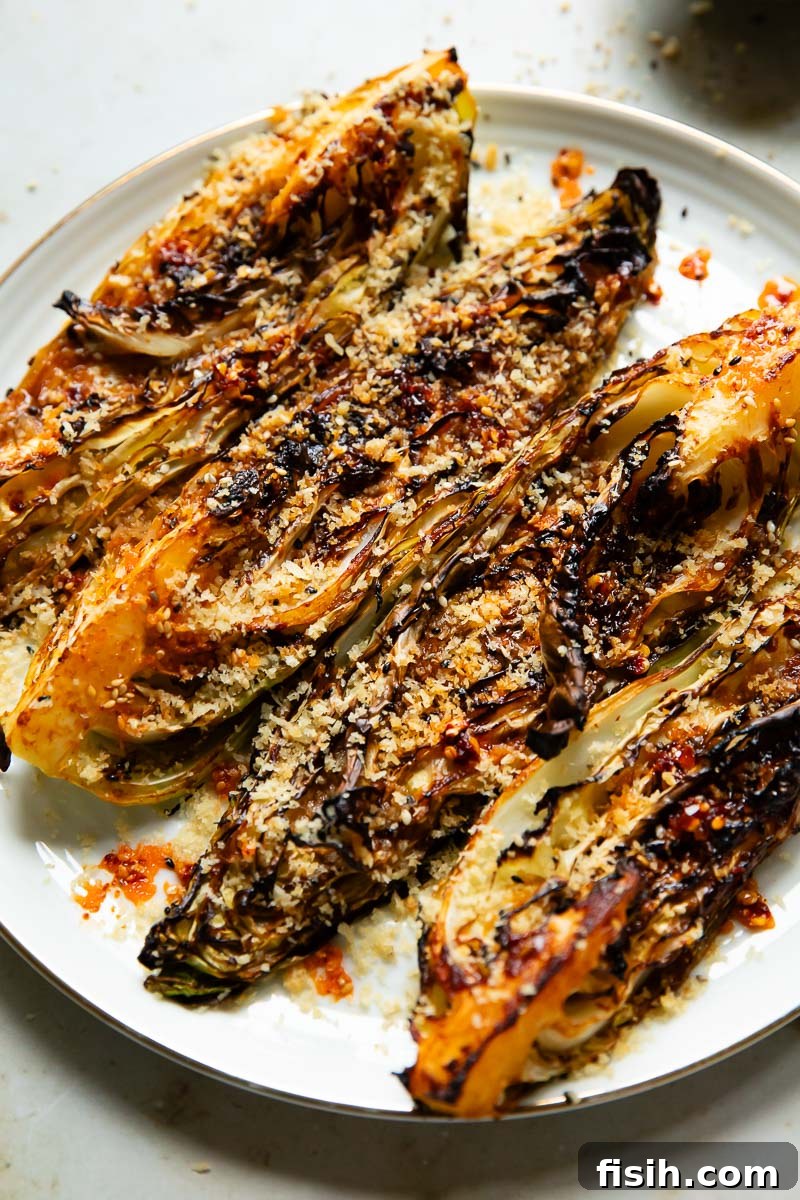
Experience an extraordinary fusion of flavors with our Gochujang Roasted Cabbage, elevated by a delightful crunchy breadcrumb topping. This recipe masterfully unites two often-underestimated ingredients – the bold, fermented kick of gochujang paste and the humble, versatile cabbage – into an easy yet remarkably sophisticated vegetable side dish. Each tender quarter of oven-roasted cabbage is generously drenched in a smoky, chili-spiced, buttery glaze, creating a symphony of sweet and savory notes with a hint of heat. Perfectly suited to complement rich red meat main courses or serve as a robust, vegetarian-friendly accompaniment to earthy mushroom or hearty legume stews.
If you’ve recently added a jar of gochujang to your pantry, don’t let this vibrant Korean chili paste become another forgotten condiment in the back of your fridge! Embrace its incredible depth of flavor with more exciting recipes. Beyond this sensational cabbage dish, consider venturing into creating these succulent gochujang short ribs, offering fall-off-the-bone tender beef with an irresistible Asian-inspired twist. Gochujang is a powerhouse ingredient, capable of transforming simple dishes into culinary masterpieces, and this roasted cabbage recipe is no exception to its magic.
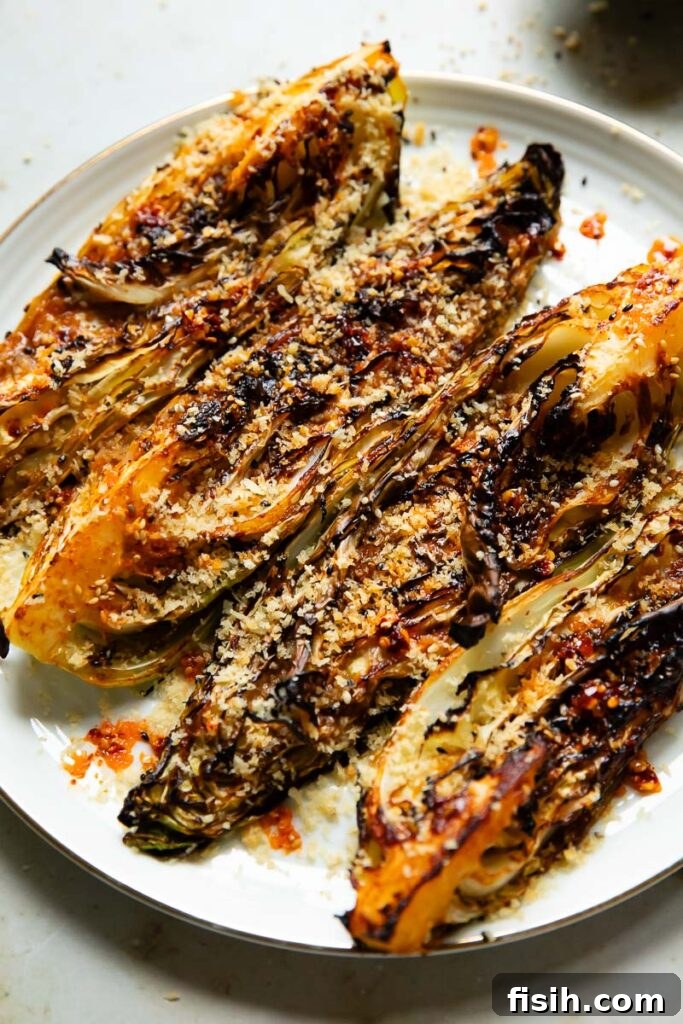
Roasted Cabbage Wedges: An Unsung Hero of Side Dishes
Cabbage, an incredibly inexpensive and nutrient-rich vegetable, frequently receives less attention than it deserves. Its versatility, however, makes it a star ingredient that can shine in countless meals. Whether taking center stage, as in these authentic hearty cabbage rolls, or playing a crucial supporting role, like these Asian-inspired roasted cabbage wedges, this humble vegetable consistently delivers. We often gravitate towards more “glamorous” vegetables, but the transformative power of roasting elevates cabbage to an entirely new level.
Forget the days of bland, boiled cabbage. Roasted cabbage is a culinary revelation. The high heat of the oven works wonders, tenderizing the heart of the cabbage while gently caramelizing its outer leaves. This process not only softens the inner layers but also imparts a delightful nutty flavor and a desirable crispy texture to the edges. This Maillard reaction creates complex, savory notes that simply cannot be achieved through other cooking methods, making roasted cabbage a truly captivating side.
Choosing the Best Cabbage for Roasting
For achieving the most perfect, portioned wedges and a smooth, buttery flavor, the sweetheart cabbage – also known as pointed or hispi cabbage – is, in my opinion, the absolute best choice for roasting. Its unique conical shape and delicate leaves make it ideal for cutting into elegant wedges that cook evenly and present beautifully. Beyond this exquisite gochujang recipe, sweetheart cabbage is also incredibly delicious when prepared with a rich miso butter glaze, showcasing its adaptability to various flavor profiles.
Should a sweetheart cabbage prove elusive, a savoy cabbage makes for an excellent substitute. While equally sweet, savoy cabbage offers a subtle earthiness and a slight peppery undertone, adding another dimension to your dish. These beautiful emerald green globes, with their distinctively ruffled leaves, are typically much larger than sweetheart cabbages. Consequently, they will require a different approach to cutting, being best sliced into circular “steaks” rather than traditional wedges. Ensuring these steaks are cut to a consistent, manageable thickness is key to achieving even cooking and that desired tender-crisp texture.
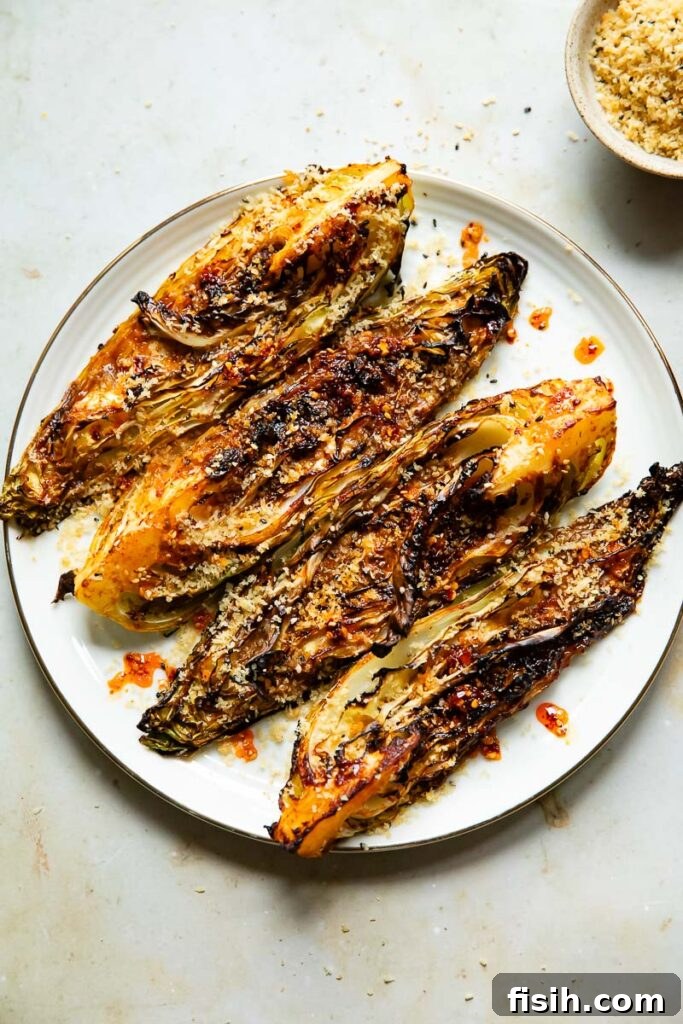
The Magic of Gochujang: A Korean Flavor Powerhouse
Gochujang, a fundamental ingredient in Korean cuisine, is much more than just a chili paste. It’s a complex, fermented condiment that delivers a unique blend of savory, sweet, spicy, and umami notes. Made from gochugaru (Korean chili powder), glutinous rice, fermented soybeans, and salt, its flavor profile is deeply layered and incredibly versatile. In this roasted cabbage recipe, gochujang truly shines, providing a robust base that transforms simple cabbage into something extraordinary. Its inherent sweetness perfectly balances the slight bitterness of the cabbage, while its heat adds an invigorating kick without overwhelming the palate. The fermentation process gives it an umami depth that is simply addictive, making you crave bite after bite. Incorporating gochujang is an effortless way to infuse your cooking with vibrant, authentic Korean-inspired flavors.
Crafting the Perfect Crunchy Breadcrumb Topping
While the gochujang-glazed roasted cabbage is undeniably delicious on its own, the crunchy breadcrumb topping elevates this dish from excellent to exceptional. The addition of toasted breadcrumbs provides a textural contrast that is absolutely essential to the overall experience. The crispiness of the breadcrumbs, especially Panko, which are known for their light and airy texture, complements the tender interior and slightly charred exterior of the cabbage beautifully. We toast these breadcrumbs in butter until golden brown, infusing them with a rich, nutty flavor. A sprinkle of garlic powder and a mix of white and black sesame seeds adds an aromatic depth and visual appeal, enhancing both the taste and the presentation. This topping isn’t just an afterthought; it’s a vital component that brings an irresistible buttery crunch and an extra layer of savory goodness, making each mouthful a truly satisfying experience.
Essential Recipe Tips and Notes for Perfect Gochujang Cabbage
- Choose Your Cabbage Wisely: For optimal results and beautifully portioned wedges, I highly recommend using a small sweetheart (hispi) cabbage. Their naturally sweet flavor and delicate texture make them perfect for roasting, and when quartered, they create ideal individual servings.
- Cabbage Alternatives: If a sweetheart cabbage is unavailable, a round savoy cabbage makes a fantastic substitute. Instead of wedges, slice the savoy cabbage into circular steaks. Ensure these slices are slim enough to allow for thorough and even cooking, typically around 1 to 1.5 inches thick.
- Roasting Time Varies: Be mindful that the exact oven time can fluctuate depending on the density and size of your cabbage. A more tightly packed cabbage head may require a longer roasting period, potentially up to 35 minutes, to reach the desired tenderness and char. Always check for fork-tenderness.
- Embrace the Char: Don’t be alarmed if the outer leaves of your cabbage catch a little char. This is a desirable outcome! The slight crispiness adds a pleasant textural contrast, and the caramelization imparts subtle, complex nutty notes that enhance the overall flavor profile.
- Breadcrumbs are Key (but optional): While not strictly essential for the dish’s fundamental flavor, I passionately advocate for the breadcrumb topping. The toasted, buttery crunch they provide adds a critical textural dimension that beautifully complements the tender, spicy cabbage. They transform the dish from good to truly gourmet.
- Even Coating: Ensure your gochujang-butter mixture is evenly brushed over all sides of the cabbage wedges. This guarantees maximum flavor absorption and a consistent char across the surface.
- Baking Sheet Selection: Use a large baking sheet to ensure the cabbage wedges have enough space and are not overcrowded. This allows for proper air circulation, leading to better caramelization and crispier edges.
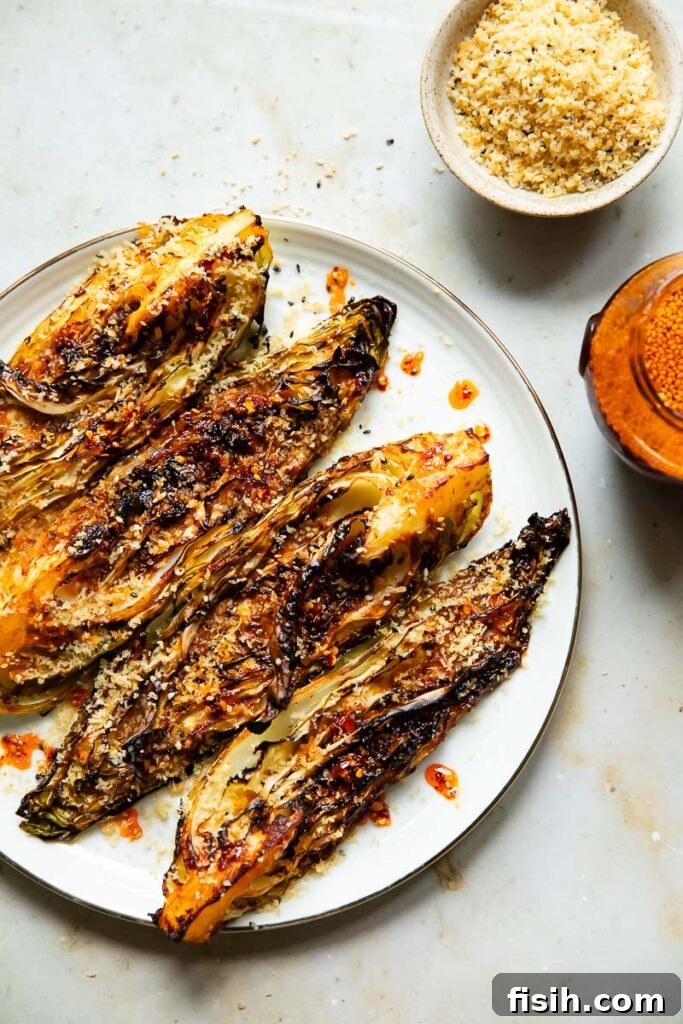
Versatile Serving Suggestions for Gochujang Cabbage
Though this recipe boasts a distinctive Asian-inspired flavor profile, don’t feel restricted to serving these incredibly umami-rich cabbage wedges exclusively with East Asian dishes. The versatile gochujang flavor lends itself beautifully to a wide array of culinary pairings, making it a fantastic addition to almost any meal. Its inherent warmth and savory depth pair exquisitely with red meats, capable of complementing everything from a luxurious elegant filet mignon with mushroom marsala sauce to a comforting and humble classic homemade meatloaf.
Furthermore, thanks to its fermented bean base, gochujang is inherently plant-based diet friendly, making this roasted cabbage an excellent option for vegetarians and vegans alike. It harmonizes particularly well with mushrooms, intensifying their earthy notes. Consider serving it alongside a rich vegetarian mushroom Bolognese or as a vibrant accompaniment to a sophisticated mushroom Wellington. The spicy, savory kick of the gochujang cuts through the richness of these dishes, creating a perfectly balanced meal.
However, if you prefer to maintain a consistent culinary theme, these gochujang cabbage wedges are a natural fit for other Asian-inspired dishes. They would be an ideal side for a speedy beef yakisoba, adding a fresh, spicy counterpoint to the noodles, or paired with a savory hoisin-glazed crispy tofu, where the spice beautifully complements the sweet and savory glaze. The possibilities are truly endless, limited only by your imagination!
Storage and Leftovers: Maximizing Your Gochujang Cabbage
The magic of this easy vegetable side dish lies in the delightful textural contrast: the slightly charred, crispy outer leaves of the roasted cabbage combined with the fresh, buttery crunch of the Panko breadcrumb topping. To truly experience this dish at its peak, it is unequivocally best served immediately, fresh from the oven, when the textures are most vibrant and the flavors most pronounced. The warmth enhances the gochujang’s aromatic qualities and the breadcrumbs retain their ultimate crispness.
That being said, if you find yourself with irresistible leftovers, fret not! They can be stored quite well. Simply transfer any remaining roasted cabbage wedges to an airtight container and refrigerate for up to 3 to 4 days. While the breadcrumbs may lose some of their initial crunch upon storage, the cabbage itself retains much of its delicious flavor. For reheating, gently warm the cabbage in an oven or air fryer to help revive some crispiness, though it won’t be quite as fresh as the first serve.
For those who enjoy culinary experimentation, leftover gochujang roasted cabbage offers an exciting opportunity for repurposing. You could try shredding the cooled cabbage wedges and incorporating them into a spicy bubble and squeak, a traditional British breakfast dish often made with leftover vegetables. This adds a fantastic Korean-inspired twist to a classic comfort food. Alternatively, chop them finely and add to a quick stir-fry, or even fold them into an omelet for a flavorful and unexpected breakfast or light lunch option. Don’t let a single delicious morsel go to waste!
More Delicious Side Dishes to Try
- Moong Dal Tadka: A comforting and flavorful Indian lentil dish.
- Braised Cabbage and Beets with Bacon: A hearty and savory side featuring rich, earthy flavors.
- Brussels Sprouts Gratin with Breadcrumbs: A creamy, cheesy take on a sometimes polarizing vegetable, made irresistible with a crunchy topping.
- Whole Roasted Cauliflower with Romesco Sauce: An impressive and flavorful centerpiece or robust side.
★
★
★
☆
Gochujang Roasted Cabbage with Crunchy Breadcrumb Topping
50 mins
25 mins
1 hr 15 mins
4 people
Ingredients
- 3 tbsp butter, divided
- 1 tbsp Gochujang paste
- 1 sweetheart (hispi) cabbage (pointed cabbage in US), cut into 4 wedges
- 40g / 1/4 cup Panko breadcrumbs
- 1/4 tsp garlic powder
- 1/2 tsp white sesame seeds
- 1/2 tsp black sesame seeds
- 1 tsp chili oil, optional
Instructions
-
Preheat your oven to 200°C (400°F). Carefully cut the cabbage into four equal wedges, making sure to keep the core intact for each wedge to hold the leaves together during roasting.
-
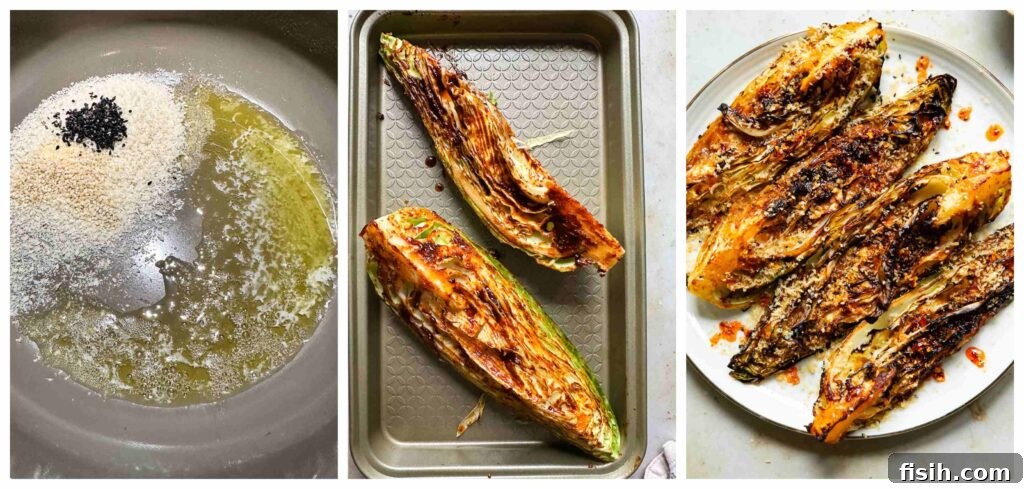
In a small bowl, thoroughly mix 2 tablespoons of softened butter with the gochujang paste until well combined and smooth. Generously brush this flavorful gochujang butter mixture over all surfaces of the cabbage quarters, ensuring a full coating, including the bottom. Arrange the seasoned cabbage wedges on a baking sheet, ensuring they are not overcrowded, and roast in the preheated oven for approximately 20 minutes. The cabbage should be tender on the inside with nicely charred and slightly crispy outer leaves. (Note: A denser cabbage may require up to 35 minutes of roasting time; adjust as needed for desired tenderness.)
-
While the cabbage is roasting, prepare your crunchy breadcrumb topping. Melt the remaining tablespoon of butter in a pan over medium heat. Once melted, add the Panko breadcrumbs, garlic powder, white sesame seeds, and black sesame seeds to the pan. Toast the mixture, stirring continuously to prevent burning, until the breadcrumbs turn a beautiful golden brown and become fragrant. This process typically takes just a couple of minutes. Immediately remove the pan from the heat to stop the cooking and prevent over-browning.
-
Once the roasted cabbage is ready, remove it from the oven. Evenly sprinkle the warm, crunchy breadcrumb topping over the cabbage wedges. If desired, drizzle with a teaspoon of chili oil for an extra layer of heat and aroma. Serve immediately to enjoy the best texture and flavor.
Notes
- I recommend using a small cabbage such as a sweetheart variety for any cabbage wedge recipe. They are sweet tasting and quarter into the perfect individual serving.
- If you can’t find a sweetheart, a round savoy will do. In this case, slice the cabbage into circular steaks instead of wedges. Cut them slim enough to cook through.
- The time in the oven will vary depending on how loose or tight the leaves are lying. A tighter packed cabbage might take up to 35 minutes roasting time.
- Breadcrumbs are not essential to the recipe but do add a toasted, buttery crunch.
Nutrition
Calories: 107kcal
|
Carbohydrates: 4g
|
Protein: 1g
|
Fat: 10g
|
Saturated Fat: 6g
|
Polyunsaturated Fat: 1g
|
Monounsaturated Fat: 3g
|
Trans Fat: 0.3g
|
Cholesterol: 23mg
|
Sodium: 96mg
|
Potassium: 30mg
|
Fiber: 0.3g
|
Sugar: 1g
|
Vitamin A: 271IU
|
Vitamin C: 1mg
|
Calcium: 15mg
|
Iron: 0.3mg
Nutrition information is automatically calculated, so should only be used as an approximation.