
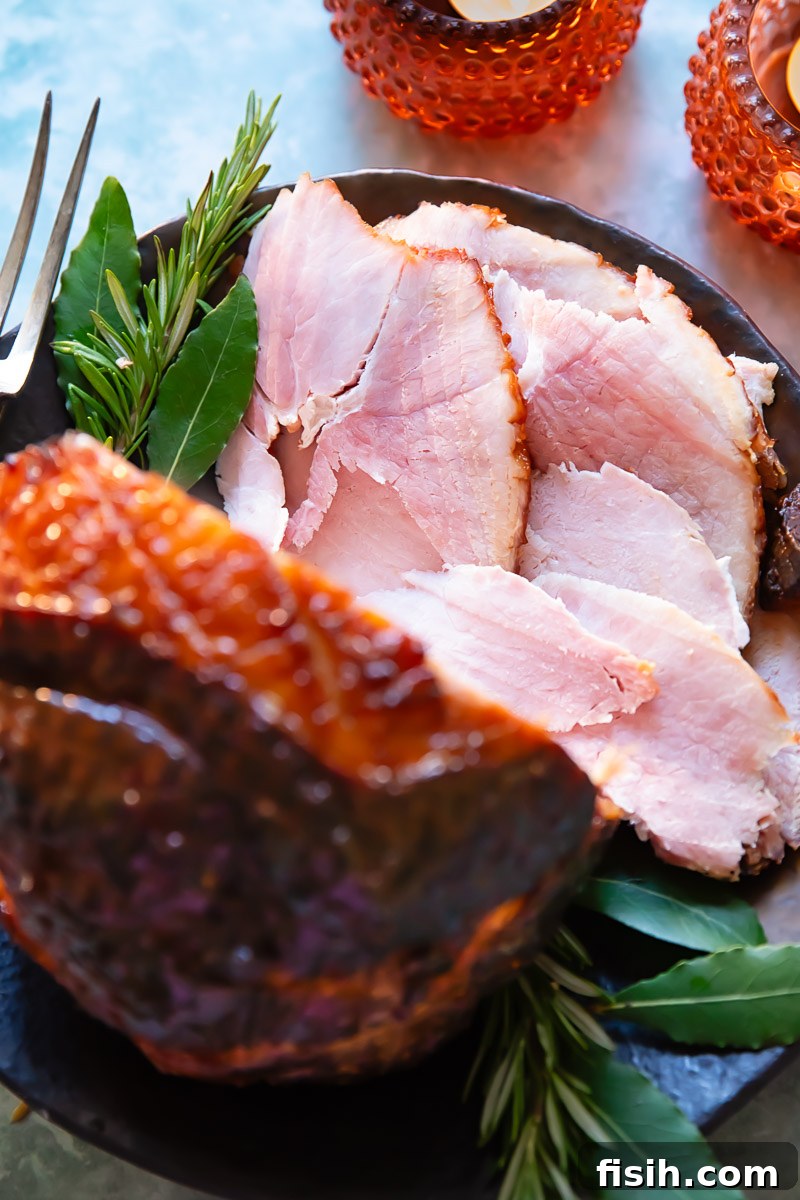
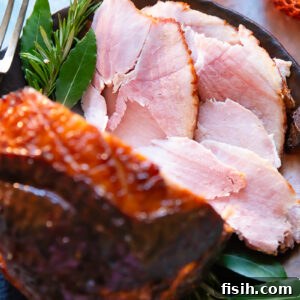
Welcome to the ultimate guide for creating a show-stopping Maple Bourbon Glazed Ham, a dish that promises to be the centerpiece of any festive gathering or special occasion. Imagine slice upon succulent slice of perfectly roasted meat, generously coated in a shimmering, deep amber glaze. This isn’t just any ham; it’s a masterpiece of culinary delight, marrying the rich, smoky flavors of pork with the sweet, warming notes of maple, the subtle kick of Dijon mustard, and the sophisticated depth of bourbon. Roasted to caramelized perfection, this recipe delivers an unforgettable experience for your taste buds, transforming a simple ham joint into a glorious feast.
While this recipe is designed to serve up to 10 guests with relative ease, offering a short 25-minute oven time for pre-cooked ham, it also provides detailed instructions for preparing a raw British gammon joint from scratch. Regardless of your starting point, the result is a beautifully moist ham with an irresistible crust that will have everyone reaching for a second, or even third, helping.
No holiday celebration, especially Christmas, feels complete without a gloriously glazed roast. If pork isn’t on your menu, don’t miss out on the magic of a glossy glaze. You can still enjoy similar sensational flavors with alternatives like our Maple Mustard Glazed Salmon, offering a lighter yet equally flavorful option, or explore the exotic sweetness of a spicy Mango Chutney Glazed Roast Chicken, perfect for an adventurous palate. These recipes prove that the art of glazing transcends specific meats, bringing festive cheer to any table.
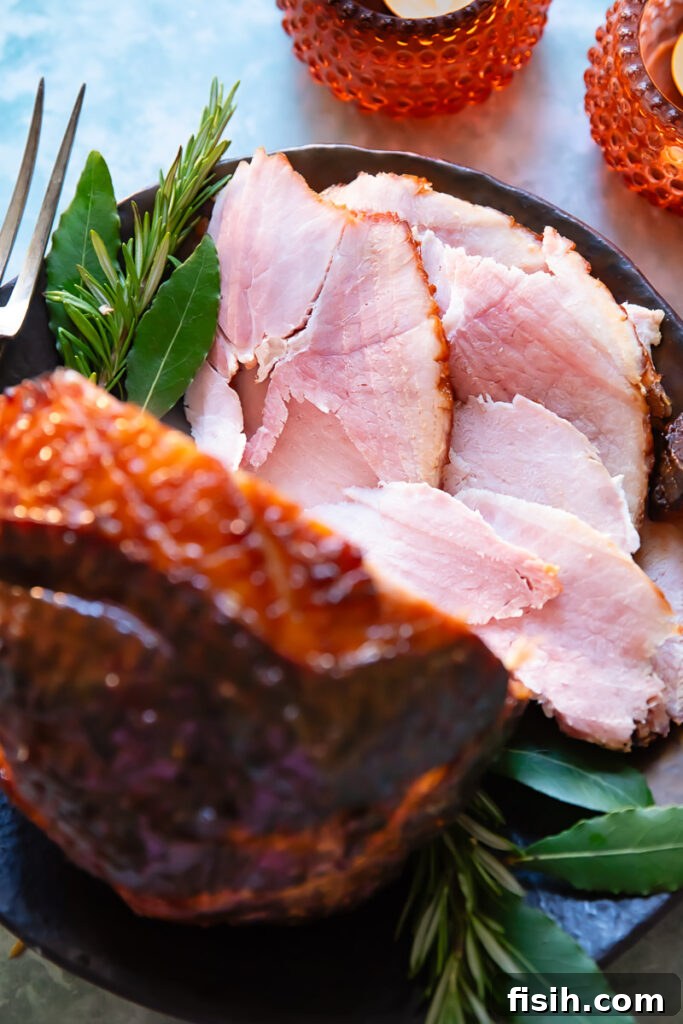
Holiday Traditions and the Magic of Glazed Ham
Food traditions are woven deeply into the fabric of our holidays, creating cherished memories year after year. Recently, a close British friend shared a brilliant Christmas tradition that has truly inspired me. Her family enjoys a traditional roast turkey on Christmas Day, a classic centerpiece, but then follows up with a succulent smoked ham joint on Boxing Day. Initially, the idea of cooking both a large turkey and a ham in such quick succession seemed incredibly labor-intensive. However, her ingenious method completely changed my perspective.
Given its impressive fridge life, the gammon joint is typically cooked around December 22nd or 23rd. This allows it to be served cold on Boxing Day, becoming a star component of the classic British “picky-bits” banquet – a delightful spread of cold cuts, cheeses, and various accompaniments. The brilliance of this approach? No additional kitchen time is required on Boxing Day itself, yet a delicious and substantial feast awaits! This tradition offers a wonderful way to extend the holiday culinary joy without the stress of continuous cooking, and it’s certainly one I plan to adopt. Imagine the relief of enjoying a leisurely Boxing Day, knowing a fantastic, pre-prepared ham is ready to be savored.
The Glorious Maple Bourbon Glazed Ham Recipe
The combination of whisky and maple is nothing short of a culinary dream, a pairing so perfect it’s echoed in classic cocktails like the Old Fashioned, or my very own Maple Cider Whisky Sour. The nutty, caramel-like undertones of pure maple syrup beautifully complement the warm spices, vanilla, and oak notes found in quality oak-aged bourbon. This harmonious blend creates a rich, complex flavor profile that radiates warmth and sophistication, ideal for a festive centerpiece.
In this spectacular ham glaze, I’ve taken this exquisite duo and elevated it further with the subtle, gentle heat of Dijon mustard. The result is a glaze that strikes a magnificent balance between sweet and salty, creating a truly addictive flavor. While there’s always a risk of overcooking ham, this particular glazing technique not only imparts an unparalleled taste but also creates a gorgeous, caramelized crust. This crust acts as a protective barrier, effectively sealing in the meat’s natural moisture and ensuring every bite is incredibly juicy and tender. It’s the secret to transforming a good ham into an extraordinary one.
Ham or Gammon? Understanding Your Pork Joint
The terminology for your pork joint can vary significantly depending on your geographical location. In North America, a “ham joint” typically refers to a ready-salted, brined, and often pre-cooked piece of pork leg. These hams are perfect for glazing and reheating at home, making them a convenient option for holiday meals. They require minimal preparation before they’re ready for their flavorful glaze and a quick roast in the oven.
Conversely, in the United Kingdom, a “gammon joint” is sold raw, although it has already been cured, much like bacon. This means that unlike its North American counterpart, a gammon joint requires thorough cooking before it can be served. For this glazed ham recipe, if you’re starting with gammon, we begin by poaching it to ensure it’s fully cooked and tender before applying the rich glaze and roasting it to perfection. This distinction is crucial for achieving the best results and ensuring food safety, so always check whether you have a pre-cooked ham or a raw gammon joint.
If you prefer to cook without alcohol, or simply desire a different flavor profile, an equally exciting and delicious alternative is our Glazed Ham with Blackcurrant Compote. This recipe offers a sharp and sweet counterpoint to the ham, providing a vibrant and sophisticated twist that is just as festive and flavorful.
Expert Tips for a Flawless Glazed Ham
- **Understanding Gammon (UK):** Remember, gammon is a raw, cured ham that absolutely *must* be cooked thoroughly before serving. The most efficient method is to poach it in liquid prior to roasting. I’ve experimented with various poaching liquids like Earl Grey tea, cola, and even cider, each lending a unique background flavor.
- **Simple Poaching Liquid:** For a classic approach that won’t interfere with the bold flavors of your maple bourbon glaze, simply boil your gammon in water with aromatic vegetables like a halved onion, large chunks of carrot, a teaspoon of black peppercorns, and a couple of bay leaves. This creates a beautifully tender ham without competing with the main glaze.
- **Mind the Cooking Times:** Adhere closely to the recommended cooking times. Overcooking, especially during the poaching stage, can result in meat that becomes too soft and shreds, more akin to pulled pork than a beautifully sliced ham joint. You want it tender, not falling apart.
- **Always Check Internal Temperature:** To ensure your ham is perfectly cooked and safe to eat, always use an instant-read thermometer. Insert it into the thickest part of the joint, avoiding any bone. The target internal temperature should be 68°C (155°F) at the center. This guarantees doneness while retaining maximum juiciness.
- **Handling Pre-Cooked Ham (North America):** If you’re starting with a pre-cooked ham joint, the process is simpler: just glaze and warm it up. However, be extremely careful not to overcook it. Pre-cooked hams can dry out quickly if roasted for too long, turning your potentially succulent roast into a disappointingly dry dish. The goal is to heat it through and caramelize the glaze.
- **Scoring the Fat:** Don’t skip scoring the ham’s fat in a diamond pattern. This isn’t just for aesthetics; it allows the glaze to penetrate and adhere better, and helps render the fat for that perfectly crispy, flavorful crust. Just be careful not to cut too deep into the meat itself.
- **Resting is Key:** Once your ham is out of the oven, resist the urge to slice into it immediately. Allowing the ham to rest for at least 10-15 minutes helps redistribute the juices throughout the meat, resulting in a more tender and flavorful finished product.
Serving Suggestions: A Feast for All Seasons
A festive glazed ham often comes as a welcome culinary relief from the traditional turkey and all its trimmings, especially when holidays like Christmas arrive hot on the heels of Thanksgiving. This versatility makes it a fantastic option for various occasions, not just the peak holiday season.
You could wholeheartedly embrace my friend’s labor-saving tradition and cook your ham in advance, reserving it for exquisite cold cuts on Boxing Day. This approach allows you to enjoy the festivities without being tied to the kitchen. For a truly indulgent Boxing Day spread, imagine thinly sliced, cold smoked ham served with thick-cut, homemade bread and rich butter “doorsteps.” Pair these with a selection of artisanal continental cheeses, perhaps even a Whisky Baked Brie for an added layer of decadence.
Complement the ham with tangy Sauerkraut, a vibrant Winter Walnut and Beet Salad, an assortment of crackers, and a warm, creamy Cheesy, Cranberry-Studded Dip. This ensemble creates an opulent buffet that feels both traditional and exciting, perfect for lingering conversations and relaxed enjoyment.
However, the ultimate test remains: can you truly resist the glistening glaze and the rich, intoxicating aromas of a just-baked bourbon glazed ham, fresh from the oven? Will your masterpiece even make it to see the light of Boxing Day? Honestly, I’m not entirely convinced mine ever will! The temptation of that warm, sticky, sweet-and-savory crust is often too strong to wait.
Storage and Leftovers: The Gift That Keeps On Giving
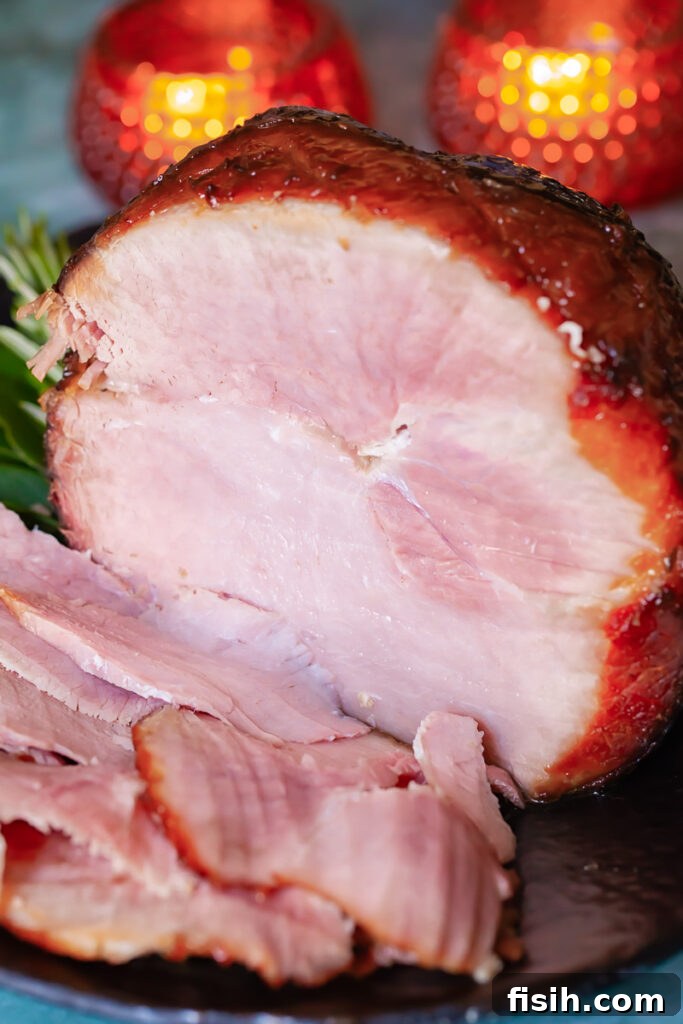
One of the many joys of preparing a generous Maple Bourbon Glazed Ham is the promise of delicious leftovers. Properly stored, your maple glazed ham will keep beautifully, covered, in the fridge for up to a week. For me, the leftover recipes are often just as exciting as the initial holiday meal itself!
The beautifully flavored slices of ham offer a subtle smokiness and sweetness that can elevate a variety of dishes. Transform your breakfast or brunch with a classic Croque Monsieur, where the ham’s rich flavor shines. Add a sweet and savory edge to a comforting bowl of Ham and Bean Soup, perfect for a chilly evening. Or, get creative by chopping the leftover ham and using it as a delectable topping for a Homemade Pizza, perhaps paired with mushrooms and mascarpone for an extra gourmet touch.
Don’t limit yourself to these suggestions! Leftover ham can be diced and added to omelets, frittatas, sandwiches, or even folded into creamy pasta dishes. The flavorful glaze often infuses the ham with extra moisture, making it incredibly versatile for repurposing in new and exciting ways. Each time you reach for those leftovers, you’ll be treated to a reminder of your glorious holiday feast.
More Ham Recipes to Explore
- Slow Cooker Gammon (Honey Glazed Ham)
- Eggs Benedict with Easy Hollandaise Sauce
- Yellow Split Pea and Ham Soup
- Best Ham and Cheese Toastie
Maple Bourbon Glazed Ham
Julia Frey of Vikalinka
20 mins
1 hr
45 mins
2 hrs
5 mins
10
Equipment
-
Roasting pan
-
Saucepan
-
Knife
-
Meat thermometer
Ingredients
For the ham
- 2½-3kg / 5½-6½ lb smoked ham, gammon in UK
- 1 onion
- 1 carrot
- 1 tsp black peppercorns
- 2-3 bay leaves
For the glaze
- 125ml / 1/2 cup bourbon, or whisky
- 125ml / 1/2 cup maple syrup
- 4 tbsp brown sugar
- 2 tbsp Dijon mustard
- 2 tsp apple cider vinegar
Instructions
-
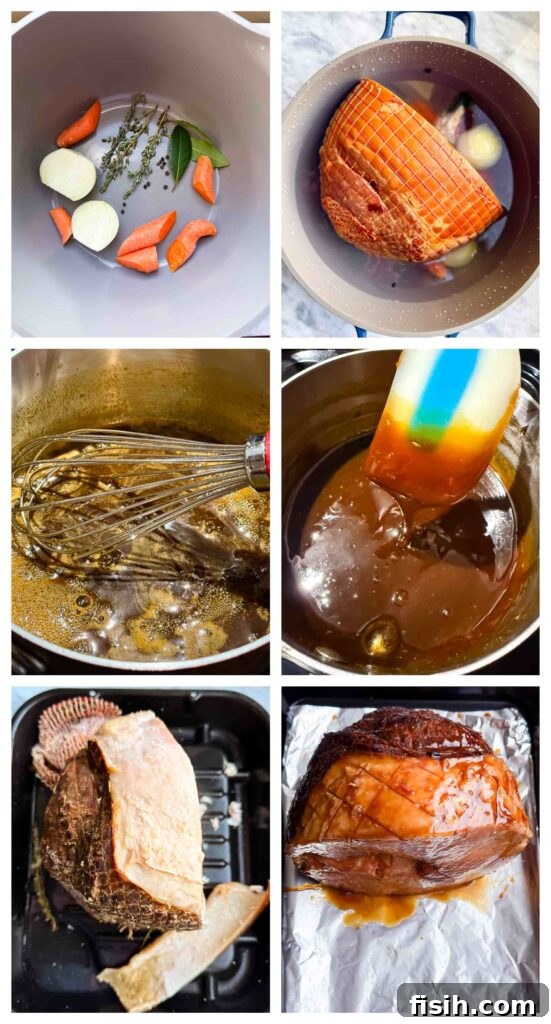
If you are in the US or Canada, please skip to step 2. For gammon, to a large pot add the halved onion, a carrot cut into large chunks, bay leaves, and whole peppercorns. Place the gammon into the pot and fill with enough water to cover. Bring the pot to a boil, then reduce the heat to medium and simmer for 1 hour and 15-20 minutes, adjusting time based on the size of your joint.
-
Meanwhile, prepare the exquisite maple bourbon glaze. Combine the bourbon or whisky, maple syrup, brown sugar, Dijon mustard, and apple cider vinegar in a saucepan. Bring this mixture to a gentle simmer, then continue simmering for about 15 minutes, stirring occasionally with a whisk, until the glaze thickens into a beautiful, syrupy consistency. Remember, the glaze will thicken further as it cools.
-
Preheat your oven to 200°C (400°F). Carefully remove the ham from its poaching liquid and allow it to cool until it is comfortable to handle. If your ham has string or netting, carefully cut and remove it. Next, gently pull the skin off the ham and discard it. Using a sharp knife, score the layer of fat in an attractive diamond pattern, being careful not to cut through into the meat itself. Evenly brush half of your prepared glaze all over the ham.
-
Place the glazed ham on a wire rack set inside a roasting pan that has been lined with tin foil. Using a rack is crucial as it ensures that the bottom of the ham also gets beautifully caramelized, creating an even crust. Roast in the preheated oven for 15 minutes. Take the ham out, apply the remaining glaze generously, and return to the oven for another 10 minutes, or until the glaze is deeply caramelized and glistening. Once done, remove from the oven and let it rest for at least 10 minutes before carving and serving.
Notes
Nutrition
Calories:
351kcal
|
Carbohydrates:
18g
|
Protein:
42g
|
Fat:
9g
|
Saturated Fat:
3g
|
Polyunsaturated Fat:
1g
|
Monounsaturated Fat:
4g
|
Cholesterol:
120mg
|
Sodium:
3076mg
|
Potassium:
762mg
|
Fiber:
1g
|
Sugar:
16g
|
Vitamin A:
1025IU
|
Vitamin C:
1mg
|
Calcium:
56mg
|
Iron:
3mg
Nutrition information is automatically calculated, so should only be used as an approximation.
Tried this recipe?
Let us know how it was!