
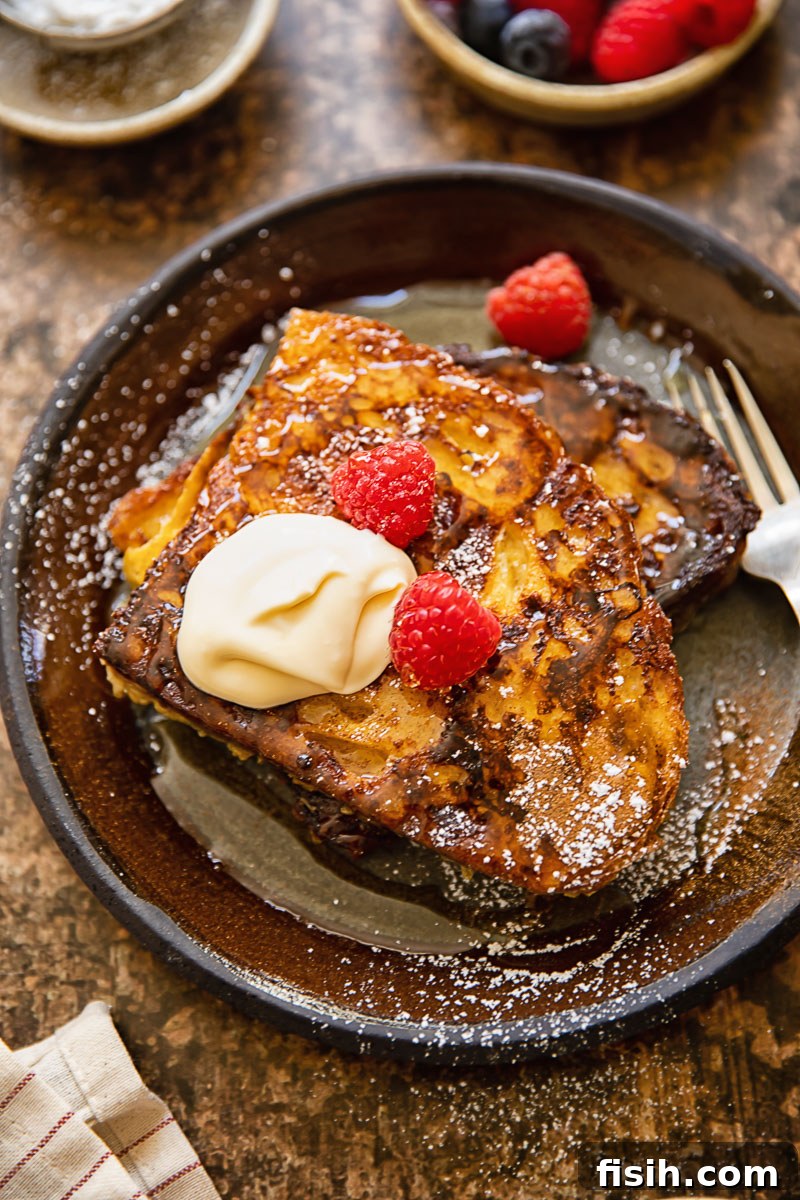
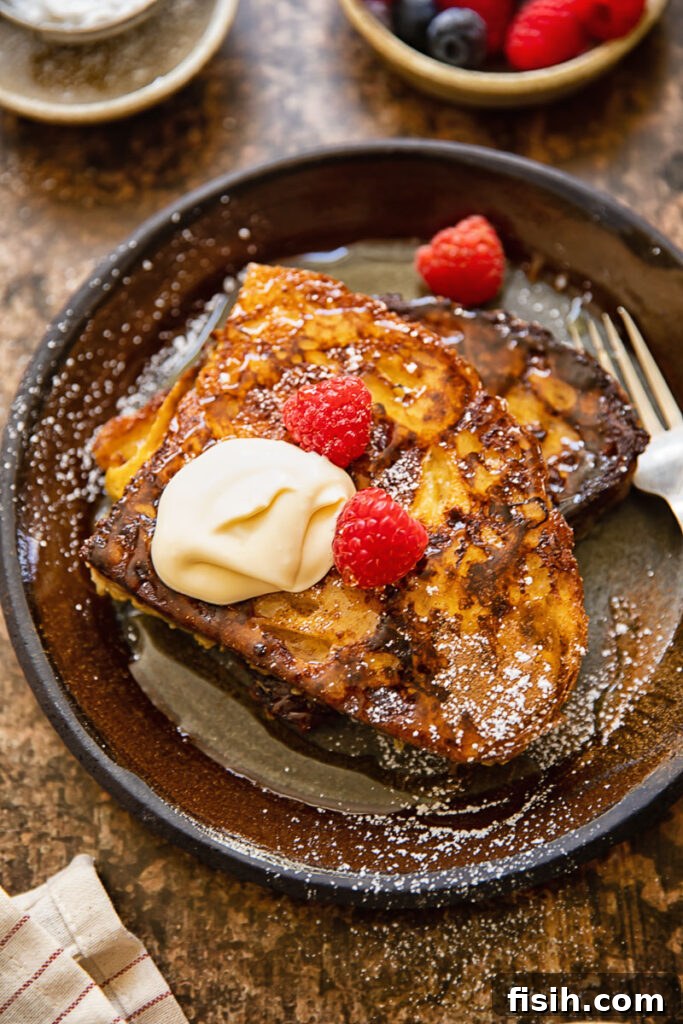
Transform your lazy weekend mornings into an indulgent culinary experience with this exquisite **Cinnamon Sourdough French Toast with Maple Crème Fraîche**. Imagine waking up to the irresistible aroma of cinnamon-spiced bread, perfectly golden and crisp, topped with a luscious, subtly sweet maple-infused crème fraîche. This isn’t just breakfast; it’s a celebration, and the best part? All the magic happens with ingredients you likely already have on hand, meaning no need to step out of your cozy pajamas. In mere minutes, you can craft a stack of these delightful slices, turning a simple start to the day into an unforgettable brunch highlight. It’s the ultimate recipe for a laid-back yet luxurious weekend.
For those who love the art of bread-making, consider elevating your French toast even further by making your own loaf. Our comprehensive Sourdough Recipe for Beginners is the perfect guide to creating the ideal base for this exceptional dish.
If you’re in the mood for another equally celebratory, but perhaps less eggy, breakfast treat, you might enjoy these Belgian Waffles. They offer another fantastic canvas for a delightful topping free-for-all, perfect for any morning feast.
As a devoted sourdough baker and enthusiast, I frequently find myself with leftover sourdough loaves. The commitment to finishing a freshly baked sourdough can often feel like a delightful challenge. I’ve gone through phases of tirelessly making sourdough toast until my jaw aches, diligently crumbing stale slices to fill the freezer, and even casting croutons into soups long past the conventional soup season. While these are all admirable ways to prevent waste, they sometimes lack the exciting flair a weekend brunch deserves.
That was my reality until a culinary revelation changed everything: **Sourdough French Toast**. This simple yet profound discovery has truly transformed my approach to stale bread. While calling it a “life-changer” might be a slight exaggeration, its impact on my brunch routine, and my perception of leftover sourdough, has been monumental! It’s not just a big deal; it’s the *best* deal for a deserving sourdough loaf.
The Rich History and Appeal of French Toast
Despite its widely recognized French name, the earliest recorded version of French toast actually hails from ancient Rome. Known back then as “Pan Dulcis” or “Aliter Dulcia,” it was a simple dish designed to prevent good bread from going to waste. The French later adopted this ingenious concept, initially referring to it as ‘Roman Bread’ before eventually renaming it pain perdu, which translates literally to ‘lost bread.’ This evocative name beautifully encapsulates the dish’s origin: giving new life to stale, or otherwise ‘lost,’ bread.
This historical context highlights precisely why your leftover sourdough loaf is the absolute ideal candidate for this classic French toast recipe. Unlike fresh bread, which is typically soft, moist, and wonderfully bouncy, it turns into an unappealing, eggy mush when soaked and fried, often disintegrating into little islands of scrambled egg in butter—a truly unappetizing prospect. A firm, slightly stale sourdough, however, possesses the perfect structure to absorb the rich egg custard without losing its integrity. The slightly tougher crust and denser crumb of sourdough become a sturdy framework, resulting in beautifully golden, crispy-edged toast that remains delightfully tender on the inside, offering a supremely satisfying sweet or savory mouthful.
While beautifully golden French toast can certainly be achieved with other types of bread or even other bread products, such as stale brioche or crumpets, for me, sourdough reigns supreme. Its distinct tang and robust texture are unmatched, making it the definitive answer to my stale bread prayers and elevating French toast to an entirely new level of gourmet deliciousness. The unique fermentation process of sourdough also imparts a depth of flavor that complements both sweet and savory toppings exquisitely.
Mastering the Art of Sourdough French Toast: A Step-by-Step Guide
The primary skill required for crafting perfect French toast isn’t complex culinary technique, but rather the elegant art of multi-tasking and efficient organization. Once your stale sourdough bread is sliced to the ideal thickness, your aromatic egg mixture is thoroughly whisked, the smooth crème fraîche is swirled with fragrant maple syrup, and your frying pan is perfectly hot and ready, it’s time to focus. The last thing you want is for your eagerly anticipated first slice of French toast to cool down before it even reaches the plate.
To ensure a seamless cooking experience, getting organized is key. Begin by deciding on your serving style: will you plate up individual, beautifully garnished servings, or opt for a relaxed, family-style presentation with bowls of crème fraîche, fresh fruit, and extra maple syrup placed invitingly on the table? Once your vision is clear, set up an efficient production line: bread slices, egg custard mixture, hot frying pan, and a warm serving plate. This flow will minimize downtime and keep everything moving smoothly.
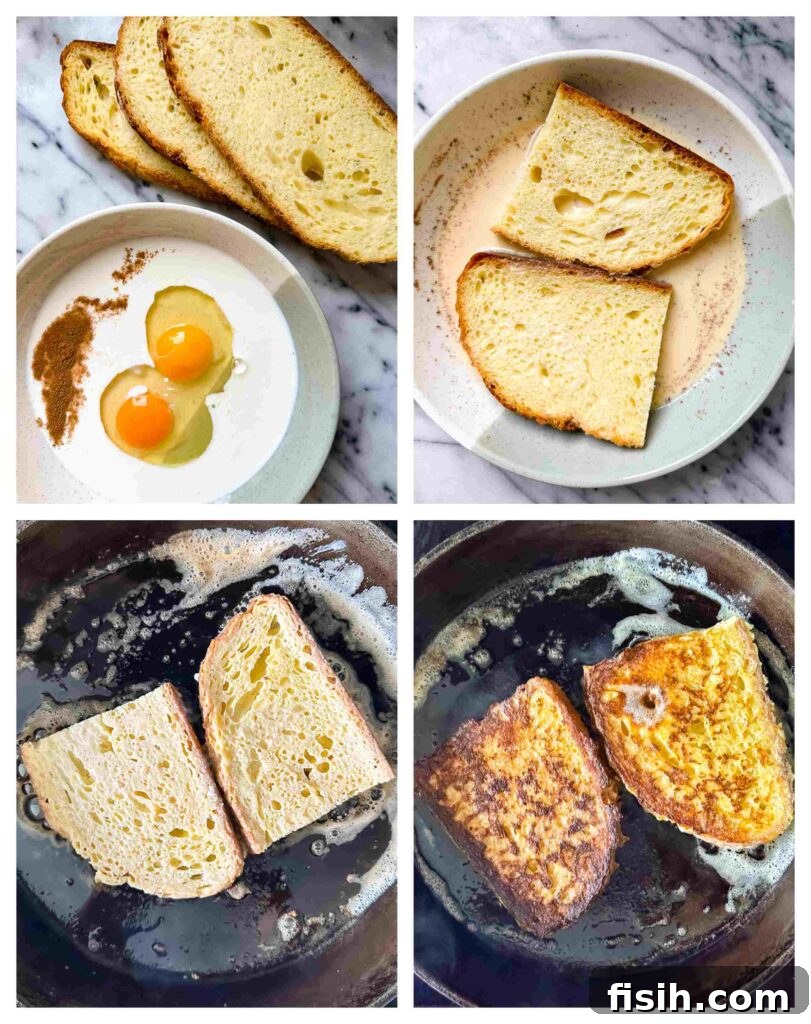
Let’s walk through the process: gently place one thick slice of sourdough into the prepared egg mixture. Allow it to soak for approximately one minute on the first side, then carefully flip it over and let it soak for another two to three minutes. The exact soaking time will depend on the thickness of your slice and just how stale your sourdough is; the goal is for the bread to become thoroughly saturated, like a sponge, without becoming flimsy. Once perfectly soaked, transfer the egg-laden slice into the hot butter sizzling in your frying pan. Immediately return to the start of your production line, placing another slice of bread into the egg mixture to begin its soak.
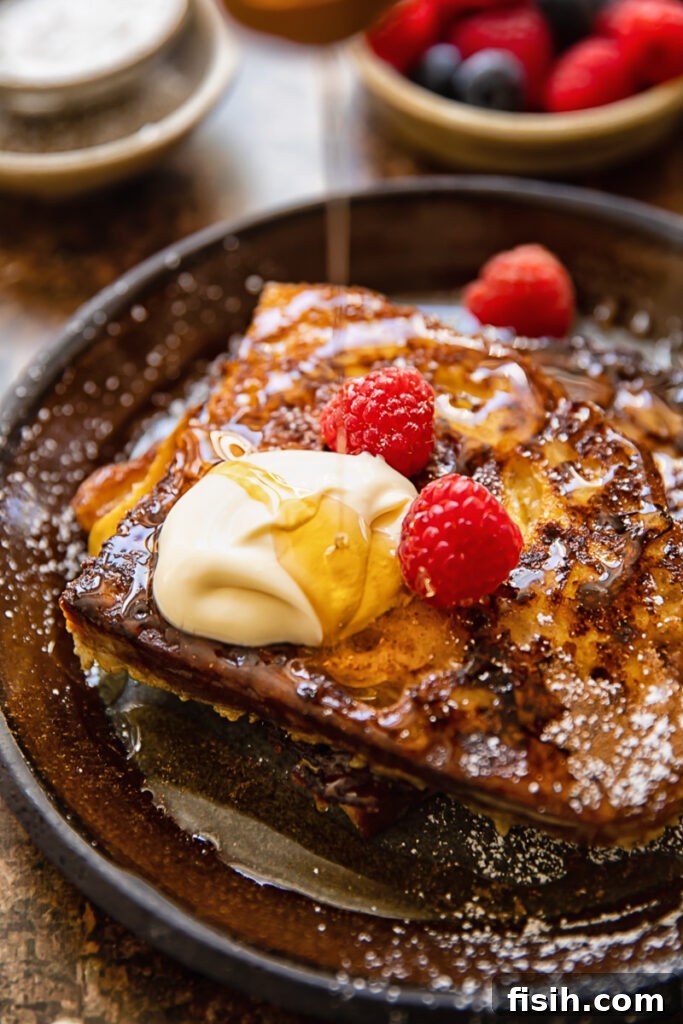
Maintain a vigilant eye on the slice cooking in the pan. When it achieves a tempting, deep golden-brown hue and appears deliciously crispy at the edges, it’s time to flip it. You’re aiming for a rich, treacle-tinted crust with a satisfying crispness. As the first slice finishes cooking, move it directly to your warm serving plate. Then, transition the second soaked slice into the now-empty spot in the pan, and the third slice into the egg mix. This continuous rotation ensures a steady supply of hot, fresh French toast.
If you’re preparing French toast for a large gathering of hungry guests, a brilliant tip is to pre-heat your oven to a low 170°F (80°C). As each slice finishes cooking, simply stash the warm French toast in the oven. This keeps them perfectly warm and ready to be served simultaneously, so everyone can enjoy their delicious brunch at the same time.
Elevating Your French Toast: Creative Topping Variations
While the allure of an elaborate French toast creation can be strong, there’s a subtle danger in over-ambition. A towering edifice of sliced banana, rich peanut butter, decadent chocolate sauce, fluffy whipped cream, fresh sliced strawberries, colorful sprinkles, and a cherry on top might look impressive, but it often results in an overwhelming experience and, frankly, an uncomfortable fullness. The key to a truly satisfying French toast lies in balanced, thoughtful toppings that enhance, rather than overpower, the star of the show.
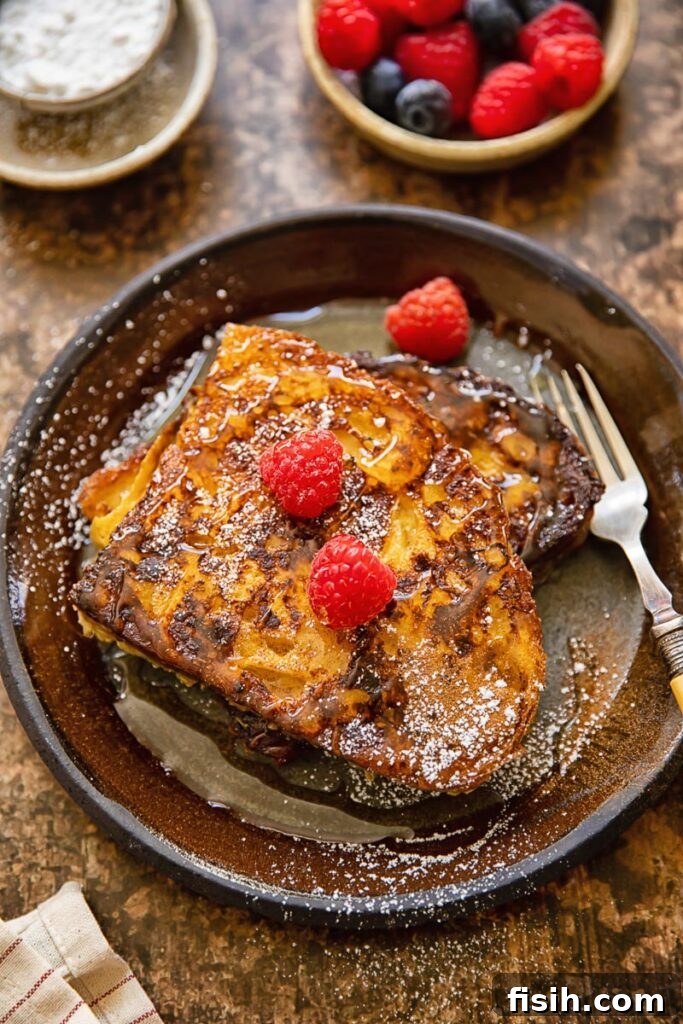
My tried-and-true formula for a truly restrained yet profoundly satisfying French toast topping involves a strategic combination of three elements: a “hero,” a “love interest,” and a “sidekick.” For this particular **Cinnamon Sourdough French Toast**, our hero is the irresistible maple crème fraîche. The love interest, offering a delightful contrast in flavor and texture, is a scattering of vibrant red berries. And finally, the sidekick, adding another layer of sweetness and moisture, is an extra drizzle of rich maple syrup. This trio creates a harmonious blend that celebrates each component without becoming excessive.
Feeling inspired to craft your own perfect topping combination? Here are some delicious nominees for each category:
Hero (The Main Event): This is your central flavor, often creamy, rich, or substantial.
- Savory options: crispy breakfast meats like streaky bacon or savory sausage patties, creamy ricotta cheese, tangy goat cheese.
- Sweet options: decadent clotted cream, a scoop of your favorite ice cream (vanilla, coffee, or even salted caramel), a dollop of whipped mascarpone.
Love Interest (The Complementary Element): This adds a contrasting texture, color, or a bright, fresh note.
- Fresh fruits: sliced bananas, blueberries, blackberries, peaches, thinly sliced apples (caramelized or fresh), citrus segments.
- Spreads: rich hazelnut chocolate spread (Nutella), speculoos cookie spread, homemade fruit compotes, or classic jams and marmalades.
Sidekick (The Finishing Touch): This element adds a final layer of flavor, crunch, or visual appeal.
- Syrups: traditional maple syrup, honey, chocolate syrup, berry coulis, caramel sauce.
- Extras: finely chopped nuts (pecans, walnuts, almonds), a sprinkle of toasted coconut flakes, mini chocolate chips, a delicate dusting of powdered sugar, or a pinch of freshly grated citrus zest.
Experiment with these categories to find your ideal balance of flavors and textures, ensuring every bite of your sourdough French toast is a memorable one.
Expert Recipe Tips & Notes for Perfect French Toast
- Slice Thick: Always slice your sourdough on the thicker side, ideally around ¾ to 1 inch (2-2.5 cm). Thicker slices provide more surface area to absorb the delicious egg custard and prevent the bread from becoming soggy or falling apart during frying.
- Generous Soak: Give each slice a good 2-3 minute soak in the eggy mixture. Sourdough is denser and thirstier than regular bread, so don’t rush this step. Ensure both sides are thoroughly saturated to achieve a custardy interior.
- Spice It Up: While I’ve used classic vanilla and cinnamon in this recipe, feel free to unleash your inner spice connoisseur. Popular and incredibly delicious choices include warm nutmeg, aromatic cardamom, a pinch of allspice, or a comforting pumpkin pie spice blend, especially for autumnal brunches.
- Choose the Right Dish: You’ll need a large and shallow dish—a square or rectangular baking dish works perfectly—to dunk the sourdough slices efficiently. A standard dinner plate simply won’t cut it for proper soaking.
- Watch Your Toast: The window between ‘toasted to perfection’ and ‘burnt toast’ can be surprisingly narrow. Keep a close eye on your slices while frying, adjusting the heat as needed to achieve that beautiful golden-brown crust.
- The Secret Disguise: Should a slice accidentally turn out a little on the dark side (it happens to the best of us!), a generous dusting of icing sugar (powdered sugar in the US) can work wonders. No-one will ever know your secret!
- Efficient Production Line: To ensure everyone enjoys their French toast hot and fresh, establish a smooth soak-and-fry production line. As one slice cooks, another should be soaking, and a third should be ready to go into the pan.
- Unleash Your Creativity with Toppings: Remember that crème fraîche and berries are just the beginning. If you’re embracing the indulgent spirit of French toast, feel free to throw caution to the wind and adorn it with just about anything your heart desires—from savory bacon to sweet fruit compotes.
Storage and Leftovers: Enjoying Freshness
Here’s a compelling excuse, as if you needed one: French toast is truly best enjoyed hot and fresh off the pan! The delicate balance of a crispy exterior and a custardy interior is at its peak immediately after cooking. Leftover, cold, or even lukewarm eggy bread simply doesn’t offer the same delightful experience. The texture can become rubbery, and the flavors muted, spoiling the indulgent treat.
Therefore, our best advice is to embrace the moment and savor every warm bite. Get it while it’s hot! If by some rare chance you do have leftovers, they can be stored in an airtight container in the refrigerator for up to 1-2 days. However, reheating them to their original glory can be challenging. A toaster oven or a quick pan-fry can help revive some crispness, but expect a slightly different texture than freshly made. Plan to make just enough for immediate enjoyment to truly appreciate this delightful dish.
More Delicious Breakfast Recipes to Explore
If you loved this indulgent French toast, you might also enjoy these other fantastic breakfast and brunch ideas from our kitchen:
- Authentic Russian Crepes Blini (VIDEO)
- Hearty Chorizo Breakfast Hash with Feta
- Wholesome Savory Buckwheat Breakfast Bowl
- Fluffy Classic American Pancakes
Cinnamon Sourdough French Toast with Maple Crème Fraîche
Julia Frey of Vikalinka
5 minutes
15 minutes
20 minutes
4
people

Equipment
-
Mixing bowl
-
Non-stick frying pan
Ingredients
- 4 slices stale sourdough bread
- 2 large eggs
- 80ml / 1/3 cup whole milk
- 60ml / 1/4 cup single/heavy cream
- 1/4 tsp cinnamon
- 1 tsp vanilla extract
- 3 tbsp butter, divided
- 125ml / 1/2 cup crème fraîche
- 2 tbsp maple syrup
- Berries (optional, for garnish)
- Icing sugar and cinnamon for dusting
Instructions
-
In a large, shallow bowl or a square baking dish, whisk together the eggs, whole milk, heavy cream, cinnamon, and vanilla extract until well combined and frothy.
-
Preheat a non-stick frying pan over medium heat with 2 tablespoons of butter. While the pan heats, immerse 2 slices of sourdough bread into the egg mixture. Let them soak for about 1 minute on one side, then flip and continue soaking for another 1-2 minutes, ensuring the bread is thoroughly saturated like a sponge. Sourdough can absorb a lot of liquid, so don’t be shy. Once soaked, carefully place the slices into the hot butter in the frying pan. Fry on both sides until beautifully golden brown and crispy. Repeat this process with the remaining bread slices, adding the last tablespoon of butter to the pan as needed.
-
In a small bowl, combine the crème fraîche and 2 tablespoons of maple syrup. Whisk with a fork or small whisk until smooth and well blended.
-
Serve the hot French toast immediately, topped with the maple crème fraîche, fresh berries (if using), and a final drizzle of extra maple syrup. For an extra touch, dust with a sprinkle of icing sugar and a pinch of cinnamon.
Nutrition
Carbohydrates: 43g |
Protein: 11g |
Fat: 23g |
Saturated Fat: 13g |
Polyunsaturated Fat: 2g |
Monounsaturated Fat: 6g |
Trans Fat: 0.4g |
Cholesterol: 140mg |
Sodium: 507mg |
Potassium: 212mg |
Fiber: 1g |
Sugar: 11g |
Vitamin A: 745IU |
Vitamin C: 0.4mg |
Calcium: 125mg |
Iron: 3mg
Nutrition information is automatically calculated, so should only be used as an approximation.
Tried this recipe?
Let us know how it was!