
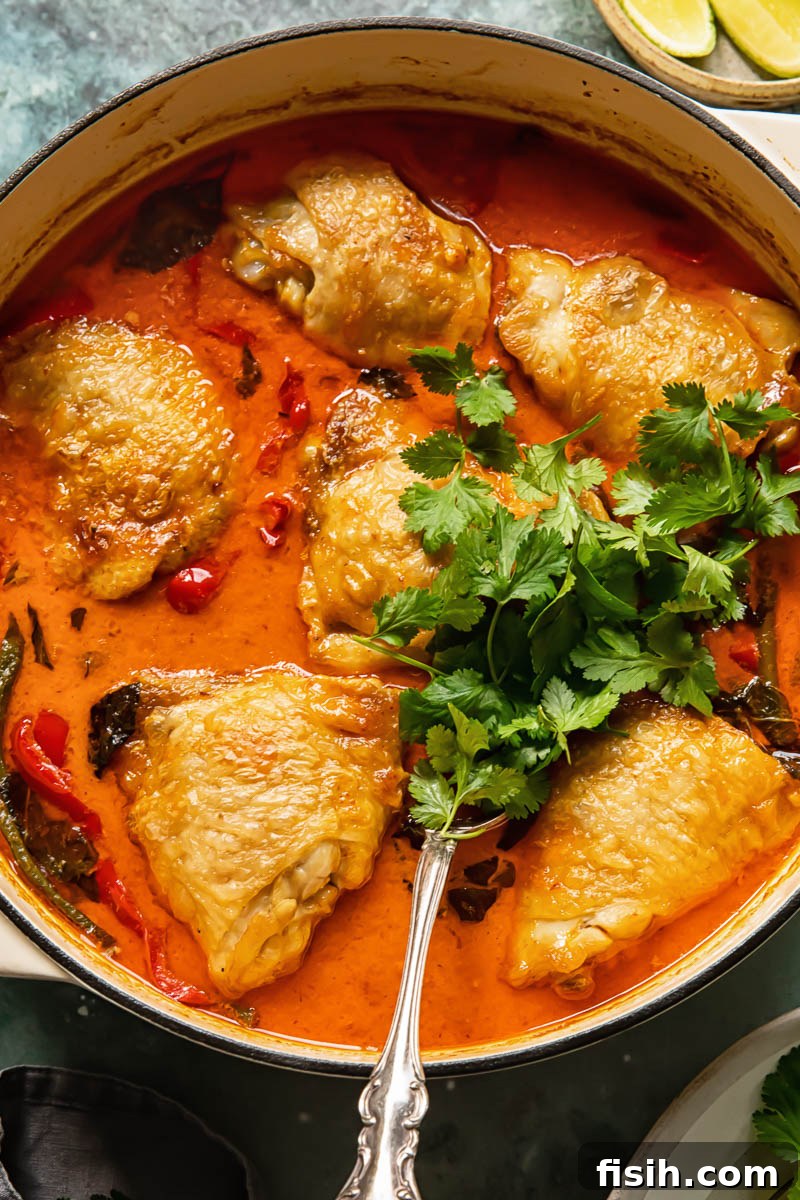
Braised Coconut Curry Chicken Thighs: An Authentic Thai One-Pot Meal
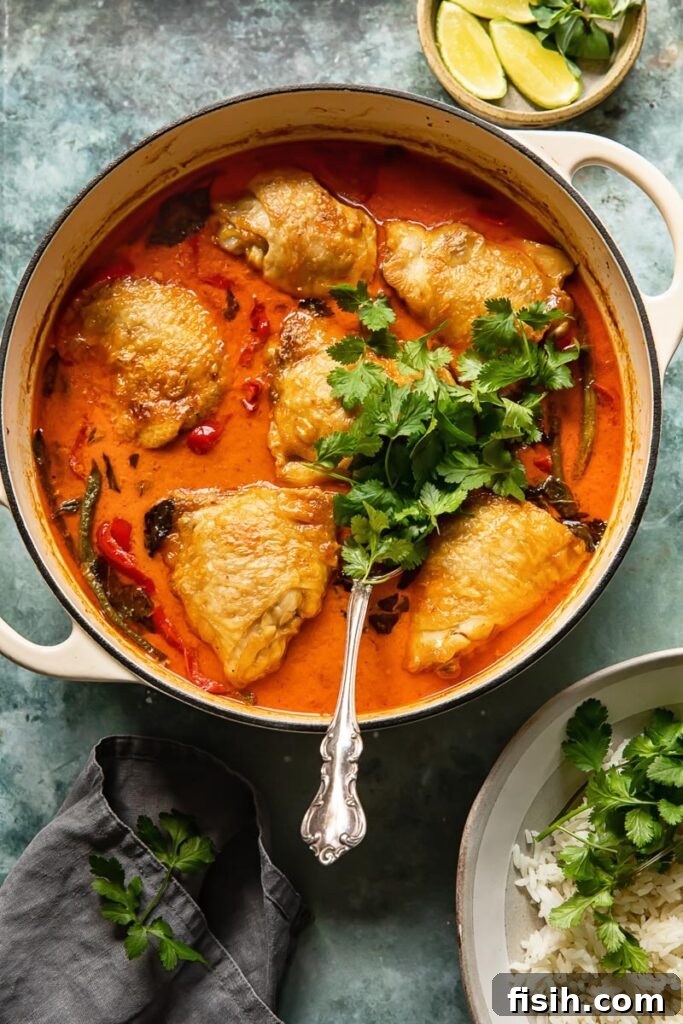
Embrace the vibrant, exotic flavors of Thailand with these incredibly tender and juicy braised coconut curry chicken thighs. Infused with a rich, aromatic red curry sauce, brightened by crunchy green beans and sweet red pepper strips, this dish offers a perfect balance of spicy, sweet, and savory notes. Designed for convenience, it’s a true one-pot wonder, ready to be served over a bed of fluffy rice.
Craving even more authentic Thai heat and flavor? Explore our vegetarian Thai green curry for a wholesome, vegetable-packed option that truly delivers on spice.
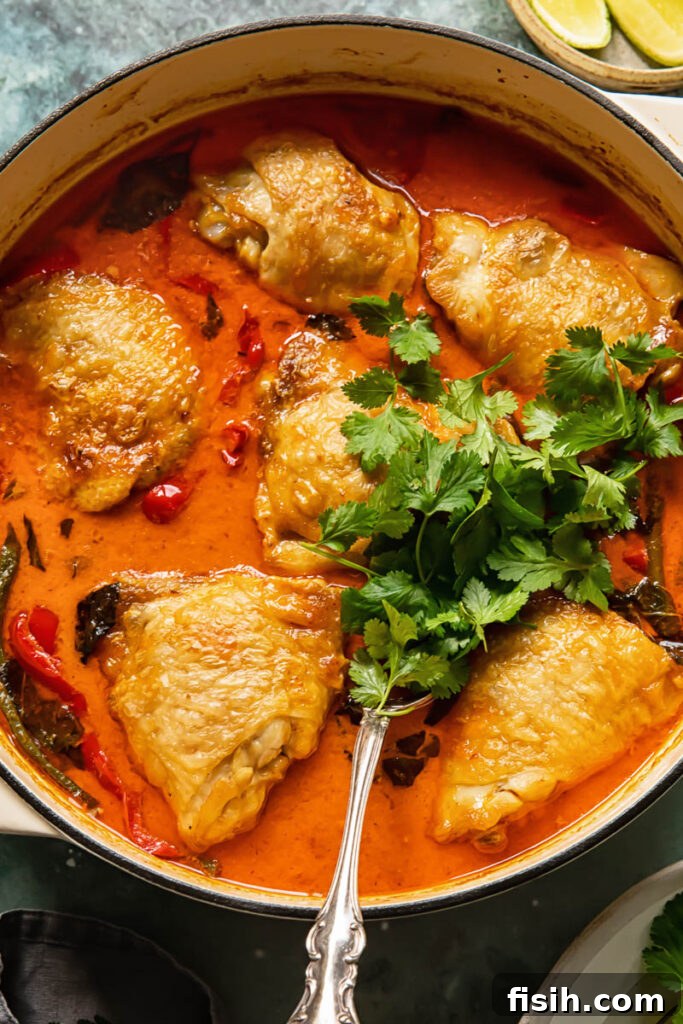
The Art of Braised Chicken Thighs: Flavor and Tenderness Unleashed
Braising, a cooking technique revered in French culinary traditions and beyond, is my absolute favorite method for preparing chicken, especially when it comes to chicken thighs. This masterful approach transforms simple ingredients into an extraordinary dish by combining two essential cooking stages: an initial ‘dry’ searing followed by a slow ‘wet’ cook in a flavorful liquid.
The process begins with browning the meat in a hot pan with a touch of oil. This crucial step, known as searing, is often overlooked but profoundly impacts the final flavor and texture. Firstly, searing helps to “seal” the moisture within the chicken, ensuring the thighs remain incredibly tender and juicy throughout the slow cooking process. Secondly, it initiates the Maillard reaction – a complex chemical process responsible for creating those irresistible golden-brown crusts and hundreds of new flavor compounds, elevating the meat’s aroma and richness. Who can resist the alluring sight and taste of perfectly golden chicken skin?
After searing, the chicken thighs are slowly simmered in a bath of aromatic liquid. This ‘wet’ cooking phase allows the meat to absorb the complex flavors of the sauce, becoming saturated and deeply infused. While wine is a classic braising liquid, as seen in my chicken in sage cream sauce (combining Madeira, chicken stock, and cream) or this delightful French chicken casserole à la Normande (a delicious apple cider braise), braising is incredibly versatile. For those seeking alcohol-free options, recipes like spiced chicken thighs braised in milk or Spanish chicken in bravas sauce (a vibrant tomato-based braise) yield equally succulent and flavor-packed results. These methods consistently deliver beautifully tender thighs brimming with robust flavor, inviting you to experiment in your own kitchen or simply trust in these tried-and-true techniques.
Exploring Thai Chicken Curry: A Culinary Journey
Thai curries are celebrated worldwide for their captivating blend of sweet, sour, salty, and spicy notes, often characterized by the luscious creaminess of coconut milk and the distinctive fragrance of fresh Thai basil. Typically, these curries are prepared as a flavorful, soup-like one-pot meal, harmoniously combining various meats and vegetables.
In Western cuisine, three main types of Thai curries are most popular and easily recognized:
- Thai Green Curry: Often considered the hottest of the trio, its signature verdant hue and fiery kick come from an abundance of green chillies, complemented by the bright zest of fresh lime and other aromatics like galangal and kaffir lime leaves.
- Thai Red Curry: Deriving its rich color from red chillies, this curry offers a robust and punchy flavor profile, often highlighted by the citrusy notes of lemongrass and the savory depth of shrimp paste. Our Thai fish curry is a fantastic example of a red curry base.
- Thai Yellow Curry: Milder and richer, this curry gets its golden color and earthy flavor from turmeric, enriched by creamy coconut milk. It often features ingredients like potatoes and sweet potatoes, creating a heartier meal.
Beyond these well-known varieties, Thailand boasts numerous regional curry variations, each with its unique character. Some incorporate more substantial ingredients like potatoes and peanuts, much like this comforting chicken and sweet potato curry. The beauty of Thai curry lies in its versatility: any type of curry paste can be paired with your preferred protein – be it chicken, beef, pork, fish, prawns, tofu, or simply a medley of fresh vegetables.
At the heart of every authentic Thai curry is an exotic blend of aromatics, traditionally pounded together with a mortar and pestle into a fragrant paste. Ingredients like fresh lemongrass, galangal, kaffir lime zest, cilantro roots, and various chillies contribute to this complex flavor base. While sourcing all raw aromatics can be challenging outside of Asia, there’s no harm in embracing a convenient store-bought hack! High-quality brands like Mae Ploy offer authentic tasting curry pastes that truly capture the essence of Thai cuisine. It’s a fantastic shortcut that delivers genuine flavor without the extensive prep.
If you’re in the mood for Thai flavors but perhaps not a curry, our grilled Thai chicken salad serves up all those crave-worthy sweet, spicy, and tangy notes on a refreshing bed of cool rice noodles.
Expert Recipe Tips and Notes for Perfect Braised Coconut Curry Chicken
- Embrace the Sear: I cannot stress this enough – searing the chicken thighs before braising is non-negotiable! This crucial step creates a deeply flavorful crust through the Maillard reaction, locking in juices and significantly enhancing the overall taste of your curried chicken. It’s a delightful fusion of East and West cooking traditions that truly pays off.
- Choosing Your Chicken: I prefer skin-on, bone-in chicken thighs for braising. The bone adds extra flavor and helps the meat stay moist, while the skin crisps up beautifully. However, if you prefer, skinless and boneless thighs will also work; just be mindful that cooking times might slightly vary. I typically reserve leaner chicken breasts for quicker cooking methods like grilling or sautéing.
- Curry Paste Matters: The quality of your curry paste makes a dramatic difference. With many brands on the market, choosing wisely is key. I’m absolutely devoted to the Thai brand Mae Ploy. They offer red, yellow, and green curry pastes that taste incredibly authentic – fragrant, vibrant, and with a genuine Thai-level kick!
- Adjusting the Heat: Thai curries are known for their spice. If you’re sensitive to heat, simply reduce the amount of curry paste you use. Remember, Mae Ploy’s green curry paste, in particular, is quite hot!
- Full-Fat Coconut Milk is Essential: For a truly creamy, rich, and authentic curry, always opt for full-fat unsweetened coconut milk. Reduced-fat versions are essentially diluted and will result in a thinner, less luxurious sauce, especially if you plan to freeze leftovers. Save yourself the disappointment and stick to full-fat.
- Vegetable Customization: I’ve included vibrant green beans and red bell peppers in this coconut curry, but the options are endless. Other popular choices that work wonderfully include eggplant (aubergine), snow peas, zucchini, mushrooms, or even baby corn. Feel free to use whatever fresh vegetables you have on hand or your personal favorites.
- The Magic of Thai Basil: Thai basil is what truly gives a homemade Thai curry its authentic, intoxicating aroma. One whiff can transport you straight to the bustling markets of Bangkok or the serene beaches of Koh Samui. While it adds an unparalleled layer of flavor, don’t worry if you can’t find a fresh bunch. The curry will still be delicious!
Serving Suggestions for a Complete Thai Feast
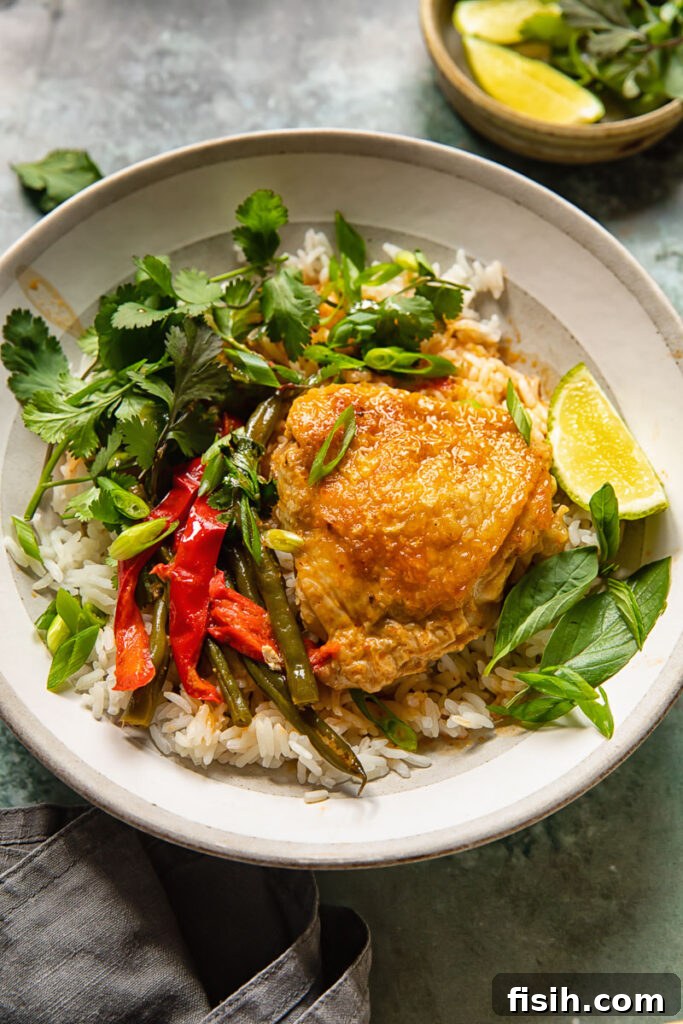
The perfect companion to any Thai curry is, without a doubt, rice. I typically serve this dish with fragrant jasmine rice, which complements the rich sauce beautifully. However, traditional sticky rice is also an excellent choice, offering a delightful texture contrast. For an extra layer of coconut flavor, consider making coconut rice. If you prefer simplicity, plain boiled white rice works perfectly well.
This coconut chicken curry is a complete and balanced meal on its own, truly needing nothing else. However, if you’re planning an elaborate tropical Thai feast, don’t miss out on som tam, or Thai green papaya salad. It’s my absolute favorite Thai dish, offering a refreshing, tangy, and spicy counterpoint to the rich curry – an essential part of any authentic Thai spread!
And while you’re exploring the wonders of Thai street food, why not consider making mini versions of these salmon burgers? Their flavor profile, especially with a spicy slaw, is wonderfully reminiscent of those tiny, delectable Thai fishcakes served on a stick with a bag of chili sauce. Such culinary delights truly make you dream of booking a flight to Thailand!
Storage and Leftovers: Enhancing the Flavor
One of the best qualities of curries is that their flavors often deepen and intensify after a little rest. This braised coconut curry chicken is no exception! A period of refrigeration allows all the aromatic spices and ingredients to meld together, resulting in an even spicier and more complex flavor experience on day two. Leftovers can be safely stored in an airtight container in the fridge for up to 3 days, making it an ideal make-ahead meal.
This Thai chicken curry is also an excellent candidate for freezing, provided you heed my earlier advice about coconut milk. Only full-fat coconut milk will freeze and thaw well, maintaining its creamy consistency. Reduced-fat versions tend to separate and become grainy upon thawing, compromising the texture of your delicious curry. When properly prepared, the curry will keep beautifully in the freezer for up to 3 months.
To enjoy your frozen curry, simply transfer it from the freezer to the fridge the day before to allow it to defrost overnight. Once thawed, reheat it gently in the microwave or on the stovetop over medium heat, stirring occasionally, until the chicken thighs are piping hot all the way through. This ensures a safe and enjoyable meal, full of those incredible Thai flavors.
More Delicious Chicken Thigh Recipes to Explore
- Italian Rosemary Chicken Stew
- Braised Chicken in Creamy Sage Sauce
- Chicken Cacciatore
- One Pan Lemon Chicken Orzo
Braised Coconut Curry Chicken Thighs
Cook: 50 mins
Total: 1 hr
Servings: 6
Ingredients
- 1 tbsp vegetable oil
- 1kg / 2lbs chicken thighs
- Salt, to taste
- 50g / 2½ tbsp Thai red curry paste (I use Mae Ploy brand)
- 400ml / 14oz unsweetened coconut milk, full fat
- 1 tbsp brown sugar
- 1 tsp fish sauce, optional
- 125ml / ½ cup water
- 1 red bell pepper, sliced
- 200g / 7oz green beans, optional
- 4-5 leaves fresh Thai basil
Instructions
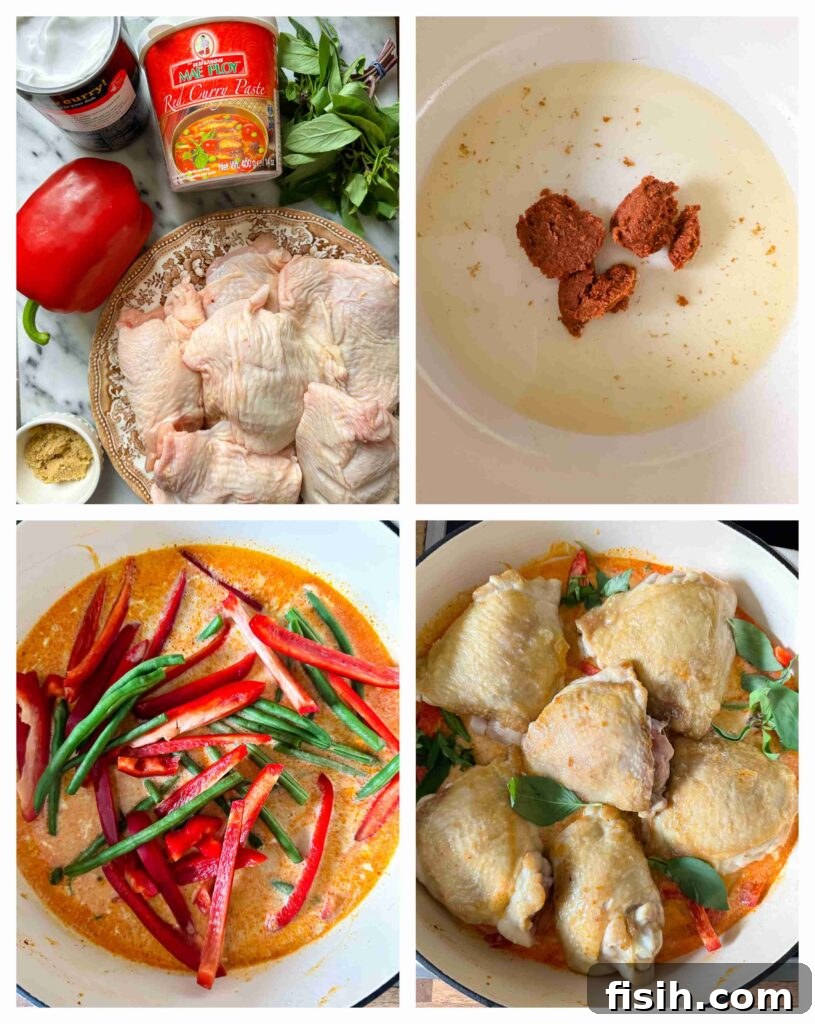
- Preheat the oven to 180C/350F. Heat the vegetable oil in a deep pan. Season chicken thighs with salt and brown them on both sides until slightly golden, but not cooked all the way through. Remove to a separate plate.
- Remove all but 1 tablespoon of fat from the pan. Add the red curry paste and cook, stirring constantly, for about 30 seconds. Then, stir in the coconut milk, brown sugar, fish sauce (if using), and water. Bring the mixture to a low simmer.
- Add the sliced red bell pepper, green beans, and Thai basil leaves to the curry sauce. Carefully place the browned chicken thighs on top of the vegetables and sauce. Cover the pan with a lid and cook in the preheated oven for 25 minutes. After 25 minutes, remove the lid and continue cooking for another 15-20 minutes, or until the chicken thighs are golden and cooked through. Serve immediately with jasmine rice and a lime wedge.
Nutrition
| Carbohydrates: 10g
| Protein: 30g
| Fat: 45g
| Saturated Fat: 22g
| Polyunsaturated Fat: 6g
| Monounsaturated Fat: 12g
| Trans Fat: 0.1g
| Cholesterol: 163mg
| Sodium: 609mg
| Potassium: 638mg
| Fiber: 3g
| Sugar: 7g
| Vitamin A: 2311IU
| Vitamin C: 32mg
| Calcium: 53mg
| Iron: 3mg
Nutrition information is automatically calculated, so should only be used as an approximation.
This Braised Coconut Curry Chicken Thighs recipe is more than just a meal; it’s an invitation to experience the depth and vibrancy of Thai cuisine from the comfort of your own kitchen. With its succulent chicken, rich sauce, and fresh vegetables, it promises to be a memorable dish that you’ll want to make again and again. Enjoy the journey of flavors!