
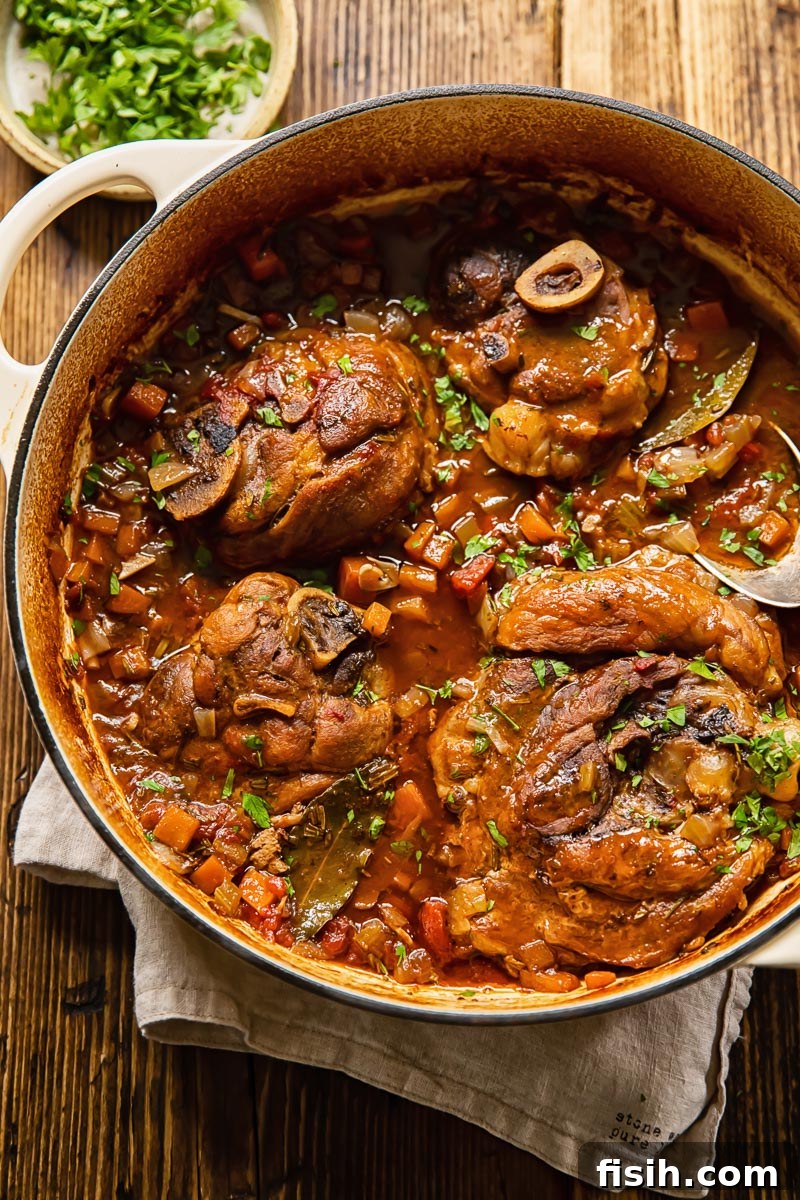
Imagine tender, succulent meat, slow-cooked to perfection, infused with aromatic wines, and gently braised until it practically melts in your mouth. This isn’t just a meal; it’s an experience, a journey to the heart of Italian comfort food. We’re talking about Osso Buco, a dish renowned for its rich, marrow-infused gravy and unparalleled depth of flavor. While traditionally made with veal, this accessible and equally spectacular version features juicy, bone-in pork shanks, transforming it into a hearty Pork Osso Buco. Prepare to elevate your culinary repertoire, as this dish is ready to claim its rightful place as your new favorite Sunday centerpiece.
For those who appreciate classic slow-cooked dishes, you might also enjoy the French elegance of Beef Bourguignon. Also braised in wine with tender carrots, it offers a different yet equally comforting experience, typically using a robust rump roasting joint or economical stewing steak. Both dishes are ideal for serving with your most cherished roast day accompaniments.
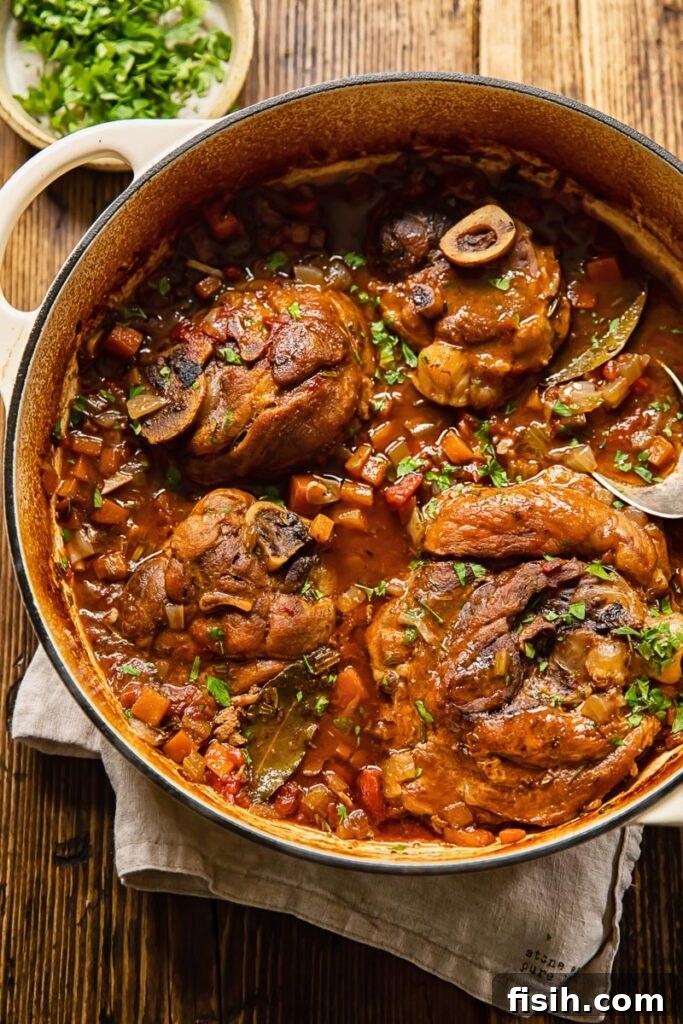
Pork Osso Buco: A Taste of Northern Italy
Osso Buco, a name that translates literally to “bone with a hole,” is a culinary gem originating from the Lombardy region in Northern Italy. This area, characterized by its mountainous terrain and cooler climate, profoundly influences its cuisine. Northern Italian cooking often highlights ingredients that flourish in such an environment: rich, fatty meats, creamy dairy products, staple grains like polenta and potatoes, and robust root vegetables. These components frequently come together in thick, hearty sauces, perfectly embodied by the magnificent Osso Buco.
In stark contrast, the sun-drenched southern regions of Italy favor lighter fare, showcasing abundant fresh seafood, the golden essence of olive oil, and artisanal bread. While both styles offer distinct delights, the comforting embrace of Osso Buco stands out as a quintessential Northern Italian experience. It’s a dish designed to warm the soul and satisfy even the most discerning palate.
At its heart, Osso Buco is a luxurious, slow-cooked stew. It masterfully combines earthy vegetables – vibrant carrots, pungent onions, and crisp celery – with a wine-infused gravy that envelops and braises a cross-cut shank. The magic lies in using shanks, specifically from the lower part of the animal’s leg. These cuts are ideal for slow cooking due to their rich abundance of connective tissue. Over hours of gentle simmering, this tissue renders down, transforming into a sublime, gelatinous juice that naturally thickens and enriches the sauce, creating an unctuous mouthfeel that is truly unforgettable.
Furthermore, shanks boast a superior bone-to-meat ratio, making the bone marrow a central player in the flavor profile. As the dish slowly cooks, the marrow melts into the gravy, intensifying its richness and lending an unimaginably luscious texture. This process is crucial to what makes Osso Buco so distinctive and deeply satisfying. Traditionally, veal shanks were the cut of choice, lending a delicate yet rich flavor. However, adapting this classic with more readily available pork shanks yields an equally delicious and immensely satisfying result. Beef shanks also make a popular and sublime alternative, proving that the technique and the marrow are key, regardless of the specific meat.
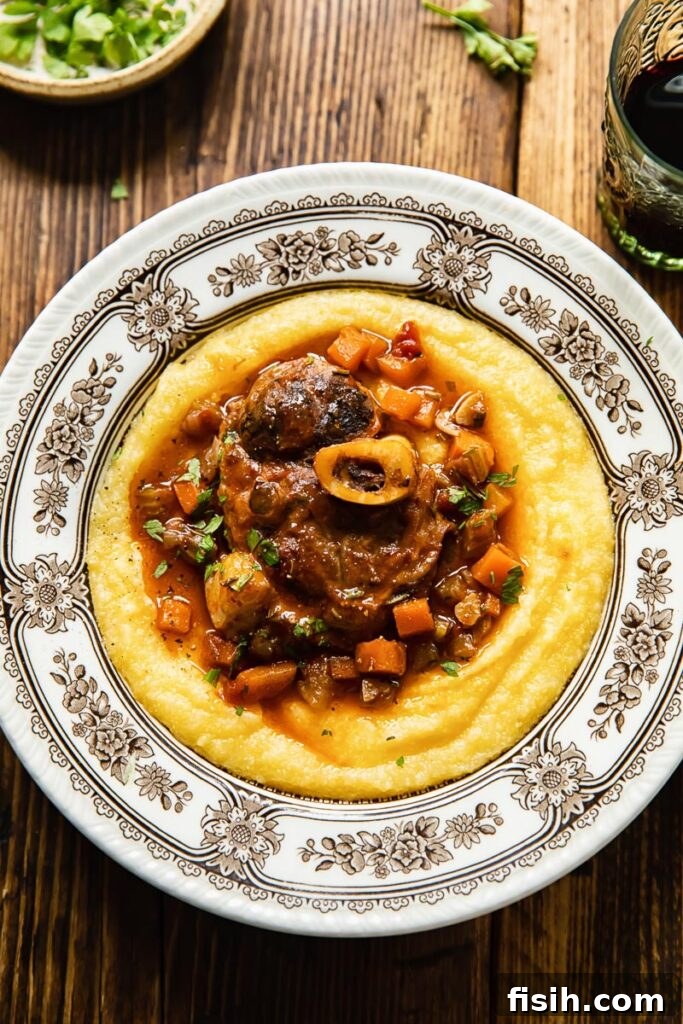
Recipe Tips for Perfect Pork Osso Buco
- Choosing Your Meat: This recipe utilizes pork shanks, which are a fantastic and often more economical alternative to traditional veal shanks, while still delivering incredible flavor and texture. The same slow-cooking method also works beautifully with beef shanks, offering versatility for your preferences. When selecting pork shanks, look for bone-in cuts with a good amount of meat and visible marrow.
- The Ideal Pot: A deep and wide cast-iron pan or Dutch oven is highly recommended for cooking osso buco. Its generous width allows for proper browning of the meat and ensures that the sauce can reduce and concentrate to the perfect consistency. A wider base also lets the pork shanks nestle comfortably in a single layer, maximizing contact with the flavorful braising liquid. If you only have a deep and narrow pot, you might need to stack the meat. In this case, ensure you uncover the pot for the last 30 minutes of cooking to allow some liquid to evaporate and the sauce to thicken appropriately.
- Wine Selection: The choice of wine is crucial for deglazing the pan and building the sauce’s foundation. Opt for a dry white or red wine. A dry white wine will contribute a lighter, more aromatic profile, while a dry red will add a deeper, more robust flavor. If you’re a fan of cooking with Vermouth – which also makes excellent cocktails – it can be a fantastic, aromatic substitute for dry wine in this recipe, imparting a unique depth.
- Herbs: Fresh vs. Dried: While fresh herbs like rosemary and thyme offer an unbeatable vibrancy and aroma, dried herbs are perfectly acceptable for this recipe, especially if fresh ones aren’t readily available or you find yourself wasting them. Dried herbs tend to be more potent, so use about one-third of the amount specified for fresh herbs. Integrate them early in the cooking process to allow their flavors to fully release.
- Tomato Level: The “tomato factor” in this dish is highly adjustable, catering to those who prefer a less tomato-forward sauce. This recipe intentionally keeps the canned chopped tomatoes to a modest ½ cup, allowing the rich, savory flavor of the pork and the wine-infused gravy to truly shine. This approach results in a sauce that is more brothy and deeply savory, rather than being overwhelmed by the sometimes tart intensity of tinned tomatoes. Feel free to slightly increase the amount if you desire a more pronounced tomato presence.
- Preparing Pork Shanks: Some pork shanks may come with a tough rind or an excessive layer of fat. Carefully remove the rind and trim off any significant layers of exterior fat before cooking. If any fat remains on the outside, score it with a sharp knife before browning. This simple step prevents the shanks from curling up at the edges as they cook, ensuring even browning and a more appealing presentation.
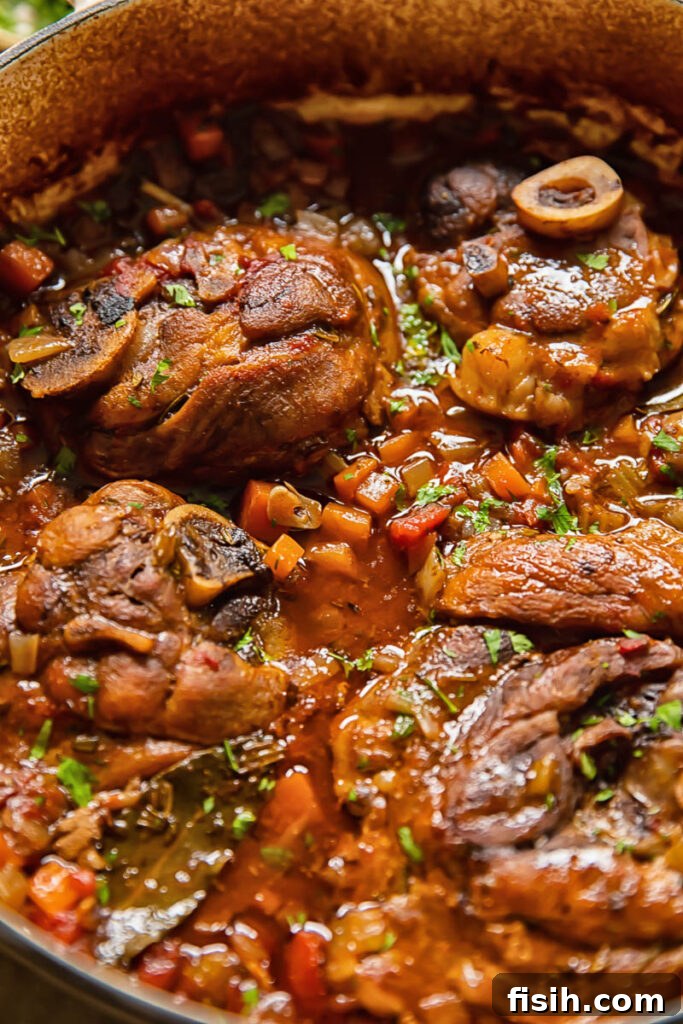
Serving Suggestions for Pork Osso Buco
To fully appreciate this sumptuous meaty wonder, serve it Lombardy style, traditionally over a bed of creamy, dreamy polenta or alongside a vibrant, golden saffron risotto. The mild, starchy base of polenta beautifully soaks up the rich, marrow-infused gravy, while saffron risotto adds an aromatic counterpoint and elegant texture. For a vibrant green side, consider steamed cavolo nero (black kale), offering a slight bitterness that perfectly cuts through the richness of the meat, or a light and fresh pan-fried zucchini with basil and pecorino. Don’t forget to add a generous portion of Tuscan butter beans with spinach and sun-dried tomatoes to the side, ensuring a truly filling and satisfying meal for everyone at the table.
Finally, no Osso Buco experience is complete without a spirited sprinkle of gremolata. Gremolata is a bright, zesty, and highly aromatic condiment typically made from finely chopped fresh parsley, fragrant lemon zest, and pungent garlic, often finished with a drizzle of quality olive oil. This fresh, unctuous sauce provides a brilliant contrast to the rich, slow-cooked meat, cutting through its depth with a burst of citrusy freshness and herbaceous notes. It takes the dish to an entirely new dimension of flavor, offering a professional finishing touch that truly elevates the entire meal.
Storage and Leftovers of Pork Osso Buco
Preparing this exquisite Italian pork recipe is an investment of time, but it’s an investment that pays dividends, especially when it comes to leftovers. Fortunately, Osso Buco is one of those remarkable dishes that actually improves with a bit of rest! The flavors meld and deepen overnight, creating an even more complex and satisfying experience on subsequent days. This makes it an ideal candidate for meal prepping on the weekend to enjoy during the busier weeknights.
Once cooked, allow the pork osso buco to cool completely before transferring it to an airtight container. Stored properly in the refrigerator, it will keep beautifully for up to 4 days. As mentioned, the already flavorsome dish will only intensify over this time, so you can anticipate an even more mouthwatering midweek meal that requires minimal effort to reheat.
When you’re ready to enjoy your leftovers, reheat the pork osso buco slowly and gently. You can either warm it on the stovetop over low heat, stirring occasionally, until the pork is heated through to a safe temperature. Alternatively, reheat it in the oven at 165°C (325°F) for approximately 30-40 minutes, or until thoroughly hot. Always use a meat thermometer to ensure the pork reaches a food-safe internal temperature of 74°C (165°F) before serving, guaranteeing both safety and enjoyment.
More Italian-Inspired Recipes to Savor
- Slow Cooker Italian Beef Stew: Another hearty, slow-cooked marvel perfect for cooler evenings.
- Chicken Broccoli Alfredo: A classic creamy pasta dish that’s quick to prepare and universally loved.
- Tortelloni with Creamy Tomato Sauce and Spinach: Indulgent and satisfying, offering a wonderful balance of flavors and textures.
- Italian Rosemary Chicken Stew: Fragrant with herbs and rich in flavor, this stew is a delightful culinary embrace.
Pork Osso Buco Recipe
Julia Frey of Vikalinka
15 mins
2 hrs 30 mins
2 hrs 45 mins
4 people

Equipment
-
Cast iron casserole dish
-
Meat thermometer
Ingredients
- 1 kg / 2.2 lbs pork osso buco (4 pieces)
- Salt
- Pepper
- 1 tbsp olive oil
- 1 carrot, diced
- 1 onion, diced
- 1 celery rib, diced
- 2 cloves garlic, sliced
- 2 rosemary sprigs or 1 tsp dried rosemary, or thyme equivalent
- 2 bay leaves
- 125ml / 1/2 cup dry white wine or red wine
- 250ml / 1 cup chicken stock
- 125ml / 1/2 cup canned chopped tomatoes
Instructions
-
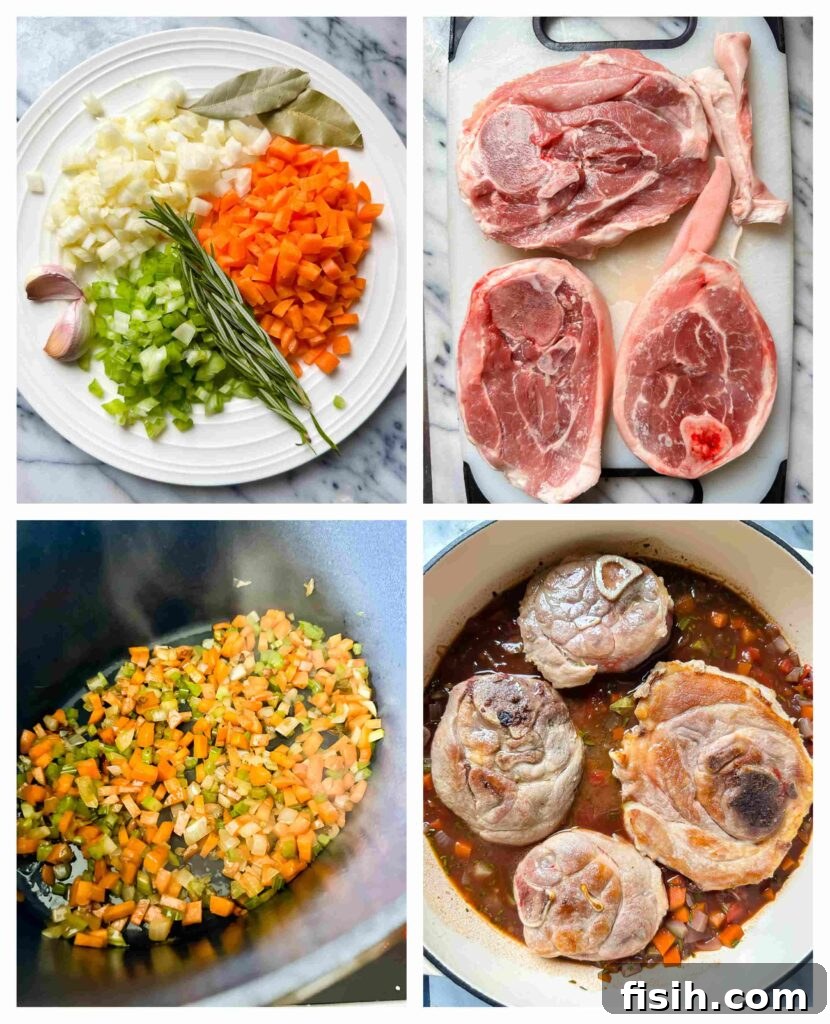
If your pork osso buco chops have a pork rind, carefully trim it off along with any excess fat. Season the shanks generously with salt and freshly ground pepper. In a large, hot cast-iron casserole dish (Dutch Oven) or heavy-bottomed pot, add the olive oil and brown the pork shanks until golden on both sides. This step is crucial for developing deep flavor. Remove the browned pork from the pan and set it aside.
-
To the same pot, add the diced carrots, onions, and celery. Cook over low heat for about 10 minutes until softened and translucent, scraping up any browned bits from the bottom of the pan – these are packed with flavor. Add the sliced garlic, fresh rosemary (or thyme), and bay leaves, cooking for another 30 seconds until fragrant. Deglaze the pan with the dry white or red wine, scraping vigorously to release all the flavorful fond. Let the wine bubble and reduce for a couple of minutes. Then, stir in the chicken stock and canned chopped tomatoes until well combined. Return the browned pork osso buco pieces to the pot, ensuring they are partially submerged and coated in the aromatic sauce.
-
Reduce the heat to low, cover the pot tightly with a lid, and simmer gently for 1 hour and 20 minutes. After this time, uncover the pot and continue to simmer for an additional 10-15 minutes, allowing the sauce to thicken slightly and the flavors to concentrate. Alternatively, for oven cooking, place the covered pot in a preheated oven at 150°C (300°F) for 1 hour and 20 minutes. Then, remove the lid and bake for another 10 minutes to help caramelize the pork and reduce the sauce slightly, enhancing its richness.
Nutrition
Carbohydrates: 9g |
Protein: 50g |
Fat: 13g |
Saturated Fat: 3g |
Polyunsaturated Fat: 1g |
Monounsaturated Fat: 6g |
Cholesterol: 189mg |
Sodium: 360mg |
Potassium: 1032mg |
Fiber: 1g |
Sugar: 4g |
Vitamin A: 2596IU |
Vitamin C: 7mg |
Calcium: 80mg |
Iron: 3mg
Nutrition information is automatically calculated, so should only be used as an approximation.