
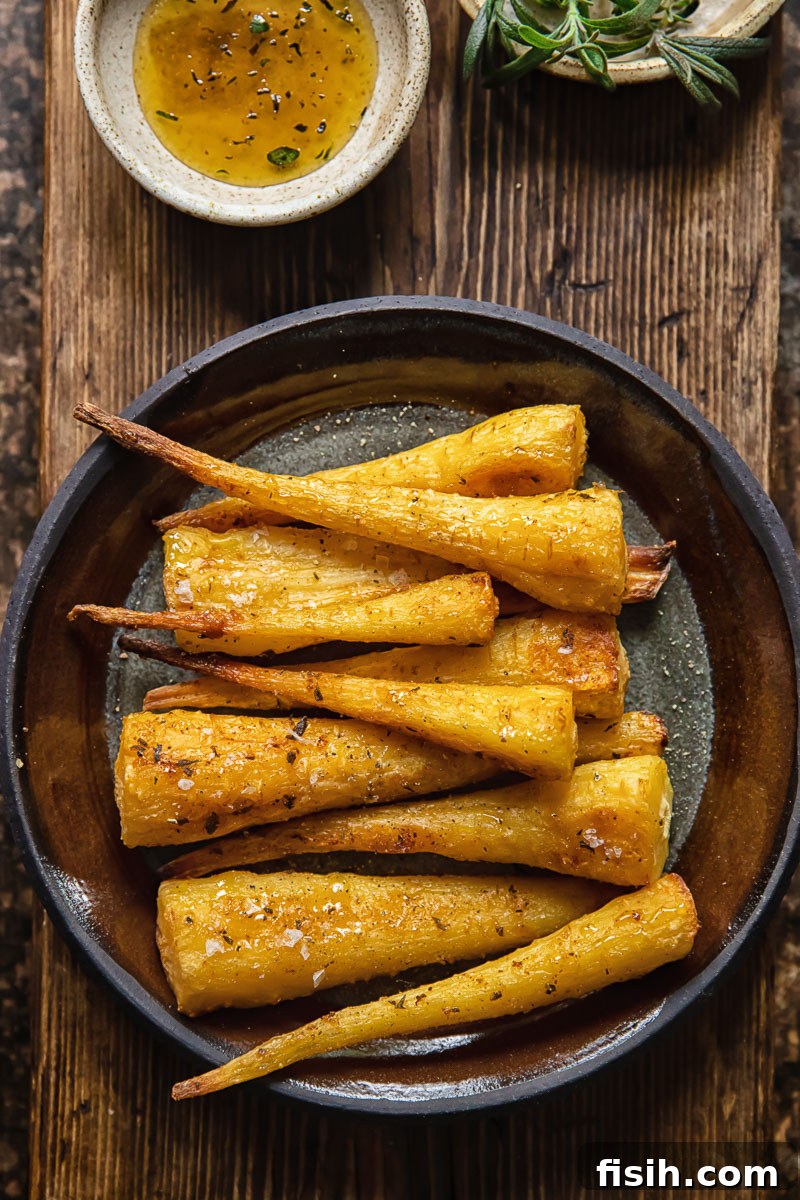
Honey Garlic Roasted Parsnips: The Ultimate Golden & Crispy Side Dish
Elevate your dinner table with these spectacular roasted parsnips! Each bite promises a delightful contrast: gloriously golden and irresistibly crispy on the outside, yielding to a tender, fluffy interior. Infused with the irresistible sweetness of honey and the pungent warmth of garlic, these parsnips are more than just a side dish; they are a culinary revelation. Whether gracing your festive holiday spread or complementing a simple weeknight roast, their unique flavor profile and satisfying texture make them an absolute essential for any meal.
While you’re dreaming of these perfect roasties, don’t miss our equally stunning Maple Glazed Carrots for another fantastic side dish option that will impress everyone at your table.
Discovering the Humble Parsnip: A Root Vegetable Renaissance
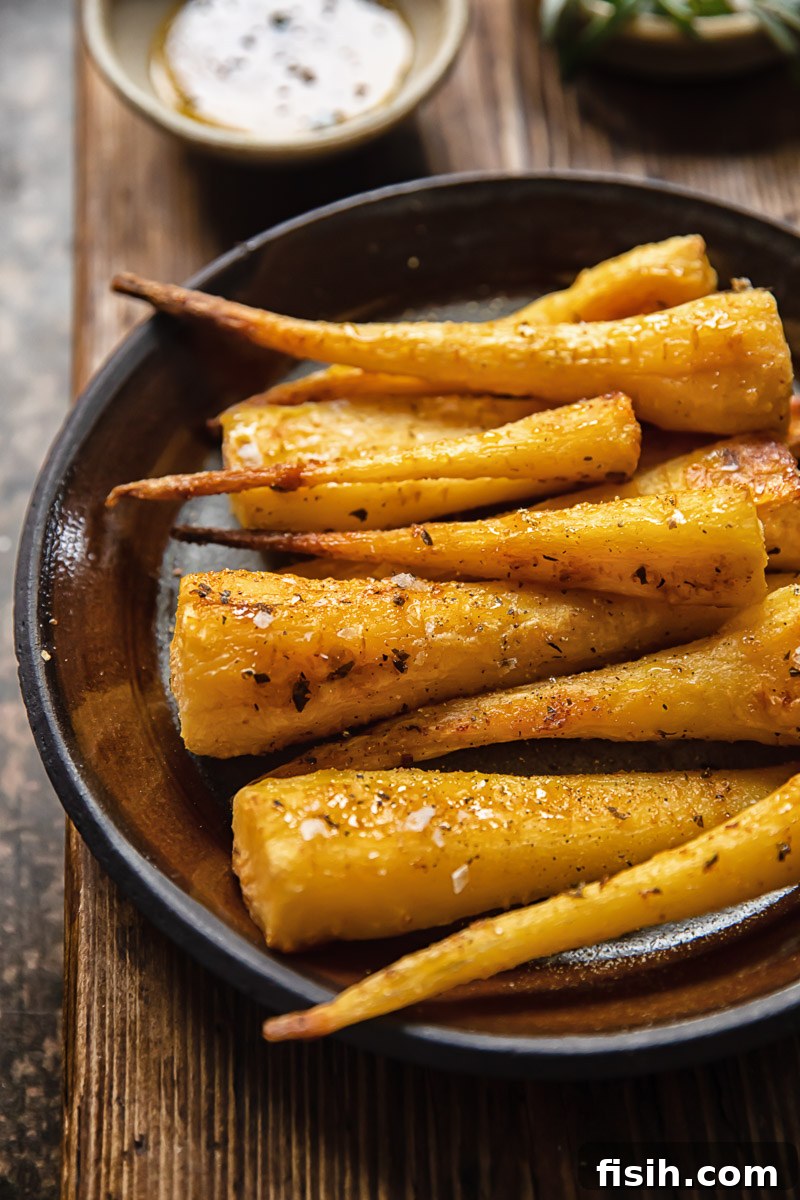
For those looking to diversify their vegetable repertoire, this recipe offers the perfect introduction to the often-overlooked parsnip. Many, myself included, only truly discovered the culinary delights of parsnips after encountering them as a staple of the British Sunday roast – a cherished weekly tradition. In the UK, parsnips hold a prominent position in the world of vegetables, a recognition they profoundly deserve.
Often overshadowed by their vibrant orange cousin, the carrot, parsnips possess a unique charm. They are root vegetables with a distinctive earthy, slightly sweet flavor that becomes wonderfully pronounced and caramelized when roasted. Beyond roasting, parsnips are incredibly versatile; they can be transformed into comforting soups, hearty stews, elegant gratins, or even puréed for a creamy side. However, roasting remains my absolute favorite method, as it unlocks their full potential for flavor and texture, turning a simple root into a gourmet delight.
Why These Honey Garlic Roasted Parsnips Are a Must-Try
If you’re new to parsnips, there’s no need for apprehension. Their close botanical relationship to carrots means their flavor profile, while distinct, won’t be entirely unfamiliar. Like carrots, parsnips are economically priced and similar in shape, yet they offer a less sweet, more earthy taste. This subtle earthiness is beautifully balanced by the roasting process, which naturally enhances their inherent sweetness, making them incredibly appealing even to those with a skeptical palate.
When roasted with a savory blend of herbs and spices, parsnips can delightfully mimic the satisfying texture of roasted potatoes, but with a significant advantage: they are notably lower in carbohydrates. This makes them an excellent choice for anyone following a low-carb diet. Beyond their carb-friendly nature, parsnips are also low in calories, yet packed with fiber and beneficial antioxidants, truly earning their title as a nutritional powerhouse. Incorporating them into your diet is a delicious way to boost your intake of essential nutrients.
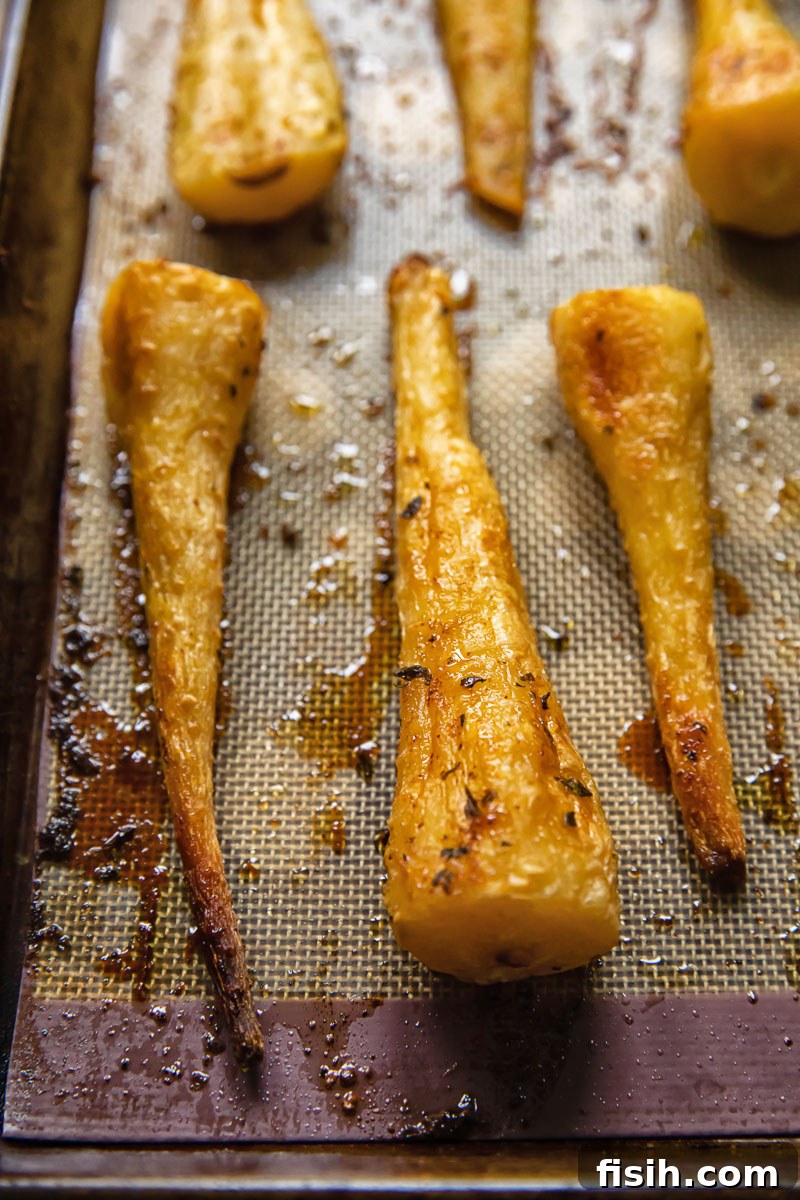
My preferred method of cooking parsnips is undoubtedly roasting. The high heat not only intensifies their natural sweetness but also works wonders on their texture. A light coating of olive oil ensures they develop an irresistible crispy, golden-brown exterior, while their core remains wonderfully soft and tender. This textural interplay is what makes roasted vegetables so exceptional. It’s a technique I frequently employ to bring out the best in many vegetables, as demonstrated in my popular recipes for Roasted Garlicky Brussels Sprouts and Carrots and Roasted Parmesan Broccoli.
Mastering the Roast: Essential Tips for Perfect Honey Garlic Parsnips
- To Peel or Not to Peel? While not strictly necessary, I highly recommend peeling your parsnips before roasting. The peeled surface tends to crisp up more beautifully, contributing to that desirable golden crunch. If you opt to cook them unpeeled, ensure you scrub them thoroughly to remove any dirt or impurities.
- Uniformity for Even Cooking: For optimal results, ensure your parsnips are roughly similar in size. If you have larger parsnips, cut them lengthwise into halves or quarters, and chop them into shorter segments (around 2-3 inches). This uniformity is key to guaranteeing they all cook evenly and achieve that perfect texture simultaneously.
- The Power of Par-Boiling: Some recipes call for roasting parsnips from raw, but I’ve found that a quick 5-minute par-boil before roasting makes a significant difference. This brief pre-cook softens the interior, speeding up the overall roasting time and resulting in an incredibly fluffy, melt-in-your-mouth texture once roasted. After par-boiling, drain them well and allow them to steam dry in a colander for a couple of minutes to remove excess moisture – this helps with crispiness.
- The Triple Glaze Technique for Unmatched Flavor & Texture: Our unique triple-glazing method is crucial for achieving that signature golden, crispy exterior and rich, complex flavor.
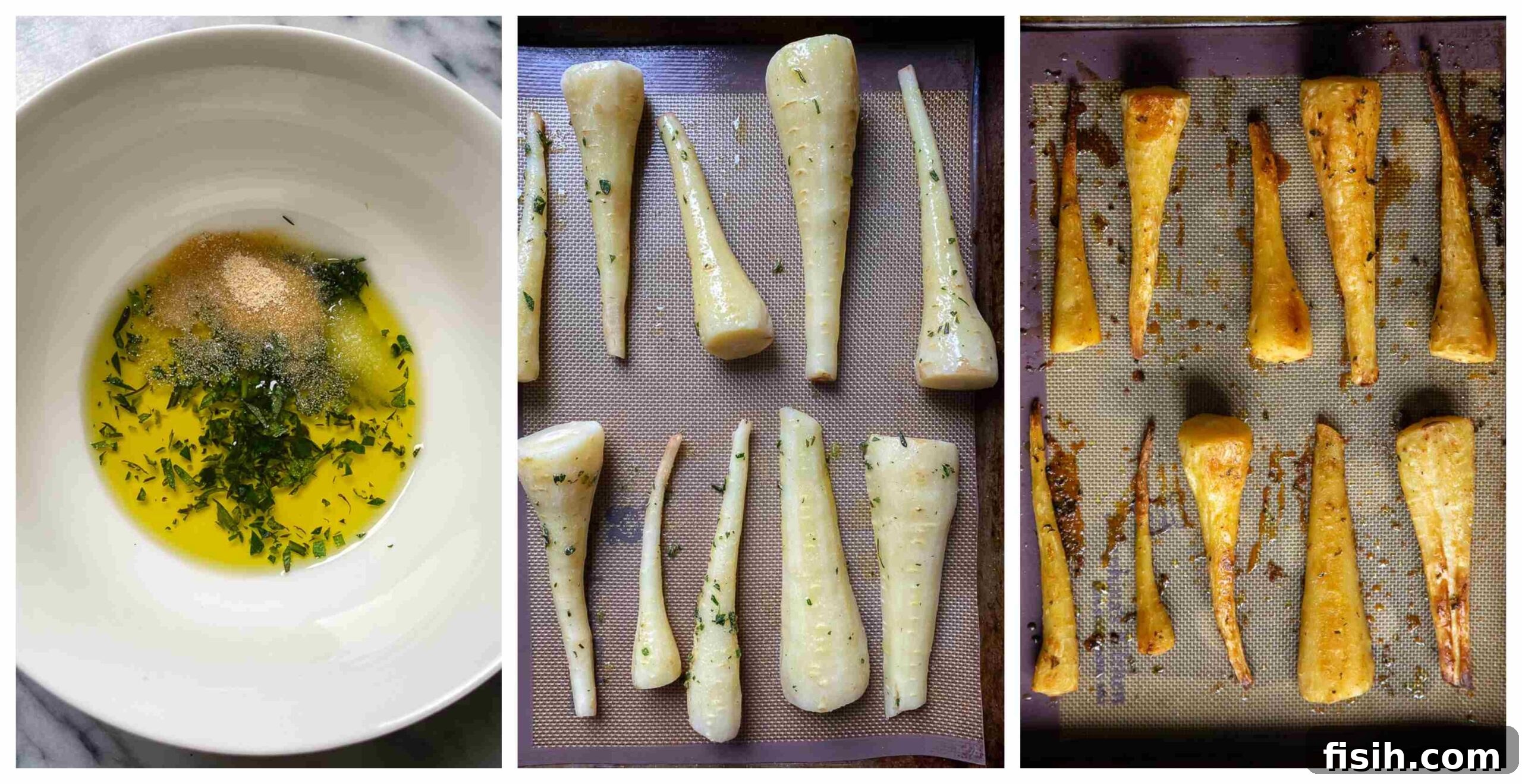
- First Glaze (Initial Crisping): The first application involves a savory blend of olive oil, fresh rosemary, garlic powder, and a pinch of salt. This coating goes on before the initial roast, helping to develop that fantastic crispy exterior and infuse the parsnips with aromatic flavors from the start.
- Second Glaze (Caramelization & Sweetness): After the parsnips have had a chance to roast and start tenderizing, we introduce the honey and Dijon mustard glaze. Adding this mixture too early would cause the sugars in the honey to burn before the parsnips are properly cooked through. This mid-roast application allows the honey to caramelize beautifully, creating a sticky-sweet, golden-brown crust. The Dijon mustard is essential here, providing a subtle tang that perfectly balances the sweetness of the honey, preventing the dish from becoming overly cloying. If you’re not a fan of mustard, you can omit it, but I highly recommend trying it for that perfect balance.
- Third Glaze (Finishing Touch): For an extra layer of glossy sweetness and an intensified flavor, brush the freshly roasted parsnips with any remaining honey-mustard mixture immediately after taking them out of the oven. This final glaze ensures maximum flavor absorption and a truly irresistible finish.
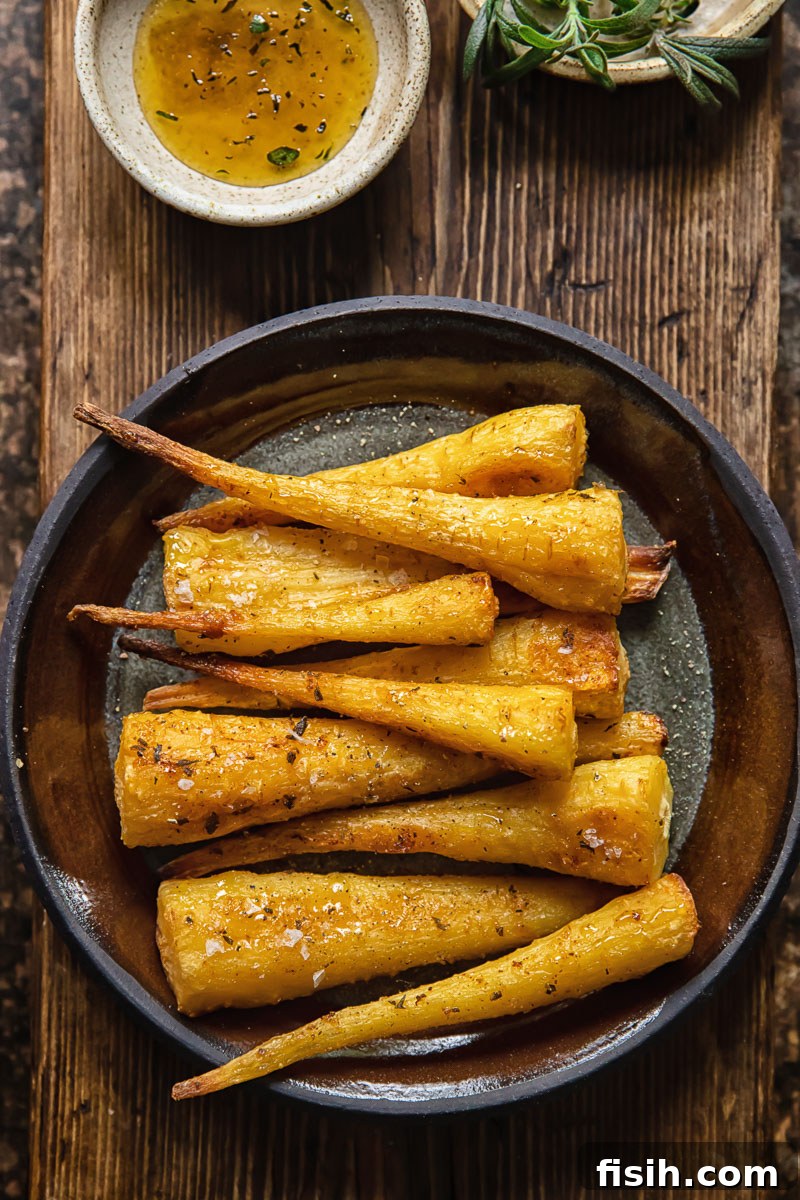
Serving Suggestions: Beyond the Holiday Feast
While these honey garlic roasted parsnips are an undisputed star on any holiday table – think Thanksgiving or Christmas feasts – their exquisite taste and minimal effort required mean they are perfectly suited for any roast dinner, any time of the year. Their sweet and savory profile makes them incredibly versatile.
As a wonderfully sweet and savory side, they pair impeccably with robust main courses. Imagine them alongside a succulent roast beef, tender pork loin, or a perfectly seasoned roast chicken. The harmonious balance between the sweetness of the parsnips and the richness of the meat creates a truly complete and satisfying meal. Don’t limit these delights to special occasions; they elevate even the simplest Sunday lunch into something extraordinary.
Storage and Reheating: Enjoying Your Parsnips Longer
Any leftover roasted parsnips can be stored conveniently in an airtight container and refrigerated for up to 3-4 days. This makes them an excellent candidate for meal prep or enjoying flavorful sides throughout the week.
When it comes to reheating, you have several flexible options. While they can certainly be warmed in a microwave or even an air fryer for speed, I find the best way to revive their crispy exterior is by returning them to the oven. Simply preheat your oven to 200C/400F and place the parsnips on a baking sheet for 5-10 minutes, or until they are thoroughly heated through and regain some of their delightful crispness. Avoid overcrowding the tray to ensure even reheating.
More Favourite Side Dishes to Explore
- Garlic Butter Sautéed Cauliflower with Breadcrumbs
- Creamy Celeriac and Potato Mash
- Brussels Sprouts with Honey and Bacon
- Savoury Sweet Potato Casserole
Honey Garlic Roasted Parsnips
Equipment
-
Enamel colander
-
Baking sheet
-
Pastry brush
Ingredients
- 750g / 1½ lbs parsnips
- 2 tbsp olive oil
- 1 sprig fresh rosemary, leaves chopped
- 1/2 tsp garlic powder
- 1/2 tsp salt
- 3 tbsp honey
- 1 tsp Dijon mustard
Instructions
-
Preheat the oven to 350F/180C. Peel the parsnips and cut them to a uniform size (approximately 2-3 inches long). Boil for 5 minutes until slightly tender, then drain thoroughly and allow them to steam dry in a colander for a couple of minutes to remove excess moisture.
-
Meanwhile, finely chop the fresh rosemary leaves. In a small bowl, combine the chopped rosemary, olive oil, garlic powder, and salt. Mix well.
-
Arrange the parsnips in a single layer on a shallow baking pan lined with parchment paper. Brush them evenly with the herb and oil mixture. Roast in the preheated oven for 25 minutes. After 25 minutes, remove the pan from the oven, flip the parsnips over, and continue to roast for another 15 minutes.
-
While the parsnips are roasting for the second interval, add the honey and Dijon mustard to the same bowl you used for the oil and herbs. Mix everything until well combined to create your honey-mustard glaze. Take the parsnips out of the oven after their 15-minute roast, and generously brush the honey-mustard glaze all over them. Return to the oven and roast for a final 10 minutes, allowing the glaze to caramelize. Before serving, give them one last brush with any remaining glaze for an extra burst of flavor and shine.
Recipe Notes for Success
- Peeling for Crispiness: While optional, peeling the parsnips before roasting significantly helps the surface achieve a desirable crispness. If you prefer to leave them unpeeled, ensure they are thoroughly scrubbed clean.
- Even Cooking is Key: To guarantee all your parsnips cook perfectly and evenly, ensure they are uniform in size. Trim larger parsnips into smaller, consistent pieces.
- The Advantage of Par-Boiling: A quick 5-minute par-boil is highly recommended. This step pre-softens the parsnips, reducing overall roasting time and contributing to a wonderfully fluffy interior texture. Don’t forget to drain and dry them thoroughly after boiling!
- Why Triple Glaze? The multiple glazing steps are not excessive; each serves a distinct purpose for ultimate flavor and texture. The initial glaze seasons and promotes crispiness, the second facilitates caramelization without burning, and the final glaze adds a perfect finishing touch of sweetness and shine. Refer to the “Mastering the Roast” section above for a detailed explanation of each step.
Nutrition Information
Nutrition information is automatically calculated, so should only be used as an approximation.
Tried this recipe?Let us know how it was!