
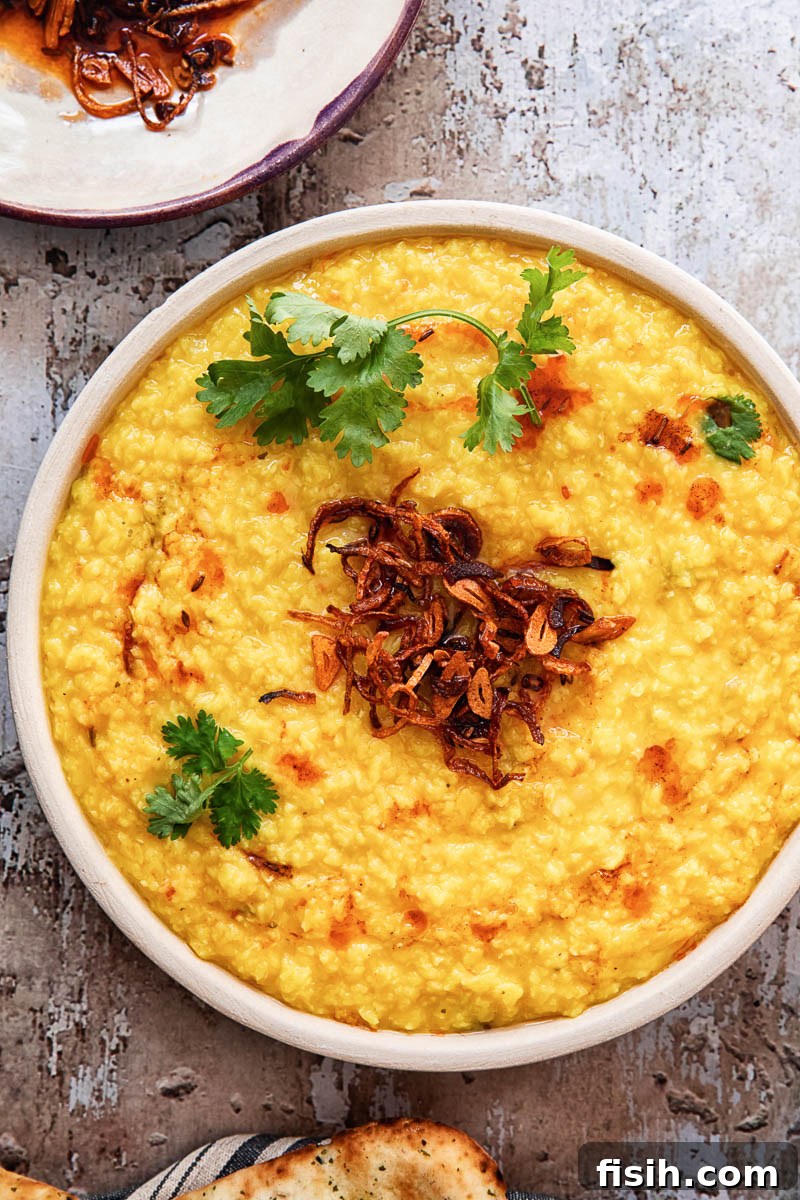
Creamy, savory, and bursting with aromatic spices, Moong Dal Tadka is more than just a lentil curry; it’s a staple of Indian cuisine, cherished for its comforting warmth and incredible flavor. This traditional dish, elevated by a fragrant tempering of garlic and onion, promises a culinary journey that delights the senses and nourishes the soul.
For those who appreciate the versatility and heartwarming taste of lentils, exploring various dal preparations is a must. If you’re eager to delve deeper into the world of Indian dals, don’t miss our legendary Dal Makhani recipe – a rich and creamy delight that consistently earns rave reviews.
The Enduring Allure of Dal
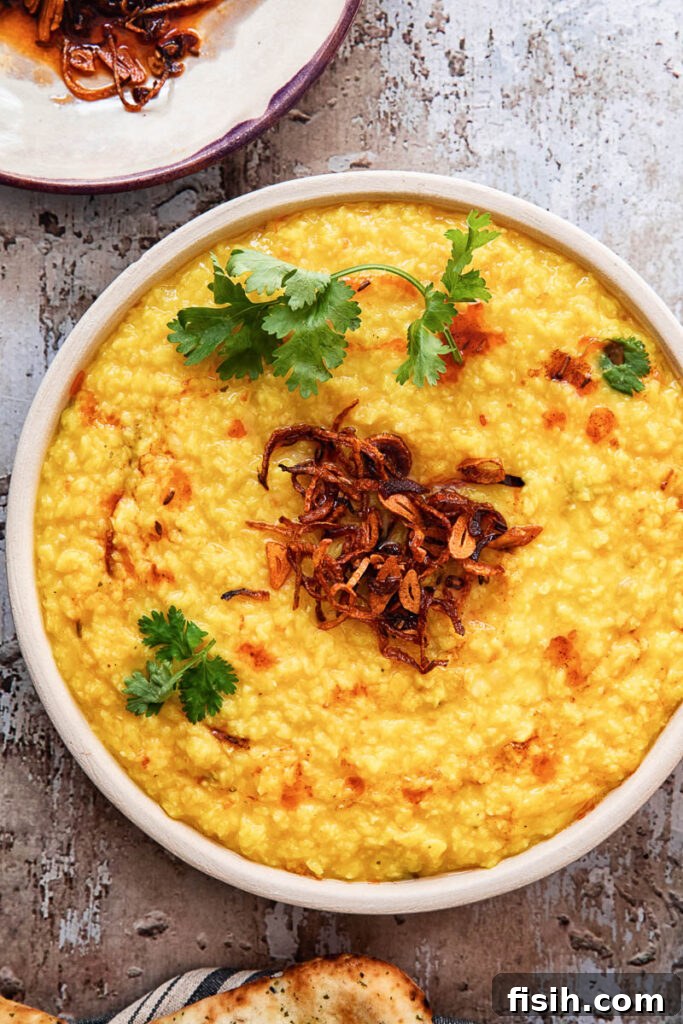
My culinary adventures have fostered a profound love affair with dal in all its forms. The humble lentil, in its various guises, possesses an extraordinary ability to infuse a meal with profound flavor and invaluable nutrition. Whether served as a delightful side dish or taking center stage as a hearty main, dal embodies culinary perfection. It’s a testament to simple ingredients coming together to create something truly magical.
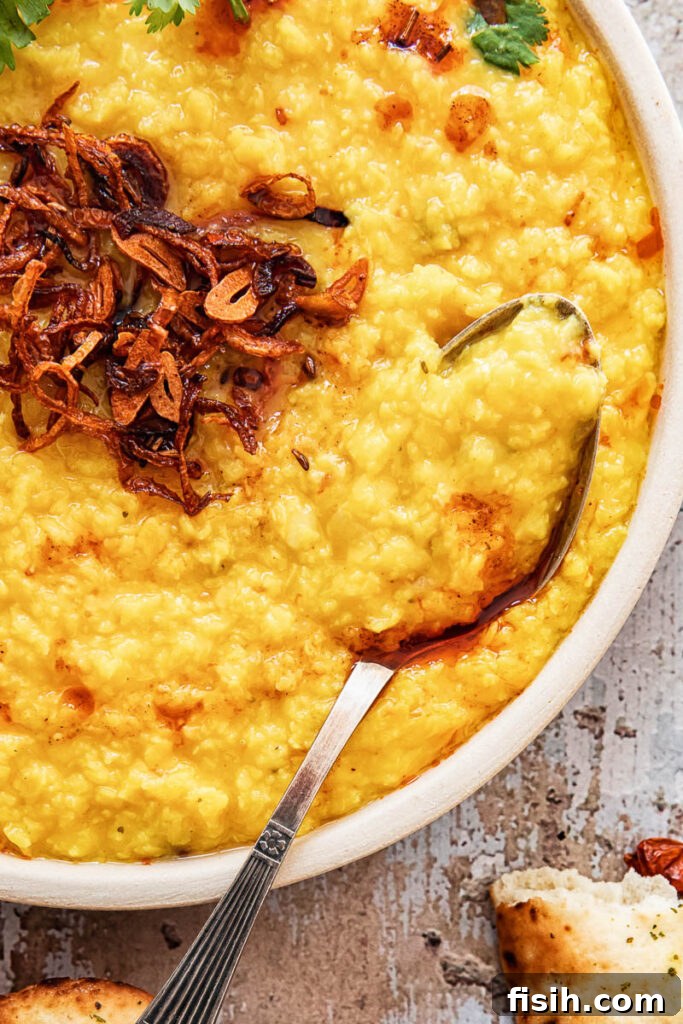
While a well-prepared dal flawlessly complements a wide array of vibrant curry dishes, its true brilliance often shines through when enjoyed as the main course. Picture a steaming bowl of delicately spiced moong dal, paired with a freshly toasted, pillowy naan bread, perfect for dipping and scooping. This combination offers a substantial, satisfying, and incredibly nutritious lunch or dinner option that’s both quick to prepare and deeply comforting.
The beauty of these subtly spiced lentils lies in their ability to act as a superb canvas for additional flavors. This Moong Dal Tadka recipe harnesses this potential by incorporating a vibrant tadka (tempering) crafted from fragrant onion, pungent garlic, and a medley of spices. A mere drizzle of this golden, sizzling tadka over the cooked dal unleashes an explosion of aroma and enhances the overall seasoning, transforming a simple dish into an extraordinary one.
Understanding Moong Dal: The Heart of This Dish
Moong dal, often referred to as mung beans in their whole, green form, holds a distinguished place in Indian cooking. The term “moong dal” specifically denotes mung beans that have undergone a crucial transformation: they are split and hulled (skinned). This process is not merely for aesthetics; it significantly alters the bean’s characteristics.
By removing the outer skin and splitting the beans, moong dal becomes remarkably easier to digest compared to its whole counterpart. This makes it a preferred choice for light meals, often recommended for those with sensitive stomachs or during convalescence. The splitting and hulling also change the bean’s natural green hue to a distinctive vibrant yellow, which is characteristic of this particular dal. These yellow split lentils are incredibly versatile, known for their quick cooking time and their tendency to break down into a wonderfully creamy consistency, which is ideal for curries and soups.
Moong dal is extensively cultivated and consumed across India, forming the foundation of countless traditional recipes, from simple everyday meals to festive preparations. Outside of India, while whole mung beans are widely available, finding split and hulled moong dal might require a visit to larger supermarkets, dedicated health food stores, specialty Indian grocery shops, or convenient online retailers. However, the effort is truly rewarding. Once cooked, moong dal naturally softens and loses its individual shape, resulting in the incredibly smooth and luscious texture that defines a perfect dal.
Crafting Your Moong Dal: A Step-by-Step Guide
One of the primary reasons dal remains a consistent choice in my dinner rotation is its inherent simplicity. A basic dal recipe is remarkably easy to master, and this delightful Moong Dal Tadka is no exception. It’s an ideal starting point for anyone looking to explore Indian cuisine, offering immense flavor without intricate techniques.
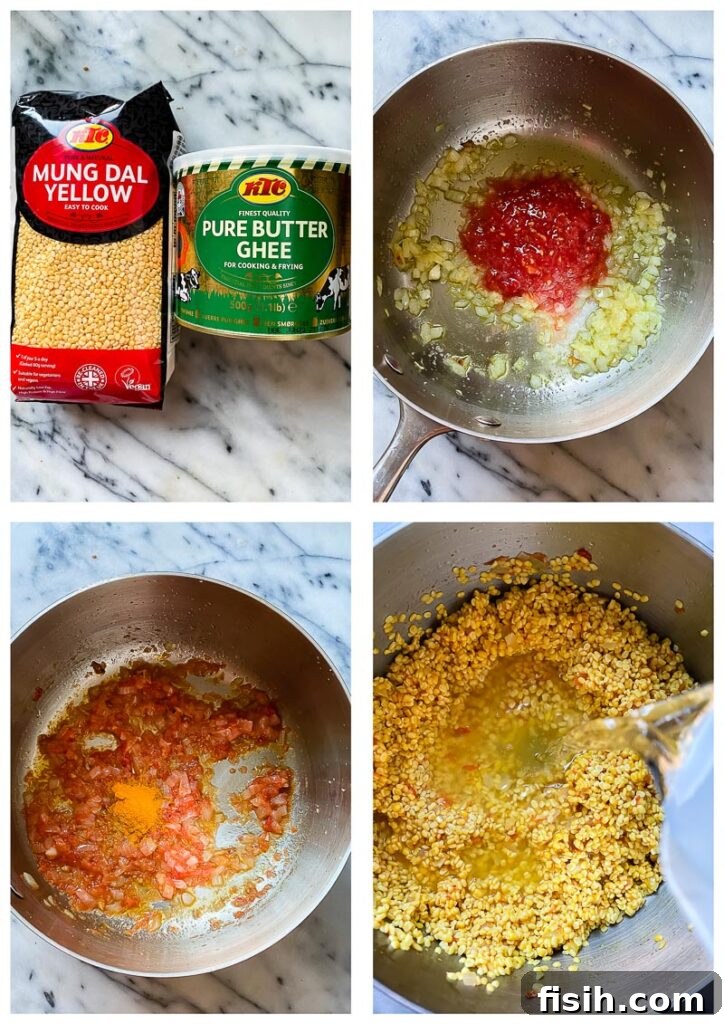
Our recipe begins with a crucial preparatory step: soaking the moong dal. While not always strictly necessary, soaking lentils can dramatically reduce cooking time, often by as much as half. This simple pre-soak ensures the lentils cook more evenly and become tender much faster, saving you valuable time in the kitchen.
To begin the cooking process, gently heat a tablespoon of ghee (clarified butter) or your preferred cooking oil in a sturdy pot or saucepan. Once shimmering, add the finely chopped onion and grated ginger. Sauté these aromatics for approximately five minutes until they soften and turn translucent, releasing their sweet and pungent fragrances. Next, incorporate the grated tomato, allowing it to cook for another five minutes over medium heat, letting its juices meld with the other ingredients to form a flavorful base.
Now, introduce the soaked moong dal into the pot, along with vibrant turmeric powder and salt. Give everything a thorough stir to ensure the lentils are well coated with the spices. Pour in the specified amount of water, then increase the heat until the mixture reaches a rolling boil. Once boiling, reduce the heat to a gentle simmer, cover the pot, and allow the lentils to cook until they are wonderfully tender and have softened into a creamy consistency. This typically takes around 20 minutes, but cooking time can vary, so keep an eye on it.
The Magic of Tadka: Elevating Flavor
Tadka, also known as tempering or chaunk, is an ancient and indispensable culinary technique in Indian cuisine. It’s a flavor-boosting marvel, specifically designed to infuse dishes with an extra layer of complexity, aroma, and depth. The process involves frying whole or ground spices, along with other aromatic ingredients like garlic, ginger, and onion, in hot ghee or oil until their flavors are fully released. This intensely flavorful oil, along with the crisp-fried aromatics, is then poured over a cooked dish, typically at the very end of preparation, acting as a vibrant topping.
The magic of oil lies in its incredible ability to extract and carry the intricate flavors and potent aromas of anything it touches. When spices and aromatics are gently sizzled in hot fat, their essential oils are released, creating a fragrant bouquet that transforms the entire dish. Tadka isn’t just about taste; it’s about the intoxicating sizzle and the burst of fragrance that precedes the first bite, an experience unique to Indian cooking.
The ingredients chosen for tadka vary significantly across India, reflecting the diverse regional culinary traditions and available spices. For this Moong Dal Tadka, we’ve opted for a beautifully balanced, yet simple, version that highlights common and beloved spices, along with onion and garlic. While asafoetida (hing) is a fantastic addition, lending a unique savory depth and aiding digestion, it is considered optional for this particular tadka, ensuring the recipe remains accessible without compromising on flavor.
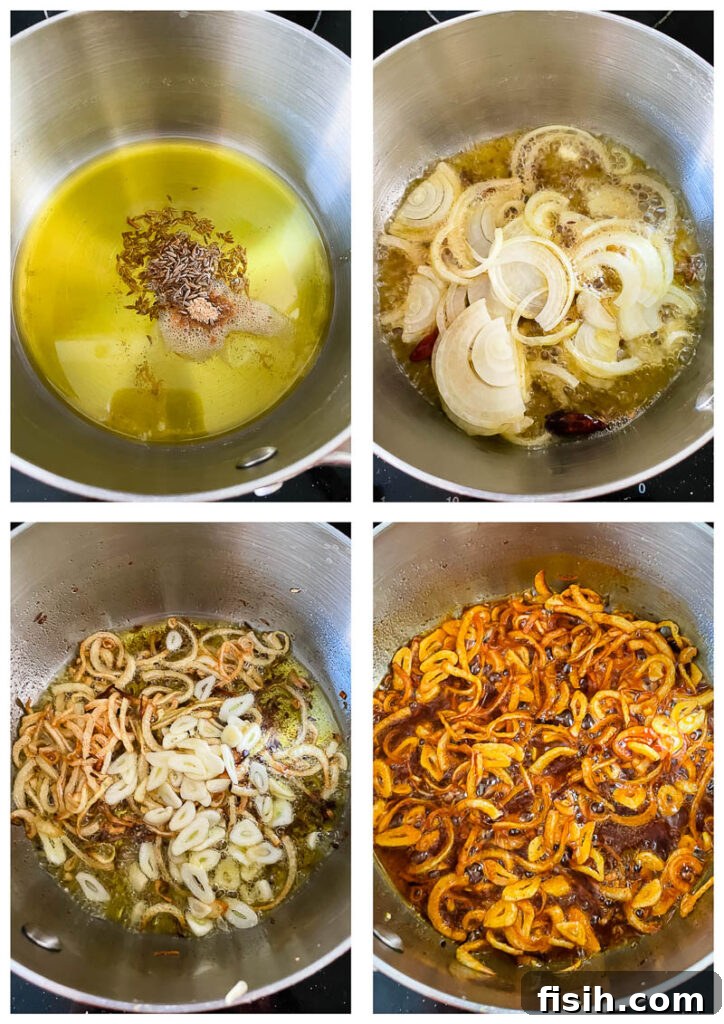
Expert Tips for the Perfect Tadka
- Choose the Right Fat: Achieving the ideal tadka requires high heat, which means selecting an oil with a high smoke point. Olive oil, with its lower smoke point, is not suitable and should be avoided. Ghee (clarified butter) or sunflower oil are excellent choices, providing the necessary heat tolerance without burning.
- Temperature Control is Key: Begin by heating your chosen ghee or oil to a high temperature to ensure it’s hot enough to release the spices’ flavors quickly. However, immediately reduce the heat to medium before adding the onions, garlic, and spices. This prevents burning and allows the ingredients to gently sizzle and develop their flavors.
- Watch for Color Change: The tell-tale sign that your tadka is ready is a beautiful change in color, particularly in the onions and garlic, which should turn a golden-orange hue. This process can happen very rapidly, so remain vigilant and keep a close eye on your pan to prevent overcooking.
- Avoid Burning at All Costs: If your tadka burns, there’s unfortunately no salvaging it. Burnt spices and aromatics develop a bitter, unpleasant taste that will negatively impact your entire dish. It’s always better to start over with fresh ingredients than to compromise the flavor of your dal.
- Serve Immediately for Best Aroma: For the most potent aroma and vibrant flavor, serve the tadka fresh and hot, drizzled directly over the dal. While a pre-made or cooled tadka will still contribute some flavor, it won’t deliver the same captivating fragrance and sizzle that makes freshly prepared tempering so special.
Serving Suggestions: Completing Your Meal
While dal is traditionally considered a side dish, its versatility allows it to effortlessly transition into a simple yet satisfying main course. It’s inherently designed to be served over a bed of fluffy rice. Classic basmati rice always makes an excellent accompaniment, but don’t hesitate to elevate your meal by trying something a little different, such as our aromatic Coconut Rice.
For a truly complete and flavourful Indian meal, you’ll likely want to pair your Moong Dal Tadka with a robust, chunky curry. The wonderful news is that our extensive curry collection offers a plethora of options to perfectly complement this dal. From rich meat dishes to vibrant vegetarian options, you’ll find something to suit every preference.
If I were to offer a personal recommendation, the fragrant and deeply flavorful Chicken Rogan Josh makes a magnificent partner for this creamy dal, creating a harmonious balance of textures and tastes. For those seeking a vegetarian feast, our comforting Cauliflower and Potato Curry (Aloo Gobi) is an absolutely wonderful choice, ensuring your entire meal remains plant-based and incredibly satisfying.
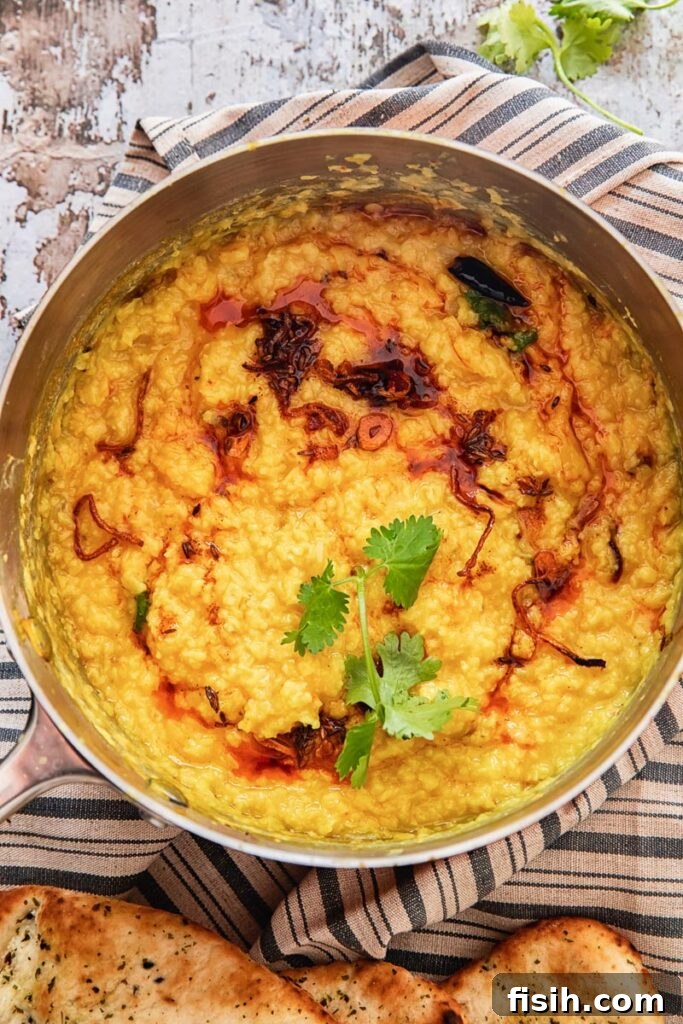
Storage and Leftovers: Enjoying Your Dal Later
Moong Dal Tadka is a fantastic dish for meal prepping, as it stores beautifully. Any leftovers can be safely kept in the refrigerator for 4-5 days. Ensure it is stored in an airtight container to maintain freshness and prevent odor absorption. When it’s time to reheat, you have a couple of convenient options: either use a microwave or gently warm it in a saucepan on the stovetop. If the dal has thickened too much during refrigeration, simply add a splash of water or vegetable broth while reheating to achieve your desired consistency.
For longer storage, Moong Dal Tadka freezes exceptionally well, making it perfect for those busy weeknights. It can be frozen for up to 3 months without significant loss of quality. To enjoy, allow it to thaw completely in the refrigerator overnight before reheating it using the methods described above. This convenient storage ensures you always have a delicious, homemade Indian meal ready to go.
More Vegetarian Curry Recipes to Explore
If you’re eager to expand your repertoire of vegetarian Indian cuisine, here are some other delightful recipes you might enjoy:
- Easy Coconut Lentil Curry with Butternut Squash
- Paneer Tikka Masala
- Easy Egg Curry with Peas and Potatoes
- Chickpea and Butternut Squash Curry
Moong Dal Tadka
Julia Frey of Vikalinka
30 mins
40 mins
1 hr
10 mins
6
Equipment
-
Saucepan
Ingredients
For the dal
- 1 tbsp ghee , or sunflower oil
- 1/2 onion
- 1/2 tbsp ginger, grated
- 1 tomato, grated
- 350g / 1½ cups moong dal
- 1 litre / 4 cups water
- 1 tsp turmeric
- 1½-2 tsp salt
For the tadka
- 3 tbsp ghee
- 1/2 tsp asafetida, optional
- 1/2 tsp cumin seeds
- 1/2 white onion, thinly sliced in half circles
- 4 cloves garlic
- 1/2 tsp mild chilli powder (Kashmiri)
Instructions
-
Wash the moong dal thoroughly, then soak the moong dal for 20 minutes.
-
While it is soaking, cut the onion, grate the ginger and 1 tomato. Heat 1 tbsp of ghee or oil in a saucepan (pot), then add the onion and ginger and fry for 5 minutes, then add the grated tomato, and continue cooking for 5 minutes longer over medium heat.
-
Stir in the moong dal, turmeric and a 1 tsp of salt and stir to combine, then pour in the water, turn the heat up and bring to a boil, then lower the heat and simmer until tender for 20 minutes.
-
When the dal is close to being done, start on the tadka. In a small saucepan heat the ghee, then add the asafetida and cumin seeds. They will start to pop and sizzle, add thinly sliced onions, cook them until they turn crispy on medium high heat, then add sliced garlic and the chilli powder and cook for a few seconds until the garlic is only slightly browned. Then take off the heat and pour all over the moong dal. Cover with the lid and let it infuse for about 5 minutes.
Notes
- Since the oil has to be at a high temperature, the oil needs to have a high smoke point. Ghee or sunflower oil are the best options.
- Look for a change in colour to orange to let you know that the tadka is ready. This can happen very fast so keep a close eye on it.
- If the tadka burns, you will need to start all over. The taste of burnt tadka will not be a pleasant addition to any dish.
- Serve the tadka when hot. The tadka will still bring some flavour if cooked or made in advance but not the same aroma.
Nutrition
Carbohydrates: 39g |
Protein: 16g |
Fat: 11g |
Saturated Fat: 6g |
Polyunsaturated Fat: 0.4g |
Monounsaturated Fat: 3g |
Cholesterol: 26mg |
Sodium: 612mg |
Potassium: 99mg |
Fiber: 6g |
Sugar: 3g |
Vitamin A: 338IU |
Vitamin C: 5mg |
Calcium: 42mg |
Iron: 3mg
Nutrition information is automatically calculated, so should only be used as an approximation.
Tried this recipe?
Let us know how it was!