
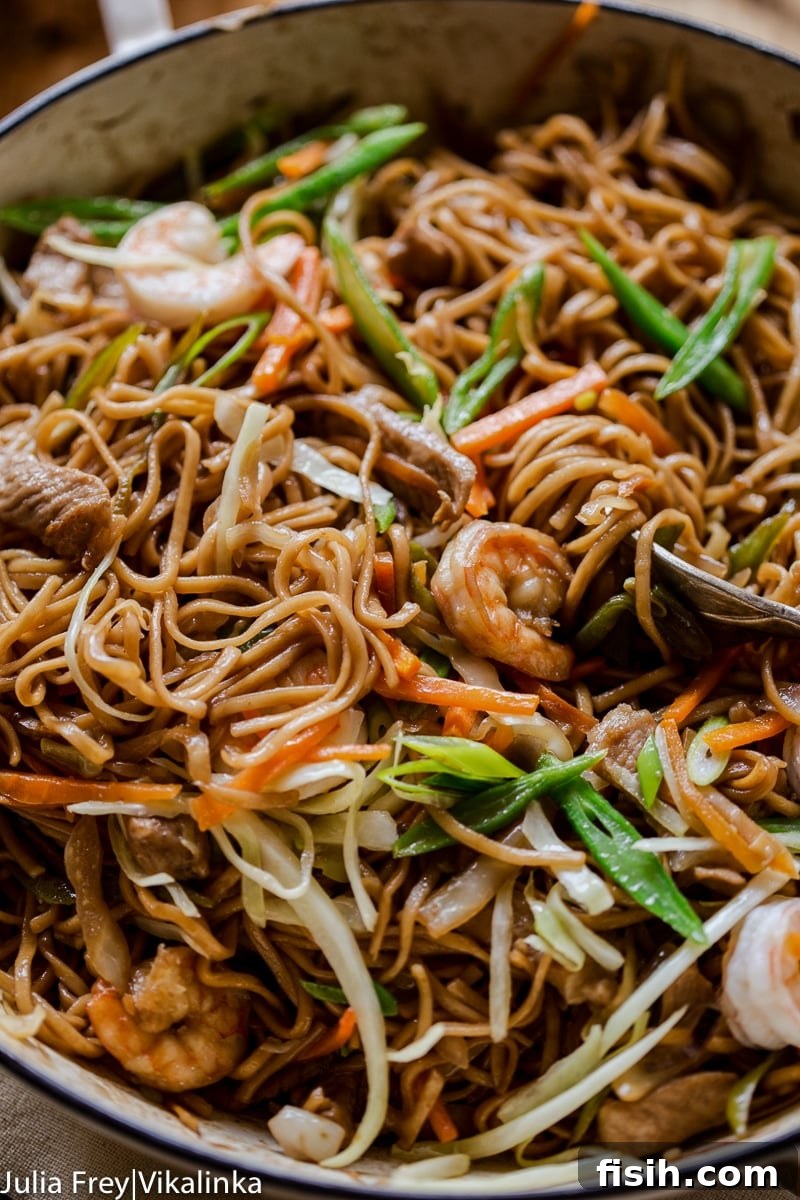
Discover how to master authentic Pancit Canton with this incredibly easy-to-follow recipe. These beloved Filipino noodles, rich with the flavors of garlic, sesame oil, and savory soy sauce, are stir-fried to perfection with tender pork, succulent shrimp, and a vibrant medley of crisp vegetables. A truly irresistible one-pan meal that will transport your taste buds straight to the Philippines!
If you’re craving more delightful Filipino cuisine, be sure to explore our Filipino Chicken Adobo recipe – a timeless classic that promises to tantalize.
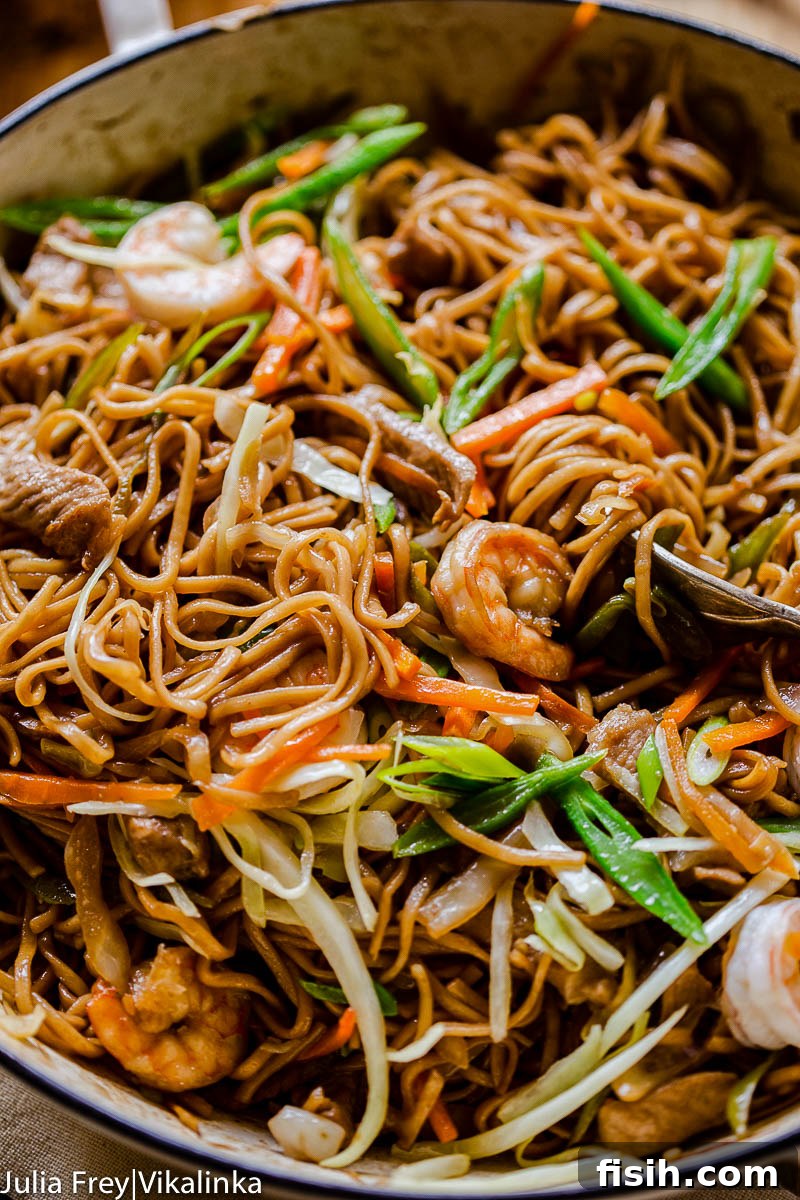
Pancit Canton, the iconic Filipino noodle dish featuring savory pork and juicy shrimp, is an absolute sensation in our household. Its delightful blend of salty noodles and crunchy vegetables captivates both children and adults alike, making it a constant request for family dinners.
A Culinary Journey: Understanding Pancit Canton
Pancit Canton is far more than just a noodle dish; it’s a celebration of Filipino culture and culinary heritage. “Pancit” is the general term for noodles in the Philippines, while “Canton” refers to its Chinese origins. This dish is a testament to the rich historical influence of Chinese traders and immigrants on Filipino cuisine, who brought with them their noodle-making traditions centuries ago. Over time, Filipinos embraced these techniques, adapting them with local ingredients and distinct flavor profiles to create something uniquely their own.
Culturally, Pancit Canton holds a special place, often served at significant events and celebrations, particularly birthdays. Noodles are traditionally believed to symbolize long life and good health, making them a staple at such festivities. Sharing a large platter of Pancit Canton signifies good wishes and communal joy, embodying the spirit of Filipino hospitality and familial bonds. Its widespread popularity ensures it’s found everywhere, from bustling street stalls to elegant restaurant tables and every home kitchen in between.
Why This Pancit Canton Recipe Stands Out
This particular Pancit Canton recipe shines for several compelling reasons, making it a go-to choice for home cooks seeking both convenience and authentic flavor:
- Effortlessly Quick: Designed for efficiency, this recipe comes together rapidly, making it perfect for busy weeknights when you need a satisfying meal without spending hours in the kitchen.
- Everyday Ingredients: You won’t need to hunt for exotic items. The ingredients are simple, wholesome, and readily available at most supermarkets, ensuring accessibility for everyone. Chances are, many are already in your pantry!
- Bursting with Flavor: Despite its simplicity, the dish is packed with layers of savory, umami-rich flavors from garlic, soy sauce, and the perfect blend of proteins and vegetables. Each bite is a harmonious explosion of taste.
- Economical and Wholesome: This recipe is not only kind to your wallet but also loaded with good stuff! Lean pork, protein-rich shrimp, and a generous assortment of fresh vegetables provide a balanced and nutritious meal for the whole family.
- One-Pan Wonder: Say goodbye to mountains of dirty dishes! This Pancit Canton is cooked primarily in a single pan or wok, streamlining both the cooking process and cleanup.
The Heart of Filipino Cuisine
From my experience living in the province of Isabela during my twenties, I’ve come to describe Filipino cuisine as inherently simple and economical, yet incredibly flavorful. Unlike many other Asian culinary traditions that often feature complex spice blends and obscure ingredients, Filipino food often relies on a concise list of components to achieve its distinctive taste.
The flavor profile of Filipino dishes is largely characterized by a delightful balance of salty, sour, and savory notes, with a prominent umami depth. Staples such as pork and rice form the backbone of countless meals, alongside an abundance of fresh fish and popular fried chicken preparations. A vibrant array of vegetable stir-fries further broadens the culinary landscape, offering diverse options for every palate.
An interesting cultural note, setting it apart from many of its Asian counterparts, is the traditional dining etiquette: Filipino food is typically enjoyed with a fork and spoon, rather than chopsticks. This custom speaks to the unique blend of indigenous traditions and colonial influences that have shaped the nation’s culinary identity.
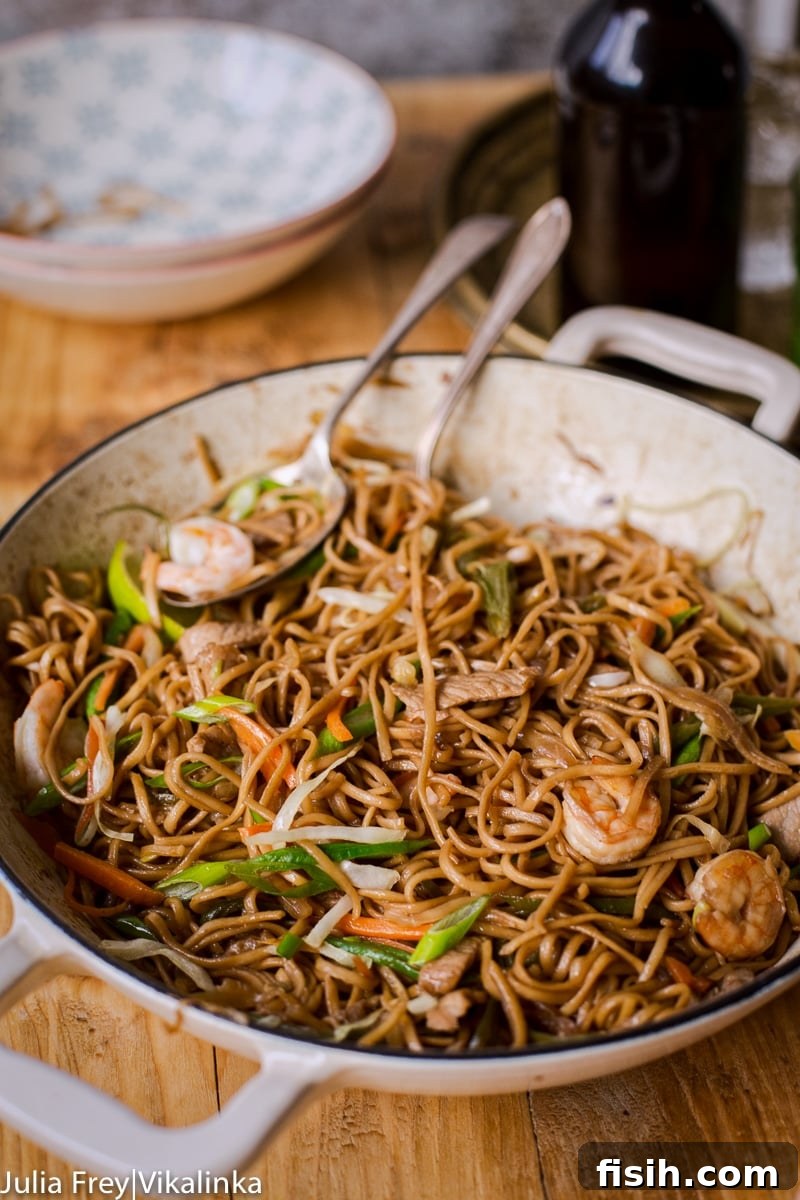
Following the tremendous positive response to my Filipino Chicken Adobo recipe, which resonated deeply with many of you, I received numerous requests for more authentic Filipino dishes. Today, I am thrilled to share another beloved family favorite and an immensely popular dish across the Philippines: Pancit Canton.
As mentioned, “Pancit” simply translates to “noodles,” while “Canton” denotes its Chinese origins. The substantial influence of Chinese culinary traditions is undeniable in a significant portion of Filipino cuisine. However, over centuries of adaptation and refinement, Filipinos have truly made these dishes their own, and Pancit is a shining example of this unique fusion and evolution.
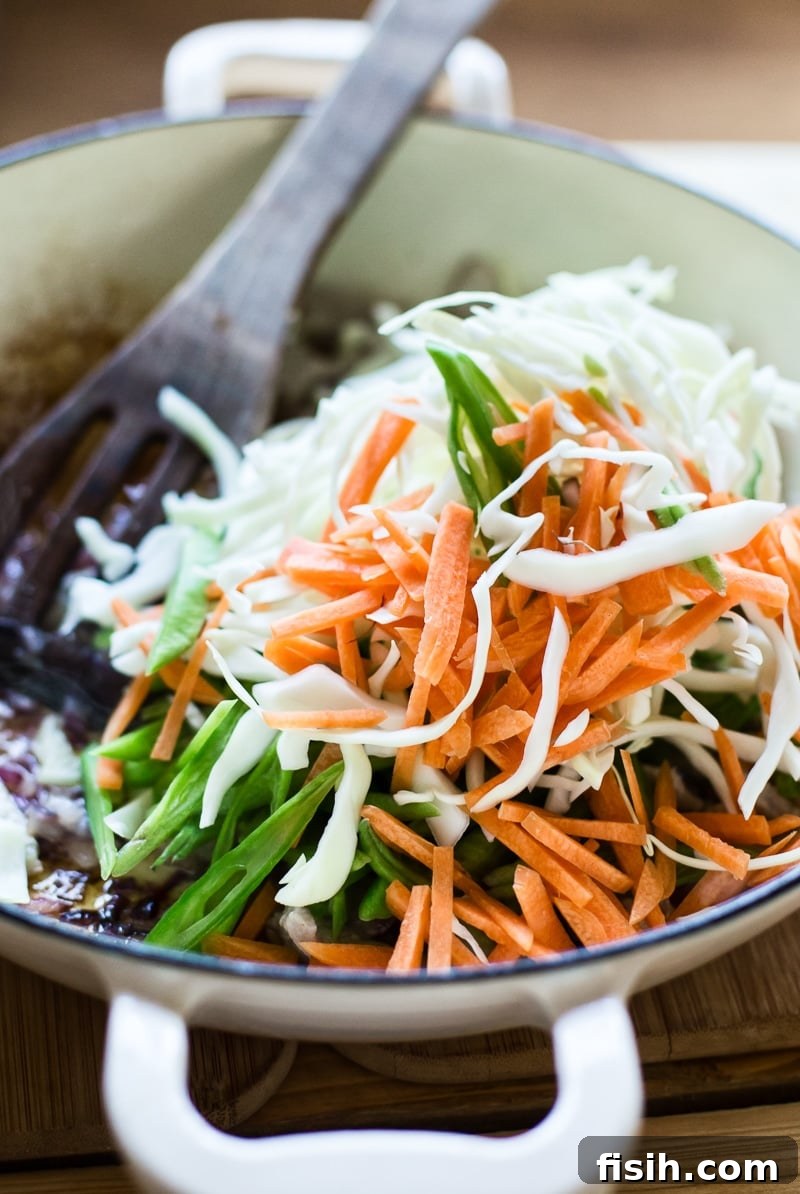
Unveiling the Flavors: Essential Ingredients for Pancit Canton
To create this crazy delicious, yet surprisingly simple dish, a thoughtful selection of fresh ingredients is key. Pancit Canton’s magic lies in the harmonious interplay of its components.
The Noodles: Choosing Your Base
The foundation of Pancit Canton is, of course, the noodles. While traditional recipes often call for egg noodles, you have flexibility. I’ve used standard egg noodles in this recipe, which provide a satisfying chew and absorb flavors beautifully. However, if you prefer, you can also use cellophane noodles (the clear, thin kind) for a different texture. Experimenting with noodle types can lead to exciting variations, so feel free to choose what you enjoy most or what’s readily available.
Proteins: Pork and Shrimp
This recipe features a classic combination of pork and shrimp, which adds incredible depth and savory notes to the dish. For the pork, thinly sliced pork loin is ideal as it cooks quickly and remains tender. The shrimp adds a touch of sweetness and a delightful textural contrast. If you’re not a fan of one or the other, or if dietary preferences dictate, you can easily adapt: chicken is a fantastic alternative to pork, or you could opt for an all-shrimp or all-pork version. The key is to slice your protein thinly to ensure even cooking.
A Rainbow of Vegetables
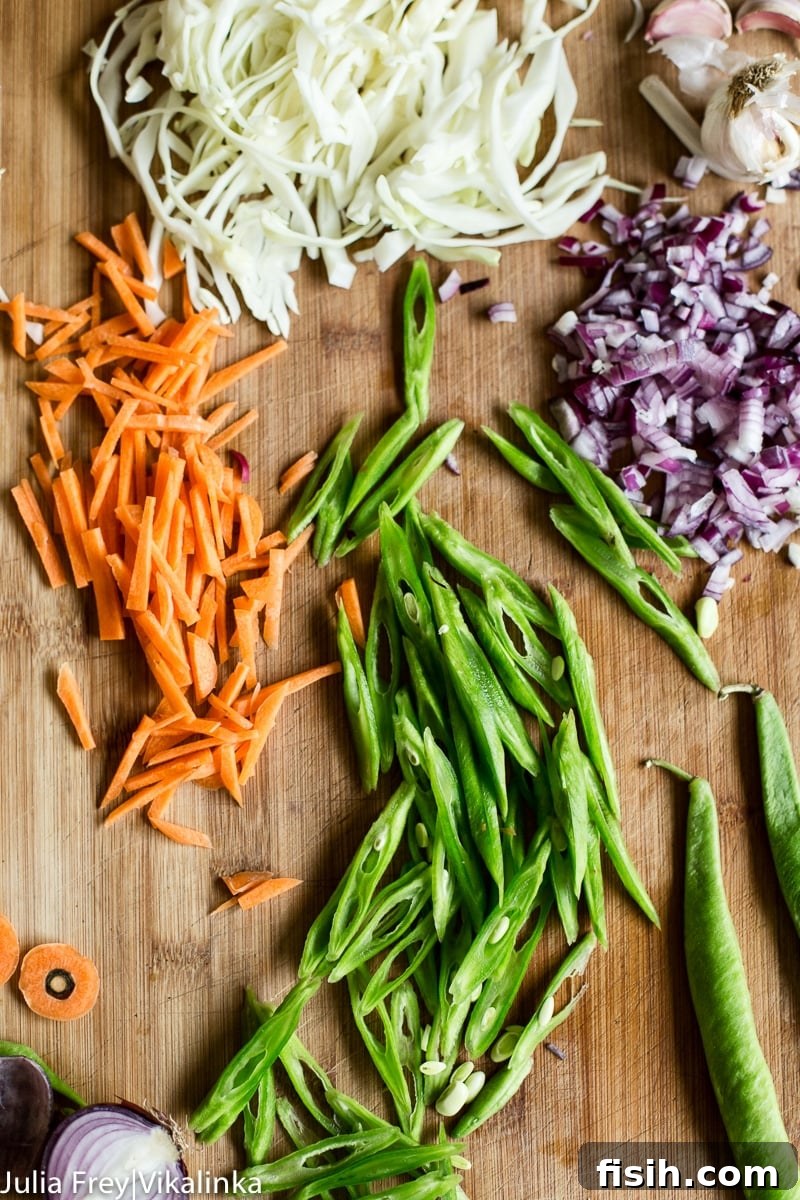
Pancit Canton is celebrated for its vibrant and crisp vegetable medley. The traditional trio includes carrots, green beans (or string beans), and cabbage. These vegetables not only contribute color and texture but also a fresh, earthy sweetness that balances the savory elements. In my recipe, I’ve used runner beans, thinly sliced, but regular green beans or even snow peas would work wonderfully. The goal is to achieve tender-crisp vegetables, so precise slicing is important for even cooking.
The Signature Sauce
The soul of Pancit Canton’s flavor profile lies in its simple yet potent sauce, primarily driven by good quality soy sauce. Garlic and onion form the aromatic base, providing a pungent and sweet foundation for the stir-fry. While not always traditionally included by home cooks, a touch of sesame oil, which I always detected in restaurant and street stall versions, adds a wonderfully fragrant and nutty dimension that elevates the dish. A pinch of salt to season the pork during cooking rounds out the core flavors.
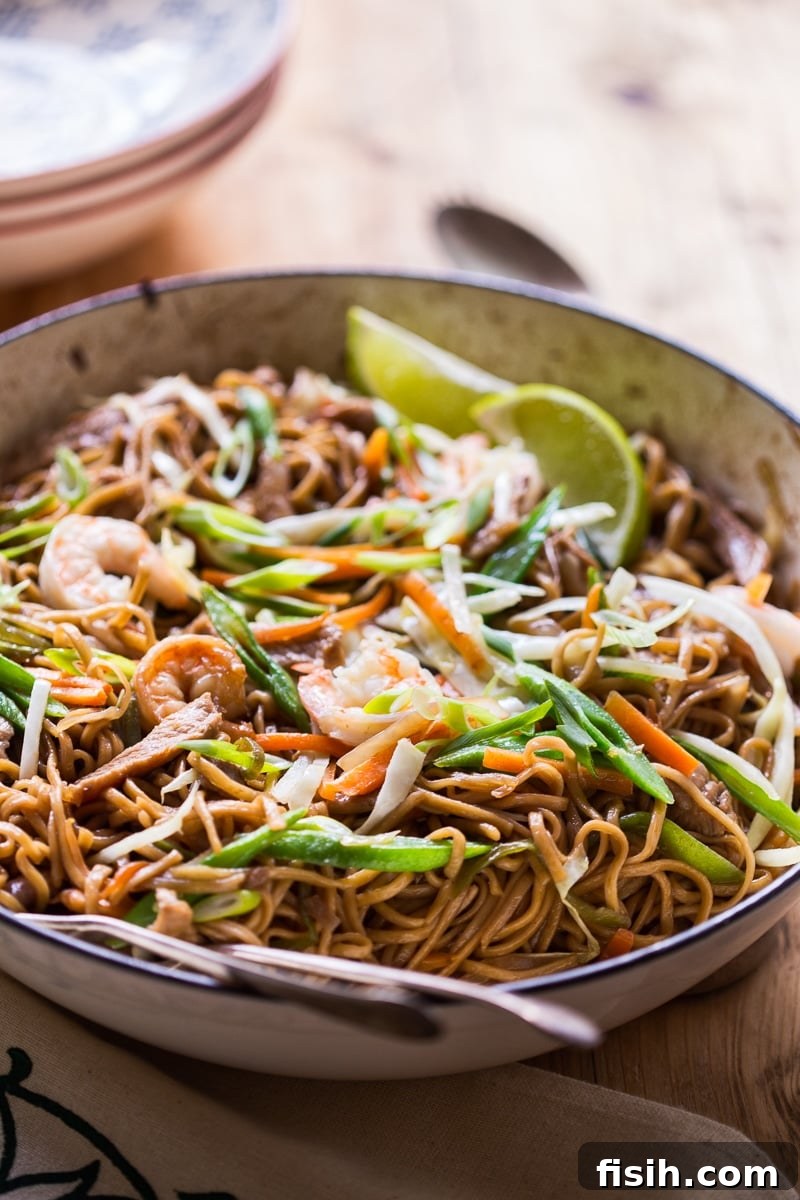
Pro Tips for Perfect Pancit Canton
- The recipe I’m sharing is a slightly refined adaptation of one I learned from a friend who also spent a year in the Philippines. I’ve streamlined the cooking method for simplicity without compromising authenticity. My addition of a drop of sesame oil, though not always seen in home kitchens, captures the aromatic essence I remember from street food and restaurants, adding a fragrant depth that truly enhances the flavor.
- This version of Pancit Canton generously serves four. However, it’s easily scalable; you can double or even triple the recipe if you’re feeding a larger crowd, provided you have a sufficiently spacious wok or large pan to accommodate the ingredients. A traditional wok is ideal for stir-fries due to its shape and ability to distribute heat evenly.
- For optimal texture and even cooking, it’s crucial for the vegetables in Pancit Canton to be sliced as consistently as possible. A mandoline (affiliate link) can be an invaluable tool for achieving uniform slices quickly and efficiently, far easier than attempting to perfectly slice everything by knife (affiliate link).
- Pancit Canton is a fast-cooking dish. To ensure a smooth and stress-free cooking experience, prepare all your ingredients—chopping vegetables, slicing pork, and measuring sauces—before you even turn on the heat. Once the cooking begins, the process moves quickly, leaving little time for last-minute prep. This mise en place approach is key to stir-fry success.
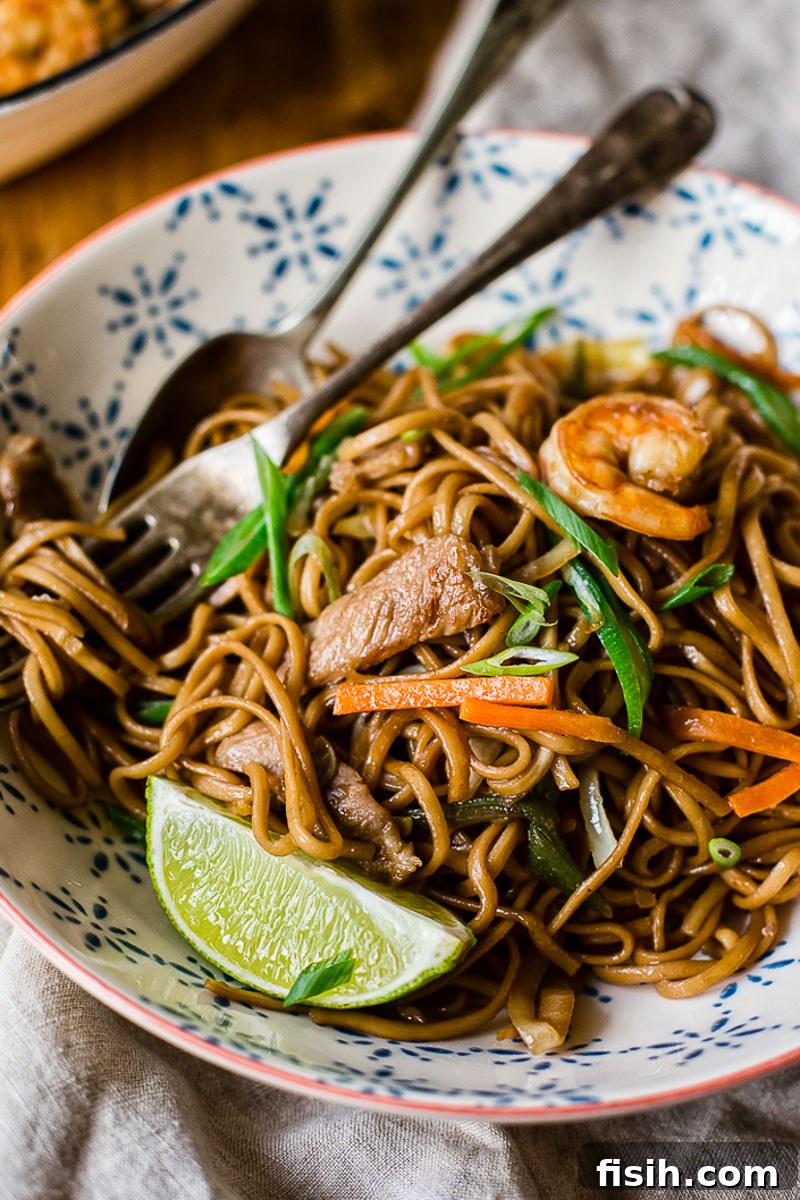
Serving Your Delicious Pancit Canton
Pancit Canton is a wonderfully complete meal on its own, a true one-pan stir-fry that requires no fuss with elaborate side dishes. Its balanced combination of protein, carbohydrates, and vegetables makes it incredibly satisfying.
To enhance both its visual appeal and flavor, a generous sprinkling of freshly sliced green onions just before serving adds a delightful burst of color and a crisp, fresh counterpoint to the savory noodles. These mild alliums provide a subtle pungency that brightens the entire dish.
Traditionally, Pancit Canton is served with calamansi, a small Filipino lime known for its distinctive fragrant and tart juice. Squeezing calamansi juice over the noodles adds a crucial tangy brightness that cuts through the richness and elevates the flavors. If calamansi is unavailable, a regular lime makes an excellent substitute, providing a similar citrusy zing that is absolutely essential for the authentic Pancit experience.
Storage and Reheating Best Practices
Proper storage ensures your delicious Pancit Canton can be enjoyed beyond the initial meal. Leftovers can be stored safely in an airtight container (affiliate link) in the refrigerator for 2-3 days. This prevents spoilage and keeps the noodles fresh.
Freezing Pancit Canton is generally not recommended. The delicate texture of the noodles can become soggy and unappetizing once thawed and reheated, significantly diminishing the dish’s quality. It’s best enjoyed fresh or from refrigeration.
To reheat leftovers, the best method is to return them to a pan or wok over medium heat. Add a tiny splash of oil or water to prevent sticking and help rehydrate the noodles. Stir gently and cook until the noodles are heated through and the vegetables regain some of their crispness. This gentle reheating process helps maintain the texture and flavor, allowing you to enjoy another tasty meal with minimal effort.
Frequently Asked Questions (FAQ)
Can I make Pancit Canton vegetarian?
Absolutely! To make Pancit Canton vegetarian, simply omit the pork and shrimp. You can replace them with firm tofu, tempeh, or a variety of mushrooms (like shiitake or oyster mushrooms) for added protein and umami flavor. Use vegetable broth instead of water if any is called for in your noodle preparation, and ensure your soy sauce is vegetarian-friendly.
What are the best noodles to use for Pancit Canton?
Traditional Pancit Canton typically uses wheat-based egg noodles, often labeled “Pancit Canton noodles.” These are usually thin and yellow, offering a good chew and absorbing flavors well. You can find them in most Asian grocery stores or the international aisle of larger supermarkets. If you can’t find specific Pancit Canton noodles, regular medium egg noodles or even thin spaghetti can be a decent substitute in a pinch.
Can I use other proteins besides pork and shrimp?
Yes, Pancit Canton is incredibly versatile! Chicken breast or thighs, thinly sliced, are excellent alternatives or additions. Beef (flank steak or sirloin, thinly sliced) also works well. For a seafood variation, consider adding squid rings or fish balls. The key is to cut your chosen protein into small, thin pieces so it cooks quickly and evenly within the stir-fry.
Is Pancit Canton typically spicy?
No, authentic Pancit Canton is generally not spicy. Its flavor profile leans more towards savory, salty, and a touch of sour (especially with calamansi). However, if you enjoy a kick, you can easily add chili flakes, a dash of sriracha, or fresh sliced chilies during cooking or as a garnish to suit your preference.
How can I make my Pancit Canton healthier?
To boost the health factor, increase the amount and variety of vegetables. Add bell peppers, snap peas, bok choy, or broccoli florets. Opt for whole wheat noodles if available. You can also reduce the amount of soy sauce and sodium by using a low-sodium version. Using leaner cuts of pork or more shrimp can also contribute to a healthier dish. Don’t forget to squeeze plenty of fresh lime or calamansi for a dose of Vitamin C!
More Asian Noodle Inspirations
- Chilli Salmon Mee Goreng (Fried Noodles)
- Udon Noodle Soup
- Thai Red Curry with Prawns and Noodles
- Beef Chow Mein
- Shrimp Fried Rice
Filipino Noodles with Pork and Shrimp (Pancit Canton)
Equipment
- Wok (affiliate link)
- Mandoline (affiliate link, optional)
Ingredients
- 2 tbsp vegetable oil
- 1 small onion, chopped
- 2 garlic cloves, minced
- 200g/7 oz pork loin, sliced thinly
- 100g/1 cup carrot, sliced thinly
- 150g/1 cup green beans, sliced thinly
- 100g/1 cup white cabbage, sliced thinly
- 3 tbsp + 1 tbsp soy sauce
- 125g/4 oz shrimp, peeled and deveined
- 250g/8 oz egg noodles
- 1 tsp sesame oil
- 1 lime, quartered (optional, or calamansi)
- 2 green onions, sliced (for garnish)
Instructions
- In a deep pan or a wok, heat the vegetable oil over medium heat. Add the chopped onion and minced garlic, and cook for 1 minute until fragrant. Then, add the thinly sliced pork loin with a pinch of salt and stir-fry for about 5 minutes, or until the pork is fully cooked through and lightly browned.
- Add the sliced carrots, green beans, and cabbage to the pan. Pour in 3 tablespoons of soy sauce and add the shrimp. Stir everything to combine, then cook on medium-high heat for approximately 7 minutes, stirring occasionally. The vegetables should become tender-crisp, and the shrimp should turn pink and opaque.
- While the vegetables, pork, and shrimp are cooking, prepare the egg noodles according to the package directions. Most egg noodles cook quickly, usually within 3-4 minutes. Ensure they are al dente.
- Once cooked, drain the noodles thoroughly and add them directly to the pan with the other ingredients. Toss everything together to ensure the noodles are well coated with the sauce and seasonings. Taste and adjust seasoning; if desired, add an additional tablespoon of soy sauce and the teaspoon of sesame oil for extra fragrance and flavor. Sprinkle with sliced green onions before serving.
- Serve your delicious Pancit Canton immediately, accompanied by lime quarters (or calamansi, if available) for a refreshing squeeze of citrus over each portion.
Nutrition
Calories: 463kcal | Carbohydrates: 57g | Protein: 30g | Fat: 13g | Saturated Fat: 7g | Trans Fat: 1g | Cholesterol: 163mg | Sodium: 1061mg | Potassium: 675mg | Fiber: 6g | Sugar: 6g | Vitamin A: 4567IU | Vitamin C: 25mg | Calcium: 123mg | Iron: 3mg
Nutrition information is automatically calculated and should only be used as an approximation.