
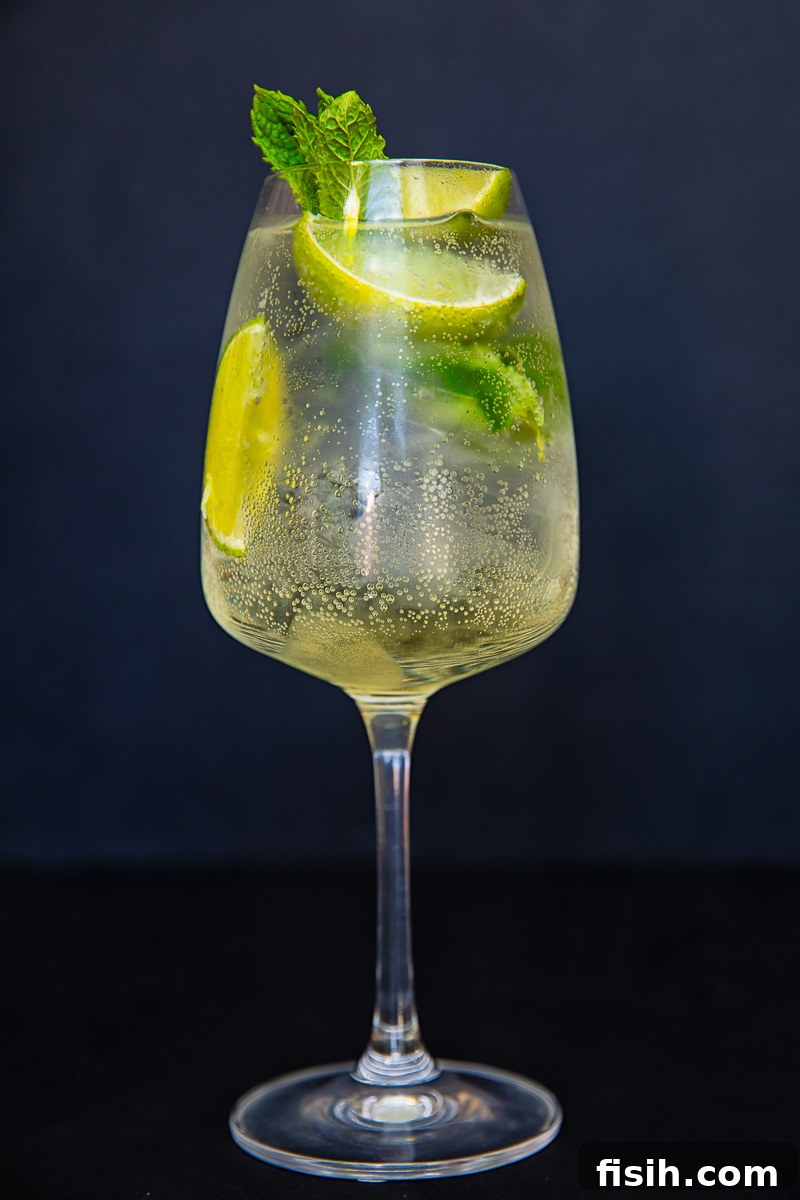
Delicate and floral, the Hugo Spritz is a soul-soothing, dreamy cocktail made with elderflower, prosecco, soda water and a spear of mint. If you don’t care for overly sweet or bitter spritzes, this is the one to try.
If you enjoy mint-forward spritzes, consider trying a mojito-style spritz as another refreshing option—light rum and plenty of lime give it a bright, tropical lift.
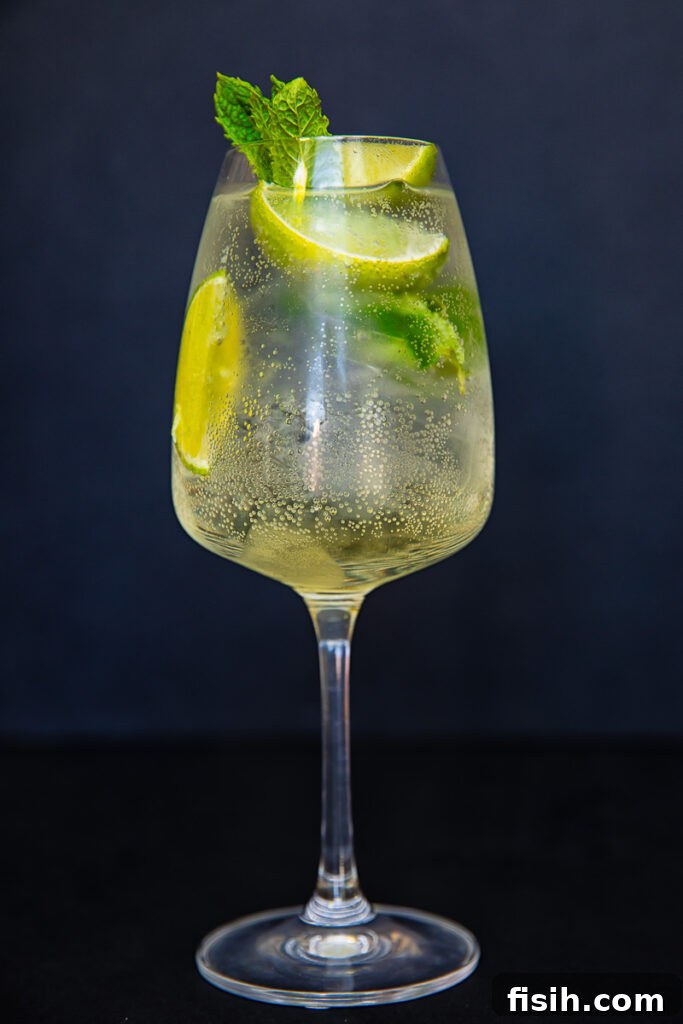
The Hugo Spritz is a relatively recent invention, created in the early 2000s in the Alpine regions of northern Italy. Despite its modern origin, its combination of elderflower and mint feels timeless and evocative of warm, fragrant summers. I’ve always had a soft spot for spritzes—bright, bubbly and endlessly adaptable—but if I were to pick a favourite, the Hugo’s gentle floral character would win me over every time.
Here are all my spritz babies (in no particular order!):
- Hugo — elegant, understated and refined with floral notes.
- Aperol — a bold, slightly bitter classic with spicy citrus flavour.
- Mojito spritz — effervescent, minty and full of Cuban party spirit.
- Limoncello spritz — bright and citrussy, an Italian sunshine in a glass.
- Martini spritz — a more aromatic, vanilla-tinged variation with botanical complexity.
I won’t ask you to name your favourite child, but which spritz tops your list?
Hugo elderflower spritz
Although the Hugo Spritz was developed in Alpine Italy, its elderflower and mint notes feel distinctly English in spirit. At the height of summer, wild elderflower blossoms perfume the air with hints of lemon blossom and ripe pear—aromas that marry beautifully with sparkling wine and fresh herbs. These flavours are what make the Hugo irresistibly drinkable.
My preferred ratio for this and other summer spritzes is simple: prosecco as the bubbly base (about three parts) to lift and brighten, elderflower liqueur (about two parts) for floral sweetness, and a splash of soda water (about one part) to extend the drink and keep it light and refreshing. This balance preserves effervescence while allowing the elderflower to take centre stage without overwhelming the palate.
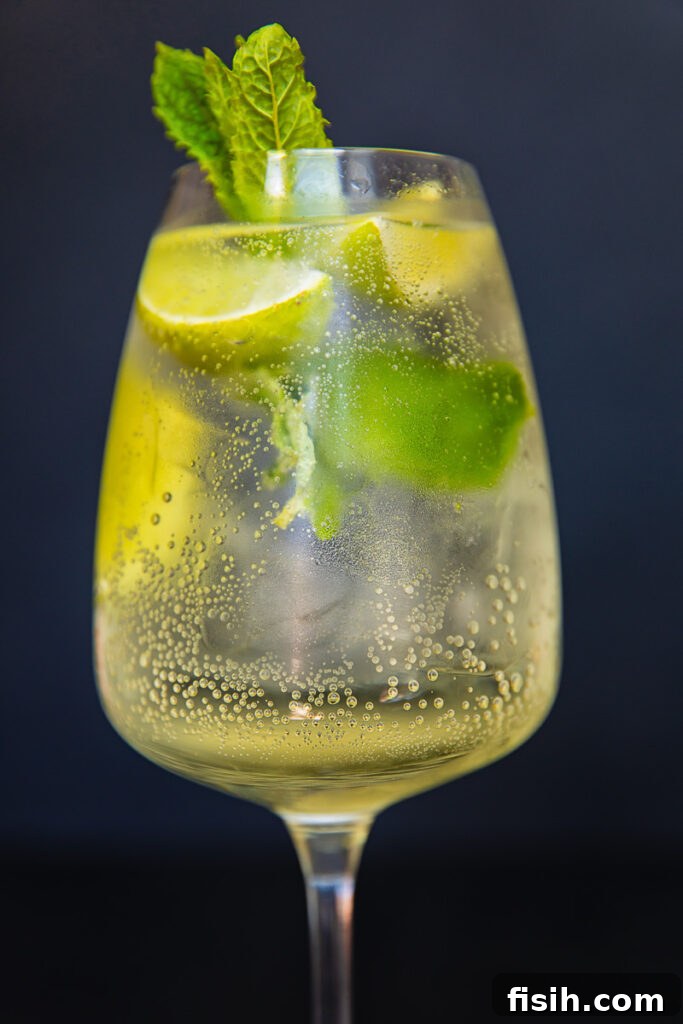
A wedge of lime adds a flash of zesty acidity that enlivens the floral notes, and a fresh sprig of mint cools and grounds the mix, offering aromatic contrast with every sip. Together these elements create a drink that is floral but balanced, airy yet rounded.
To me, the Hugo is like an English meadow in a glass—soft, fragrant and infinitely pleasant on warm afternoons.
Recipe Tips and Notes
- Use elderflower cordial instead of liqueur for a lower-alcohol version.
- To make a mocktail, substitute non-alcoholic sparkling wine and elderflower cordial.
- Because elderflower liqueur is quite sweet, opt for a dry prosecco to keep the drink balanced.
- Fill the glass generously with ice to keep the spritz chilled and refreshing.
- Stir gently to combine—vigorous stirring can bruise the mint and reduce carbonation.
Serving suggestions
The Hugo is a visually graceful cocktail. Its pale green hue and mint spear lend a dreamy, Midsummer Night’s Dream quality. Serve it in a tall Collins or large wine glass filled with plenty of ice for the best presentation. Finish with a lime wedge and a fresh mint sprig for aroma and visual appeal.
More cocktail recipes
- Maple whisky sour — a warming twist on a classic.
- Mojito spritz — a minty, effervescent crowd-pleaser.
- Passion fruit margarita — tangy, tropical and vivid.
- Elderflower peach Bellini — delicate, summery and fruit-forward.
Hugo Elderflower Spritz
Ingredients
- 50ml / 2oz elderflower liqueur
- 75ml / 3oz prosecco
- 25ml / 1oz soda water
- 8–10 mint leaves
- lime wedge, for garnish
- mint sprig, for garnish
Instructions
-
Fill a glass with ice and add the mint leaves. Pour in the elderflower liqueur.
-
Fill half the remaining space with prosecco, then top with soda water. Stir gently to combine.
-
Garnish with a sprig of mint and a lime wedge. Serve immediately.
Nutrition
Nutrition information is an approximation and should be used as a guide only.