
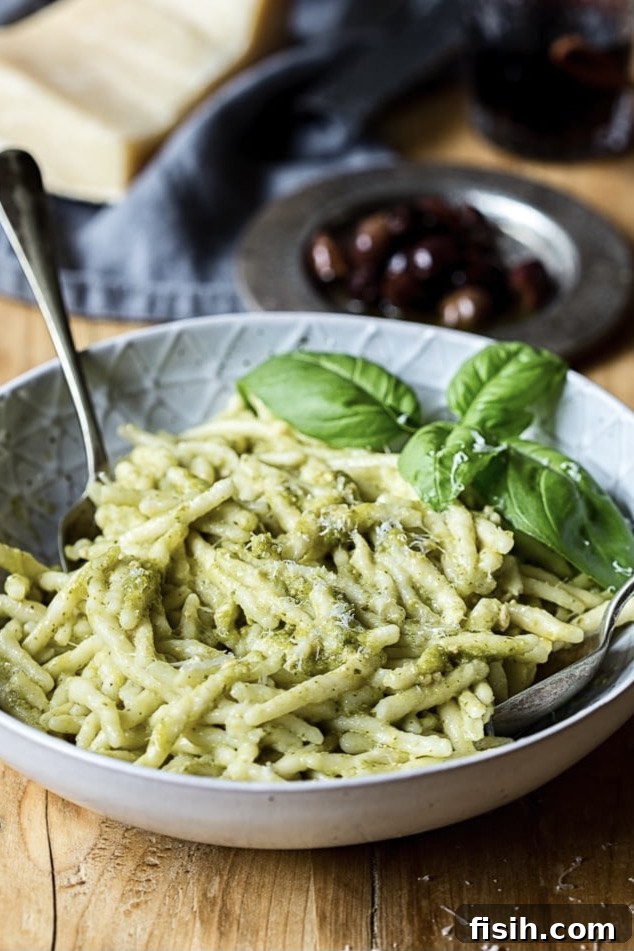
Homemade basil pesto offers an unrivaled burst of fresh, vibrant flavors that elevate a simple pasta dish into an unforgettable culinary experience. This versatile and easy-to-master recipe is perfect for brightening up any quick lunch or dinner, providing a delicious solution even on the busiest weeknights. Once you discover the joy of making your own pesto, you’ll wonder how you ever settled for store-bought versions.
For those who love pesto and are keen to explore its potential, we highly recommend trying our Roasted Romanesco Cauliflower Pesto Spaghetti for a unique twist, or this delightful Grilled Chicken Pesto Pasta which adds a protein-packed dimension to the classic.
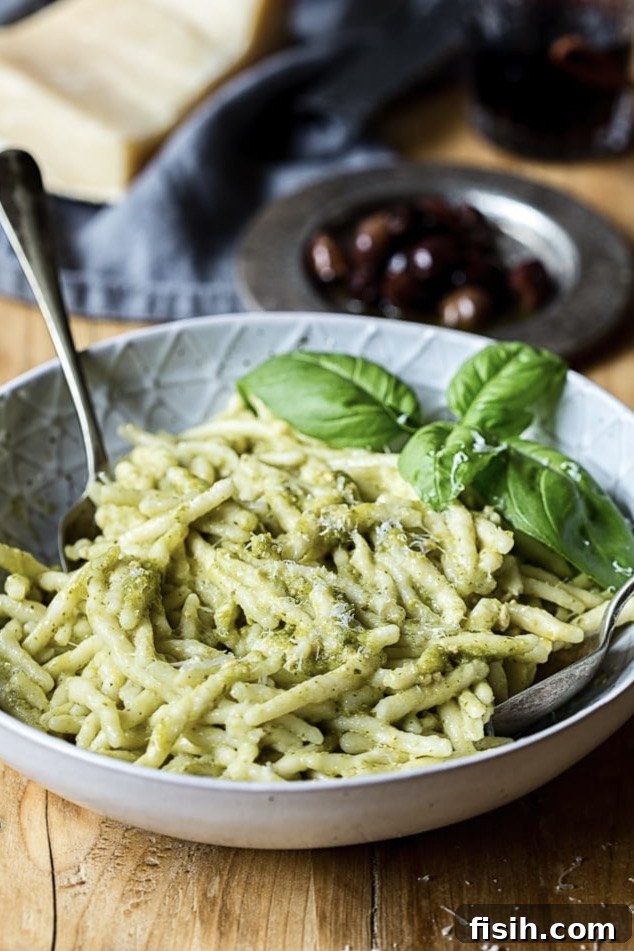
For years, a comforting plate of creamy pesto pasta has been my trusted choice for a quick and satisfying meal. It’s incredibly fast to prepare, wonderfully simple, and budget-friendly – what’s not to love? Plus, it consistently earns smiles from my kids, making it a true family favorite.
While I initially relied on convenient store-bought pesto from the local supermarket, I soon realized the transformative power of fresh, homemade pesto. Whenever I have a few extra minutes, I opt to create my own vibrant sauce. As good as pre-made pesto can sometimes be, it simply cannot compare to the bright, lively, and aromatic flavors that only freshly made pesto delivers. The difference is truly remarkable, adding a dimension of freshness that elevates the entire dish.
Crafting the Perfect Homemade Pesto: A Step-by-Step Guide
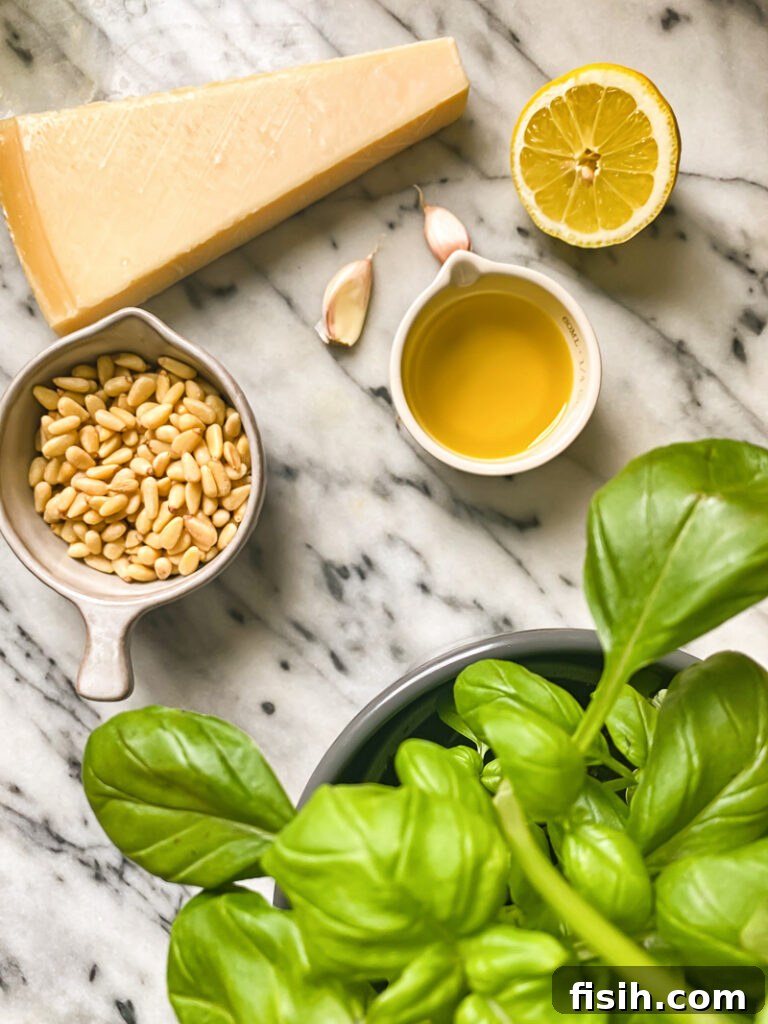
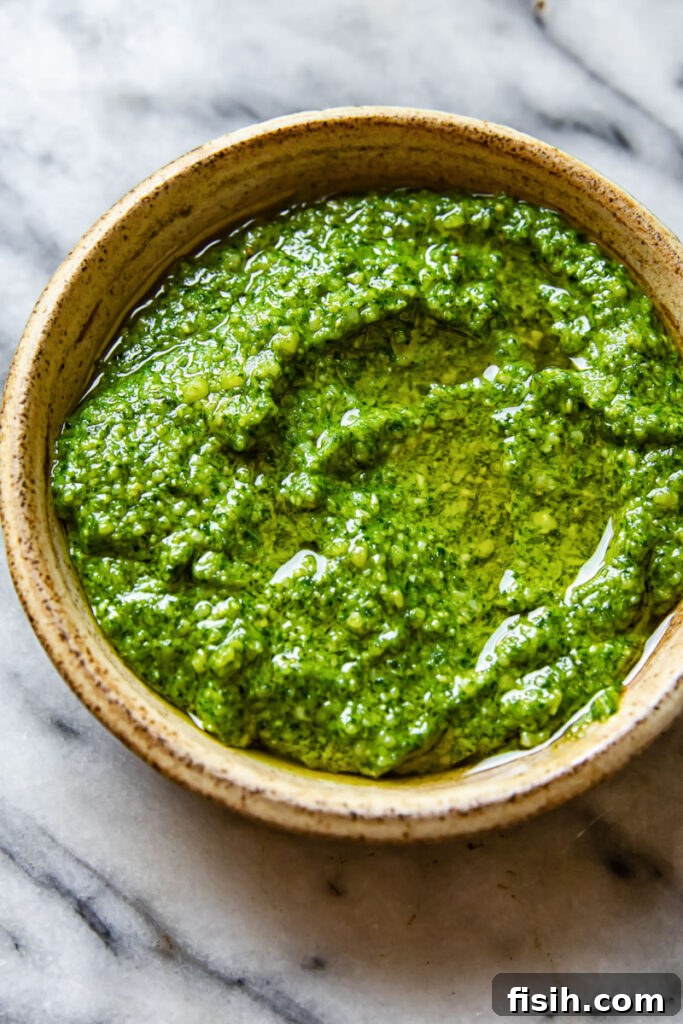
The beauty of homemade pesto lies in its simplicity and the quality of its fresh ingredients. Traditional Genoese pesto is a harmonious blend of fragrant fresh basil leaves, rich Parmesan cheese, delicate pine nuts, pungent garlic, and a generous pour of high-quality olive oil, often brightened with a squeeze of fresh lemon juice. This classic combination creates a sauce that is both robust and refreshing.
While the classic recipe is divine, don’t hesitate to experiment with substitutions to suit your taste or dietary needs. For instance, almonds can be an excellent alternative to pine nuts, offering a slightly different but equally delightful texture and flavor. Similarly, if you prefer, a vegetarian hard cheese can easily replace traditional Parmesan. These slight adjustments allow for personalization without compromising the essence of a great pesto.
Our recipe provides a foundational ingredient ratio, serving as a reliable starting point. However, the true secret to perfect pesto is to always taste and adjust. As you process the ingredients, sample the mixture and tweak the seasoning. Adding more salt, a touch more garlic, or an extra splash of lemon juice can bring all the flavors into exquisite balance, ensuring the best possible result tailored to your palate. This iterative process of tasting and adjusting is key to culinary success.
Beyond the classic basil, pine nut, and Parmesan combination, the pesto-making technique is incredibly adaptable. You can venture beyond traditional pine nuts and explore other varieties like walnuts, which impart a richer, earthier flavor. The base green can also be swapped; try nutrient-rich kale or vibrant spinach for a different hue and taste profile, creating unique and equally delicious sauces. Experimentation is encouraged!
Selecting the Ideal Pasta Shape for Pesto
In Italy, the choice of pasta shape is a serious culinary decision, often dictated by the sauce it accompanies. For a long time, I found this emphasis on shape amusing, but through experience, I’ve come to appreciate that the right pasta shape can genuinely transform a dish. It’s about how the pasta interacts with the sauce, allowing it to cling, absorb, or nestle within its crevices.
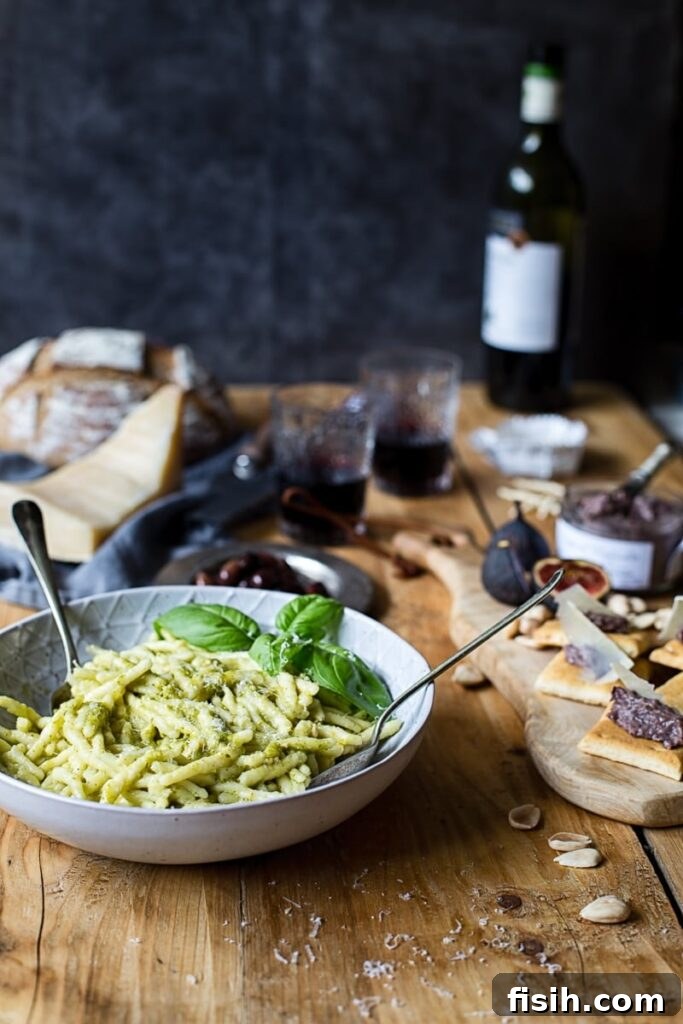
Fortunately, when it comes to pesto, even the most traditional Italian cooks often agree: pesto is remarkably versatile and pairs beautifully with almost any pasta shape. Its creamy, clinging texture means it adheres well to a wide range of forms. For this particular dish, I discovered a pack of gemelli pasta, whose signature twists create delightful little pockets. These twists expertly capture and hold the luscious pesto, ensuring every bite is bursting with flavor and making the pasta incredibly pleasant to eat.
However, gemelli was simply what I had on hand at the time. You truly can’t go wrong when choosing a pasta shape for pesto. Other excellent choices include fusilli, rotini, or cavatappi, whose spirals are perfect for trapping the sauce. Shorter, chunkier shapes like penne or rigatoni also work well, allowing the pesto to coat both the inside and outside. Even long, thin pasta like spaghetti or linguine, when properly tossed, becomes beautifully enrobed in the vibrant green sauce. The key is to choose a shape that you enjoy eating and that provides a good surface area for the pesto to cling to, ensuring maximum flavor in every forkful.
Expert Recipe Tips for Perfect Pesto Pasta
- **Embrace Customization:** This recipe is intentionally simple and basic, making it incredibly easy to master and adapt. Feel free to personalize it by adding your favorite proteins such as grilled chicken, succulent shrimp, or flavorful sausage. For a vegetarian boost, consider incorporating chickpeas, white beans, or a medley of vegetables like sweet cherry tomatoes, sun-dried tomatoes, roasted bell peppers, or tender asparagus.
- **The Essential Salted Water:** Always, always salt your pasta water generously before adding the pasta. This seemingly small step is absolutely vital for infusing the pasta with flavor from the inside out. Without it, your pasta will taste bland, regardless of how delicious your sauce is. After salting, simply follow the package instructions to cook your pasta to a perfect al dente.
- **The Secret to Creamy Consistency:** To achieve that silky, creamy consistency that coats every strand of pasta beautifully, remember to reserve about a cup of the starchy pasta cooking water just before draining. As you stir in the homemade pesto sauce, gradually splash in 2-3 tablespoons of this reserved water. The starch in the water helps emulsify the pesto, creating a smooth, rich sauce that clings perfectly. Skipping this crucial step can result in dry, clumpy pasta that lacks that desirable luscious texture. Continue adding pasta water, a tablespoon at a time, until you reach your desired consistency.
- **Effortless Pesto Making:** A food processor or a powerful blender makes preparing fresh pesto at home incredibly easy. Just combine all your ingredients in the appliance, pulse until smooth, and let the machine do all the hard work for you. It’s a convenient way to enjoy restaurant-quality pesto in minutes!
Delightful Serving Suggestions for Pesto Pasta
This basil pesto pasta dish is incredibly versatile, making it a star on its own or as part of a larger meal. It’s substantial enough to stand as a complete meal, ideal for a quick and satisfying lunch or a no-fuss weeknight dinner. To create a perfectly balanced yet light meal, serve your pesto pasta alongside a crisp, fresh salad, such as a classic Caprese salad with ripe tomatoes, fresh mozzarella, and aromatic basil. Add a side of steaming hot garlic bread for an extra layer of comfort and flavor, perfect for soaking up any leftover sauce.
But the culinary possibilities for pesto pasta extend far beyond a simple standalone dish. It shines wonderfully as a component of a more elaborate Italian feast, especially as a primo (first course) after lighter appetizers. Imagine starting your meal with a selection of delicious antipasti, followed by a beautiful plate of vibrant pesto pasta, setting the stage for a memorable dining experience.
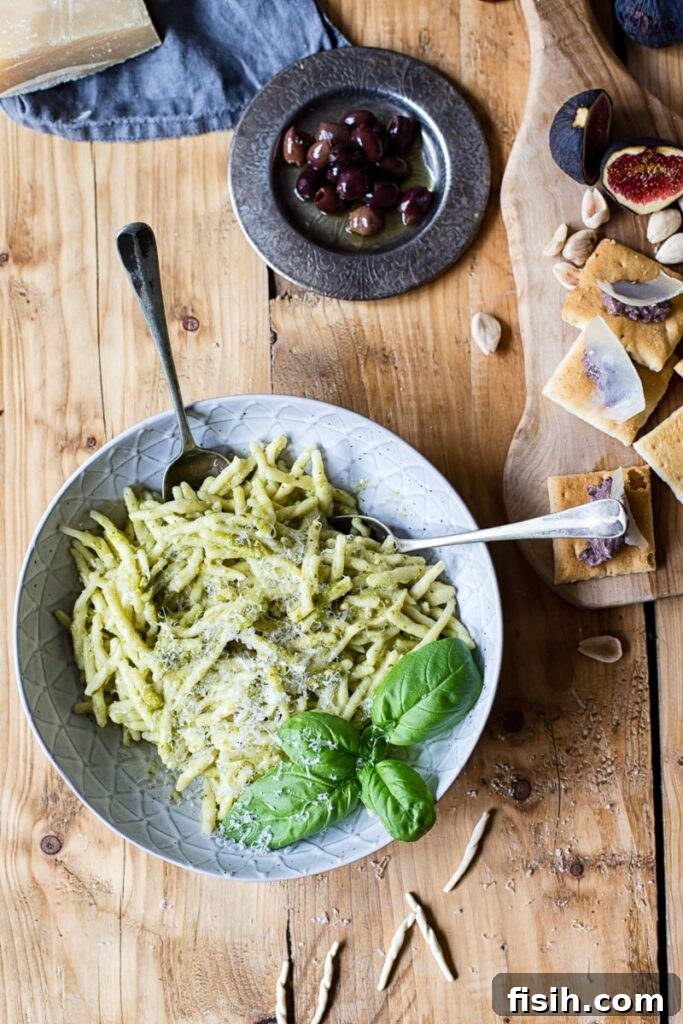
The options for antipasti are virtually limitless, adding to the joy and variety of an Italian meal. I’m particularly fond of savory mushroom crostini, but there are countless other crostini options to explore, from tomato and basil to roasted vegetable combinations. A simple platter of olives, cured meats, and cheeses also makes an excellent prelude to pesto pasta.
Storage, Leftovers, and Meal Prep Considerations
While freshly cooked pasta, especially al dente, is truly incomparable, sometimes leftovers are inevitable, or you might want to prepare components in advance. Unfortunately, time spent in the refrigerator means cooked pasta will lose some of its lovely al dente texture, becoming softer. For the best experience, it’s always ideal to cook only the amount of pasta you plan to eat immediately.
However, life often gets in the way of ideal situations, and I wholeheartedly dislike wasting food. If you find yourself with leftover pesto pasta, it can be safely stored in an airtight container in the refrigerator for 3-4 days. Be aware that its texture will soften over time. Reheating is simplest in a microwave, gently warming it until just heated through. You might want to add a tiny splash of water or olive oil to help revive the sauce.
For any extra homemade pesto you have, keep it in an airtight container in the refrigerator. A layer of olive oil poured over the top before sealing can help prevent oxidation and preserve its vibrant green color and freshness for 1 week to 10 days. You can also freeze pesto in ice cube trays for longer storage, transferring the frozen cubes to a freezer bag once solid. This makes for convenient portions to pull out and use whenever a pesto craving strikes.
More Easy Pasta Recipes to Enjoy
- 5 Minute Ravioli Sauce
- Creamy Dreamy Pasta Cream Sauce
- Zesty Lemon Garlic Pasta with Broccoli and Asparagus
- Hearty Pasta e Piselli (Pasta and Peas)
Basil Pesto Pasta
Equipment
-
Food processor
Ingredients
- 450g / 1 lb pasta of your choice, I used gemelli pasta
- 50g / 2½ cups fresh basil
- 50g / ⅓ cup pine nuts or blanched almonds
- 50g / ⅓ cup Parmesan cheese, plus extra for serving
- 4 tbsp olive oil
- 1 lemon, juice only
- 1 clove garlic
Instructions
-
Cook the pasta in a large pot of salted water according to package directions.
-
In a food processor or blender combine the fresh basil, pine nuts or almonds, Parmesan cheese, pressed garlic clove and the juice of one lemon. Process until smooth. With the motor of the food processor still running pour in the olive oil through a chute and process for 10-20 seconds longer. Turn the food processor off and taste the pesto, add a pinch of salt if necessary.
-
Drain the pasta while reserving 1 cup/250ml of cooking water. Combine the pasta and pesto, toss everything gently to combine, add a splash of reserved water to loosen the sauce. The dish should be saucy and not a paste. Keep adding the pasta water until you reach the desired consistency. Taste and add more salt if needed. Serve with additional grated Parmesan cheese.
Notes
Nutrition
Nutrition information is automatically calculated, so should only be used as an approximation.