
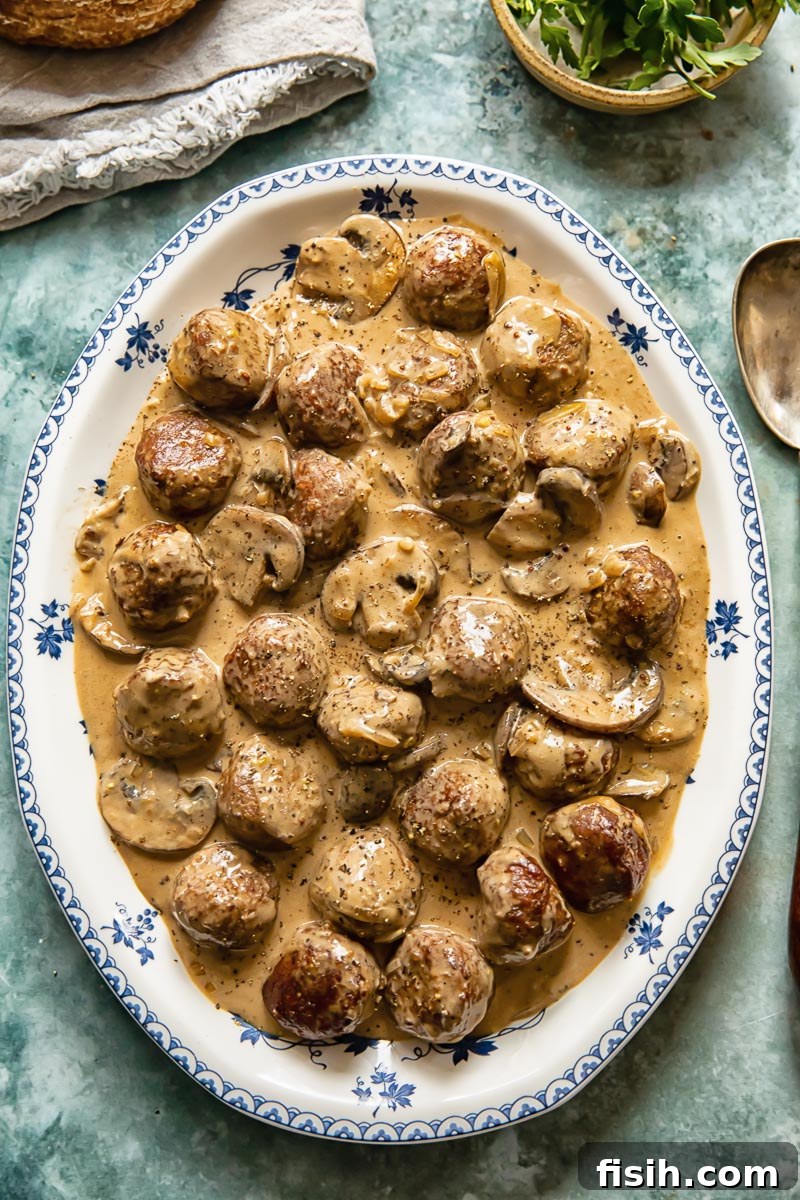
In the depths of a Baltic winter, few dishes offer the heartwarming comfort and rich satisfaction of a classic Beef Stroganoff. Imagining yourself dining like a Russian noble on every cold evening is certainly appealing, but perhaps your culinary budget has other ideas! This thrifty yet incredibly delicious homemade Meatballs Stroganoff recipe brings that same creamy decadence to your table, allowing you to indulge as often as the snow falls in Siberia – without breaking the bank.
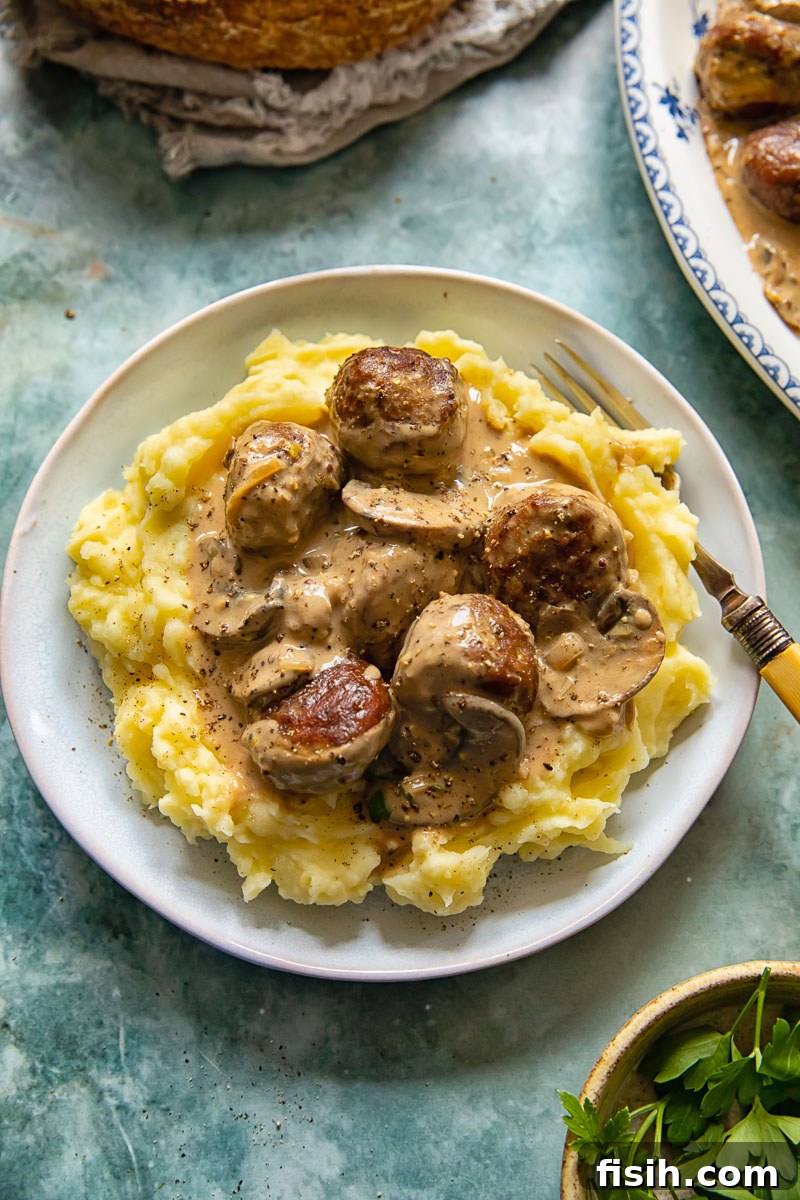
Elevate this comforting meal even further by serving it with a traditional side of creamy Instant Pot Mashed Potatoes with Cream Cheese. The velvety texture and tangy notes of the potatoes perfectly complement the rich, savory sauce, creating a truly unforgettable dining experience.
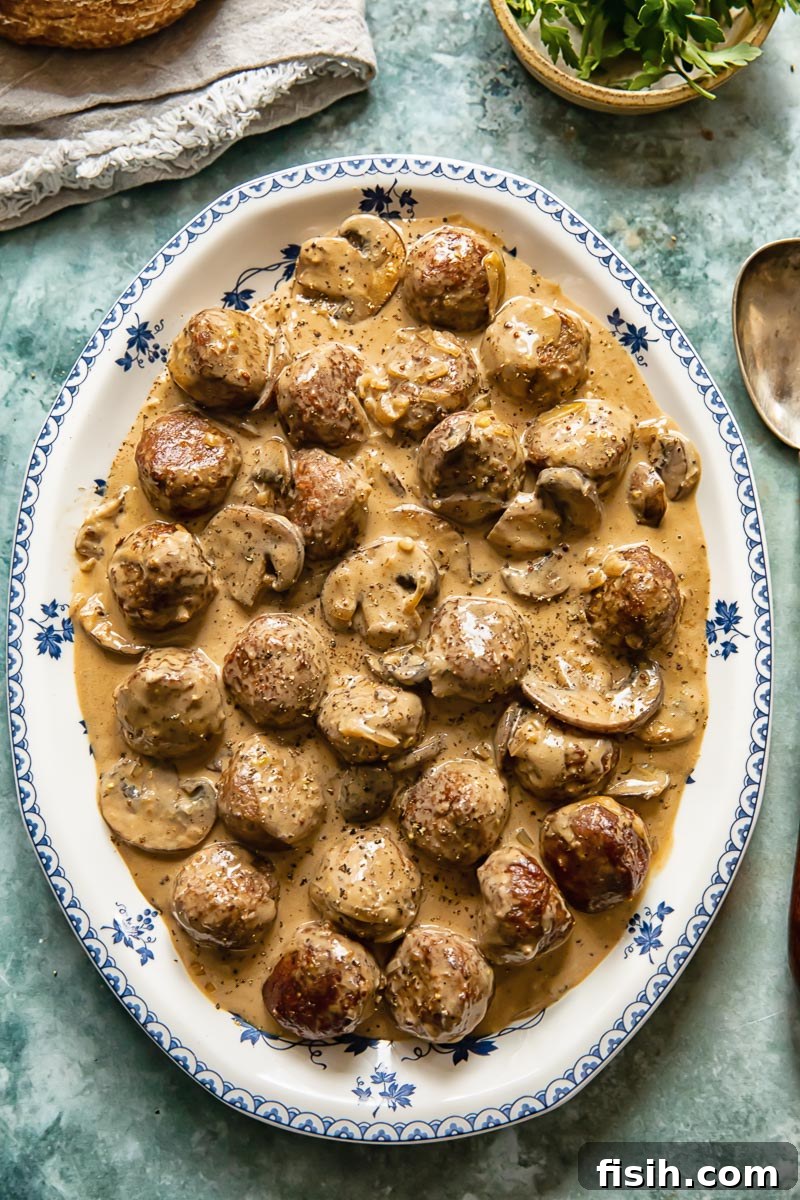
A Culinary Twist: Why Meatballs Make the Perfect Stroganoff
You might be wondering why one would dare to adapt such a time-honored, bona fide classic. While Count Stroganoff himself might have savored prime steak seven nights a week within the opulent walls of his St. Petersburg Palace, such luxury isn’t a daily reality for most of us. It was from this need for an equally comforting yet more accessible dish that the meatball version of the beloved saucy Stroganoff was born, offering a delightful and practical alternative that retains all the charm and flavor of the original.
Beyond being a significantly more economical alternative to premium cuts like fillet steak, ground beef also offers an undeniable family-friendly appeal, especially if you have little ones at home. Firstly, children, including my own, have always had an inexplicable fondness for meatballs. Their bite-sized nature makes them easy to eat, reducing mealtime fuss. Secondly, steak can often be tricky and tiresome for small jaws to chew, sometimes leading to mealtime resistance. Beef Stroganoff with ground beef, transformed into tender meatballs, might not possess the inherent fancy aura of its blue-blooded cousin, but its down-to-earth simplicity and comforting flavors are sure to charm everyone at the table, making it a regular fixture in your family’s meal rotation.
The Illustrious History of Stroganoff: From Russian Nobility to Global Classic
Unlike many cherished Russian and Eastern European recipes that trace their roots back to humble peasant kitchens, Beef Stroganoff boasts a decidedly aristocratic origin. The dish is famously named after Count Pavel Alexandrovich Stroganov, a prominent diplomat and wealthy magnate during the late 19th century. Count Stroganov was renowned for his “open table” tradition, a fashionable practice among the Russian elite of the era. These gatherings were essentially lavish supper clubs where anyone suitably dressed and well-mannered could attend, fostering a vibrant social scene for the glitterati of St. Petersburg.
It was Stroganov’s personal French chef, whose name is often debated but whose culinary genius is undisputed, who specially created the eponymous dish for these grand events. The design of the dish was ingenious, perfectly suited for the demands of an “open table.” It featured thinly sliced beef in a creamy sauce, making it easy to portion and serve efficiently to between 40 and 60 guests. The inclusion of meat served as a clear display of the host’s wealth and generosity, while the use of sour cream (smetana) deftly catered to the local Russian palate, which favored tangy, rich dairy products. This combination made it an instant dinner party delight, celebrated for both its practicality and exquisite flavor.
The first official recipe for Beef Stroganoff was documented and published in 1871 in “A Gift to Young Housewife,” an influential Russian cookbook authored by Elena Molokhovets. To this day, her meticulous recipe is widely regarded as the original and most authentic rendition of the dish, providing a foundational blueprint for all subsequent adaptations. The narrative of Stroganoff took another significant turn after the Russian Revolution in 1917. As the Bolsheviks rose to power, many aristocrats and members of the elite were compelled to flee Russia. With them, the famed Beef Stroganoff embarked on a culinary diaspora, finding new homes and evolving in cuisines across China, Europe, and America.
It is widely believed that the popular practice of serving Beef Stroganoff over noodles, particularly egg noodles, is a direct influence from Chinese culinary traditions. In its country of origin, Russia, the dish was traditionally enjoyed with potatoes, often mashed or roasted, or sometimes with rice. The introduction of noodles showcased the dish’s adaptability and its capacity to integrate into diverse gastronomic landscapes, solidifying its status as a truly global comfort food.
Crafting the Perfect Meatballs for Your Stroganoff
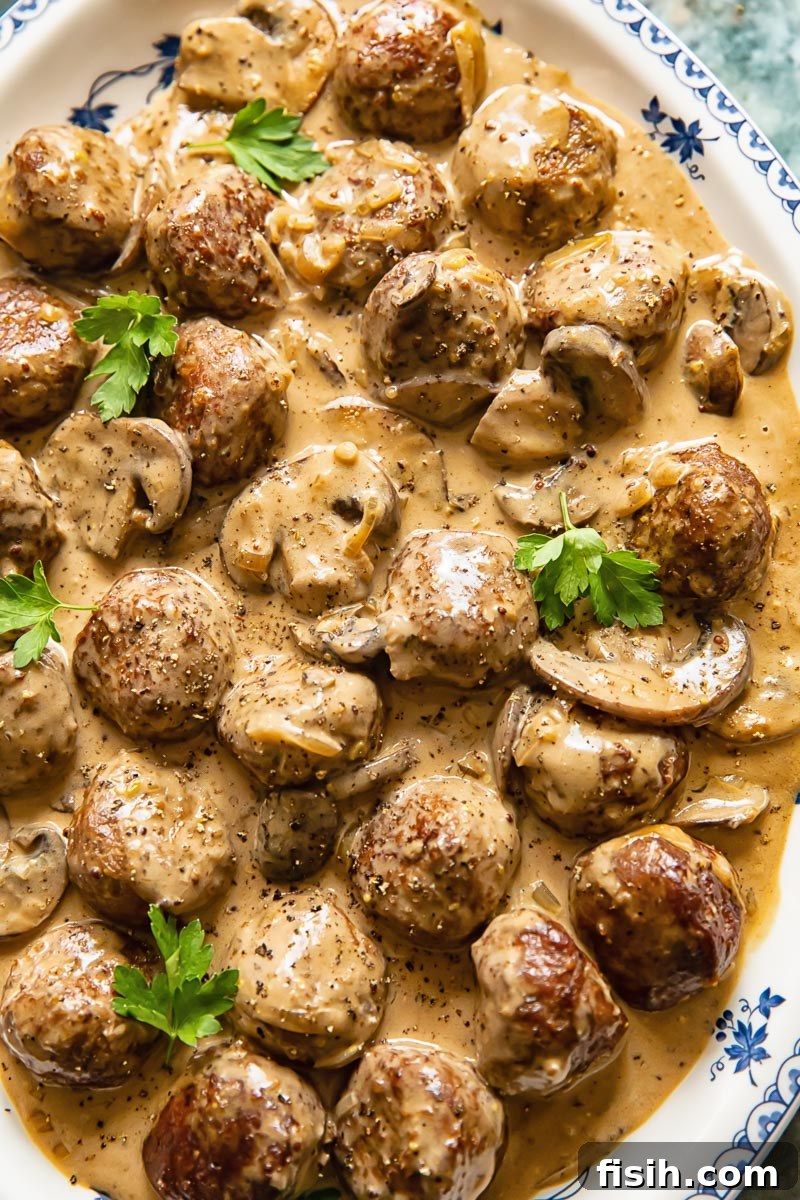
The secret to an exceptional Meatballs Stroganoff begins with the meatballs themselves. The perfect meatball should be round, approximately two-bites in size, and, most importantly, incredibly juicy and tender. My tried and tested recipe guarantees just that. It calls for an equal ratio of ground beef and ground pork, a blend specifically chosen for its superior results.
I deliberately incorporate ground pork because it tends to be fattier than lean beef, and it’s this higher fat content that contributes significantly to the meatballs’ succulent texture and rich flavor. The pork also adds a subtle sweetness and depth that complements the savory beef beautifully. To enhance the umami profile and add a touch of complexity, a dash of Worcestershire sauce is essential. This fermented condiment introduces a savory, slightly tangy note that deepens the overall flavor of the meat. A judicious pinch of black pepper and salt ensures perfect seasoning, making these homemade meatballs so irresistibly flavorful that you won’t give expensive steak a second thought. The combination of these ingredients and the careful balance of seasoning creates meatballs that are not just tender and juicy, but also bursting with savory goodness, ready to soak up the rich Stroganoff sauce.
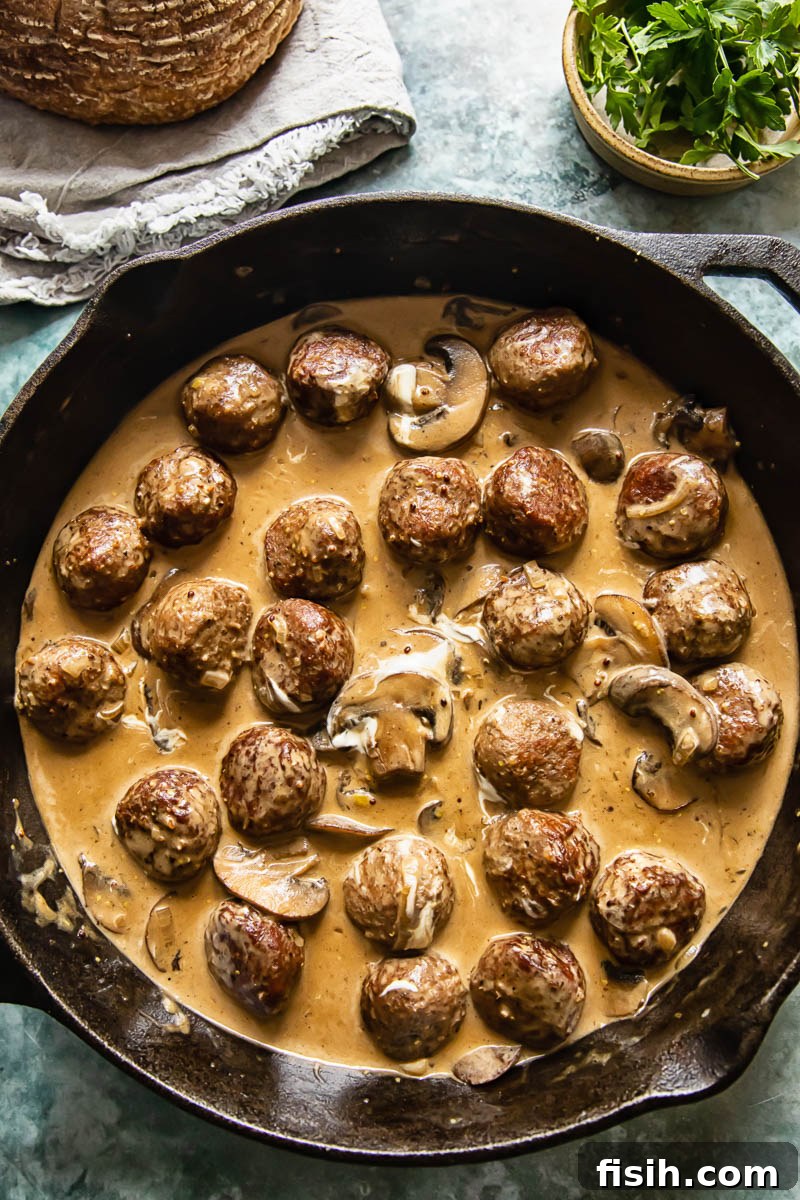
The Signature Stroganoff Sauce: A Symphony of Flavors
While I’ve taken a creative liberty with the meat element by using meatballs, I remain steadfastly true to the essence of the classic Stroganoff sauce. This is where the magic truly happens, transforming simple ingredients into a deliciously rich and complex gravy that perfectly cradles your tender meatballs.
The cornerstone of any authentic Stroganoff sauce is cream. Historically, Smetana—a thick, tangy, and characterful sour cream widely enjoyed across Central and Eastern Europe—would have been the ingredient of choice in the original Russian recipe. While true Smetana is now more readily available in many supermarkets, you don’t need to embark on an arduous quest to find it. Regular full-fat sour cream or crème fraîche make excellent, widely accessible substitutes, delivering the necessary tang and richness without compromising the sauce’s integrity. The key is to ensure it is full-fat to prevent splitting and achieve that luscious texture.
The secret to a truly outstanding Stroganoff sauce lies in the careful balance and harmonious interplay of its key ingredients. Each component contributes to a gastronomical symphony that could rival a Tchaikovsky masterpiece. The tart acidity of the cream is beautifully grounded by the earthy, savory notes of sautéed mushrooms, which also add a wonderful umami depth. These earthy mushrooms are then exquisitely lifted by a splash of fruity brandy, which deglazes the pan, capturing all the delicious browned bits (fond) and adding a nuanced complexity. The subtle sweetness of the brandy, in turn, is expertly curbed and balanced by the pungent, slightly spicy kick of whole grain mustard seeds. A touch of mustard, incidentally, was not merely an optional addition but a crucial element in the original recipe, so important that it was even included in the title of its very first written version, highlighting its indispensable role in the sauce’s characteristic flavor profile.
I personally adore this sauce but tend to prefer a slightly lighter ratio of gravy to meatball on my plate. This preference largely stems from my enjoyment of Beef Stroganoff served over creamy mashed potatoes, where a overly runny sauce would detract from the overall texture. However, if your preference leans towards serving your Stroganoff over delicate egg noodles, you might consider adjusting the proportions to achieve a more generous coating of sauce, ensuring every strand of noodle is enveloped in its rich flavor. Ultimately, the beauty of this dish lies in its adaptability to personal taste.
Expert Tips for Stroganoff Success
- The Meatball Blend: While it might be tempting to use just one type of ground meat for your meatballs, I cannot stress enough the importance of the beef and pork combination. This blend isn’t just about flavor; it’s about achieving the perfect texture. The fattier pork ensures the meatballs remain incredibly juicy and tender, preventing them from drying out during cooking, while the beef provides a robust, classic flavor.
- Don’t Skip Browning: I am a strong believer in the power of browning meat, and this step is non-negotiable for a truly flavorful Stroganoff. It takes just a few extra minutes, but the rich, deep flavor that develops from the Maillard reaction (the chemical reaction between amino acids and reducing sugars that gives browned food its distinctive flavor) is absolutely worth it. Use a medium-high heat to ensure a beautiful caramelization on the exterior of your meatballs.
- Chef’s Flair for Browning: Browning your meatballs offers a fantastic opportunity to add a bit of “cheffy flair” to your cooking. Instead of laboriously turning each meatball individually, gently shaking the pan with one hand allows them to roll and brown evenly on all sides. This technique not only looks professional but also helps the meatballs retain their perfectly round shape.
- Choosing Your Spirit: The choice of alcohol significantly impacts the depth and character of your sauce. Brandy, my preferred choice, brings a wonderful fruity and oaky complexity that truly enhances the richness. If you opt for whiskey, you can expect a smoky and subtly peaty undertone, adding a different dimension. Dry sherry is another excellent substitute if that’s what you have on hand, offering a more subtle, nutty taste. Each spirit contributes its unique aromatic profile, so choose based on your preference or what’s in your liquor cabinet.
- Go Full-Fat with Dairy: A common pitfall when making cream-based sauces is attempting to use low-fat dairy. Whether you choose sour cream or crème fraîche, always ensure it is full-fat. Low-fat dairy products have a higher water content and less fat, making them much more prone to splitting or curdling when exposed to heat, resulting in a grainy rather than smooth sauce.
- Mind the Temperature: When incorporating dairy into your sauce, timing and temperature are crucial. Always add the sour cream or crème fraîche when the sauce is simmering gently, not boiling vigorously. Adding it at too high a temperature can shock the dairy proteins, causing them to curdle and separate, ruining the smooth texture of your sauce.
- Traditional Tang or Rich Comfort: A truly traditional Stroganoff sauce, especially one made with authentic Russian smetana, will have a tantalizingly tangy profile. Any Russian connoisseur will swear by this tartness. I highly encourage you to experience this authentic flavor, but if you find the tanginess too intense for your palate, a good quality heavy cream can be substituted. It will yield a richer, milder sauce, albeit deviating slightly from the traditional taste.
- Don’t Overcrowd the Pan: When browning meatballs or sautéing mushrooms, cook them in batches if necessary. Overcrowding the pan lowers the temperature, steaming the ingredients instead of browning them, which prevents the development of those crucial deep flavors.
- Season as You Go: Taste and adjust your seasoning at various stages of cooking, especially before adding the sour cream. This ensures a well-balanced flavor profile throughout the dish.
Storage and Leftovers: Maximizing Your Meatballs Stroganoff
For those new to my blog, it bears repeating: cream-based dishes, by their very nature, do not defrost well. The delicate emulsion of the sauce is likely to break upon freezing and thawing, resulting in an unappetizingly split and grainy texture. Therefore, freezing this Meatballs Stroganoff is not recommended if you want to maintain the creamy integrity of the sauce.
However, if you find yourself with a generous amount of leftover meatballs that you can’t quite finish in one sitting, they can still be enjoyed! Simply cover them tightly in an airtight container and keep them refrigerated for up to 2-3 days. When it’s time to reheat, gently warm them on the stovetop over a low heat. Stir occasionally to ensure even heating and prevent sticking, but be extremely careful not to bring the sauce to a rolling boil. High heat can cause the cream to curdle, even during reheating. The goal is to warm the meatballs through gently until piping hot, preserving the smooth, luxurious texture of your delicious Stroganoff sauce.
Explore More Stroganoff Variations to Try
Once you master this Meatballs Stroganoff, you might want to explore other delicious takes on this classic dish:
- Creamy Chicken Stroganoff with Mushrooms
- Mushroom Stroganoff
- Vegetarian Mushroom Stroganoff
Meatballs Stroganoff
Equipment
-
Cast iron skillet
Ingredients
For the Meatballs
- 450g / 1lb ground beef, lean
- 450g / 1lb ground pork, lean
- 40g / 1/2 cup breadcrumbs
- 1/2 onion, finely grated
- 125ml / 1/2 cup beef stock or milk
- 1 egg
- 1 tsp black pepper
- 2 tsp salt
- 1 tbsp vegetable oil , for frying
For the Sauce
- 1 tbsp vegetable or olive oil
- 1 tbsp butter
- 225g / 1/2lb mushrooms, sliced
- 1/2 tsp salt
- 1/2 tsp black pepper
- 1 onion, sliced
- 2 cloves garlic, minced
- 2 tbsp flour
- 60ml / 1/4 cup brandy or dry sherry, can also use whiskey
- 500ml / 2 cups beef stock
- 1 bay leaf
- 1 tsp wholegrain mustard
- 250ml / 1 cup full fat sour cream or creme fraiche
- 1 tbsp fresh parsley or dill, optional
Instructions
-
In a large bowl, combine both ground pork and beef, breadcrumbs (soaked in beef stock or milk if using), finely grated onion, 1 beaten egg, salt, and pepper. To test the balance of spices and seasoning, pinch off a small amount of the mixture and fry it for a quick taste test. Adjust seasoning if needed.
-
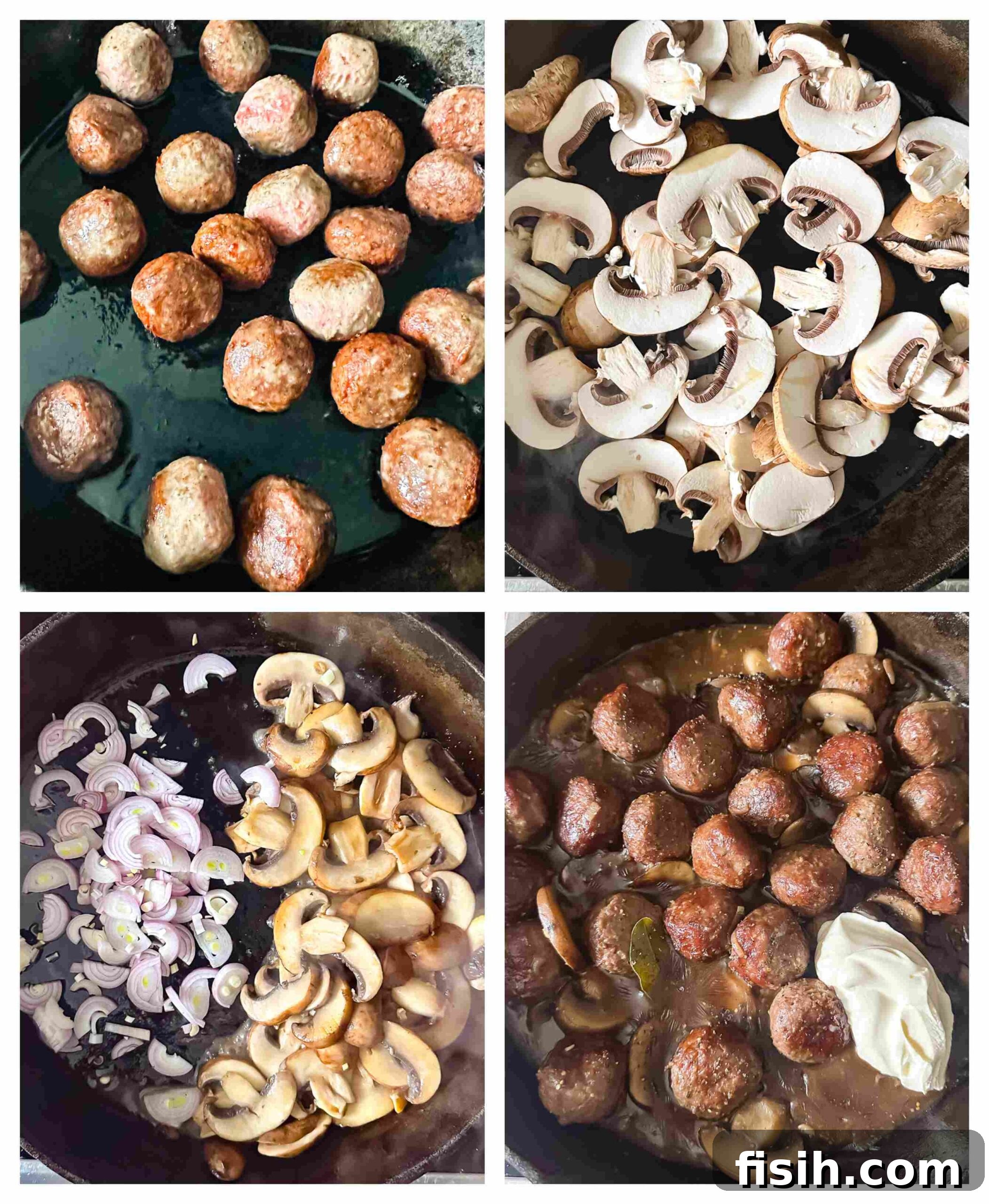
Shape the meatballs by rolling them evenly in your hands. You should yield approximately 25 golf ball-sized meatballs. Heat 1 tbsp of vegetable oil in a large skillet (preferably cast iron) over high heat. Brown the meatballs on all sides until nicely caramelized on the outside but not cooked all the way through. Remove the browned meatballs to a large bowl and set aside.
-
To the same pan, add one tablespoon of vegetable oil and one tablespoon of butter. Once the butter is melted and sizzling, add the sliced mushrooms and cook until golden brown and tender. Push the mushrooms to one side of the pan and add the sliced onion. Cook the onion for about 5 minutes, stirring occasionally, until softened and lightly golden, incorporating it with the mushrooms. Then, add the minced garlic and cook for an additional 30 seconds until fragrant.
-
Sprinkle the flour evenly over the mushroom and onion mixture, mixing well to combine with the fat to create a roux. Continue cooking over medium heat for a couple of minutes to cook out the raw flour taste. Next, pour in the brandy (or sherry/whiskey) and allow the liquid to reduce by about half, scraping up any browned bits from the bottom of the pan. Then, add the beef stock, wholegrain mustard, and the bay leaf, bringing the mixture to a gentle simmer. Return the browned meatballs to the pan, lower the heat to low, and let it cook for 15 minutes, stirring once in a while to ensure even cooking and to prevent sticking. At the very end of the cooking time, stir in the full-fat sour cream. Immediately remove the pan from the heat to prevent the cream from curdling. Serve hot, garnished with freshly chopped parsley or dill if desired.
Nutrition
Nutrition information is automatically calculated, so should only be used as an approximation.