
Unlock the culinary secret that tastes like French sophistication but is surprisingly simple to master: garlic confit. With just two core ingredients and a little patience, you can transform ordinary garlic into a luxurious, mellow, and incredibly versatile ingredient that will elevate your cooking to gourmet levels. Prepare to impress everyone with this powerful, secret weapon in your kitchen arsenal.
Continue exploring delightful French-inspired cuisine with my elegant celeriac remoulade or the classic comfort of a Croque Madame.
Imagine indulging in the rich, sweet flavor of garlic without the tell-tale harshness or dreaded “garlic breath.” This isn’t a fantasy; it’s the reality of garlic confit, a gastronomic breakthrough we owe to the ingenious medieval cooks of France. They discovered a method to transform pungent garlic into soft, buttery pearls, and you’re about to learn their timeless technique.
What is Garlic Confit? The Art of Preservation
The term “confit” (pronounced kawn-FEE) is French for “preserve.” You might recognize its cousin, “confiture,” which refers to fruit preserves like jams and jellies. Historically, the confit method was developed in the Middle Ages as a crucial food preservation technique, long before the advent of modern refrigeration and vacuum-sealed packaging. It was traditionally used to preserve meats (like the famous duck confit), but the principle extends beautifully to vegetables and fruits.
Essentially, confit involves slowly cooking an ingredient and then preserving it in fat. For meats, this means cooking in their own rendered fat. For fruits, it’s typically cooked in a sugar syrup. And for vegetables, like our beloved garlic, it’s all about the oil. Whole garlic bulbs or individual peeled cloves are gently simmered, fully submerged in oil, over a very low heat. That’s the simple magic behind it!
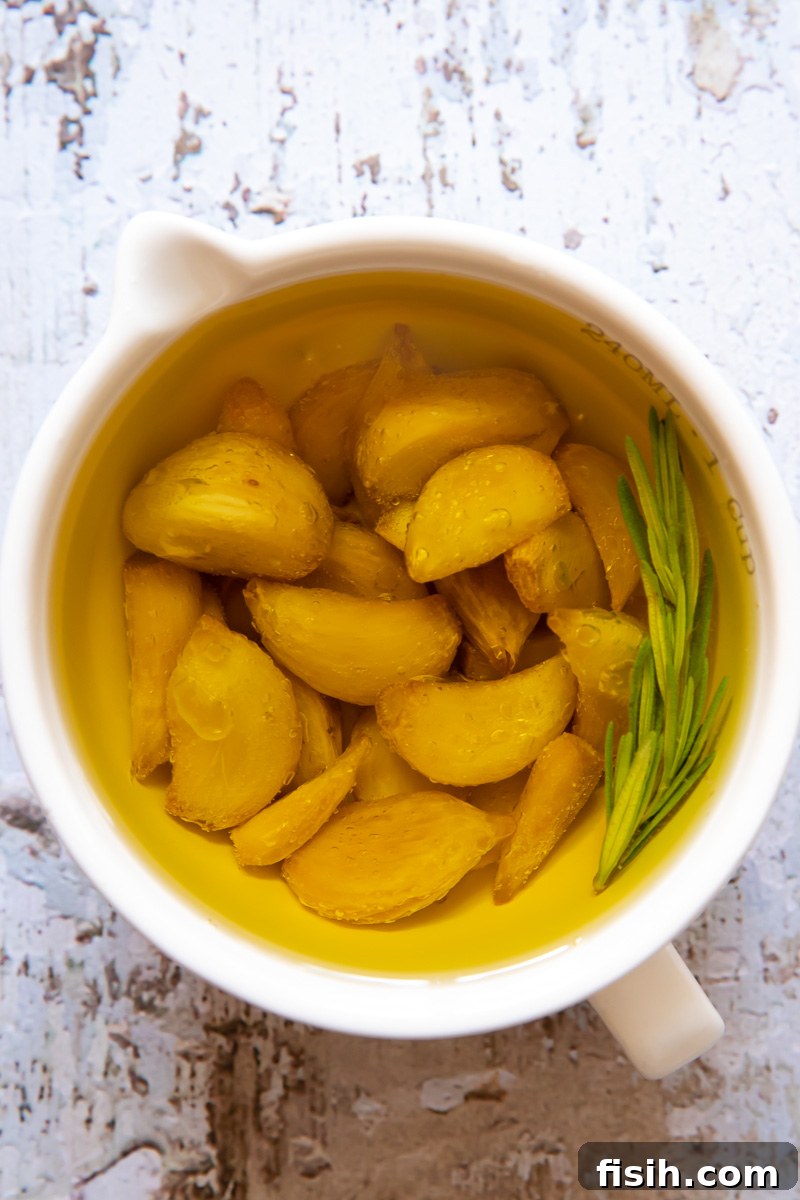
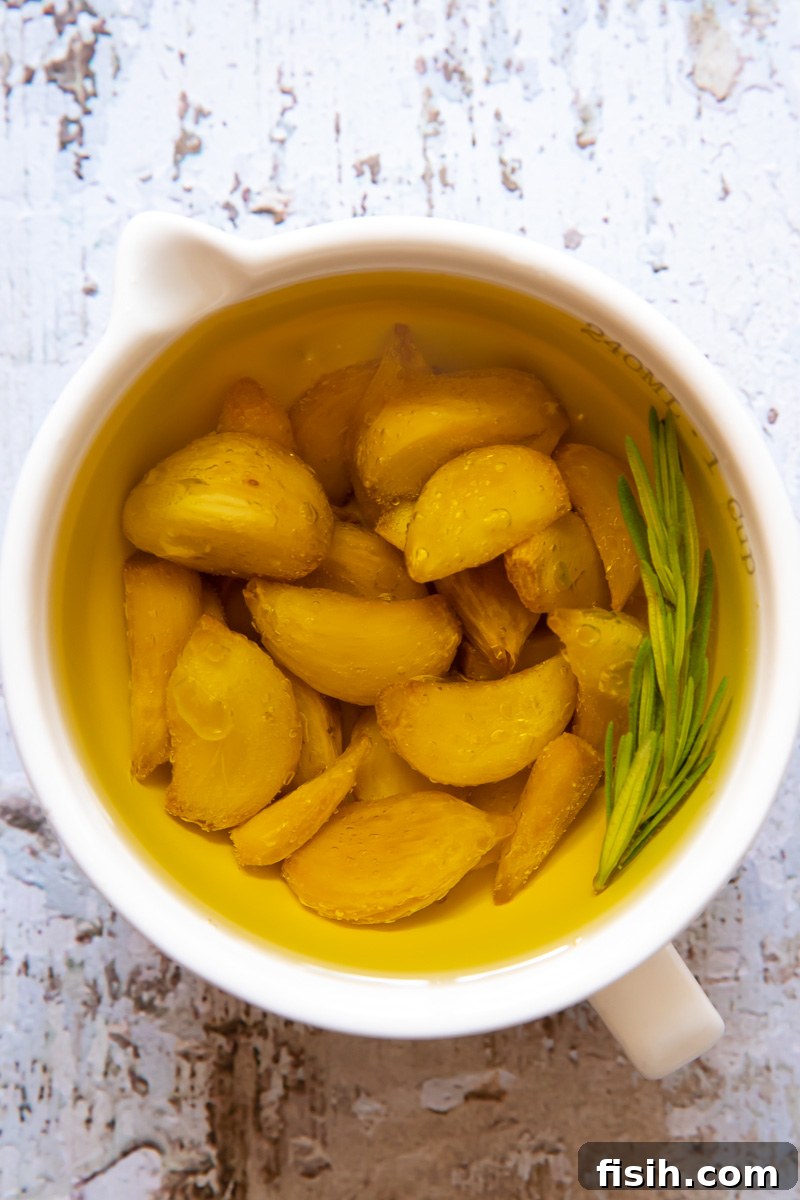
The result of this gentle cooking process is a jar of golden, aromatic oil cradling the sweetest, most tender, and incredibly syrupy garlic cloves. This isn’t just cooked garlic; it’s garlic transformed. The harsh, biting notes are replaced by a profound sweetness and buttery richness that melts in your mouth.
What makes confit garlic particularly remarkable is how it mitigates the common issue of garlic breath. When garlic is minced, chopped, or grated, it releases enzymes (specifically alliinase) that react to produce the strong, pungent sulfur compounds responsible for its characteristic aroma and potent flavor. However, with garlic confit, the cloves are kept whole, and the slow, low-temperature cooking significantly deactivates these enzymes. This means you can enjoy the deep, complex flavor of garlic in generous amounts without the usual olfactory aftermath. It’s a game-changer for any garlic lover!
Why Make Garlic Confit at Home?
Beyond its simple elegance, making garlic confit at home offers a multitude of benefits that elevate your everyday cooking:
- Unparalleled Flavor Transformation: The slow cooking process completely mellows garlic’s pungent bite, turning it into sweet, spreadable, almost buttery cloves with a rich, complex aroma that enhances nearly any savory dish.
- Dual Culinary Treasure: When you make garlic confit, you don’t just get the tender garlic cloves; you also gain a deeply aromatic, garlic-infused oil. This “liquid gold” is a flavor powerhouse in itself, perfect for dressings, sautéing, or dipping.
- Economic and Convenient: While gourmet garlic oils can be pricey, making your own confit is surprisingly cost-effective. It’s also a fantastic way to prep garlic in advance, saving time during busy weeknights as you’ll always have these flavor bombs ready to go.
- Elevate Everyday Meals: A spoonful of garlic confit or a drizzle of its oil can transform a simple piece of toast, mashed potatoes, or a plain pasta dish into something truly special and luxurious. It adds a sophisticated touch with minimal effort.
- Control Over Ingredients: Making it yourself allows you to choose high-quality garlic and your preferred extra virgin olive oil, ensuring the best flavor and no unwanted additives. You can also customize it with your favorite herbs and spices.
- Health-Conscious Indulgence: For those who love garlic but find it difficult to digest or wish to avoid the strong after-effects, confit garlic provides a gentler, more digestible option, allowing guilt-free enjoyment.
How to Make Perfect Garlic Confit: A Step-by-Step Guide
Creating this delicious garlic confit is straightforward, but a few key details ensure a perfect result every time.
Equipment
- Small Saucepan: Crucial for minimizing the amount of oil needed, as garlic cloves must be fully submerged.
- Instant Read Thermometer: Essential for maintaining the correct low temperature, preventing the garlic from frying.
- Clean Glass Jar with Lid: For safe storage of your finished confit.
Ingredients
- 2 heads garlic, separated into cloves and peeled (approximately 20-25 cloves)
- 250ml / 1 cup extra virgin olive oil, or enough to fully submerge garlic
- 1 sprig fresh rosemary or thyme (optional, for added flavor)
Instructions
- Prepare the Garlic: Begin by peeling your garlic cloves. A quick tip for easy peeling: separate the cloves, place them in a bowl, cover with hot water for 15 minutes, then drain and peel. The skins should slip off easily.
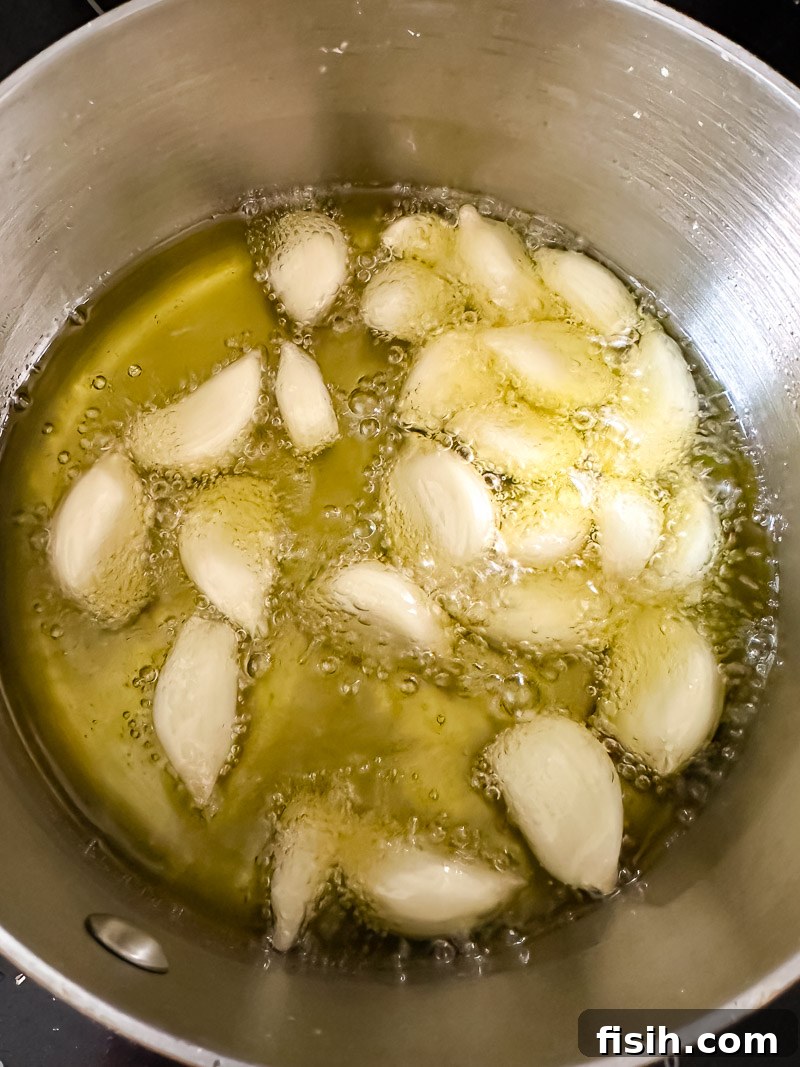
- Submerge in Oil: Select the smallest saucepan you have. This is important because the garlic cloves need to be fully submerged in the olive oil. Add the peeled garlic cloves to the pan, then pour in enough good quality extra virgin olive oil to cover them completely. If your pan is too wide, you’ll need significantly more oil.
- Gentle Heat: Place the saucepan on your stovetop and set the heat to the absolute lowest possible setting. The goal is a gentle simmer, not a fry.
- Monitor Temperature: This is the most critical step. Use an instant-read thermometer to monitor the oil’s temperature. The ideal range is between 80°C and 90°C (175°F-195°F). Never let the oil boil or fry the garlic. If the temperature starts to climb too high, remove the pan from the heat temporarily until it cools back down, then return it to the lowest setting.
- Confit Until Tender: Continue to cook the garlic very gently for approximately 25-30 minutes on the stovetop. If you prefer a more hands-off method, you can also cook the garlic in an oven preheated to a consistent 90°C (195°F) for 1-2 hours. The garlic should become incredibly tender, soft enough to be easily pierced with a knife, and slightly golden brown in color. It should have a spreadable consistency.
- Infuse and Cool: Once the garlic is perfectly tender, remove the pan from the heat. If you’re adding optional aromatics like a sprig of rosemary or thyme, add it now. Allow the garlic and oil to cool completely in the pan. This allows the flavors to further meld and prevents thermal shock to your storage jar.
- Store Safely: Once completely cool, carefully transfer the confit garlic cloves and all the infused oil into a very clean, preferably sterilized, airtight glass jar.
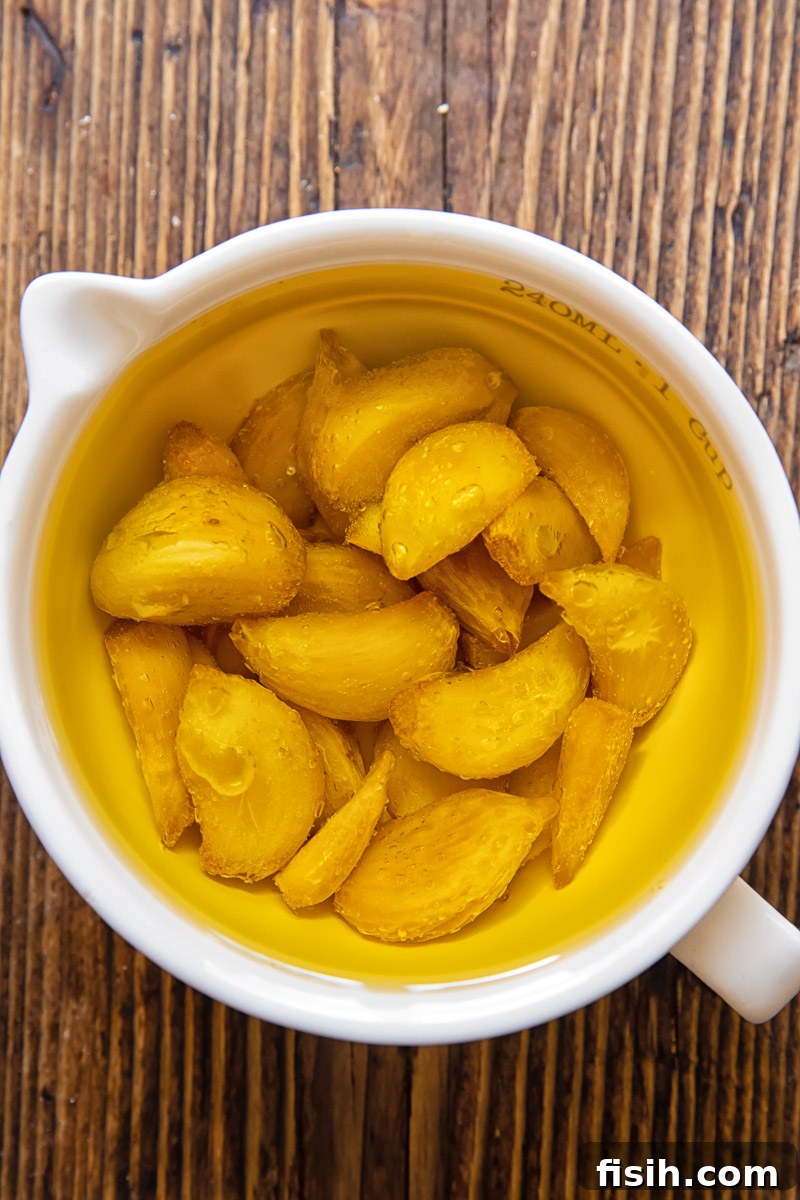
The Golden Elixir: Culinary Uses of Garlic Confit
This richly unctuous treasure offers a universe of savory applications, both for the soft, sweet cloves and the fragrant, infused oil. Garlic confit is a vegan garlic-lover’s dream, but its appeal is universal.
Using the Tender Confit Garlic Cloves:
- Spreads: Mash the butter-soft cloves directly onto warm toast or crusty bread for an incredibly easy and wholly vegan garlic bread. It’s also divine on bruschetta or crackers.
- Mashed Delights: Squash the cloves and a drizzle of the garlic-infused oil into mashed potatoes (or any other mash like parsnip or cauliflower) for a sweetly spiked, deeply savory side dish.
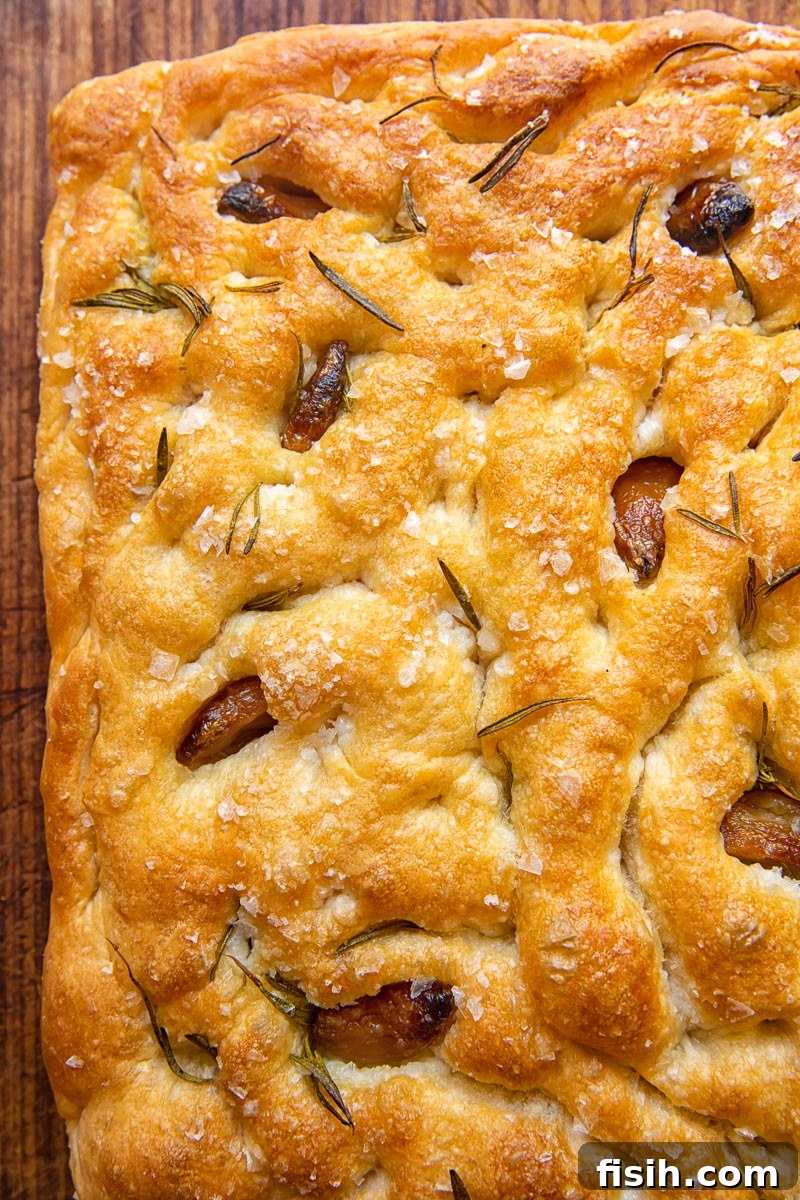
- Focaccia Topping: Embed the whole or gently smashed cloves into your homemade focaccia bread before baking, offering bursts of mellow garlic flavor.
- Dips and Hummus: Mix into your favorite dips, or crown a bowl of creamy hummus with extra garlicky gems and a generous swirl of the liquid gold oil.
- Elevated Proteins: Mix smashed confit garlic into your hamburger patties or meatballs for a supremely juicy and high-end bite.
- Roasted Vegetables: Toss confit cloves with root vegetables, asparagus, or broccoli before roasting for an extra layer of sweetness and aroma.
- Pizza Perfection: Scatter a few cloves over your pizza before baking for a sophisticated touch.
Using the Aromatic Garlic-Infused Oil:
- Cooking Medium: Use the oil to pan-fry your steak, chicken, or vegetables. It creates a heady aroma of sizzling meat and caramel that pairs perfectly with something like truffle fries and a good red wine.
- Pasta Sauces: Replace regular olive oil and minced garlic with the confit oil and cloves for a deeply flavored spaghetti Bolognese, arrabiata, or simple aglio e olio.
- Dipping Oil: It’s exquisite on its own as a dipping oil for crusty bread, perhaps with a pinch of sea salt and chili flakes.
- Salad Dressings: Whisk into your homemade vinaigrettes for a nuanced garlic flavor without the sharpness.
- Finishing Drizzle: Drizzle over grilled fish, roasted chicken, scrambled eggs, or a bowl of soup just before serving for an instant flavor boost.
And these are just a few starting points! Think of all the salad dressings, pizzas, pastas, dips, sauces, soups, and gravies that benefit from the sweet and deep kiss of confit garlic. The possibilities are truly endless.
Creative Variations for Your Confit Garlic
While classic garlic confit is perfect on its own, don’t hesitate to experiment with additions to customize its flavor profile:
- Herbs: Incorporate fresh sprigs of rosemary (as suggested in the recipe), thyme, bay leaves, or even oregano. These infuse beautifully into the oil as the garlic confits.
- Spices: For a gentle warmth, add a few whole dried chilis, a pinch of chili flakes, or a few black peppercorns to the oil alongside the garlic.
- Citrus Zest: For a bright, aromatic twist, add a strip of lemon peel (ensure it’s just the zest, no pith) to the oil during the last few minutes of cooking, or once it’s off the heat to prevent bitterness.
- Umami Boost: A single sun-dried tomato (packed in oil) or a small piece of kombu can add a subtle depth of savory flavor to your confit.
This garlic confit recipe is a simple foundation, so feel free to play around and make it your own!
Critical Storage & Safety Guidelines for Garlic Confit
Storing your garlic confit correctly is paramount due to a specific food safety concern: the risk of botulism. Clostridium botulinum is a bacterium that thrives in anaerobic (oxygen-free), low-acid environments, such as garlic submerged in oil. When allowed to grow, it produces a potent toxin that can cause botulism, a serious and potentially fatal illness. Therefore, strict adherence to storage guidelines is not optional.
Safe Storage Practices:
- Refrigeration is Mandatory: Once your garlic confit has cooled completely after cooking, it MUST be transferred to an airtight container and immediately refrigerated. Never store garlic confit at room temperature, even for a short period, as this creates the perfect breeding ground for botulism bacteria.
- Use a Clean, Sterilized Jar: Always transfer the cooked garlic and oil to a very clean, or preferably sterilized, glass jar. Ensure the lid seals tightly to create an airtight environment.
- Shelf Life: To err on the side of caution and maintain optimal safety, consume your refrigerated garlic confit within two weeks. Beyond this period, the risk of bacterial growth, even in the fridge, increases.
- Oil Solidification: It is completely normal and safe for the olive oil to solidify or become cloudy when refrigerated. This is a natural characteristic of olive oil at cooler temperatures and does not indicate spoilage. Simply let it come to room temperature for a bit, or gently warm it to return to its liquid state before use.
- Signs of Spoilage: Always inspect your confit before use. Discard immediately if you notice any signs of mold, unusual discoloration, off-smells, bubbling, or if the oil appears cloudy even at room temperature. When in doubt, throw it out.
Freezing for Extended Shelf Life:
For longer storage, freezing is an excellent option that eliminates the risk of toxic bacteria development. The best way to freeze garlic confit is to spoon individual cloves and a bit of oil into ice cube trays. Once frozen solid, transfer the cubes to a freezer-safe bag or container.
- Freezer Duration: Garlic confit can be safely stored in the freezer for up to two months.
- Handling Frozen Oil: Be aware that olive oil does not freeze completely solid like water, so the frozen cubes may be slightly softer or oilier. Handle them carefully when removing from the freezer or tray.
- Usage from Frozen: You can typically add frozen confit garlic cubes directly to hot dishes like soups, sauces, or sauté pans.
Other Garlicky Recipes to Explore
If you love garlic, you’ll adore these other recipes that celebrate its incredible flavor:
- Chicken with 40 Cloves of Garlic
- Garlic Herb Butter
- One-Pan Chilli Garlic Salmon
- Garlic Butter Sautéed Cauliflower with Breadcrumbs
Frequently Asked Questions About Garlic Confit
Here are answers to some common questions about making and using garlic confit:
- Q: Can I use pre-peeled garlic for confit?
- A: Yes, you absolutely can! It’s a great time-saver. However, the quality can vary. Some pre-peeled garlic may have a slightly different flavor or texture, or be older. For the best results, fresh garlic you peel yourself is often preferred, but convenience sometimes wins!
- Q: What kind of oil should I use?
- A: Extra virgin olive oil is highly recommended for its flavor and quality, which beautifully complements the garlic. You can also use other neutral oils like grapeseed or avocado oil, but they won’t impart the same depth of flavor to the infused oil.
- Q: What if the oil gets too hot and starts to boil or fry the garlic?
- A: If your oil starts boiling or frying, immediately remove the pan from the heat. The goal is to gently poach the garlic, not crisp it. While it won’t ruin the confit if it happens briefly, consistent low heat is crucial for achieving that signature sweet, mellow flavor and tender texture without bitterness. Turn the heat back on only once the temperature has dropped to the desired range.
- Q: Can I reuse the garlic-infused oil after the confit is gone?
- A: Absolutely, and you should! The infused oil is a valuable byproduct, packed with incredible garlic flavor. Store it with the confit cloves and use it for salad dressings, sautéing vegetables, drizzling over pasta, or dipping bread. Just remember, it must be stored in the refrigerator with the same safety precautions as the cloves themselves.
- Q: How can I peel a large amount of garlic quickly?
- A: Besides the hot water soak mentioned in the instructions, you can also place separated garlic cloves into two sturdy metal bowls (one inverted over the other) and shake vigorously for 30 seconds to a minute. The skins should loosen and often come off.
Conclusion: Your Gourmet Kitchen Awaits
Garlic confit might sound like a chef’s secret, but it’s a remarkably accessible and rewarding culinary technique. In just a short time, you can transform humble garlic into a rich, sweet, and versatile ingredient that will become an indispensable part of your cooking repertoire. From simple toast to elaborate main courses, the mellow flavor of confit garlic and its aromatic oil will add a touch of gourmet elegance to every dish. So, gather your garlic, select your finest olive oil, and prepare to unlock a world of delicious possibilities!
Garlic Confit Recipe
Garlic confit is a simple yet elegant preparation where garlic cloves are slowly cooked in olive oil until incredibly soft, sweet, and fragrant.
Prep time: 10 mins
Cook time: 30 mins
Total time: 40 mins
Yields: Approx. 20 servings
Author: Julia Frey of Vikalinka
Equipment
- Small Saucepan
- Instant Read Thermometer
- Clean Glass Jar for Storage
Ingredients
- 2 heads garlic, separated into cloves and peeled (approx. 20-25 cloves)
- 250ml / 1 cup extra virgin olive oil, or enough to fully submerge garlic
- 1 sprig fresh rosemary or thyme (optional, for added flavor)
Instructions
- Select the smallest saucepan you have available. Add the peeled garlic cloves to the pan.
- Pour in the extra virgin olive oil, ensuring the garlic cloves are completely submerged. If not, add more oil as needed. Using a smaller diameter pan helps minimize the amount of oil required.
- Place the saucepan on your stove and set the heat to the absolute lowest setting. Begin heating the garlic in the oil. The ideal temperature for confiting garlic is around 90°C (195°F). Use an instant-read thermometer to monitor the oil’s temperature closely.
- If the temperature begins to rise above 90°C (195°F), turn off the heat temporarily to allow it to cool down, then resume cooking on low heat. The goal is to gently cook the garlic cloves until they are very tender, soft, and lightly golden brown, without frying them. This process can take approximately 25-30 minutes, depending on the size of your garlic cloves and the consistency of your heat.
- Alternatively, for a more hands-off approach, you can confit the garlic in an oven preheated to a consistent 90°C (195°F) for 1-2 hours.
- Test the garlic for doneness by piercing a clove with a small knife; it should offer no resistance and feel completely soft. The cloves will be a light golden color and have a spreadable consistency.
- Remove the pan from the heat. If using, add the sprig of rosemary or thyme to the warm oil and garlic to infuse additional flavor as it cools.
- Allow the garlic confit to cool completely in the pan. Once cooled, carefully transfer the garlic cloves and all the infused oil into a very clean, preferably sterilized, airtight glass jar.
- Crucial Storage Note: Once cooled, the garlic confit must be stored in the refrigerator. Do not store at room temperature due to the risk of botulism. It will keep for up to 2 weeks in the refrigerator. The oil may solidify when cold, which is completely normal.
Nutrition Information (per serving, approx.)
- Calories: 115kcal
- Carbohydrates: 1g
- Protein: 0.2g
- Fat: 13g
- Saturated Fat: 2g
- Polyunsaturated Fat: 1g
- Monounsaturated Fat: 9g
- Sodium: 1mg
- Potassium: 11mg
- Fiber: 0.1g
- Sugar: 0.03g
- Vitamin A: 0.4IU
- Vitamin C: 1mg
- Calcium: 5mg
- Iron: 0.1mg
Nutrition information is automatically calculated and should be used as an approximation.