
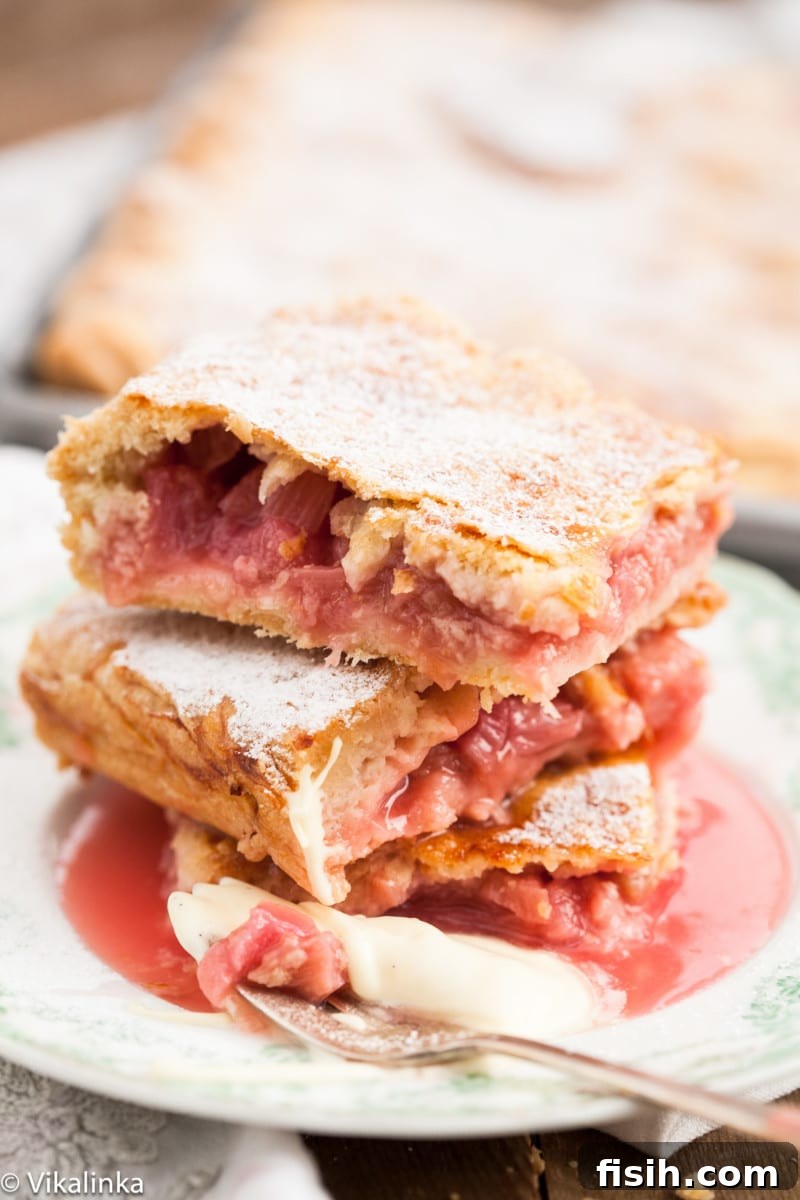
If you cherish the delightful taste of rhubarb pie as much as we do, then you absolutely must try our sensational Rhubarb Slab Pie! This generously sized pie is perfect for feeding a lively crowd at your next gathering or indulging yourself (we won’t judge!). With its tender, flaky crust and a perfectly balanced sweet and tangy rhubarb filling, this dessert truly embodies the vibrant flavors of spring.
For those who can’t get enough of this wonderful stalk, you might also enjoy our Roasted Rhubarb Bakewell Tart – a truly exquisite treat that showcases rhubarb’s versatility.
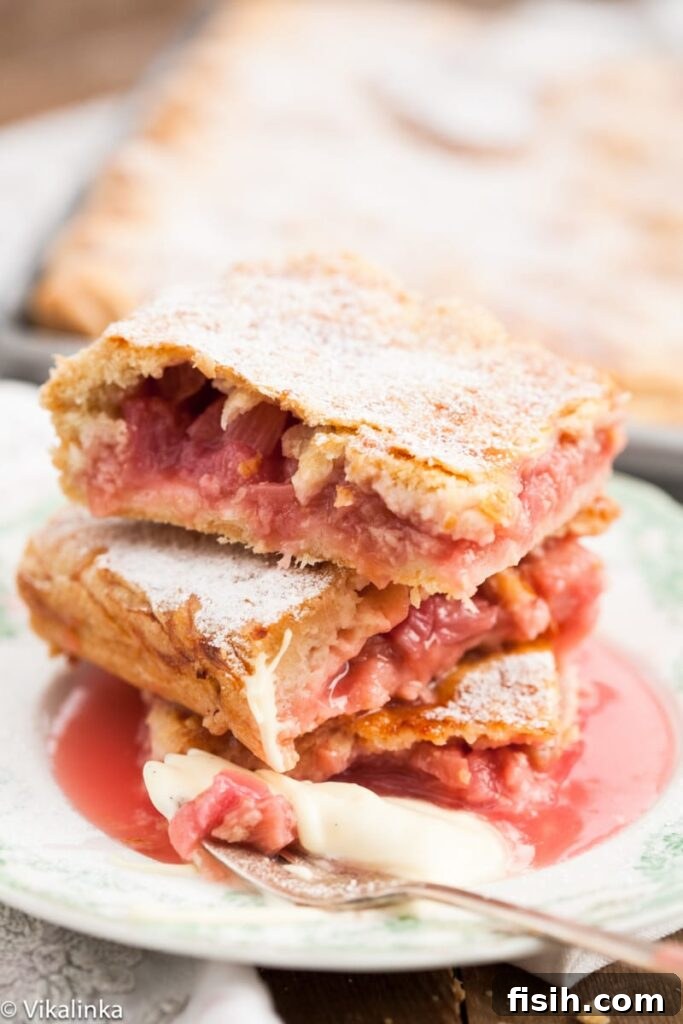
As the chill of winter recedes and the days grow longer and warmer, the arrival of spring brings with it a bounty of fresh, seasonal produce. Among these treasures, few are as eagerly anticipated as fresh rhubarb, readily available in grocery stores and local farmers’ markets. Its distinct tartness and vibrant color signal the unofficial start of pie season, and in our humble opinion, there’s no better ingredient to feature in a truly memorable pie.
It’s quite astonishing how the seemingly tough and fibrous stalks of rhubarb transform during baking. What starts as a crisp, crunchy vegetable becomes incredibly tender, releasing its juices to create a luscious, syrupy filling. The natural tartness of rhubarb mellows beautifully in the heat of the oven, resulting in a complex flavor profile that is both refreshing and deeply satisfying. This unique balance of sweet and sour is what makes rhubarb a star in countless spring desserts.
To celebrate this seasonal delight in a practical yet impressive way, we developed this easy-to-make Rhubarb Slab Pie. Designed for simplicity without compromising on flavor, this recipe is destined to become a staple in your baking repertoire. It’s perfect for casual family dinners, potlucks, picnics, or any occasion where a generous, crowd-pleasing dessert is in order. Prepare to be asked for the recipe every time you serve it!
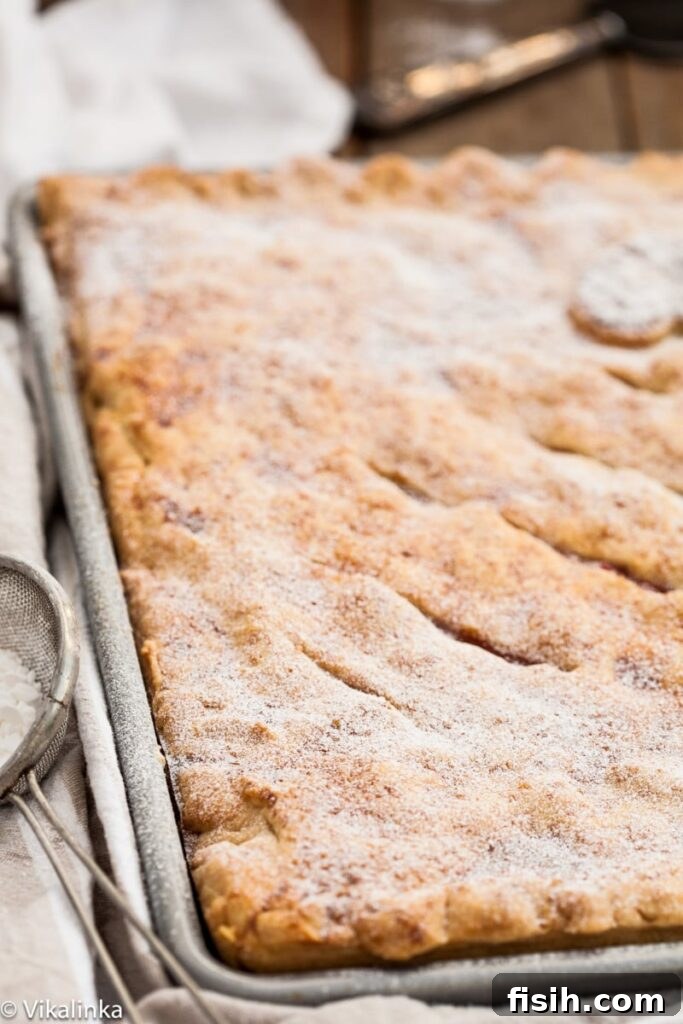
What Exactly is a Slab Pie? The Secret to Stress-Free Pie Making
For many home bakers, the thought of making a traditional round pie can seem daunting. From meticulously rolling out a perfect circle of pastry to crimping edges just right and fitting it into a delicate pie plate, the process can feel labor-intensive. But what if we told you there’s a simpler, often more generous, way to enjoy all the goodness of a homemade pie?
Enter the slab pie. A slab pie takes the cherished concept of a classic fruit pie and reimagines it on a larger, more accessible scale. Instead of a circular pie dish, it’s baked in a standard sheet pan or a large rectangular baking dish, typically 9×13 inches or even larger. This rectangular format offers several distinct advantages that make it a favorite among busy bakers and those who love to entertain.
Firstly, the rectangular shape makes rolling out the pastry significantly easier. Gone are the worries about achieving a perfectly round crust; a simple rectangular roll is all you need. This also translates to less waste and a more efficient use of dough. Secondly, slab pies yield more servings than traditional round pies, making them ideal for feeding larger groups without needing to bake multiple individual pies. Imagine effortlessly serving 12-16 slices from a single pie – a true party pleaser!
Furthermore, the increased surface area of a slab pie allows for greater crust-to-filling ratio, which many pie enthusiasts adore. The edges crisp up beautifully, offering a satisfying textural contrast to the soft, bubbling fruit filling. Less work for more pie? That’s what we call a culinary win-win! While this recipe simplifies the process by suggesting store-bought pastry, if you’re inclined to spend a little extra quality time in the kitchen, we highly recommend trying our famously flaky and flavorful pie crust recipe. (Just check the rave reviews under that post!).
Exploring Rhubarb: A Springtime Delight
Though commonly found in desserts and often treated like a fruit, rhubarb is, botanically speaking, a vegetable. It’s a perennial plant, meaning it grows back year after year, typically appearing as a low bush with thick, edible stalks and large, distinctive green leaves. Native to Central Asia, rhubarb has found a happy home in cooler climates across the globe, including North America and Europe, where it thrives and signals the start of spring.
It’s crucial to remember that only the stalks of rhubarb are safe to eat. The leaves contain oxalic acid in high concentrations, making them lightly toxic and therefore they should always be discarded. When preparing rhubarb, simply trim off the leafy ends and the woody bases of the stalks.
Rhubarb comes in a spectrum of varieties, usually categorized by the color of their stalks: red, green, or speckled (a mix of red and green). While red rhubarb is often perceived as more desirable due to its vibrant hue, which can make for a more visually appealing pie, it’s a common misconception that it’s inherently sweeter or superior for baking. In reality, all varieties offer that characteristic tangy flavor and soften beautifully when cooked. The color often depends more on the specific variety and growing conditions rather than sweetness levels.
The peak season for fresh rhubarb is typically springtime, spanning from April through June. However, this window can vary depending on your geographical location. Farmers sometimes employ a technique known as “forcing” to extend the growing season and produce rhubarb earlier. Forced rhubarb is grown in dark, heated sheds, which encourages rapid growth as the plant stretches to find light. This method results in stalks that are often more tender, have a milder flavor, and a distinctively pinker interior when cut open, making it a prized ingredient for early spring dishes.
Beyond its culinary appeal, rhubarb also offers some nutritional benefits. It’s a good source of Vitamin K, which is important for blood clotting and bone health, and also contains dietary fiber, contributing to digestive wellness. Its tartness is not just for flavor; it also means it’s relatively low in natural sugars, allowing bakers to control the sweetness of their dishes.
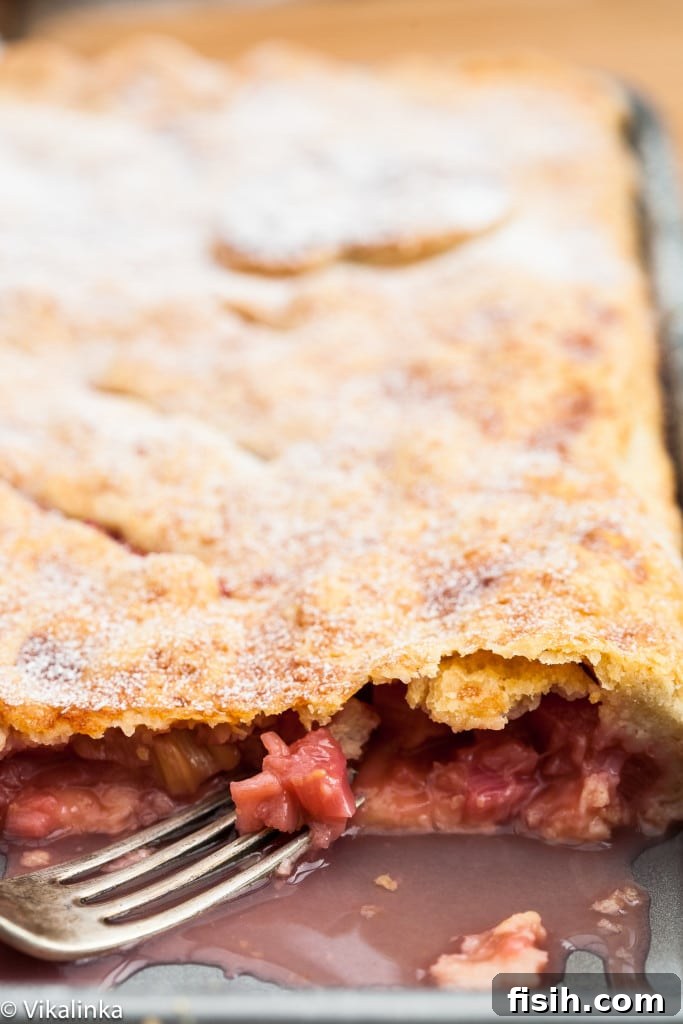
Beyond the Pie: Versatile Rhubarb Recipes
Few ingredients bring as much joy to my baking as rhubarb. Its unique sweet-tart profile is simply captivating. The beauty of rhubarb lies in its simplicity: a quick chop, a toss with a bit of sugar, and it’s ready to elevate almost any baking creation into something truly spectacular. My culinary journey with rhubarb goes way back, making it a frequent star in my kitchen. I’ve even experimented with traditional recipes, like a classic Russian Sharlotka cake, substituting the usual apples with rhubarb for a delightful twist that adds a burst of tangy flavor.
Rhubarb is famously paired with strawberries or other berries in many desserts, and for good reason. Its natural acidity and lack of sweetness create a wonderful counterpoint to the sugary sweetness of berries. This combination results in the ultimate sweet-and-sour tango, where the sour notes of rhubarb are beautifully mellowed and complemented by the fruitier, sweeter elements. This harmonious blend makes for incredibly balanced and flavorful treats.
However, I often find myself drawn to the pure, unadulterated taste of rhubarb. In this slab pie recipe, I’ve chosen to let rhubarb shine on its own, allowing its distinctive flavor to be the star of the show. The result is a bold, refreshing, and intensely rhubarby pie that truly captures the essence of spring.
Beyond pies and tarts, rhubarb’s versatility extends to various other culinary delights. Imagine it simmered into a compote for breakfast, transformed into a tangy jam, or infused into refreshing drinks like a homemade cordial or even a sophisticated cocktail. Its bright flavor also lends itself well to savory applications, acting as an acidic component in chutneys or sauces for fatty meats. The possibilities are truly endless once you appreciate its unique character.
Effortless Elegance: Assembling Your Rhubarb Slab Pie
The notion of an elaborate pie-making project had been on my mental to-do list for weeks, always pushed aside by the perceived time commitment. However, this rhubarb slab pie shattered that misconception, proving to be an astonishingly quick and straightforward endeavor. From gathering ingredients to having it ready for the oven, the entire preparation took less than 20 minutes – a significant feat for any homemade pie, not counting the crucial baking time.
The secret to this swift assembly lies partly in the genius of pre-made pie pastry. I opted for pastry already rolled into convenient large rectangles, eliminating the most time-consuming step of traditional pie making. This shortcut ensures that anyone, regardless of their baking experience, can create a stunning pie with minimal fuss. All that was left to do was to prepare the star filling: fresh rhubarb, chopped into uniform pieces and then gently tossed with sugar, a touch of flour to help thicken the juices, and fragrant lemon zest to brighten the flavors.
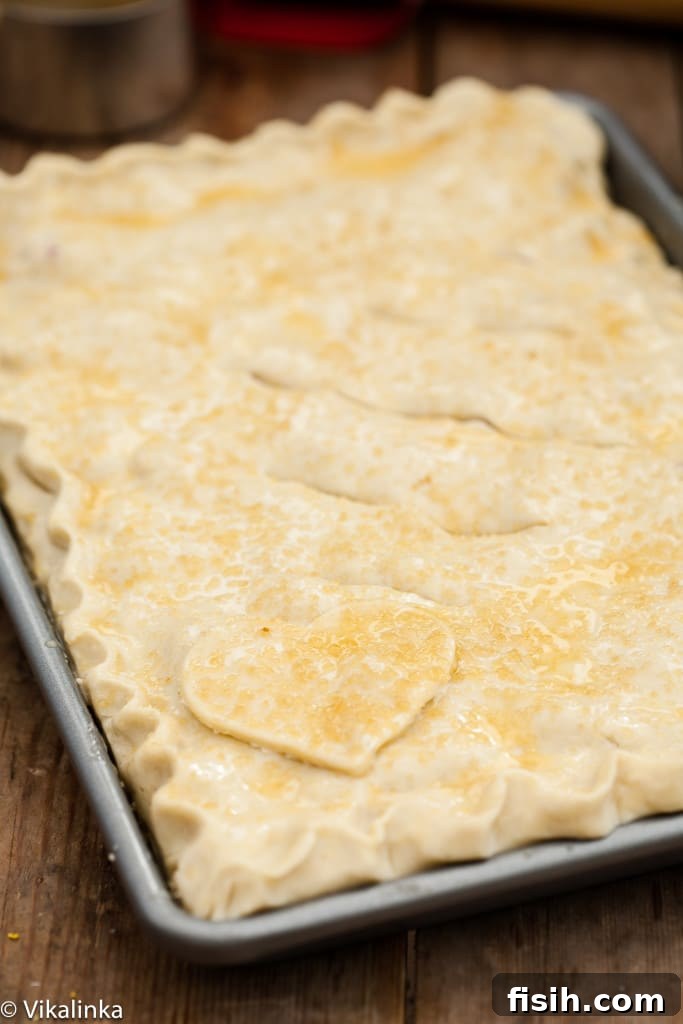
With the filling prepared, one sheet of pastry was carefully laid into the baking dish, allowing the edges to generously extend up the sides. The vibrant rhubarb mixture was then spread evenly over the base. The second pastry sheet was then placed on top, creating a beautiful enclosed pie. The edges were then pinched together, or “crimped,” to create a decorative seal that not only looks appealing but also ingeniously prevents any of that delicious, bubbling filling from escaping during baking. For an extra touch of charm, any leftover pastry can be used to cut out decorative shapes, like leaves or lattice strips, to adorn the top.
Finally, for that irresistible golden-brown finish and a hint of sparkle, the top crust was brushed with a lightly beaten egg and then generously sprinkled with Demerara or Turbinado sugar. A few strategic slits cut into the top crust serve as vents, allowing steam to escape and preventing the pie from becoming soggy or bursting. Into the preheated oven it goes for about 45 minutes, transforming into a magnificent, aromatic dessert. The hardest part? Waiting for it to cool before digging in! For those of us lacking superhuman self-control, a warm slice might just be unavoidable, though a little patience ensures a perfectly set filling.
Expert Tips for Your Perfect Rhubarb Slab Pie
- Selecting the Best Rhubarb: When choosing rhubarb, prioritize stalks that are firm, crisp, and free from blemishes. Avoid any stalks that appear wilted, rubbery, or woody, as these are signs of age and will result in a less pleasant texture. While red rhubarb is visually appealing, remember that color isn’t a direct indicator of sweetness. Both forced (often pinker) and garden-grown (sometimes greener) rhubarb varieties are excellent for baking, so choose based on freshness and texture.
- No Pre-Cooking Required: One of the beauties of this recipe is its simplicity. There is absolutely no need to pre-cook the rhubarb. Dicing the stalks into small, approximately 1/4-inch pieces ensures they will soften and cook perfectly within the pastry as the pie bakes, creating that delightful tender filling.
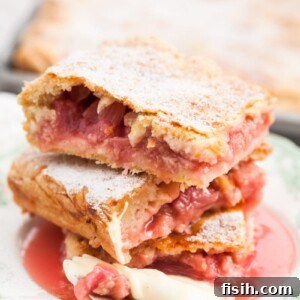
- The Art of Cooling: Patience is a virtue, especially when it comes to pie. While the aroma of a freshly baked pie is undeniably tempting, allowing your slab pie to cool for at least one hour before slicing is crucial. This cooling period gives the hot, syrupy filling ample time to set and solidify, preventing it from streaming out when you cut into it. For the neatest slices and a perfectly structured filling, a full cool-down is recommended.
- Serving Suggestions: Rhubarb’s vibrant tartness is wonderfully complemented by a touch of creamy richness. Serve your warm (or room temperature) rhubarb slab pie alongside a generous scoop of vanilla bean ice cream, a dollop of freshly whipped cream, or even a drizzle of crème fraîche. The added creaminess provides a delightful contrast that truly elevates the entire dessert experience.
- Crust Protection: If you notice your pie crust browning too quickly during baking, especially around the edges, you can loosely cover the pie with aluminum foil. This prevents over-browning while allowing the filling to continue cooking through.
- Lemon Zest’s Role: Don’t skip the lemon zest! It’s not just for flavor; the natural acids in lemon zest help to brighten the rhubarb’s taste and prevent it from tasting flat, enhancing its overall fruity notes.
Storage and Enjoying Leftovers
One of the many benefits of this hearty slab pie is how well it stores, ensuring you can enjoy its deliciousness for days to come. To store any leftover slices or the entire pie, first allow it to cool completely to room temperature. Once cooled, cover it tightly with plastic wrap or transfer it to an airtight container that is large enough to accommodate it without crushing. Because this pie contains no dairy products in its filling, it can safely be left at room temperature for up to two days, maintaining its wonderful flavor and texture. For extended freshness, you can refrigerate the pie, where it will keep well for up to four days.
For even longer storage, this rhubarb slab pie freezes beautifully. Once the pie has fully cooled to room temperature, place it uncovered in the freezer. Allow it to freeze solid, which typically takes a few hours. Once completely frozen, remove it from the freezer, wrap it tightly in several layers of plastic wrap, and then an additional layer of aluminum foil to prevent freezer burn. Stored this way, the pie will remain fresh and delicious in the freezer for up to two months. When you’re ready to enjoy a slice, simply thaw it in the refrigerator overnight or at room temperature for a few hours.
This pie is absolutely delicious served at room temperature, making it a convenient option for picnics or buffets. However, if you prefer a warm, comforting slice, reheating is simple. Just place individual slices or the entire pie in an oven preheated to 180°C (350°F) for about ten minutes, or until warmed through. The crust will crisp up slightly, and the filling will become wonderfully gooey again, almost like it’s fresh from the oven.
More Rhubarb Recipes to Explore
- Luscious Rhubarb Curd
- Elegant Rhubarb Custard Crepe Cake
- Refreshing Rhubarb Moscow Mule
- Comforting Rhubarb Crumble
- Hearty Rhubarb Cobbler
Rhubarb Slab Pie
Equipment
-
Baking dish (9″x13″ or similar)
-
Pastry brush
-
Sharp knife
Ingredients
- 700 g /25oz pre-made pie pastry or use a homemade recipe
- 800 g /8 cups fresh rhubarb, chopped into 1/4 inch pieces
- 200 g /1 cup granulated sugar
- 1 lemon, zest only
- 1 tbsp all-purpose flour
- 1 large egg, beaten
- 1 tbsp Demerara or Turbinado sugar
Instructions
-
Preheat your oven to 400°F (200°C). In a large bowl, combine the chopped rhubarb with the granulated sugar, flour, and lemon zest. Toss gently until the rhubarb is evenly coated.
-
Roll out your first sheet of pie pastry to fit the bottom of a 9″x13″ shallow baking pan (or a similar rectangular pan). Carefully line the bottom and sides of the pan with this pastry sheet, ensuring the edges extend slightly up the sides. Pour the rhubarb mixture evenly into the pastry-lined pan.
-
Cover the filling with the second pastry sheet. Press and crimp the edges of both pastry layers together to seal the pie. If you have any leftover pastry, you can cut out decorative shapes with cookie cutters and place them on top for embellishment. Brush the entire top surface of the pie with the lightly beaten egg and then sprinkle generously with Demerara or Turbinado sugar. Cut a few slits on the top crust to allow steam to escape during baking.
-
Place the pie in the preheated oven and immediately reduce the temperature to 350°F (180°C). Bake for 45 minutes, or until the crust is beautifully golden brown and the rhubarb filling is bubbling invitingly through the slits. Once baked, remove the pie from the oven and let it cool for at least 1 hour before slicing and serving. This cooling time is essential to allow the filling to set properly and prevent it from being too runny.
-
Serve your delicious Rhubarb Slab Pie warm or at room temperature, ideally accompanied by a scoop of vanilla ice cream or a dollop of fresh whipped cream for an extra touch of indulgence.
Nutrition Information (Approximate per Serving)
| Calories: | 535 kcal |
| Carbohydrates: | 74 g |
| Protein: | 7 g |
| Fat: | 24 g |
| Saturated Fat: | 7 g |
| Cholesterol: | 20 mg |
| Sodium: | 370 mg |
| Potassium: | 380 mg |
| Fiber: | 4 g |
| Sugar: | 28 g |
| Vitamin A: | 132 IU |
| Vitamin C: | 9 mg |
| Calcium: | 106 mg |
| Iron: | 3 mg |
Please note: Nutrition information is automatically calculated and should be used as an approximation. Actual values may vary based on ingredients and preparation methods.