
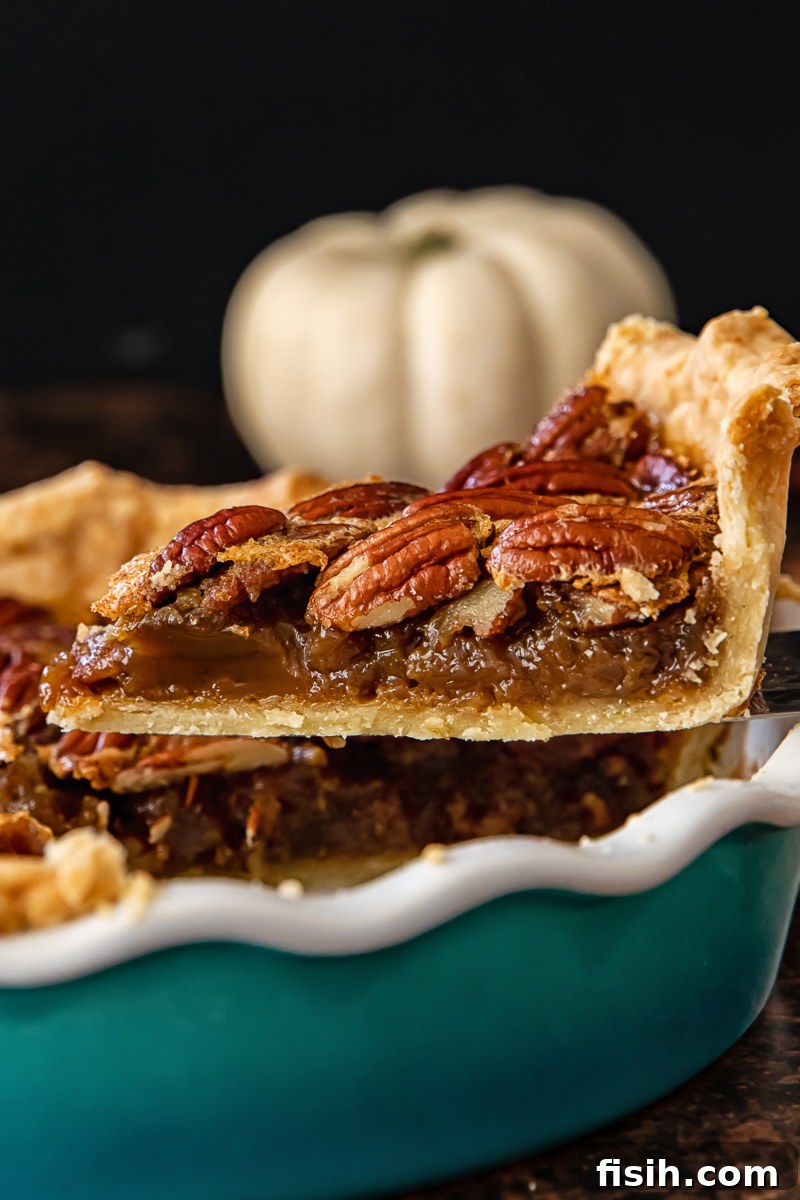
Maple Bourbon Pecan Pie: A Decadent Holiday Dessert Recipe
Prepare to elevate your dessert game with this truly exceptional Maple Bourbon Pecan Pie. Imagine a golden, exquisitely flaky, and buttery crust cradling a rich, gooey filling bursting with the sweet, deep flavors of pure maple syrup, a hint of sophisticated bourbon, and the satisfying crunch of perfectly toasted pecans. This isn’t just a pie; it’s a celebration in every slice, making it the perfect centerpiece for holiday gatherings, special occasions, or simply a luxurious treat for yourself.
As the holiday season approaches, our thoughts often turn to cherished traditions and, of course, delicious food. While there’s a myriad of delightful Thanksgiving desserts to explore, few capture the essence of festive indulgence quite like a classic pecan pie. This recipe takes that beloved tradition and infuses it with an unforgettable twist, ensuring it stands out on any dessert table and leaves a lasting impression on your guests.
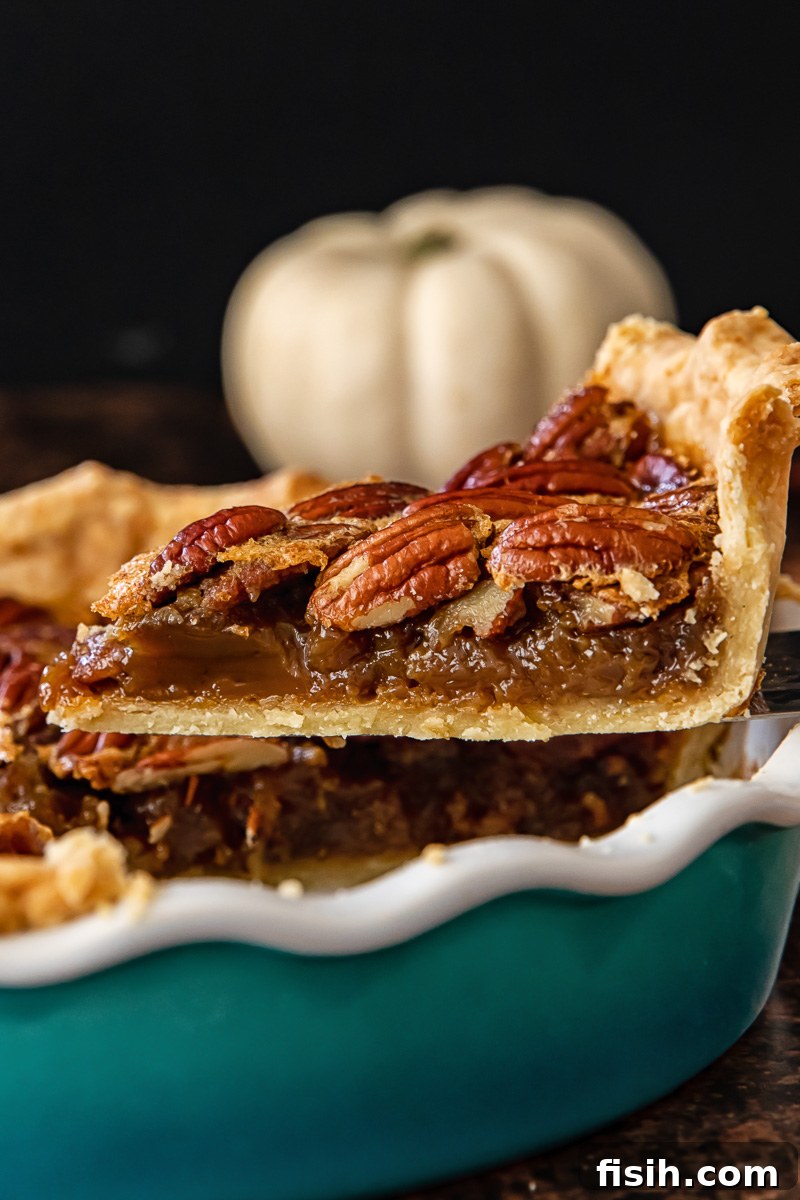
The eternal debate: are you team Pumpkin Pie, Pecan Pie, or Apple Pie when the festive season rolls around? Or perhaps, like many, you belong to the “All The Pies” club! While families across America and beyond have their loyalties – my son, for instance, is a staunch pumpkin pie devotee – it’s hard to deny the universal appeal of a truly great pecan pie. Its harmonious blend of intensely sweet and deeply nutty flavors, encased in that quintessential flaky and buttery crust, truly makes it a special dessert that transcends simple preferences, earning its rightful place as a holiday favorite.
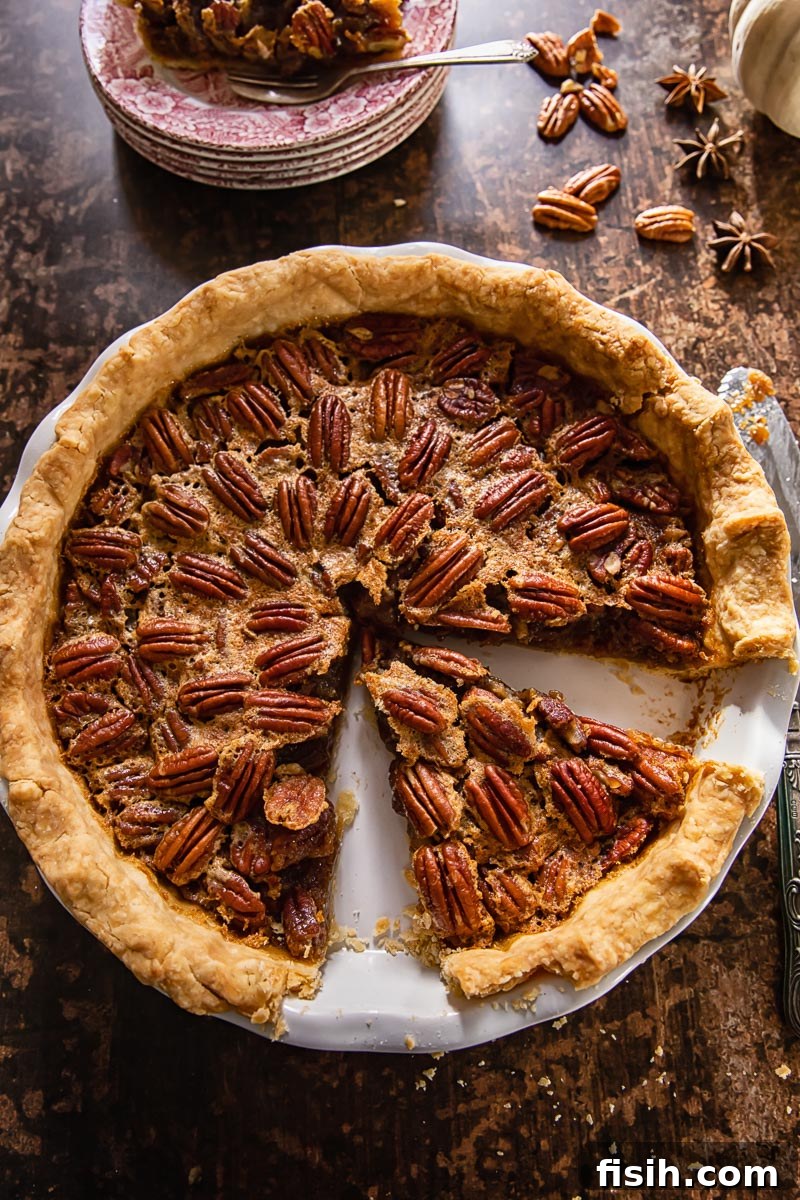
The Secret to Crafting the Best Maple Bourbon Pecan Pie
What makes this particular pecan pie recipe stand out from the rest? Let me share a little secret that transforms a good pecan pie into an extraordinary one. The inspiration for this elevated pecan pie comes from a beloved Canadian treat with a cult following: Butter Tarts. These delightful pastries, as Canadian as hockey and maple syrup, bear a surprising resemblance to pecan pie in their rich, gooey filling, though they traditionally feature walnuts and sometimes raisins. Drawing from this heritage, I decided to infuse our pecan pie with the unmistakable essence of real maple syrup, a natural fit that adds a layer of complex, earthy sweetness.
But the journey back to an all-American classic needed a balancing act. To bring it full circle and add another layer of complexity and warmth, I spiked the filling with a generous splash of Bourbon. This addition introduces subtle smoky undertones and rich vanilla notes, perfectly complementing the maple and pecans. The result is a sophisticated flavor profile that marries the deep, caramelized sweetness of maple with the robust character of bourbon, creating a symphony of tastes that is utterly divine. This harmonious blend takes your pecan pie from delightful to truly sublime, offering a depth of flavor that is both comforting and exciting, making it the undisputed star of any dessert table.
Beyond the filling, the foundation of any truly great pie is its crust. And I promise, this recipe delivers the tastiest pie crust you can imagine. It’s a masterful shortcrust pastry – buttery, incredibly flaky, and just subtly sweet enough to perfectly complement the rich, decadent filling without being overpowering. The precise balance ensures that every single bite offers a delightful contrast of textures and flavors. Just one look at the beautifully golden, crimped edge of this pie, and you’ll know you’re in for a real winner – a pie that delivers on both taste and visual appeal, promising a truly satisfying dessert experience.
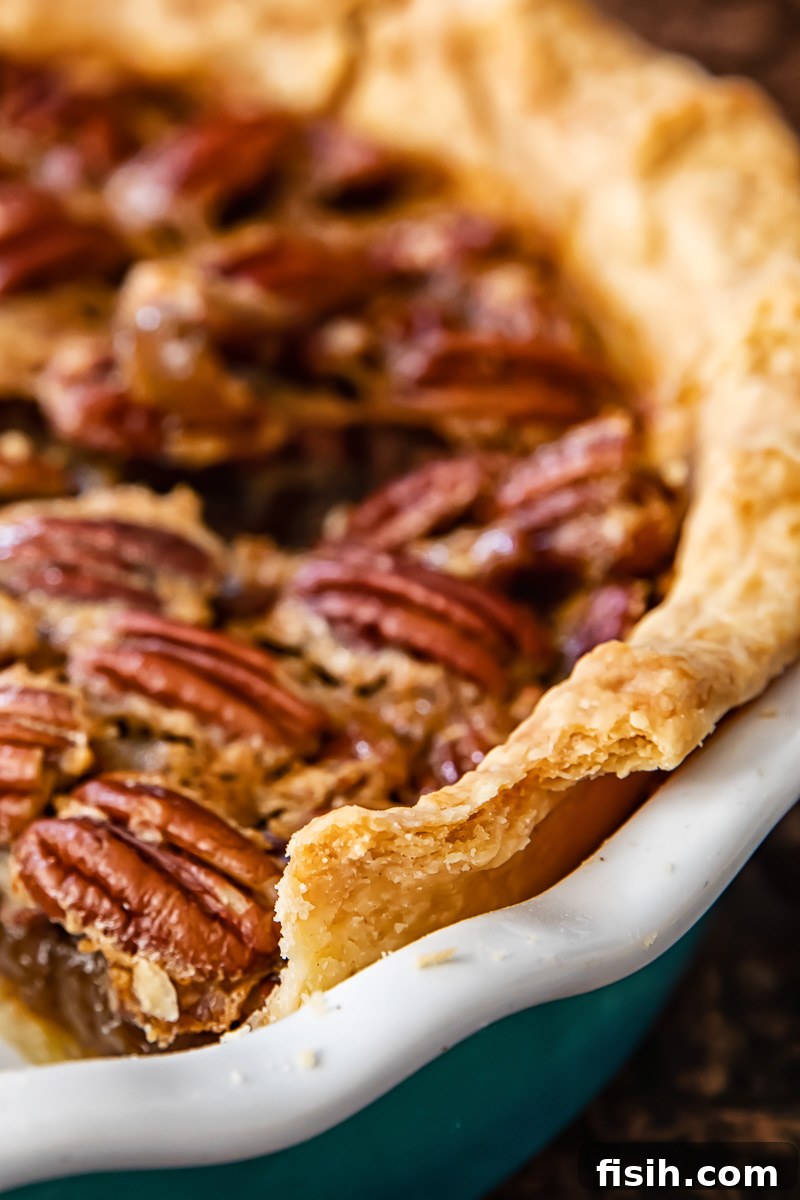
Understanding the Core Ingredients of Pecan Pie
While pecan nuts are, as the name suggests, the undisputed star of the show, they are just one component in the symphony of flavors and textures that make this pie so uniquely special. Traditionally, a classic pecan pie filling is crafted from a precise blend of fresh eggs, high-quality butter, aromatic vanilla extract, rich brown sugar, and the essential corn syrup. This carefully chosen combination results in a filling that is wonderfully gooey, incredibly smooth, and beautifully set, all while being punctuated by the delightful, satisfying crunch of the pecans.
The corn syrup plays a truly crucial role here, providing that characteristic slightly chewy, yet smooth and glossy texture that is the hallmark of an authentic pecan pie. It works its magic by preventing the crystallization of sugars, which ensures the filling remains wonderfully clear and sets beautifully without becoming grainy. You can choose between dark corn syrup, which offers a richer, more robust, molasses-like flavor for a deeper caramel note, or light corn syrup, which delivers a more delicate, vanilla-forward sweetness for a lighter taste profile. Both work beautifully, so feel free to choose based on your preference. For those outside the US, golden syrup can be an excellent and readily available substitute. In this particular recipe, we embrace the best of both worlds by incorporating both corn syrup and premium maple syrup, adding an extra layer of complexity, natural sweetness, and a distinctly unique flavor that truly sets our pie apart from the traditional versions.
All this deliciousness is lovingly nestled within a perfectly crafted buttery pie crust. Every skilled baker has their own cherished recipe for this crucial element, and mine is a classic shortcrust pastry elevated with a tiny pinch of white sugar. This seemingly small addition makes a significant difference, subtly enhancing the overall flavor balance and adding a delicate sweetness to the crust that perfectly complements the rich, deep flavors of the filling without making it overly sweet. It creates a harmonious experience where the crust is not merely a sturdy vessel but an integral and flavorful part of the pie’s exquisite taste, contributing to its overall irresistible appeal.
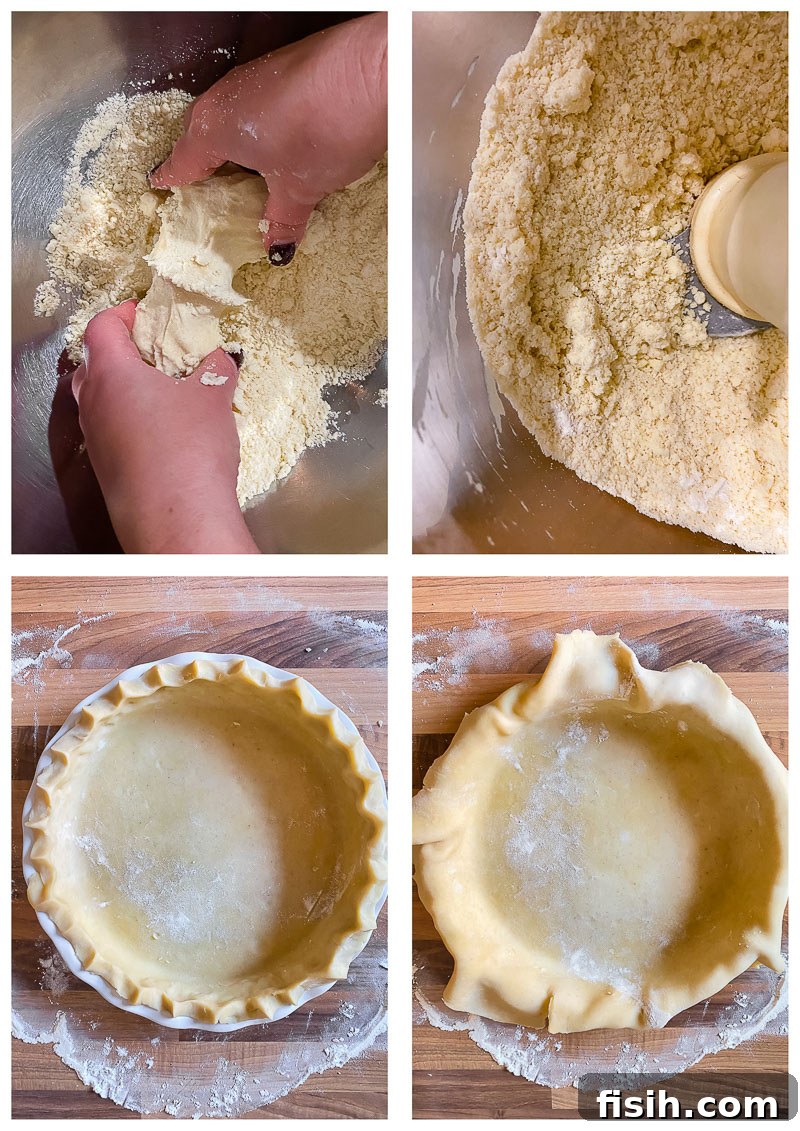
Crafting the Perfect Flaky Shortcrust Pastry
The basic shortcrust recipe is remarkably versatile, serving as an excellent base for both sweet and savory pies, tarts, and even quiches. To tailor it specifically for our indulgent maple bourbon pecan pie, we incorporate a tablespoon of white sugar into the mix. This subtle sweetness enhances the crust’s flavor, making it a perfect, harmonious partner to the rich, complex maple-bourbon filling.
The cornerstone of a truly great shortcrust is its flour-to-butter ratio, typically calling for roughly double the amount of flour to butter. While exact proportions are crucial for consistency, sometimes a slight adjustment, like adding a touch more flour, can make the dough easier to handle without compromising the final texture. A key ingredient for success is also ice-cold water – just 2-3 tablespoons are usually sufficient to bring the dough together. The extreme coldness of the water is absolutely essential because it prevents the butter from melting too quickly as you work it into the flour, which is critical for achieving that desirable light and flaky texture in the finished crust.
As you process the ingredients, especially if you’re using a food processor, the mixture will initially resemble a collection of fine, sandy crumbs. This is perfectly normal and exactly what you want at this stage! Do not be tempted to add more water than specified, thinking the dough isn’t coming together. Over-hydrating the dough is a very common mistake that leads to a hard, tough, and chewy crust instead of the tender, melt-in-your-mouth flaky texture we’re aiming for. The goal is to have the butter evenly distributed in tiny, pea-sized pieces throughout the flour, creating precious pockets of steam during baking that ultimately result in those beautiful, airy layers of flakiness.
You’ll know you’re on the right track when you can squeeze a handful of the crumbly mixture and it just barely forms a cohesive clump, as depicted in the process images above. Using a food processor is highly recommended for this step, as it’s fast, incredibly efficient, and minimizes direct handling of the dough. Excessive handling with warm hands can melt the butter, which is detrimental to the crust’s texture and will inhibit flakiness. If you don’t have a food processor, a pastry blender or even two knives can achieve similar results by carefully cutting the cold butter into the flour until the desired consistency is reached.
Once the dough is formed into a shaggy ball or flattened disk, it is absolutely paramount to refrigerate it for at least one hour, or even better, overnight. This resting period is not merely a suggestion; it’s a crucial step that allows the gluten strands in the flour to relax, which prevents the crust from shrinking excessively during baking. It also firms up the butter, ensuring those precious pockets of fat remain intact, ready to create the beautiful layers of flakiness we desire. Remember to wrap it tightly in plastic wrap to prevent it from drying out and forming a crust while it chills.
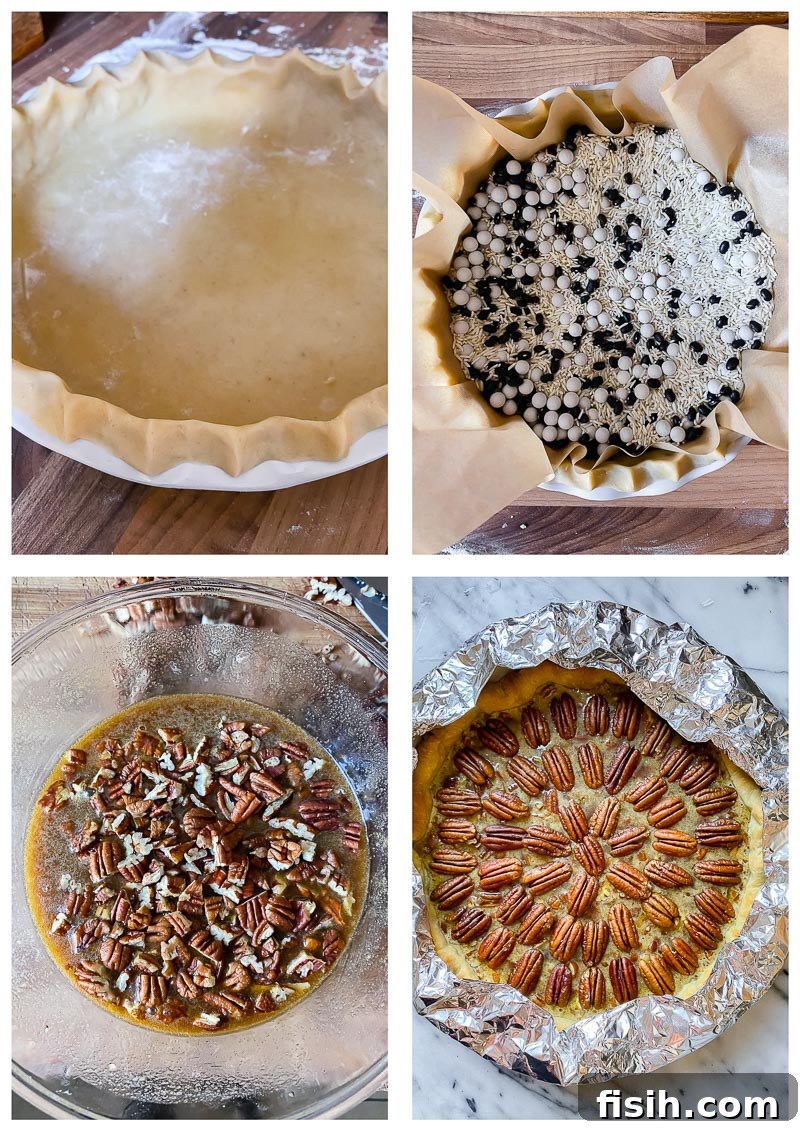
To Blind Bake or Not to Blind Bake: A Crucial Step for Pie Perfection
Many pecan pie recipes circulating the internet might suggest skipping the blind baking step, promising an easier and faster process. While tempting, I cannot stress enough the importance of blind baking, especially when it comes to pies with wet, liquid-rich fillings like our incredibly decadent pecan creation. For me, a “soggy bottom” in a pie is simply unacceptable, and blind baking is the ultimate, non-negotiable defense against this common pie woe. It’s the secret to a crisp, golden base that truly holds up to the rich filling.
If you’re new to the term, blind baking is the process of partially pre-baking your pie crust before adding the filling. This crucial preparatory step serves several vital purposes: firstly, it helps to set the gluten structure, which prevents the crust from shrinking excessively during the final bake. Secondly, it gives the pastry a significant head start in baking, allowing it to dry out and achieve a beautifully crisp texture. Most importantly, it ensures the bottom crust is fully baked through and avoids becoming soggy once the moist, wet filling is added, which is a common issue with custard-based pies. The filling typically bakes faster than a raw crust, so blind baking allows both components to reach their ideal doneness simultaneously, resulting in a perfectly cooked pie.
The process involves lining your unbaked and well-chilled pie crust with parchment paper, then filling it with pie weights, dried beans, or even rice to hold its shape firmly against the pie dish. As shown in the accompanying photos, I often use a combination of all three to adequately and evenly fill my deep 9-inch pie pan, ensuring full contact with the crust. Remember to prick the bottom of the crust generously with a fork before lining and weighting it; this creates small vents that allow steam to escape, preventing the crust from puffing up unevenly. After an initial bake with weights, carefully remove the weights and parchment paper, and bake for a few more minutes to further dry out and lightly brown the crust. This thoughtful preparation ensures a golden, perfectly crisp base that provides the ideal foundation for your incredible Maple Bourbon Pecan Pie.
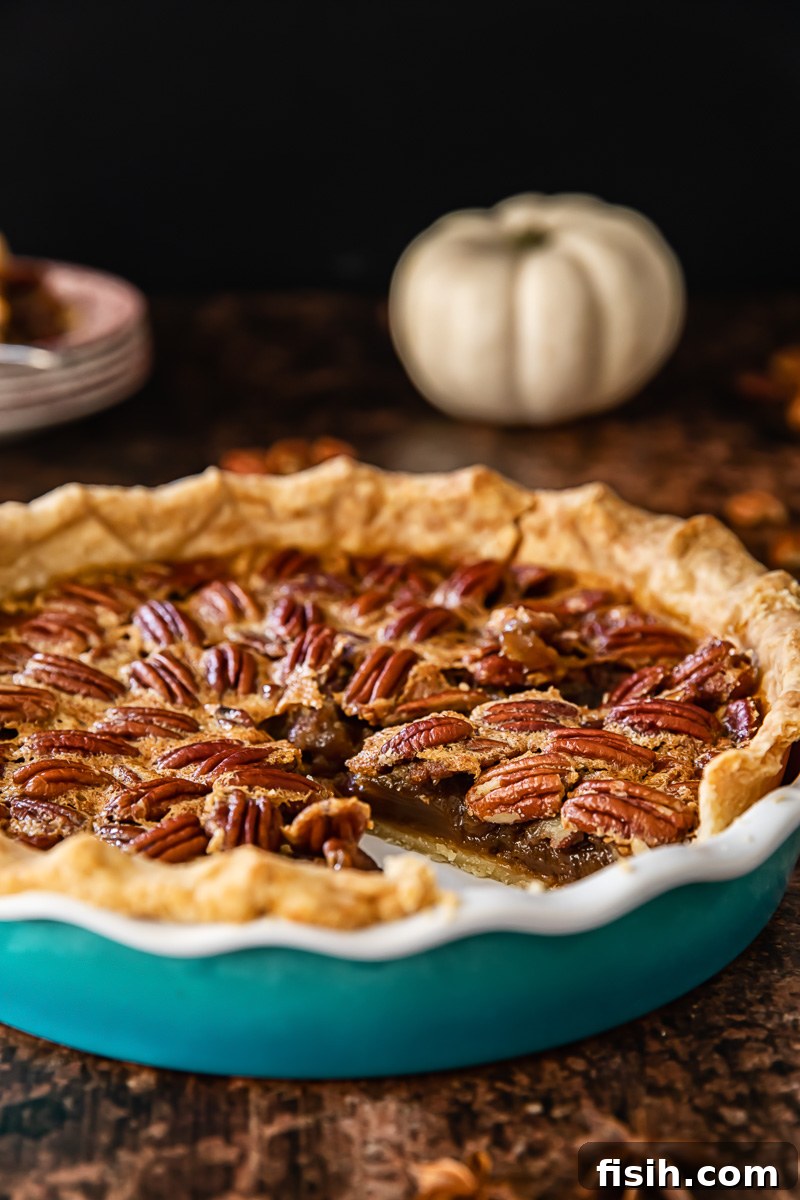
Expert Tips and Notes for Pecan Pie Success
- Prepare Ahead for Best Results: Making the pastry dough a day or two in advance is a brilliant strategy for efficiency and quality. Not only does it help spread out your holiday baking tasks, reducing stress on the big day, but it also gives the pastry ample time to rest and chill thoroughly in the refrigerator. This crucial resting period allows the gluten in the flour to relax, preventing toughness and ultimately resulting in a more tender and spectacularly flaky pastry once baked. Always wrap it tightly in plastic wrap to prevent it from drying out or absorbing refrigerator odors.
- Mastering the Dough Consistency: When preparing your shortcrust pastry, it’s important to understand that its specific flour-to-butter ratio will cause it to initially resemble a collection of coarse crumbs rather than a smooth dough. This appearance is perfectly normal and exactly what you’re aiming for! Resist the strong temptation to add more water than specified in the recipe. Adding too much liquid is a common pitfall that will develop the gluten excessively, leading to a hard, tough, and unpleasant pie crust instead of the delicate, flaky texture you desire. The dough should just barely come together when you squeeze a handful firmly.
- Room Temperature for Rolling: Regardless of how long your pastry has rested, it’s essential to take it out of the refrigerator and let it sit at room temperature for at least 20 minutes before you plan to roll it out. If the pie dough is too cold and stiff, it will be difficult to work with and highly prone to cracking and tearing as you attempt to flatten it. Allowing it to warm slightly makes it pliable, much easier to handle, and less likely to resist your rolling efforts.
- The Indispensable Art of Blind Baking: For any pie with a very wet, custard-like filling, such as our luscious pecan pie, it is absolutely essential to partially bake the pastry case before adding the filling. This pre-baking process, known as blind baking, is your best defense against the dreaded “soggy bottom.” After lining your pie plate and carefully trimming and crimping the edges, chill the crust for another 20 minutes. Then, cover the entire bottom and sides of the crust with parchment paper and fill it completely with baking beans, regular dried beans, or even rice. This step not only ensures the pie shell bakes thoroughly and crisps up, but also prevents it from shrinking too much during the initial bake.
- Choosing Your Corn Syrup Wisely: Corn syrup comes in two main varieties, each offering a distinct flavor profile that can subtly impact your pie. Dark corn syrup provides a richer, more robust, caramel-like taste, often reminiscent of molasses. Light corn syrup, on the other hand, is milder with a more pronounced vanilla essence and less intensity. While either can be used successfully, consider your personal preference: choose dark for a deeper, more complex flavor in your filling, or light for a classic, sweeter profile where other flavors can shine through more prominently. Remember, our recipe uniquely combines both corn and maple syrup for a balanced, nuanced taste.
- Pecan Distribution is Key: While it’s tempting to pile on an abundance of pecans, be mindful not to overload your pie with too many nuts. An excessive amount of pecans can make each slice somewhat dense, a bit tiresome to chew, and can overwhelm the delicate balance of the gooey filling. Less truly is more in this instance, allowing the rich, sweet, and gooey filling to shine through alongside the perfect amount of nutty crunch from the pecans. This is a crucial lesson I learned through experience, resulting in a more balanced and enjoyable texture.
- Trust Your Thermometer, Not Just Your Oven Dial: Oven temperatures can vary significantly from what is displayed on the dial of domestic ovens, often leading to frustratingly inconsistent baking results. After years of struggling with inaccurate ovens and unevenly baked goods, I became a firm believer in using an inexpensive yet indispensable oven thermometer. This simple tool provides the crucial confidence that your oven is actually at the correct temperature, ensuring the magnificent pie you’ve worked so hard on bakes perfectly, preventing both under-baking (which can lead to a runny filling) and over-baking (which can result in a dry, tough pie).
Serving Suggestions for Your Decadent Pecan Pie
Pecan pie is most commonly enjoyed at or close to room temperature, where its complex flavors are most pronounced and its texture is at its absolute best – a firm, yet wonderfully gooey filling with a crisp, buttery crust. However, it’s also delightfully delicious served slightly chilled, which lends it a firmer, almost candy-like texture, or gently warmed, which makes the filling extra luscious and fragrant. The key is to avoid serving it piping hot directly from the oven, as the filling, while still delicious, can lose its structural integrity and become too runny, resembling “lava” rather than a perfectly set pie slice that holds its shape.
With this in mind, it is absolutely crucial to allow the pie to rest and cool completely at room temperature after baking, for at least 2-3 hours, or even longer. This resting period is not merely for appearance; it allows the rich pecan filling to fully set and firm up, ensuring clean, beautiful slices and the ideal gooey-but-firm texture that defines a perfect pecan pie. Patience truly is a virtue here, as rushing this step will result in a messy, unset pie!
A slice of this Maple Bourbon Pecan Pie is so exceptionally rich, flavorful, and satisfying on its own that you’ll make no enemies by serving it plain. Its inherent richness and complex blend of maple, bourbon, and pecan flavors are more than enough to satisfy even the most discerning palate. However, if you’re looking to elevate the experience further and add an extra touch of indulgence, consider pairing it with a generous dollop of freshly whipped cream, perhaps infused with a touch of vanilla extract or a hint of extra bourbon for a cohesive flavor profile. Alternatively, a scoop of premium vanilla bean ice cream or even a cinnamon-pecan ice cream can create a delightful contrast in temperature and texture, enhancing the overall sensory indulgence. For a beautiful finishing touch, a light dusting of cocoa powder or a few extra toasted pecan halves can add both visual appeal and a complementary flavor note.
Storage and Leftovers: Keeping Your Pecan Pie Fresh
The presence of eggs in the pecan pie filling dictates its shelf life and specific storage requirements to maintain both optimal freshness and food safety. For this reason, your baked Maple Bourbon Pecan Pie should always be stored in the refrigerator once it has completely cooled. Ensure it is well-covered with plastic wrap, aluminum foil, or placed securely in an airtight pie container if you have one, to prevent it from drying out, absorbing other refrigerator odors, or spoiling. When stored correctly in the refrigerator, it will remain deliciously fresh and safe to eat for 3-4 days.
The good news is that this is a truly versatile pie that tastes fantastic even when served cold. There’s absolutely no need to go through the hassle of heating it up before enjoying leftovers; simply slice and serve straight from the fridge for a quick, convenient, and satisfying treat. In fact, many pie enthusiasts actually prefer the firmer, almost fudgy texture of a chilled pecan pie!
Should you wish to prepare your pie even further in advance for a special occasion or preserve any extra slices, a baked pecan pie freezes beautifully, making it an excellent make-ahead dessert. To freeze, wrap the cooled pie very tightly first in plastic wrap, then again thoroughly in aluminum foil, ensuring no air can reach the pie. Stored this way, it can last in the freezer for up to 3 months without compromising its quality. When you’re ready to enjoy it, simply transfer the frozen pie to the refrigerator and allow it to thaw completely overnight before serving. For an extra touch of warmth, you can gently warm individual slices in a microwave or a low oven, but it’s just as delightful thawed and served at room temperature.
More Inspiring Thanksgiving Dessert Recipes
- Pumpkin Mousse Trifle (No Bake)
- Salted Caramel Pear Tarts (Very Easy)
- Spiced Pumpkin and Chocolate Cake with Mascarpone Frosting (For Serious Bakers)
- Dulce de Leche Apple Pie
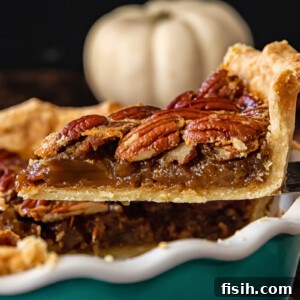
Maple Bourbon Pecan Pie
Julia Frey of Vikalinka
30 mins
1 hr
1 hr 30 mins
8
Print Recipe
This pecan pie, flavoured with maple syrup and a touch of Bourbon, boasts a flaky buttery crust and a delicious filling.
Equipment
- Food processor
- Pastry blender
- Ceramic pie dish
- Parchment paper
- Oven thermometer (Highly recommended for accurate baking)
Ingredients
For the shortcrust
- 250g / 1 3/4 cup + 1 tsp plain flour
- 125g / 1/2 cup + 1 tbsp cold unsalted butter, cubed
- 1 tsp salt
- 1 tbsp white sugar
- 3 tbsp ice cold water
For the filling
- 125ml / 1/2 cup corn syrup or golden syrup
- 125ml / 1/2 cup maple syrup
- 100g / 1/2 cup brown sugar
- 75g / 1/3 cup butter, melted
- 3 large eggs
- 1/2 tsp salt
- 1 tsp vanilla extract
- 3 tbsp Bourbon
- 150g / 1 1/2 cups pecans, roughly chopped
- 100g / 1 cup pecan halves to decorate the top, optional
Instructions
- 1. Prepare the Shortcrust Pastry: In a food processor, combine the flour, salt, sugar, and cold cubed butter. Pulse in short bursts until the mixture resembles coarse crumbs. With the food processor running on low, gradually add ice-cold water one tablespoon at a time through the chute, pulsing just until the mixture starts to come together and feels slightly heavier. It won’t form a smooth ball yet, but it should hold together when pressed.
- 2. Chill the Dough: Remove the crumbly mixture from the food processor and empty it into a large bowl. Gently bring the dough together with your hands, forming a shaggy ball. Avoid overworking the dough to maintain flakiness. Wrap it tightly in plastic wrap, then gently press it down with the palm of your hand to form a flattened disk. Refrigerate for at least one hour, or preferably overnight, to allow the gluten to relax and the butter to firm up.
- 3. Roll Out the Crust: Take the chilled shortcrust from the refrigerator and let it sit at room temperature for at least 20 minutes to become pliable. Attempting to roll out very cold dough will cause it to crack. On a lightly floured surface, roll the dough into a 12-inch circle about 1/8 inch thick. Don’t worry if it cracks; simply pinch it back together. Carefully drape the rolled-out pastry over your rolling pin and transfer it to a 9-inch ceramic pie dish. Gently press it into the dish, ensuring it fits snugly, and patch any tears as needed.
- 4. Prepare for Blind Baking: Once the pie plate is lined, fold any overhanging edges of the pastry under to create a thicker, more defined rim, then crimp it decoratively with your fingers or a fork. Chill the lined pie crust in the fridge for another 20 minutes. Preheat your oven to 200°C (400°F).
- 5. Blind Bake the Crust: Remove the chilled crust from the fridge. Prick the bottom of the crust generously all over with a fork to prevent bubbling. Line the crust with parchment paper and fill it completely with pie weights (or dried beans/rice). Blind bake at 200°C (400°F) for 15 minutes. Then, carefully remove the baking weights and parchment paper, and bake the crust for an additional 5 minutes to dry it out further. The crust should look pale, dry, and partially baked; a slight shrinkage is normal.
- 6. Prepare the Filling: While the crust is blind baking, prepare your delicious filling. In a large mixing bowl, whisk together the corn syrup (or golden syrup), maple syrup, brown sugar, melted butter, and salt until all ingredients are well combined and smooth. Then, whisk in the large eggs one at a time, ensuring each is fully incorporated before adding the next. Stir in the vanilla extract and Bourbon. Finally, add the roughly chopped pecans and mix until they are evenly distributed throughout the filling.
- 7. Assemble and Bake the Pie: Reduce your oven temperature to 180°C (350°F). Pour the prepared pecan filling into the blind-baked and cooled pie crust. If desired, artfully arrange the optional pecan halves in concentric circles on top of the filling for a stunning presentation. To prevent the crust edges from browning too quickly and burning, loosely cover them with aluminum foil. Bake for 35-40 minutes, or until the edges of the filling are set, but the very center still has a slight, gentle jiggle when the pie is carefully shaken.
- 8. Cool Completely: This step is critical for the pie’s structure and texture. It is absolutely crucial to allow the pie to cool completely at room temperature before attempting to slice and serve. This allows the rich, gooey filling to fully set and firm up, ensuring clean, perfect slices and the ideal gooey-but-firm texture that defines a perfect pecan pie.
Nutrition
Carbohydrates: 65g |
Protein: 8g |
Fat: 45g |
Saturated Fat: 15g |
Polyunsaturated Fat: 8g |
Monounsaturated Fat: 19g |
Trans Fat: 1g |
Cholesterol: 115mg |
Sodium: 653mg |
Potassium: 243mg |
Fiber: 4g |
Sugar: 36g |
Vitamin A: 731IU |
Vitamin C: 1mg |
Calcium: 72mg |
Iron: 3mg
Nutrition information is automatically calculated, so should only be used as an approximation.