
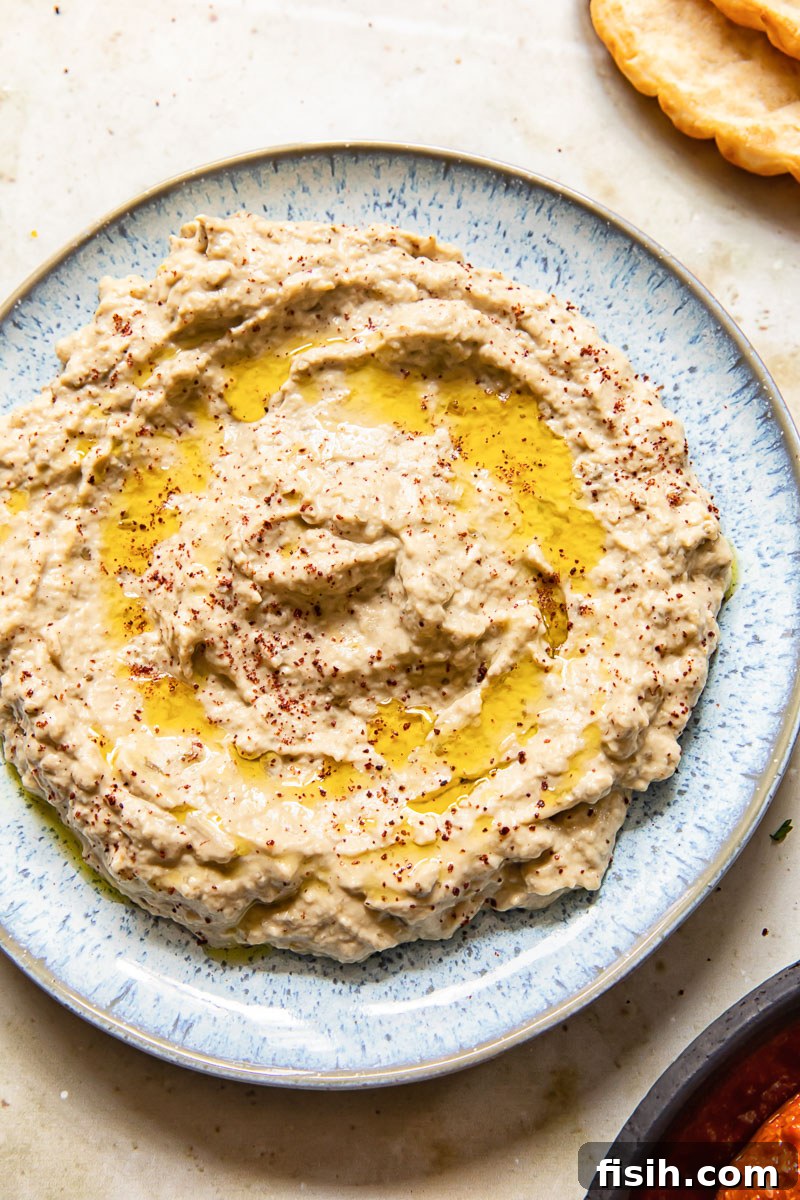
A captivating blend of smoky charm and creamy texture, Baba Ganoush stands as a jewel in the crown of Middle Eastern cuisine. This entirely vegan dip, crafted from fire-roasted eggplant and rich tahini, offers a luxurious experience without a drop of cream. It’s an effortlessly elegant starter or side, perfect for any gathering inspired by the vibrant flavors of the Levant.
For an unforgettable meat-free feast, pair this exquisite dip with my Falafel Salad Bowl, creating a symphony of textures and tastes that perfectly complement each other.
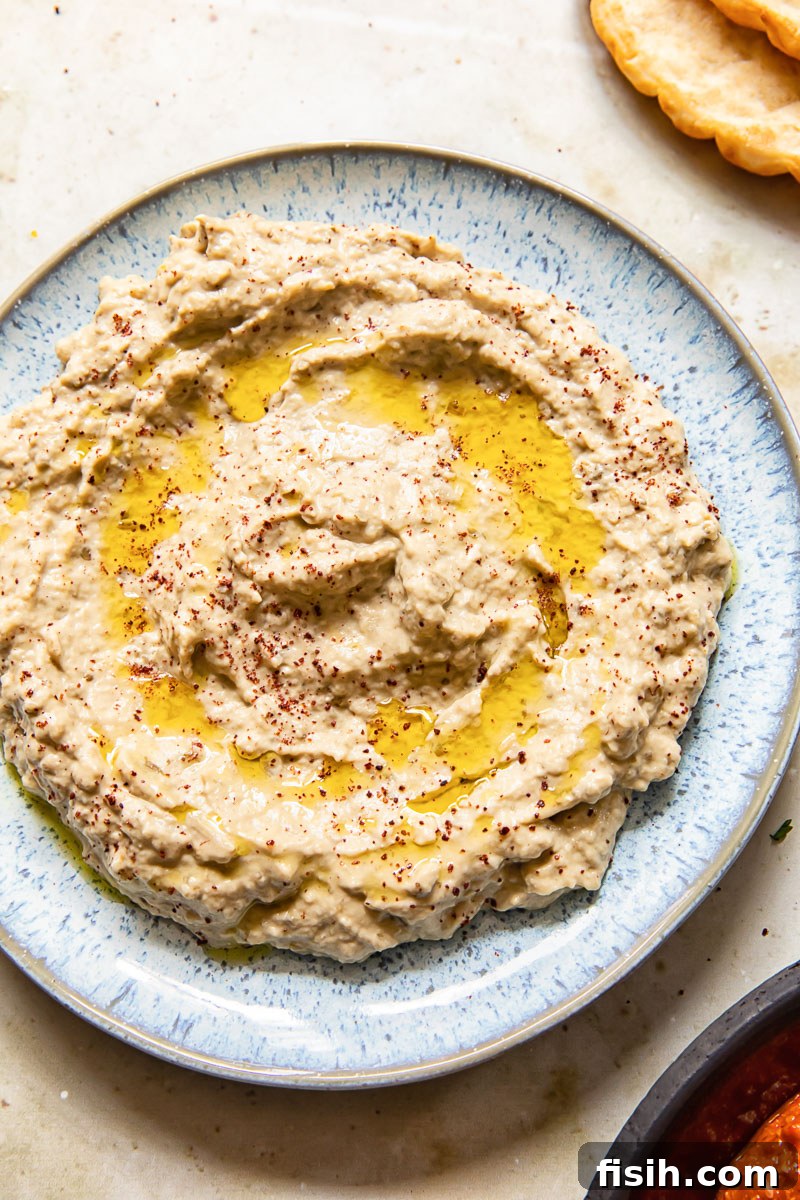
There’s a deep sense of nostalgia for me when it comes to eggplants, or aubergines as they’re known in the UK, especially in the form of a dip. My love for this versatile purple vegetable traces back to my childhood, recalling the comforting aromas of my mother’s homemade Russian “eggplant caviar.” If your palate leans towards eggplant dishes brightened with tomato, that classic recipe is definitely one to explore.
What Exactly is Baba Ganoush? A Dive into its Rich History and Flavors
In Arabic, “Baba Ganoush” playfully translates to “spoiled daddy.” One taste of this opulent eggplant dish, and you’ll undoubtedly understand why “daddy” earned such a delightful indulgence. But fear not, this culinary treasure is certainly not reserved for just the head of the household! This intensely flavorful roasted and charred eggplant dip is inherently designed for sharing, bringing people together over a common love for rich, smoky flavors.
At its heart, Baba Ganoush is a masterclass in simplicity, blending the deeply smoky flesh of eggplant with creamy tahini, bright lemon juice, pungent garlic, and a generous drizzle of olive oil. The result is a dip that can stand proudly on its own, served with warm pita, or take its esteemed place among a vibrant selection on a traditional mezze platter.
While its Arabic name is most globally recognized, the love for this dish transcends borders. Having recently savored it in Israel, I can attest to its widespread popularity. Visitors to Turkey, Lebanon, Egypt, or Iran will likely have encountered a similar, beloved eggplant preparation, perhaps under a different local name like *mutabal* or *kashk bademjan*. The Middle East and Mediterranean regions share an undeniable, profound appreciation for eggplant, transforming it into countless delicious forms, with Baba Ganoush being one of its most celebrated manifestations.
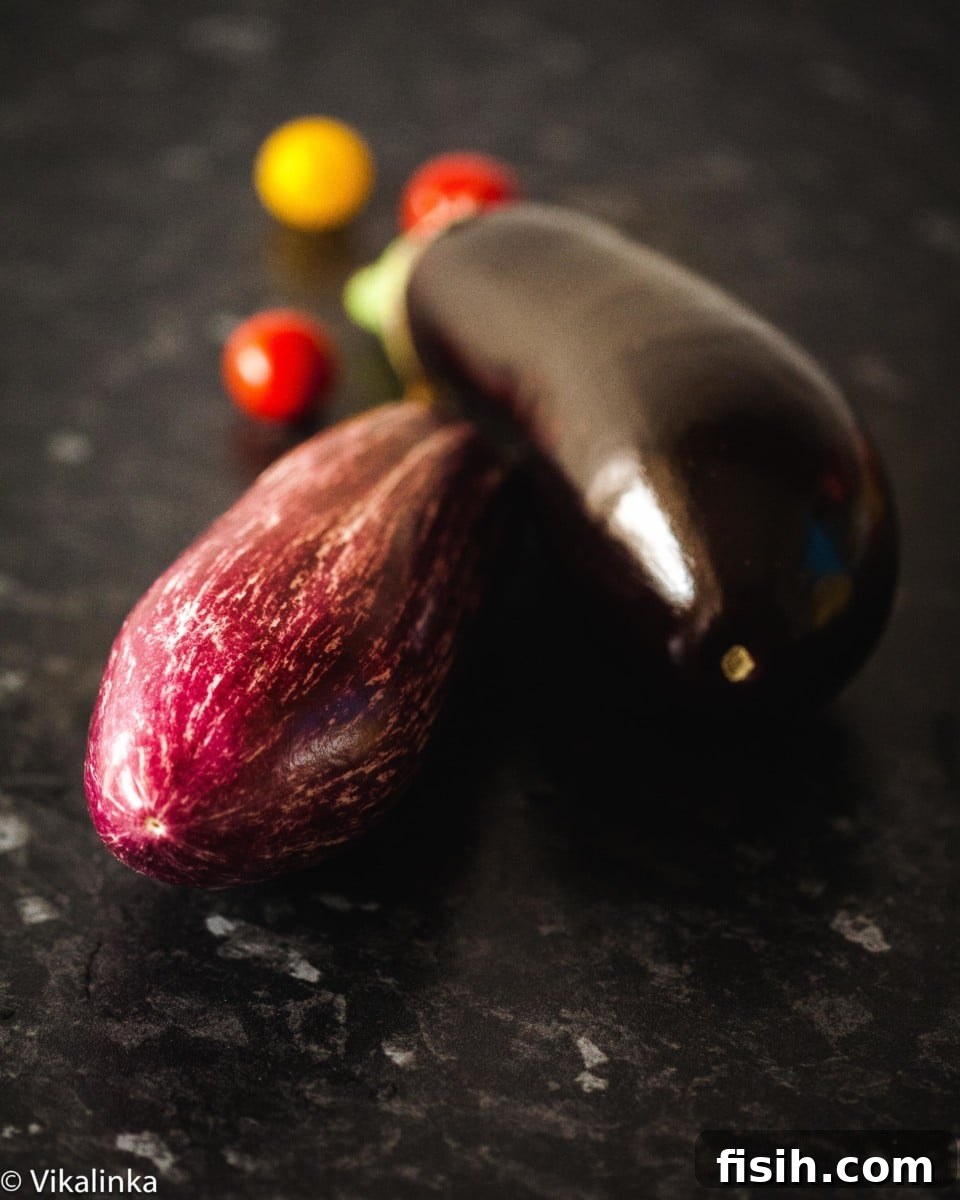
Baba Ganoush vs. Hummus: A Levantine Dip Showdown
In the culinary arena of Levantine dips, who claims the ultimate victory and a prized spot on your table? While both are undeniably delicious and deeply rooted in the region’s culinary heritage, let’s explore their unique characteristics:
- Both boast rich Arabic names and ancient origins, signifying their integral role in Middle Eastern gastronomy.
- Both are universally appealing, being naturally vegetarian, vegan, dairy-free, and gluten-free, making them accessible to a wide range of dietary preferences.
- Both achieve a remarkable creamy texture without the addition of any dairy cream, relying instead on wholesome ingredients and expert blending. They are also notably easy to prepare, requiring minimal fuss for maximum flavor.
- Both find their perfect home as a versatile starter, a satisfying snack, or a delightful side dish, adaptable to any meal or occasion.
- Ultimately, both are exquisitely delicious and incredibly moreish, making it hard to stop at just one spoonful.
However, distinct differences set them apart:
- Hummus, primarily made from chickpeas, is a heavy-hitter in the protein stakes, offering a more substantial and satiating option.
- The magnificent Baba Ganoush, being eggplant-based, typically comes in lower in calories, offering a lighter, yet equally flavorful, alternative.
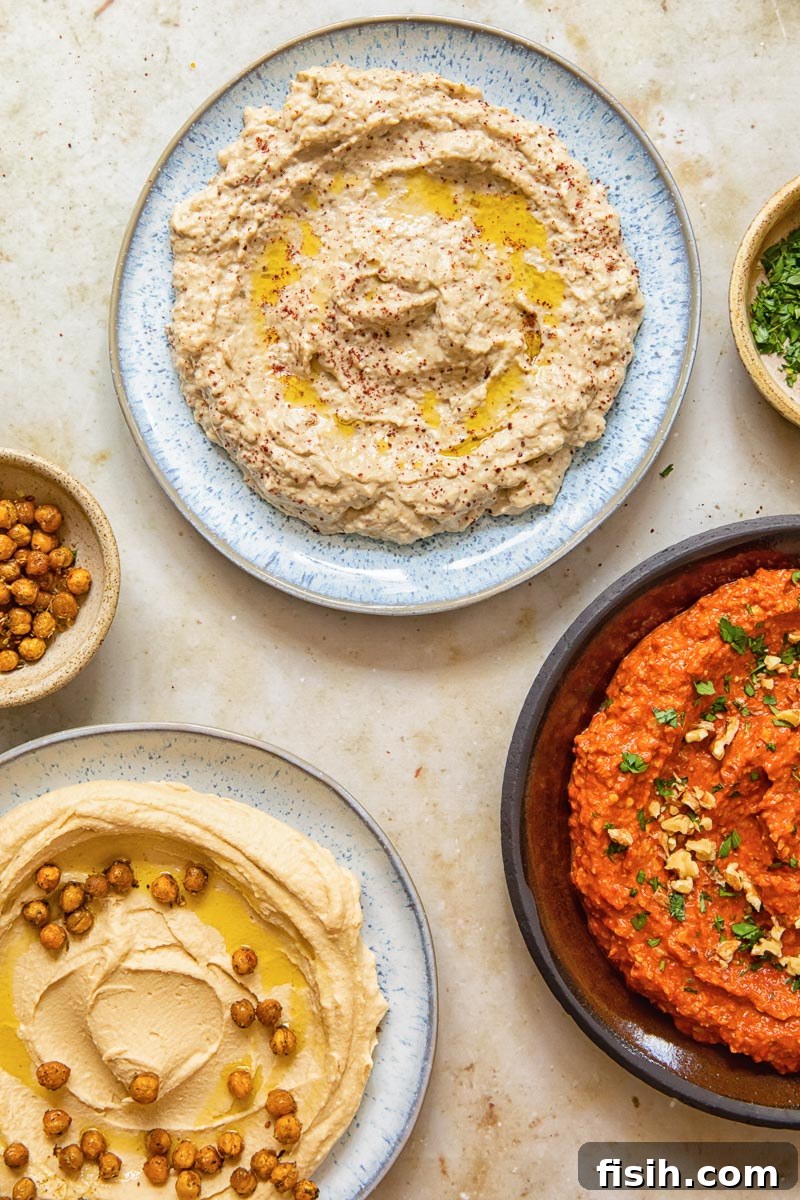
But truly, do we really need to choose? The beauty of a mezze platter lies in its variety, providing ample room for both of these beloved dips to coexist harmoniously, each offering its own unique contribution to the feast. Why settle for one when you can enjoy the best of both worlds?
Mastering Your Baba Ganoush: Essential Recipe Tips and Notes
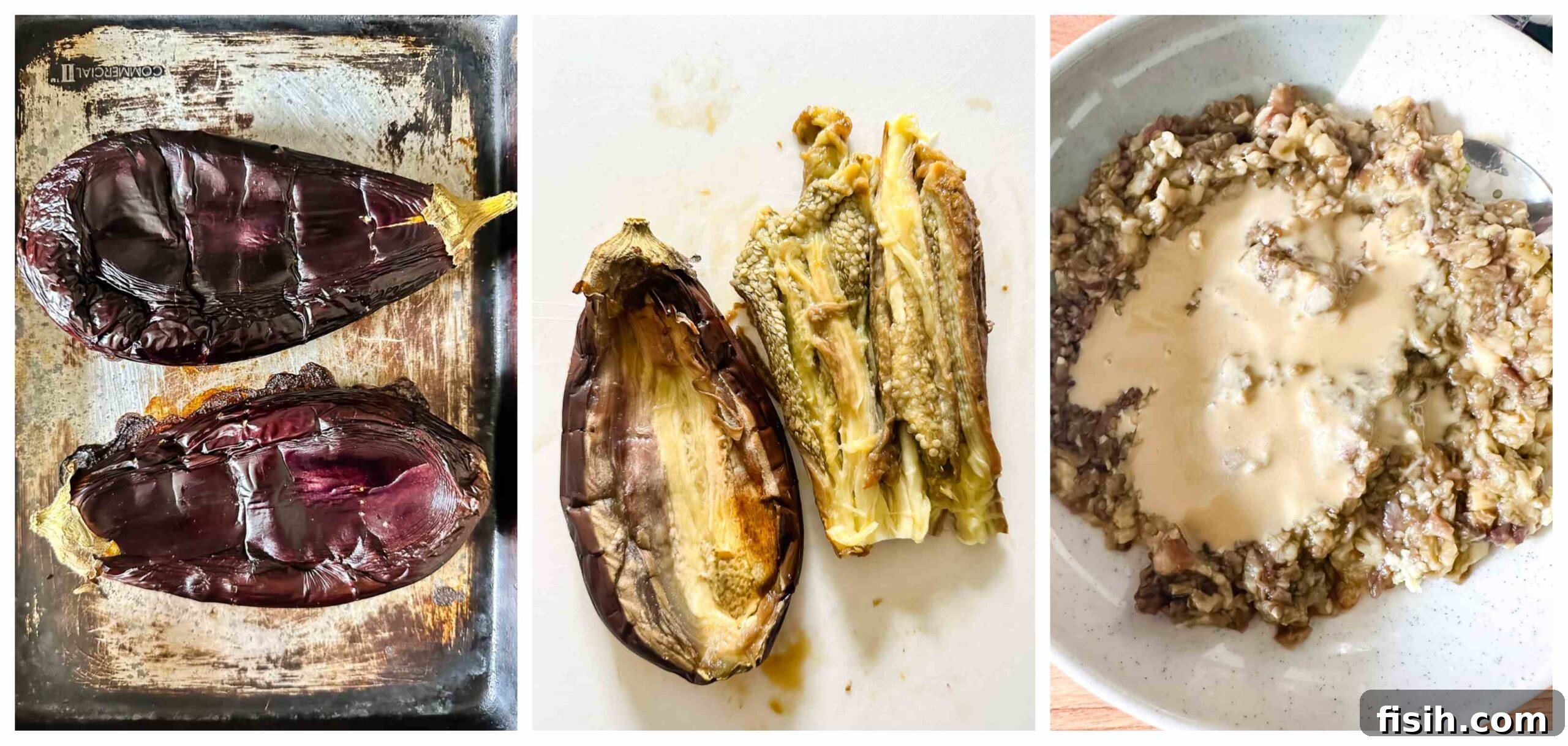
- **The Signature Smokiness:** The hallmark of authentic Baba Ganoush is its distinctive smoky aroma and flavor. While open flame grilling over a BBQ is ideal for achieving this, it’s not always practical. An excellent “cook’s hack” is to use your oven’s broiler (grill in the UK). Place your eggplants directly under the broiler to blacken and char the skin evenly. This intense heat ensures the flesh becomes incredibly soft and infused with that desired smoky depth, mimicking the effect of direct flame.
- **Boosting the Smoke Factor:** If your roasted eggplant doesn’t quite hit the smoky notes you crave, a small dash of smoked paprika can work wonders. Add it judiciously to the dip, tasting as you go, to elevate the smoky profile without overpowering the delicate eggplant flavor.
- **Perfectly Roasted Eggplant Every Time:** Achieving that perfectly soft, collapsed eggplant flesh can be a bit tricky, but it’s crucial. Be diligent in turning your eggplant frequently under the broiler or on the grill. You’re aiming for consistently tender flesh throughout, devoid of any firm or spongy sections. Look for skin that is thoroughly charred and visibly collapsed all over before removing it from the heat. This indicates the interior is cooked through and ready for peeling.
- **The Tahini Test:** The quality of your tahini makes a significant difference in the final taste and texture of your Baba Ganoush. Some tahini brands can be gritty and chalky, while premium varieties are wonderfully smooth, runny like honey, and boast a glossy sheen. Always opt for the latter! For an in-depth guide on selecting the best tahini, check out my blog post on Classic Hummus with Za’atar Roasted Chickpea Topping.
- **Texture Preference: Smooth vs. Rustic:** The texture of your Baba Ganoush is a matter of personal preference. For a more traditional, slightly chunky dip with visible strands of eggplant, mix the roasted eggplant flesh by hand with the other ingredients, perhaps mashing it with a fork. If you prefer a luxuriously smooth and creamy spread, a food processor or blender is your best friend. Use the pulse setting to achieve your desired consistency without over-processing.
Beyond the Dip: Creative Serving Suggestions for Baba Ganoush
Baba Ganoush is far more than just a dip; it’s a versatile culinary companion ready to elevate a myriad of dishes. Its cool, smoky character makes it incredibly adaptable:
Classic Dipping: Our go-to favorites for dunking include warm, pillowy flatbread or pita, crispy tortilla chips, and a colorful array of fresh crudités like carrot sticks, cucumber slices, and bell pepper strips. For those following a gluten-free diet, rice cakes offer a fantastic alternative. And when you’re on the move, crunchy breadsticks provide a convenient and satisfying vehicle for this delightful spread.
A Luxurious Spread: Elevate your sandwiches and wraps by using Baba Ganoush as a delectable spread. It’s fantastic on its own layered onto crusty bread, or combined with grilled chicken, crispy bacon, or vibrant roasted vegetables for a fulfilling meal. Imagine it generously spread on burger buns, perfectly complementing a juicy lamb or veggie burger, adding a rich, smoky depth that transforms a simple sandwich into a gourmet experience.
An Exceptional Condiment: Think of Baba Ganoush as the ultimate condiment for grilled meats. Its bright acidity and smoky undertones beautifully cut through the richness of dishes like tender chicken souvlaki, grilled lamb chops, or even simple roasted fish. It’s also a splendid accompaniment for oven-roasted vegetables, offering a creamy counterpoint to their caramelized sweetness, or a flavorful base for a wholesome salad bowl.
A Brunch Revelation: Don’t limit Baba Ganoush to lunch or dinner. I particularly adore incorporating it into a warm brunch spread. Its unique flavor profile adds an unexpected gourmet touch, as demonstrated in my recipe for Sweet Potato Hash with Halloumi and Baba Ganoush – a truly inspired way to start your day.
Storage and Leftovers: Enhancing Flavor Over Time
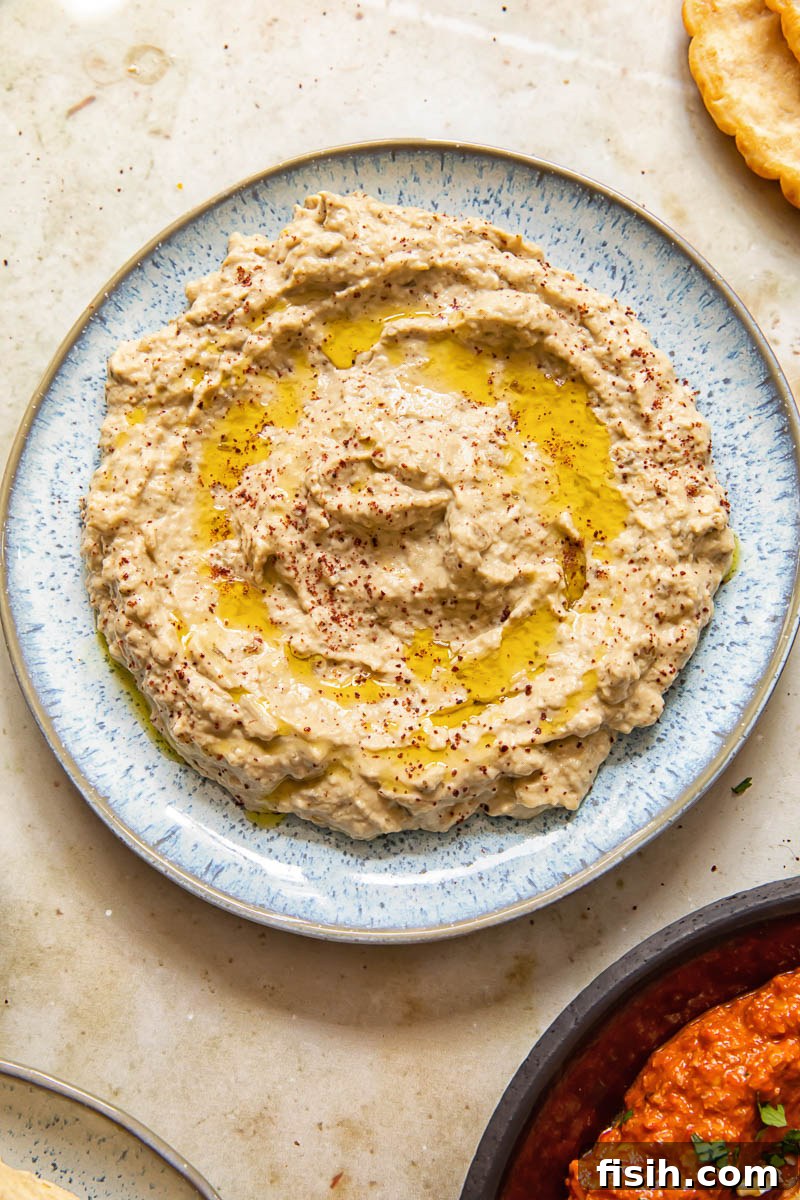
Baba Ganoush is an ideal make-ahead dish, perfect for simplifying your meal prep or getting ahead of your mezze game. Not only does it keep exceptionally well, but its flavors actually deepen and meld beautifully over time, intensifying that garlicky zing and smoky essence. Store your freshly made Baba Ganoush in an airtight container in the refrigerator for up to 4 days. Before serving leftovers, allow it to come to room temperature for about 15-20 minutes to best appreciate its complex flavors and creamy texture. A fresh drizzle of olive oil and a sprinkle of sumac can revitalize it beautifully.
More Middle Eastern Recipes to Explore
If you’ve fallen in love with the vibrant tastes of the Middle East through Baba Ganoush, here are more authentic recipes from my kitchen to expand your culinary horizons:
- Classic Hummus with Roasted Za’atar Chickpea Topping
- Fattoush Salad: A Refreshing Bread Salad
- Muhammara: A Spicy Walnut and Roasted Red Pepper Dip
- Chicken Musakhan: Sumac-Spiced Chicken with Caramelized Onions on Flatbread
Smoky Baba Ganoush with Sumac
Equipment
-
Food processor or blender
Ingredients
- 2 medium eggplants
- 2 cloves garlic
- 1/2 lemon, juice of
- 2 tbsp tahini
- 2 tbsp olive oil
- salt to taste
- 1/2 tsp sumac
Instructions
-
Prick the eggplants all over with a fork and place them on a baking sheet. Arrange the baking sheet on the top rack of your oven, approximately 6 inches away from the broiler element. Broil the eggplants until the skin is thoroughly charred and blackened, about 20 minutes on one side. Then, carefully turn them over and continue to cook for another 10-15 minutes, or until the skin is charred all around and the eggplant flesh has completely collapsed and softened.
-
Once cool enough to handle, peel the charred skin from the eggplants. Place the tender eggplant flesh into a food processor along with the garlic cloves, freshly squeezed lemon juice, tahini, olive oil, and a pinch of salt. Pulse until the mixture is smooth and creamy. Taste and adjust the seasoning, adding more salt if needed. For a more rustic, chunkier Baba Ganoush with visible eggplant strands, you can simply chop the peeled eggplant by hand and then mix it with the remaining ingredients.
-
Serve your delicious Baba Ganoush immediately, garnished with an extra drizzle of olive oil and a vibrant sprinkle of sumac for both flavor and visual appeal.
Nutrition
Nutrition information is automatically calculated, so should only be used as an approximation.