
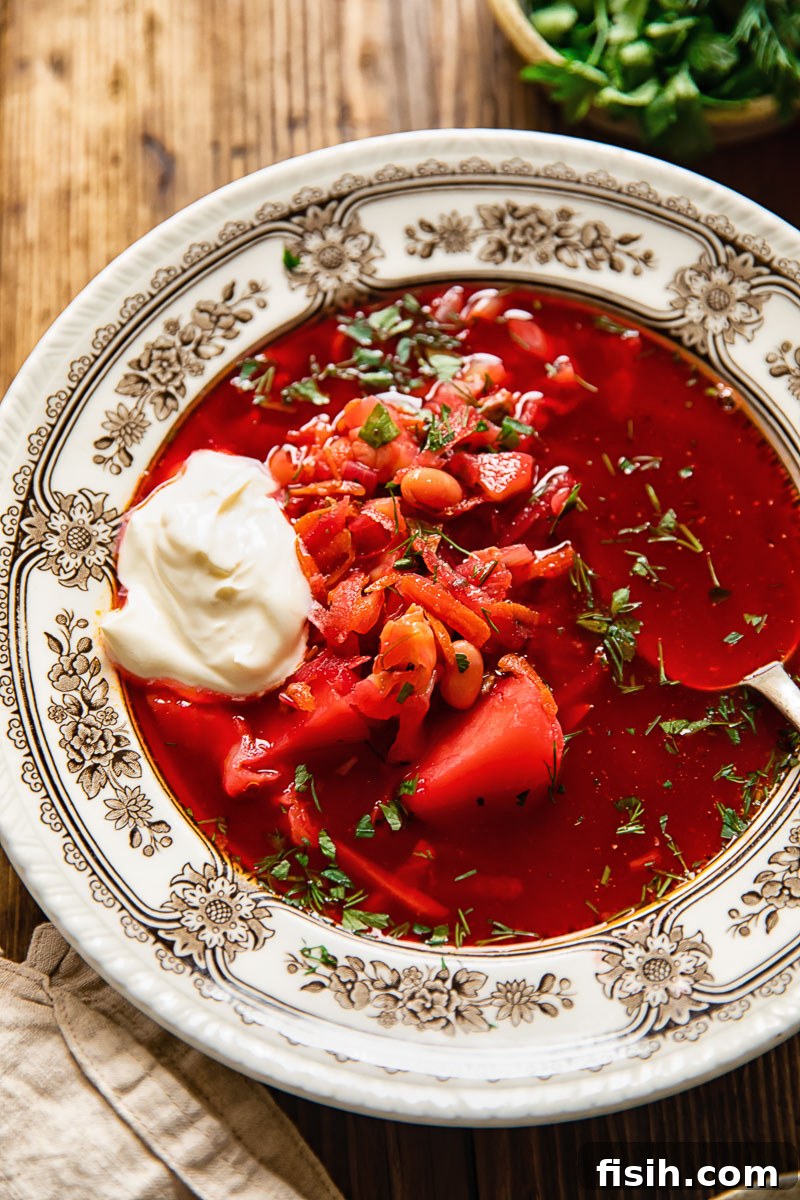
Welcome to the heartwarming world of Vegetarian Borscht, a ruby-red masterpiece that transcends its humble origins to deliver a truly exquisite culinary experience. This vibrant beetroot soup, brimming with wholesome vegetables, is a testament to the rich Ukrainian culinary heritage. More than just a starter, this recipe offers a deeply satisfying and nourishing meal in itself. Our meat-free vegetarian borscht promises all the robust flavor and comfort of a traditional recipe, but with an added lightness that makes it remarkably easier to digest. Prepare to be enchanted by a dish that’s as visually stunning as it is delicious.
To elevate your borscht experience, serve it alongside a generous slice of freshly baked rye bread. The hearty texture and earthy flavor of the bread are perfect for dunking into the rich broth, ensuring you can savor every last drop of this incredible soup.
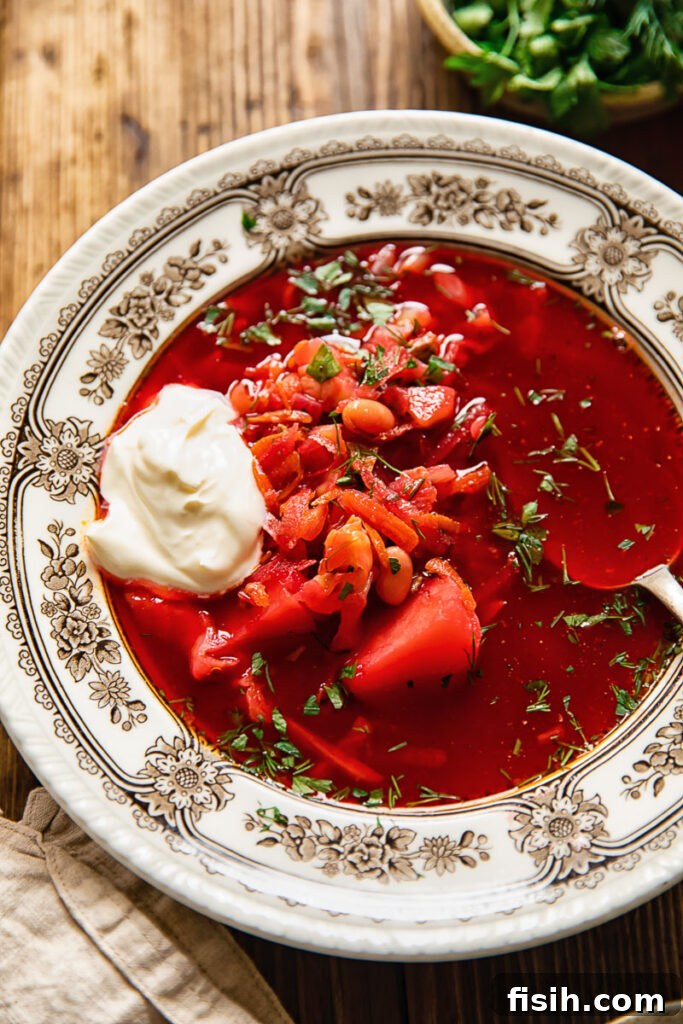
The name “borscht” itself offers a fascinating glimpse into its historical roots, literally translating to ‘cow parsnip’ or ‘hogweed.’ While this might not sound particularly appetizing, especially to an English speaker, it points to a time when these wild plants were key ingredients in early versions of the soup. Thankfully, you can rest assured that modern borscht, and certainly this delicious recipe, features no such wild “weeds” but rather a carefully curated selection of fresh, flavorful vegetables.
As a family deeply appreciative of wholesome vegetables, and with ancestral ties to the very region where borscht originated, this soup holds a special place in our hearts. What was once considered a staple for rural communities has evolved into a celebrated dish, gracing our tables during significant festive occasions like Christmas Eve and Easter. Each vivid bowlful is a reminder of tradition, comfort, and the joy of sharing good food.
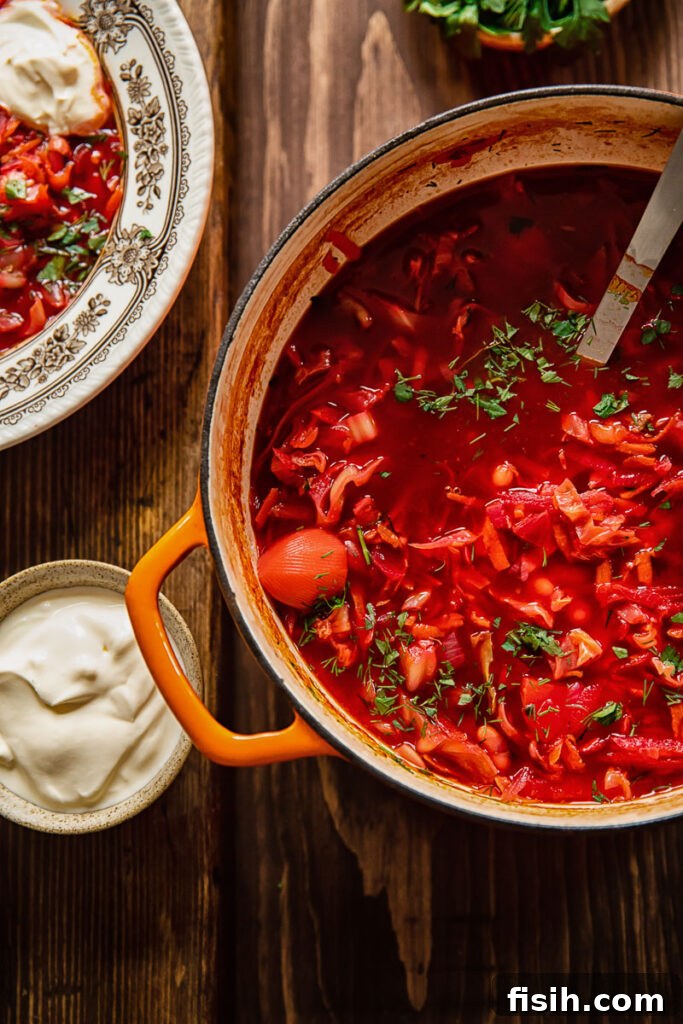
What is Borscht? A Culinary Journey Through Time
Borscht is far more than just a soup; it’s a living piece of culinary history. Hailing from the fertile lands of what is now Ukraine, this iconic dish began as a humble sustenance for the rural poor, evolving dramatically over centuries into the internationally beloved soup we recognize today. Its journey has been marked by changes in ingredients, colors, and flavors, delighting palates across the globe.
The earliest forms of borscht were quite distinct from modern versions. Initially, beetroot wasn’t even a core component. It was truly “peasant” food, made from whatever was readily available and growing nearby – roots, shoots, flowers, and stems. This original preparation likely yielded a clear or greenish broth, often with a slightly meaty, sour flavor resulting from fermentation. Historical accounts even suggest it was a reputed cure for medieval hangovers!
As centuries passed, borscht gathered new ingredients and refined its character. It ascended from rustic tables to grace the elaborate feast tables of nobility across Eastern Europe. Eventually, its fame spread beyond the continent, captivating diners as far afield as the United States. Today, borscht is instantly recognizable by its characteristic deep red hue, its comforting earthy undertones balanced with a refreshing sour tang, and its signature dollop of rich sour cream served on top. It stands as a symbol of Eastern European cuisine, deeply ingrained in cultural identity.
While the ruby-red beetroot version is the most famous, the versatility of borscht allows for wonderful variations. For those seeking a different experience, explore my delightful green borscht recipe, a perfect summer soup that foregoes beets entirely for a refreshing, herby flavor profile.
Crafting the Perfect Vegetarian Borscht: Essential Ingredients
At the heart of any truly authentic borscht, regardless of its variations, lies a collection of foundational ingredients. As the name might suggest from its ancient origins, roots are paramount: earthy beetroot, hearty potato, sweet carrot, and pungent onion form the backbone of the soup. The only non-root vegetable considered a ‘must-have’ for its distinctive flavor and texture is cabbage.
Traditional borscht often incorporates a touch of meat, typically beef or chicken, along with a rich meat stock. However, don’t hesitate to explore the equally delicious vegetarian or vegan routes, as demonstrated by this recipe. By opting for a high-quality vegetable stock and introducing plant-based proteins, you create a soup that is just as satisfying and flavorful. Beyond the core ingredients, the beauty of borscht lies in its adaptability. Ingredients like mushrooms, tomatoes, and various fresh herbs can be added to complement your palate or simply to utilize what you have on hand, enriching the soup with additional layers of taste and texture.
The final color of your borscht is largely determined by your chosen root vegetables and their ratios. While the iconic ruby-red is most common, this versatile sour soup can also appear in shades of green (as with sorrel borscht) or even white. Interestingly, the color of borscht served can sometimes hold significance, correlating with specific religious events or seasonal traditions.
Expert Tips and Notes for Your Vegetarian Borscht
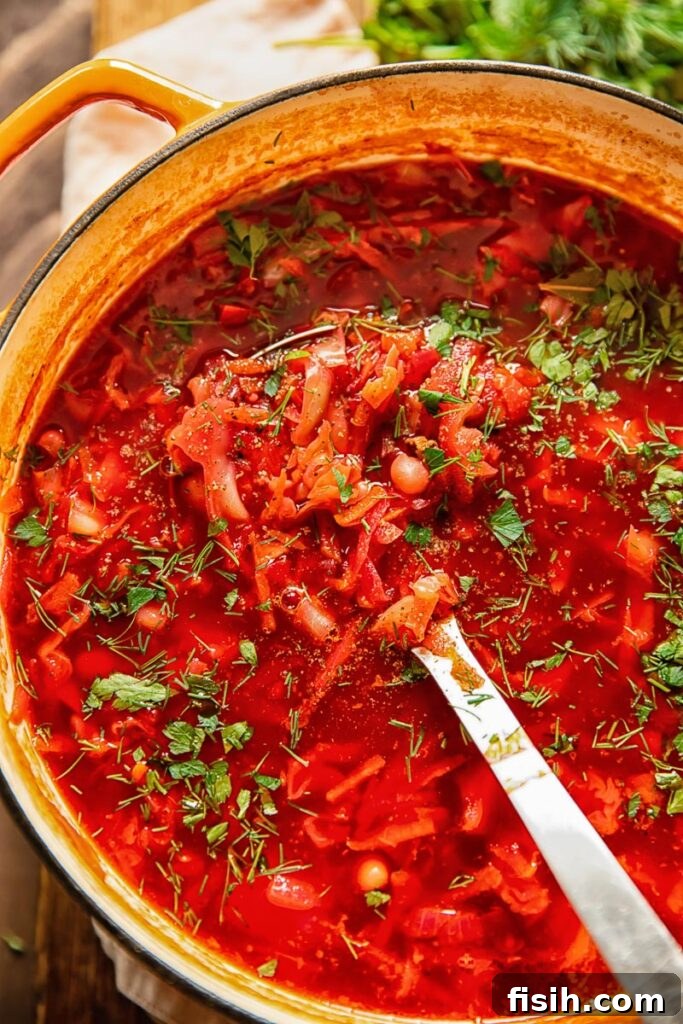
- Embrace the Hearty Texture: This particular vegetarian borscht recipe is designed to be a substantial, stew-like soup. Expect it to be thick, chunky, and incredibly hearty. This robust consistency is a hallmark of truly satisfying borscht, perfect for warming you from the inside out.
- Beetroot Choice Matters: For the most profound and earthy flavor, always opt for uncooked beets if possible. Their natural intensity will infuse the soup with a deep, authentic taste. If fresh beets aren’t available, pre-cooked vacuum-packed beets are a good second choice. However, we strongly recommend avoiding canned beets, as they often lack the vibrant flavor and firm texture essential for quality borscht.
- Unlocking Umami with Dried Mushrooms: To add an extraordinary depth of earthy, umami flavor to your broth, dried mushrooms are an invaluable secret ingredient. Porcini or a good quality mixed dried mushroom blend work best, transforming your soup into something truly exceptional. If dried mushrooms are not an option, ensure you use the highest quality vegetable stock you can find to build a robust flavor base.
- The Power of Beans: In this meat-free version, cannellini beans step in beautifully to provide protein and a satisfying bite, mimicking the texture often found in traditional meat-based borscht. Cannellini beans are favored for their nutty flavor and ability to retain their shape during cooking. Feel free to experiment with other beans you might have; red kidney beans maintain the classic color theme, while borlotti beans offer a delightfully creamy texture.
- The Essential Fresh Herb & Cream Finish: Never underestimate the impact of fresh herbs and a generous dollop of sour cream! A sprinkle of freshly chopped dill and parsley provides a vibrant contrast, cutting through the rich, earthy flavors of the soup with their bright, aromatic notes. And the sour cream? It’s non-negotiable, adding a creamy tang that is the perfect traditional flourish to every bowl of borscht.
Serving Your Vegetarian Borscht: Traditions and Modern Twists
Historically, borscht was often presented as a first course, setting the stage for a more substantial main meal featuring meat and potatoes or other hearty dishes. However, culinary traditions evolve, and today, borscht is increasingly embraced as a standalone meal. Its rich, satisfying nature makes it perfectly capable of carrying a meal all on its own, especially this generously portioned vegetarian version.
Regardless of whether it’s a starter or a main, certain accompaniments are almost universally expected with borscht. You will invariably find it served with a generous dollop of cool, tangy sour cream (or crème fraîche), which provides a delightful creamy contrast to the soup’s earthy and slightly tart profile. A healthy sprinkling of fresh herbs, particularly aromatic dill and bright parsley, is also essential, adding freshness and a pop of color. To complete the experience, I highly recommend serving your borscht with a few slices of crusty sourdough or another lovely fresh bread, perhaps with a smear of butter. For an even more authentic touch, consider traditional garlic knots (pampushky) for dipping – they are truly a match made in heaven for this soup.
Storage and Leftovers: Savoring Borscht for Days
One of the many wonderful qualities of borscht is how well it keeps, and often, how its flavors deepen and meld overnight. If you have any leftovers, ensure you store them in an airtight container in the refrigerator. Without the addition of sour cream (which is best added fresh upon serving), the soup will remain delicious for 2-3 days. In fact, many connoisseurs argue that borscht tastes even better the next day, after all the individual ingredients have had ample time to truly harmonize their flavors.
While some soups are perfectly suited for freezing, I generally advise against freezing borscht, primarily due to the potatoes. Potatoes, when frozen and then defrosted, tend to become mealy and lose their desirable texture, which can significantly detract from the overall enjoyment of the soup. For the best culinary experience, enjoy your borscht fresh or from the fridge within a few days.
More Delicious Vegetarian Soup Recipes to Explore
- Hearty Harvest Minestrone Soup
- Comforting Curried Cauliflower and Cheese Soup
- Luxurious Cream of Broccoli Soup with Smoked Gouda
- Flavorful Roasted Butternut Squash and Sweet Potato Soup
- Light and Fresh Spring Minestrone Soup
Vegetarian Borscht
Equipment
-
Large pot
Ingredients
- 10g/1/3 cup dried porcini mushrooms
- 250ml/1 cup boiling water
- 2 litres/8 cups vegetable stock
- 2 bay leaves
- 1 medium beet, peeled and grated
- 180g/2 cups sliced cabbage
- 2-3 medium potatoes, cut into chunks
- 400g/14oz canned cannellini beans or kidney beans, drained
- 2 tbsp tomato paste
- 1 tbsp butter
- 1 tbsp olive oil or vegetable oil
- 2 medium carrots, grated
- 1 onion, chopped
- 2 cloves garlic, minced
- Salt to taste
- 1/2 lemon, juice only
- 2 tbsp fresh dill and parsley, for serving (optional)
- Sour cream or creme fraiche, for serving
Instructions
-
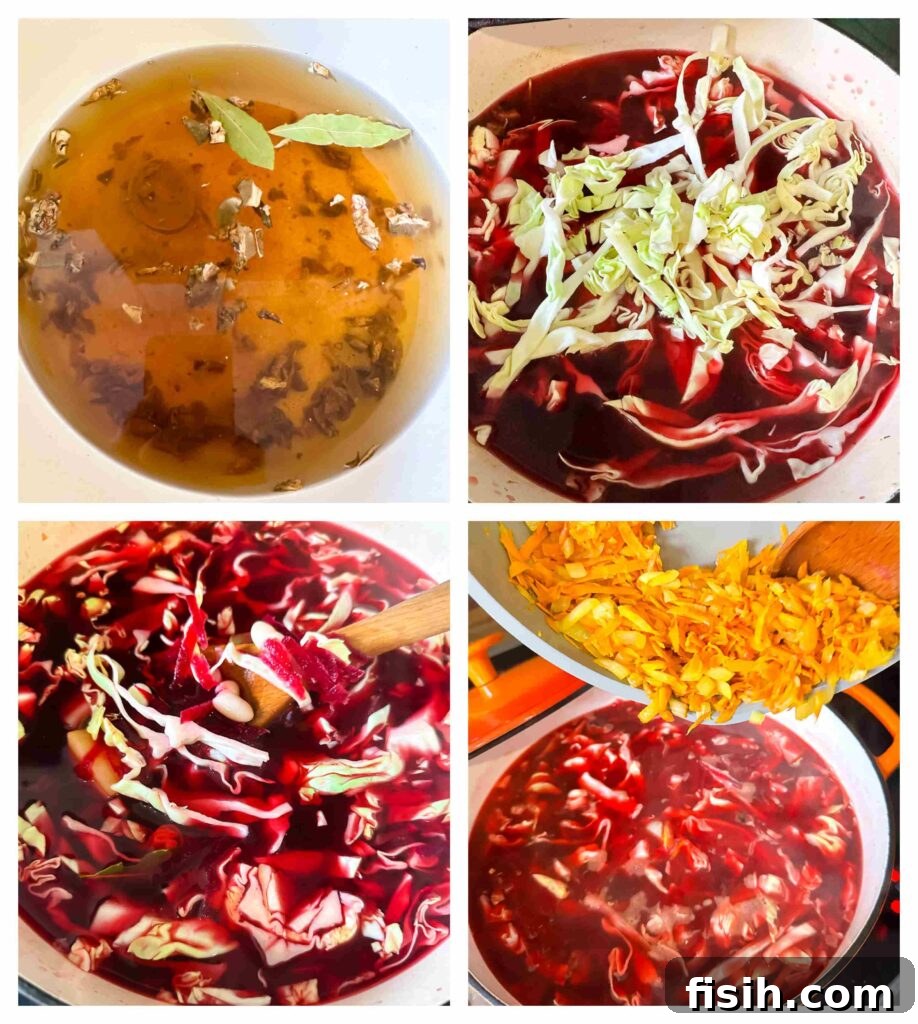
Pour the boiling water over the dried porcini mushrooms and set aside for 20 minutes.
-
Meanwhile, prepare the vegetables by peeling and grating 1 beetroot, removing the core and slicing the cabbage, grating the carrots, peeling and cutting the potatoes into chunks, and chopping the onion.
-
Remove the re-hydrated mushrooms from their liquid and chop them. Reserve the liquid to use in the soup for extra flavor.
-
Combine the vegetable stock, chopped mushrooms, bay leaves, and the reserved mushroom liquid in a large soup pot and bring to a simmer. Once simmering, add the beets, potatoes, beans, tomato paste, and cabbage. Cook for 20 minutes.
-
During the final 10 minutes of the soup’s cooking time, sauté the chopped onion and carrots in the butter and oil over low heat until the onions are lightly browned and softened. Add the minced garlic and sauté for an additional 30 seconds until fragrant. Stir this sautéed mixture into the soup and cook for 5 more minutes. Finally, stir in the fresh lemon juice and season with salt to taste.
-
Serve your delicious vegetarian borscht hot, garnished with fresh herbs and a generous dollop of sour cream.
Nutrition
Nutrition information is automatically calculated, so should only be used as an approximation.