
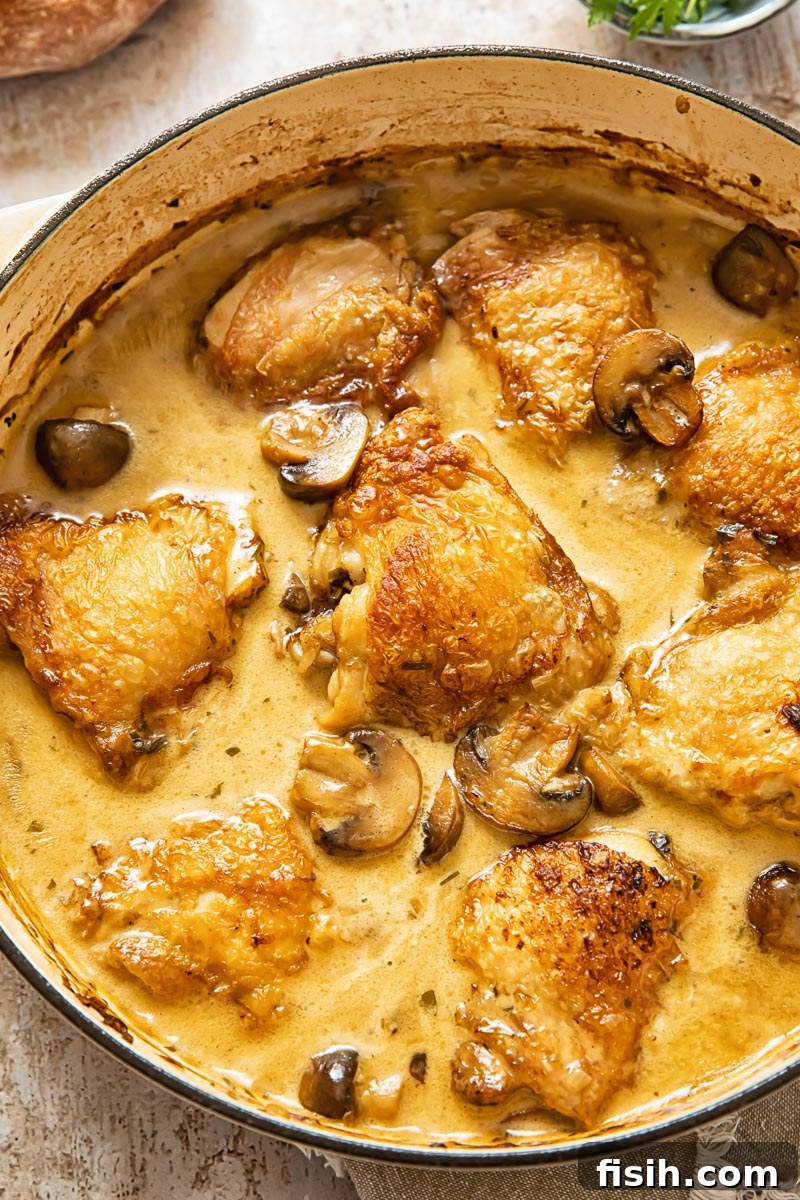
Transport your taste buds straight to the heart of France with a classic Chicken Fricassee. This exquisite, creamy chicken dish is the epitome of comfort and elegance, perfect for a cozy family dinner or an impressive gathering. Featuring succulent chicken thighs and tender vegetables bathed in a rich, smooth cream sauce, it’s a sophisticated one-pot meal that brings fine French dining right into your home kitchen. Forget complicated techniques; this recipe is about simple ingredients transformed into something truly magnificent.
Craving French flavors but perhaps exploring beyond chicken? My boneless pork chops with apples and cider offer a similarly luxurious creamy sauce and pair beautifully with all the suggested sides below, providing a delightful alternative for your culinary adventures.
What is Chicken Fricassee? A French Culinary Gem
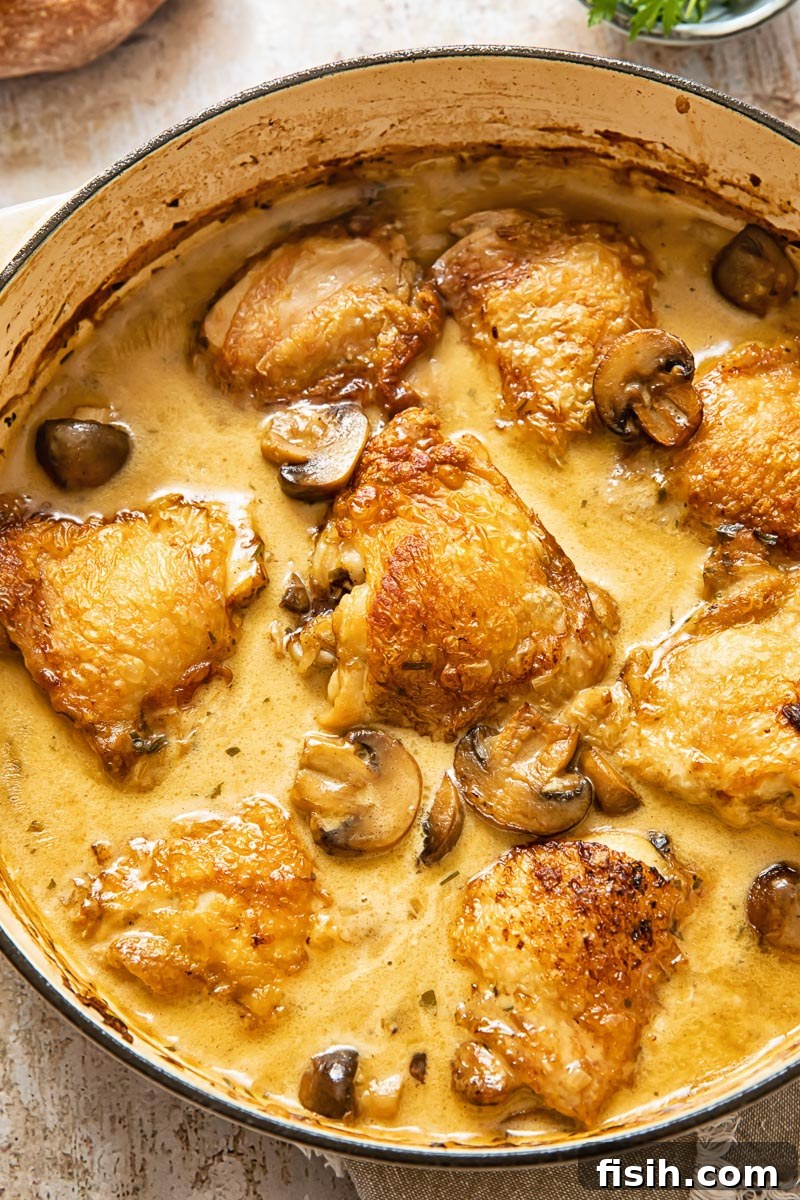
Often described as a “white stew,” Chicken Fricassee (pronounced “free-ka-SAY”) is a beloved French culinary classic that beautifully bridges the gap between a sauté and a stew. Unlike a dark, robust stew where the meat is fully browned before simmering, fricassée involves lightly sautéing the chicken and vegetables until just golden, then cooking them gently in a delicate, pale sauce thickened with flour or egg yolks, and enriched with white wine and cream. This method ensures the chicken remains incredibly tender and juicy, while the sauce develops a nuanced, comforting flavor profile that is distinctively French.
While we might categorize it as a chicken casserole or a creamy stew today, the origins of chicken fricassée trace back to 14th-century France. Far from the haute cuisine often associated with French gastronomy, it began as a humble, practical dish. Its purpose was to make the most of available ingredients, typically utilizing poultry that might otherwise be tougher cuts, slowly transforming them into a tender and flavorful meal. This historical context highlights its enduring appeal as a comforting, economical, yet deeply satisfying dish.
The beauty of fricassée lies in its two-step preparation. First, the ingredients are briefly sautéed, which helps to develop a foundational layer of flavor, caramelizing the surfaces without creating a dark crust. This initial browning is crucial for intensifying the taste of the chicken and vegetables. Then, everything is gently stewed, allowing the flavors to meld and the sauce to thicken beautifully, becoming intensely savory from the meat and vegetables. This ingenious method means the dish pairs perfectly with relatively simple sides, such as fluffy rice, creamy mashed potatoes, or crusty bread, which can soak up every drop of the luxurious sauce.
Often compared to its more celebrated cousin, Coq au Vin, Chicken Fricassee offers a distinctly different experience. While Coq au Vin boasts a rich, dark red wine sauce, fricassée champions a lighter, creamier, and often more subtle flavor profile derived from white wine and fresh herbs. Both are quintessential French chicken recipes, but fricassée stands out for its elegant simplicity and the velvety texture of its pale sauce, offering a different facet of French culinary tradition. If you prefer your chicken in a red wine sauce, Coq au Vin is definitely the dish for you, but for a delicate, creamy indulgence, fricassée reigns supreme.
Ingredients and Versatile Adaptations of Chicken Fricassee
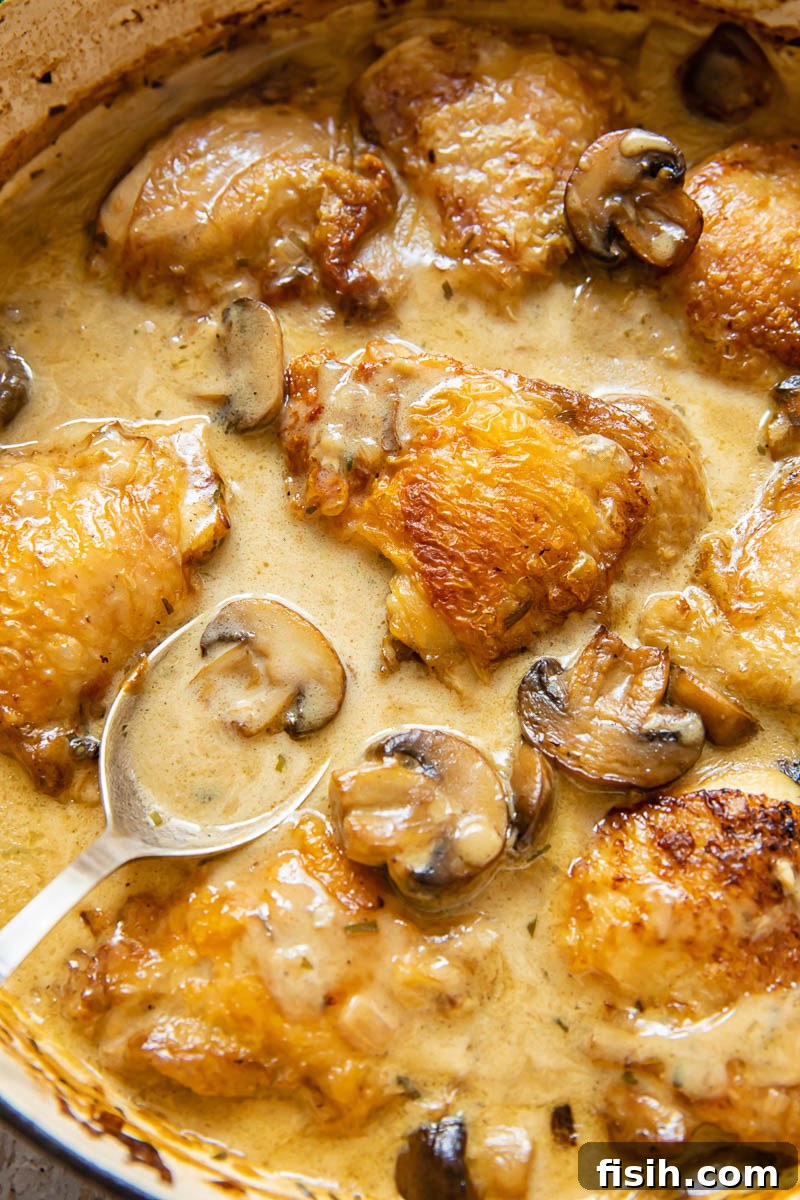
The versatility of Chicken Fricassee is one of its most charming attributes, echoing its humble beginnings where cooks would utilize whatever ingredients were readily available. Historically, the main protein could have been chicken, veal, or even rabbit, depending on the region and the season in medieval France. Today, chicken remains the most popular choice, and for good reason. I specifically recommend using bone-in, skin-on chicken thighs. They are not only more affordable than breasts but also inherently more succulent, retaining moisture and flavor during the longer cooking process. The skin, when properly browned, adds an extra layer of richness and texture, while the bone contributes depth to the sauce.
When it comes to vegetables, the possibilities are vast and delightful. While earthy chestnut mushrooms are a classic addition, providing a deep umami note that complements the creamy sauce beautifully, feel free to experiment with what you have on hand or what’s in season. Carrots, potatoes, and winter squash (like butternut or acorn) are excellent choices as they absorb the rich flavors of the sauce and become wonderfully tender. Other fantastic additions include leeks, celery, peas, green beans, and asparagus. Imagine a spring fricassée with fresh asparagus and peas, or a hearty autumn version with root vegetables. Embrace the spirit of the 13th-century French peasant and adapt the recipe to your pantry!
The thickening agent for the sauce has also seen historical variations. Early recipes often employed egg yolks as a liaison, whisked in at the end to create a protein-rich, incredibly silky, and luxurious sauce. This method yields a truly exquisite texture, though it requires a bit more care to prevent the eggs from scrambling. For convenience and a slightly more robust consistency, flour (creating a roux with butter) is a common modern alternative, as I’ve used in this recipe. It’s certainly a more straightforward approach for a busy weeknight, achieving a perfectly smooth and rich sauce with ease.
While white wine and chicken thighs form the foundation of the classic French fricassée, its introduction to diverse cultures has given rise to fascinating national variations. For instance, German fricassée often features a whole chicken, sometimes incorporating green peas or fresh asparagus for a lighter touch. In the Spanish Caribbean, versions of fricassée (often called fricasé) diverge significantly, built upon a vibrant red wine and tomato-based sauce, typically including carrots and sometimes olives, reflecting a different culinary heritage entirely. These variations beautifully illustrate that it is the “fricassée” method – the initial sautéing followed by gentle stewing in a rich sauce – rather than a rigid list of ingredients, that truly defines this adaptable dish. So, feel empowered to tamper with the recipe, making it uniquely yours while respecting its core cooking principle.
Elegant Serving Suggestions for Your Chicken Fricassee
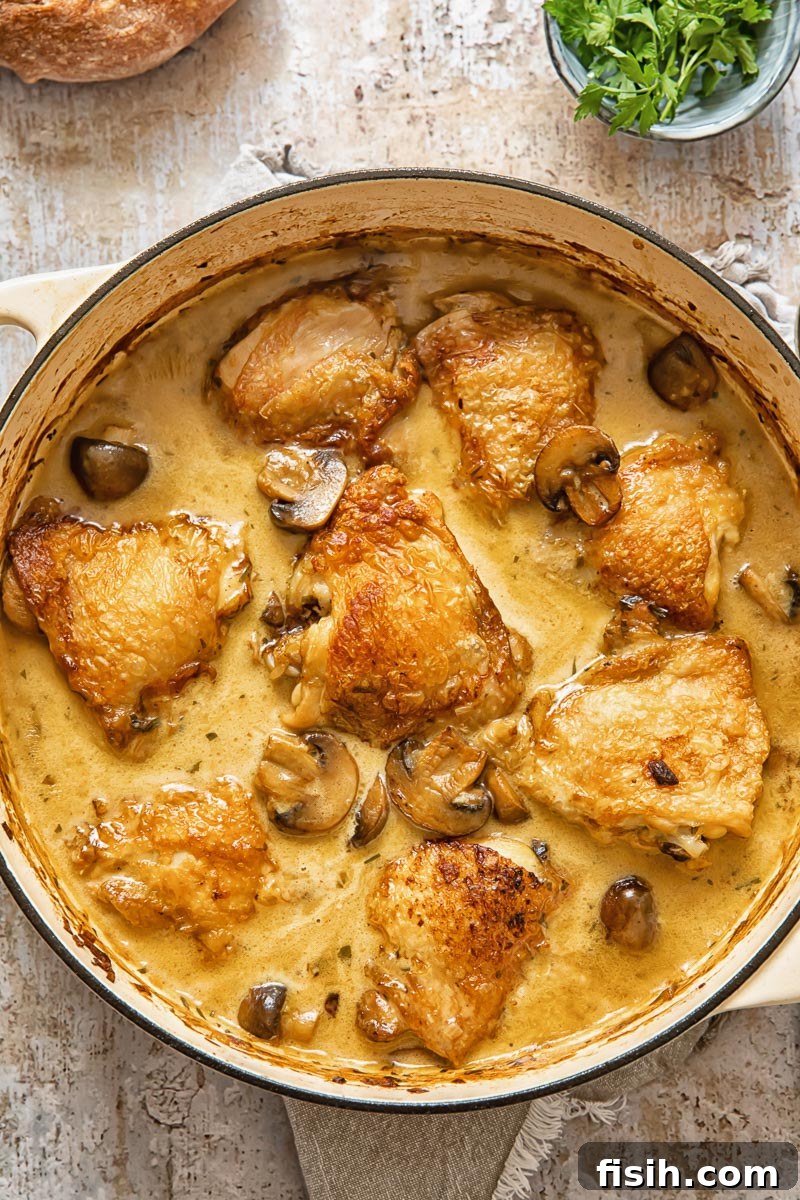
One of the many delights of Chicken Fricassee is its remarkable versatility, allowing you to present it as a comforting, no-fuss weeknight meal or elevate it to a sophisticated centerpiece for a special occasion. The rich, creamy sauce and tender chicken make it inherently satisfying, regardless of its accompaniment.
For a quick and easy family dinner, serve this exquisite French chicken casserole over a bed of fluffy white rice, which is perfect for soaking up every last drop of the delectable sauce. Alternatively, my herb and garlic mashed potatoes offer a creamy, savory counterpoint that enhances the dish beautifully. Simple steamed green beans or a crisp green salad with a light vinaigrette can complete the meal with freshness and balance.
If you’re aiming for a more elaborate fine dining experience, transforming your home into a Parisian bistro à la française, consider curating a multi-course menu. Begin with an elegant l’entrée, such as a rich and creamy cauliflower cheese soup or perhaps some delicate escargots for a truly authentic touch. For le plat principal, your beautifully prepared Chicken Fricassee will shine. Offer a vegetarian option alongside, such as roasted butternut squash with lentils and feta, ensuring all your guests are catered for. Conclude your feast with a classic French le dessert. A rustic strawberry galette or an elegant plum tarte tatin with lavender cream would provide a sweet and memorable ending. And, of course, no French meal is complete without the perfect beverage – a chilled bottle of crisp, dry French white wine (perhaps a Sauvignon Blanc or Chardonnay) will complement the creamy notes of the fricassee beautifully. Don’t forget a fresh baguette to wipe your plates clean!
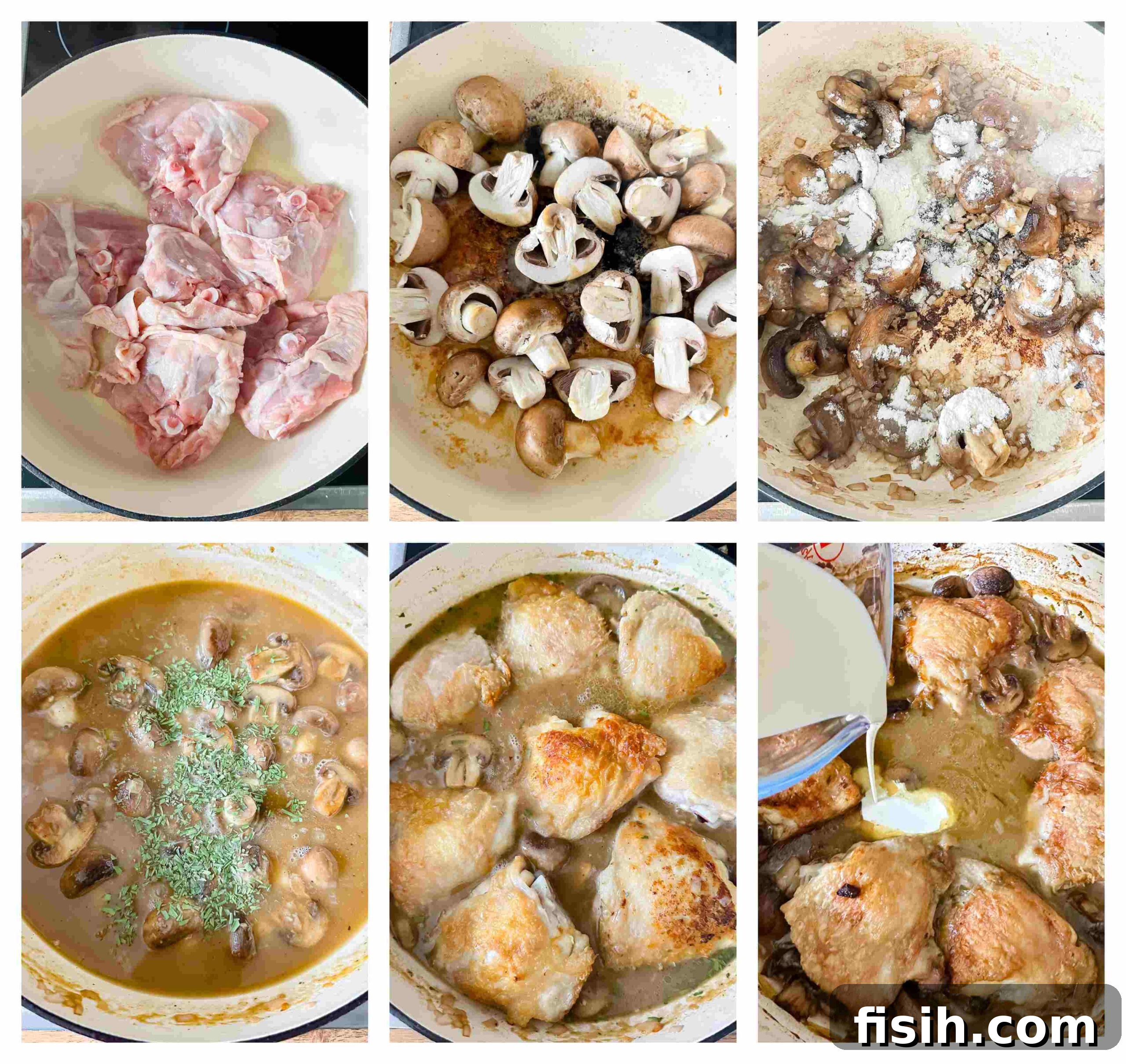
Expert Recipe Tips and Notes for Perfect Chicken Fricassee
- Choose the Right Chicken: For this recipe, chicken thighs are non-negotiable! They are a more forgiving cut of meat, resisting dryness and becoming incredibly tender during the slow stewing process. The darker meat is inherently more flavorful, and if you opt for bone-in, skin-on thighs, the bone marrow adds richness to the stock, while the skin crisps up beautifully during browning, contributing essential flavor and texture.
- Don’t Skip the Browning: This is a crucial step! Browning the chicken, especially if using skin-on pieces, initiates the Maillard reaction, developing deep, complex flavors that form the backbone of your sauce. It also renders some of the fat from the skin, leading to a more pleasant texture. Aim for a golden-brown crust on all sides before setting the chicken aside.
- Herb Selection: Tarragon is the classic herb for chicken fricassée, offering a unique fresh, slightly anise-like flavor that is distinctly French and pairs wonderfully with cream and chicken. If fresh tarragon is available, use about 1-2 tablespoons, or 1/2 to 1 teaspoon of dried tarragon. However, if tarragon isn’t to your taste or readily available, fresh thyme or rosemary are excellent alternatives that will still impart a beautiful, aromatic quality to your dish.
- Vegetable Harmony: For me, the combination of earthy mushrooms, tender chicken, and a creamy sauce is pure culinary comfort and nostalgia. Chestnut mushrooms provide a robust flavor, but white button or cremini mushrooms work just as well. If you’re not a mushroom fan, or simply want to add more bulk and nutrition, root vegetables like parsnips, turnips, or even small chunks of potatoes added at the stewing stage will absorb the rich sauce wonderfully.
- Wine or No Wine: French cooking frequently incorporates wine for its acidity and depth of flavor, and it truly elevates this fricassée. A dry white wine, such as Sauvignon Blanc, Pinot Grigio, or even a dry sherry, will add brightness and complexity. If you prefer to cook without alcohol, you can successfully substitute the wine with apple juice for a touch of sweetness and flavor, combined with a tablespoon of white wine vinegar or lemon juice to mimic the essential acidity that balances the richness of the cream.
- Cream Management: Heavy cream (also known as double cream in the UK) is best added at the very end of the cooking process. High heat can cause cream to curdle, resulting in an unappetizing grainy texture. Once the chicken is cooked through, remove the pan from direct heat, allow it to cool slightly, and then gently stir in the cream until it’s fully incorporated and the sauce is smooth and velvety. Warm it through gently, but avoid bringing it to a rolling boil after adding the cream. Crème fraîche is another fantastic option, as its higher fat content and slight tang make it more resistant to curdling.
- Seasoning is Key: Always taste and adjust your seasoning throughout the cooking process. The chicken stock and wine contribute saltiness, but you might need more salt and freshly ground black pepper at the end to bring all the flavors into perfect harmony.
- Deglazing for Flavor: After browning your chicken and sautéing the vegetables, don’t forget to deglaze the pan with the white wine. Use a wooden spoon to scrape up any browned bits (fond) from the bottom of the pan; these bits are packed with flavor and will enrich your sauce immensely.
Storage and Reheating: Making the Most of Your Fricassee
Chicken Fricassee is often even more delicious the next day as the flavors have had more time to meld and deepen. Proper storage is key to enjoying your leftovers safely and deliciously.
Any leftover fricassee can be stored in an airtight container in the refrigerator for 2-3 days. This ensures it remains fresh and prevents any cross-contamination with other foods. To reheat, the best method is to gently warm it on the stovetop over medium-low heat. Add a splash of water or a little extra chicken stock to loosen the sauce, as it may thicken considerably in the fridge. Stir occasionally until the chicken is heated all the way through and the sauce is bubbling gently. You can also reheat individual portions in the microwave, using short bursts and stirring in between to ensure even heating.
While technically you can freeze leftover chicken fricassée, it’s important to note that due to its high cream content, the sauce may become a little grainy or separate upon thawing and reheating. This doesn’t affect its safety, but the texture won’t be as smooth and luxurious as when freshly made. If you absolutely must freeze it, try freezing the chicken and vegetables separately from the sauce, or be prepared for a slightly altered texture. For the best culinary experience, I highly recommend enjoying this dish on the day it’s made or reheated within a couple of days from the refrigerator.
Explore More Favorite French Chicken Recipes
If you’ve fallen in love with the comforting flavors of Chicken Fricassee, you’ll surely enjoy these other classic French chicken dishes:
- Chicken in Wine and Mustard Sauce
- French Chicken Casserole a la Normande
- Chicken Provencal
- Chicken Chasseur
- Chicken Forestière
Chicken Fricassee
By Julia Frey of Vikalinka
Cook: 1 hr 15 mins
Total: 1 hr 25 mins
Servings: 6 people
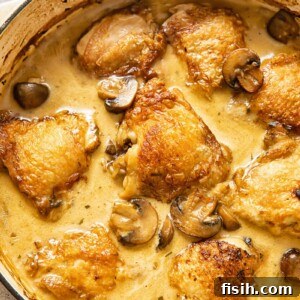
Chicken Fricassee consists of succulent chicken thighs and vegetables in a smooth cream sauce, offering a delightful taste of French comfort.
Ingredients
- 1 tbsp olive oil
- 8 chicken thighs (1 kg/2.2 lbs)
- 1 tsp salt
- 1/2 tsp pepper
- 1 tbsp butter
- 1 shallot, chopped
- 2 cloves garlic, minced
- 300g/10 oz chestnut mushrooms, halved
- 1/2 tsp – 1 tsp tarragon
- 2 tbsp flour
- 125ml / 1/2 cup dry white wine such as Sauvignon Blanc or dry sherry
- 375ml/1 1/2 cups chicken stock
- 4 tbsp double/heavy cream
Instructions
- Preheat oven to 180C/350F. Heat one tablespoon of olive oil in a large pan over medium heat. Season the chicken thighs generously with salt and pepper. Brown the chicken thighs for approximately 4 minutes per side until golden, but not cooked all the way through. Remove to a plate and set aside.
- Discard all but 1 tablespoon of fat from the pan. Add 1 tbsp of butter and the halved mushrooms. Brown the mushrooms over medium heat for 5 minutes, allowing them to release their moisture and develop flavor. Then, add the chopped shallot and sauté over low heat for 3-4 minutes until softened, ensuring they do not brown. Add the minced garlic and cook briefly for about half a minute until fragrant. Sprinkle in the flour and stir well to combine, forming a paste (roux) that lightly browns. Pour in the white wine or dry sherry while stirring constantly. Let the wine simmer for 2-3 minutes, reducing by about half, which deglazes the pan and concentrates the flavor. Finally, add the chicken stock and dried tarragon. Turn the heat up and bring the mixture to a boil, then immediately remove it from the heat.
- Return the browned chicken thighs to the pan, nestling them into the sauce. Bake uncovered in the preheated oven for 45 minutes, allowing the chicken to cook through and the flavors to meld beautifully. Once baked, remove the pan from the oven and carefully stir in the double/heavy cream. Stir gently to fully incorporate the cream into the sauce, creating a smooth and luscious consistency. Taste the sauce and adjust seasoning with more salt and pepper if necessary. Serve hot.
Nutrition
Nutrition information is automatically calculated, so should only be used as an approximation.
- Calories: 559kcal
- Carbohydrates: 9g
- Protein: 35g
- Fat: 41g
- Saturated Fat: 13g
- Polyunsaturated Fat: 7g
- Monounsaturated Fat: 17g
- Trans Fat: 0.2g
- Cholesterol: 207mg
- Sodium: 649mg
- Potassium: 739mg
- Fiber: 1g
- Sugar: 3g
- Vitamin A: 366IU
- Vitamin C: 1mg
- Calcium: 42mg
- Iron: 2mg