
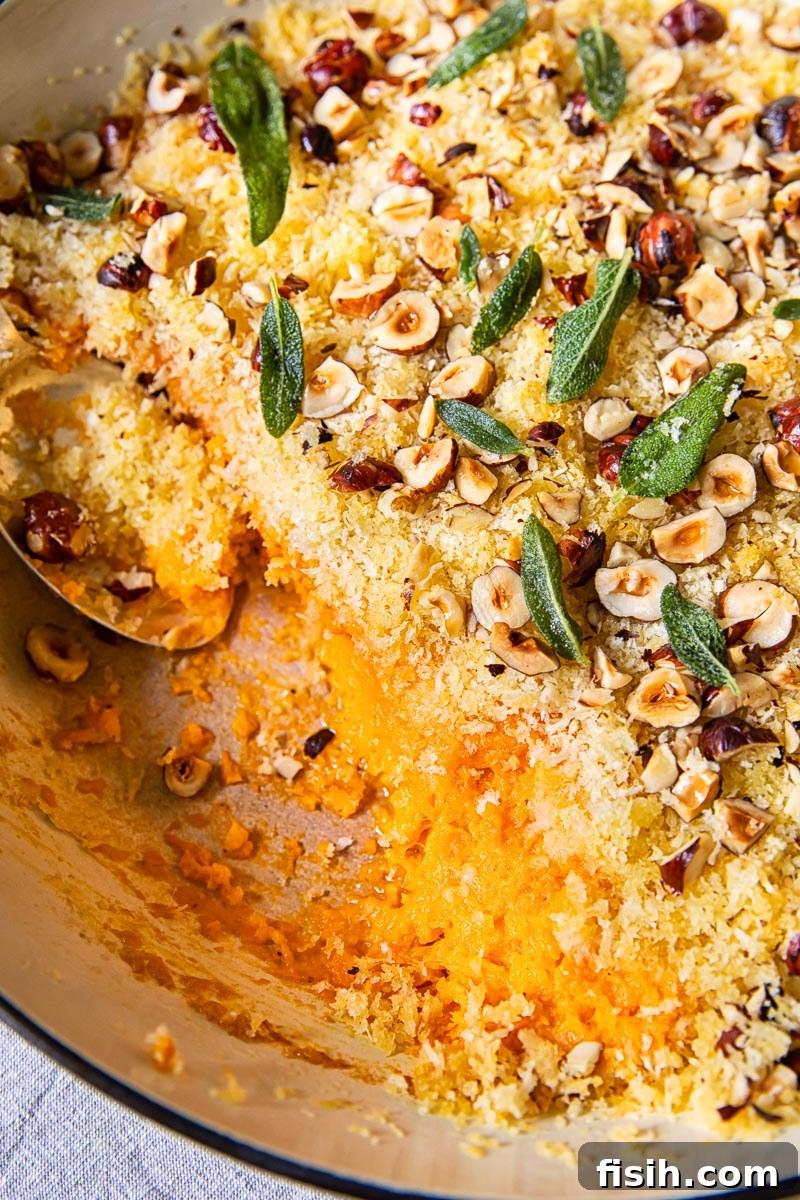
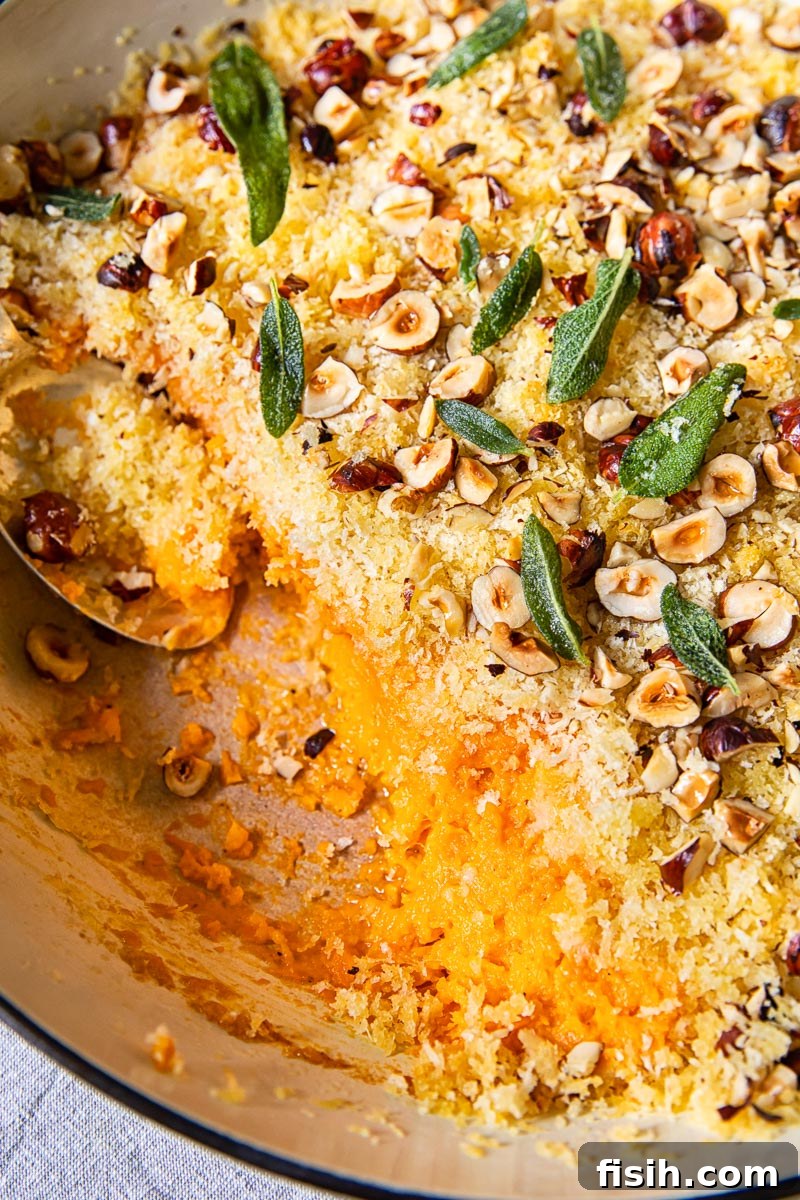
Welcome to a culinary revolution that redefines a beloved holiday classic! Forget everything you thought you knew about sweet potato casserole. While the traditional marshmallow-topped, sugar-laden version holds a special place in many hearts, a growing number of food enthusiasts are craving something different, something more sophisticated, something truly savory. This recipe delivers just that: a light and creamy mashed sweet potato casserole, infused with aromatic butter, fragrant bay leaf, and a subtle hint of garlic, all crowned with a golden, crunchy topping of buttery breadcrumbs, toasted hazelnuts, and delicate fried sage leaves. It’s a dish that respects the inherent sweetness of the humble sweet potato while elevating it to an entirely new, deeply satisfying experience.
If you’re someone who appreciates the art of transformation in the kitchen and enjoys challenging conventional flavors, then this savory sweet potato casserole is designed for you. It’s a brilliant alternative for those who find the classic rendition overly sweet, especially when paired with an already rich holiday spread. This recipe brings balance and complexity to the table, making it a standout side dish that will intrigue and delight even the most traditional palates. For another elevated holiday side, be sure to check out my Fresh Green Bean Casserole!
The Sweet Potato: A Savory Revelation
My admiration for sweet potatoes runs incredibly deep. They are versatile, nutritious, and possess a natural sweetness that is simply unmatched. However, my journey with the traditional sweet potato casserole has always been a struggle. The common practice of adding excessive brown sugar and a blanket of mini marshmallows often overwhelms the sweet potato’s delicate flavor, pushing the dish into a realm of sweetness that, for me, feels out of place in a savory meal. It’s akin to adding sugar to an already sweet dessert – it becomes one-dimensional and cloying.
This culinary philosophy led me to create an alternative that champions the natural goodness of sweet potatoes by embracing savory complements rather than additional sugar. The result is a casserole that beautifully balances the inherent sweetness of the root vegetable with robust, earthy flavors. It’s a game-changer for anyone who has ever felt that the conventional sweet potato casserole was just too much. Even if you’re a staunch defender of the original, I encourage you to give this sophisticated savory version a try. You might just discover a new favorite holiday tradition!
Embracing the Savory Side of Sweet Potatoes
For a long time, I’ve held a firm conviction that might not sit well with everyone: sweet potatoes do not, in fact, need more sugar. Their natural sweetness is profound and satisfying on its own. Instead, I believe they truly shine when seasoned with salt, pepper, and an array of savory spices and aromatics. It’s all about creating balance and depth, allowing the sweet potato to play a starring role without being overshadowed by an artificial sugar rush. This approach highlights the vegetable’s inherent qualities, transforming it into a more complex and adult-friendly dish.
My kitchen experiments are filled with examples of this belief. Take my herby sweet potato and swede (rutabaga) mash, for instance, where fresh herbs and root vegetables create a vibrant side. Or consider the magic of baked sweet potatoes adorned with a stunning garlic tahini sauce, where nutty, savory notes beautifully cut through the sweetness. I also love introducing a touch of spice, as demonstrated in my warming Thai roasted squash and sweet potato soup, or alongside bold flavors like in my chilli garlic salmon with sweet potatoes. These dishes prove that sweet potatoes are incredibly versatile, extending far beyond the realm of desserts.
A European-Inspired Savory Casserole with Hazelnuts and Sage
If I were to encapsulate the essence of this particular sweet potato casserole, I’d say it’s like the classic American rendition decided to take a grand tour of Europe and returned with a sophisticated, continental flair. This recipe reinterprets the familiar structure of a sweet potato casserole through a savory lens, offering a delightful twist that feels both comforting and new.
The transformation begins with the creamy sweet potato mash itself. I’ve consciously swapped out granulated sugar for a generous seasoning of salt and pepper, allowing the sweet potato’s natural sugars to shine. To this foundation, I’ve introduced a harmonious blend of aromatic ingredients: a crushed clove of garlic for a subtle pungency, a bay leaf steeped during cooking for an earthy depth, and a whisper of freshly grated nutmeg for warmth and spice. These additions elevate the mash from merely sweet to wonderfully complex. The texture remains luxuriously creamy and light as a cloud, achieved by incorporating rich butter, a touch of milk, and eggs, which also lend a beautiful richness and structure to the casserole.
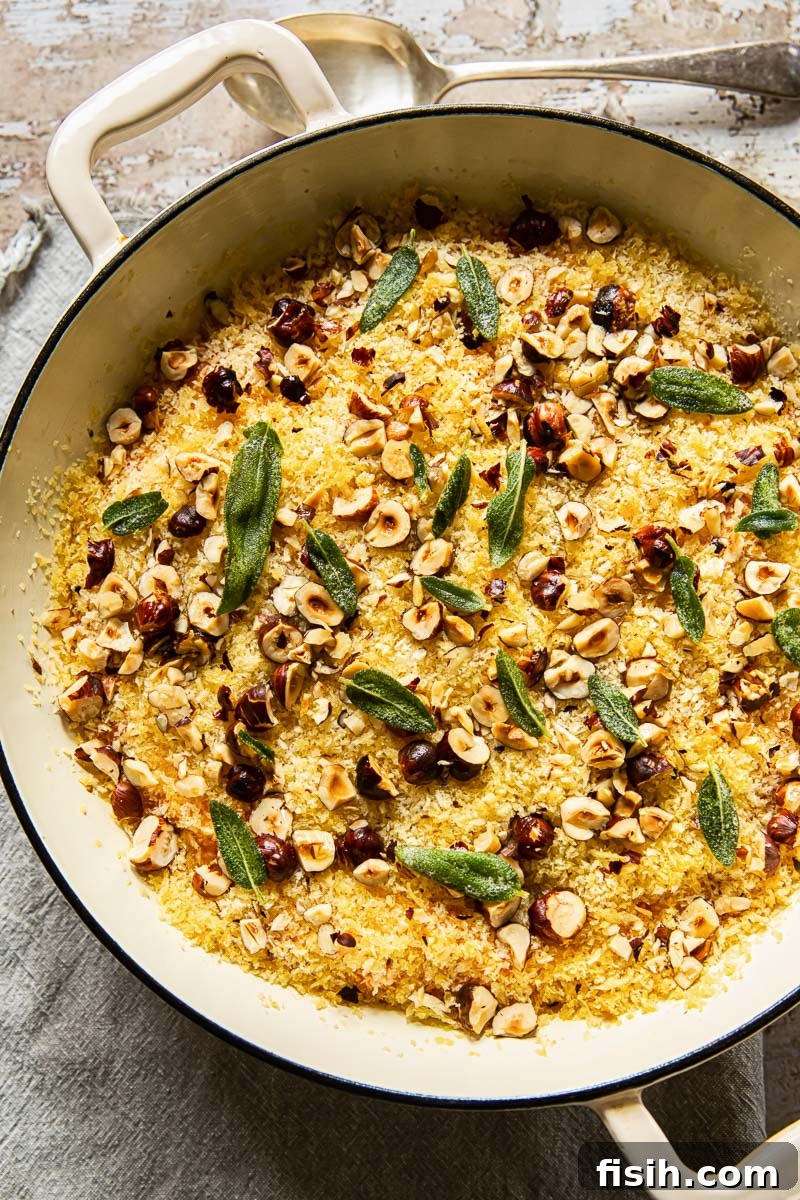
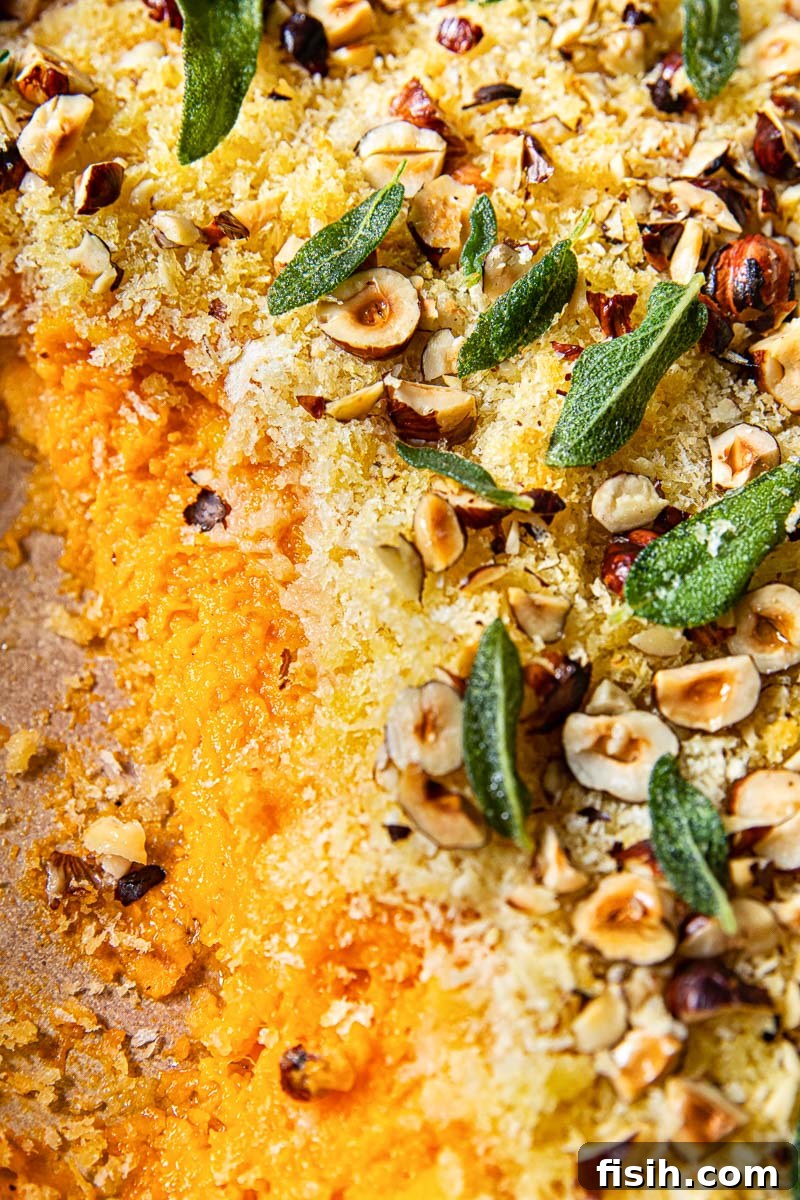
The most distinctive element, however, is the topping. Departing from the traditional pecan and marshmallow crust often found in American casseroles, I’ve crafted a topping that celebrates European culinary traditions. Instead of sugary pecans, I use buttery breadcrumbs combined with richly toasted hazelnuts. Hazelnuts, abundant in European forests, offer a delightful crunch and a distinctly nutty flavor that complements the sweet potatoes beautifully, without the hefty price tag often associated with pecans. The final flourish is a scattering of fresh sage leaves, pan-fried in butter until crisp and fragrant. Their herbaceous, slightly peppery notes provide an exquisite aromatic counterpoint to the sweetness of the potatoes and the richness of the butter, tying the entire dish together with an elegant, savory bow. This innovative combination creates a casserole that is truly a feast for the senses, inviting you to rethink what a sweet potato dish can be.
Expert Tips for the Perfect Savory Sweet Potato Casserole
- **Achieving Ultimate Creaminess:** The secret to exceptionally creamy mashed sweet potatoes lies in heating the milk before incorporating it into the cooked sweet potatoes. Adding warm milk instead of cold prevents the potatoes from cooling down too rapidly, allowing them to absorb the liquid more evenly and creating a smoother, silkier texture. Use a potato masher for the best results, ensuring no lumps remain.
- **The Magic of Fresh Nutmeg:** While pre-ground nutmeg works, freshly grated nutmeg offers an unparalleled burst of warm, aromatic flavor that truly elevates the dish. If possible, use a whole nutmeg and a fine grater for a noticeable difference in taste and aroma.
- **Season Generously:** Don’t be shy with salt and freshly ground black pepper. Sweet potatoes, with their natural sweetness, can handle (and indeed, benefit from) robust savory seasoning. Proper seasoning is crucial for balancing the flavors and preventing the dish from tasting bland.
- **Nut Choice Flexibility:** While hazelnuts are key to this recipe’s European twist, feel free to substitute them with traditional pecans if you prefer. Both offer a wonderful crunch and nutty flavor, so choose what best suits your taste or what you have on hand.
- **Frying Sage Leaves to Perfection:** When frying the sage leaves in butter, be vigilant. Sage leaves burn very quickly. Heat the butter gently, add the leaves, and watch them closely. As soon as they start to curl and become crisp, remove them immediately to a paper towel to drain. This quick frying infuses the butter with incredible sage flavor and creates delicate, crispy garnishes that are both beautiful and delicious.
- **Choosing the Right Baking Dish:** For the best presentation and even baking, a wide, shallow dish is ideal. This allows for more surface area for the crispy topping to develop and ensures the casserole cooks through evenly. A cast iron casserole dish is an excellent choice for its heat retention and rustic appeal.
Versatile Serving Suggestions
It’s no secret that a casserole like this is a quintessential feature on any Thanksgiving table, nestled among a vibrant array of other holiday side dishes. Its rich flavor and comforting texture make it a perfect companion for roasted turkey or ham. However, its sophisticated profile makes it equally fitting for other festive occasions, adding a touch of elegance to your Christmas dinner or Easter brunch spread. The beauty of this savory sweet potato casserole lies in its adaptability; it’s too good to be confined to just one season!
Beyond the holidays, this versatile side dish seamlessly transitions into everyday meals. Imagine it alongside a perfectly roasted Air Fryer Whole Chicken, where its creamy texture and savory notes complement the juicy poultry. It also makes a superb accompaniment to a succulent ribeye steak, cutting through the richness with its earthy flavors, or paired with a delicate baked salmon, providing a hearty and flavorful contrast. Whether you’re planning a grand feast or simply looking to elevate a weeknight dinner, this savory sweet potato casserole is an excellent choice that promises to impress.
Storage and Leftovers: Plan Ahead for Deliciousness
This savory sweet potato casserole is a fantastic make-ahead dish, perfect for streamlining your holiday preparations or simply enjoying throughout the week. You can prepare the entire casserole a day in advance, cover it tightly with aluminum foil, and store it in the refrigerator. When you’re ready to serve, reheat it in an oven preheated to 200°C (400°F) for about 15 minutes with the foil on. Then, remove the foil and bake for another 5-10 minutes uncovered to allow the topping to crisp up beautifully. If the topping needs a little extra browning, a quick 30-second blast under the broiler will do the trick – just watch it carefully to prevent burning!
For even longer-term planning, the sweet potato mash mixture can be prepared and frozen for up to six months. Simply prepare the mash as directed in the recipe, allow it to cool completely, and then transfer it to a freezer-safe container or freezer bags. When you’re ready to bake, thaw the mixture completely in the refrigerator until it reaches room temperature. Once thawed, proceed with adding the topping and baking as specified in the recipe card.
Leftovers of the baked casserole are equally delicious. Store any remaining portions covered or in an airtight container in the refrigerator for up to 3-4 days. For reheating, if the casserole is still in its baking dish, take it out of the fridge about 30 minutes before reheating to allow it to come closer to room temperature. Then, return the dish to an oven preheated to 180°C (350°F) for 15-20 minutes, or until it’s heated through. If you’ve transferred individual portions out of the casserole dish, reheating in the oven is still recommended to help crisp up the breadcrumbs again. However, if you’re in a hurry, the microwave will work in a pinch for warming, though the topping may lose some of its crispness.
More Festive Side Dishes to Complete Your Spread
- Sausage, Pear and Sage Stuffing
- Roasted Carrots with Garlicky Lemon Tahini Sauce
- Vintage Cheddar and Gruyere Macaroni and Cheese
- Herb and Garlic Mashed Potatoes
Savoury Sweet Potato Casserole
Equipment
-
Cast iron casserole dish
-
Potato masher
Ingredients
- 4 large sweet potatoes, approximately 2lbs/1kg
- 1 bay leaf
- 1 clove garlic
- 75g/1/3 cup unsalted butter
- salt and pepper to taste
- 1/4 tsp nutmeg
- 2 eggs, large
- 125ml/1/2 cup milk, whole or 2%, heated
- 90g/1.5 cups breadcrumbs
- 6 tbsp melted butter
- 65g/ 1/2 cup whole hazelnuts, roughly chopped
- 5-6 sage leaves
Instructions
-
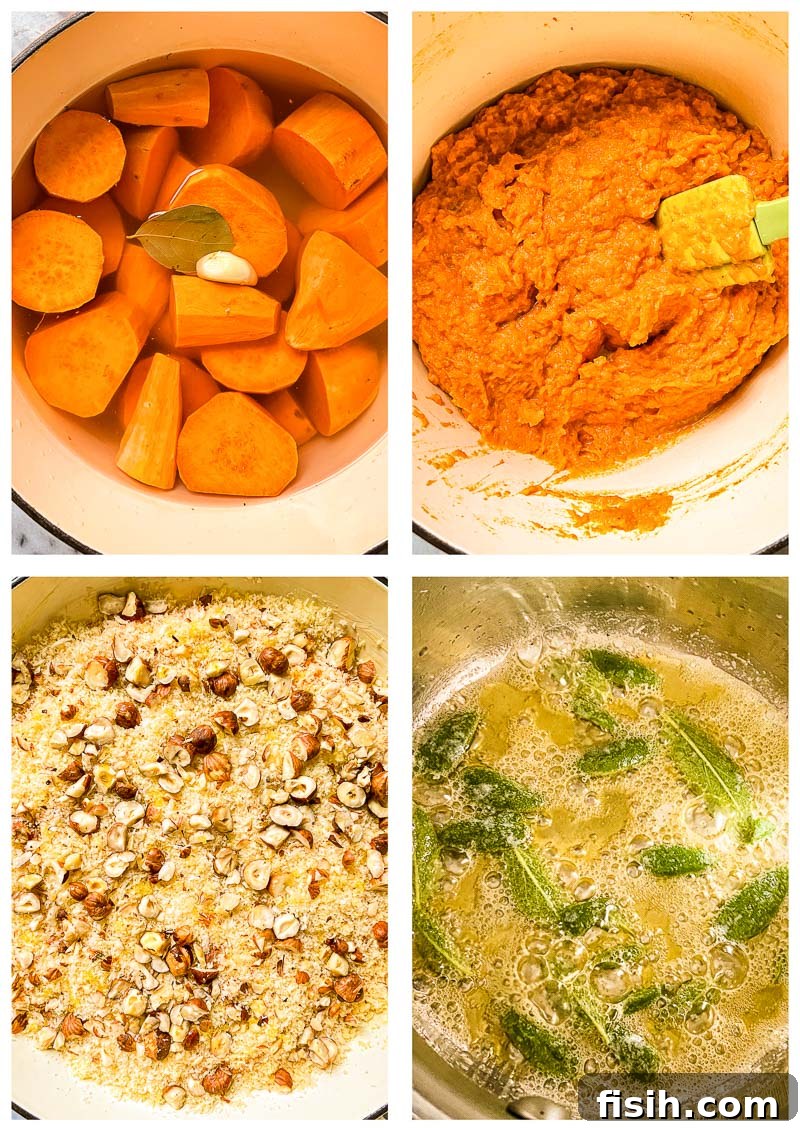
Preheat the oven to 180°C (350°F). Peel and cut the sweet potatoes into even chunks. Place them in a pot with 1 bay leaf and a whole clove of garlic. Cover with water and boil until the sweet potatoes are fork-tender. Discard the bay leaf, then mash the sweet potatoes with the softened garlic clove until smooth and no lumps remain. Stir in the unsalted butter and the heated milk until fully incorporated. Season generously with salt, pepper, and freshly grated nutmeg to taste. Finally, gently fold in the beaten eggs.
-
To prepare the irresistible topping, combine the breadcrumbs with 4 tablespoons of melted butter and the roughly chopped hazelnuts in a small bowl. Toss everything together until the breadcrumbs are evenly coated and crumbly.
-
Transfer the mashed sweet potatoes into a lightly greased casserole dish, spreading the mixture evenly to level the top. Generously sprinkle the breadcrumb and hazelnut topping all over the surface. Bake uncovered in the preheated oven for 25-30 minutes, or until the casserole is heated through and the topping is golden brown and crisp.
-
A few minutes before the casserole finishes baking, melt the remaining 2 tablespoons of butter in a small skillet over medium heat. Add the sage leaves and fry them until they just begin to curl and become crisp, typically within 30-60 seconds. Watch the sage leaves carefully as they can burn very quickly. Remove them immediately from the butter and place them on a paper towel to drain. Once the casserole is out of the oven, scatter the fried sage leaves over the top and drizzle the flavorful sage-infused melted butter over the entire dish before serving.
Nutrition
Nutrition information is automatically calculated, so should only be used as an approximation.