
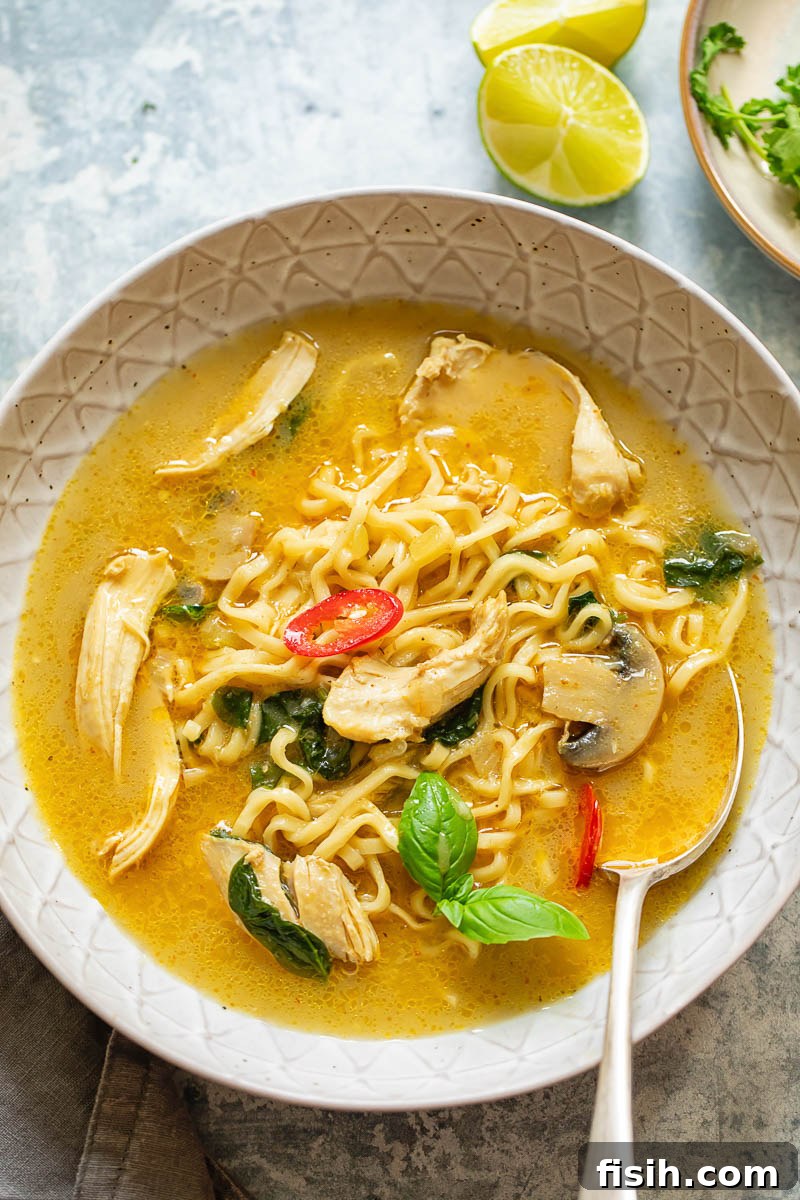
Imagine a soup so profoundly flavorful, so comforting, yet bursting with exotic spices and a creamy richness that transports you straight to the bustling streets of Bangkok. This is our Thai Coconut Chicken Noodle Soup – a vibrant, thick, and utterly slurp-worthy dish inspired by the iconic Thai yellow curry. It’s an explosion of fragrant ginger, sharp lemongrass, and mellow chili, all harmoniously balanced by the lusciousness of coconut milk. Brimming with nutritious chicken, fresh spinach, and earthy mushrooms, this recipe offers a complete meal in a single bowl. And for the ultimate convenience, it all comes together in just one pan, making cleanup a breeze and ensuring maximum flavor with minimal fuss.
While some Thai noodle soups might feature a lighter, more brothy base with a distinct sour kick, our rendition embraces the indulgent depth of coconut milk. This creates a richer, more satisfying texture and flavor profile, reminiscent of a classic yellow curry transformed into a comforting noodle soup. It’s a dish that promises a delightful journey for your palate, allowing you to confidently serve a homemade Southeast Asian masterpiece that’s both authentic in spirit and incredibly accessible to prepare.
The Art of Eating: Unveiling Thai Table Etiquette
Before we dive deeper into the symphony of flavors that awaits, let’s explore a fascinating aspect of Thai culture: their unique dining etiquette. Have you ever noticed that in Thailand, meals are primarily enjoyed with a spoon and fork, rather than the familiar knife and fork common in Western cultures, or even chopsticks often associated with East Asian cuisine? This culinary tradition might surprise many, offering a practical and insightful glimpse into how food is traditionally consumed across the region.
My own discovery of this custom came during my twenties while traveling in the Philippines, where a similar spoon-and-fork approach is prevalent. It was quite a relief at the time, as mastering chopsticks was, to my chagrin, not yet among my acquired skills! This shared practice across much of Southeast Asia, including Thailand, the Philippines, and Malaysia, highlights a pragmatic approach to enjoying saucy, often rice-based dishes that form the backbone of their cuisines.
In the traditional Thai style, the spoon is held in the dominant hand (typically the right for most people), and the fork, with its tines facing up, in the non-dominant hand. The fork’s primary role is to gently assist in pushing food onto the spoon, which then acts as the primary utensil for delivering the delicious morsel to the mouth. This method is incredibly intuitive and efficient for dishes that are rich in sauce or served with easily scoopable rice. It makes perfect sense for the typical Thai meal, where fragrant curries and stir-fries are often served with fluffy jasmine rice. My family has enthusiastically adopted this practice for many of our saucier home-cooked meals, finding it remarkably practical and mess-free!
So, without a knife, how are foods cut into manageable pieces? Thai cuisine ingeniously addresses this by presenting most dishes in bite-sized portions already. Picture succulent chicken pieces, perfectly flaked fish in a Thai fish curry, or finely sliced vegetables – all are prepared to be easily consumed with a spoon. If, by chance, a larger item like a bone-in chicken thigh requires a bit of division, it’s typically accomplished by tearing the meat with the edge of the spoon while securing it with the fork. This demonstrates a thoughtful consideration for the dining experience from the moment food is prepared.
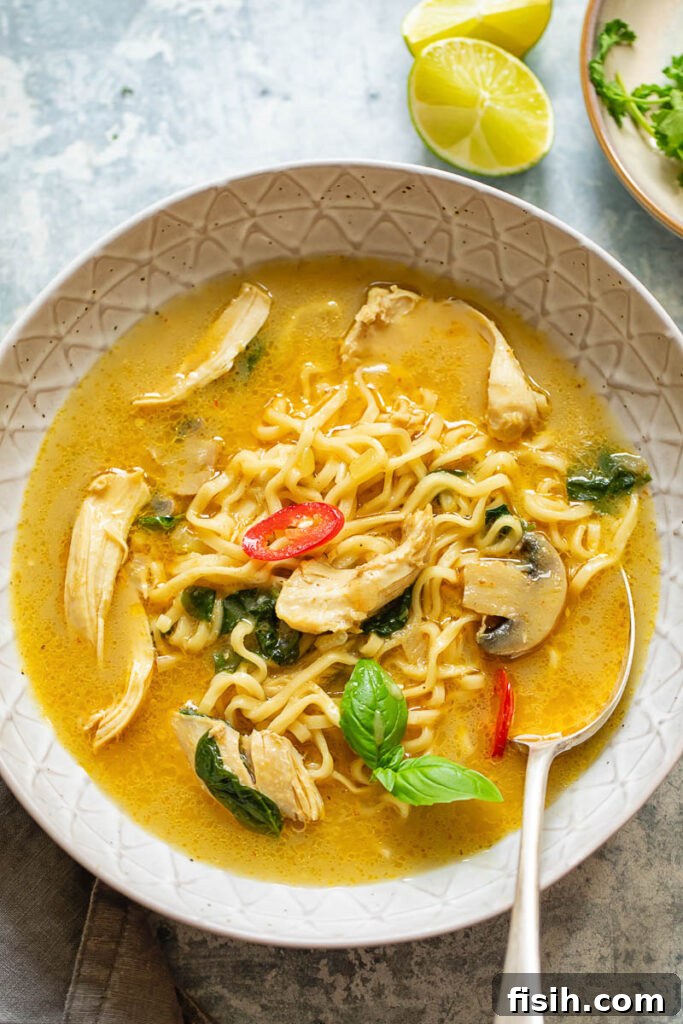
There is, of course, an elegant exception to every rule, and in Thailand, that exception is noodle soup. Yes, you guessed it – for a hearty bowl of noodles, chopsticks make their graceful appearance! They are primarily used to lift and separate the noodles from the bowl, gently placing them onto the spoon. The spoon, in turn, remains the sole utensil that makes its way into your mouth, carrying the broth, noodles, and other ingredients in perfect harmony. This dual-utensil approach for noodle soups ensures you get to savor every strand and every drop of the flavorful broth. So, as you prepare to enjoy your homemade Thai Coconut Chicken Noodle Soup, consider which traditional approach you’ll embrace for a truly authentic experience!
Thai Coconut Chicken Noodle Soup: An Unforgettable Flavor Journey
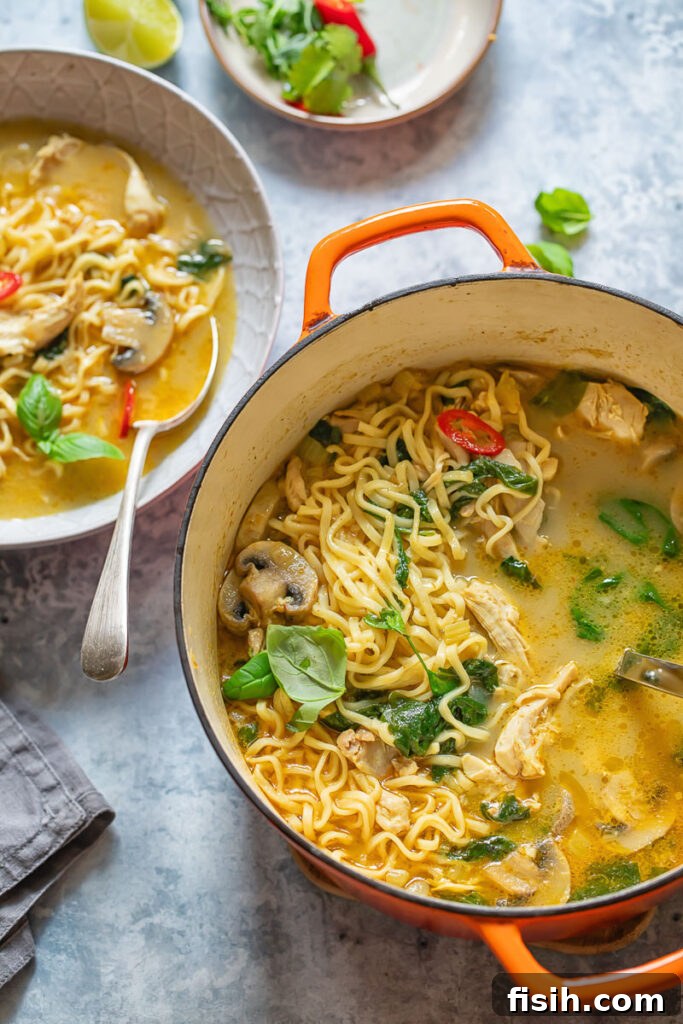
Forget everything you know about classic, comforting chicken noodle soup. While that familiar bowl is a reliable companion on a chilly day, our Thai Coconut Chicken Noodle Soup takes the concept to an entirely new stratosphere. Imagine your go-to comfort food, then inject it with a rocket-fueled dose of exotic flavors and creamy indulgence. That’s the exhilarating experience awaiting you with this dish.
When I speak of “rocket-fueled,” I’m not referring to an overwhelming, face-melting level of chili heat (though you can certainly adjust it to your preference!). Instead, I mean an explosion of vibrant, layered flavors – a veritable fireworks display for your taste buds. This soup is a testament to the aromatic complexity and harmonious balance that defines authentic Thai cuisine, making every spoonful an adventure.
Comparing Flavors: Western Comfort vs. Thai Exotica
Let’s draw a brief comparison to illustrate just how unique and captivating this Thai-inspired version is, highlighting the distinct culinary philosophies:
- The Flavor Foundation (Soffritto): A traditional Western chicken noodle soup typically begins with a humble “soffritto” of sautéed onions, carrots, and celery in butter or olive oil, creating a mild, earthy base. Our Thai chicken noodle soup, however, starts with a more aromatic and potent blend. Diced onion and celery are sautéed, then joined by generous amounts of freshly minced garlic, all fried in neutral oil. This foundational difference immediately sets a distinct and vibrant tone for the entire soup.
- Aromatics That Pop: Classic chicken noodle soup relies on simple aromatics like bay leaves and black peppercorns for its gentle fragrance. In stark contrast, our Thai version is supercharged with intensely exotic ingredients such as fresh lemongrass and galangal. Lemongrass imparts a bright, citrusy, and slightly minty note, while galangal (a rhizome related to ginger) offers a sharper, more peppery, and piney zest. These ingredients provide that characteristic “sharp and sour lemon and gingery edge” that is unmistakably Thai, contributing significantly to the soup’s complex bouquet.
- The Heart of the Meal: Chicken Selection: For many traditional chicken soups, especially those aimed at recovery from illness, bone-in chicken is often advocated for its ability to create a richer, deeper broth. However, for this vibrant Thai interpretation, boneless chicken (thighs or breasts) is preferred. Once cooked, it’s easily removed and shredded into perfectly bite-sized pieces. This ensures every mouthful of soup is a delightful mix of textures, making it easy to enjoy with your spoon and, if you choose, chopsticks.
- Herbs & Spices: The Finishing Touch: Nearer to home, parsley, thyme, or dill are common garden-grown additions to Western chicken noodle soup, offering fresh, herbaceous notes. In Thailand, the flavor profile is elevated by ingredients like limey kaffir lime leaves and fragrant, slightly liquorice-scented holy basil. These herbs add layers of complexity, freshness, and an unparalleled aromatic quality that are central to Thai cooking, rounding out the soup with bright, herbal notes.
The Secret to Deep Thai Flavor: Thai Yellow Curry Paste
To ensure this soup delivers an authentic punch of Thai flavors without requiring you to stock every single less common aromatic and spice, we leverage the power of pre-made Thai yellow curry paste. Just two tablespoons are enough to infuse the entire pot with a captivating depth. This isn’t a “cheat” so much as an “efficient hack” – a simple, accessible way to bring complex Thai tastes to your kitchen with minimal effort, making this recipe approachable for even novice cooks.
Thai yellow curry paste is a remarkable blend of ingredients, generally milder in heat compared to its fiery red or green counterparts, but incredibly potent in aroma and flavor. It typically features a harmonious mix of earthy cumin, vibrant turmeric (which gives it its characteristic sunny yellow hue), pungent ginger, fresh coriander, a hint of chili, and the essential galangal and lemongrass. This expertly balanced combination creates a deeply aromatic and savory base that forms the heart of our soup, providing a perfect foundation for the other fresh ingredients.
The Silky Finish: The Magic of Coconut Milk
Finally, departing from the clear broth of Western chicken noodle soup, our Thai version receives its signature smooth, silky, and luxurious finish from rich, full-fat coconut milk. This essential Southeast Asian ingredient transforms the soup, adding a creamy texture and a subtle sweetness that perfectly complements the spicy and tangy notes of the curry paste and aromatics. It’s the unifying element that brings all the bold flavors into perfect balance, creating a truly irresistible dish that is both comforting and exotic.
Mastering Your Thai Noodle Soup: Essential Tips and Customizations
- Approach to Authenticity: While this recipe beautifully captures the essence of Thai flavors, it’s designed for home cooks seeking deliciousness and convenience. It may not be 100% authentic in every minute detail, but it absolutely ticks all the essential boxes: it’s nutritious, incredibly tasty, deeply satisfying, uses accessible ingredients, and is wonderfully simple to prepare!
- The Power of Paste: The secret to this soup’s simplicity and depth of flavor lies in a good quality, store-bought Thai yellow curry paste. This isn’t a shortcut that compromises flavor; it’s a smart culinary hack that delivers complex Thai tastes without the need for an extensive spice cabinet or lengthy preparation.
- Adjusting Spice Levels: Curry pastes can vary significantly in potency depending on the brand and even how long the jar has been open. Always use your judgment. If you prefer a milder soup, start with the recommended amount. If you suspect your paste is less potent, or if you simply love it “Thai spicy,” feel free to increase the amount to taste. For an even bolder kick, consider experimenting with a stronger paste like red or green curry, keeping in mind they will subtly alter the overall flavor profile.
- Noodle Choice: While I personally gravitate towards medium egg noodles for their delightful chewiness and hearty texture, feel free to use rice vermicelli if you prefer a gluten-free option or a lighter texture. Both types of noodles work beautifully in this flavorful soup, so choose what suits your preference.
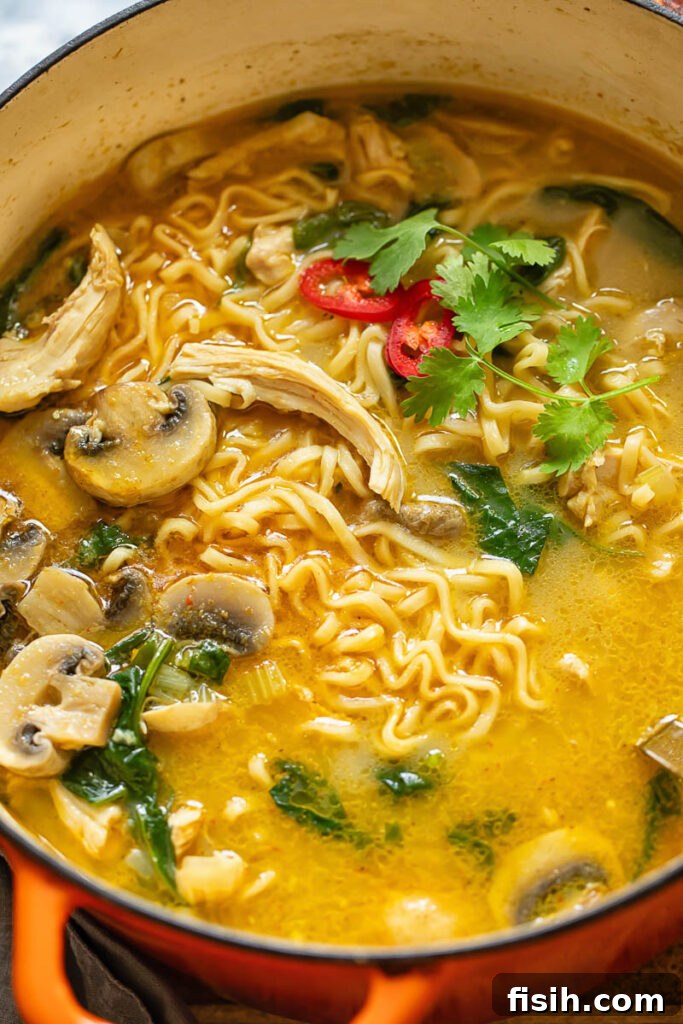
- Adding More Vegetables: To enhance the texture, nutritional value, and vibrant appeal of your soup, consider adding other vegetables. Thinly sliced bell peppers (red or yellow), baby corn, or bok choy can be added alongside the mushrooms in step 6. Bamboo shoots, commonly found in Thai curries, bring an additional, satisfying crunch and texture. They are typically sold canned and can be found in the Asian section of most well-stocked supermarkets.
- Protein Alternatives: While chicken is a classic choice for this soup, it’s also wonderfully delicious with other protein sources. Consider adding shrimp (cook for only a few minutes until pink), firm tofu (cubed and pan-fried before adding), or even thinly sliced pork. Adjust cooking times accordingly to ensure your chosen protein is cooked through.
Serving Your Thai Noodle Soup: The Art of Toppings and Customization
In Thailand, a bowl of noodle soup is often seen as a canvas for a personalized flavor adventure, with roadside stands and restaurants offering an impressive array of fresh toppings and condiments. This rich tradition encourages diners to customize their meal to their exact preference, transforming each bowl into a dynamic and interactive eating experience that reflects individual tastes.
Common Thai toppings might include vibrant fresh, chopped bird’s eye chilies for an exhilarating extra kick, crunchy crushed peanuts for a delightful texture, crisp raw green beans for freshness, or the tart zest of mini lime cheeks. Beyond these initial garnishes, a “condiment bar” is often found at the table, featuring staples like fish sauce (for an essential umami boost and saltiness), vinegar (for a sour tang that cuts through richness), chili flakes (for customizable heat), and even sugar (to balance and round out the complex flavors). This allows for a truly bespoke and evolving bowl of soup.
For our homemade version, while you’re absolutely welcome to create your own elaborate condiment bar, I suggest keeping it elegantly simple yet impactful to let the soup’s core flavors shine. A garnish of thinly sliced red chilies will provide a beautiful flash of color and an inviting warmth. Fresh basil leaves (Thai basil if you can find it for its distinctive peppery, anise-like flavor, or sweet basil as a widely available and excellent substitute) will contribute a fragrant, aromatic lift. A simple lime wedge, squeezed generously over the top just before eating, brightens all the flavors and adds that essential tangy finish that characterizes so much of Thai cuisine. Feel free to add a sprinkle of chopped cilantro for extra herbaceous freshness and a final pop of color, making your presentation as appealing as the taste!
Storage and Leftovers: Flavor That Evolves with Time
One of the many joys of hearty, boldly flavored soups like this Thai Coconut Chicken Noodle Soup is that they often taste even better the next day. The flavors have ample time to meld and deepen, creating a more complex and harmonious profile that rewards patience. This soup stores exceptionally well, making it a perfect candidate for convenient meal prepping throughout the week.
Store any leftovers in an airtight container in the refrigerator for up to 4 days. You might notice that the noodles will likely absorb some of the liquid over time, causing the soup to thicken considerably. This is a perfectly normal occurrence with noodle soups. To restore it to your preferred consistency when reheating, simply add a splash of water or extra chicken stock to the pot on the hob, stirring gently until it reaches your desired brothiness. Reheat gently over medium heat until warmed thoroughly, ensuring the chicken is piping hot before serving. This soup is a delightful culinary companion that just keeps on giving!
More Comforting Soup Recipes to Explore
- Hearty Lentil and Bacon Soup
- Savory Peanut Miso Chicken Ramen
- Robust Chorizo, Bean, and Vegetable Soup
- Creamy Roasted Butternut Squash and Sweet Potato Soup
Thai Coconut Chicken Noodle Soup Recipe
By Julia Frey of Vikalinka
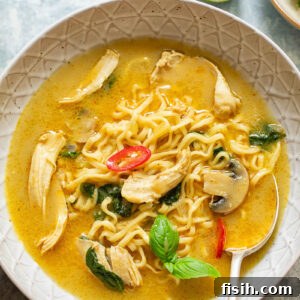
This Thai yellow curry-inspired bowl of noodle soup is incredibly fragrant, perfectly spicy, rich with creamy coconut milk, and brimming with tender, nutritious chicken. An easy-to-make, one-pan meal perfect for any day of the week.
Recipe At a Glance:
- Prep Time: 10 minutes
- Cook Time: 30 minutes
- Total Time: 40 minutes
- Servings: 6 people
Ingredients
- 1 tbsp vegetable oil
- 1 onion, diced
- 2 ribs celery, diced
- 4 cloves garlic, minced
- 2 tbsp Thai yellow curry paste
- 400ml / 14 oz full-fat coconut milk
- 1.5 litres / 6 cups chicken stock
- 600g / 4 skinless boneless chicken thighs or breasts
- 125g / 5 oz medium egg noodles or rice vermicelli
- 150 g button mushrooms, sliced
- 70g / 2 cups fresh spinach
- 1 lime, cut into wedges, to serve
Instructions
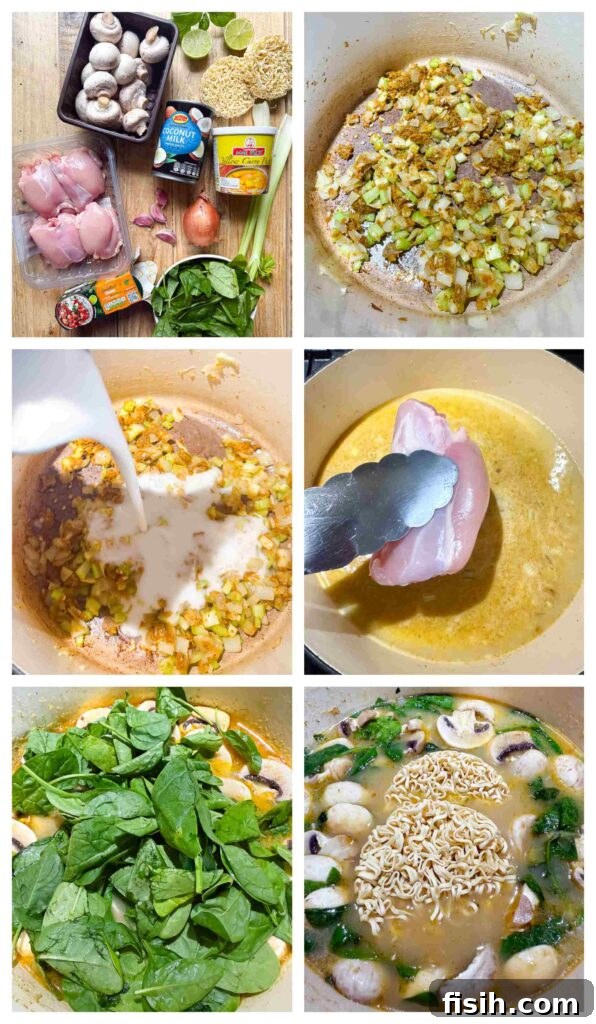
- Heat the vegetable oil in a large soup pot or Dutch oven over medium-low heat. Add the diced onion and celery, and sauté gently for about 5 minutes until softened. Stir in the minced garlic and continue sautéing for another 30 seconds until fragrant, being careful not to burn the garlic.
- Add the Thai yellow curry paste to the pot. Stir-fry briefly for about 1 minute, allowing the paste to release its aromatic oils and deepen in flavor. This step is crucial for developing the rich curry base.
- Pour in the coconut milk and chicken stock. Stir well to thoroughly combine the curry paste with the liquids. Bring the mixture to a gentle simmer, stirring occasionally.
- Carefully add the chicken thighs or breasts to the simmering soup. Ensure they are fully submerged in the liquid. Cook for 15 minutes, or until the chicken is thoroughly cooked through and tender.
- Using tongs or a slotted spoon, carefully remove the cooked chicken from the pot and transfer it to a large bowl. Using two forks, shred the chicken into bite-sized chunks. Set the shredded chicken aside.
- Return the pot with the soup broth to the heat. Add the sliced mushrooms and the noodles to the soup. Cook for 3 minutes, or according to the noodle package directions, until the noodles are al dente (firm to the bite).
- Stir in the fresh spinach, allowing it to wilt into the hot soup for approximately 1-2 minutes.
- Return the shredded chicken to the pot of soup. Stir gently to combine all ingredients and warm through for another 2 minutes. Taste the soup and adjust seasoning if necessary, adding a pinch of salt or a splash of fish sauce if desired.
- Ladle the hot soup into individual serving bowls. Serve immediately with fresh lime wedges for squeezing over the top and any desired additional toppings. Enjoy this fragrant and comforting meal!
Recipe Notes
- Curry Paste Potency: The flavor and heat level of Thai yellow curry paste can vary significantly by brand and freshness. Always taste and adjust the amount to your preference. If you prefer a spicier soup, consider using red or green curry paste, but be aware that their flavor profiles are distinct from yellow curry.
- Noodle Preference: While egg noodles offer a satisfying chew, rice vermicelli is an excellent alternative for a lighter, gluten-free option. Ensure to cook them according to package instructions.
- Vegetable Additions: Don’t hesitate to customize with other vegetables for added texture and nutrients. Sliced bell peppers, bamboo shoots (found canned in Asian aisles), or bok choy make wonderful additions and can be added alongside the mushrooms.
- Meal Prep Tip: If making ahead for meal prep, you might consider cooking the noodles separately and adding them to individual portions just before serving or reheating. This prevents them from absorbing too much broth and becoming overly soft when stored.
Nutrition Information (Approximate per serving)
Nutrition information is automatically calculated and should only be used as an approximation.
- Calories: 437 kcal
- Carbohydrates: 30g
- Protein: 31g
- Fat: 22g
- Saturated Fat: 14g
- Polyunsaturated Fat: 2g
- Monounsaturated Fat: 4g
- Trans Fat: 0.03g
- Cholesterol: 120mg
- Sodium: 458mg
- Potassium: 877mg
- Fiber: 2g
- Sugar: 6g
- Vitamin A: 1935 IU
- Vitamin C: 9mg
- Calcium: 63mg
- Iron: 4mg