
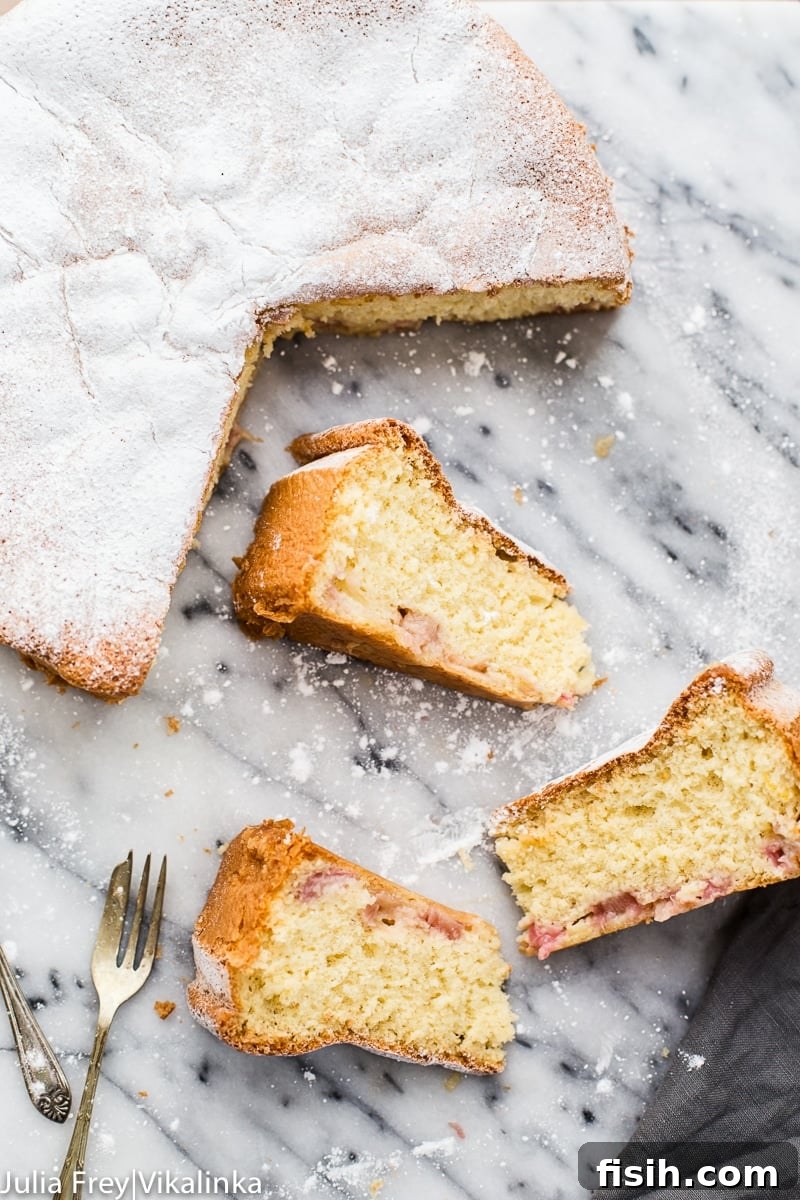
Effortlessly Elegant Rhubarb Sharlotka Cake: A Cloud-Like Sponge Recipe for Any Occasion
Lighter than a cloud, this sweet and airy sponge cake is generously filled with vibrant, tangy rhubarb, creating a perfectly balanced symphony of tart and sweet flavors. Our Rhubarb Sharlotka Cake is the approachable, everyday dessert you’ve been searching for! Made with just 6 essential ingredients, it’s an absolute dream for teatime, brunch, or a light evening treat.
If you’re a fan of easy and delicious fruit-filled cakes, be sure to explore my Blackberry Tea Cake recipe as well. Both are perfect for showcasing seasonal produce with minimal effort and maximum reward!
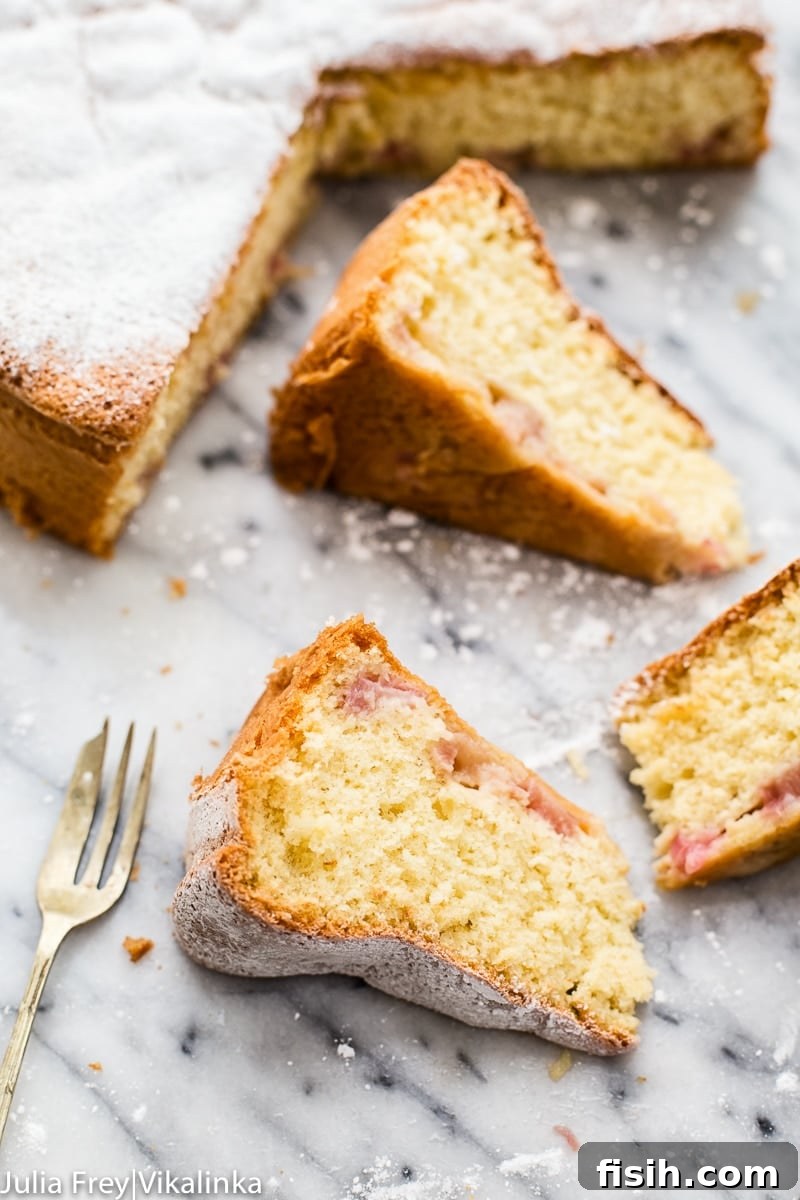
Embracing Spring’s Bounty with Fresh Rhubarb
While many parts of the world are still thawing from winter’s stubborn embrace, here in London, we’ve been exceptionally fortunate to experience an early surge of warmth, abundant sunshine, and the magnificent bloom of magnolias everywhere you look. And no, I’m not trying to boast; typically, we’re the ones commiserating over the perpetually grey skies and endless discussions about the dreary weather. But not this week!
This week has been a joyful celebration of glorious sunshine, high spirits, and the arrival of truly gorgeous seasonal produce. Among these delightful harbingers of spring, one ingredient stands out with its unmistakable charm and vibrant flavor: rhubarb.
Rhubarb, with its distinct tartness and beautiful pink-red stalks, signals the start of warmer days and lighter, brighter desserts. It’s an ingredient that truly shines when given the spotlight, offering a refreshing zest that prevents dishes from becoming overly sugary. Botanically a vegetable, but culinarily treated as a fruit, rhubarb brings a wonderful complexity to baked goods. Its ability to hold its shape while softening beautifully makes it an ideal candidate for simple cakes where its tartness can truly cut through and enhance the sweetness of a delicate sponge. Harnessing the fresh, seasonal flavor of rhubarb is key to making this Sharlotka truly spectacular.
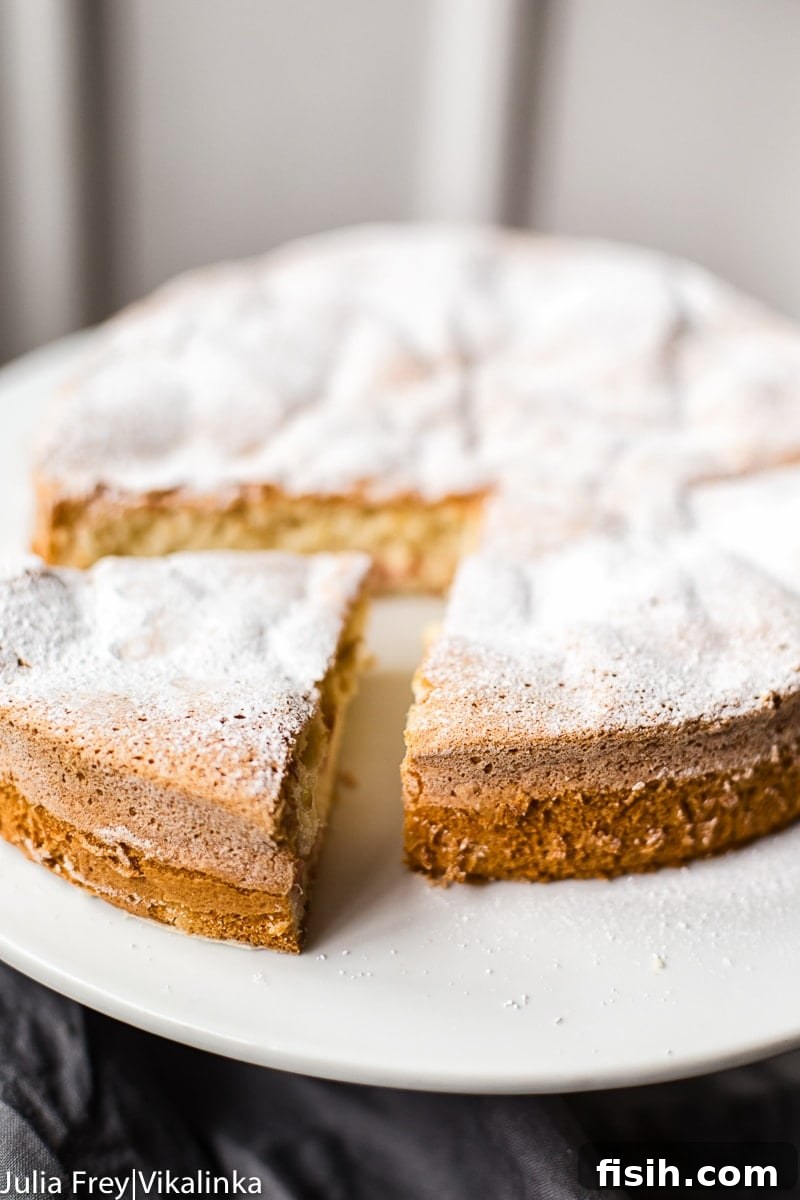
Sharlotka: The Quintessential Everyday Russian Cake
To truly allow the glorious rhubarb to be the star of the show, I decided to revisit a timeless classic, a recipe that embodies simplicity and pure delight. I’m talking about a simple sponge cake, the very kind my mother baked at least once a week during my childhood. In Russia, this beloved cake is known as Sharlotka. While traditionally made with apples, the incredible versatility of Sharlotka means it adapts beautifully to other seasonal fruits, and rhubarb is an exceptional choice, offering a bright, zesty contrast.
The enduring appeal of Rhubarb Sharlotka lies in its elegant simplicity. It requires only six basic ingredients, yet the result is nothing short of glorious – a true testament to the fact that you don’t need a complicated list of components or elaborate techniques to create something truly memorable and delicious. This is more than just a cake; it’s a comforting slice of home, a recipe passed down through generations, cherished for its ease of preparation and its consistently perfect outcome. It’s the kind of cake you can whip up on a whim when guests drop by, or when you simply crave a light, satisfying treat.
My family’s love for this cake is undeniable. I recently baked this Rhubarb Sharlotka twice in one week! Partially, I admit, it was to fine-tune the recipe to absolute perfection and ensure every nuance was captured. But largely, it was because my children simply couldn’t get enough and begged for more! That’s a true indicator of a winning recipe – when it disappears from the cake stand almost as quickly as it emerges from the oven. Its understated charm and delightful flavor make it an instant family favorite.
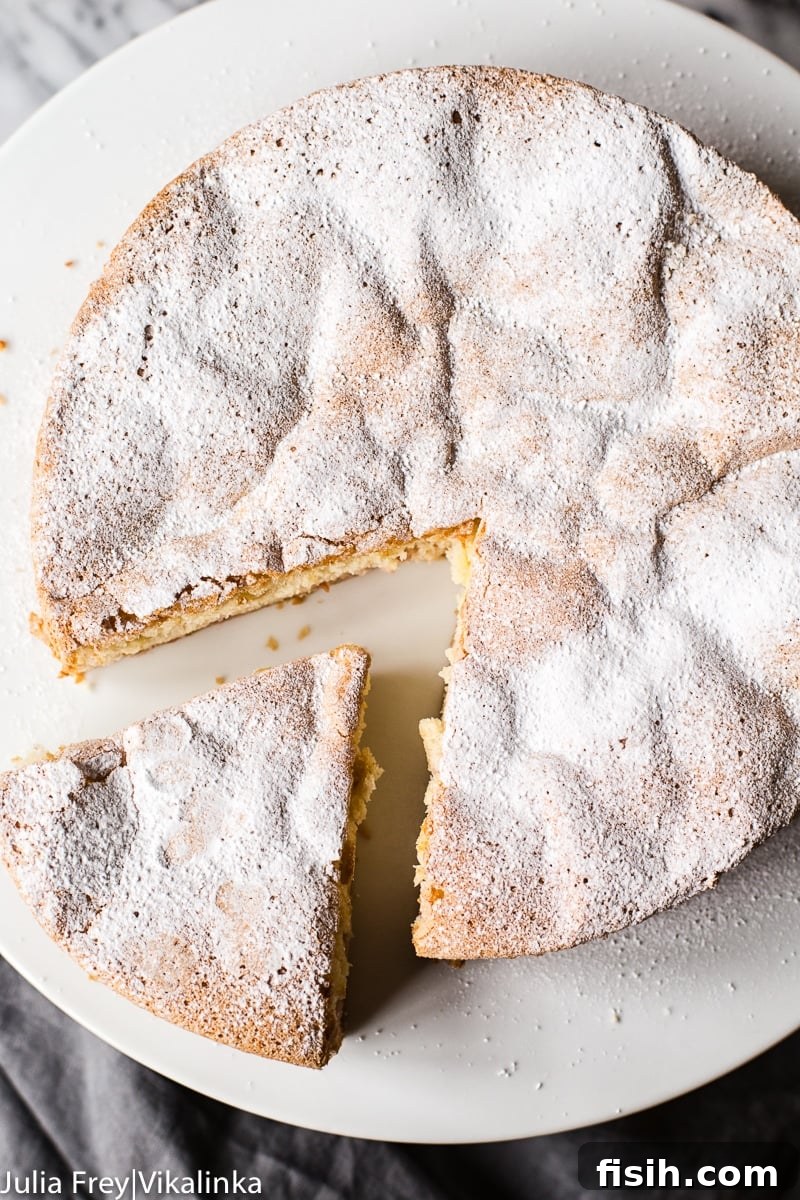
Understanding the Magic of Russian Sponge (Biskvit) Cake
At the heart of any authentic Sharlotka is the “Biskvit,” or Russian sponge cake. What makes this particular sponge so unique and incredibly light? Traditionally, this recipe calls for a generous quantity of eggs (often five or six), and crucially, no chemical rising agents like baking powder or baking soda. The magnificent rise and signature airy texture of the sponge come solely from the immense volume of air meticulously beaten into the eggs and sugar mixture. This technique, relying on mechanical aeration, is what gives Biskvit its characteristic cloud-like, almost ethereal consistency.
This classic sponge is not unique to Russia; it’s a fundamental technique used across many European countries, famously known as Genoise. While Genoise often incorporates melted butter, the Russian version typically distinguishes itself by omitting butter altogether, resulting in an even lighter, almost fat-free cake that truly highlights the delicate flavor of the fruit. I have experimented with adding butter in the past, but I’ve consistently found it makes very little discernible difference to the final texture and lightness. For this reason, I always revert to the authentic, butter-free version I grew up with, which preserves the cake’s traditional character.
My Sharlotka Egg and Leavening Experiment
The beauty of home baking often lies in adaptation and learning from unexpected situations. When the brilliant idea for a Rhubarb Sharlotka first sparked, I only had three eggs on hand, rather than the traditional five. Not one to be deterred, I decided to proceed with three eggs and, to compensate for the reduced egg volume, I incorporated a mere 1/2 teaspoon of baking powder. The result? A cake that was just as incredibly light and airy as its five-egg counterpart! This experiment proved that while the traditional method relies solely on eggs for lift, a touch of baking powder can provide an excellent safety net, making this cake even more accessible and forgiving for home bakers, especially on days when your egg carton isn’t fully stocked.
Seeing how successful the first attempt was, I felt it needed one more enhancement: more rhubarb! For my second version, I doubled the amount of rhubarb to two full cups and increased the eggs back to the traditional five (without baking powder this time). This iteration yielded an even more voluminous cake during baking, truly embodying the “cloud” description. Interestingly, and quite characteristic of classic Sharlotka, most of the rhubarb settled beautifully at the bottom, creating a lovely, moist, and intensely fruit-rich base layer that complements the light sponge above.
To be perfectly honest, while both versions were undeniably delicious, I didn’t observe a dramatic difference in the sponge’s texture between the three-egg-with-baking-powder and the five-egg-without-baking-powder versions. However, the second version, with its generous two cups of rhubarb, definitely won my preference for its intensified tangy fruit flavor. This flexibility means you can tailor the recipe slightly based on what you have on hand or your personal preference for fruit content, giving you freedom in your baking adventures!
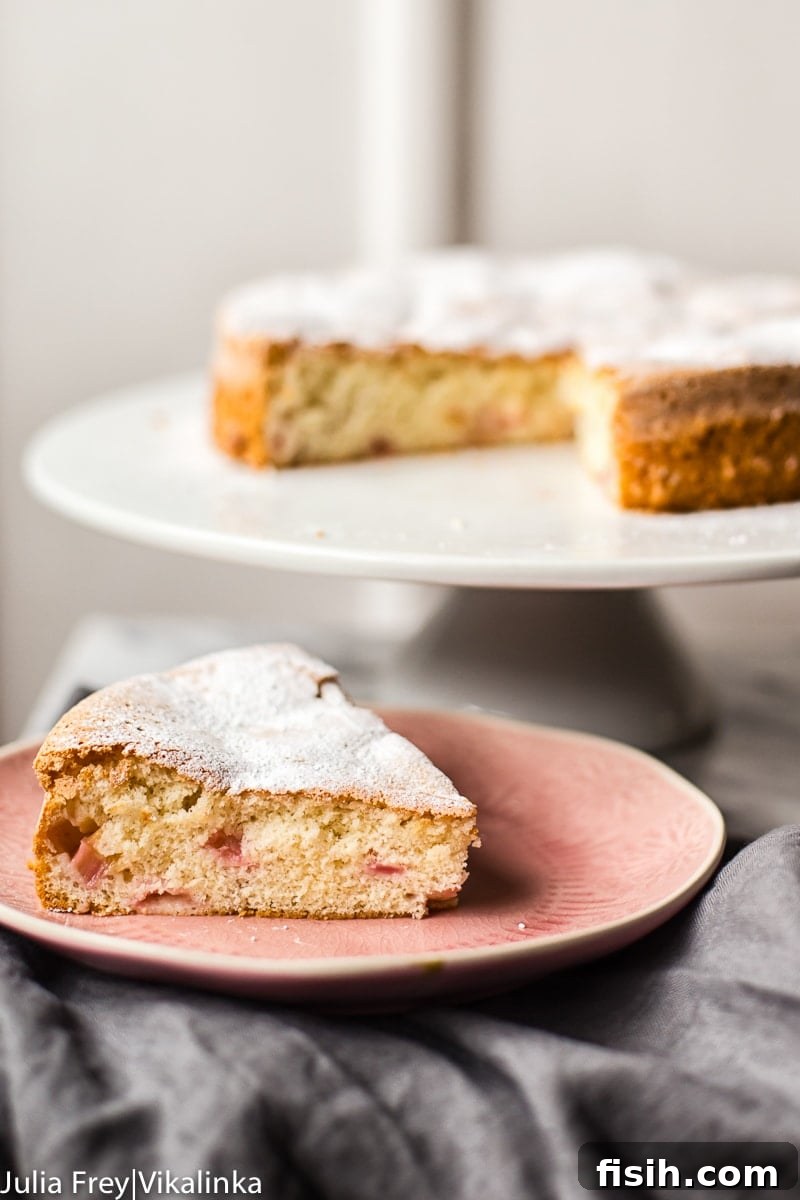
Mastering the Rise: Essential Tips for a Perfect Sponge Cake
Achieving that coveted light and airy sponge is the ultimate goal when baking Sharlotka, and it’s a technique I’ve used successfully in many of my other cake recipes. Understandably, I often receive questions and feedback from readers whose sponges didn’t rise as expected or came out a little dry. Let’s demystify the process and ensure your Rhubarb Sharlotka reaches its full, cloud-like potential every single time.
Firstly, it’s essential to reiterate that this isn’t a new or revolutionary recipe; it’s a classic European Genoise, celebrated in French and Italian patisserie for centuries. However, the technique commonly employed in Russia, and the one I share with you, is arguably simpler and just as effective, often bypassing the need for a complicated water bath without compromising the delicate, airy texture of the finished cake. This simplification is definitely a win in my cookbook, making gourmet-level results achievable in your home kitchen!
While this recipe might be a tad more nuanced than some of the more straightforward, stir-together cakes you encounter, the final, melt-in-your-mouth result is absolutely worth the effort. Perfecting this sponge takes a little patience and a very light hand, especially during the crucial folding stages. Here are the golden rules for success:
- Beat Eggs Thoroughly: The foundation of a good sponge is properly aerated eggs and sugar. You need to beat this mixture together until it is very pale, thick, and has at least tripled in volume. This extended beating creates a stable foam that traps countless tiny air bubbles, which are essential for the cake’s natural rise. Do not rush this step – it’s the most important part!
- Gentle Folding is Key: Once your egg mixture is perfectly aerated, the challenge is to incorporate the flour without deflating all that precious air. This requires a gentle hand and a rubber spatula. Fold the sifted flour in very lightly, in three separate additions, using an upward motion that gently lifts from the bottom of the bowl and folds over the top. Over-mixing at this stage is the quickest way to a dense, flat cake, as it will knock out all the air you worked so hard to incorporate.
- Do Not Overbake: An overbaked sponge will inevitably be dry and crumbly. Keep a close eye on your cake as it nears the end of its baking time. It should be golden brown, and a wooden skewer or cake tester inserted into the very center should come out completely clean, with no wet batter clinging to it.
- Avoid Sudden Temperature Changes: Try not to open the oven door too frequently during baking, especially in the first 20-25 minutes. Sudden drops in oven temperature can cause the delicate, rising structure of the sponge to collapse, leading to a sunken cake.
With these expert tips in mind, you’ll be well on your way to baking a truly exceptional Rhubarb Sharlotka Cake that boasts an impressive rise and an irresistibly light texture.
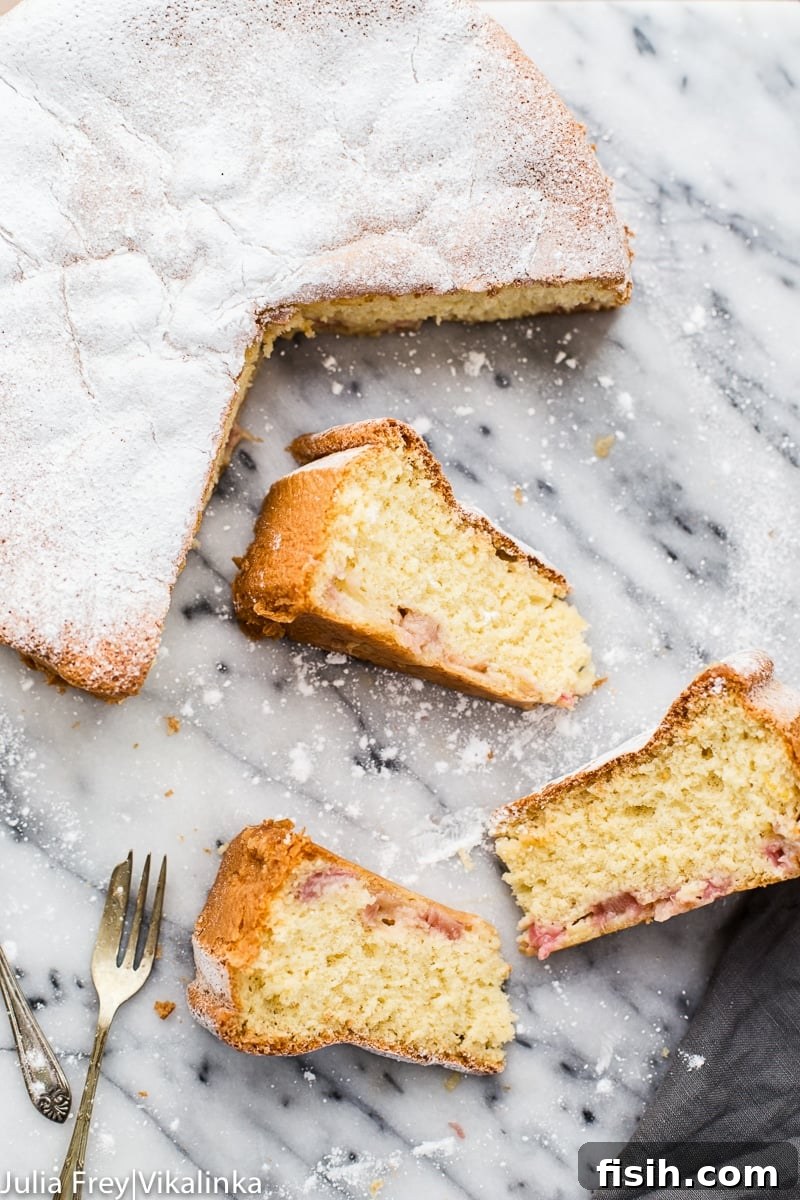
Pan Preparation: To Grease or Not to Grease? The Definitive Answer
This is another common question I receive when it comes to baking delicate sponge cakes, and the answer is a resounding YES, you absolutely should grease and flour your cake pans! Proper pan preparation is a critical, yet often overlooked, step that contributes significantly to a successful bake, especially for delicate sponges like our Sharlotka.
For this Rhubarb Sharlotka Cake, I strongly recommend both greasing and flouring your cake tins. Some bakers might worry that greasing and flouring will hinder the cake’s ability to “climb” the sides of the pan and achieve its full height. However, with this particular type of sponge, which relies heavily on the aeration of eggs, a well-prepared pan ensures an even release and prevents sticking, without compromising the impressive height that careful egg aeration provides. A thin, even layer of butter or baking spray, followed by a light dusting of flour (tapping out any excess flour), creates a non-stick barrier that helps the cake release cleanly once baked and cooled slightly. This small, simple step makes a big difference in the presentation and integrity of your finished Rhubarb Sharlotka. It’s a simple assurance that your beautiful, cloud-like cake will slide out of the pan effortlessly, looking picture-perfect every time. Trust the process, and your sponges will consistently rise to incredible heights, just like mine.
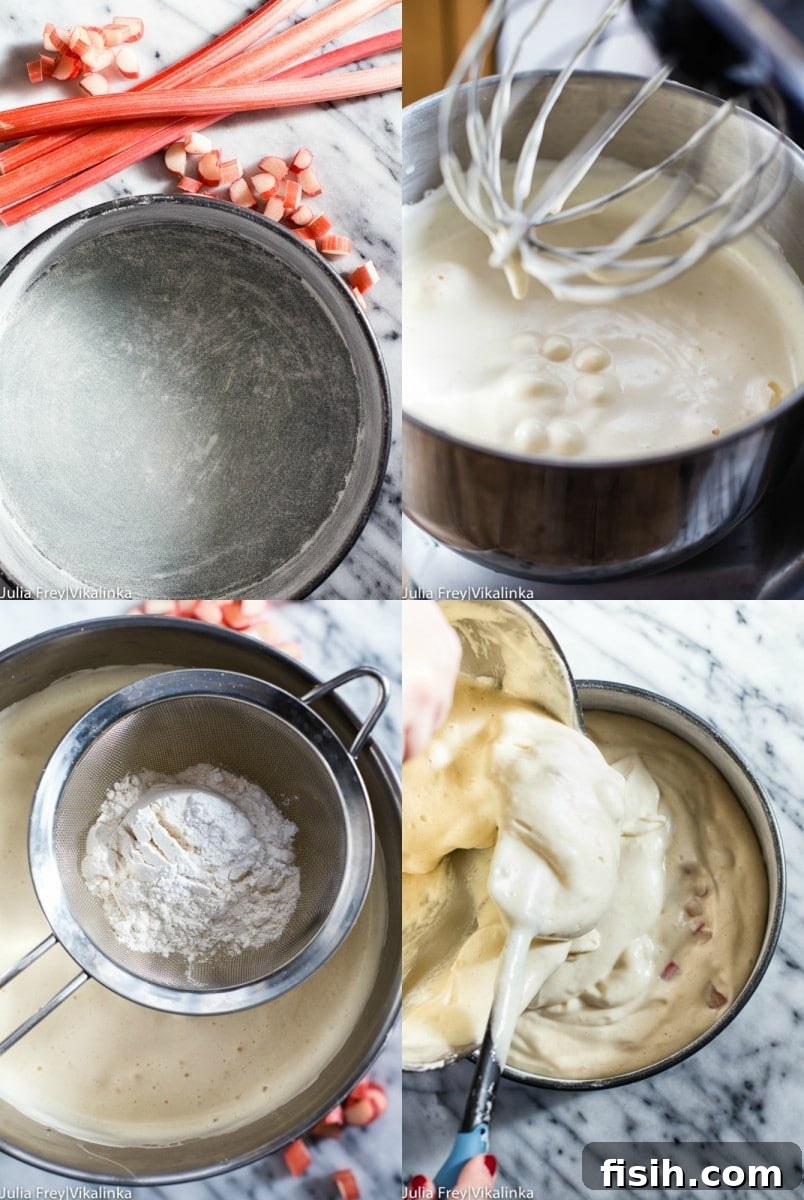
Essential Steps for Baking Your Perfect Rhubarb Sharlotka Cake
Bringing this delightful Rhubarb Sharlotka Cake to life is a rewarding experience. While the full, detailed recipe card follows, here’s a concise overview of the critical steps to ensure your sponge is light, airy, and utterly delicious:
- Achieve Maximum Volume: Begin by combining your room temperature eggs and sugar (and vanilla extract) in a large mixing bowl. Beat this mixture with an electric mixer on high speed until it transforms into a very pale, thick, and creamy foam that has approximately tripled in volume. This can take anywhere from 7 to 10 minutes, depending on your mixer’s power, but it’s a step you absolutely cannot rush. The immense amount of air incorporated here is the secret to your cake’s signature lightness.
- Gentle Flour Incorporation: Sift the flour and baking powder (if using) into the egg mixture in three separate additions. After each addition, use a rubber spatula to fold the flour in very lightly, taking extreme care not to deflate the carefully aerated batter. Use an upward scooping and folding motion. Make sure to scrape the bottom of the bowl to ensure all the flour is fully incorporated without overworking the mixture. This delicate folding technique preserves the precious air bubbles crucial for a high rise.
- Fold in the Rhubarb: Carefully fold in the chopped rhubarb with your spatula. Again, be gentle! You want to distribute the rhubarb evenly throughout the batter without losing the precious volume in your batter. Remember, rhubarb is quite moist, so incorporating it gently helps maintain the sponge’s structure.
- Maintain Oven Temperature: Ensure your oven temperature is stable and accurately set at 350°F (180°C). An oven thermometer is a valuable tool here, as domestic oven temperatures can often vary significantly and be unreliable. Consistent, accurate heat is vital for even baking and a good, steady rise for your delicate sponge.
- Practice Makes Perfect: Lastly, and perhaps most importantly, don’t be discouraged if your first attempt isn’t absolutely perfect. Baking, especially delicate sponges, takes practice and a bit of intuition. Each oven is different, and each batch of ingredients can behave slightly uniquely. Keep experimenting, refine your technique, and before you know it, you’ll be baking show-stopping cakes with confidence – perhaps even ready for the Great British Bake Off! The reward of a perfect Sharlotka is truly worth the journey.
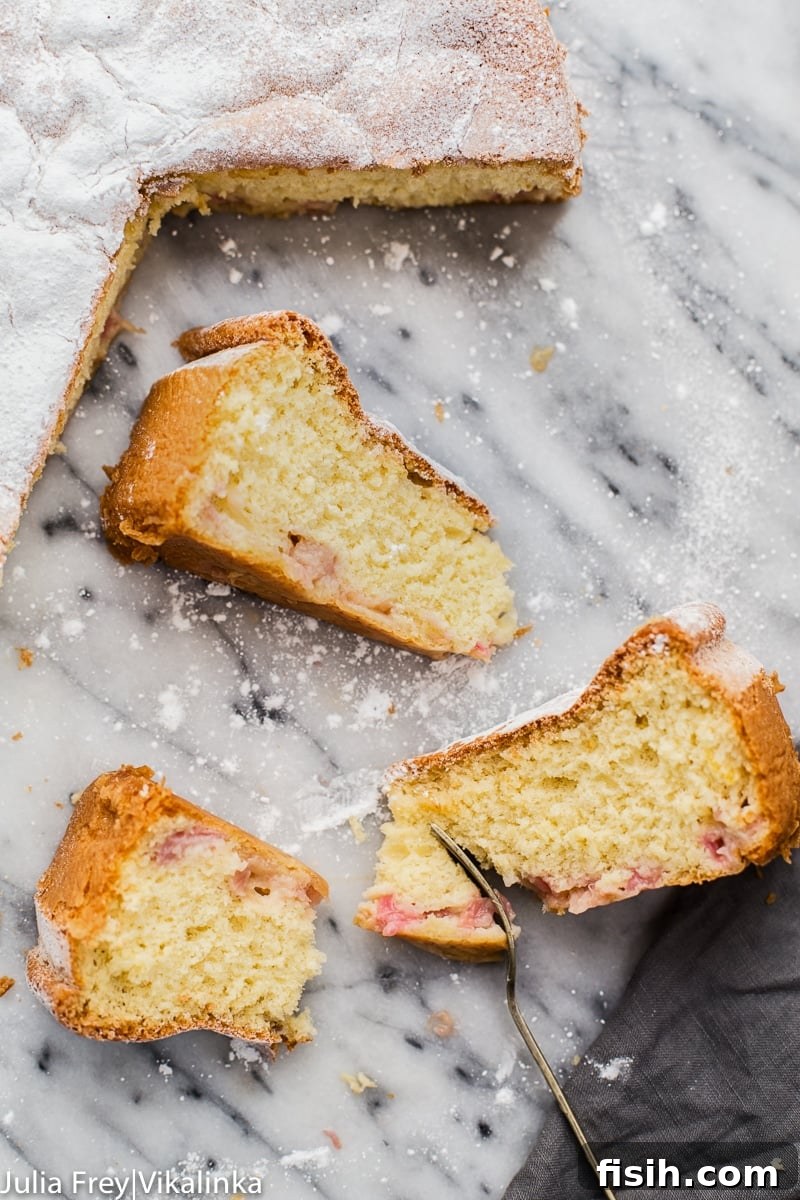
More Everyday Cakes for Tea and Coffee Time
If you’re looking for more delightful and easy-to-make cakes that are perfect for your afternoon tea or coffee break, or simply a sweet treat, here are some other cherished recipes from my collection:
- Lemon Ricotta Cake with Blackberry Glaze
- Apple Spice Cake with Salted Caramel Drizzle
- Summer Peach Cake with Red Currants
- Chocolate Fudge Cake
Rhubarb Sharlotka Cake Recipe
Rating: 5 out of 5 stars (based on 2 votes)
By: Julia Frey of Vikalinka
Prep Time: 15 mins
Cook Time: 45 mins
Total Time: 1 hr
Servings: 8-10
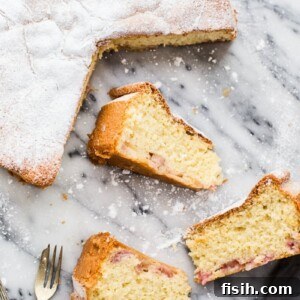
Lighter than a cloud, this sweet sponge is filled with tangy rhubarb creating a pleasing balance of tart and sweet. An easy and elegant everyday cake.
Print Recipe
Equipment
- Stand mixer (or powerful hand mixer)
- 9-inch Springform pan
- Flour sifter
- Rubber spatula
Ingredients
- 5 large eggs, at room temperature
- 1 cup (200g) granulated sugar
- 1 tsp vanilla extract (optional, but enhances flavor)
- 1 cup (120g) all-purpose flour
- 1/2 tsp baking powder (optional, see notes in post for details)
- 2 cups (300g) fresh rhubarb, trimmed and chopped into ½-inch (1-1.5 cm) pieces
- Powdered sugar, for dusting
- Butter/baking spray and extra flour, for preparing the pan
Instructions
- Preheat your oven to 350°F (180°C). Position an oven rack in the middle of the oven.
- Thoroughly grease a 9-inch (23 cm) springform pan with butter or baking spray, then lightly dust it with flour, tapping out any excess. Set the prepared pan aside.
- In a large mixing bowl, combine the room temperature eggs, granulated sugar, and vanilla extract (if using). Using an electric stand mixer or a powerful hand mixer, beat the mixture on high speed. Continue beating until the mixture is very thick, pale yellow, and has approximately tripled in volume. This crucial step typically takes between 7 to 10 minutes, depending on the strength of your mixer. The mixture should hold ribbons when the whisk is lifted.
- In a separate small bowl, whisk together the all-purpose flour and baking powder (if using). Sift this dry mixture into the beaten egg mixture in three separate additions. After each addition, gently and carefully fold in the flour with a rubber spatula using a light, upward motion. Be extremely careful not to deflate the aerated batter, as this will prevent the sponge from rising properly. Ensure you scrape the bottom of the bowl to incorporate all flour without overworking the mixture.
- Gently fold in the chopped rhubarb with a spatula until it is evenly distributed throughout the batter. Pour the batter into the prepared springform pan.
- Bake for 40-45 minutes, or until the cake is beautifully golden brown on top and a wooden skewer or cake tester inserted into the very center comes out completely clean.
- Once baked, remove the cake from the oven and allow it to cool in the pan for about 10-15 minutes on a wire rack. Then, carefully release the springform ring and transfer the cake to the wire rack to cool completely.
- Just before serving, generously dust the cooled Rhubarb Sharlotka Cake with powdered sugar for a beautiful and classic finish. Slice and enjoy!
Nutrition Information (Approximate per serving)
- Calories: 218 kcal
- Carbohydrates: 43g
- Protein: 5g
- Fat: 3g
- Saturated Fat: 1g
- Polyunsaturated Fat: 1g
- Monounsaturated Fat: 1g
- Trans Fat: 0.01g
- Cholesterol: 102mg
- Sodium: 41mg
- Potassium: 168mg
- Fiber: 1g
- Sugar: 30g
- Vitamin A: 180IU
- Vitamin C: 2mg
- Calcium: 55mg
- Iron: 1mg
Nutrition information is automatically calculated and should only be used as an approximation. Please note that individual results may vary based on exact ingredients and preparation methods.
Tried this recipe? We’d love to hear about your experience! Let us know how it was in the comments below!