

The Ultimate Kielbasa and Sauerkraut: A Hearty and Healthy One-Pan Wonder
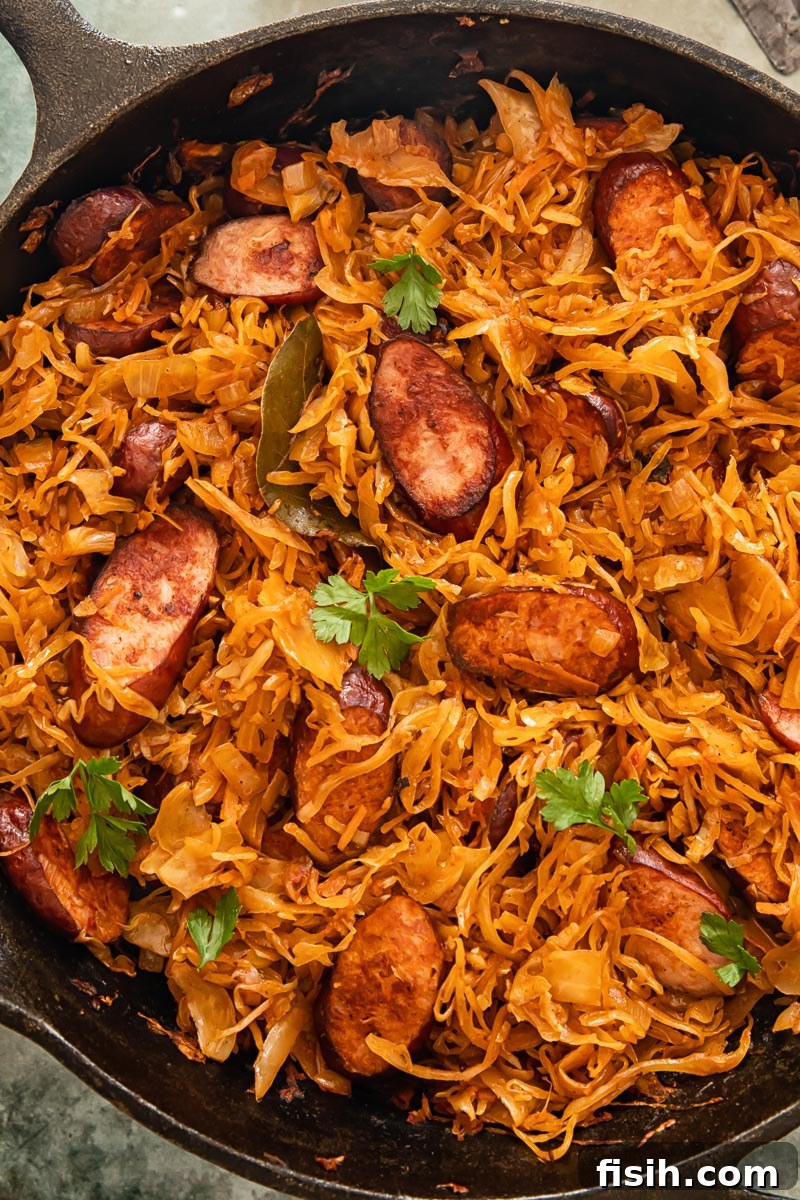
There are some dishes that just speak to the soul, and this classic Kielbasa and Sauerkraut recipe is undoubtedly one of them. Imagine smoky, savory kielbasa sausage mingling with the vibrant tang of fermented sauerkraut, all harmoniously balanced by the subtle sweetness of apples and tomatoes. This isn’t just a meal; it’s a comforting embrace, a symphony of flavors that delivers both nutrition and delicious satisfaction with remarkable ease. Forget fussy preparations; this one-pan wonder brings a taste of Eastern European tradition right to your dinner table, proving that healthy eating can also be incredibly flavourful and straightforward.
A Culinary Journey: The Enduring Appeal of Fermented Foods
For centuries, long before refrigeration became commonplace, fermentation was a fundamental method of food preservation and a cornerstone of diverse cuisines across the globe. From the kimchi of Korea to the tempeh of Indonesia, and indeed, the beloved sauerkraut of Eastern Europe, fermented foods have nourished generations. Growing up, my diet regularly featured an array of ferments – crisp fermented cucumbers, tangy tomatoes, and the refreshing drink, kefir. This rich tradition instilled in me a deep appreciation for the unique flavors and profound health benefits these foods offer.
Today, these ancient practices are experiencing a well-deserved resurgence. Modern science increasingly supports what our ancestors intuitively knew: incorporating fermented foods into our daily diet provides enormous health advantages, particularly for gut health. Packed with beneficial probiotics, these foods can aid digestion, boost immunity, and even improve overall well-being. While many enjoy ferments raw to maximize their probiotic content, cooking with them is also incredibly common and equally delicious, transforming them into rich, complex components of hearty meals.
Sauerkraut, in particular, is a culinary marvel. It brings a distinctive taste and texture to dishes with minimal effort, essentially acting as a pre-seasoned ingredient. When combined with kielbasa, a sausage renowned for its incredible depth of smoky flavor, you create a pairing that truly feels like a match made in heaven. The best part? This robust and satisfying dinner can be on your table with surprisingly little fuss, making it perfect for busy weeknights or relaxed weekend meals.
If you’re interested in exploring the world of fermentation further, why not try making your own? Discover our step-by-step guide to Homemade Russian Sauerkraut.
Cooking with Sauerkraut: Embracing Its Versatility and Flavor
While some might initially be hesitant about sauerkraut’s pungent aroma, those of us who grew up enjoying it know its incredible culinary versatility. It’s an ingredient that can elevate a simple side dish or become the star of a main course. For instance, my personal favorite, the vibrant Beet and Sauerkraut Salad, also known as Salat Vinegret, showcases just how wonderfully sauerkraut can complement other flavors.
The recipe we’re exploring today is another fantastic example of how to harness sauerkraut’s unique qualities in your cooking. However, I understand that the bold, fermented flavor of cabbage might not appeal to everyone immediately. For those who find it a bit too assertive, there are excellent alternatives. Consider a recipe made with fresh Savoy cabbage, braised with bacon and mushrooms, and enriched with sour cream, offering a milder yet equally delicious cabbage-based experience.
If you’re keen to try sauerkraut but prefer a gentler introduction, a clever approach is to dilute its intensity. You can achieve this by using a blend of half fermented sauerkraut and half fresh, finely shredded cabbage. This method allows you to enjoy the benefits and unique character of sauerkraut while gradually acclimatizing your palate.
But for the initiated, there are few gastronomic pleasures as deeply satisfying as sauerkraut. Whether it’s cooked into a rich, stew-like dish like this one, stuffed into delicate vareniki dumplings, or prepared in countless other creative ways, it remains a wonderfully nutritious and incredibly tasty component of any meal. Its distinctive tang provides a perfect counterpoint to rich meats and starches, creating a balanced and memorable dish every time.
Recipe Tips and Notes for Perfection
- **Sauerkraut Selection and Carrots:** I often use Russian-style sauerkraut, which frequently comes with shredded carrots already added. These carrots are not just for color; they introduce a lovely touch of natural sweetness that beautifully balances the sauerkraut’s sourness. If your chosen sauerkraut is plain, I highly recommend adding a fresh grated carrot to the dish along with the sauerkraut. It makes a significant difference in the final flavor profile.
- **The Sweet-Sour Harmony:** The genius of this recipe lies in its balanced flavor profile. Ingredients like apple cider, a fresh grated apple, and a hint of tomato paste are added precisely to achieve this equilibrium. They temper the sharpness of the sauerkraut, adding layers of sweet, fruity, and umami notes that make the dish incredibly complex and inviting, without being overly sweet.
- **Embracing Caraway Seeds:** Caraway seeds, with their distinctive nutty flavor and a subtle hint of anise or liquorice, are a traditional and beloved companion to cabbage in many Eastern European dishes. They add an authentic depth that is truly wonderful. However, their unique taste can be quite strong and unfamiliar to some palates. I remember disliking them as a child! If you’re new to caraway, proceed with caution and use them sparingly, perhaps starting with half the amount and adjusting to your preference. You can also lightly toast them before adding to enhance their aroma.
- **Kielbasa: The Star Protein:** I am a huge admirer of kielbasa and incorporate it into my cooking frequently. Its smoky and savory characteristics are unmatched, whether in a traditional recipe like this, a hearty Russian Beef Stew Solyanka, a comforting plate of Pierogies and Kielbasa, or my innovative take on Macaroni and Cheese with Kielbasa. The smoky depth and robust flavor never disappoint. If authentic kielbasa is difficult to find, a good quality smoked sausage or even thick-cut, pan-fried bacon can serve as a suitable substitute, ensuring that delicious smoky element remains.
Serving Suggestions: Creating a Complete and Hearty Meal
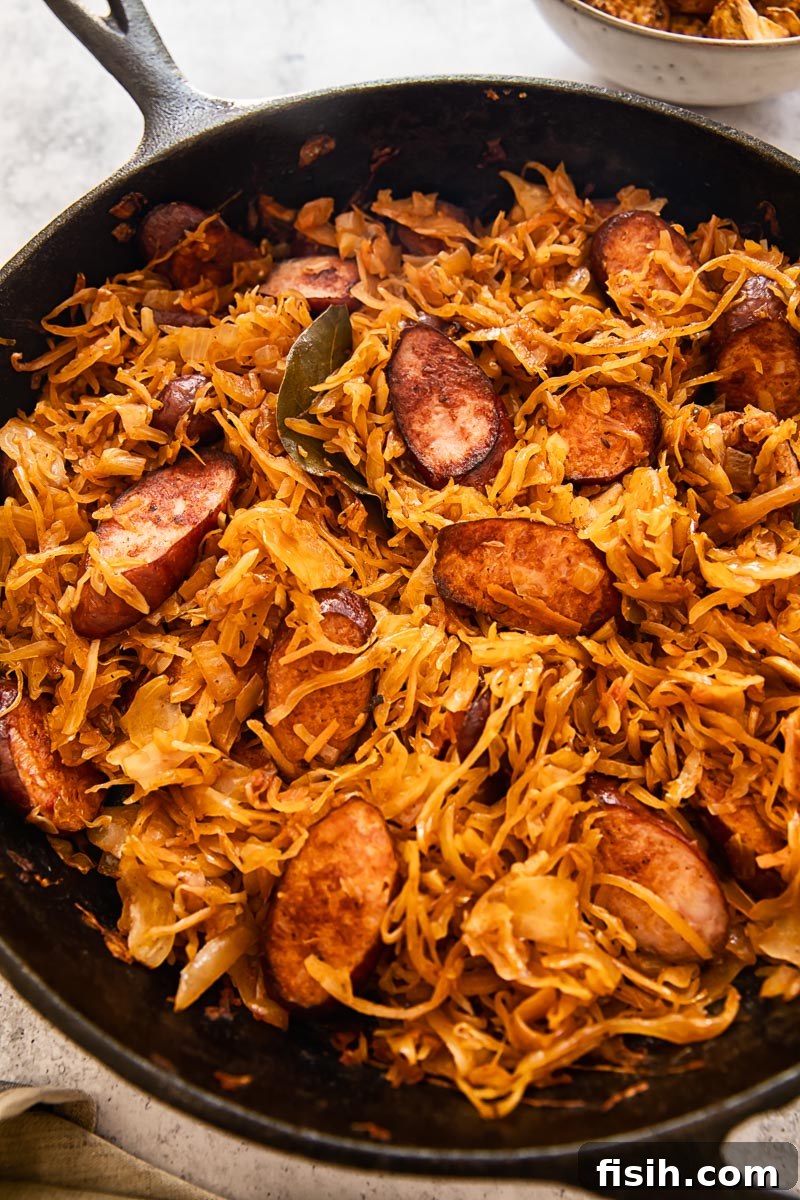
This Kielbasa and Sauerkraut dish is incredibly satisfying on its own, but it truly shines when paired with the right accompaniments. During my travels, I’ve often enjoyed this classic served alongside potatoes in various forms, a pairing that offers comforting textures and flavors. For a warm and hearty side, our Oven Fried Potatoes with Mushrooms and Onions are an excellent choice, soaking up all the delicious juices from the main dish. Alternatively, if you prefer a cold, tangy contrast, a German Two Potato Salad offers a refreshing balance to the rich sausage and braised cabbage.
Beyond potatoes, I’m also a huge proponent of serving this meal with dumplings. The soft, chewy texture of dumplings creates a wonderful textural counterpoint to the tender kielbasa and sauerkraut. Classic Eastern European choices like Potato Caramelized Onion Pierogies or Potato, Bacon, and Caramelised Onion Vareniki are both fantastic options that are always a huge hit with my family and guests alike. Their savory fillings and tender dough perfectly complement the robust flavors of this dish. For a simpler option, crusty bread is always a good idea for soaking up the delicious sauce.
Maximizing Your Meal: Storage and Reheating Tips
One of the many virtues of Kielbasa and Sauerkraut is that it often tastes even better the next day, once the flavors have had more time to meld and deepen. Leftovers are a true culinary gift! This dish will keep beautifully for 4-5 days when stored in an airtight container in the refrigerator, making it perfect for meal prepping or enjoying throughout the week.
When it comes to reheating, you have a couple of excellent options. While an oven can certainly warm it through, I personally prefer reheating this dish in a frying pan over medium heat with just a touch of oil. This method allows the kielbasa to regain a slight crispness and prevents the sauerkraut from becoming overly soft or dry. Stir it occasionally to ensure even heating and to prevent any sticking or burning. The kielbasa heats through relatively quickly, and the sauerkraut benefits from a gentle re-braise, bringing all those wonderful flavors back to life. You can also use a microwave for speed, but be mindful of stirring frequently to ensure uniform temperature and retain texture.
Essential Eastern European Delights: Explore More Recipes
If you’ve enjoyed the comforting flavors of this Kielbasa and Sauerkraut dish, you’re in for a treat with other traditional Eastern European recipes. These dishes are known for their hearty ingredients, rich flavors, and ability to bring people together. Explore more culinary treasures from this vibrant region:
- Potato, Bacon and Caramelised Onion Pierogi (Vareniki)
- Classic Borscht Recipe
- Russian Salad Olivier (Potato Salad with Chicken)
- Hearty Cabbage Rolls (Golubtsi)
(Or browse our comprehensive Russian Recipe Collection for more culinary inspiration!)
Kielbasa and Sauerkraut: A Classic Comfort Food
Julia Frey of Vikalinka
10
40
50
6

Print Recipe
Ingredients
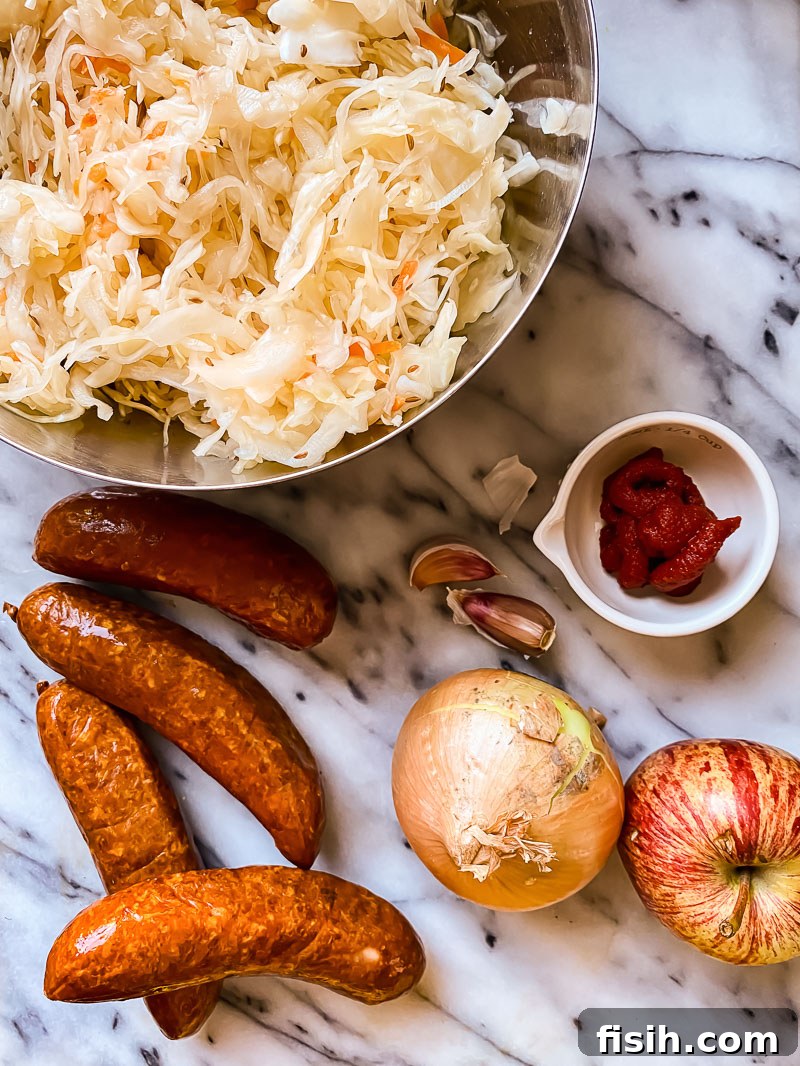
- 300g-350g (4) kielbasa, sliced
- 1 large onion, chopped
- 2 cloves garlic, minced
- 80ml (1/4 cup) apple cider
- 500g (4 cups) drained sauerkraut (with carrots, if available; see notes for plain sauerkraut)
- 1/2 tsp caraway seeds (optional, to taste)
- 1 medium apple, grated (e.g., Gala, Fuji)
- 2 tbsp tomato paste
- 1 bay leaf
- Salt and freshly ground black pepper (to taste)
- Vegetable oil or butter (if needed for onions)
Instructions
-
Preheat your oven to 350°F (180°C). This ensures the oven is ready for a seamless transition from stovetop to slow braise, allowing for even cooking and flavor development.
-
Prepare the Kielbasa: Slice the kielbasa sausage into thick, coin-shaped pieces, approximately ½-inch thick. Heat a large, oven-safe frying pan or Dutch oven over medium-high heat. Add the sliced kielbasa and pan-fry for about 5-7 minutes, turning occasionally, until it’s beautifully golden brown and slightly crispy on both sides. The sausage will release its own flavorful fat, which you can use for sautéing the vegetables, so additional oil is usually not needed. Remove the cooked kielbasa from the pan and set it aside on a plate, leaving the rendered fat in the pan.
-
Sauté Aromatics: If the pan appears dry after removing the kielbasa, add a tablespoon of vegetable oil or butter. Add the chopped onion to the same pan and sauté over medium heat for 7-10 minutes, stirring occasionally, until it softens and becomes translucent. Stir in the minced garlic and cook for another 30 seconds until fragrant, being very careful not to let it burn, which can turn it bitter.
-
Deglaze and Build Flavor: Pour in the apple cider, using a wooden spoon to scrape up any delicious browned bits (fond) from the bottom of the pan. This deglazing step is crucial for incorporating concentrated flavors into your sauce and creating a rich base.
-
Combine Ingredients for Braising: Add the drained sauerkraut (and grated carrots if you’re using plain sauerkraut), caraway seeds, grated apple, tomato paste, and bay leaf to the pan. Stir everything together thoroughly until all components are well combined and coated. Return the pan-fried kielbasa to the pan, nestling the slices among the sauerkraut mixture.
-
Braise in the Oven: Cover the pan tightly with a lid (or use aluminum foil if your pan isn’t oven-safe, transferring the mixture to a Dutch oven). Transfer the covered pan to the preheated oven and cook for 40-50 minutes. This slow braising allows all the flavors to meld beautifully, the sauerkraut to tenderize further, and the dish to develop a rich, cohesive taste. Before serving, check the seasoning and adjust with salt and freshly ground black pepper as needed.
Recipe Notes for Success
- **Sauerkraut Selection & Carrots:** Russian-style sauerkraut often includes carrots, which contribute a subtle sweetness and excellent balance to the sourness. If your chosen sauerkraut is plain, we highly recommend adding 1 grated carrot along with the sauerkraut to the pan. This simple addition will significantly enhance the dish’s flavor profile.
- **Achieving Flavor Balance:** The combination of apple cider, grated fresh apple, and a touch of tomato paste is vital for creating a harmonious flavor in this dish. These ingredients work together to naturally sweeten and round out the tangy notes of the sauerkraut, ensuring the dish is robust and flavorful without being overwhelmingly sour.
- **Caraway Seed Usage:** Caraway seeds, with their distinctive nutty and slightly liquorice-like flavor, are a classic element in many European cabbage dishes. They impart an authentic depth that is truly delicious. However, their flavor can be quite pronounced. If you’re new to caraway, start with half the recommended amount or omit them if preferred, and adjust to your personal taste.
- **Kielbasa Alternatives:** While smoky kielbasa is the ideal choice for its rich flavor, if it’s unavailable, you can substitute with other good quality smoked sausages or even thick-cut, pan-fried bacon. The key is to select a meat that provides a rich, savory, and smoky element to complement the sauerkraut effectively.
- **Adjusting Sourness Levels:** For those who find sauerkraut’s pungent flavor too intense, a practical tip is to rinse it thoroughly under cold water before adding it to the pan. This process helps to temper its sourness. Another approach is to use a mixture of half fermented sauerkraut and half fresh, finely shredded cabbage for a milder overall taste.
Nutrition Information
Nutrition information is automatically calculated and should be used as an approximation.
Tried this amazing recipe?
We’d love to hear your thoughts! Leave a comment below and share how it turned out. Your feedback helps us improve and inspire other home cooks.