
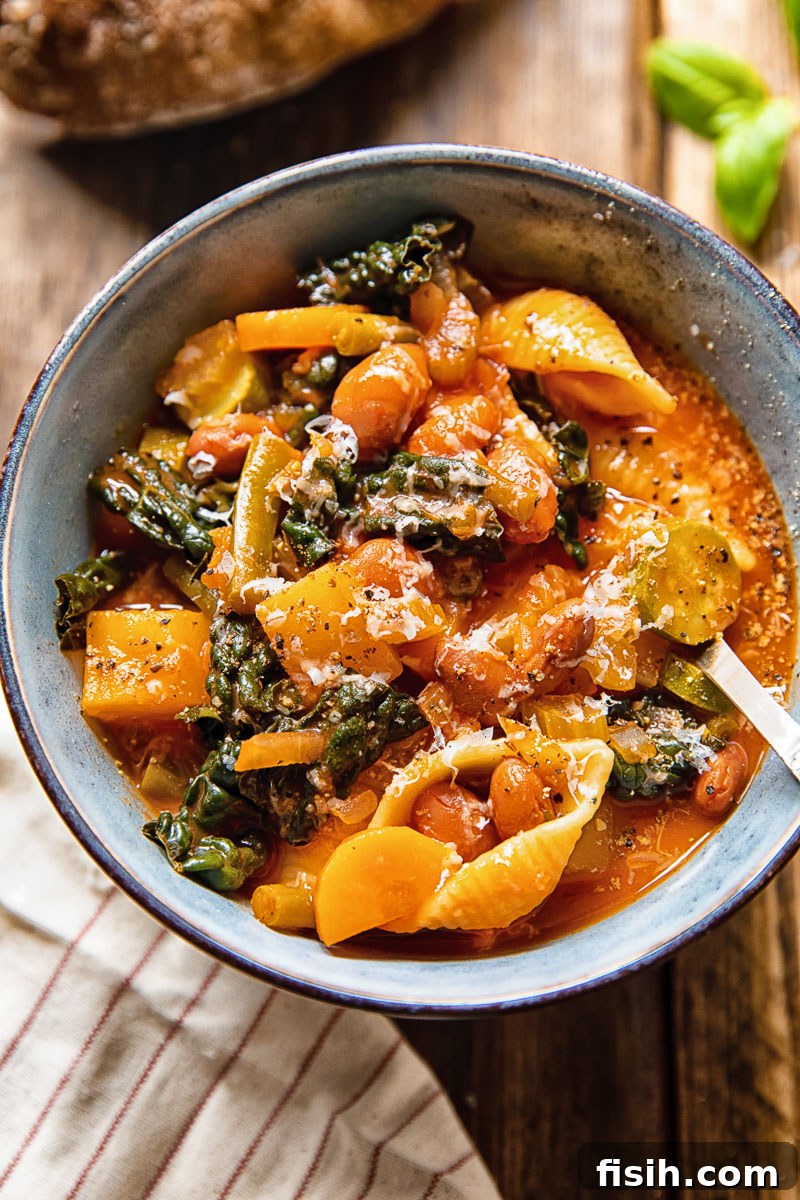
Minestrone is far more than just a soup; it’s a culinary embrace, a vibrant celebration of vegetables, and the epitome of comfort food. This ultimate vegetarian soup recipe checks every box for a winning dish in the kitchen: it’s incredibly cost-effective, packed with nutrition, requires minimal prep and cooking time, offers a deeply satisfying fullness, and delivers an explosion of delicious flavors. Hearty, wholesome, and profoundly satisfying, this dish gracefully bridges the gap between a robust soup and a flavorful vegetable stew, making it a complete meal perfect for any season, especially a crisp autumn evening.
While Minestrone proudly stands as a protein-rich, meat-free marvel thanks to its generous serving of legumes, it’s also wonderfully adaptable. For those who occasionally crave a heartier touch while still savoring Italian flavors, consider exploring recipes that introduce a meaty element, such as a comforting Chicken Meatball Soup with Tortellini. However, the true spirit of Minestrone lies in its humble origins and its celebration of plant-based ingredients.
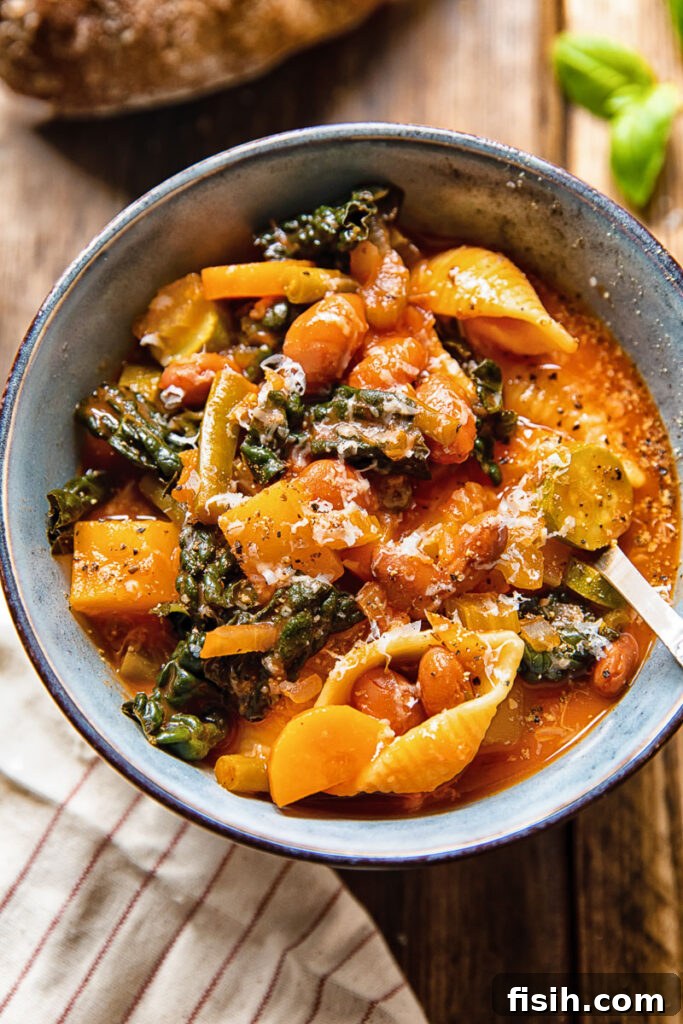
Few things are as gratifying as transforming disparate items from your pantry and fridge into a wholesome, mouth-watering family meal. Minestrone excels at this, inviting you to clear out those lingering vegetables, half-used pasta packets, and forgotten tins. It’s a delightful culinary adventure that encourages creativity and minimizes food waste, proving that the most delicious meals often arise from resourcefulness.
What is Minestrone Soup? Unveiling a Timeless Italian Classic
This globally renowned Italian soup boasts ancient origins, tracing its lineage back to the Roman Empire. For centuries, Minestrone was revered as a staple of cucina povera – “poor kitchen” or “kitchen of the poor” – a culinary philosophy focused on making the most of readily available, seasonal ingredients with minimal waste. Its early iterations were a testament to frugality, predominantly featuring seasonal grains, pulses, and vegetables, with meat being a rare inclusion, reserved only when truly necessary or affordable.
Like other celebrated examples of Italian peasant food, such as Tuscan Chickpea Soup, Sardinian Minestrone, or the vibrant Spring Minestrone Soup, this Harvest Minestrone embodies the principle of using what’s at hand. This resourceful approach not only prevented waste but also led to the creation of incredibly adaptable, varied, and nutritious one-pot meals. It’s no wonder that Minestrone’s enduring appeal has allowed its recipe to survive, evolve, and thrive for centuries, captivating palates across the globe with its comforting simplicity and profound depth of flavor.
The beauty of Minestrone lies in its inherent flexibility. There is no single “authentic” recipe; instead, it is a living tradition, a soup that changes with the seasons and the produce available in local markets. Each region, and often each family, has its own rendition, passed down through generations. This fluid nature is precisely what makes Minestrone so special – it’s a reflection of its environment, a culinary canvas for seasonal abundance. It’s a dish that teaches us to appreciate simple ingredients and the art of cooking with purpose and passion.
Embrace Versatility: Endless Substitutions and Flavorful Variations for Your Minestrone
At its heart, a true Minestrone typically includes pasta, legumes, tomatoes, a medley of vegetables, and a finishing touch of Parmesan cheese. However, within these foundational components lies an incredible world of flexibility. The very essence of Minestrone dictates that there is no rigid, unchangeable recipe. Historically, before modern refrigeration, ingredients were dictated by seasonality and local availability, a tradition that is beautifully resurfacing in contemporary kitchens.
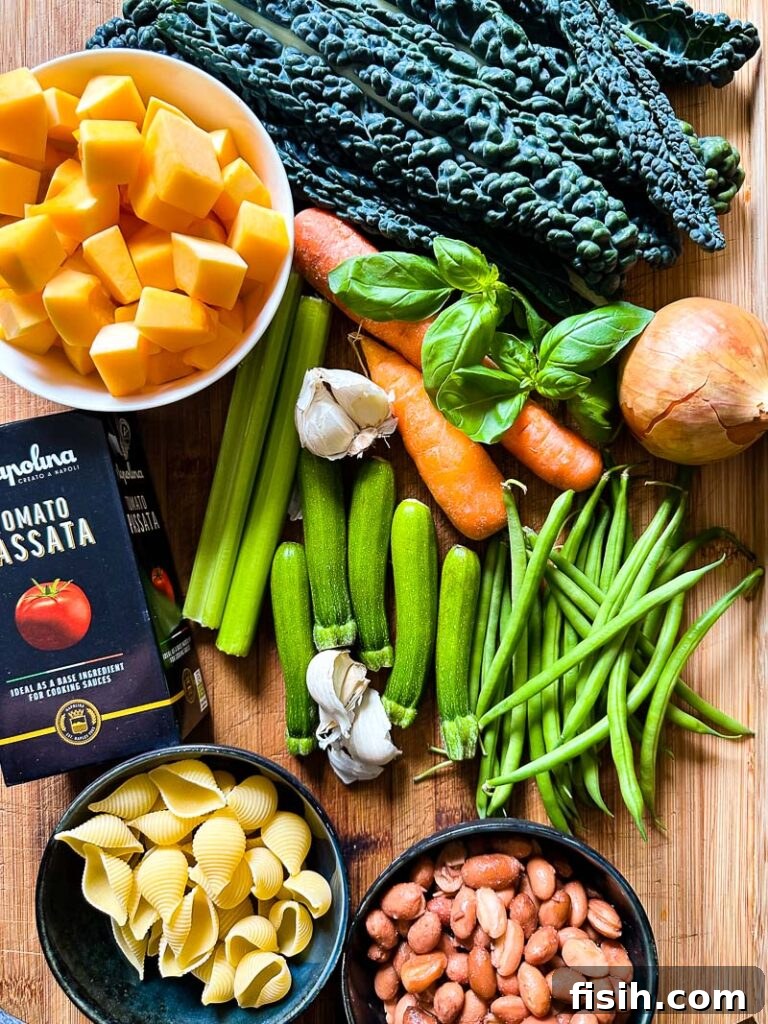
Today, my Harvest Minestrone features small pasta, borlotti beans, vibrant green beans, sweet butternut squash, tender zucchini, and nutrient-rich Tuscan kale. Yet, this is merely one snapshot of its potential. On another day, you might find me using leftover fusilli pasta, perhaps broken into smaller pieces, along with creamy cannellini beans, fresh spinach, broad beans, and hearty potatoes. The remarkable charm of Minestrone lies in its ability to be effortlessly tweaked and tailored to your specific tastes, dietary needs, and, most importantly, the ingredients you have readily on hand.
Think about the possibilities: switch out butternut squash for sweet potato or pumpkin. Replace borlotti beans with kidney beans, chickpeas, or navy beans. Green beans can give way to peas, chopped broccoli, or even asparagus spears when in season. For greens, beyond kale, consider chard, spinach, or even savoy cabbage. Small pasta shapes like ditalini, elbow macaroni, or orzo are traditional, but feel free to break up spaghetti or vermicelli if that’s what’s in your pantry.
While traditionally a vegetarian recipe, Minestrone welcomes the addition of meat if that suits your preference. A few strips of crispy bacon or a sprinkle of pancetta can lend a delightful salty depth. For a more substantial protein boost, consider browning some Italian sausage or thinly sliced chicken breast and adding it to the pot. These adaptations honor the spirit of *cucina povera* by utilizing what’s available to create a satisfying meal, whether it’s purely plant-based or includes a touch of meat.
Expert Recipe Tips and Notes for Your Perfect Minestrone
- Embrace the Method, Not Just the Recipe: Minestrone is truly more of a flexible method than a rigid recipe. This liberation means you can confidently go off-script, utilizing any lonely or aging vegetables patiently waiting in the bottom of your fridge. Think of it as a creative way to empty your vegetable crisper and minimize food waste, turning forgotten produce into a delicious meal.
- Thoughtful Meat Additions: While Minestrone is traditionally vegetarian, feel free to incorporate meat if you desire. A couple of slices of bacon or a handful of diced pancetta, rendered until crispy, will infuse a wonderful salty, savory depth. For a heartier meal, brown some Italian sausage or thinly sliced chicken breast at the beginning of the cooking process with the aromatics. This allows the meat to cook through and blend its flavors seamlessly with the soup.
- The Philosophy of Cucina Povera: My approach to Minestrone strongly aligns with the *cucina povera* philosophy: it’s about creating a low-cost, incredibly efficient meal that maximizes flavor and minimizes waste. I rarely buy ingredients specifically for Minestrone; instead, I work with what I already have available. This approach not only makes cooking more sustainable but also fosters culinary creativity.
- Start with Confidence: If adopting the *cucina povera* freestyle method feels intimidating at first, there’s absolutely no shame in buying fresh, specific ingredients. As you gain experience with Minestrone, you’ll naturally develop a feel for its rhythm and versatility, eventually embracing the joy of cooking freestyle.
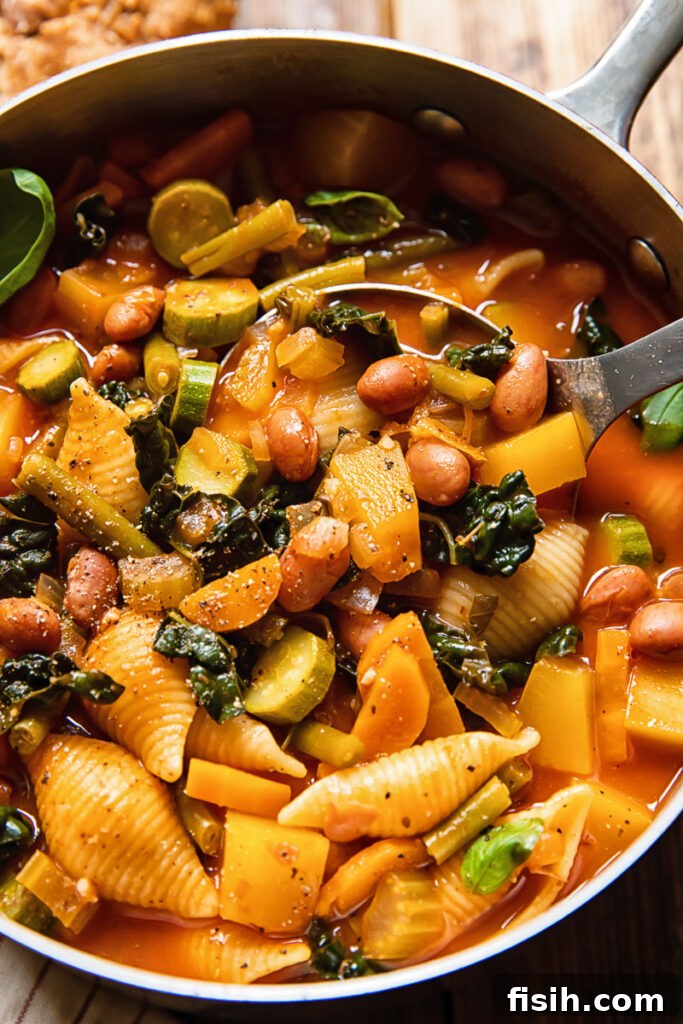
- Layering for Texture and Flavor: Resist the urge to toss all your ingredients into the pot simultaneously! Different vegetables and pasta require different cooking times to achieve their optimal texture. Start with aromatics like onions, carrots, and celery, then add harder vegetables like squash, followed by legumes and stock. Softer vegetables like zucchini and leafy greens, along with pasta, should be added later to prevent them from becoming mushy. This staggered addition ensures every component retains its integrity, rewarding you with a soup rich in both texture and layered flavor, far from a “minestrone mush.”
- The Perfect Companion: Nothing complements a warm bowl of Minestrone better than a substantial piece of rustic bread. A soft, airy focaccia shares the same Italian soul, while a dense, chewy slice of sourdough is perfect for soaking up every flavorful drop. For a more complete meal, consider pairing your soup with a light sandwich or a crisp, fresh side salad.
- Adjusting Consistency: Minestrone is typically a thick, stew-like soup, brimming with ingredients. If you prefer a brothier consistency, simply increase the amount of vegetable or chicken stock until it reaches your desired thickness. Remember, the pasta will absorb some liquid as it cooks and cools, so anticipate this when adjusting.
- Finishing Touches: A drizzle of high-quality extra virgin olive oil just before serving adds a luxurious sheen and enhances the flavors. Freshly grated Parmesan cheese is a non-negotiable garnish for its salty, umami kick. A sprig of fresh basil or a pinch of red pepper flakes can also elevate the experience.
Storage and Leftovers: Maximizing Your Minestrone Experience
True to the resourceful spirit of *cucina povera*, if your efforts to clear out the fridge and cupboards result in a generous pot of Minestrone large enough to sustain a small Italian village, you’ll be pleased to know it stores beautifully. Minestrone often tastes even better the next day as the flavors have more time to meld and deepen.
For longer-term storage, Minestrone freezes exceptionally well. Allow the soup to cool completely before transferring it to freezer-safe containers or heavy-duty freezer bags. It will maintain its quality in the freezer for up to 3 months. When ready to enjoy, simply thaw it overnight in the refrigerator. Reheat gently on the stove top, bringing it to a simmer and ensuring it is thoroughly hot before serving. For best results, avoid boiling aggressively during reheating to preserve the texture of the vegetables and pasta.
Any immediate leftovers can be safely refrigerated for 2-3 days in an airtight container. It’s important to note that the pasta in Minestrone will likely absorb a significant amount of the liquid while chilling, transforming your soup into a thicker stew. If you prefer a more brothy consistency upon reheating, simply add a splash or two of water or vegetable stock until it reaches your desired texture. This little trick ensures your reheated Minestrone is just as delightful as the fresh batch.
More Hearty Soup Recipes to Explore
- Beef Cabbage Soup
- Potato and Sausage Chowder
- Borscht
- Corn Chowder
Harvest Minestrone

Ingredients
- 1 tbsp olive oil, extra virgin
- 1 stalk celery
- 1 carrot
- 1/2 onion
- 3 cloves garlic
- 500ml / 2 cups canned tomato passata or crushed tomatoes
- 4-5 basil leaves , or ½ tsp dried basil
- 1/2 tsp dried oregano
- Salt to taste
- 1 litre / 4 cups vegetable or chicken stock
- 350g / 2 cups butternut squash, peeled and diced
- 100g / 1 cup green beans
- 400g / 14oz canned borlotti beans, drained
- 100 g /5 baby zucchini, sliced
- 70g / 1 cup small pasta
- 50g / 1½ cups cavolo nero/tuscan kale
- 1-2 tbsp parmesan cheese, grated
Instructions
-
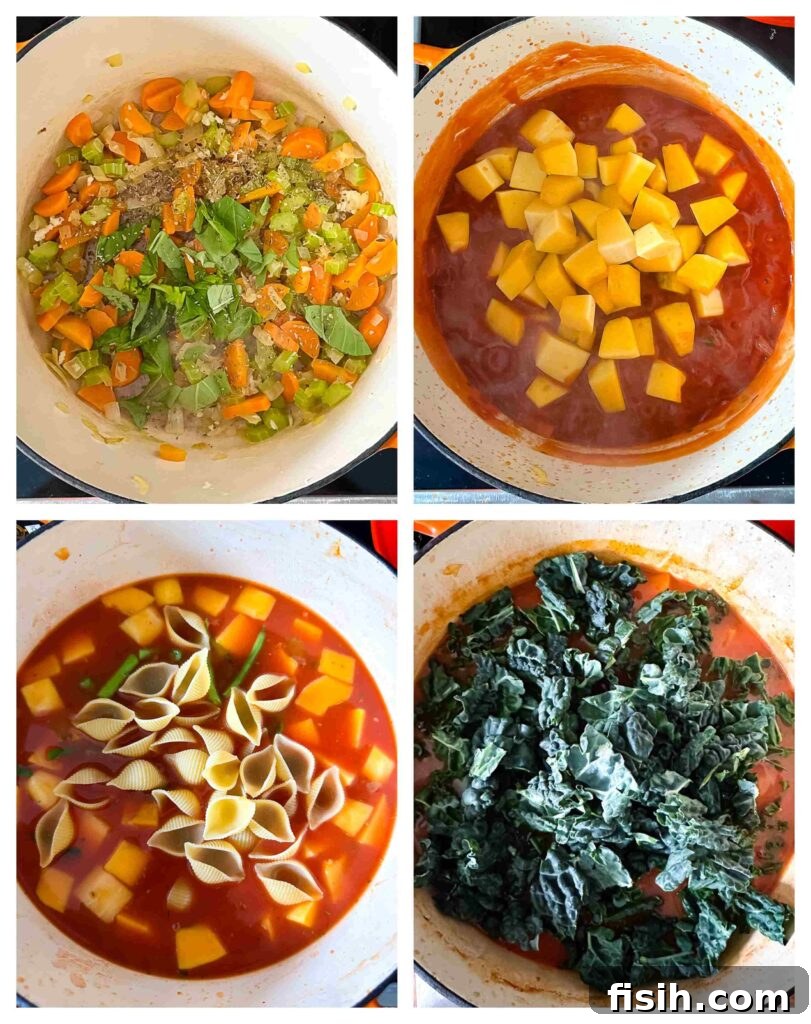
Heat the olive oil in a soup pot, then sauté the chopped onion, sliced carrot and celery for 5 minutes over low heat, then add the minced garlic and cook for 30 seconds.
-
Pour in the canned chopped tomatoes, diced butternut squash, sliced fresh basil or dried basil and oregano with a pinch of salt, mix to combine, then let the vegetables cook for 5-7 minutes with a lid on. We are looking for the tomatoes to cook down and for the flavours to blend.
-
Pour in the vegetable or chicken stock, green beans, canned borlotti beans and pasta, bring to a boil and cook for 10 minutes.
-
Then add the diced zucchini and kale, cook for 5 minutes longer. Taste and season with salt and pepper.
-
Serve topped with grated Parmesan cheese.
Nutrition
Nutrition information is automatically calculated, so should only be used as an approximation.
Thank you for exploring this wonderful Harvest Minestrone recipe! Whether you’re a seasoned cook or just starting your culinary journey, this versatile soup offers a canvas for creativity and a nourishing meal for your table. We hope you enjoy making it as much as we love sharing it. This classic Italian comfort food is a testament to simple ingredients, thoughtful preparation, and the enduring joy of a homemade meal.