
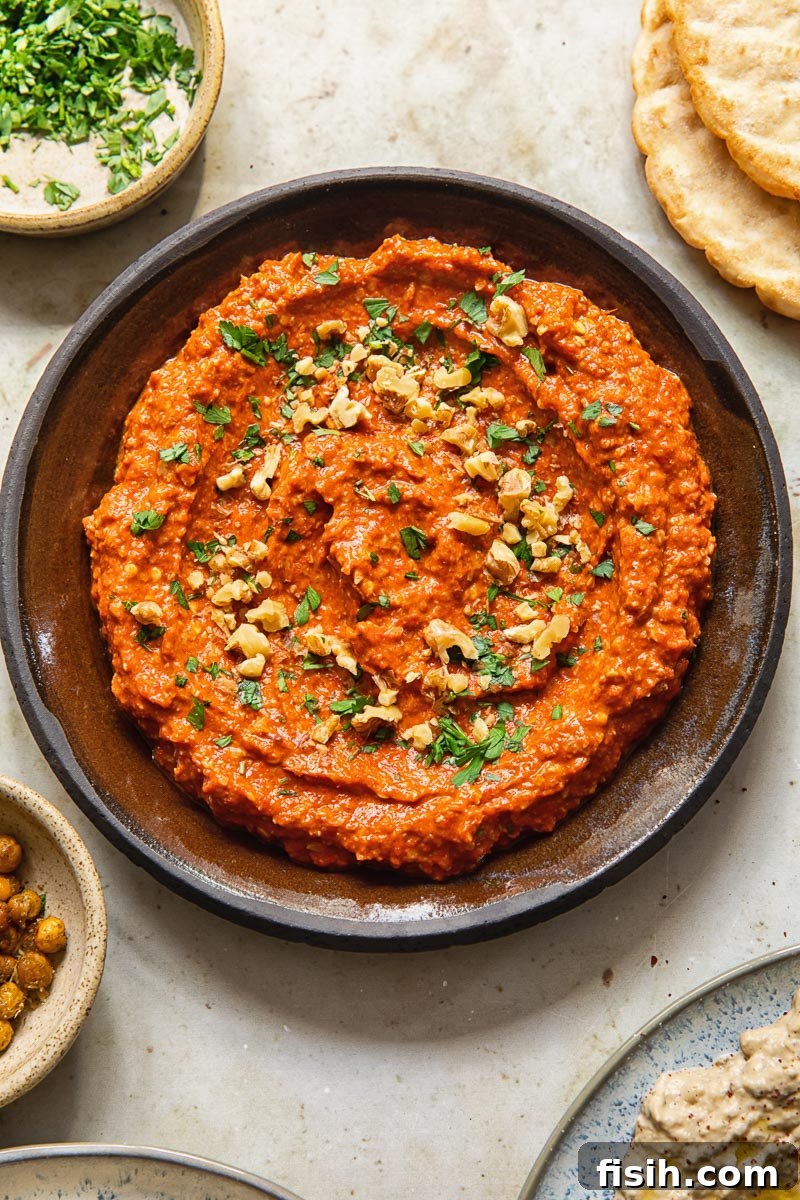
Dive into the rich, vibrant world of Muhammara, a celebrated Middle Eastern dip that captivates with its deep red hue and complex smoky flavor. This luscious roasted red pepper and walnut spread evokes the enchanting aromas of a bustling souk at sunset, offering a culinary journey with every bite. More than just a simple dip, Muhammara is a versatile and vegetarian (often vegan) masterpiece, capable of transforming a variety of dishes, from delicate white fish and grilled chicken to an exotic chutney substitute on an elegant cheese board. Its unique blend of sweet, smoky, and nutty notes makes it an essential addition to any mezze spread, yet its potential extends far beyond traditional appetizers.
While Muhammara is a staple of mezze platters, its incredible depth of flavor and creamy texture mean it shouldn’t be confined to special occasions or starter courses. Consider making a generous batch for your next backyard barbecue or family gathering. Imagine slathering this smoky delight onto your Greek chicken burger with feta for an unforgettable twist, or using it as a vibrant spread in sandwiches and wraps. Its adaptability is truly remarkable, promising to elevate everyday meals into extraordinary culinary experiences.
Unveiling Muhammara: A Jewel of Levantine Cuisine
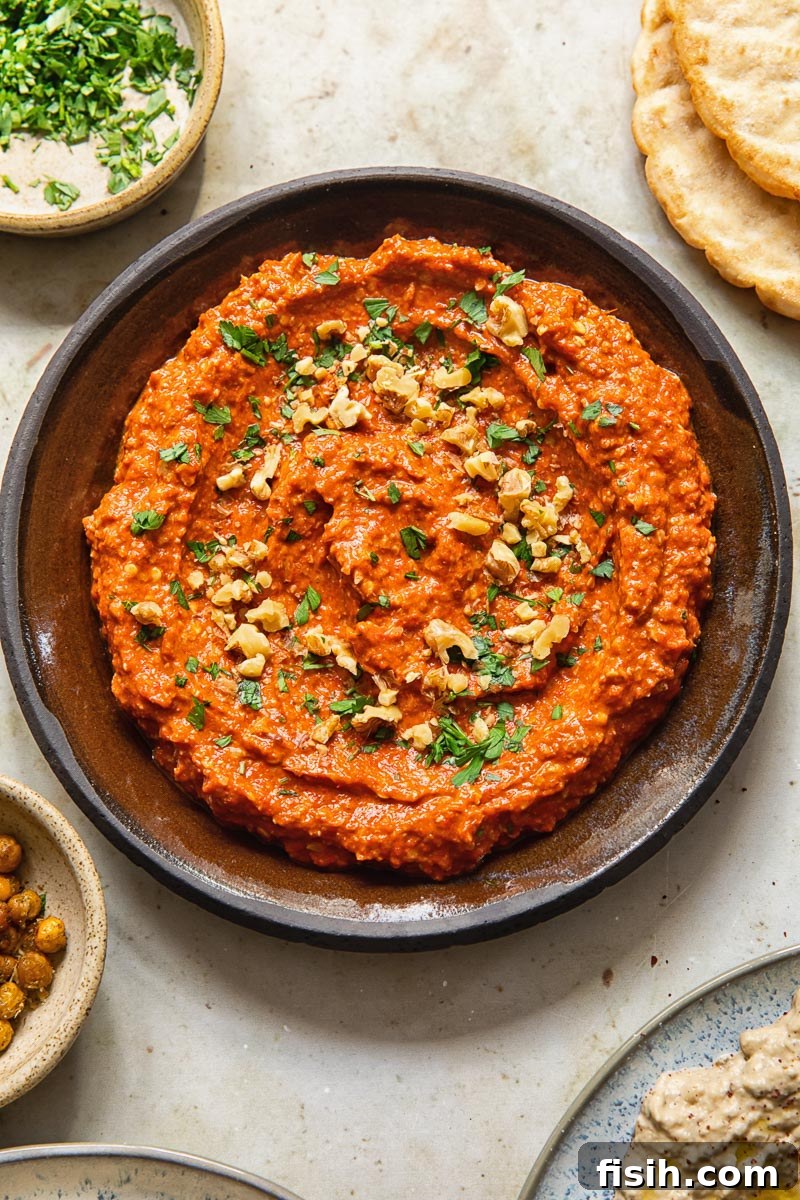
Originating from Aleppo, Syria, Muhammara stands as a proud member of the Levantine mezze family, distinguished by its striking color and robust flavor. Unlike its paler and creamier cousins like Baba Ganoush and hummus, Muhammara bursts onto the Middle Eastern table with an unmistakable splash of vibrant crimson. Its name, derived from the Arabic word for ‘red,’ perfectly encapsulates its bold hue, which is as inviting as its taste. This exquisite spread is a testament to the region’s rich culinary heritage, showcasing a masterful balance of sweet, smoky, and earthy notes.
The essence of Muhammara lies in its core ingredients: beautifully roasted red peppers, pungent garlic, and earthy walnuts. While this combination might sound vaguely familiar, perhaps echoing the Spanish Romesco sauce, the two distinct dips are set apart by their signature nut. Muhammara proudly features walnuts, which contribute a deep, slightly bitter richness and a wonderful texture, whereas Romesco typically uses almonds. Both sauces share a remarkable ability to enhance a variety of dishes, tasting incredible when served over firm white fish, grilled vegetables, or simply as a dipping accompaniment. The inclusion of walnuts in Muhammara also adds a nutritional boost, packing in healthy fats and essential nutrients.
Beyond its core components, Muhammara often includes a blend of aromatic spices like cumin, a touch of breadcrumbs for body, and a hint of pomegranate molasses for a unique sweet and sour tang. This careful combination of ingredients creates a multi-layered flavor profile that is both comforting and exotic, making it a beloved dish across the Middle East and increasingly, around the world.
Crafting Muhammara: A Step-by-Step Guide to Perfection
Creating authentic Muhammara, like many traditional dips, begins with mastering the art of roasting. While some purists might painstakingly char peppers and garlic over an open flame to achieve a truly authentic ashy flavor, modern kitchens often opt for the convenience and consistency of oven roasting. Either method yields delicious results, but the oven offers a simpler approach without compromising on flavor development.
The Roasting Process: Building the Flavor Foundation
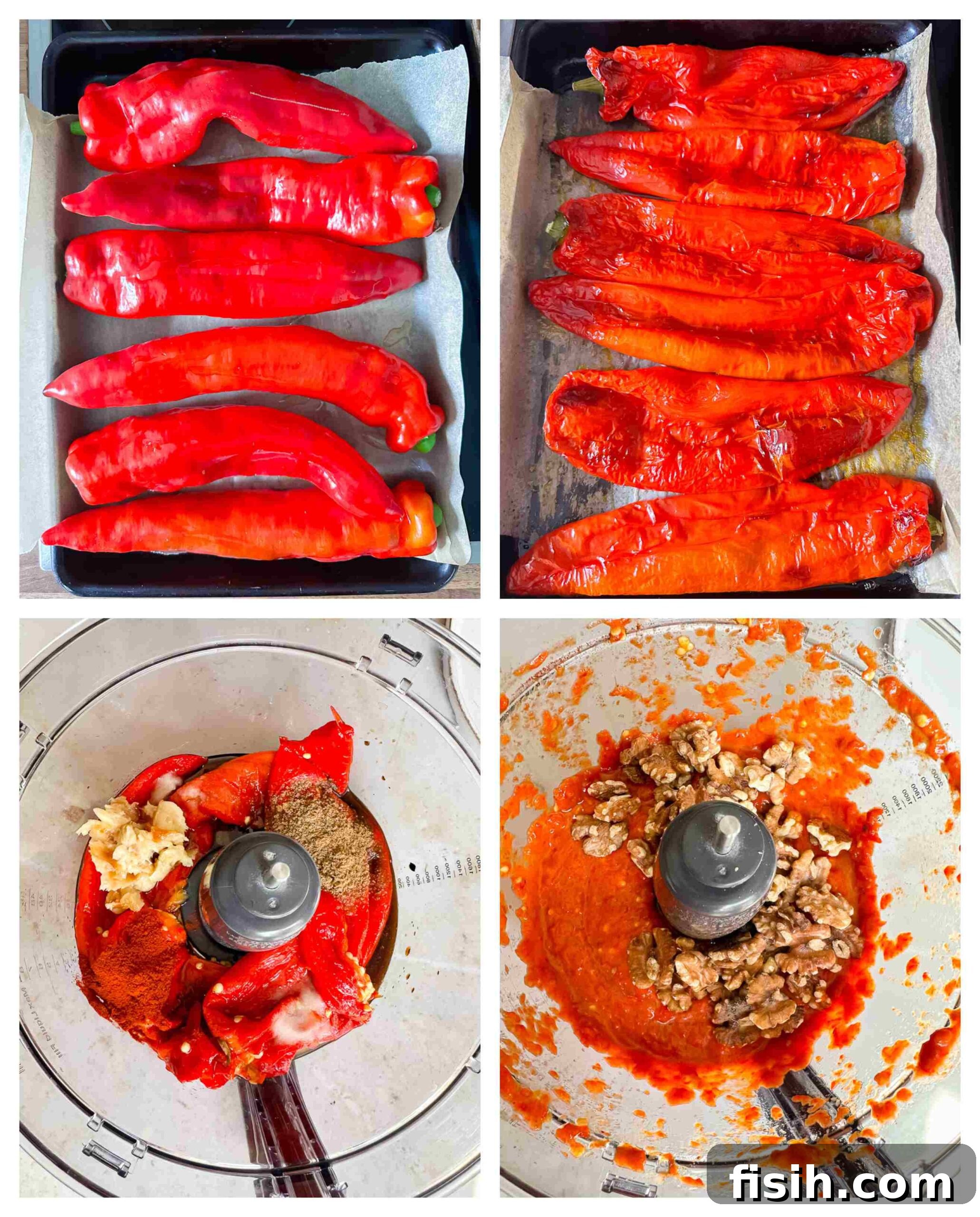
To start, arrange whole red peppers on a baking sheet. Drizzle them generously with olive oil – this helps the skins blister and the peppers soften beautifully. For the garlic, taking a whole bulb, slicing off the very top to expose the cloves, and wrapping it in foil before drizzling with oil ensures it roasts to a sweet, buttery perfection without burning. Roast these together in a preheated oven for approximately 40 minutes, or until the peppers are deeply softened, slightly collapsed, and the garlic cloves are wonderfully tender. The aroma filling your kitchen will be a promise of the deliciousness to come.
Cooling and Preparation: The Patience Pays Off
Once roasted, the next crucial step is allowing the peppers and garlic to cool completely. This not only prevents singed fingers but also allows the peppers to “steam” in their own heat if covered with a kitchen towel, making the peeling process much easier. When cool enough to handle, deseed the peppers. You can choose to peel them for a smoother dip, or leave the skins on for a more rustic texture and an extra layer of smoky flavor. Carefully squeeze the sweet, sticky garlic cloves from their papery skins. This roasted garlic is profoundly different from raw garlic; it’s mellow, sweet, and incredibly aromatic.
Blending and Finishing: Achieving the Perfect Texture
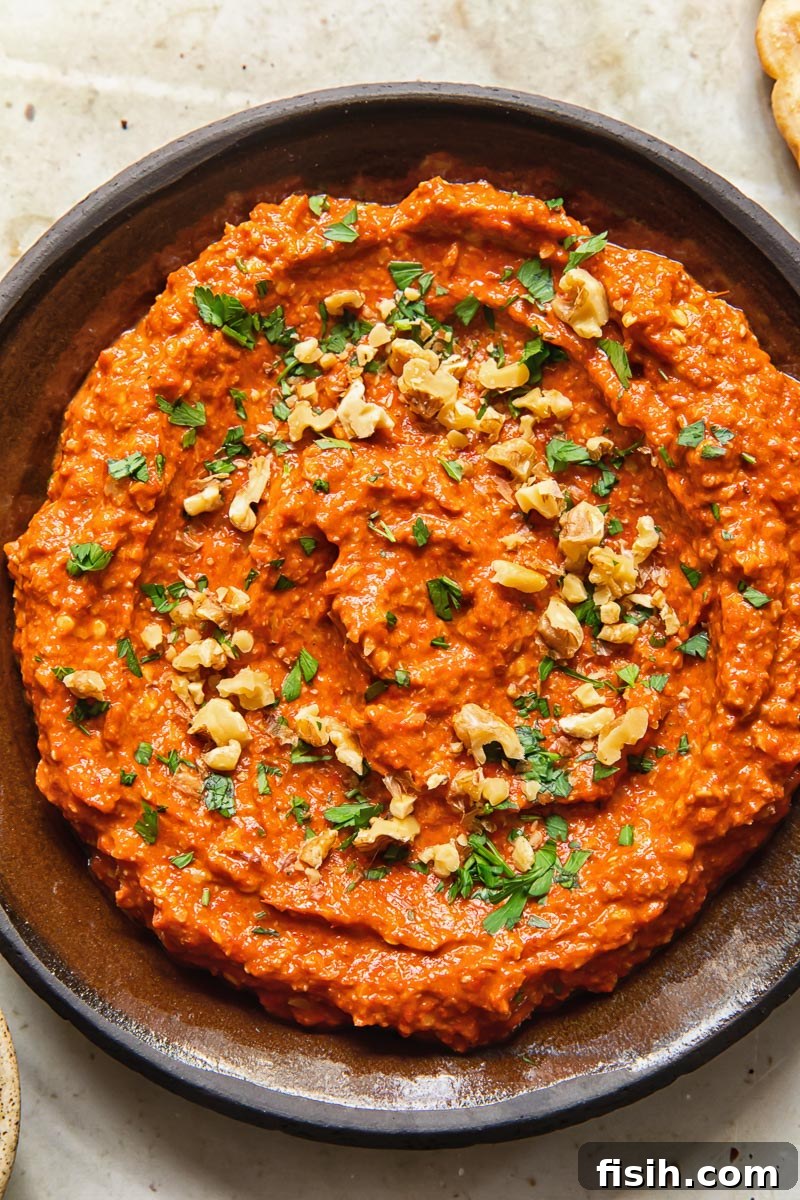
Combine the prepared roasted red peppers, garlic, and the remaining ingredients (spices, olive oil, vinegar) into a food processor. Pulse until the mixture is well blended and reaches a smooth, creamy consistency. Meanwhile, toast your walnuts in a dry frying pan over low heat for about 5 minutes, stirring frequently. This step is paramount as toasting significantly enhances their fragrance and deepens their nutty flavor, while also reducing any raw bitterness. Add these toasted walnuts to the food processor and pulse briefly. The goal here is not to create a completely smooth paste but to retain some textural integrity from the walnuts, giving the Muhammara a delightful chew. This balance of smooth and slightly chunky is characteristic of a truly exceptional Muhammara.
Serving Muhammara: Versatility for Every Occasion
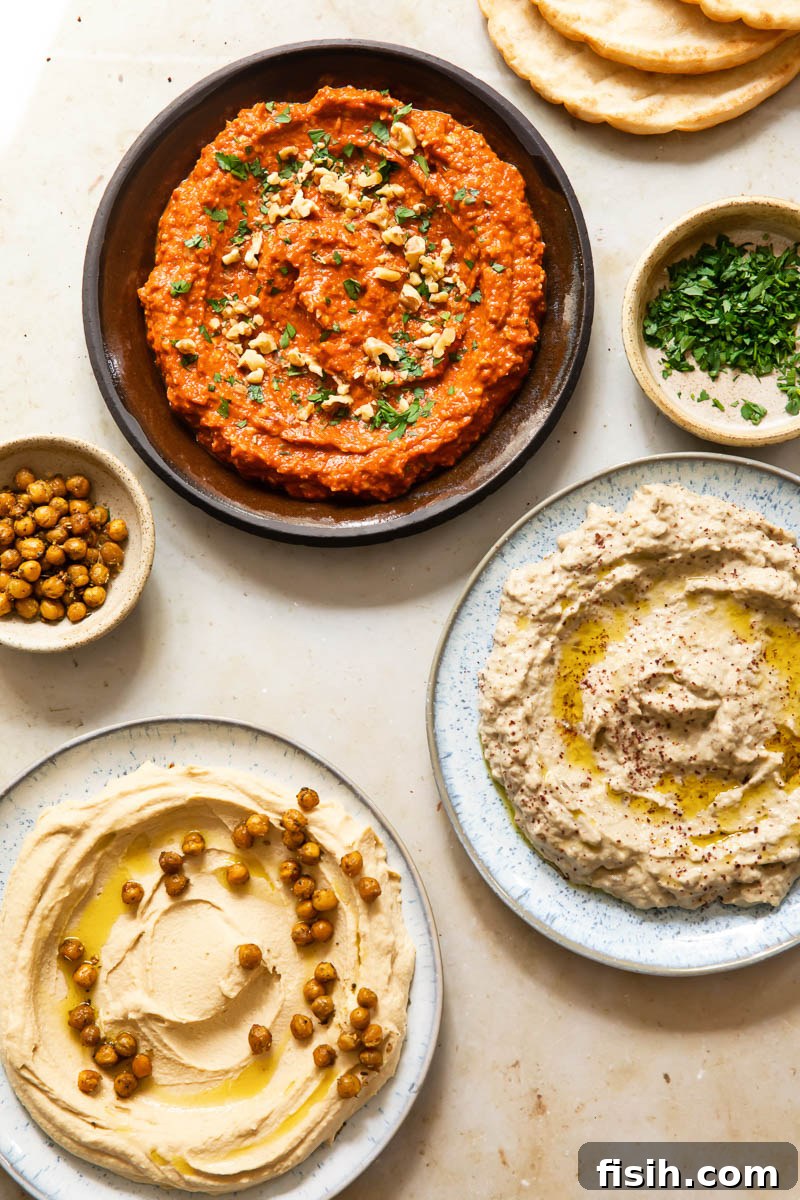
There’s an undeniable allure to a table laden with a vibrant mezze spread. Whether you’re arranging a meticulously curated display or simply serving an impromptu snack, Muhammara transforms the simplest setup into a work of art. Its glossy, deep red appearance makes it a visual centerpiece, inviting diners to dip and discover its exquisite flavors.
For a quintessential Middle Eastern experience, pile the table high with warm, freshly baked flatbreads, alongside mounds of glistening olives, steaming grilled meats, crisp, herb-rich salads, and of course, a selection of other delectable dips like hummus and baba ganoush. This communal style of dining encourages everyone to help themselves, fostering a joyful and interactive mealtime.
Beyond the mezze platter, Muhammara shines as a versatile accompaniment to main courses. It’s a fantastic side dish next to richly flavored mains such as Spicy Lemon Za’atar Chicken or the traditional Chicken Musakhan, offering a bright counterpoint to the savory notes. Serve it with extra flatbreads to complete the spread, allowing guests to scoop up every last drop of its deliciousness.
Creative Ways to Enjoy Muhammara:
- Spread it: Use it as a vibrant and healthy sandwich or wrap spread instead of mayonnaise or mustard. It pairs wonderfully with roasted vegetables, grilled halloumi, or lean meats.
- Sauce it: Thin it slightly with a little extra olive oil or water and toss with pasta for a quick and flavorful vegetarian meal. It also makes an excellent base for pizza or a topping for bruschetta.
- Dress it: Whisk a spoonful into your favorite vinaigrette for a rich, smoky salad dressing that will elevate any green salad.
- Enhance eggs: A dollop of Muhammara alongside scrambled eggs or a fried egg makes for a surprisingly delicious and flavorful breakfast or brunch.
- Beyond savory: While primarily savory, its slight sweetness can even make it a unique addition to certain sweet and savory pairings, like a sophisticated chutney with sharp cheeses.
Expert Tips for the Perfect Muhammara
- Choosing Your Peppers: The foundation of exceptional Muhammara lies in the quality of your red peppers. Opt for sweet, ripe varieties, such as pointed red peppers, for a dip that is naturally juicy and vibrant. These often have a thinner skin and are less watery than standard bell peppers once cooked, resulting in a more concentrated flavor and richer crimson color. However, classic bell peppers will still yield a delicious result if that’s what’s readily available. For an intensified smoky flavor, you can also experiment with lightly charring the peppers directly over a gas flame or under the broiler before roasting, then steaming them in a sealed bag or covered bowl to loosen their skins.
- Spicing it Right: Traditional Muhammara recipes often feature Aleppo pepper, a moderately hot chili pepper from Syria renowned for its fruity, tangy, and slightly salty notes. If Aleppo pepper is not in your pantry, don’t fret! You can achieve a wonderful flavor balance by using smoked paprika, which provides a beautiful depth and warmth without overwhelming heat. For those who crave a bit more kick, a combination of smoked paprika and a pinch of chili flakes can mimic the gentle warmth of Aleppo pepper. A teaspoon of ground cumin is also highly recommended, as its earthy warmth complements the sweetness of the peppers and the richness of the walnuts beautifully. Feel free to adjust the spices to suit your personal preference for heat and aroma.
- Garlic: Roasted vs. Raw: Roasting the garlic alongside the peppers is an effortless step that makes a significant difference. Roasting a whole bulb, with its top sliced off and wrapped in foil, allows the cloves to caramelize and become incredibly sweet and mellow, transforming into a spreadable, buttery consistency. This distinct sweetness and smoothness are unparalleled. While you *could* substitute with 2 cloves of raw minced garlic for convenience, be prepared for a much sharper, more pungent flavor profile. The sweet, smooth taste of baked garlic truly elevates Muhammara to another level.
- Achieving the Ideal Texture: When blending, remember that Muhammara traditionally has a slightly coarse, rustic texture, not a completely smooth puree. Pulse the ingredients in your food processor rather than continuously blending. This ensures the walnuts retain some of their bite and the peppers don’t become overly smooth. The contrast between the creamy base and the discernible bits of walnut is a signature characteristic of this delightful dip.
- Balancing Flavors: The inclusion of sherry vinegar or balsamic vinegar is crucial for balancing the richness and sweetness of the roasted peppers and walnuts. It provides a bright tang that cuts through the other flavors, preventing the dip from tasting too heavy. A touch of pomegranate molasses, if available, can further enhance this sweet-sour dynamic, adding an authentic Middle Eastern depth. Taste and adjust as you go, adding more vinegar, salt, or spices until the flavors sing.
Storage and Making Ahead: Muhammara’s Enduring Appeal
One of the many joys of Muhammara, much like other mezze dips, is its ability to be prepared in advance. In fact, making it a day ahead can actually enhance its flavor profile as the ingredients meld and deepen, especially thanks to the roasted garlic. This makes it an ideal choice for entertaining, allowing you to focus on other preparations on the day of your event.
To store, transfer your freshly made Muhammara into an airtight container. When properly refrigerated, it will maintain its quality and vibrant taste for 4 to 5 days. While the flavors will continue to develop beautifully during this time, it’s worth noting that the toasted walnuts may lose some of their initial crispness after a couple of days. If you prefer a fresher crunch, you can toast a few extra walnuts and sprinkle them on top just before serving. If the dip appears a bit thick after refrigeration, simply stir in a tablespoon or two of fresh olive oil to restore its luscious consistency.
Freezing Muhammara:
For longer storage, Muhammara can also be frozen. Place it in a freezer-safe, airtight container, leaving a little headspace. It can be stored in the freezer for up to 2-3 months. Thaw overnight in the refrigerator before serving. You might find that the texture is slightly softer after thawing, and the walnuts will definitely lose their crispness. A quick stir and a drizzle of fresh olive oil will help revive it. If desired, you can even stir in a small amount of freshly toasted walnuts after thawing to bring back some of that textural contrast.
More Middle Eastern Recipes to Explore
If Muhammara has sparked your interest in the rich tapestry of Middle Eastern cuisine, consider exploring these other delightful recipes:
- Middle Eastern Fattoush Salad
- Chicken Musakhan
- Middle Eastern Salad Bowl
- Falafel Salad Bowl with Tabouleh and Hummus
Muhammara
Print Recipe
Ingredients
- 6 sweet red peppers, roasted
- 1 tbsp olive oil
- 1 head garlic, roasted
- 1 tsp smoked paprika
- 2 tsp sherry vinegar or balsamic vinegar
- 2 tbsp olive oil
- 1 tsp ground cumin
- 100g/3.5 oz toasted walnuts
- 1/2 tsp salt
Instructions
-
Preheat your oven to 200°C/400°F. Arrange the whole red bell peppers on a roasting pan and drizzle them evenly with 1 tablespoon of olive oil. Take a large head of garlic, slice off the very top to expose the cloves, place it on a sheet of aluminum foil, and drizzle with a little more olive oil. Wrap the garlic head securely in the foil and place it on the same roasting pan as the peppers. Roast in the preheated oven for approximately 40 minutes, or until the peppers are significantly softened and collapsed, and the garlic cloves are very tender and fragrant.
-
Carefully remove the pan from the oven. To facilitate peeling, cover the roasted peppers with a clean kitchen towel and allow them to cool completely. Once the peppers are cool enough to handle, remove the seeds. You can choose to peel the skins for a smoother texture or leave them on for a more rustic feel and additional smoky notes. Once the garlic is cool enough, gently squeeze the softened cloves out of their peels.
-
While the peppers and garlic are cooling, toast the walnuts. Place them in a dry frying pan over low heat for about 5 minutes, stirring frequently to prevent burning. Toasting enhances their flavor and aroma significantly. Once lightly golden and fragrant, remove them from the pan and allow them to cool.
-
In a food processor, combine the roasted red peppers, smoked paprika, sherry vinegar (or balsamic vinegar), 2 tablespoons of olive oil, ground cumin, salt, and the roasted garlic cloves. Pulse the mixture until it is well blended and forms a relatively smooth paste.
-
Add the cooled, toasted walnuts to the food processor. Pulse briefly, just a few times, until the walnuts are incorporated and the mixture forms a rich paste while still retaining some textural bits from the walnuts. This creates the perfect balance of creamy and crunchy. Serve immediately, or refrigerate for later enjoyment.
Nutrition
Nutrition information is automatically calculated, so should only be used as an approximation.
Tried this recipe?Let us know how it was!