
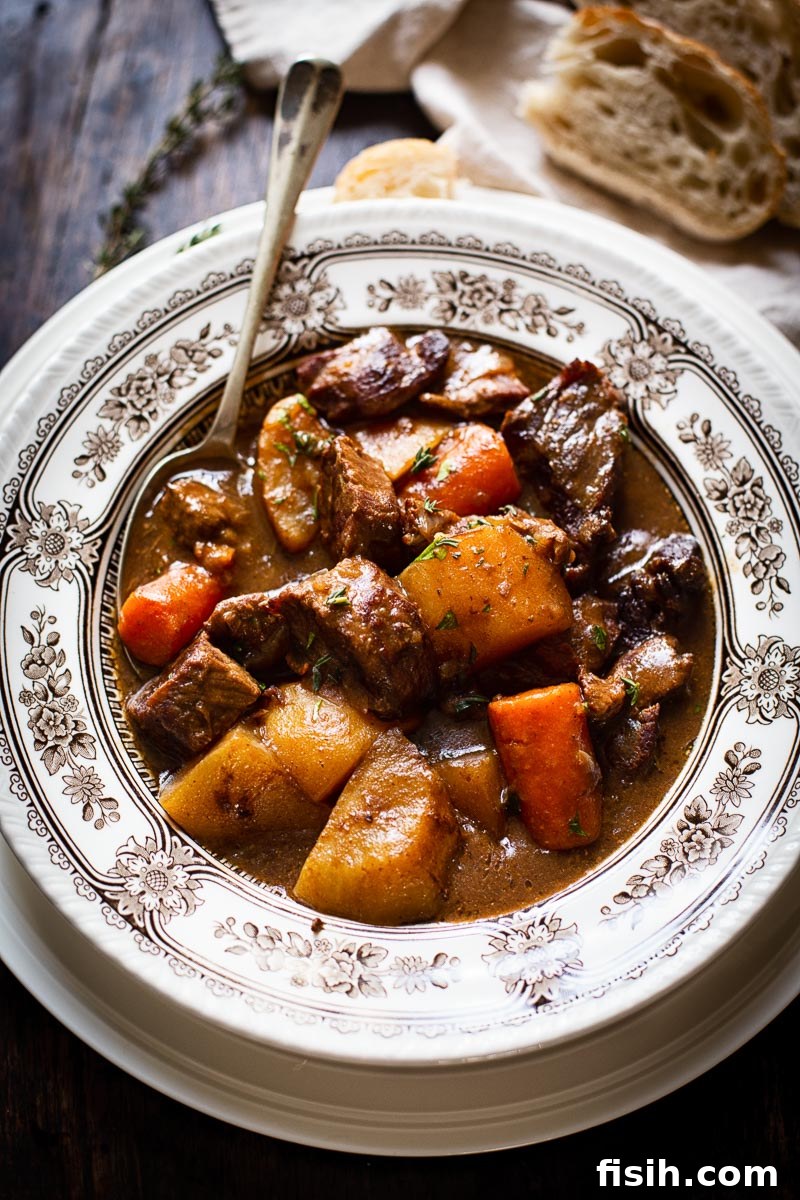
Stew season is officially here, and with it comes the irresistible aroma of rich, slow-cooked goodness! My traditional Irish Beef Stew recipe is a testament to how the simplest pantry staples can transform into a dish of profound complexity and unparalleled tenderness. Prepare for melt-in-your-mouth beef and a gravy so flavourful it will leave you craving more. Curious about my secret ingredient? Keep reading to uncover the magic that elevates this humble stew to extraordinary heights.
While this recipe transports you directly to the Emerald Isle, the world of stews is vast and wonderful. Explore other global culinary delights with our Italian Beef Stew or the classic French Beef Bourguignon. Each offers a unique journey for your palate, proving the versatile power of a good stew pot.
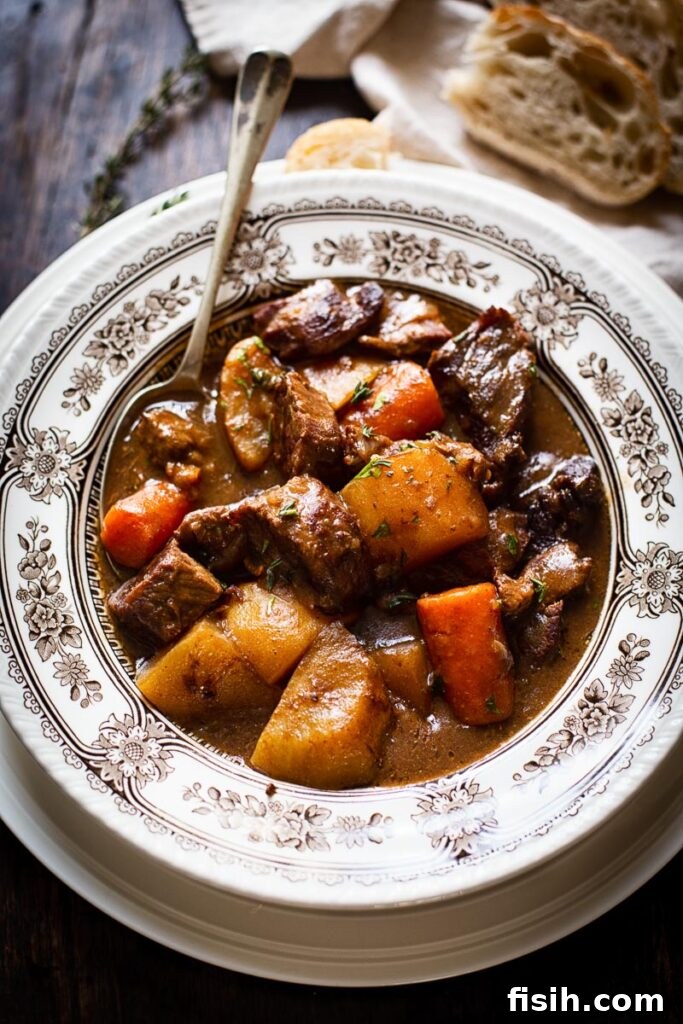
Irish Beef Stew: The Ultimate Comfort Food with a Secret Ingredient
There’s something uniquely comforting about a hearty stew. Not only does it deliver incredible taste, filling your home with an inviting fragrance, but it’s also wonderfully forgiving to prepare. This makes it an ideal choice for busy weeknights or relaxed weekend cooking. As the temperatures dip, a good stew offers warmth from the inside out, making it a perfect, soul-satisfying meal for any household looking for true comfort food.
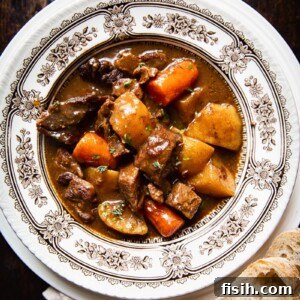
Our Irish Beef Stew is a culinary masterpiece, celebrated for its robust flavour and tender components. It’s generously packed with succulent beef, wholesome potatoes, and vibrant vegetables – a combination that satisfies deep cravings and leaves everyone feeling nourished and content. But what truly sets this recipe apart? It’s the subtle addition of a particular ingredient that creates an unforgettable depth of flavour, transforming simple components into a truly gourmet experience.
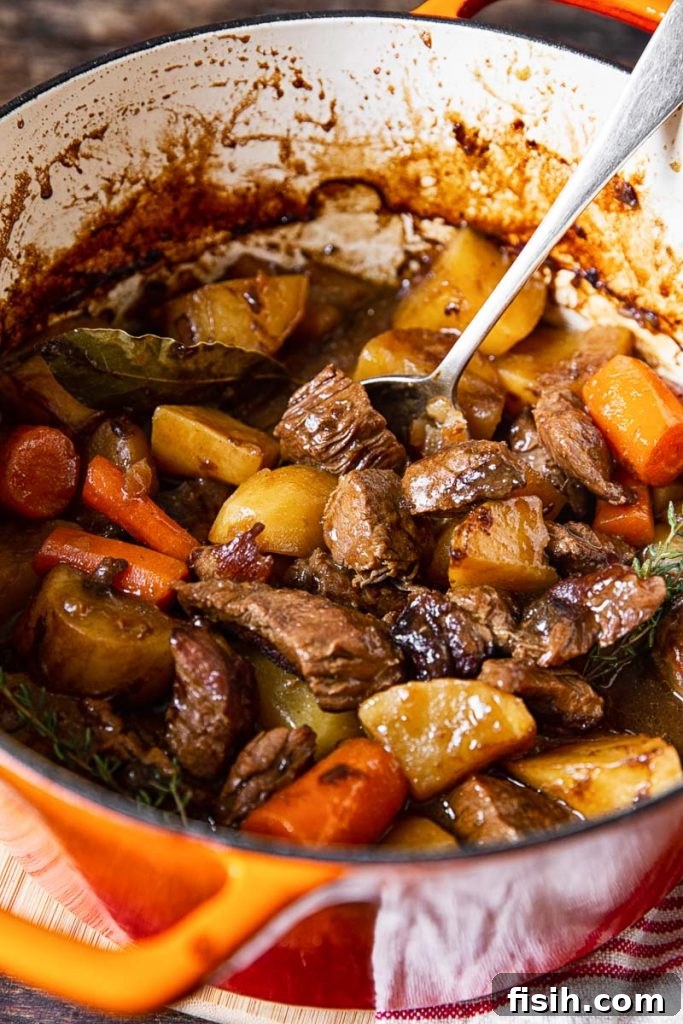
The Signature Flavour: Irish Beef and Guinness Stew
Like many of the world’s most beloved stews, this recipe leverages the power of time. Slow cooking is the cornerstone, allowing the beef to gradually tenderize to perfection and the diverse flavours to meld into a rich, wholesome symphony. This unhurried process is key to achieving that incredibly deep, satisfying taste that defines exceptional stews.
However, there’s another crucial element that contributes significantly to the remarkable flavour profile of this dish: Guinness stout. This iconic Irish dry stout isn’t just for drinking; it’s a culinary game-changer. By simply adding a can of Guinness to your pot, you infuse the stew with a dark, malty richness and a subtle bitterness that beautifully complements the beef and vegetables, creating an intensely robust and warming meal.
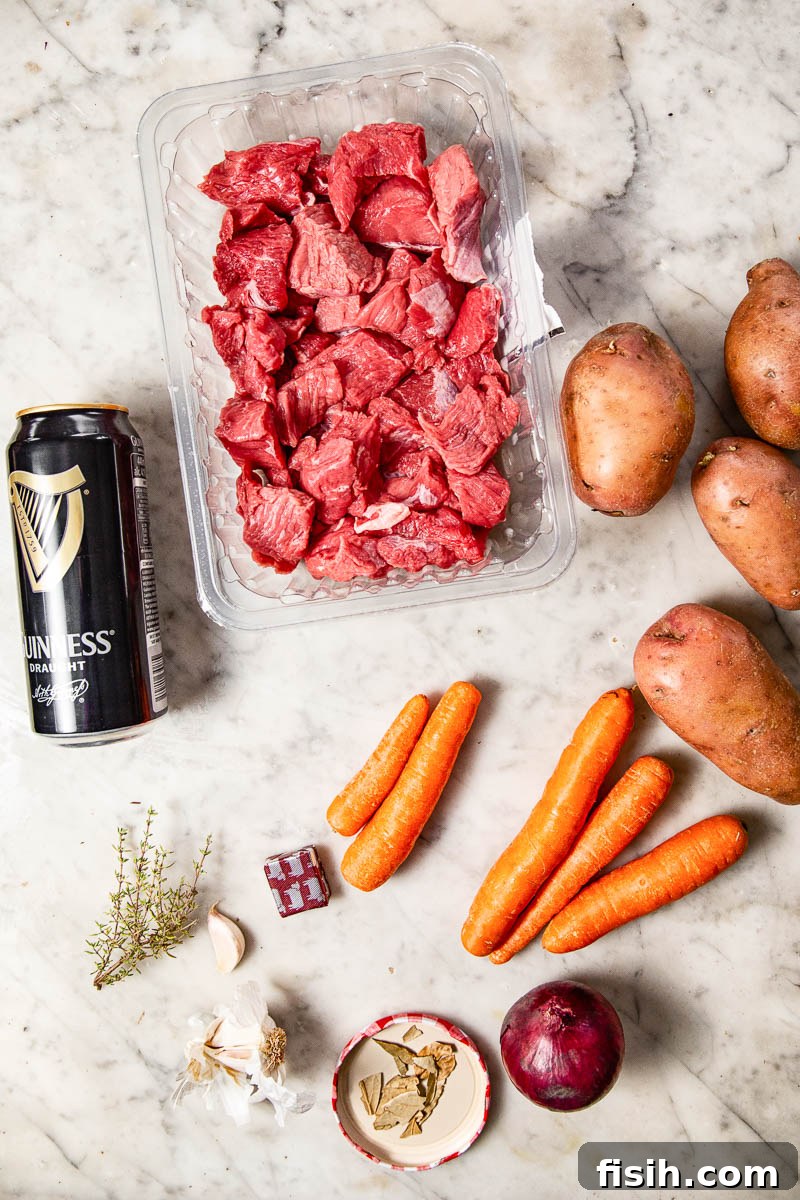
As you’ll observe from the ingredient photos, my Irish Beef Stew relies on surprisingly humble, readily available items. So, how do we transform these everyday ingredients into a stew that’s anything but bland or forgettable? The secret lies in a few expert culinary tricks that prevent dullness. While I often emphasize the importance of quality ingredients, for this particular stew, success truly hinges on meticulous slow cooking and the proper application of a couple of fundamental cooking techniques. These methods are what unlock the hidden depths of flavour and texture from simple components.
Selecting Your Ingredients for an Authentic Irish Stew
The foundation of any great stew begins with its ingredients. For a traditional Irish Beef Stew, the usual suspects are beef, onions, carrots, celery, and potatoes. These are common, affordable staples found in most kitchens, making this a comforting and accessible meal for many families.
Choosing the Right Beef Cut for Maximum Tenderness
While beef can often be on the pricier side, one of the brilliant aspects of stew is its ability to transform cheaper, tougher cuts of meat into incredibly tender, luscious bites. Unlike dishes like Beef Stroganoff, which demands premium steak, stewing beef thrives on long, slow cooking. I highly recommend using stewing beef readily available in supermarkets, or a beef shoulder roast. I often find it more economical to purchase a beef shoulder roast and cut it into bite-sized chunks at home, ensuring both quality and value.
For those seeking an even more authentic experience, traditional Irish stew is often made with lamb. If you prefer the distinct flavour of lamb, feel free to substitute it for beef in this recipe.
The Essential Vegetables: Potatoes, Carrots, Onions & More
The combination of carrots and potatoes not only adds essential nutrients and bulk to the stew but also contributes to its classic texture and flavour. For potatoes, choose waxy varieties like red-skinned potatoes. These hold their shape beautifully during extended cooking, preventing them from disintegrating and making your stew mushy. Onions and celery provide aromatic depth and sweetness, building layers of flavour from the very beginning.
The “Secret” to Richness: Beyond Just Guinness
Beyond the primary ingredients, simple seasonings like salt, pepper, and fresh thyme are vital. A touch of flour helps to thicken the stew, creating that wonderfully rich, coating gravy. And of course, the star “secret ingredient” – a can of Guinness or another quality stout – is indispensable for its unique malty, slightly bitter, and deeply savoury notes that are synonymous with an authentic Irish Beef Stew.
Mastering the Art of Slow Cooking for Tender Perfection
The transformation of inexpensive, tougher beef cuts into tender, succulent morsels is purely a function of extended cooking time. Beef stews, and this recipe is no exception, achieve their peak deliciousness when cooked “low and slow.” This patient approach allows connective tissues in the meat to break down, resulting in that desirable melt-in-your-mouth texture and a deeply flavourful broth.
This versatile Irish Beef Stew can be prepared using several methods, each offering convenience and excellent results:
The Dutch Oven: A Classic Choice
As demonstrated in this recipe, a heavy-bottomed Dutch oven or cast iron casserole pot is an excellent choice. Its ability to retain and distribute heat evenly is perfect for browning ingredients on the stovetop and then transferring the stew to the oven for long, gentle cooking. This method yields a consistently tender stew with rich, concentrated flavours.
Slow Cooker Adaptation: Effortless Excellence
For maximum convenience, the slow cooker is an invaluable tool. It allows you to set it and forget it, slowly simmering the stew to perfection over several hours while you go about your day. To adapt this recipe for a slow cooker, follow the initial steps of browning the beef and sautéing the onions on the stovetop for flavour development. Then, transfer all ingredients to your slow cooker, adding carrots and potatoes, and cook on high for 4 hours or on low for 8 hours. This method ensures wonderfully tender results with minimal hands-on time.
Pressure Cooker Speed: Flavor in a Fraction of the Time
If time is of the essence, a pressure cooker like an Instant Pot can significantly reduce cooking time without sacrificing flavour. Again, begin by browning the beef and cooking the onions to build a robust flavour base. Then, combine all ingredients in the pressure cooker, adding carrots and potatoes, and cook on Manual Mode for approximately 45 minutes. The high pressure quickly tenderizes the meat and infuses the flavours efficiently.
Crucial Cooking Techniques: Browning and Deglazing
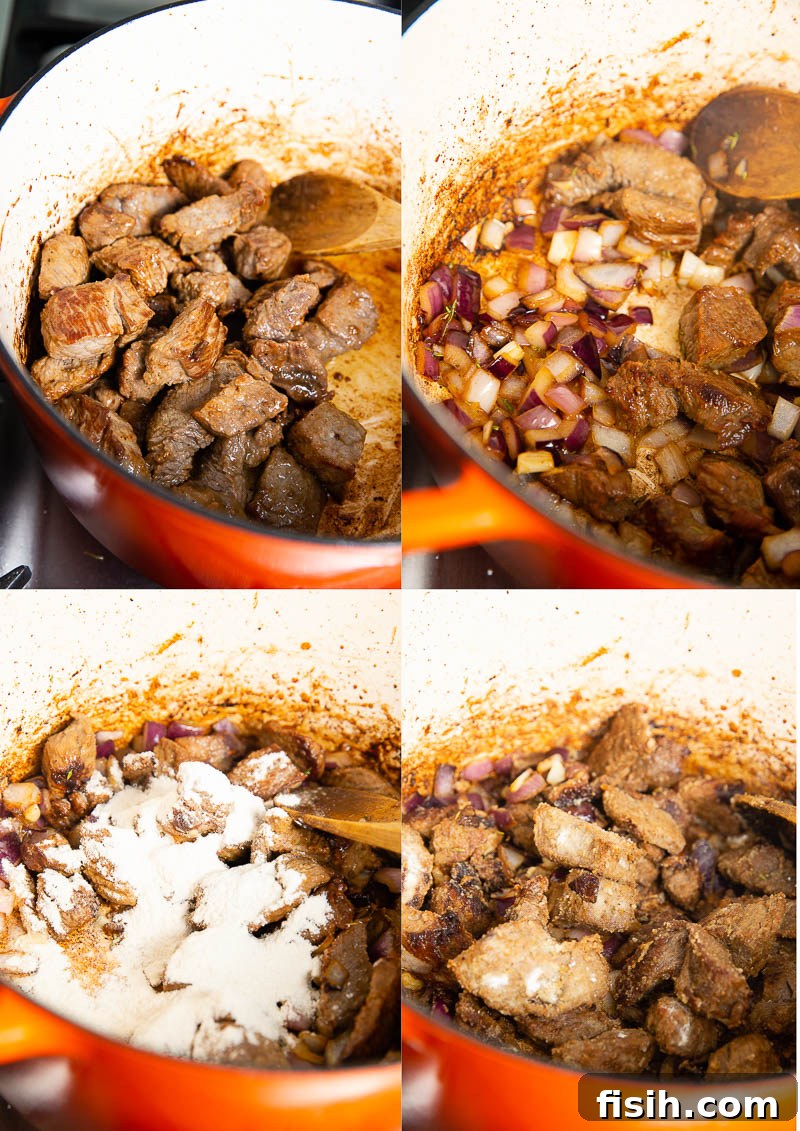
Regardless of the cooking method you choose, two initial steps are critical for achieving a rich and flavourful stew: browning the beef and properly cooking the onions. These steps are non-negotiable for developing deep, complex flavours. Browning the beef creates a rich, caramelized crust, adding savoury depth through the Maillard reaction. Slowly cooking the onions until they are soft and translucent sweetens the base of the stew, building essential aromatic layers. Taking the time for these foundational steps ensures that your finished Irish Beef Stew will be incredibly delicious and satisfying.
Expert Tips for an Unforgettable Irish Beef Stew
- Choose the Right Cut: Opt for stewing beef or a beef shoulder roast. These cuts are designed for slow cooking and become incredibly tender, absorbing all the wonderful flavours of the stew.
- Select Waxy Potatoes: Use waxy potato varieties, such as red-skinned potatoes. Their firm texture ensures they hold their shape beautifully throughout the long cooking process, preventing them from becoming mushy in your stew.
- Master the Art of Browning: This step is paramount. Brown the beef chunks thoroughly until they develop a beautiful golden-brown crust, as shown in the process photos. This caramelization (the Maillard reaction) is responsible for building incredible depth and richness, forming the flavour foundation of your stew. Do this in batches to avoid overcrowding the pan, which would steam the meat instead of browning it.
- Patiently Cook the Onions: Do not rush this stage! I frequently observe this step being overlooked, with onions merely stirred for a minute before liquids are added. Onions require at least 8-10 minutes of gentle cooking over low heat to fully release their natural sugars and transform from crisp to soft, sweet, and luscious. Rushing them or cooking on high heat can lead to bitterness. This patience pays off immensely in the final flavour.
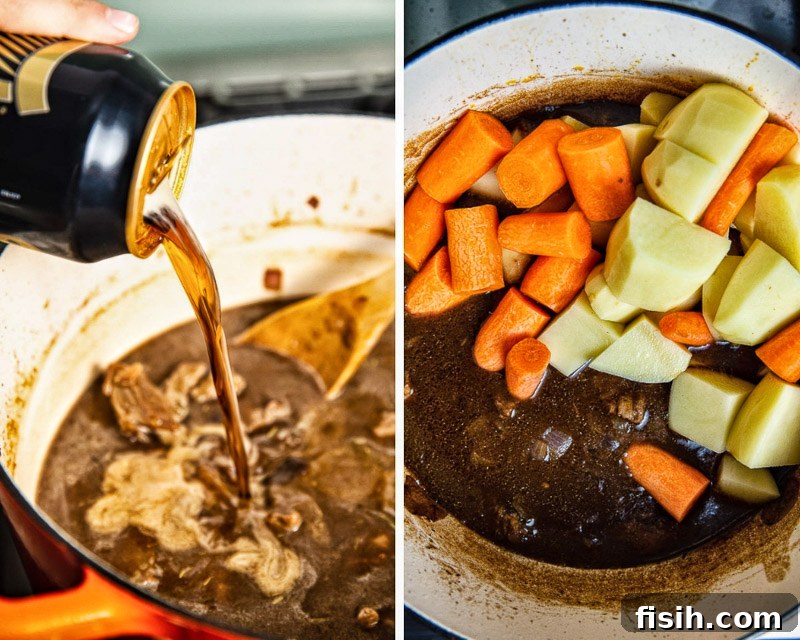
- Don’t Skip Deglazing: After browning the beef and cooking the onions, add your liquid (water, stock, or Guinness) and use a wooden spoon to scrape all the flavourful brown bits from the bottom of the pot. This process, known as deglazing, incorporates these concentrated flavours back into the stew, adding another layer of complexity.
- Effortless Gluten-Free Adaptation: If you need a gluten-free version, simply substitute the all-purpose flour with an equal amount of cornstarch mixed with a small amount of cold water to create a slurry. Add this slurry towards the end of cooking to thicken the stew to your desired consistency.
- Balance the Seasoning: Taste and adjust seasonings throughout the cooking process, especially before the final simmer. The long cooking time can mellow flavours, so a final check ensures perfect balance.
Serving Your Hearty Irish Stew: Perfect Pairings
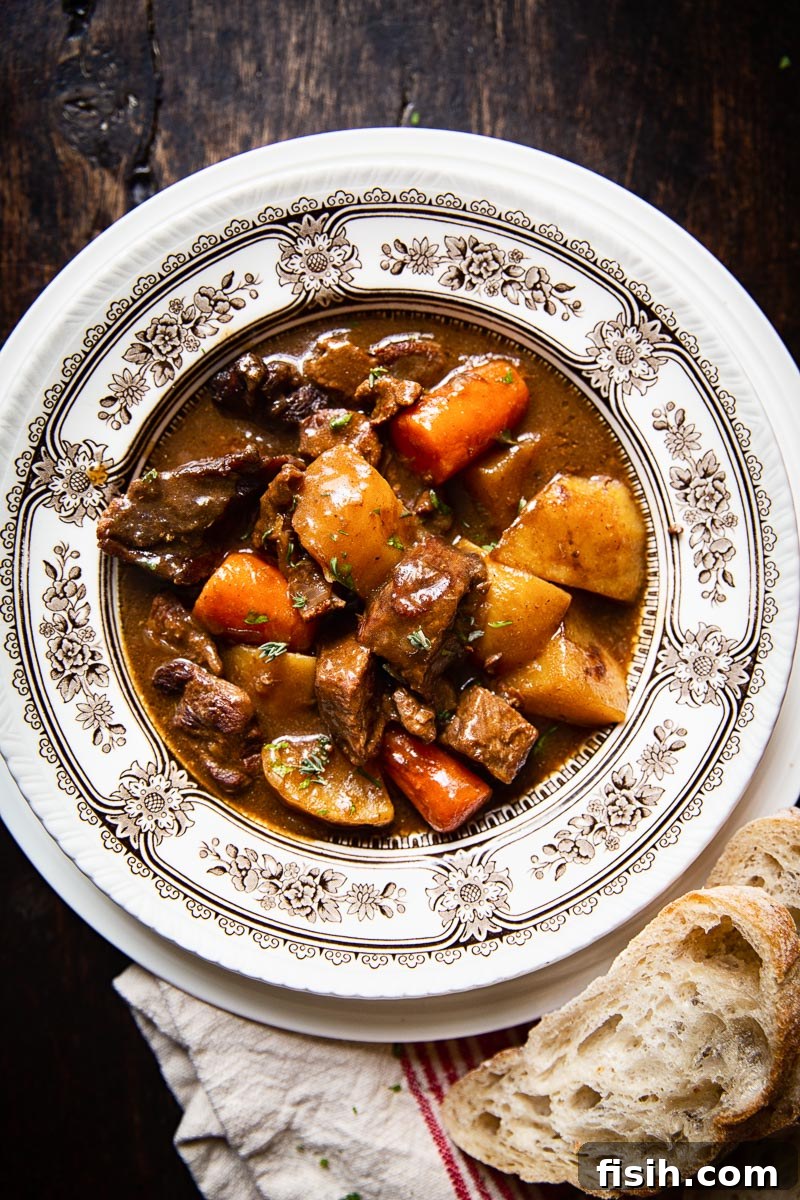
An Irish Beef Stew is a robust and complete meal on its own, designed to provide lasting satisfaction. While it requires little else to make it a fulfilling dish, certain accompaniments elevate the experience and allow you to savour every last drop of that incredible gravy.
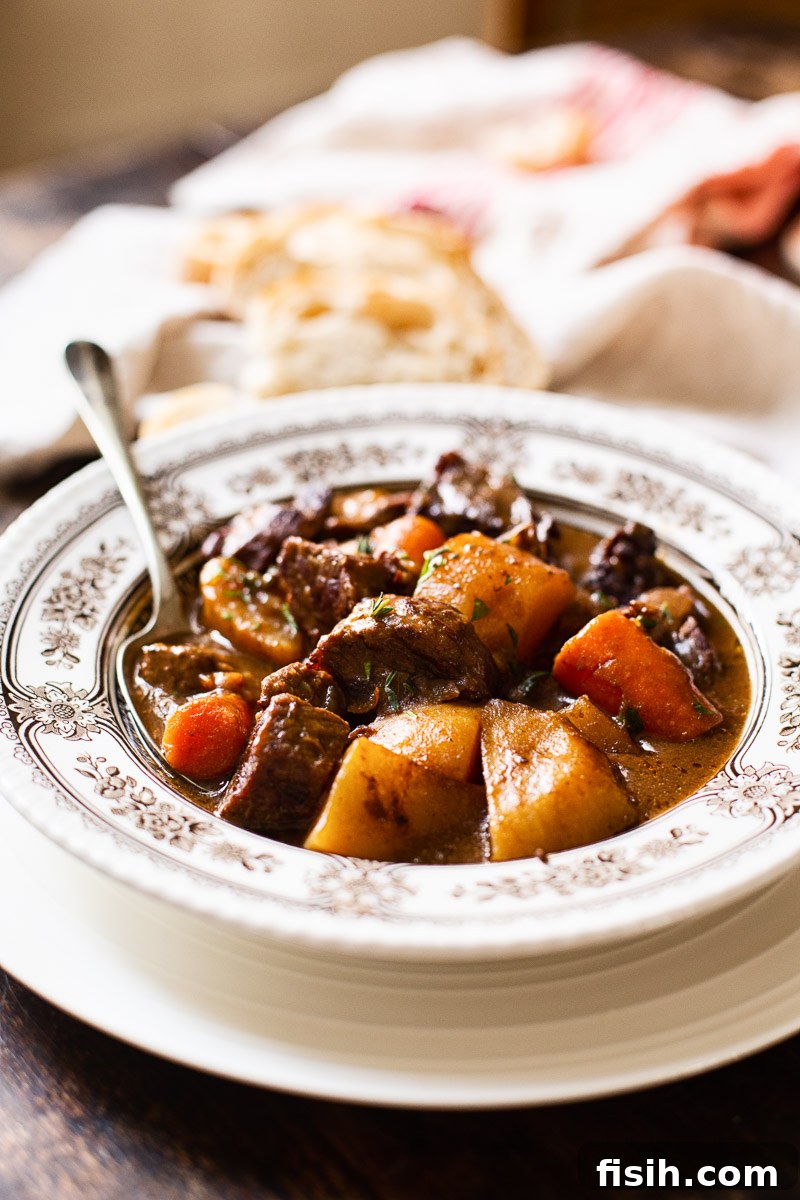
You’ll definitely want something to soak up all the rich, delicious juices at the bottom of your bowl. A generous chunk of warm, crusty bread is the perfect companion for this task. The contrast of the soft interior and crispy crust against the hearty stew is simply divine. To add a final flourish of freshness and a vibrant splash of colour, I always recommend sprinkling some freshly chopped parsley over the top just before serving. Its herbaceous notes brighten the rich flavours of the stew.
Traditional Irish Accompaniments for a Feast
If you’re aiming to transform this comforting meal into a true Irish feast, then embrace these classic pairings. Traditional Colcannon, a creamy mash of potatoes and cabbage (or kale), offers a delightful textural and flavour contrast. Alternatively, savoury Potato Farls, small flat potato cakes, provide another authentic and delicious way to enjoy your stew. Any of these choices will make your Irish Beef Stew dinner an even more memorable and authentically Irish culinary event.
Storing and Enjoying Leftovers: A Make-Ahead Marvel
Having a selection of delicious, homemade meals ready in the freezer is a fantastic strategy for those busy days when time for meal preparation is scarce. Hearty stews like this Irish Beef Stew are virtually perfect for this purpose, offering both convenience and sustained flavour.
This stew freezes exceptionally well, making it an ideal candidate for meal prepping. You can safely freeze it for up to 3 months, or store it in the refrigerator for 3-4 days. Always ensure you use a good airtight container to maintain freshness and prevent freezer burn.
To reheat, you can use a microwave for speed, but for the best results, gently warm the stew in a saucepan over low to medium heat on the stovetop. If the stew appears too thick after reheating, simply add a splash of water or beef stock to achieve your desired consistency. Leftover stew often tastes even better the next day, as the flavours have had more time to deepen and meld.
More Cold Weather Comfort Food Recipes to Try
- Beef in Truffled Cream Sauce
- Russian Sweet and Sour Beef Stew Solyanka
- Beef Goulash
- Pork Loin Steaks in Creamy Shallot and Mushroom Sauce
Rated 5 stars by 9 votes
Irish Beef Stew
Equipment
-
Cast iron Dutch oven
Ingredients
- 2 tbsp olive oil
- 1 tsp salt and pepper
- 700g / 1½ lbs stewing beef
- 1 medium onion
- 3-4 sprigs thyme, or 1 tsp dried thyme
- 1 clove garlic
- 2 tbsp flour
- 500ml / 2 cups water, or beef stock, divided
- 440ml / 1 can Guinness, or other stout
- 1 bay leaf
- 4 medium carrots
- 4 medium waxy potatoes such as red potatoes
Instructions
-
Preheat the oven to 160℃/300℉.
-
Heat the olive oil in a large Dutch oven/cast iron casserole pot. Season the beef chunks with salt and pepper, then brown them over medium heat until golden. Work in batches to avoid overcrowding the pot, which prevents proper browning.
-
Once beef is browned, move it to one side of the pot and reduce the heat. Add the chopped onions and thyme, cooking over low heat for 8-10 minutes until the onions are tender and translucent. Then, add the minced garlic and cook for a brief 30 seconds until fragrant.
-
Sprinkle the flour over the beef and stir to coat it thoroughly. Pour in the water or beef stock, and use a spatula to scrape the bottom of the pot, releasing any browned bits (deglazing) – this adds immense flavour. Add the Guinness and bay leaf(ves), then increase the heat and bring the mixture to a boil. Cover the pot with a lid and transfer it to the preheated oven to cook for 1 hour.
-
After one hour, carefully remove the pot from the oven. Add the carrots and potatoes, cut into large chunks, to the pot. Stir well and add an additional 250ml/1 cup of water. Cover again with the lid and continue cooking the stew in the oven for another 1.5 hours. Remove the lid for the final 10 minutes of cooking to allow the stew to thicken slightly.
-
Serve the hearty Irish Beef Stew warm, ideally with crusty bread, and garnished with fresh parsley for added flavour and colour.
Notes
Gluten-Free Substitutes
To thicken the stew without gluten, substitute flour with cornstarch dissolved in a small amount of cold water to create a slurry. Add this slurry towards the end of the cooking process, stirring until the stew reaches your desired consistency.
Alternative Cooking Methods
While the recipe card outlines the Dutch Oven method, this versatile Irish Beef Stew can also be prepared in a slow cooker or a pressure cooker for convenience.
You can also cook this stew on a stovetop over low heat; just ensure you stir it occasionally to prevent it from sticking to the bottom.
Slow Cooker Method
Follow the recipe instructions up to step 4 (browning beef, cooking onions, adding liquids and Guinness). Transfer the mixture to your slow cooker. Then add carrots and potatoes. Cook on high for 4 hours or on low for 8 hours, until beef is tender and vegetables are cooked through.
Pressure Cooker Method
Follow the recipe instructions up to step 4 (browning beef, cooking onions, adding liquids and Guinness). Transfer the mixture to your pressure cooker. Then add carrots and potatoes. Cook in Manual Mode for 45 minutes, then allow for a natural pressure release or quick release according to your cooker’s instructions.
Nutrition
Nutrition information is automatically calculated, so should only be used as an approximation.
Tried this recipe?
Let us know how it was!