
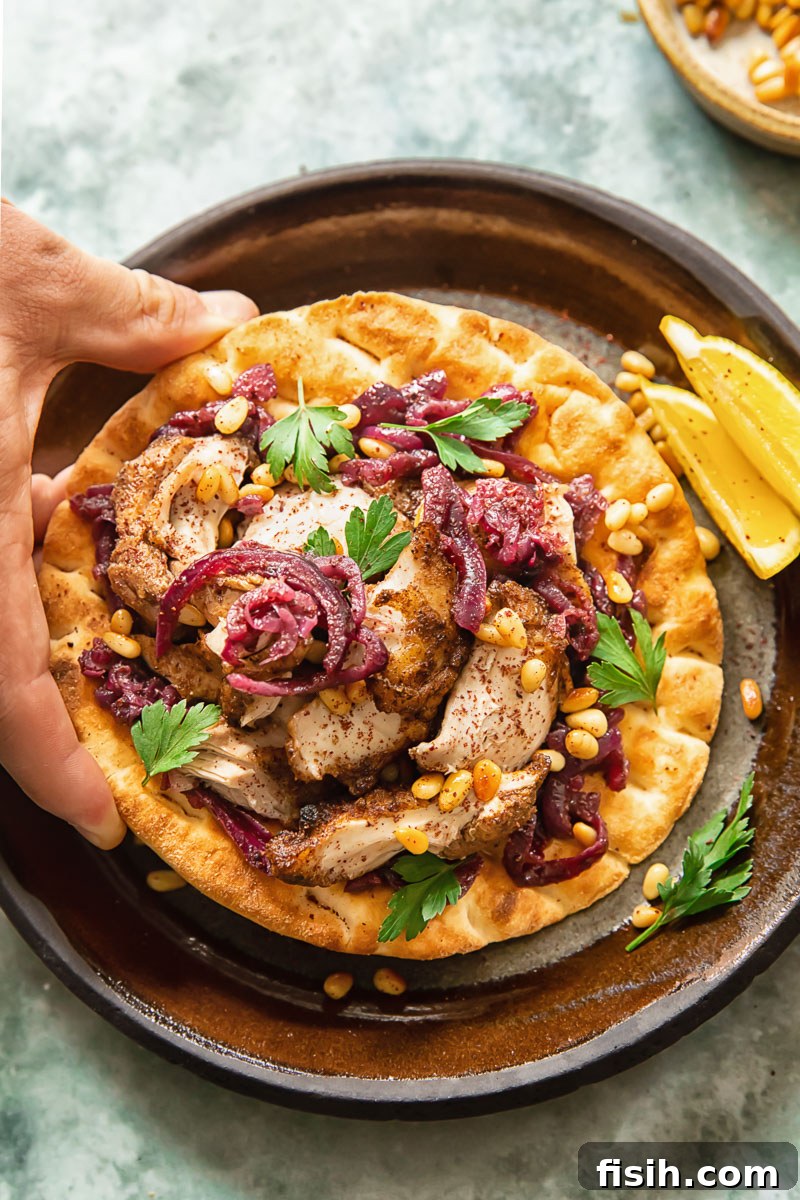
Transport your taste buds straight to the vibrant souks of the Middle East with Chicken Musakhan, a dish bursting with aromatic spices and rich, savory flavors. This healthy, homemade chicken and flatbread delight is poised to become your new favorite weekend “fakeaway.” Experience the warmth and complexity of traditional Palestinian cuisine right in your own kitchen.
Elevate your Middle Eastern feast by pairing this exquisite dish with other traditional favorites. Explore our recipes for creamy hummus with roasted za’atar chickpea topping, incredibly easy homemade flatbread, and a vibrant vegetarian falafel salad bowl for a truly authentic dining experience.

Inspiration often strikes in the most unexpected places, and for us, a recent adventure to Tel Aviv ignited a passion for exploring and recreating the incredible culinary landscape of the Middle East. The vibrant spices, fresh ingredients, and centuries-old traditions woven into every meal left an indelible impression.
It was during this journey that I first encountered Musakhan, the revered national dish of Palestine. One bite was all it took – I was utterly captivated by its mysterious charm and exotic flavors. The combination of tender chicken, richly spiced onions, and soft flatbread was unlike anything I had tasted before. I knew immediately I had to learn its secrets and bring this authentic taste home. And so, after much experimentation and passion, I am thrilled to share my rendition of this truly captivating dish with you.
What is Musakhan? The Heart of Palestinian Cuisine
If you consider yourself a connoisseur of Middle Eastern cuisine, you might believe you’ve sampled every chicken dish the region has to offer. Perhaps you can distinguish your chicken shish kebab from your succulent shawarma, or your simple grilled kebab. Yet, Musakhan stands apart, a jewel in the crown of Palestinian gastronomy that remains surprisingly lesser-known outside its homeland. It was certainly a delightful discovery for me, and I’m eager for you to experience its unique magic.
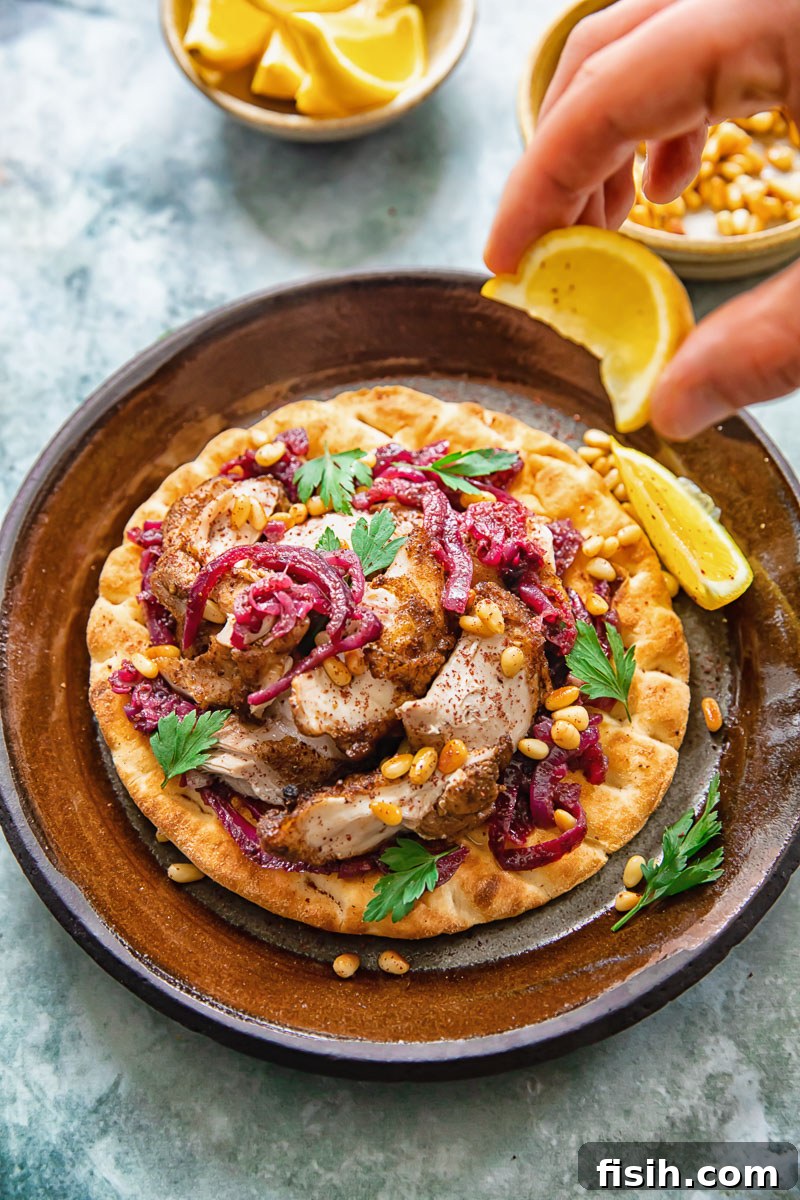
Musakhan, derived from the Arabic word meaning “heated,” is more than just a dish; it’s a celebration of Palestinian heritage and bounty. At its core, it features sumac-infused roasted chicken, sumptuously caramelized red onions, and toasted pine nuts, all generously layered upon a warm, sturdy flatbread known as taboon bread. Unlike the often-dry döner or simple chicken wraps, Musakhan offers an incredibly moist, deeply flavorful, and finger-licking experience. The secret lies in the generous use of premium olive oil, which not only tenderizes the onions to a silky consistency but also infuses the entire dish with a luscious richness. Each bite delivers a symphony of textures and tastes: the tender chicken, the sweet and tangy onions with a delightful snap from the pine nuts, all soaking into the absorbent flatbread below. It’s a truly authentic taste of Palestine, a dish meant to be savored and shared.
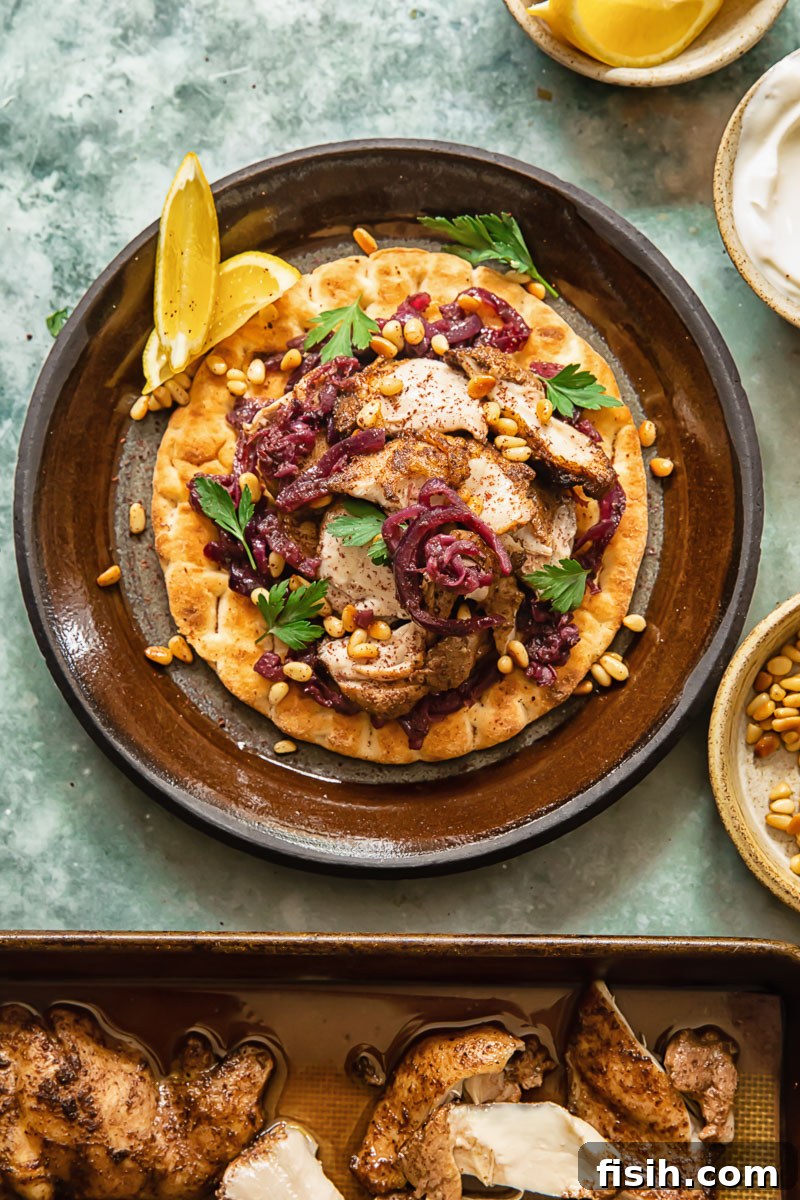
Unlocking the Flavors: Key Ingredients of Musakhan
The soul of Chicken Musakhan lies in its carefully selected, high-quality ingredients, each playing a crucial role in crafting its signature flavor profile. Understanding these core components is key to mastering this exceptional Palestinian dish.
Olive Oil: The Golden Standard
Olive oil is not merely an ingredient in Musakhan; it is a central pillar, a testament to the rich agricultural heritage of the Palestinian region, renowned for producing some of the world’s finest olive oils. Historically, Musakhan was conceived as a way to celebrate and showcase the quality of the olive harvest. This tradition dictates a generous hand when adding oil, allowing it to permeate the dish with its fruity, robust essence. While our recipe uses a slightly reduced quantity compared to ultra-traditional versions, it still ensures a luscious, mouth-coating richness that is absolutely essential for an authentic experience. Choose a high-quality extra virgin olive oil to truly honor this aspect of the dish.
Chicken: The Hearty Protein
For convenience and consistent juiciness, our recipe opts for skinless, boneless chicken thighs. The dark meat of the thigh is inherently more flavorful and resilient to cooking, making it an ideal canvas for the vibrant spice mixture. It retains moisture beautifully, ensuring that every piece of chicken is tender and succulent, perfectly complementing the other elements of the dish. While traditional Musakhan might use a whole roasted chicken, thighs offer a practical, equally delicious alternative for home cooks.
Spices: The Aromatic Soul of Musakhan
The magic of Musakhan is truly unlocked by two distinct yet complementary spices: Baharat and Sumac. These aromatic treasures, though originating from different corners of the Middle East, come together to create an unforgettable flavor symphony. While they might sound exotic, both are now widely available in most well-stocked supermarkets or specialty spice stores.
-
Baharat: The Warm and Earthy Blend
Baharat, meaning “spices” in Arabic, is a cornerstone of Middle Eastern cuisine. It’s a complex, aromatic blend that brings warmth and depth to the chicken marinade. While compositions can vary slightly by region and family recipe, common spices found in Baharat include earthy cumin, fragrant cinnamon, pungent cloves, sweet nutmeg, and smoky paprika. You might also detect hints of cardamom, black pepper, and coriander, creating a multifaceted flavor profile that is both comforting and exhilarating. It’s this blend that gives the chicken its rich, foundational flavor.
-
Sumac: The Tangy Zest
Sumac is a distinct, single spice made from the dried, ground berries of the sumac shrub, identifiable by its beautiful wine-red color. Its defining characteristic is a bright, tangy, almost lemony flavor with a subtle sour fizz that provides an electrifying zing. Sumac is crucial in both the chicken marinade and, more prominently, in the preparation of the onions. It cuts through the richness of the olive oil and chicken, adding a vibrant, refreshing counterpoint that elevates the entire dish. Without sumac, Musakhan simply wouldn’t be Musakhan.
Expert Tips for a Perfect Musakhan
-
Embrace the Olive Oil: Don’t be hesitant about the quantity of olive oil specified in this recipe. As mentioned, Musakhan’s heritage is deeply tied to celebrating the olive harvest, making olive oil a star ingredient. While we’ve adjusted the amount to suit a modern palate, there’s still a generous helping that ensures the onions become incredibly tender and flavorful, creating that delightful, lip-coating slick that defines authentic Musakhan. It’s an integral part of the texture and taste experience.
-
Chicken Selection for Convenience: Traditionally, a whole chicken is marinated, roasted, and then portioned, adding a ceremonial touch ideal for grand Middle Eastern banquets. However, for everyday cooking or when time is of the essence, this can be quite labor-intensive. To simplify the process and minimize bone-related fuss, our recipe calls for skinless, boneless chicken thighs. They cook faster, absorb flavors beautifully, and consistently deliver juicy, tender results without sacrificing any of the authentic taste.
-
Flatbread Foundation: The authentic flatbread used for Musakhan is called Taboon bread, a rustic, often dimpled bread baked in a taboon oven. While finding genuine Taboon bread outside the Middle East can be challenging, readily available pita bread makes an excellent substitute due to its similar texture and ability to absorb flavorful juices. For an even more satisfying and substantial base, you could also consider using homemade naan, which offers a richer, denser texture. Alternatively, why not try making your own fresh flatbread from scratch with our easy flatbread recipe? The freshness truly makes a difference.
-
Accommodating Vegetarian Guests: While Musakhan is a meat-centric dish, you can easily create a comprehensive Middle Eastern spread that caters to everyone. Offer a variety of fresh, local vegetarian dishes such as a crisp and tangy Fattoush salad, a bowl of creamy hummus (perhaps with a roasted chickpea topping), and a smoky Baba Ganoush with sumac. These vibrant sides not only provide delicious options for vegetarians but also beautifully complement the Musakhan for meat-eaters, adding freshness and balance to the meal.
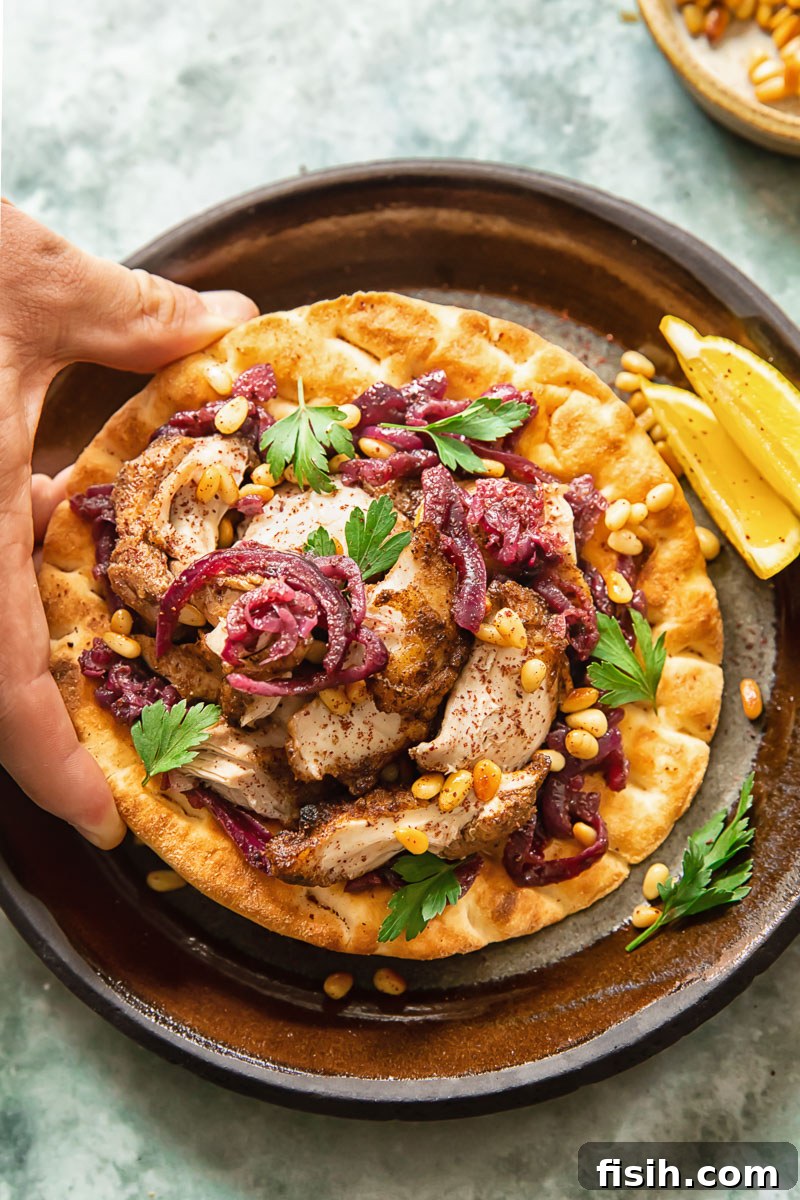
Serving Your Authentic Chicken Musakhan
How you present and enjoy Chicken Musakhan is as much a part of the experience as the cooking itself. This isn’t a dish meant for rigid formalities; it’s a vibrant, communal meal designed for sharing and enjoyment. You have the flexibility to serve it elegantly plated or, more traditionally, family-style as a spectacular centerpiece.
For a family-style presentation, arrange the warm flatbreads on a large platter. This creates the essential foundation that will enthusiastically soak up all the flavorful cooking juices and rich olive oil, ensuring no drop of flavor goes to waste. Then, generously mound the thinly sliced, oven-roasted chicken over the flatbreads, followed by spoonfuls of the soft, sumac-infused red onions. A scattering of the golden-brown pine nuts adds a delightful crunch and visual appeal. Offer a dollop of plain, creamy yogurt on the side for a cooling contrast, and perhaps a wedge of fresh lemon for an extra spritz of brightness.
The true joy of Musakhan lies in its interactive nature. There’s no right or wrong way to eat it – just don’t reach for a knife and fork! Embrace the tradition: fold it over like a taco, roll it up into a hearty wrap, or simply tear strips of bread and pinch the flavorful filling. Things are bound to get deliciously messy, so be sure to have plenty of napkins on hand. It’s a meal that encourages connection, conversation, and a wonderfully tactile dining experience.
Preparing Ahead and Storing Leftovers
Chicken Musakhan is an excellent choice for entertaining or meal prep, as many of its components can be prepared in advance. The marinated chicken, for instance, actually benefits from a longer resting period, allowing the spices to deeply penetrate the meat. You can easily marinate the chicken a day in advance; simply store it in an airtight container in the refrigerator, ready for oven roasting on the day you plan to serve. The sumac-spiced onions can also be cooked ahead of time and gently reheated in the microwave or a pan just before assembly, saving you valuable time when hosting or preparing for a busy week.
Should you find yourself with any delicious leftovers, simply store them covered in the refrigerator for 2-3 days. Cold Musakhan chicken makes a fantastic addition to a lunchbox salad the next day, or it can be gently reheated on the flatbread for another quick and satisfying meal. The flavors often deepen and meld even further overnight, making it just as enjoyable the second time around.
More Middle Eastern Recipes to Explore
- Smoky Baba Ganoush with Sumac
- Vibrant Middle Eastern Fattoush Salad
- Classic Hummus with Roasted Za’atar Chickpea Topping
- Nourishing Middle Eastern Salad Bowl
- Fresh Israeli Salad with Lemon Garlic Tahini Dressing
Chicken Musakhan
Julia Frey of Vikalinka
15 mins
35 mins
50 mins
6
Ingredients
- 2 tbsp olive oil
- 1 tbsp Baharat spice mix
- 1.5 tsp ground cumin
- 1 tsp salt
- 1.2kg/3 lbs skinless, boneless chicken thighs
For the onions
- 50ml/1/4 cup olive oil
- 50g/1/4 cup pine nuts
- 2 large red onions, sliced
- 1.5 tbsp sumac
- 2 tsp cumin
- 1/4 tsp black pepper, optional
Serve with
- Plain yogurt
- 6 flatbreads
Instructions
-
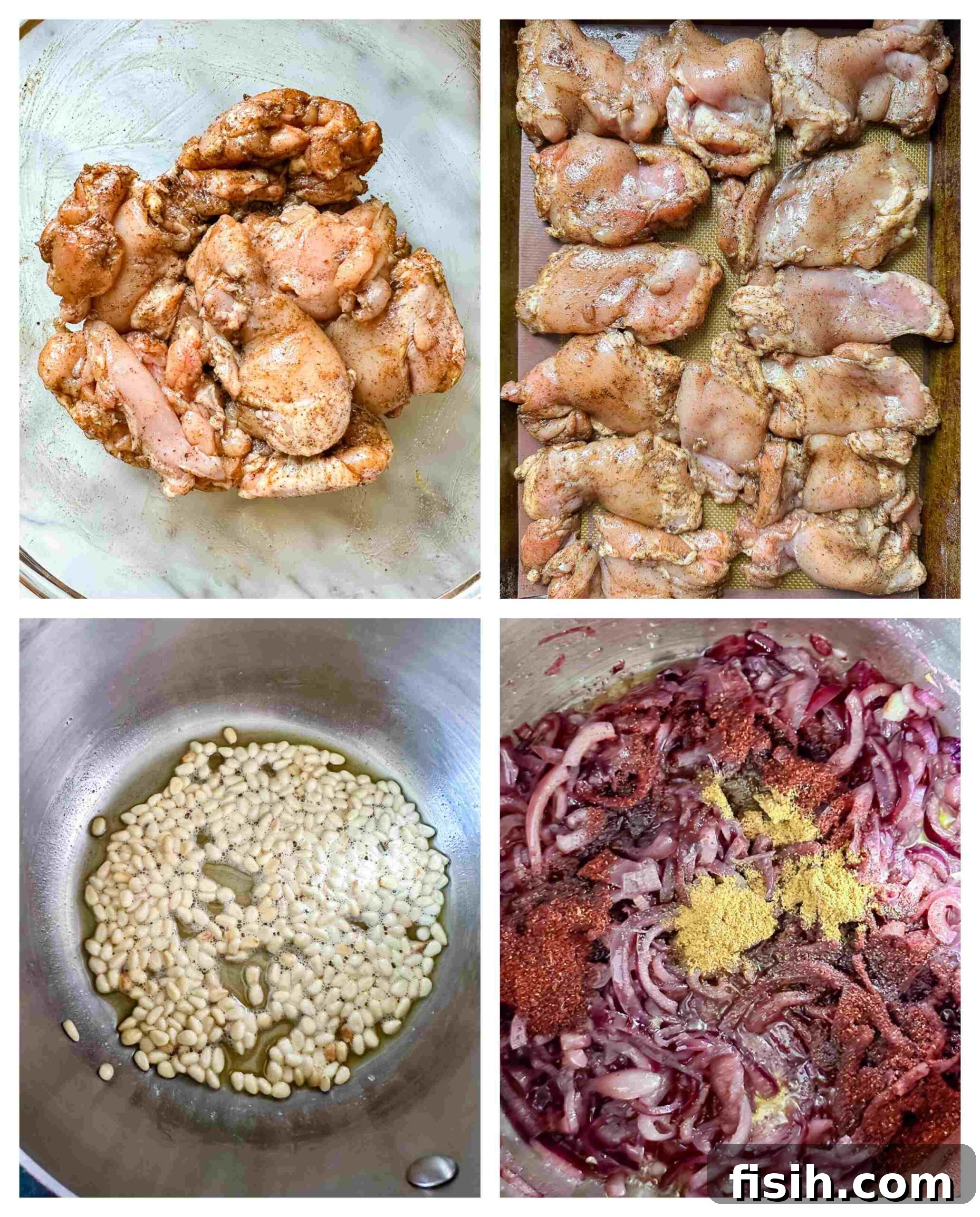
Mix the olive oil, Baharat spice mix, ground cumin, and salt in a large bowl. Add the chicken and mix to coat thoroughly. You can either marinate for 30 minutes for quick preparation or ideally, let it marinate for several hours or overnight in the fridge to deepen the flavors.
-
Spread the seasoned chicken in a single layer on a baking tray. Cook in a preheated oven at 200°C/400°F for 30 minutes. For a slightly crispier finish, move the tray closer to the broiler element and grill/broil for an additional 2 minutes, watching carefully to prevent burning.
-
While the chicken is roasting, begin preparing the onions. Slice the red onions thinly. In a large saucepan, heat the olive oil over medium heat. Add the pine nuts and cook, stirring frequently, until they are lightly golden brown, typically 1-2 minutes depending on the oil’s heat. Carefully remove the toasted pine nuts with a slotted spoon and transfer them to a small bowl, setting aside.
-
To the same oil in the saucepan, add the sliced onions. Cook over low heat for approximately 20 minutes, or until the onions become very soft and translucent. Stir occasionally to ensure even cooking. Once soft, stir in the sumac, cumin, and black pepper (if using) until well combined. Remove the pan from the heat.
-
Lightly toast the flatbreads in the oven for a few minutes to warm them and prevent them from becoming soggy under the chicken and onion mixture. To assemble, place a toasted flatbread on a plate. Top generously with the sumac-flavored onions, then layer with slices of the oven-roasted chicken. Drizzle any flavorful juices collected at the bottom of the baking tray over the chicken and onions. Finish by sprinkling the toasted pine nuts over the top. Serve immediately with a side of plain yogurt for a refreshing contrast.
Nutrition
Carbohydrates: 28g |
Protein: 45g |
Fat: 28g |
Saturated Fat: 4g |
Polyunsaturated Fat: 6g |
Monounsaturated Fat: 14g |
Trans Fat: 0.04g |
Cholesterol: 191mg |
Sodium: 742mg |
Potassium: 697mg |
Fiber: 4g |
Sugar: 3g |
Vitamin A: 75IU |
Vitamin C: 3mg |
Calcium: 56mg |
Iron: 4mg
Nutrition information is automatically calculated, so should only be used as an approximation.