
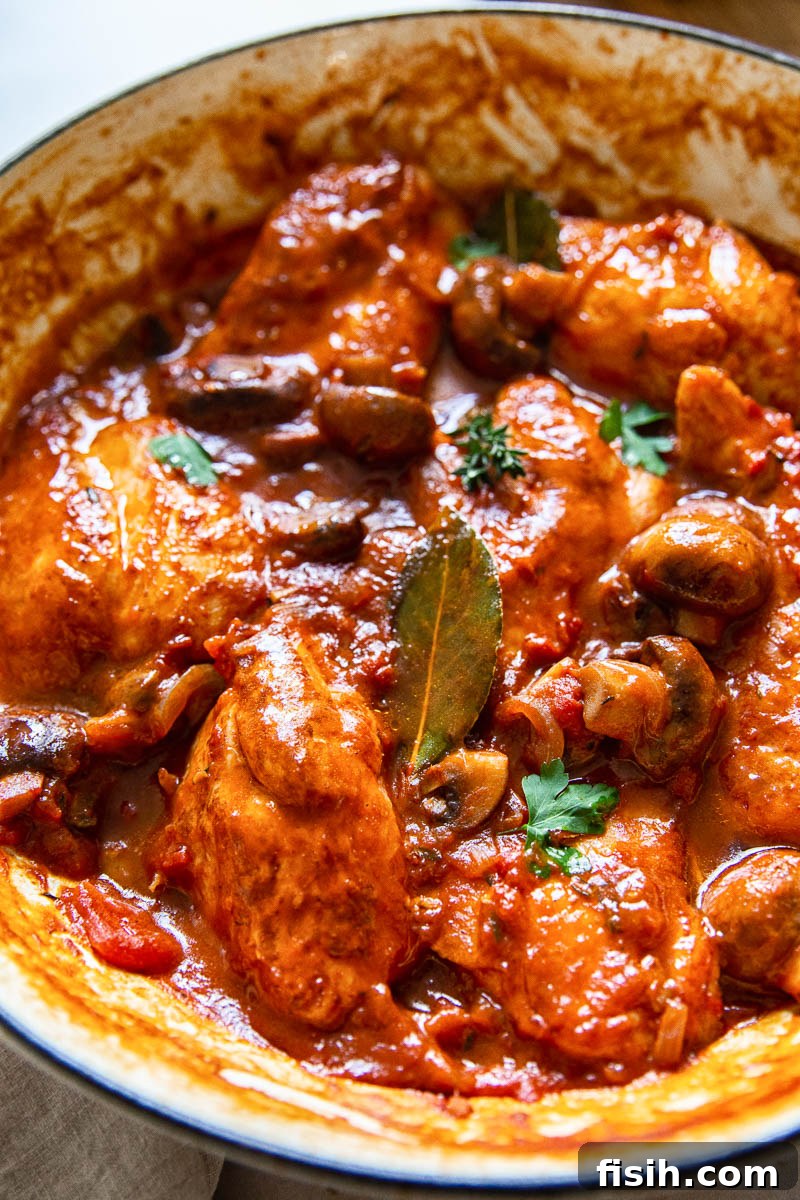
Welcome to a culinary journey that unveils the rustic elegance of French cooking – a journey highlighted by our exquisite, yet surprisingly simple, **Chicken Chasseur**. This beloved French classic, often known as ‘Hunter’s Chicken,’ is a hearty, flavorful dish that perfectly balances rich, earthy notes with vibrant acidity. Imagine succulent chicken breasts, tenderly braised in a robust tomato and mushroom sauce, infused with aromatic herbs. This recipe offers a leaner and quicker version of the traditional masterpiece, making it an ideal choice for busy weeknights without compromising on its deeply satisfying taste. Get ready to discover a true gem of French provincial cuisine that’s both easy to prepare and incredibly delicious.
For those who cherish authentic French poultry dishes, you might also enjoy exploring my French Chicken Casserole or the delightful Chicken Forestière, both offering their unique takes on rustic comfort.
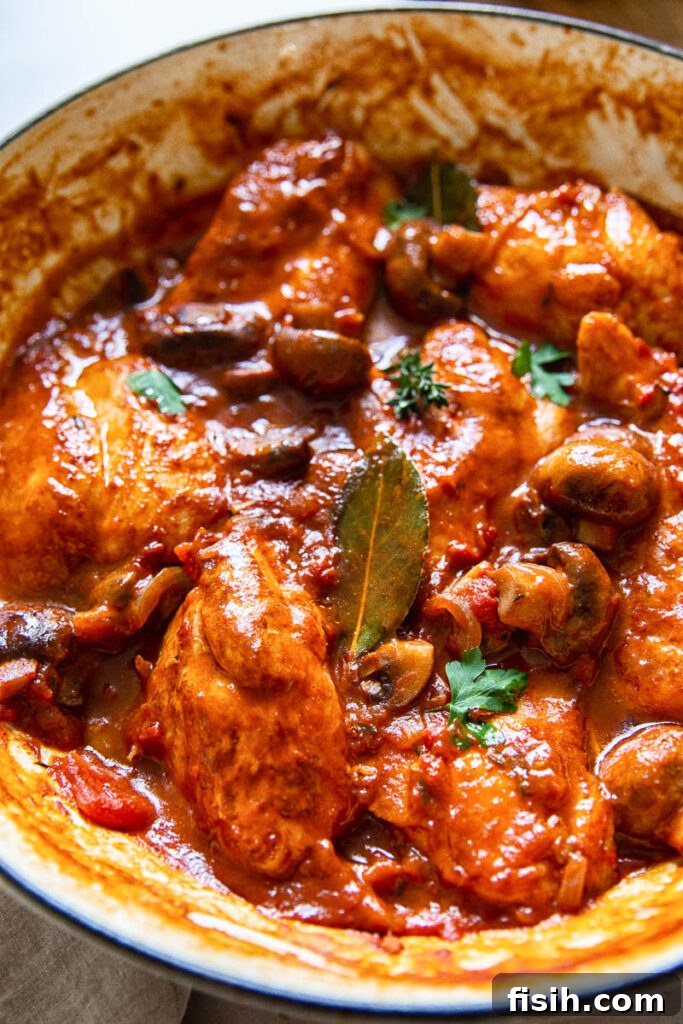
My admiration for French cuisine runs deep, a passion clearly reflected in the diverse array of French-inspired recipes featured on this blog. Classics like French Chicken Casserole, the ultimate one-pot wonder Coq au Vin, and the bright flavors of Chicken Provencal consistently rank among our readers’ favorites. It’s this enthusiasm that drives me to share not only the well-known masterpieces but also the lesser-celebrated, yet equally captivating and delicious dishes that truly embody the spirit of French cooking.
My first encounter with Chicken Chasseur, or Hunter’s Chicken, came through the pages of Ginet Mathiot’s “I Know How to Cook,” a revered French culinary bible. This remarkable cookbook serves as an invaluable resource for confident home cooks eager to delve into the intricacies and traditions of authentic French cuisine. It was through Mathiot’s detailed yet concise guidance that I truly appreciated the depth and simplicity of this incredible dish.
The traditional recipe paints a picture of beautifully flavored chicken enveloped in a rich, deeply savory tomato and mushroom sauce. It’s a dish that, despite its humble and rustic origins, exudes the eternal elegance that defines French culinary artistry. Each spoonful offers a harmonious blend of textures and tastes, making it a truly unforgettable dining experience.
What is Chicken Chasseur? Unveiling the Hunter’s Legacy
The name ‘Chasseur’ directly translates from French to ‘hunter,’ providing a clear and evocative clue about the dish’s historical roots and character. This classic French stew is thought to originate from a hunter’s kitchen, where a successful day in the woods would culminate in a meal made with freshly caught game and wild mushrooms foraged along the way. It’s a testament to resourceful and flavorful cooking, transforming simple ingredients into a gourmet experience.
At its heart, Chicken Chasseur is a robust stew built upon a rich, aromatic base sauce. The foundation typically includes sautéed mushrooms and shallots (or onions), generously seasoned with a medley of fresh, fragrant herbs such as thyme, tarragon, and parsley. The stew then welcomes whichever meat the hunter brought home – historically, this could have been venison, rabbit, or even wild fowl. Today, as our hunting grounds have shifted to the aisles of local grocery stores, chicken has become the most convenient and popular choice, lending itself perfectly to the rich flavors of the sauce while retaining the dish’s rustic, comforting essence.
This “hunter’s style” of cooking isn’t exclusive to France. Its philosophy resonates across various European cuisines. A prime example is Chicken Cacciatore, the Italian equivalent of Hunter’s Chicken, which shares a remarkably similar approach, utilizing regional ingredients to create a hearty, satisfying meal.
The Essential Ingredients for a Perfect Chasseur
The beauty of French provincial cooking often lies in its flexibility and reliance on local, seasonal produce. This is particularly true for Chicken Chasseur, a dish that boasts numerous variations. The traditional French approach to recipes often provides general guidelines rather than rigid instructions, allowing for improvisation and personal touches. This freedom has led to a rich tapestry of Chasseur recipes, each with its subtle differences.
However, core components remain consistent across most versions. The star is, of course, the chicken – whether a whole bird expertly portioned or a selection of preferred chicken parts. The sauce, the soul of the dish, typically begins with onions and mushrooms, lovingly sautéed in butter to develop a deep, aromatic base. A splash of dry white wine adds essential acidity and depth, while canned or fresh chopped tomatoes contribute a vibrant tang and natural sweetness. Fresh herbs, such as thyme, tarragon, or parsley, are crucial for infusing the sauce with its signature fragrance. It’s interesting to note that while modern iterations often feature a robust tomato sauce, Ginet Mathiot’s classic recipe, surprisingly, does not include tomatoes or tomato paste, highlighting how regional and temporal variations can influence even beloved dishes.
Crafting Your Quick and Lean Chicken Chasseur: A Step-by-Step Guide
My adapted version of Hunter’s Chicken is designed with modern life in mind – faster, simpler, and perfect for busy families and quick after-work dinners. By opting for skinless, boneless chicken breasts, we significantly reduce cooking time and lighten the calorie count, making this classic more accessible for everyday enjoyment. This simple substitution can cut the traditional cooking time by half, delivering a delicious meal with much less fuss.
Here’s a straightforward approach to preparing this delectable dish:
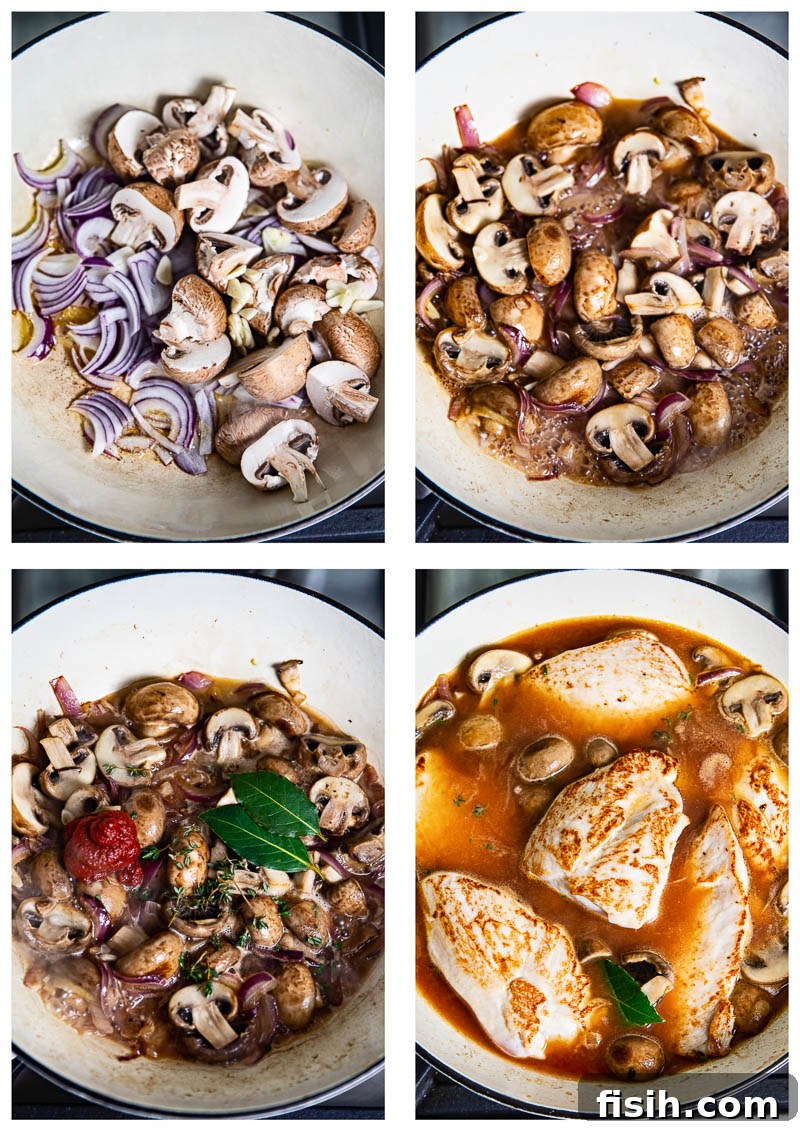
- **Prepare the Chicken:** Begin by seasoning your chicken breasts generously with salt and freshly ground black pepper. In a large pan, heat a tablespoon of olive oil over medium-high heat. Brown the chicken on both sides until it develops a beautiful golden crust. It’s important not to cook the chicken all the way through at this stage, as it will continue to braise in the sauce. Remove the browned chicken to a plate and set it aside. This crucial browning step seals in the juices and creates a richer flavor base.
- **Sauté Aromatics:** Return the pan to the stove over medium-low heat. Add a tablespoon of butter, allowing it to melt and foam. Then, add your sliced onions, halved mushrooms (feel free to use your favorite variety, such as cremini or button mushrooms), and thinly sliced garlic cloves. Sauté these aromatics gently for about 10 minutes until the onions are translucent and sweet, and the mushrooms have released their moisture and started to caramelize. This slow sautéing process builds incredible depth of flavor.
- **Deglaze and Season:** Pour in the dry white wine and let it simmer vigorously for a couple of minutes, allowing the alcohol to evaporate and deglazing the pan. Use a wooden spoon to scrape up any flavorful browned bits from the bottom of the pan. This step adds a fantastic layer of complexity to the sauce. Next, stir in your fresh herbs – I recommend the leaves from fresh thyme sprigs and a couple of bay leaves for authentic French flavor.
- **Build and Simmer the Sauce:** Add the tomato paste and the diced tomatoes (or crushed tomatoes if you prefer a smoother sauce) to the pan, stirring to combine them with the sautéed vegetables and herbs. Pour in the chicken stock, bringing the mixture to a gentle boil. Return the browned chicken breasts to the pan, nestling them into the simmering sauce. Reduce the heat to low, cover the pan, and let it braise for 20 minutes. Then, uncover the pan and continue to simmer for an additional 10 minutes, allowing the sauce to thicken slightly and the flavors to meld beautifully. If the sauce appears too thin at the end, simply let it simmer uncovered for a few extra minutes to reduce to your desired consistency.
Expert Recipe Tips and Notes for a Flawless Chasseur
- **Natural Thickening:** You might notice that this recipe doesn’t call for flour or cornstarch to thicken the sauce. This is a deliberate choice, allowing the natural pectin from the tomatoes, combined with the reduction during simmering, to create a velvety, naturally thickened sauce. This method yields a lighter, fresher taste.
- **Achieving Desired Consistency:** If, however, you prefer a thicker sauce, an easy fix is to whisk 1 tablespoon of cornstarch with 2 tablespoons of cold water to create a slurry. Stir this mixture into the simmering sauce during the last few minutes of cooking and allow it to cook until it reaches your desired consistency.
- **Wine Substitutions:** French cuisine often utilizes wine to add a layer of acidity and sophisticated complexity to dishes. If you prefer to cook without alcohol, you can achieve a similar acidic balance by substituting the white wine with an equal quantity of apple juice combined with 1 tablespoon of white wine vinegar. This offers a sweet-tart alternative that complements the other flavors.
- **Herb Selection:** While I’ve used fresh thyme and bay leaves for their classic French aroma, feel free to experiment with other herbs you enjoy. However, to maintain the distinct French character of the dish, I recommend avoiding overtly Italian herbs like basil and oregano, as they can shift the flavor profile dramatically.
- **Chicken Cut Variations:** The traditional Chicken Chasseur is often prepared with a whole chicken cut into pieces. For convenience and speed, I’ve opted for chicken breasts. However, bone-in, skin-on chicken thighs are an excellent alternative that offers rich flavor and stays incredibly moist during braising. If using thighs, simply adjust the browning and simmering times slightly.
- **Choosing Your Mushrooms:** While any mushrooms work well, consider varieties like cremini (baby bellas) for a deeper, earthier flavor, or even a mix of wild mushrooms if available, to truly embody the ‘hunter’s’ spirit.
Elevate Your Meal: Inspired Serving Suggestions
The beauty of Chicken Chasseur lies not only in its exquisite flavor but also in its versatility when it comes to serving. The most classic and undeniably comforting way to enjoy this dish is piled generously atop a bed of creamy, buttery mashed potatoes. The potatoes absorb the rich sauce, creating a harmonious and utterly satisfying combination. However, there are many other delightful pairings to explore:
Consider serving it with fluffy white rice or a light, grain-like couscous for a different texture. For those seeking a lower-carb option, cauliflower mash makes an excellent substitute for traditional mashed potatoes, allowing you to enjoy all the rich flavors without the extra carbohydrates. A simple green salad with a light vinaigrette also provides a fresh counterpoint to the rich sauce.
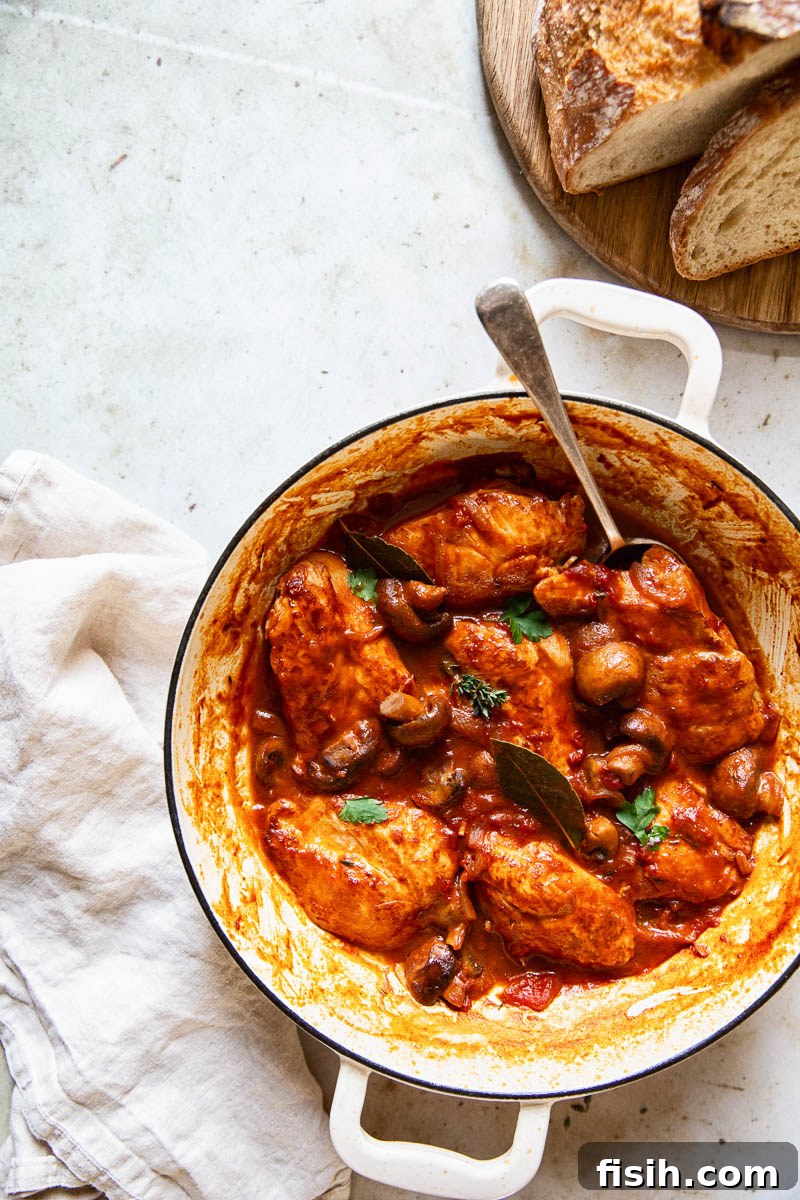
And, of course, no French stew would be complete without a thick slice of crusty bread. It’s not just an accompaniment; it’s an essential tool for soaking up every last drop of that incredible, flavorful sauce – a truly indulgent pleasure.
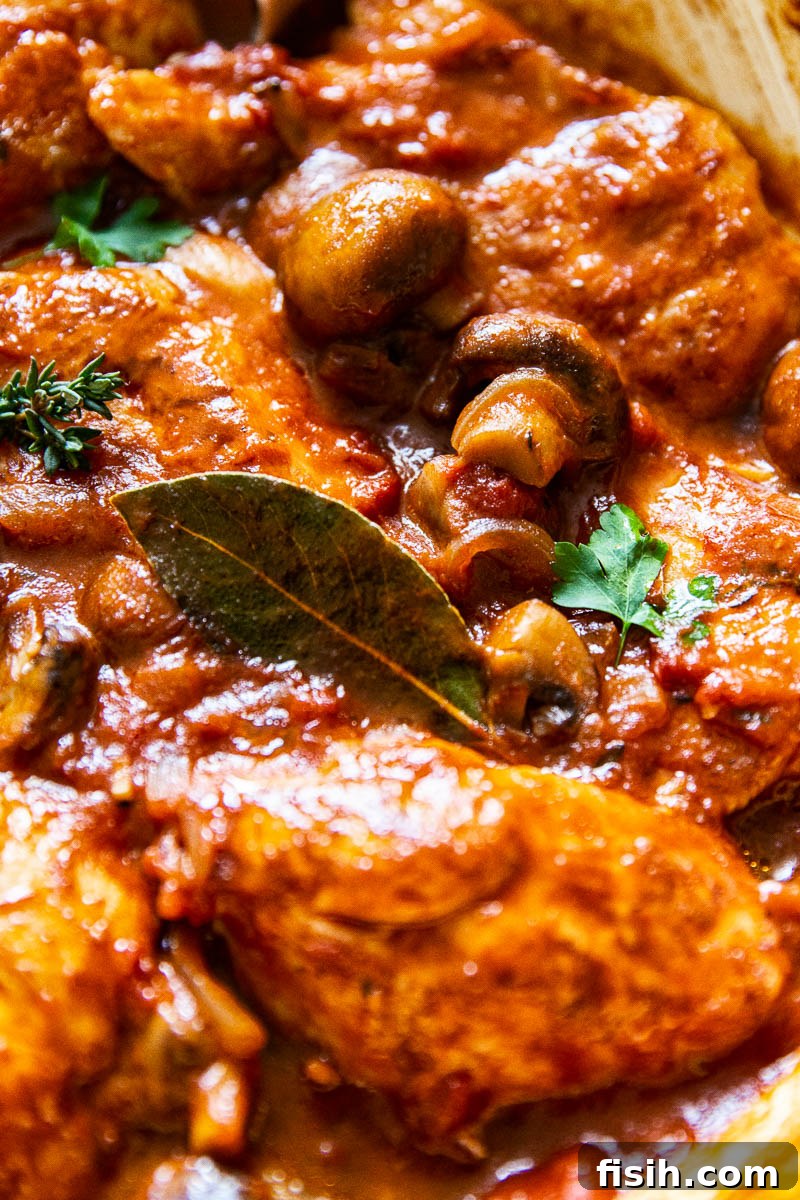
Despite its relatively lean preparation, this chicken recipe carries a decidedly luxurious feel. Just a modest amount of butter, used to sauté the aromatics, works wonders in contributing to the sauce’s rich and luscious texture. The slow braising process is particularly transformative for the tomatoes, allowing their natural sugars to sweeten and their flavors to deepen, resulting in a fragrant, sweet-tasting sauce that perfectly complements the tender, fall-apart chicken breasts. Each bite is a journey to the heart of French comfort food.
Storage and Reheating for Culinary Longevity
One of the many advantages of a delicious braised dish like Chicken Chasseur is that it often tastes even better the next day as the flavors have had more time to meld and deepen. Storing and reheating leftovers properly ensures you can enjoy this delightful meal again and again.
For reheating, while a microwave offers a quick solution, I highly recommend using the stovetop for the best results. Transfer your leftovers to a pan over medium-low heat. To prevent the sauce from becoming too thick or drying out, add a splash of water or chicken stock. Cover the pan with a lid or aluminum foil to trap moisture and allow the chicken and sauce to heat gently and evenly for approximately 15 minutes, or until it is thoroughly hot all the way through. This method helps maintain the chicken’s tenderness and the sauce’s luscious consistency.
Proper storage is key to food safety and flavor. Leftovers can be kept in an airtight container in the refrigerator for up to 5 days, making it perfect for meal prepping. For longer storage, Chicken Chasseur freezes exceptionally well. Portion the cooled leftovers into freezer-safe containers and store in the freezer for up to 3 months. When ready to enjoy, simply thaw overnight in the refrigerator before reheating on the stovetop as described.
Discover More French Culinary Delights
- Chicken Supreme
- Coq au Vin Blanc
- Salmon en Croute
- Chicken Fricassee
Chicken Chasseur Recipe
By Julia Frey of Vikalinka
Prep Time: 10 mins
Cook Time: 45 mins
Total Time: 55 mins
Servings: 6
Print Recipe
Ingredients
- 1 tbsp olive oil
- 750-900g / 1½-2 lbs skinless boneless chicken breasts
- 1 tbsp butter
- 1 medium onion, sliced
- 250g / 8oz mushrooms, cut in half
- 2 cloves garlic, sliced
- 125ml / ½ cup dry white wine
- 4 fresh thyme sprigs, leaves only
- 2 fresh bay leaves
- 1 tbsp tomato paste
- 150g / ½ cup canned diced tomatoes (or crushed tomatoes in the US)
- 350ml / 1½ cups chicken stock
- Salt and pepper to taste
Instructions
- In a large pan, heat 1 tbsp of oil over medium-high heat. Season chicken breasts with salt and pepper, then brown them on both sides until golden. Do not cook them all the way through. You may need to work in batches to avoid overcrowding the pan. Remove the chicken to a plate and set aside.
- To the same pan, add butter, sliced onions, halved mushrooms, and sliced garlic cloves. Sauté with a pinch of salt on low heat for 10 minutes until softened and fragrant. Then, add the white wine and let it bubble away for a couple of minutes to deglaze the pan and reduce slightly.
- Stir in the fresh thyme leaves, bay leaves, and tomato paste. Return the browned chicken breasts to the pan, along with the diced tomatoes and chicken stock. Bring the mixture to a boil, then reduce the heat to low. Cover the pan and let it simmer for 20 minutes. Uncover and continue to cook for another 10 minutes, allowing the sauce to thicken naturally and the flavors to deepen. If the sauce is too watery at the end, simply let it simmer uncovered for a few extra minutes until it reaches your desired consistency.
Video
Notes
- It might seem counter-intuitive to omit flour or cornstarch, but this recipe intentionally relies on tomatoes to thicken the sauce naturally, resulting in a fresher taste.
- For a thicker sauce, you can add 1 tbsp of cornstarch diluted in 2 tbsp of water at the end of cooking.
- Wine adds acidity and complexity; if avoiding alcohol, substitute with an equal quantity of apple juice plus 1 tbsp white wine vinegar.
- Fresh thyme and bay leaves are recommended, but use other herbs you enjoy, just avoid basil and oregano to keep it French, not Italian.
- Traditionally made with a whole chicken, this recipe uses chicken breasts for convenience. Chicken thighs are also an excellent alternative.
Nutrition Information
Calories: 230kcal | Carbohydrates: 8g | Protein: 30g | Fat: 8g | Saturated Fat: 2g | Cholesterol: 86mg | Sodium: 313mg | Potassium: 781mg | Fiber: 1g | Sugar: 4g | Vitamin A: 240IU | Vitamin C: 8.6mg | Calcium: 28mg | Iron: 1.4mg
Nutrition information is automatically calculated, so should only be used as an approximation.
Tried this recipe? Let us know how it was!