
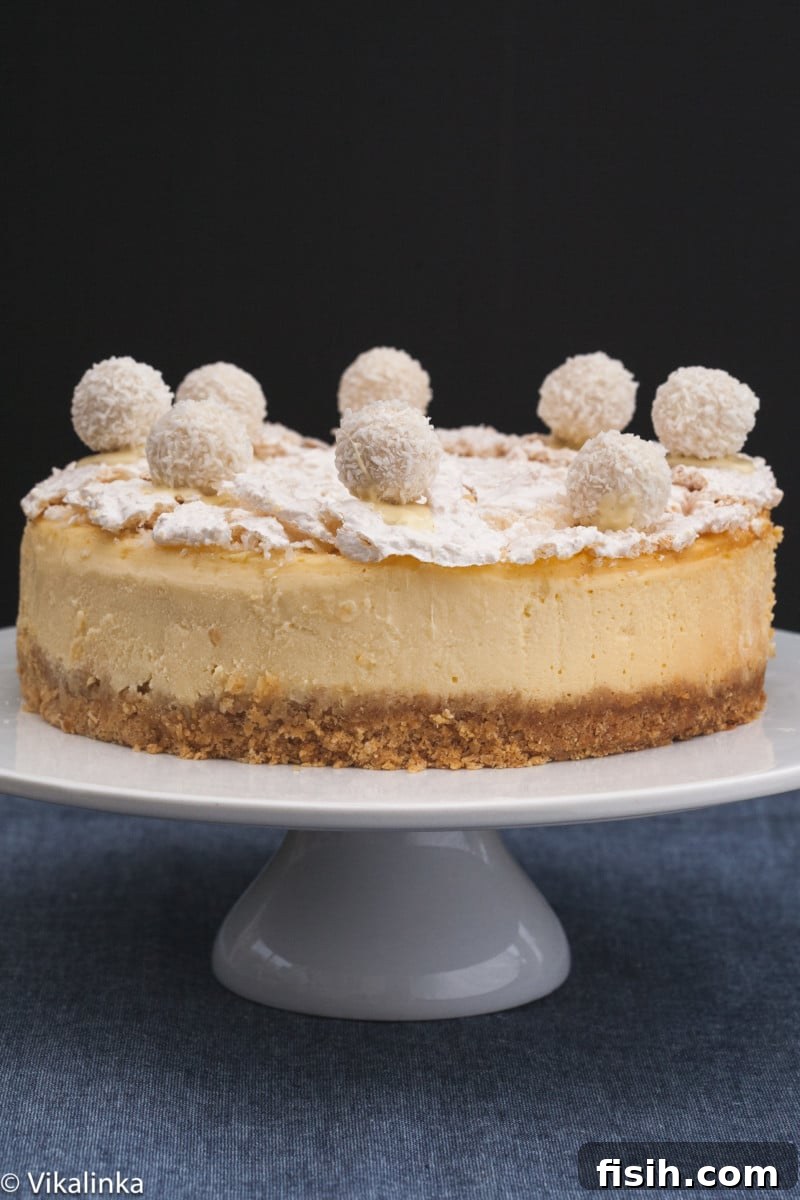
Experience the epitome of indulgence with this exquisite Raffaello Cheesecake – a dessert that promises to delight with every light, creamy, and distinctively flavored bite. Infused with the delicate essences of coconut and almond, it’s a truly special treat perfect for any occasion that calls for a touch of elegance.
For those times when a no-bake option is preferred, don’t miss our refreshingly easy and utterly delicious Blood Orange No-Bake Cheesecake, another fantastic choice to satisfy your sweet cravings.
The Allure of Raffaello: An Inspiration for Dessert Perfection
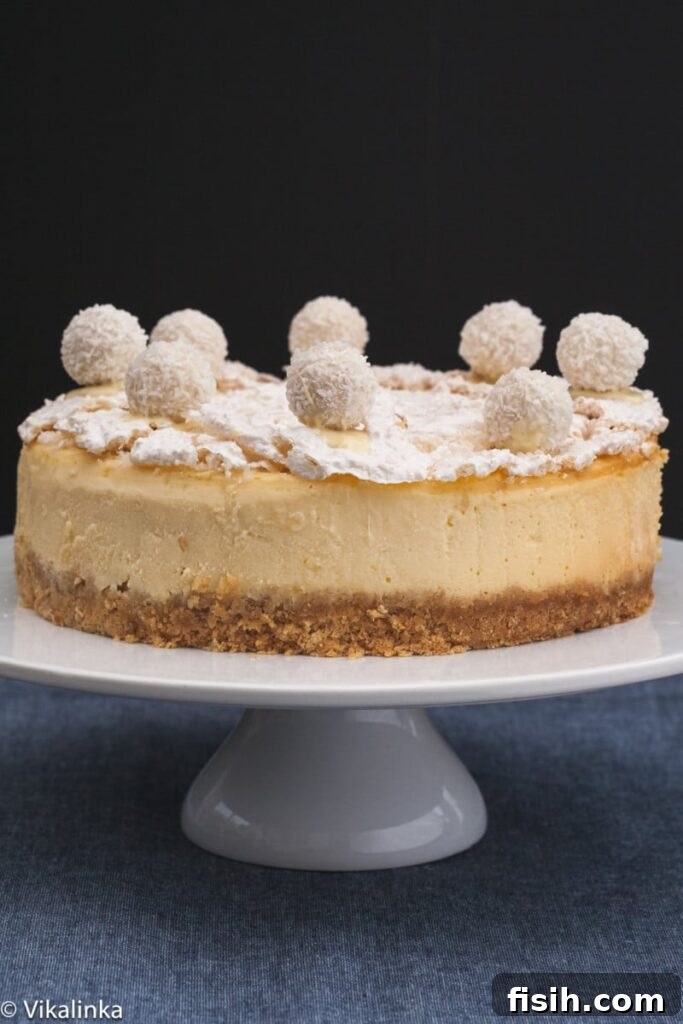
For years, I’ve harbored a deep fondness for the luxurious white chocolate, coconut, and almond symphony found in Raffaello confections. These delightful Italian treats, a cousin to the more widely known Ferrero Rocher, hold a special place in my heart, especially during the festive holiday season. While they often make an appearance at Christmas, I confess to indulging in them at various other times throughout the year!
It was this obsession that sparked the idea for a cheesecake that could perfectly capture their unique charm. Imagine a cheesecake that embodies that same lovely delicate flavor combination: the rich, smooth taste of white chocolate harmoniously blended with the tropical sweetness of coconut and the subtle nuttiness of almond. This vision led to the creation of this extraordinary Raffaello Cheesecake.
Crafting the Dream: A Deep Dive into this Coconut and Almond Cheesecake
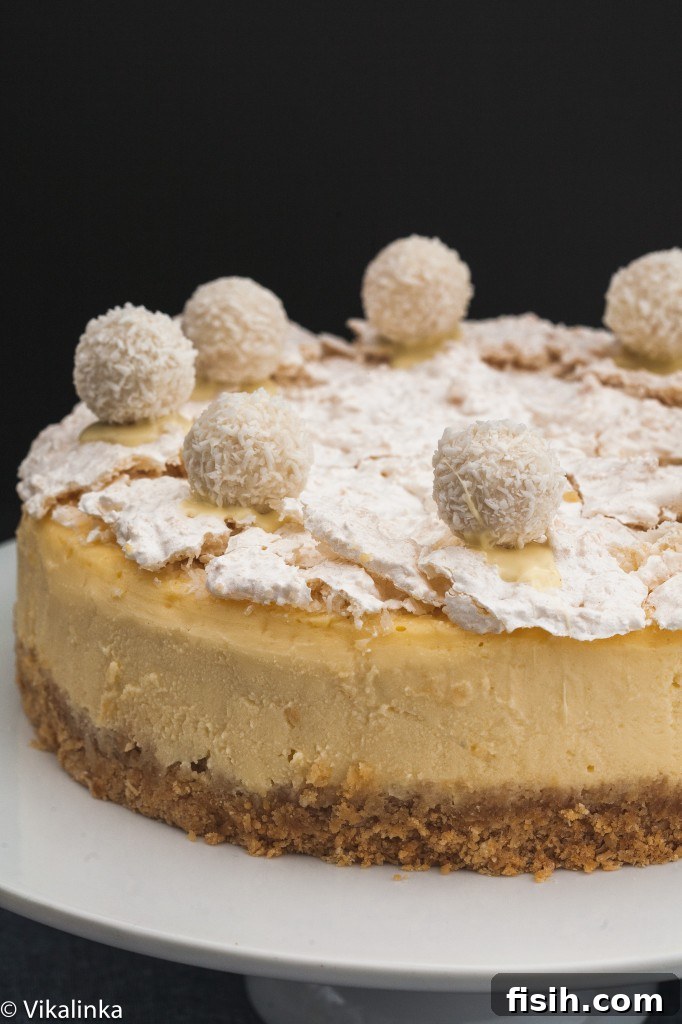
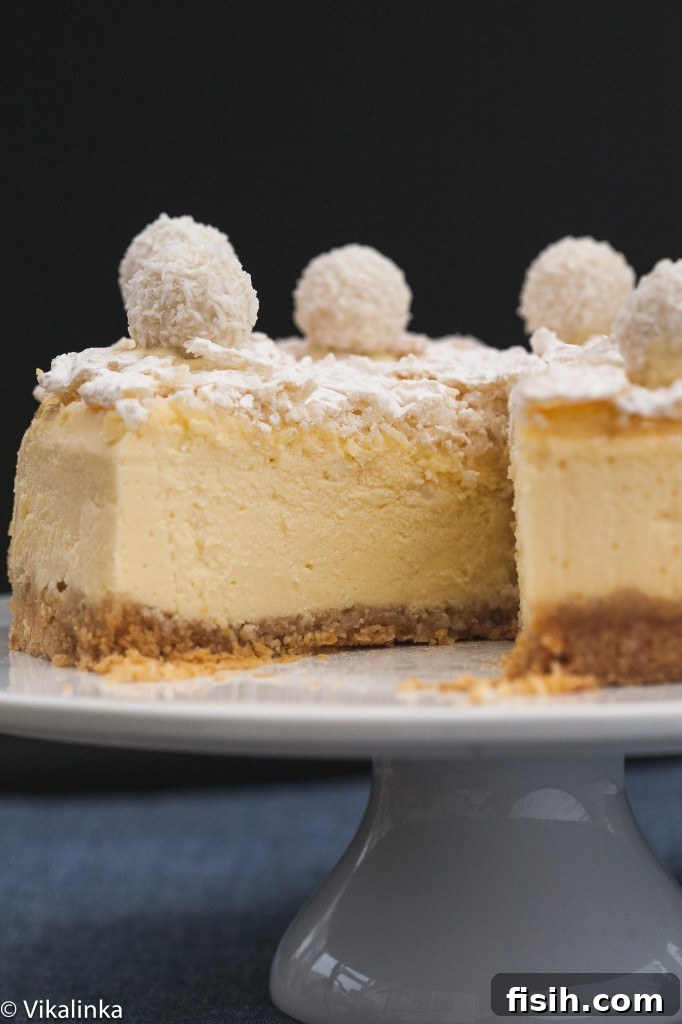
This isn’t just any cheesecake; it’s a masterpiece designed to evoke the pure joy of biting into a Raffaello. From its foundation to its crowning glory, every element is meticulously chosen to replicate the iconic flavors and textures. The journey begins with a distinctive coconut wafer crust, providing a subtly sweet and crunchy base that hints at the layers of flavor to come. The cheesecake filling itself is a revelation – incredibly light yet sumptuously creamy, bursting with natural coconut and almond flavors. To complete this edible tribute, the cheesecake is elegantly topped with a delicate, crunchy coconut meringue, adding an ethereal finish and an irresistible textural contrast.
This particular Raffaello Cheesecake stands as the undisputed “boss” of all cheesecakes in my repertoire. While its snowy white decoration and luxurious taste make it an ideal centerpiece for Christmas celebrations, it’s equally fitting for Easter or any special occasion where an impressive dessert is desired. Its sophisticated flavor profile and stunning appearance are sure to captivate your guests and leave a lasting impression.
The Unique Appeal of Raffaello Flavors
For those unfamiliar with the delightful Raffaello, imagine a delicate balance of flavors distinct from its chocolate-based cousin, Ferrero Rocher. Raffaello combines the creamy sweetness of white chocolate with the exotic notes of coconut and the distinct, subtle flavor of almonds. This unique trio creates a taste experience that is both refreshing and deeply satisfying. Beyond the flavor, Raffaello offers a wonderful interplay of textures – a crisp outer shell giving way to a creamy interior and a crunchy almond center. My goal with this cheesecake was to faithfully reproduce both this exquisite flavor and delightful textural contrast, delivering an authentic Raffaello experience in every slice.
The Art of the Filling: Achieving Unparalleled Creaminess
The heart of this Raffaello cheesecake lies in its incredibly rich and smooth filling. We achieve its signature creaminess by using a blend of half full-fat cream cheese (or traditional farmer’s cheese, known as tvorog) and half luxurious mascarpone. This combination ensures a dense yet silky texture that melts in your mouth. To further enhance the flavor and consistency, a plethora of eggs and the rich, thick part of coconut cream are incorporated, lending a tropical depth that truly sets this cheesecake apart. The addition of vanilla and almond flavoring further refines the profile, ensuring that signature Raffaello taste shines through.
As I describe this epitome of cheesecake perfection, I’m almost moved to sing its praises, but I’ll spare you my vocal talents. Instead, I hope this accompanying photo conveys the glorious nature of this dessert far better than words ever could.
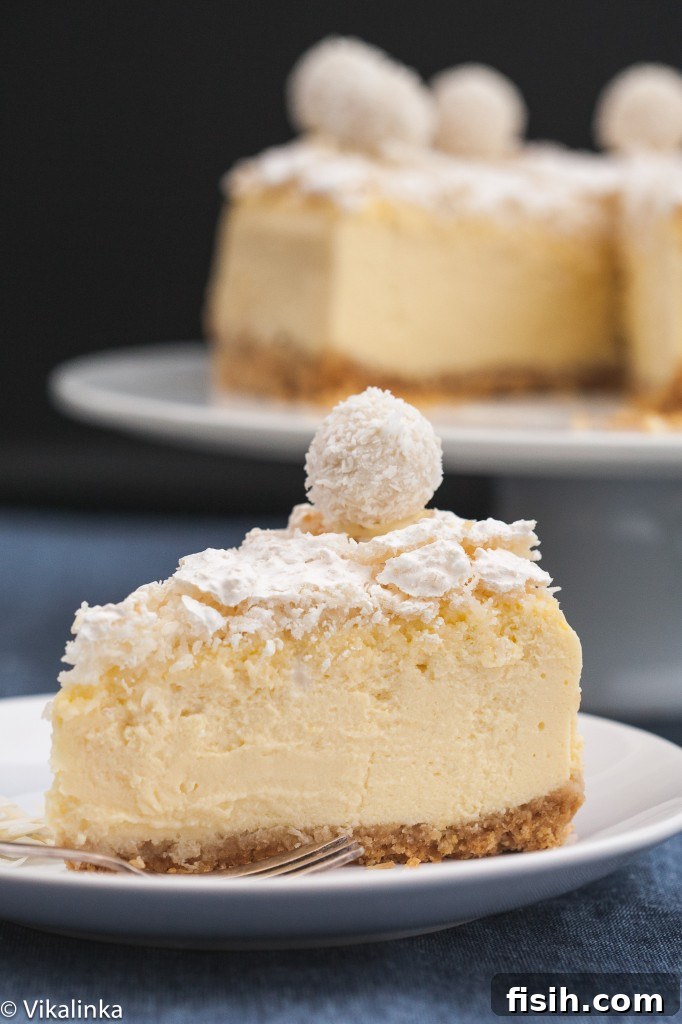
In essence, if your palate rejoices in the tropical allure of coconut and the comforting richness of cheesecake, then this Raffaello Cheesecake was unequivocally made for you. It boasts the lightest and creamiest texture imaginable, elevated by the delicate balance of coconut and almond. And let’s not forget the show-stopping meringue layer on top – it truly “blows it out of the park” with its delicate crunch and airy sweetness.
End of story. You simply must try it.
Essential Tips for a Flawless Raffaello Cheesecake
Ingredient Spotlight and Preparation Pointers
- Wafers for the Base: Opting for cream-filled wafers instead of traditional graham crackers for the crust adds an extra layer of sweetness and a distinct texture that complements the Raffaello theme. Ensure they are finely crushed to create a cohesive base.
- Cream Cheese vs. Farmer’s Cheese: Both full-fat cream cheese and farmer’s cheese (tvorog) work beautifully. If using farmer’s cheese, blending it until perfectly smooth and creamy is crucial for a lump-free filling. For cream cheese, simply ensure it’s at room temperature for easy mixing.
- Mascarpone Magic: Mascarpone adds a luxurious richness and silky texture to the cheesecake filling, making it exceptionally smooth and decadent.
- The Role of Coconut Cream: When using canned coconut milk, allow it to chill in the refrigerator overnight. This allows the thick, creamy part to separate and rise to the top. Only use this thick cream for the cheesecake filling, discarding any watery liquid at the bottom, to ensure maximum richness and coconut flavor.
- Room Temperature Eggs: Always use room temperature eggs for cheesecake. They emulsify better with the cheese mixture, resulting in a smoother, more uniform batter and preventing cracks during baking.
Baking and Cooling Wisdom
Cheesecakes are notoriously delicate, and proper baking and cooling are key to preventing cracks and achieving that perfect creamy texture. While a water bath is a common technique for many cheesecakes, this recipe is designed to achieve a beautiful finish with careful temperature control:
- Initial High Heat: Starting the oven at a higher temperature (350F/180C) helps set the edges of the cheesecake quickly.
- Gradual Temperature Reduction: Reducing the temperature significantly (to 250F/120C) for the bulk of the baking time ensures a slow, gentle cook from the center outwards, minimizing the risk of cracks.
- The Meringue Addition: Adding the meringue towards the end of the baking cycle, followed by further baking at an even lower temperature (190F/90C), allows the meringue to dry out and become crisp without overcooking the cheesecake.
- Crucial Gradual Cooling: After the final baking stage, do not remove the cheesecake from the oven immediately. Turn off the oven, open the door slightly, and allow the cheesecake to cool gradually inside. This slow temperature transition is paramount for preventing the cheesecake from shrinking too rapidly and cracking. Only remove it when the oven has cooled significantly, then cool completely at room temperature before refrigerating.
Troubleshooting Common Cheesecake Woes
- Cracked Surface: The most common culprit is sudden temperature changes. Ensure gradual cooling as outlined above. Small cracks on the meringue, however, often add to its rustic charm, so don’t fret over minor imperfections!
- Soggy Crust: Make sure your melted butter is fully incorporated into the crushed wafers and coconut, and press the mixture firmly into the pan. Baking the crust for 5-10 minutes before adding the filling can also help, though this recipe doesn’t explicitly call for it, it’s a useful tip for extra crispiness.
- Cheesecake is Too Soft/Undercooked: Cheesecakes will always have a slight jiggle in the center when done. It should not be liquid. If it seems too wobbly, give it a few more minutes in the oven. The residual heat during gradual cooling will continue to set the center.
Storage and Leftovers: Keeping Your Cheesecake Fresh
Proper storage is essential to maintain the freshness and flavor of your Raffaello Cheesecake, ensuring you can savor its deliciousness for days to come.
- Refrigeration: This cheesecake should always be kept in the fridge. When stored in an airtight container or tightly wrapped in plastic wrap, it will remain fresh and delightful for up to a week. Cheesecake can readily absorb other flavors from your refrigerator, so creating a tight seal is crucial. For extra protection, consider wrapping it first in plastic wrap, then placing it inside an airtight container.
- Freezing: If you’re planning to enjoy your cheesecake at a later date, it freezes wonderfully. To freeze, first allow the cheesecake to cool completely in the refrigerator. Once chilled, wrap it securely in several layers of plastic wrap, followed by a layer of aluminum foil. This double-layer protection helps prevent freezer burn and shields it from absorbing freezer odors. For best quality and taste, consume within one month, though it can last safely for up to two months.
- Thawing: When ready to enjoy a frozen cheesecake, transfer it from the freezer to the refrigerator and allow it to thaw slowly overnight. This gradual thawing process helps maintain the cheesecake’s creamy texture and prevents condensation from making it soggy.
More Favorite Cheesecake Recipes to Explore
If you’ve fallen in love with the creamy indulgence of this Raffaello Cheesecake, you’ll be thrilled to discover other delectable variations. Each offers a unique twist on this beloved dessert:
- Strawberry Meringue Cheesecake (No Bake): A light, fruity, and effortless dessert perfect for summer.
- Crumb Apricot Cheesecake: A comforting and rustic cheesecake featuring sweet apricots and a delightful crumb topping.
- Raspberry Cheesecake Bars: Convenient and delicious, these bars offer the classic cheesecake experience in an easy-to-serve format, with a bright burst of raspberry.
Raffaello Cheesecake Recipe
This recipe creates a stunning coconut and almond-flavored cheesecake that tastes just like the beloved Raffaello chocolates. Perfect for special occasions or when you simply crave an exceptional dessert.
By: Julia Frey of Vikalinka
Prep time: 30 mins
Cook time: 1 hr 30 mins
Servings: 12
Ingredients
For the base
- 200g / 2 1/2 cups cream filled wafers, crushed
- 5 tbsp ground almonds
- 6 tbsp desiccated coconut
- 30g / 2 tbsp butter, melted
For the filling
- 500 g / 16oz cream cheese or farmer’s cheese
- 500 g / 16oz mascarpone
- 3 tbsp corn starch
- 300g / 1 1/2 cups sugar
- 1 tsp vanilla (affiliate link)
- 1 tsp almond flavouring
- 5 eggs
- 2 eggs yolks (egg whites reserved for the meringue)
- 400g / 1 3/4 cup coconut milk (affiliate link), if separated use the thick creamy part only, discard water
For the meringue
- 2 egg whites, at room temperature (reserved from filling)
- 100g / 1/2 cup sugar
- 60g / 1 cup desiccated coconut
For decorating
- 30g / 1/4 cup melted white chocolate
- 8 Raffaello chocolates
Instructions
- Preheat the oven to 350F / 180C.
- Process wafers in a food processor with ground almonds until they resemble fine bread crumbs.
- In a medium bowl, combine the crumbs with melted butter and desiccated coconut. Press this mixture firmly into a 21cm / 8″ or 9″ springform pan. Set aside.
- If using farmer’s cheese, blend it in a food processor until smooth and creamy. Skip this step if you are using cream cheese.
- In a food processor or with an electric mixer, combine cream cheese (or blended farmer’s cheese) with sugar, cornstarch, vanilla, almond flavouring, and mascarpone until well blended and smooth.
- Add the 5 whole eggs and 2 egg yolks one by one, ensuring each egg is fully incorporated into the cheese filling before adding the next. Do not overmix.
- Add the thick coconut cream (from the chilled coconut milk) and blend well until just combined.
- Pour the cheese filling into the prepared crust. It will likely fill the pan to the top.
- Place the cheesecake in the preheated oven and bake for 15 minutes. After 15 minutes, reduce the oven temperature to 250F / 120C and continue baking for 1 hour.
- About 10 minutes before the end of the cheesecake’s baking time, begin preparing your meringue. Beat the reserved 2 egg whites with an electric mixer on high speed until stiff peaks form. Gradually add the 100g / 1/2 cup sugar, one tablespoon at a time, while the mixer is running.
- Continue beating until your meringue is thick, glossy, and no longer feels “gritty” when a small amount is rubbed between your fingers.
- Gently fold in the 60g / 1 cup desiccated coconut with a spatula. It is crucial not to add the coconut until the meringue is fully formed, as the fat in coconut can prevent egg whites from whipping properly. Be careful not to overwork the meringue during folding to avoid deflating it.
- Carefully open the oven door and gently slide the cheesecake out slightly; it will still be quite “jiggly.” Gently spread the coconut meringue evenly over the top of the cheesecake. Continue baking for 30 minutes, then reduce the temperature to 190F / 90C and bake for another 30 minutes.
- Once the baking is complete, turn off the oven. Open the oven door slightly (about 3-4 inches) and allow the cheesecake to cool gradually inside the oven. This slow cooling prevents cracks.
- After the cheesecake has cooled significantly in the oven, remove it and let it cool completely at room temperature for about 1 hour. Then, refrigerate until thoroughly chilled and firm, preferably overnight, before serving.
- Before serving, run a sharp knife along the inner edge of the springform pan to release your cheesecake cleanly. If the meringue cracks a little, do not worry; small cracks often add to its homemade beauty.
- To decorate, melt the white chocolate. Drizzle or drop 8 small dots of melted white chocolate along the edge of the meringue top. Carefully place one Raffaello chocolate directly onto each melted chocolate dot for a beautiful and delicious finish.
Nutrition information is automatically calculated and should only be used as an approximation.
Tried this recipe? Let us know how it was! We love hearing about your culinary creations.