
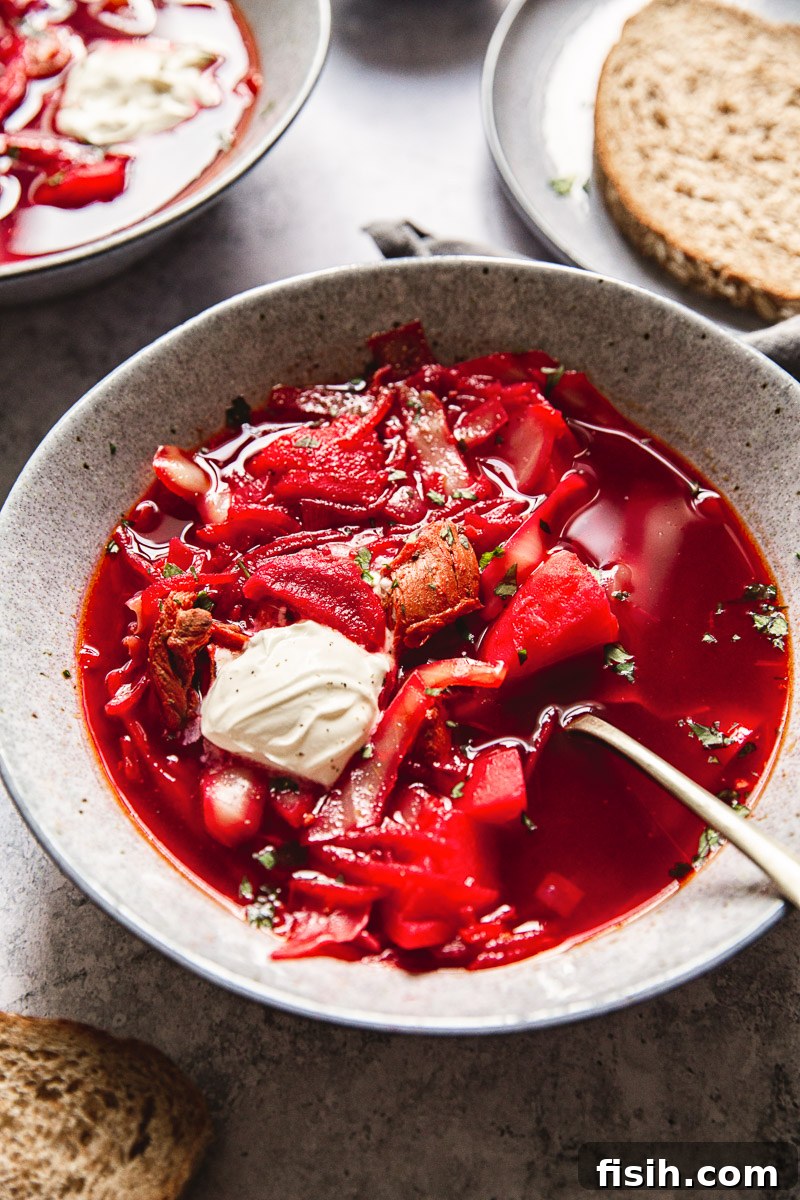
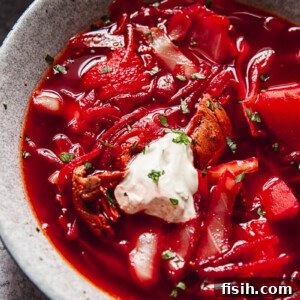
Have you ever truly experienced the warmth and rich flavors of authentic Ukrainian borscht? This isn’t just a soup; it’s a culinary embrace, a hearty masterpiece woven from beef or pork stock, vibrant beets, tender cabbage, and comforting potatoes. If you’ve yet to taste this Eastern European treasure, prepare to embark on a delicious journey. Below, I share the time-honored recipe that has been passed down through generations in my family, a recipe my mother and grandmother perfected throughout my childhood.
Should this delightful borscht inspire your palate for more Ukrainian classics, I highly recommend trying our Potato, Bacon and Caramelised Onion Vareniki (Pierogi) – another staple that evokes the comforting flavors of home.
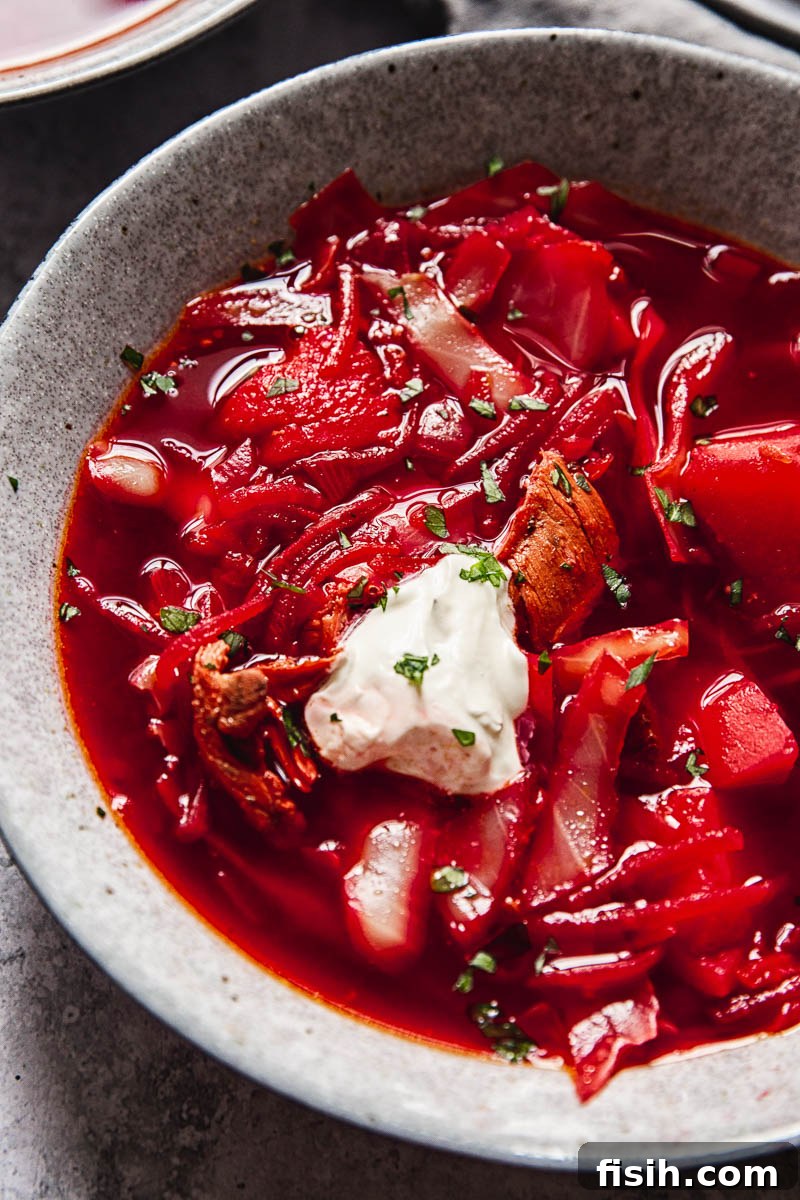
The Heartbeat of Eastern Europe: A Borscht Legacy
It’s almost surreal to finally share my family’s cherished borscht recipe. This dish was at the very top of my list when I first conceived of this blog years ago, a testament to its profound significance. The delay wasn’t due to complexity, but rather the sheer weight of its history and its integral role in Eastern European cuisine. Borscht is more than just food; it’s a cultural icon, a symbol of hospitality, and a source of immense pride.
Presenting the “perfect” borscht recipe felt like a weighty responsibility, demanding justice for a dish that has nourished countless families over centuries. Yet, in another sense, sharing this recipe is also one of the simplest tasks. Its preparation is ingrained in my memory, a culinary rhythm I’ve known since childhood. This recipe, much like my popular Beef Stroganoff or my comforting Cabbage Rolls, flows in my veins, a delicious part of my heritage.
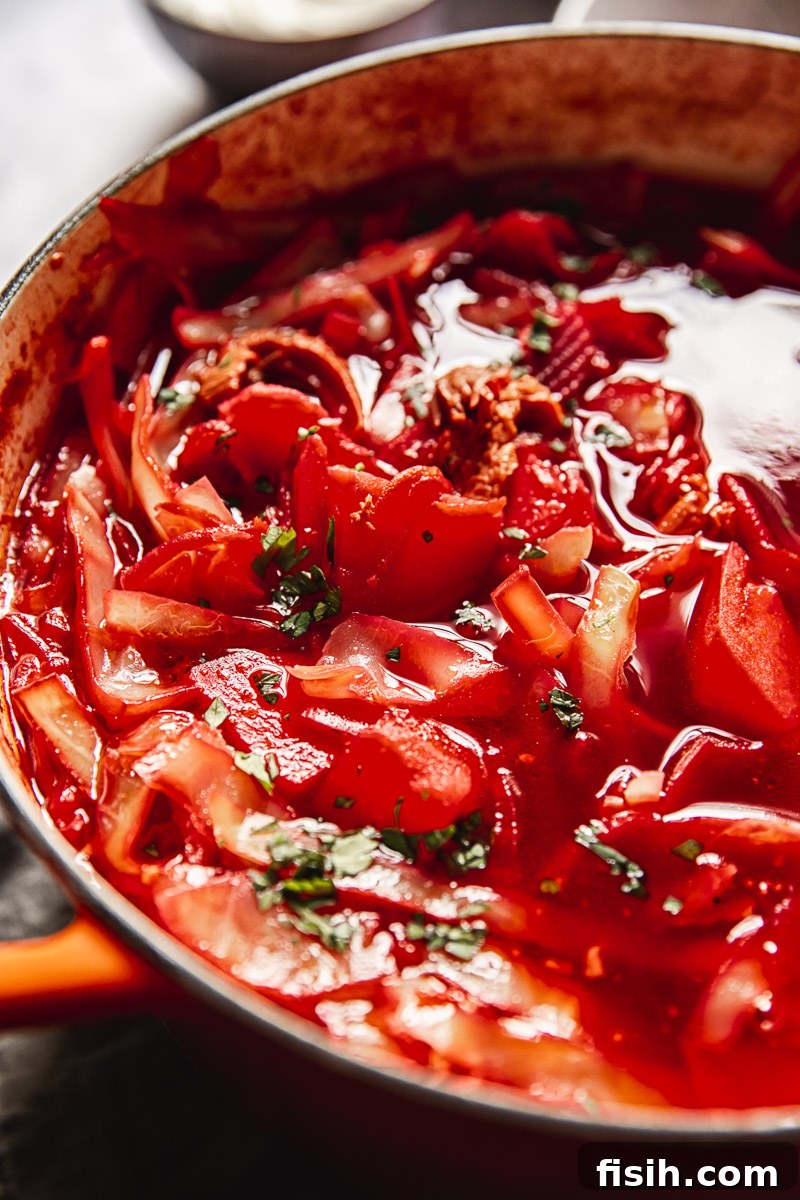
Unraveling the Borscht Identity: Ukrainian vs. Russian & Beyond
Before we dive into the cooking, let’s clarify a common point of confusion and a nuance in pronunciation. While widely recognized globally as “borscht,” the more accurate pronunciation, especially in its native land, is simply “borsch” – without the ‘t’ at the end. A small detail, perhaps, but one that highlights the dish’s true origins.
While many people outside Eastern Europe mistakenly associate borscht primarily with Russia, its roots are undeniably Ukrainian. Historical records confirm its widespread presence in Ukraine for centuries, evolving from ancient peasant fare into the rich, complex soup we know today. That’s not to say it isn’t beloved in Russia; indeed, it has been a staple there for hundreds of years, even gracing the tables of Russian tsars. However, its culinary heart beats strongest in Ukraine, where countless regional variations and family recipes thrive, each a source of local pride.
Beyond the classic red beet borscht, the Eastern European culinary landscape boasts a fascinating array of variations. For instance, in summer, a refreshing Green Borscht made with sorrel is popular, offering a lighter, tangy alternative that shares little beyond the name with its beetroot counterpart. Polish cuisine also features its own distinct version, often called “barszcz,” which, while also featuring beets, often differs in its stock base and souring agents, sometimes incorporating fermented beet starter for a deeper, tangier flavor. These regional differences underscore the rich and diverse culinary tapestry of Eastern Europe, where borscht, in all its forms, holds a revered place.
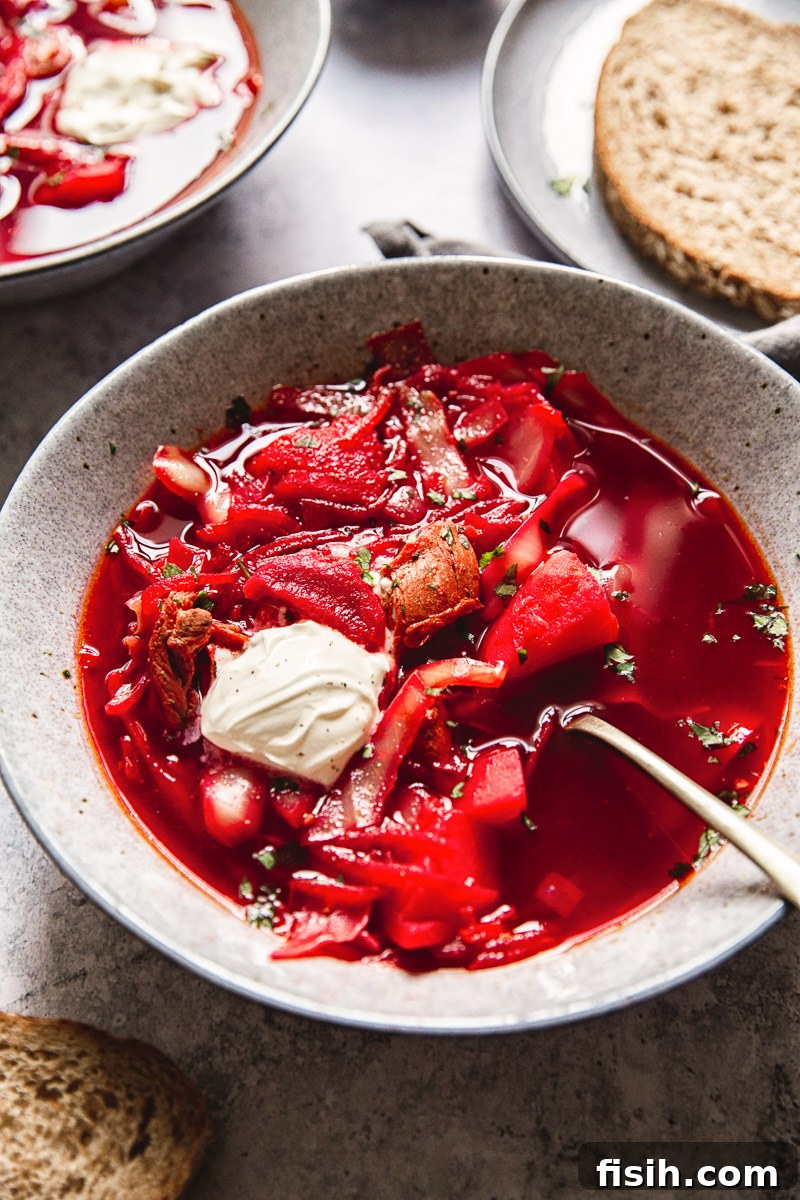
The Essential Ingredients for a Perfect Pot of Borscht
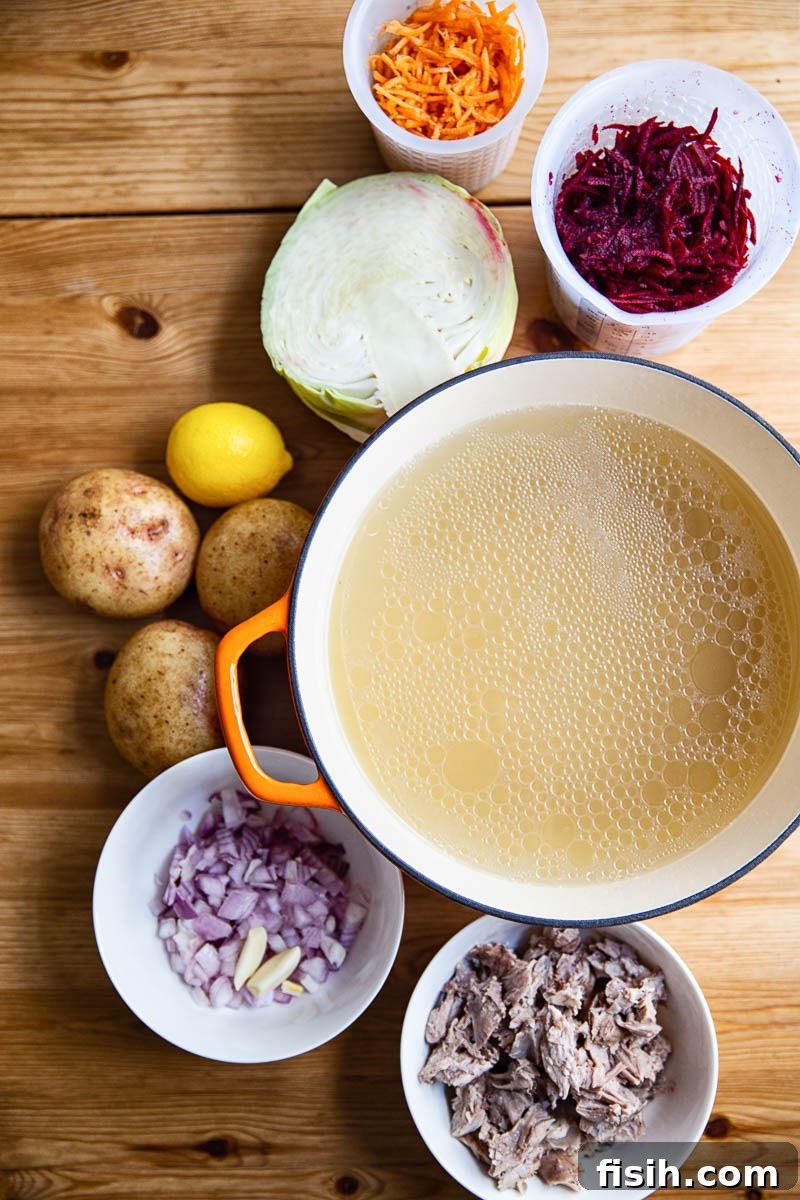
What ingredients truly define borscht? This might seem like a straightforward question, but the truth is, the specific components can vary wildly by country, region, and even household. However, a handful of core ingredients remain constant, acting as the soul of any true borscht.
These indispensable elements include:
- Beets: The undisputed star, responsible for borscht’s iconic deep red hue and earthy sweetness. Fresh, vibrant beets are paramount.
- Cabbage: Adding a delightful crunch and subtle sweetness, usually white or green cabbage, cut into thin strips.
- Potatoes: Providing a hearty, comforting texture, typically cut into substantial chunks to hold their shape during cooking.
- Carrots: Offering natural sweetness and depth of flavor, often sautéed to bring out their best.
- Onions: A fundamental aromatic, forming the flavor base alongside carrots.
Traditionally, borscht is a meat-lovers delight, with its rich stock often derived from beef, pork (especially pork ribs), or chicken. The meat itself, once tender, is shredded and returned to the soup, adding profound savory notes. However, the beauty of borscht lies in its adaptability. This foundational list of vegetables also serves as an excellent starting point for a delicious vegetarian borscht, where a rich vegetable broth or mushroom stock can stand in for the meat base.
Crafting Your Borscht: From Rich Stock to Vibrant Soup
The Foundation: Building a Flavorful Stock
Just as every sturdy building requires a solid foundation, every exceptional soup begins with a superb stock. For borscht, this step is arguably the most critical, laying down the fundamental flavor profile. While it’s the most time-consuming part of the process, don’t mistake time for difficulty; it simply requires patience and attention to detail.
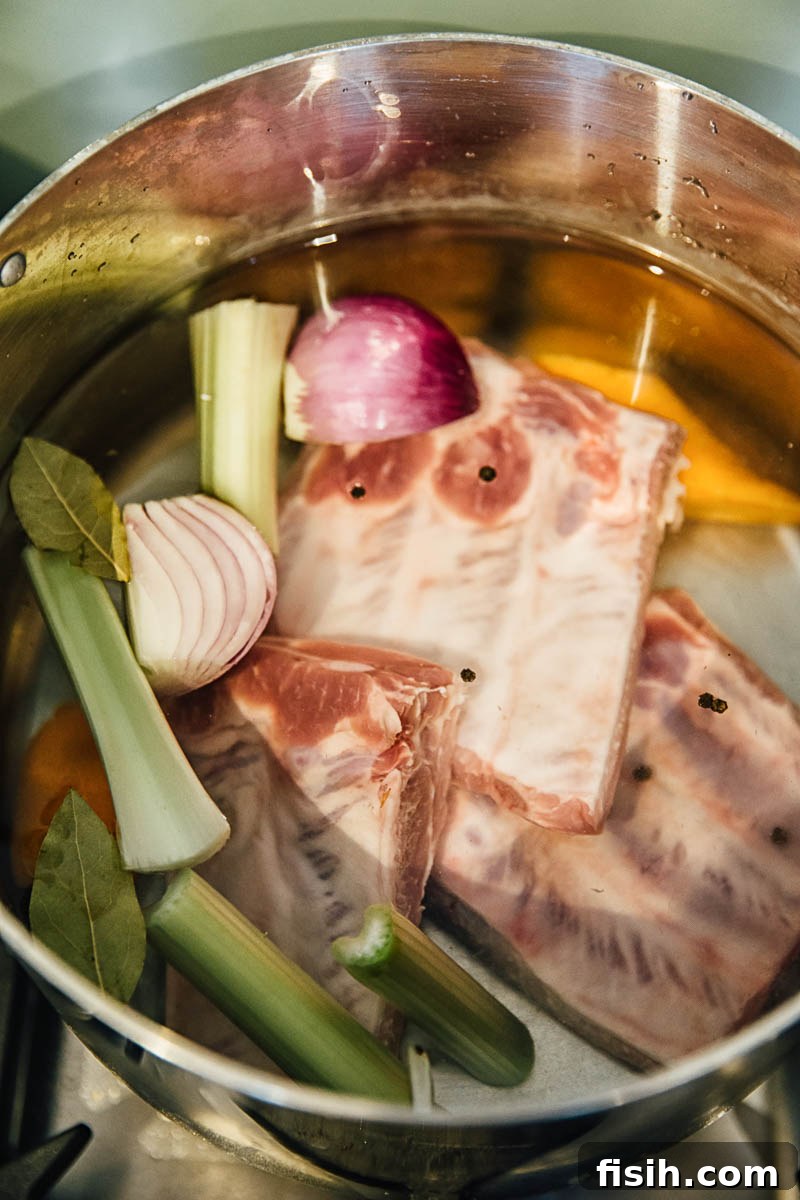
The deepest, most authentic flavors emerge from using bone-in meat, whether it’s pork ribs or beef bones. These bones release gelatin and marrow during a long simmer, contributing an unparalleled richness and mouthfeel to the broth. Alongside the meat, simple aromatic vegetables like half an onion, a whole carrot, and celery stalks are essential. My mother and grandmother always included bay leaves and black peppercorns, which infuse the stock with a subtle, earthy spice. To elevate the authenticity further, consider using celery root instead of celery stalks. While celery root can be a bit more challenging to find outside of Eastern Europe, its distinct, earthy flavor adds another layer of traditional taste. For those unable to source it, regular celery works perfectly well.
When making stock, ensure you start with cold water and bring it to a slow boil, then immediately reduce to a gentle simmer. This gradual heating allows impurities to rise to the surface, forming a “scum” that should be carefully skimmed off with a slotted spoon. This crucial step is repeated several times during the first hour or so of simmering to ensure a clear, clean-tasting broth. A clear stock is not just for aesthetics; it also means a purer, more concentrated flavor for your finished borscht. Once the meat is fork-tender, remove it, strain the stock through a fine-mesh sieve or cheesecloth to remove all solids, and discard the spent vegetables and bones. The tender meat can then be shredded and set aside, ready to be reintroduced to the soup.
Assembling the Soup: A Symphony of Vegetables
Once your stock is prepared and clarified, the actual soup-making process is surprisingly swift, typically taking no more than 30 minutes. If time is of the essence, you can certainly prepare the stock the day before, or even opt for a high-quality, store-bought beef or chicken broth as a convenient shortcut. However, for the true authentic experience, homemade stock is incomparable.
While making borscht doesn’t demand advanced culinary techniques, the order in which you add the vegetables is key to achieving that perfect balance of textures – ensuring everything is cooked through but still retains its integrity. For instance, potatoes, being denser, need an earlier start. Cabbage, which cooks relatively quickly, is best added towards the end to keep it tender-crisp, not mushy.
A distinctive element in Ukrainian and Russian cooking, and crucial for borscht, is the “zazharka.” This involves sautéing grated carrots and chopped onions in sunflower oil or butter until they are beautifully soft and golden, often with a hint of caramelization. This step adds a significant layer of depth and savory sweetness, enhancing both the flavor and color of the soup. Minced garlic is usually added right at the end of the zazharka process, just for 30 seconds, to release its aroma without burning. While some cooks choose to sauté the beets separately, I’ve found it adds unnecessary steps without a notable improvement in flavor. My family’s tradition, and one I wholeheartedly recommend, is to add raw grated beets directly to the simmering soup. They impart their vibrant color and earthy essence wonderfully without pre-sautéing.
Finally, a touch of acidity is essential for balancing the flavors and preserving the beets’ gorgeous color. Lemon juice or a dash of white vinegar added towards the end brightens the entire dish, preventing the beets from losing their rich hue and adding a pleasant tang. Adjusting salt and pepper to taste is the final flourish, ensuring your borscht is perfectly seasoned.
Expert Tips for Your Best Borscht Yet
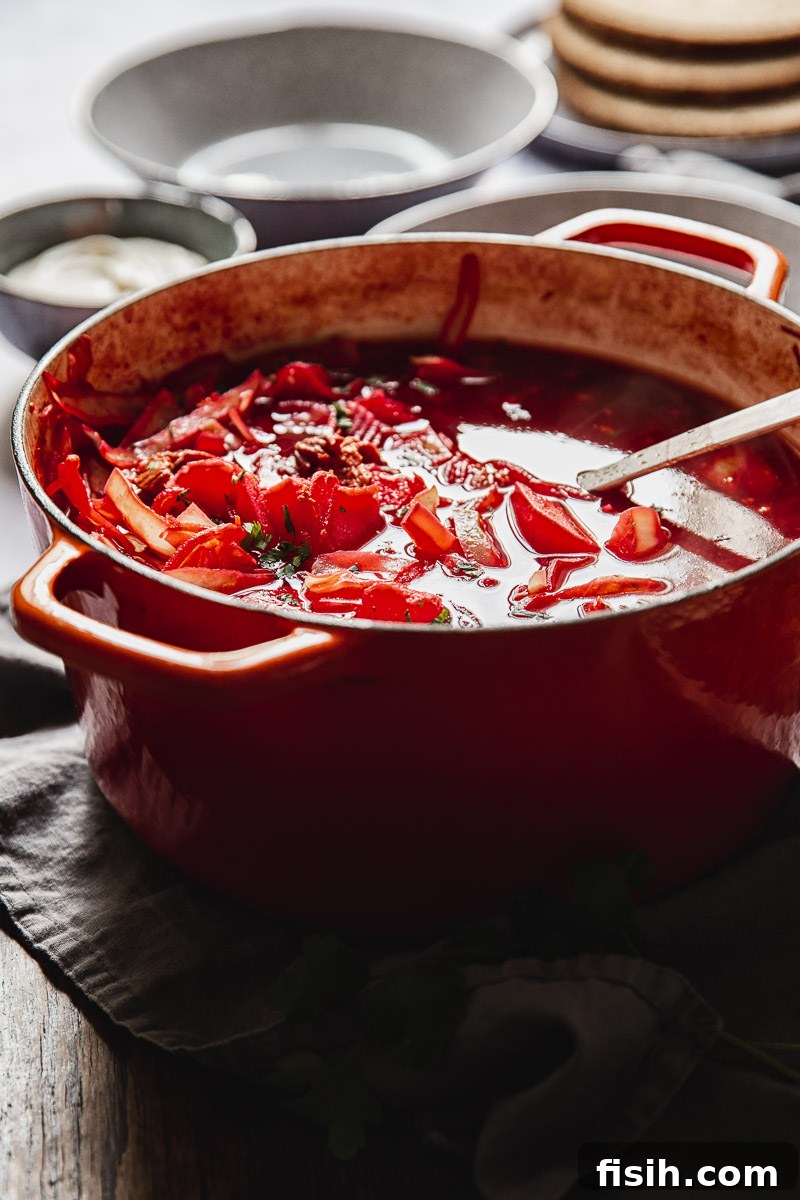
To ensure your homemade borscht reaches its full potential, consider these expert tips gleaned from generations of cooking:
- Homemade Stock is King: As emphasized, a homemade stock is the backbone of truly flavorful borscht. Its depth and nuance cannot be replicated. However, if time truly doesn’t allow, opt for a high-quality beef or chicken broth from your supermarket. Aim for about 2 liters (8 cups) for this recipe.
- Beet Selection Matters: Raw beets will always deliver the most authentic flavor and vibrant color. Pre-cooked, vacuum-packed beets are a convenient alternative that still yields good results. Crucially, avoid canned beets, as their flavor and texture are generally inferior and can negatively impact the soup.
- Potatoes with Presence: Cut your potatoes into generous 2-inch chunks. This helps them maintain their shape and texture throughout the cooking process, preventing them from becoming overly soft or disintegrating into the soup.
- Embrace Versatility: Borscht is a wonderfully adaptable dish. In summer, my mother often added sweet red or yellow bell peppers for extra sweetness and color. For added protein or a vegetarian option, many cooks include dried beans (soaked and cooked separately) or various dried mushrooms, which impart a deep umami flavor. Feel free to experiment with seasonal vegetables and personal preferences.
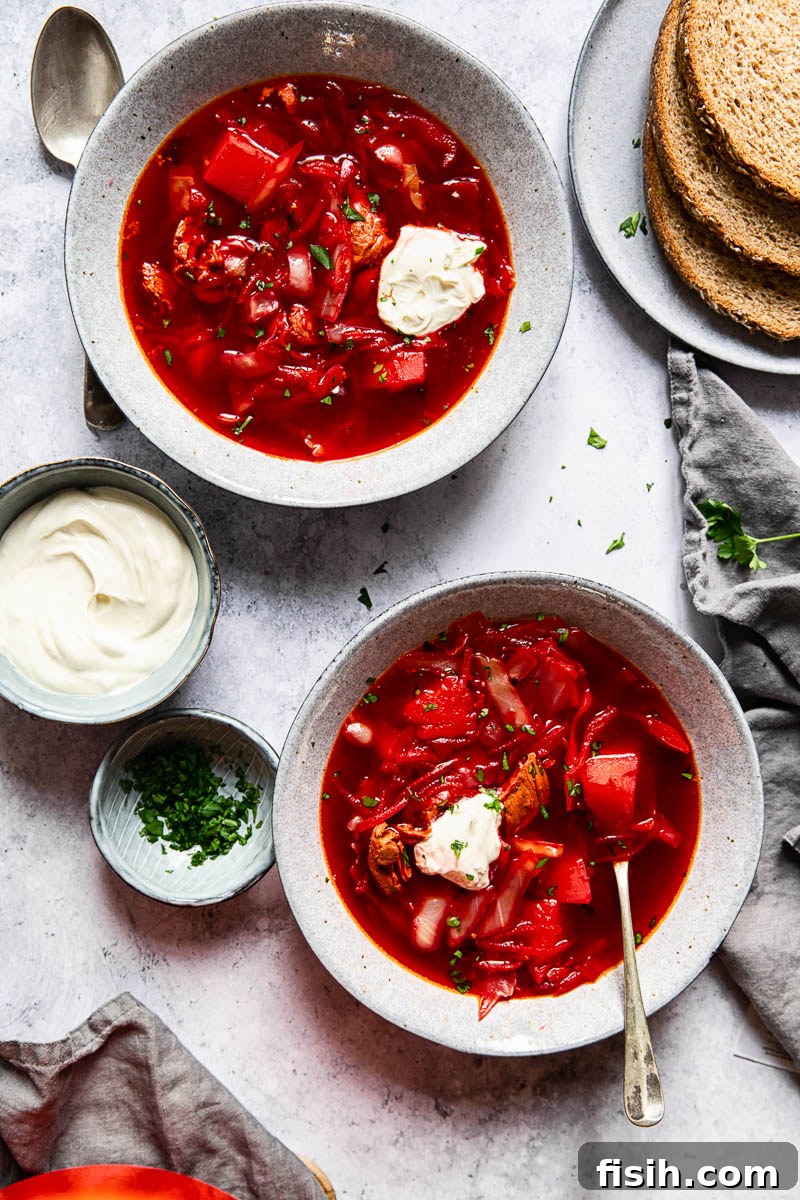
- The Sour Cream Secret: A dollop of sour cream (or its Eastern European cousin, smetana) is non-negotiable for serving borscht. Its creamy tang cuts through the richness of the soup beautifully. Always serve it on the side, allowing each diner to add it to their bowl, rather than stirring it directly into the entire pot. This prevents curdling and keeps the soup fresh.
- Fresh Herbs for Finish: A generous sprinkle of fresh herbs, particularly dill and parsley, is the traditional garnish for borscht. They don’t just add a burst of lovely green color; their fresh, herbaceous notes brighten the flavor profile and enhance the overall experience.
Serving Your Hearty Borscht: Traditions and Modernity
In Ukraine and Russia, borscht traditionally holds a place of honor as the first course of a substantial midday meal. This would often be followed by a “second course” of meat and potatoes – a broad term that could encompass a variety of dishes beyond just that combination – and concluded with something sweet for the third course. This multi-course dining ritual reflects a historical reverence for food and gathering.
However, in today’s fast-paced world, many people no longer have the time or the appetite for such elaborate meals. Consequently, borscht has often evolved into a standalone meal, its inherent heartiness making it perfectly satisfying on its own. It’s a testament to its comforting and filling nature that a single bowl can be a complete culinary experience.
Regardless of whether it’s part of a grand feast or a simple meal, borscht is almost universally served with a generous dollop of smetana or sour cream, which provides a creamy, tangy contrast to the soup’s robust flavors. A liberal sprinkle of fresh herbs like dill or parsley adds vibrant color and a burst of freshness. To complete the experience, fresh bread is an essential accompaniment. Crusty sourdough or hearty rye bread are popular choices, perfect for soaking up every last drop of this delicious, ruby-red soup. Some even enjoy it with a side of garlic bread or pampushky, small savory garlic buns, for an extra layer of flavor.
Storage, Freezing, and Reheating Your Borscht
One of the many wonderful qualities of borscht is how well it keeps, and often, how its flavors deepen and meld overnight. If you haven’t already added sour cream to the entire pot, any leftover soup can be securely covered and stored in the refrigerator for 2-3 days. In fact, many connoisseurs argue that borscht tastes even better the next day, allowing all the ingredients time to harmonize.
Borscht can also be frozen, offering a convenient make-ahead option. Pour cooled borscht into airtight freezer-safe containers or bags, leaving some headspace for expansion. It will keep well in the freezer for 2-3 months. However, be aware that potatoes, due to their high water content, may become slightly softer and a bit mushy after freezing and defrosting. To mitigate this, some prefer to freeze borscht without potatoes and add freshly cooked potatoes when reheating. When reheating, gently warm the soup in a saucepan over medium heat, stirring occasionally, or use a microwave. Avoid boiling it vigorously, which can diminish the fresh flavors and textures.
Explore More Eastern European Soup Delights
If you’ve enjoyed this taste of Ukrainian cuisine, there’s a whole world of Eastern European soups waiting to be discovered:
- Restaurative Beef and Cabbage Soup ‘Shchi’
- Russian Sweet and Sour Beef Stew Solyanka
- Meatball Soup
- Yellow Split Pea Soup
Authentic Ukrainian Borscht Recipe
- Prep Time: 30 mins
- Cook Time: 2 hrs 20 mins
- Total Time: 2 hrs 50 mins
- Servings: 8
- By: Julia Frey of Vikalinka
A traditional Ukrainian borscht recipe featuring a rich meat-based broth with tender beets, cabbage, potatoes, and carrots, served with a dollop of sour cream for ultimate comfort.
Equipment
- Large Stock Pot
- Large Soup Pot
- Frying Pan
- Fine-mesh Sieve
Ingredients
For the Stock:
- 3 litres / 3 quarts cold water
- 600g / 1½ lbs pork ribs or bone-in beef (cut into smaller chunks if needed)
- ½ onion, quartered
- 1 carrot, cut in half
- 2 celery sticks, cut in half
- 2 bay leaves
- 5 black peppercorns
- 1 tsp salt
For the Borscht:
- 2 medium beets, peeled and grated
- 3 medium potatoes, peeled and cut into 2-inch chunks
- 2 medium carrots, grated
- 1 medium onion, chopped
- 2 cloves garlic, minced
- 1 bay leaf
- 3 tbsp tomato puree/paste
- ½ small white cabbage, cored and thinly sliced
- Juice of 1 lemon, or 1 tsp white vinegar
- Salt to taste
- Pepper to taste
- Fresh dill or parsley, for garnish
- Sour cream or smetana, for serving
Instructions
For the Stock:
- In a large stock pot, combine the cold water, pork ribs (or beef), quartered half onion, celery sticks, carrot halves, bay leaves, peppercorns, and a pinch of salt.
- Bring to a boil, then immediately reduce the heat to a gentle simmer. Cook for 1 to 1.5 hours, or until the meat is nearly falling off the bones. During the first hour, periodically remove any foam or “scum” that rises to the surface with a slotted spoon to ensure a clear stock.
- Once the stock is done, allow it to cool slightly. Carefully remove the ribs to a separate plate. Strain the stock by pouring it through a fine-mesh sieve into another pot or large bowl, discarding the cooked vegetables.
- When the meat is cool enough to handle, remove it from the bones and shred it using two forks or your hands. Discard the bones. Set the shredded meat aside until needed. The prepared stock can be made in advance and refrigerated for up to 2 days or frozen for up to 3 months.
For the Borscht:
- Prepare all your vegetables: peel and grate the beets and carrots separately, chop the onion, peel and cut the potatoes into chunks, and thinly slice the cabbage. Having everything ready before you start assembling the soup will make the process smooth.
- Pour the strained stock into a large soup pot. Add the shredded meat, grated beets, potato chunks, tomato puree, a pinch of salt, and one fresh bay leaf. Bring the mixture to a boil, then reduce the heat to a simmer.
- Meanwhile, heat 1 tablespoon of vegetable oil in a frying pan over low to medium heat. Add the grated carrots and chopped onions and sauté for 7-10 minutes until they are softened and lightly caramelized. Then, add the minced garlic and stir-fry for another 30 seconds until fragrant. This is your “zazharka.”
- Once the onions and carrots are ready, add them to the simmering soup pot along with the sliced cabbage. Continue to cook for approximately 15 minutes, or until the cabbage leaves are tender but still have a slight bite (not mushy).
- Stir in the lemon juice (or white vinegar), then season with salt and pepper to taste. Remove the bay leaf before serving.
- Serve the borscht hot, garnished with a generous dollop of sour cream or crème fraîche, and sprinkled generously with fresh dill or parsley.
Notes
- Stock Alternatives: While homemade stock is recommended for the best flavor, you can use a good quality store-bought beef or chicken broth if you’re short on time. For this recipe, you would need approximately 2 litres / 8 cups of stock.
- Beet Quality: Always prioritize raw, fresh beets for optimal flavor and color. Pre-cooked, vacuum-packed beets are an acceptable substitute, but avoid canned beets, as they often have a metallic taste and soft texture.
Nutrition Information (per serving, approximate)
Calories: 237kcal | Carbohydrates: 21g | Protein: 10g | Fat: 12g | Saturated Fat: 4g | Cholesterol: 42mg | Sodium: 404mg | Potassium: 722mg | Fiber: 3g | Sugar: 5g | Vitamin A: 1335IU | Vitamin C: 20.4mg | Calcium: 49mg | Iron: 1.6mg
Nutrition information is automatically calculated and should only be used as an approximation.