
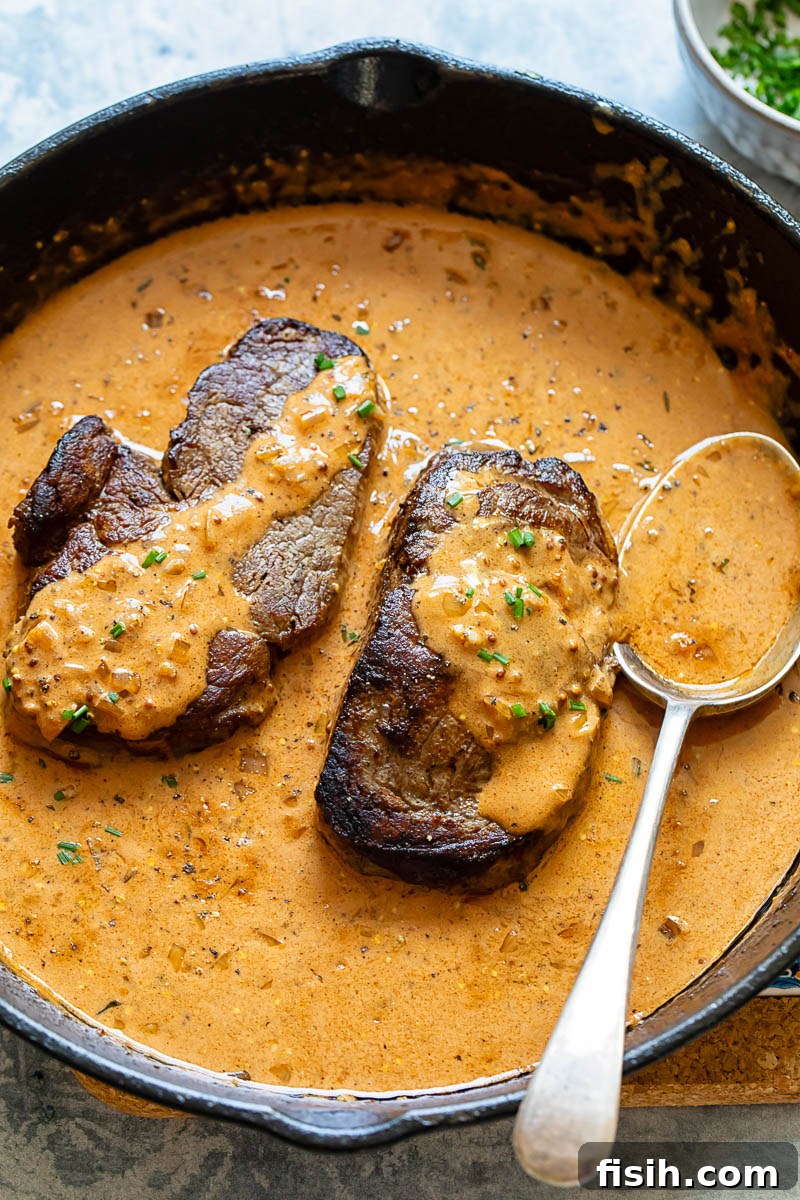
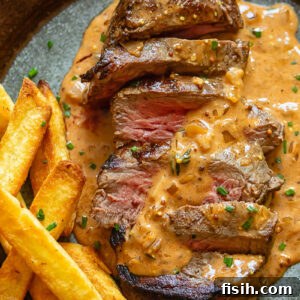
Indulge in the timeless elegance of Steak Diane. This classic dish features tender fillet steak, cooked to your desired perfection, then enveloped in a lavish, velvety sauce. A symphony of flavors from fruity brandy, sweet shallots, pungent wholegrain mustard, and rich cream awaits your palate. Elevate your home dining experience with this sensational retro favorite.
When it comes to enhancing a magnificent cut of steak, the options for sauces are abundant. While some might reach for a classic Béarnaise, a bold peppercorn sauce, or even a rich mushroom Marsala sauce, there’s a special place in culinary history for Steak Diane. For those who prefer dairy-free options, a vibrant, herb-heavy, citrus-fresh Sicilian salmoriglio is a fantastic choice, showcasing the incredible versatility of steak pairings. However, today, we’re casting our spotlight on a star that deserves its revival.
As a passionate culinary explorer, I feel a genuine sense of duty to rescue and revitalize forgotten retro recipes that teeter on the brink of disappearing from modern menus. It would be a true culinary tragedy if future generations missed out on the delightful flavors and charming histories of archival treasures such as Waldorf Salad, the comforting Turkey a lá King, the savory Salisbury Steak, or even the hearty Tater Tot Casserole (though, admittedly, Tater Tot Casserole seems to possess an enduring charm that ensures its survival!).
Among these cherished classics, Steak Diane stands out as a gastronomic icon from the mid-20th century. For our younger, Gen Z readers, that means it’s a dish steeped in the glamour of the last century, making a triumphant return from the hallowed, perhaps dusty, dining halls of yesteryear to grace our tables once more.
What is Steak Diane? The Story Behind the Classic
Steak Diane emerged as a dazzling culinary spectacle in the 1950s, becoming one of the most dramatic dishes you could order in an upscale restaurant. Imagine the scene: a perfectly seared fillet steak, presented tableside, then bathed in a rich sauce dramatically flambéed with brandy right before your eyes. This theatrical flourish added an element of excitement and luxury to the dining experience. While modern health and safety regulations mean this tableside flambé is a rare sight in today’s establishments, the magnificent sauce itself is wonderfully accessible for home cooks.
Recreating the magic of Steak Diane at home is surprisingly simple, allowing you to capture its essence without the fiery pyrotechnics. The sauce is defined by a few distinct characteristics that contribute to its unparalleled depth and complexity:
- Pan-Seared Perfection: The foundation of the sauce is built directly in the same pan where the steak was cooked. This ingenious method ensures that all the rich, savory drippings and browned bits – known as “fond” – along with the unctuous butter and beef fat, are fully incorporated into the sauce, adding an incredible depth of flavor.
- Slow Reduction for Maximum Flavor: The base of the sauce is meticulously crafted through a painstakingly slow reduction of quality brandy, followed by robust beef stock. This patient process concentrates the flavors, creating a rich and aromatic liquid that forms the soul of the Diane sauce.
- A Symphony of Savory Notes: The sauce is further infused with a powerful and harmonizing combination of ingredients: the tangy umami of Worcestershire sauce, the piquant kick of whole-grain mustard, and the subtle sweetness and depth of tomato paste. These elements intertwine to create a truly unforgettable flavor profile.
- Luxurious Creamy Finish: The grand finale involves finishing the sauce with decadently heavy cream (often referred to as double cream in the UK). This addition transforms the sauce, giving it a velvety smooth texture and a rich, indulgent mouthfeel that beautifully complements the tender steak.
You might wonder how such a diverse array of contrasting flavors – the sweet fruitiness and oak notes of brandy, the earthy depth of beef, the tangy and salty punch of Worcestershire and mustard, and the mild creaminess – can possibly harmonize. Yet, they do, creating a perfectly balanced and utterly delectable experience. It’s this ingenious mastery of contrasting elements that makes Steak Diane so appealing and enduring.
While the core elements remain consistent, variations of Steak Diane exist. My personal rendition embraces the use of finely diced shallots and minced garlic, which contribute a subtle sweetness and an engaging texture to the sauce. As a dedicated herb enthusiast, I also incorporate fresh thyme, adding an aromatic layer that elevates the dish further. Some recipes even suggest sautéing mushrooms, but I generally prefer a finer, smoother consistency for my Steak Diane sauce.
And for those curious about the name, “Diane”? The sauce is believed to take its name from Diana, the Roman Goddess of the hunt. This connection suggests a pairing with game meats like venison or pheasant. The link to beef steak, while perhaps a bit tenuous for some, still evokes a sense of wildness and classic culinary tradition, making “Steak Diane” a fittingly evocative title for this magnificent dish. Whether the goddess herself would approve of this particular beef preparation is a delightful mystery, but its deliciousness is undeniable.
Mastering the Perfect Steak & Sauce: Essential Tips & Notes
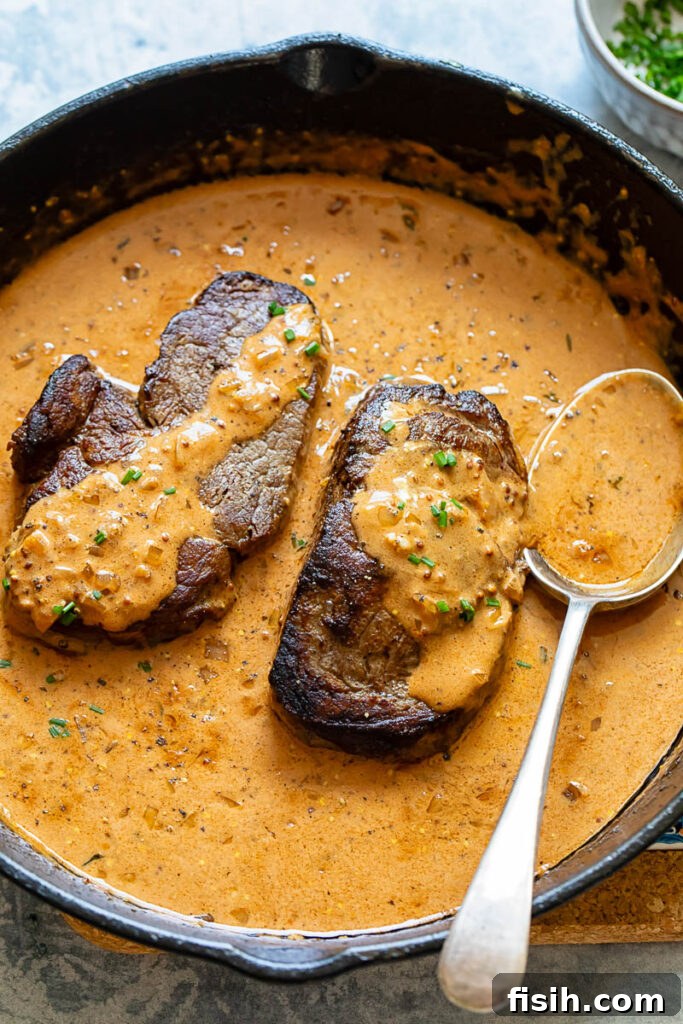
Achieving a restaurant-quality Steak Diane at home is entirely within your reach with a few crucial tips. The key lies in both the meticulous preparation of the fillet steak and the patient crafting of its accompanying sauce.
- The Golden Rules of Steak Resting: There are two non-negotiable rules for cooking steak perfectly, and both involve resting. Think of it as a well-deserved spa day for your steak!
- Rule One: Bring to Room Temperature. Always remove your fillet steak from the refrigerator 20 to 30 minutes before you plan to cook it. Cooking meat at room temperature ensures a more even cook from edge to center, resulting in a tender, succulent steak rather than a tough one.
- Rule Two: Post-Cook Rest. After searing, allow the steak to rest for at least 5 minutes before slicing. This critical step permits the muscle fibers to relax and the juices to redistribute throughout the meat. Skipping this rule will inevitably lead to a disappointing puddle of liquid on your plate and a drier steak.
- Alcohol-Free Option: If you prefer not to cook with alcohol, simply omit the brandy from the recipe. There’s no need for a substitute; the sauce will still be incredibly flavorful due to the rich beef stock and other aromatics.
- Patience with the Sauce: The Steak Diane sauce thrives on patience. Take your time during the reduction stages. Allow the brandy to reduce almost completely, intensifying its subtle fruity notes, and then give the beef broth ample time to simmer down and thicken. Finally, add the cream off the heat to prevent splitting.
- Cream Care: A crucial warning: heating cream to a vigorous boil can cause it to “split,” resulting in a curdled, unappetizing texture. To prevent this, always ensure the sauce is removed from the heat before stirring in the cream.
- Naturally Thickened Sauce: This recipe intentionally avoids artificial thickeners. The desired consistency for Steak Diane sauce is silky and fluid, not gloopy or overly viscous. The high fat content of heavy cream (or double cream in the UK) naturally provides a beautiful, rich body as it gently heats and emulsifies with the reduced liquids.
Elevating Your Steak Diane: Perfect Pairings
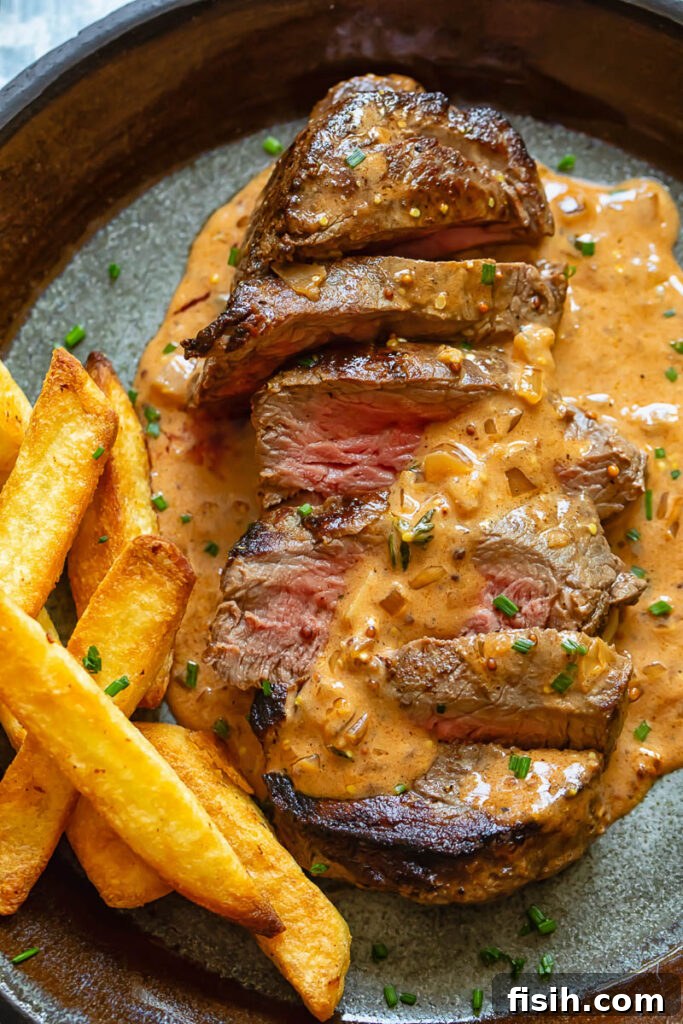
While Steak Diane is undeniably a gourmet dish, my heart remains with the comforting simplicity of steak and chips! For this particular steak recipe, I wholeheartedly recommend thick-cut chips. While I’m also a fan of classic fries, their delicate nature tends to be overshadowed by the opulent sauce and can become soggy beneath a juicy slab of beef. Robust chips offer the perfect textural contrast and absorb the exquisite sauce beautifully.
Should you be aiming to impress your guests with equally robust and elegant potato offerings, consider these fantastic alternatives:
- Golden and Crispy Parmesan-Crusted Potatoes: Their savory crust adds a wonderful texture and flavor dimension.
- Artfully Crafted Hasselback Potatoes: The clever ridges of these Swedish-style baked potatoes are ingeniously designed to catch and hold every drop of that sumptuous Steak Diane sauce.
- Rustic Oven-Fried Potatoes with Mushrooms and Onions: A flavorful and hearty side that complements the beef perfectly.
When pairing vegetables with a rich, creamy sauce like Steak Diane, I typically lean towards cooked vegetables rather than fresh salads. I strive to choose what’s in season for optimal flavor and freshness. Some excellent choices include:
- Buttery Garlic Butter Sautéed Cauliflower: A tender and flavorful accompaniment that won’t compete with the main dish.
- Elegantly Roasted Asparagus with Radishes: The slight bitterness of asparagus and the peppery crunch of radishes provide a lovely counterpoint to the creamy sauce.
- Bright Lemon Butter Green Beans: A touch of citrus and butter adds a fresh zest that balances the richness.
For those with a heartier appetite who enjoy the indulgence of melted cheese with their steak, comforting sides like macaroni cheese or a decadent cauliflower gratin are safe bets. These options offer satisfying richness without overshadowing the star of the show – the exquisite Steak Diane sauce.
Storage and Leftovers: Maximizing Your Meal
The concept of leftover fillet steak is almost unheard of – it’s simply too delicious to leave behind! However, the rich and creamy nature of Steak Diane sauce means that a little goes a long way, and I often find myself with a small quantity of this luscious sauce remaining. Fortunately, it stores beautifully.
If the sauce has been kept separate from the steak, it will remain fresh in an airtight jar in the refrigerator for 2-3 days. This makes it a fantastic culinary asset to have on hand.
Should you be fresh out of filet mignon, this versatile leftover sauce will happily transform humble chicken thighs or pork chops into a gourmet meal. Alternatively, stir it into a comforting chicken casserole or a hearty beefy pie for an incredible boost of flavor and luxurious creaminess. It’s a simple way to add a touch of elegance to everyday dishes, proving that the magic of Steak Diane can extend far beyond its initial serving.
More Robust Beef Recipes to Explore
- Braised Beef Short Rib
- Slow Cooker Beef Brisket
- Beef Stew with Dumplings
- Harissa Beef Stuffed Eggplant
Steak Diane
Ingredients
- 2 tbsp butter
- 2 x 200g / 8 oz beef fillet steaks, (fillet mignon)
- Salt
- 1 shallot, diced
- 2 cloves garlic
- 3-4 sprigs thyme
- 50ml / 1/4 cup brandy
- 150ml / 2/3 cup beef stock
- 2 tsp Worcestershire sauce
- 1 tbsp wholegrain mustard
- 1 tbsp tomato paste
- 1/4 tsp black pepper
- 50ml / 1/4 cup double / heavy cream
Instructions
-
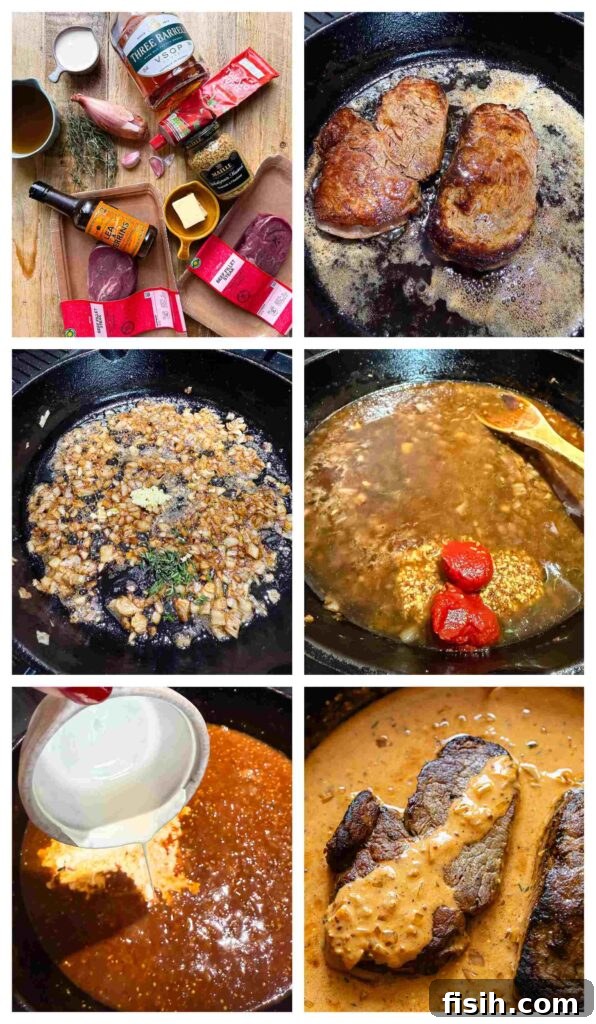
Take the steaks out of the fridge and bring them to room temperature, which should take 20-30 min. Pat the steaks dry with a paper towel and season with salt on both sides. Melt the butter in the frying pan on medium heat and cook the steak until they develop a brown crust on both sides for 4-5 minutes on each side for a medium rare finish. Remove the steaks from the pan and allow to rest on a plate, cover to keep warm.
-
Add the diced shallot to the same pan sauté for 2-3 min, then add minced garlic and thyme leaves and continue sautéing while stirring constantly as garlic burns quickly for another 30 sec. Deglaze the pan with the brandy and let it reduce to almost nothing.
-
Now add the beef stock, tomato paste, Worcestershire sauce, mustard, a pinch of salt and pepper to the sauce and cook it until thickened.
-
Take the sauce off the heat and wait a bit until the bubbles calm down. Now add the cream to the sauce and stir everything together to blend.
-
Slice the steaks and serve with the sauce.
Notes
- There are two important rules for getting the steak just right. The first is to take the steak from the fridge 20-30 minutes before cooking. It will cook more evenly and become tender if cooked from room temperature.
- And secondly, rest the steak after cooking to allow the juices to be reabsorbed. It will only take 5 minutes but really does make a big difference.
- If you don’t want to cook with alcohol, just leave it out. No need to find a substitute.
- Take your time when making the sauce. Give time for the brandy and sauce to reduce.
- Boiling the cream will result in it splitting. Make sure it’s only added off the heat.
Nutrition
Nutrition information is automatically calculated, so should only be used as an approximation.