

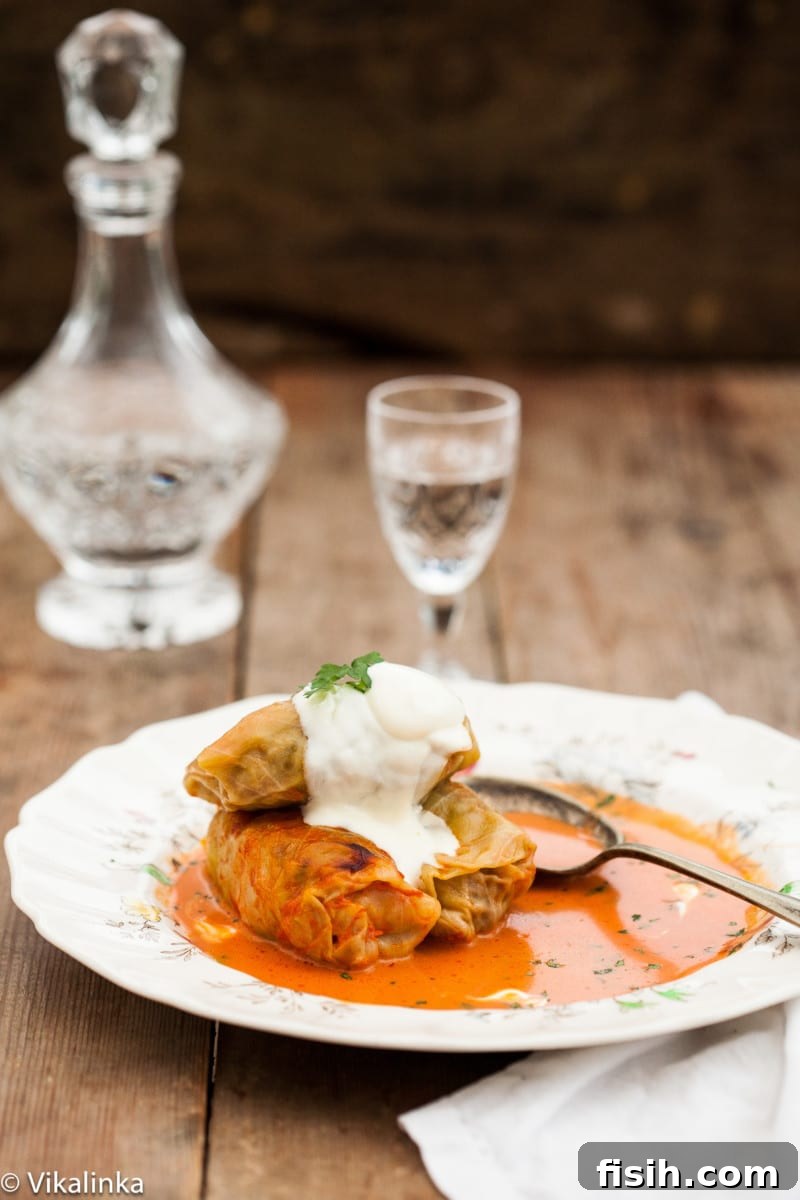
Welcome to the heartwarming world of Stuffed Cabbage Rolls, a beloved culinary treasure often known as “Golubtsi” in Eastern European kitchens. This iconic dish features tender cabbage leaves lovingly wrapped around a savory filling of seasoned ground beef, succulent pork, fluffy rice, and a medley of aromatic vegetables. Once assembled, these delightful parcels are slow-cooked in a rich, creamy tomato sauce until they reach a state of absolute perfection. While their elegance might suggest a complex process, making authentic cabbage rolls at home is remarkably straightforward and immensely rewarding.
For a truly satisfying and comforting meal, consider serving these flavorful cabbage rolls alongside our Herb and Garlic Mashed Potatoes. The creamy texture of the potatoes beautifully complements the robust flavors of the rolls, creating a complete and utterly delicious dinner experience that will transport you straight to a cozy family gathering.
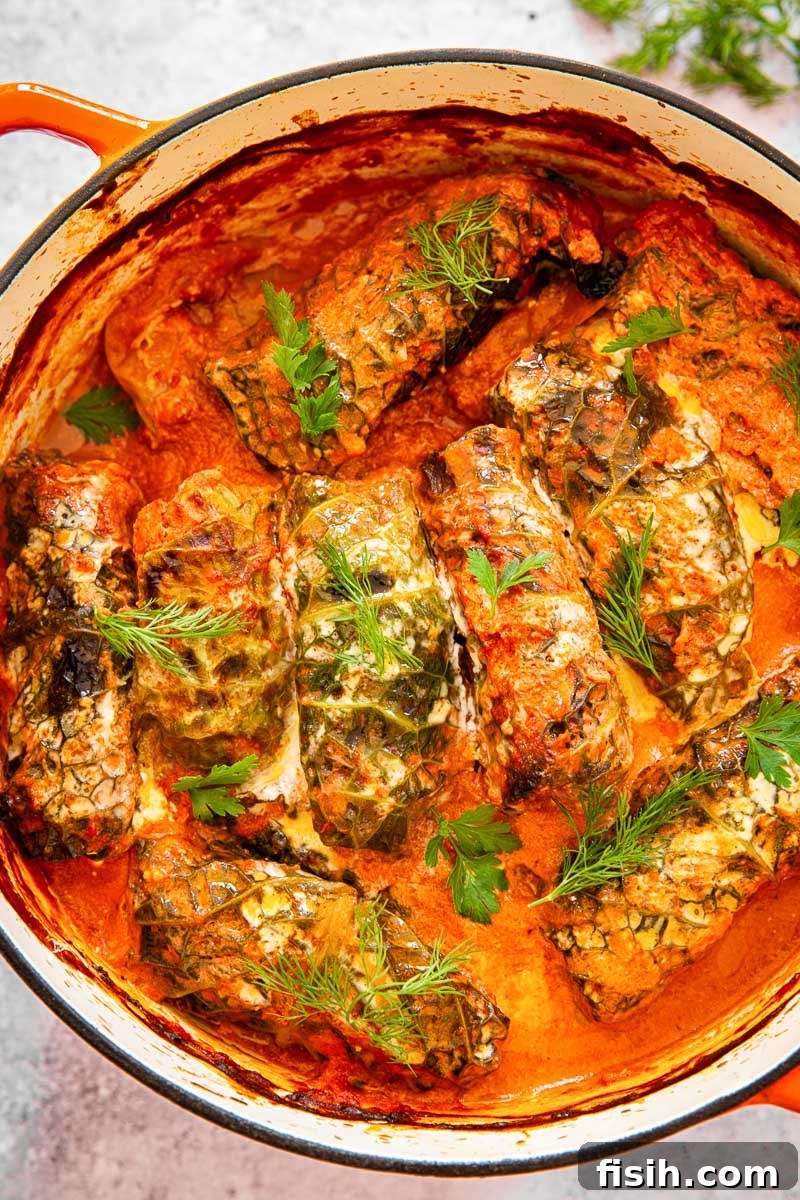
Cabbage Rolls (Golubtsi): A Comfort Food Classic
For countless families across Russia and Ukraine, Stuffed Cabbage Rolls, or Golubtsi, are more than just a dish; they are a symbol of comfort, tradition, and home. This recipe captures the essence of generations of culinary heritage, offering a meal that is both deeply satisfying and surprisingly wholesome. Don’t be intimidated by the idea of preparing them; while it requires a little patience and a touch of meticulousness, the process is far from difficult. The result is a dish that nourishes both body and soul, perfect for sharing with loved ones on a chilly evening.
Have you ever wondered about the secret to enduring long, harsh winters without succumbing to constant colds? A significant part of the answer, for many in Eastern Europe, lies in the humble cabbage. This often-underestimated vegetable is an absolute powerhouse of nutrition, boasting an impressive amount of Vitamin C—even more than oranges! Incorporating cabbage into winter diets is a time-honored tradition, ensuring essential nutrients are consumed during colder months.
Cabbage’s versatility is truly remarkable, making it a staple in various culinary forms. It can be enjoyed fresh and crisp in a vibrant salad, simmered to perfection in hearty soups like Shchi, or tenderly braised as a flavorful side dish. Its adaptability allows it to star in countless recipes, each offering a unique way to savor its earthy goodness and health benefits. This adaptability is precisely what makes it ideal for our delicious cabbage rolls.
Mastering the Art of Stuffed Cabbage Rolls: Our Family Recipe
The recipe I am delighted to share with you today is a cherished family heirloom, passed down from my mother. While I may have introduced a few small tweaks to simplify the preparation steps and enhance the overall ease of the process, I’ve taken great care to ensure that the authentic taste and comforting essence of this traditional dish remain absolutely unchanged. It’s a testament to the enduring flavors that have graced our family table for years.
Choosing the Best Cabbage for Golubtsi
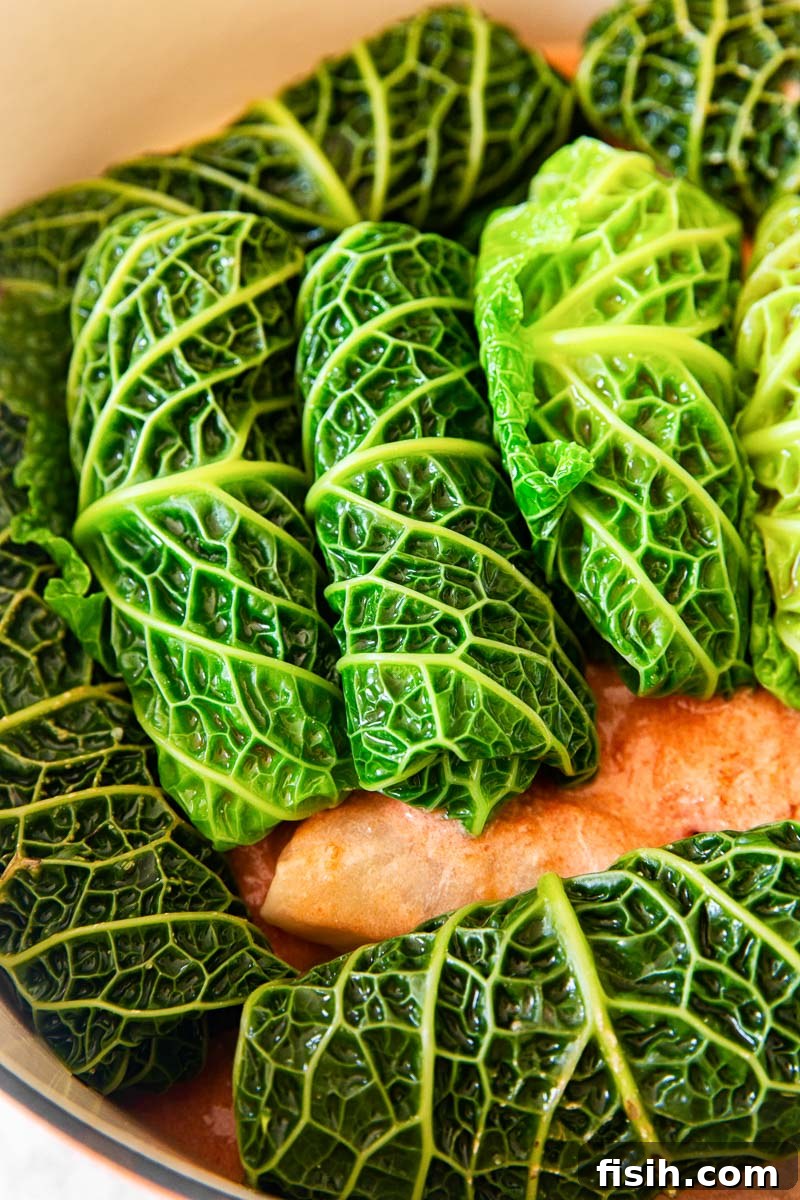
When it comes to crafting the perfect cabbage rolls, the choice of cabbage is paramount. Traditionally, firm, crisp green cabbage is the variety of choice for its robust texture and classic flavor profile. However, I’ve recently embarked on some culinary experimentation with Savoy cabbage, and the results have been nothing short of delightful. Savoy cabbage, known for its crinkled, tender leaves, offers a distinct advantage: it is often considered the sweetest of all cabbage varieties, imparting a subtle sweetness to the dish that beautifully complements the savory filling. Furthermore, its delicate texture adds a wonderful depth to the finished rolls, and its leaves separate much more easily than those of green cabbage, making the preparation process a dream for any home cook.
Regardless of whether you opt for the traditional green cabbage or the more tender Savoy, the key to exceptional cabbage rolls lies in selecting the freshest and crispiest head available. Look for cabbage that feels heavy for its size, with vibrant, unblemished outer leaves. A common pitfall to avoid is using cabbage later in the growing season, typically around March or April. Cabbage harvested during this period can often result in rolls that are unfortunately tough and stringy, compromising the overall texture and enjoyment of your meal. Always prioritize fresh, early-season cabbage for the most tender and delicious results.
The Heart of the Dish: A Savory Cabbage Roll Stuffing
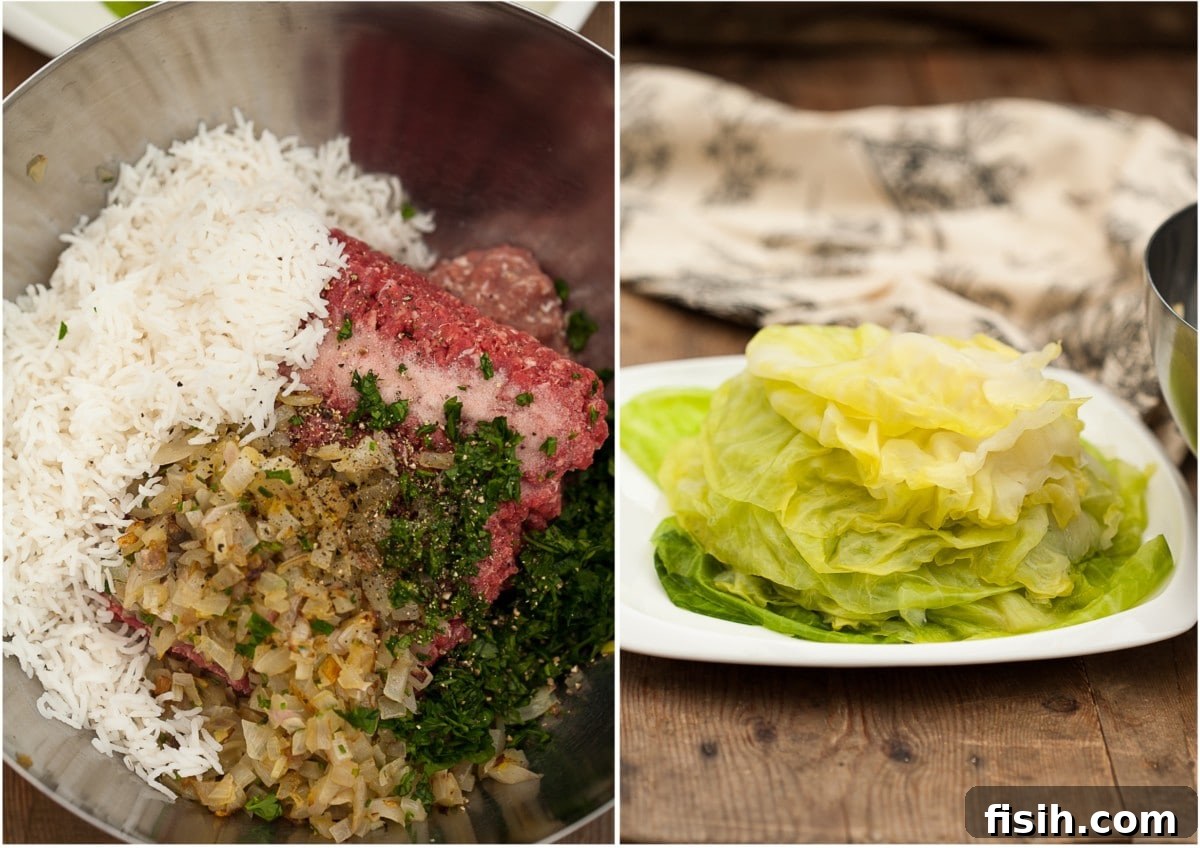
The soul of these magnificent cabbage rolls lies within their carefully crafted stuffing. We begin with a harmonious blend of extra-lean proteins, combining the rich flavor of ground beef with the tender succulence of ground pork. This mixture forms the hearty base, providing both substance and an incredible depth of flavor. To this, we add a medley of aromatic ingredients: sweet, caramelized onions that have been slowly cooked to bring out their natural sugars, finely grated carrots for a hint of sweetness and vibrant color, and an abundance of fresh parsley, chopped to impart a bright, herbaceous note that lifts the entire filling. Finally, perfectly cooked rice is incorporated, acting as a binder and adding a delightful texture to each bite.
Once these flavorful cabbage leaves are meticulously stuffed and rolled into neat parcels, they are nestled into a baking dish and enveloped in a luscious, tangy sour cream tomato sauce. This ingenious preparation transforms the dish into a truly convenient one-pot wonder. While the initial assembly might require a little dedicated time in the kitchen, the beauty of this recipe is that once those rolls are tucked away in the oven, the cooking process becomes wonderfully hands-free. This allows the flavors to meld and deepen slowly, resulting in an incredibly tender, juicy, and profoundly flavorful meal that practically cooks itself.
The Easiest Way to Separate Cabbage Leaves
One of the most frequently asked questions when it comes to making stuffed cabbage rolls is how to effortlessly separate the leaves without tearing them. My mother, like many traditional cooks, relied on a method involving boiling the cabbage. However, I’ve discovered a new, much easier, and significantly faster technique that has revolutionized my cabbage roll preparation, saving both time and frustration.
The traditional method typically involves submerging an entire head of cabbage in boiling water for a short period. The goal is to soften the leaves just enough to gently pull them apart, one by one. While this sounds simple in theory, it often proves to be quite a painstaking process in practice.
The challenge with boiling is finding that perfect sweet spot: boiling the cabbage long enough for the leaves to become pliable and flexible, yet not so long that they turn mushy and fall apart. It’s a delicate balance that often leads to frustration. After the initial boil, you then have the unenviable task of pulling the steaming hot cabbage out of the boiling water, carefully cutting away the softened outer leaves, and then returning the head to the hot water to continue softening the inner layers. This repeated process can be quite tedious, uncomfortable, and frankly, a bit of a “pain!”
Thankfully, there’s a much simpler alternative that yields consistently excellent results: freezing the cabbage. I first heard whispers of this method and, ever the experimental cook, decided to put it to the test. The idea is to freeze an entire head of cabbage for a couple of days. After it’s thoroughly frozen, you then defrost it, ideally in the refrigerator overnight or at room temperature. To my delight, this method proved to be a resounding success! Upon defrosting, the cabbage leaves become incredibly easy to separate, practically peeling away from the core with minimal effort. They emerge perfectly pliable and soft, ideal for rolling, without any risk of becoming waterlogged or mushy. This freezing technique has truly been a game-changer for my cabbage roll preparation, making the entire process far more enjoyable and efficient.
This robust recipe is designed to yield a generous 10-12 servings, making it perfect for feeding a large family, entertaining guests, or for efficient meal prepping. Essentially, it provides enough delicious cabbage rolls for two full and satisfying meals, ensuring you have a wonderful homemade dish ready to enjoy whenever hunger strikes.
Freezing Cabbage Rolls for Future Meals
One of the many wonderful attributes of these homemade cabbage rolls is their exceptional freezer-friendliness. They are an absolute dream for meal prepping, allowing you to enjoy a delicious, homemade dinner even on those busiest of weeknights when cooking from scratch feels like an insurmountable task. Once cooked and cooled, simply portion them into freezer-safe bags or airtight containers. They will happily keep in your freezer for at least a month, preserving their incredible flavor and tender texture.
Imagine the convenience: with a batch of these glorious cabbage rolls tucked away in your freezer, you have a wholesome and comforting meal ready at a moment’s notice. It’s the perfect solution for those days when you simply don’t feel like fussing in the kitchen but still crave a hearty, home-cooked dish. Just thaw, reheat, and savor the taste of comfort.
Explore More Authentic Russian Cabbage Recipes
- Braised Cabbage with Bacon and Mushrooms: A rich and savory side dish or light meal.
- Homemade Russian Sauerkraut (Kvashenaya Kapusta): Discover the traditional method for making this tangy and probiotic-rich staple.
- Beef and Cabbage Soup Shchi: A hearty and restorative soup, perfect for cold days.
- Lazy Cabbage Rolls (Easy Version): All the flavor of traditional golubtsi with a simplified preparation.
Cabbage Rolls “Golubtsi”
Rated 4.90 from 39 votes
By Julia Frey of Vikalinka
Cook: 1 hr 30 mins
Total: 1 hr 50 mins
Servings: 10
Cabbage leaves stuffed with a mixture of beef, pork, rice and seasoned vegetables.
Equipment
- Cast iron casserole dish
Ingredients
For the filling
- 2 cabbage, 2 small heads
- 110g/1/2 cup rice, any type
- 2 tbsp olive oil
- 1 large onion, chopped
- 450g/1 lb ground beef, I used 5% fat
- 450g/1 lb ground pork, I used 5% fat
- 25g/1/4 cup parsley, chopped
- 2 carrots, grated
- 2 tsp salt
- 0.5 tsp pepper
- 2-3 bay leaf
For the sauce
- 250ml/1 cup chicken stock
- 250ml/1 cup sour cream or creme fraiche, full fat
- 500ml/2 cups canned crushed tomatoes, or passata
- salt and pepper to taste
Instructions
- To easily separate leaves, freeze the cabbages 3 days before you plan to cook. The night before, defrost the cabbage in the fridge until you are ready to use.
- Cook rice in plenty of water, similar to pasta, until al dente (approximately 5 minutes after the water boils). It should not be too soft. Drain and set aside.
- In a frying pan, heat olive oil over low heat. Add chopped onions and cook for 7-10 minutes until they become tender and translucent.
- Grate the carrots. In a large mixing bowl, combine the cooked ground beef, ground pork, fresh parsley, sautéed onions, grated carrots, cooked rice, 2 tsp salt, and 0.5 tsp pepper. Mix thoroughly until all ingredients are well combined.
- In a separate medium bowl, whisk together the chicken stock, crushed tomatoes (or passata), sour cream (or creme fraiche), and season with salt and pepper to taste. Set this delicious sauce aside.
- Place a defrosted head of cabbage on a cutting board. Carefully cut off the bottom core and gently pull the softened leaves away from the stalk. Repeat this process with the second head of cabbage.
- Preheat your oven to 350°F (180°C).
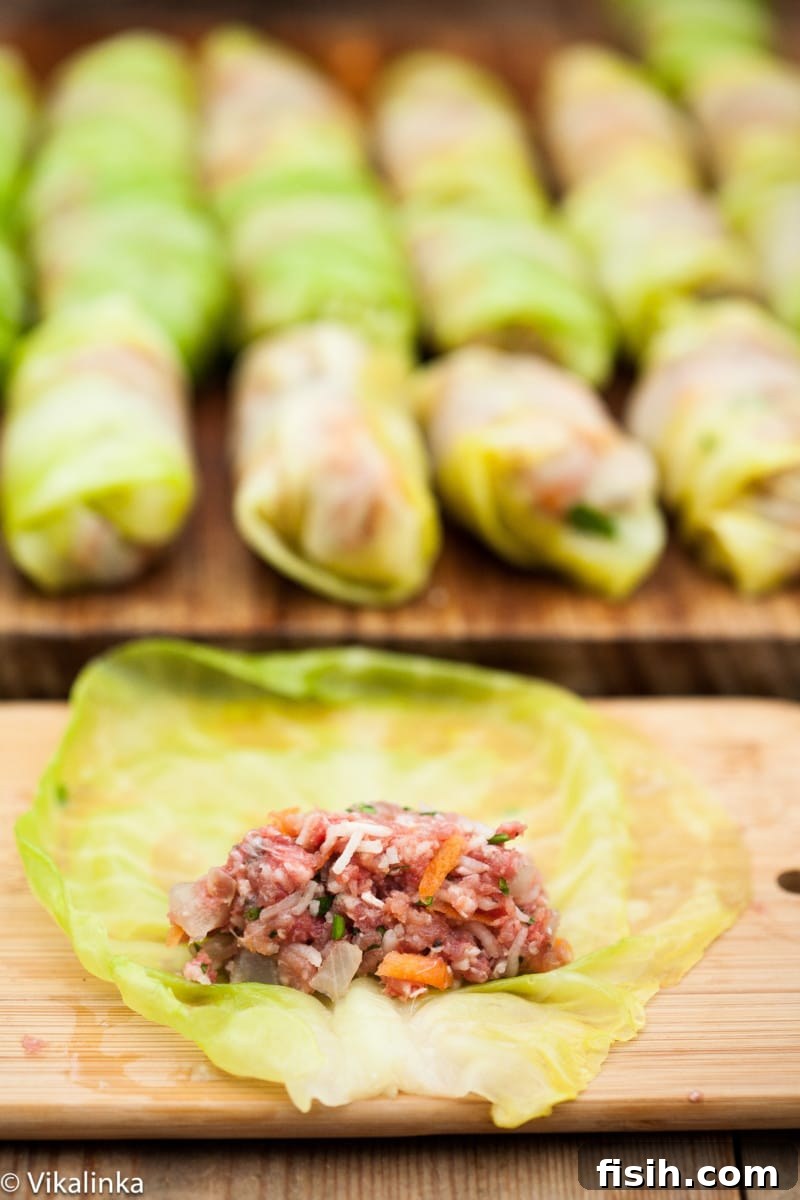
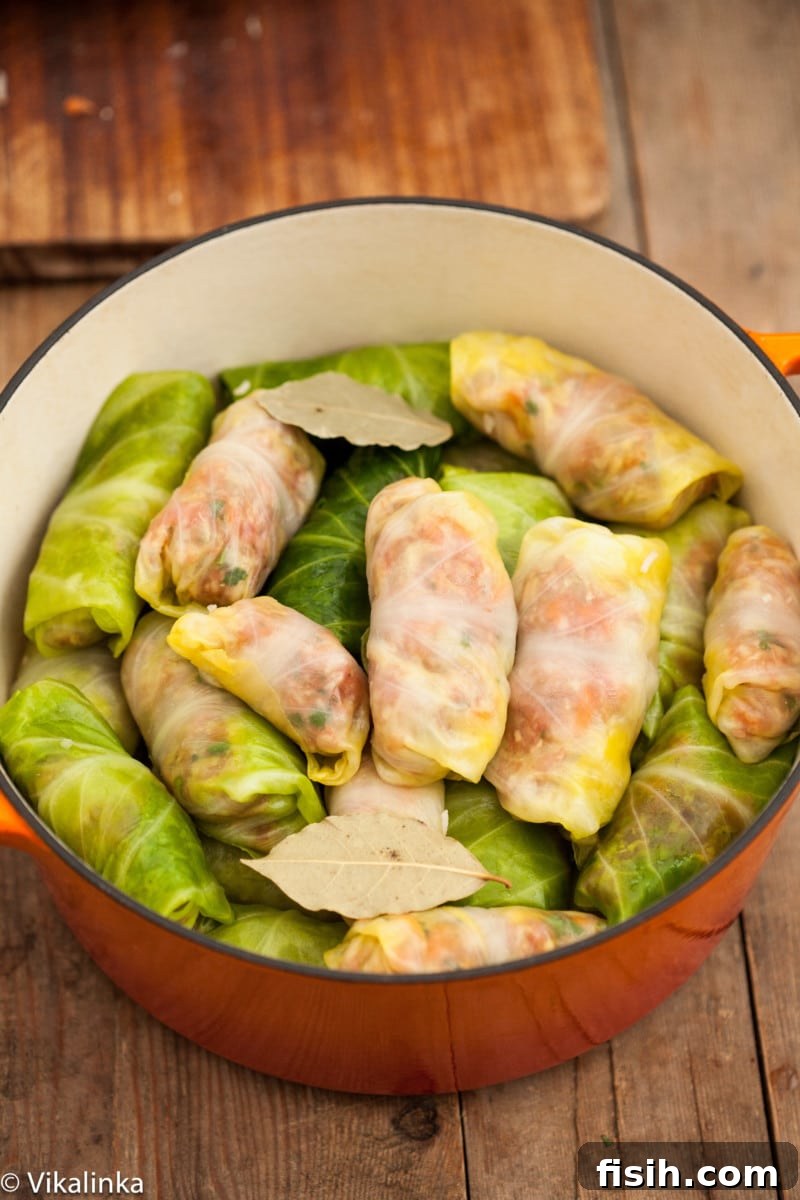
- Organize your workspace, ensuring all ingredients are within easy reach. Take a single cabbage leaf and carefully trim down the thick central rib so it’s not too thick, making the leaf easier to roll. Place about 2 tablespoons of the prepared filling mixture at the bottom of the wide part of the leaf (refer to accompanying pictures for visual guidance). Fold in the sides of the leaf, then roll it up tightly like a small burrito. The size of your cabbage rolls will vary slightly depending on the size of your cabbage leaves. You should yield approximately 30-32 cabbage rolls in total.
- Pour about a cup of the prepared sauce onto the bottom of a large cast-iron casserole dish or any other heavy-bottomed oven-safe dish. Begin carefully stacking your rolled cabbage rolls in layers. Approximately halfway through stacking, add a couple of bay leaves and pour in about one-third of the remaining sauce. Continue layering the cabbage rolls until all are neatly arranged in the dish.
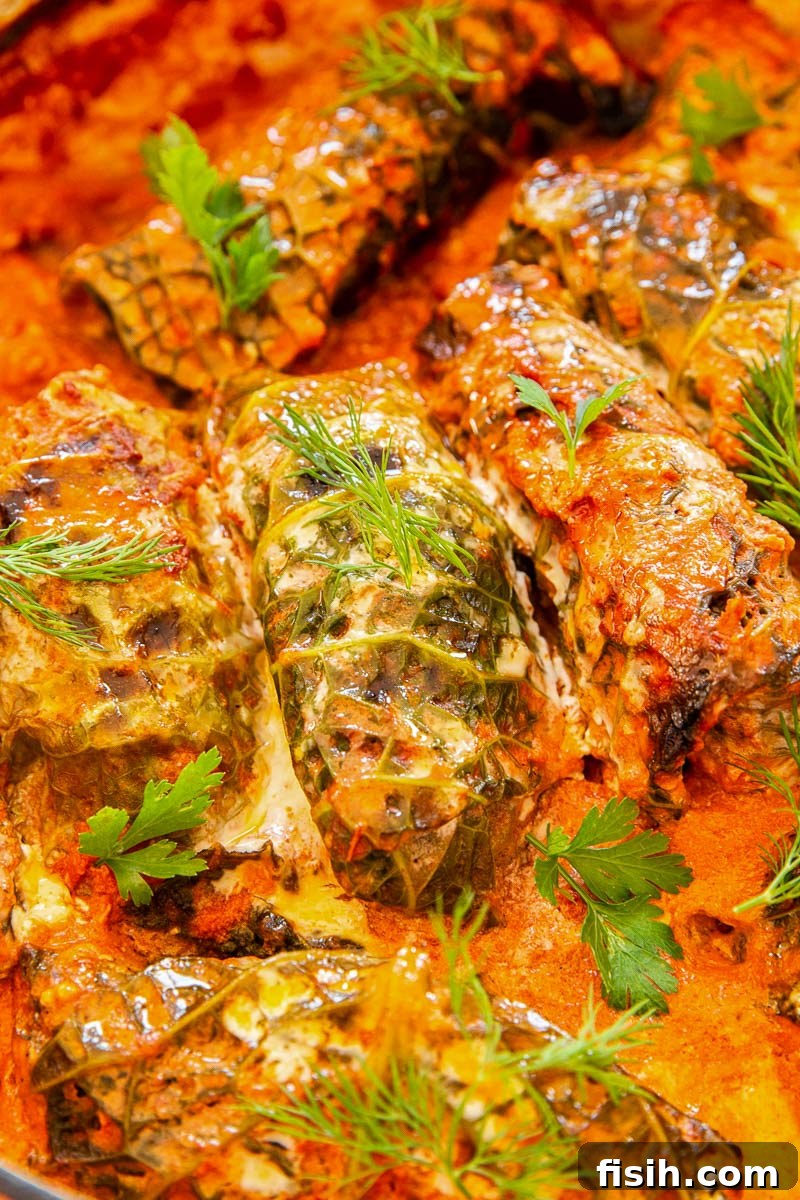
- Pour the remaining sauce evenly over the stacked cabbage rolls. Cover the casserole dish with a lid and bake in the preheated oven for 1 hour. After 1 hour, remove the lid and continue baking for an additional 30 minutes, allowing the tops to gently brown and the flavors to further concentrate. Serve hot with an extra dollop of sour cream or creme fraiche and a sprinkle of fresh herbs like dill and parsley for garnish.
Nutrition
Nutrition information is automatically calculated, so should only be used as an approximation. Per serving (approximate values):
- Calories: 429 kcal
- Carbohydrates: 27g
- Protein: 21g
- Fat: 27g
- Saturated Fat: 11g
- Cholesterol: 79mg
- Sodium: 686mg
- Potassium: 851mg
- Fiber: 6g
- Sugar: 10g
- Vitamin A: 2690 IU
- Vitamin C: 76mg
- Calcium: 145mg
- Iron: 3mg
We hope you enjoy this traditional and delicious recipe for Cabbage Rolls (Golubtsi). It’s a dish that embodies comfort and heritage, perfect for creating new memories around your dinner table. We’d love to hear from you!
If you’ve tried this recipe, please let us know how it was in the comments below!