
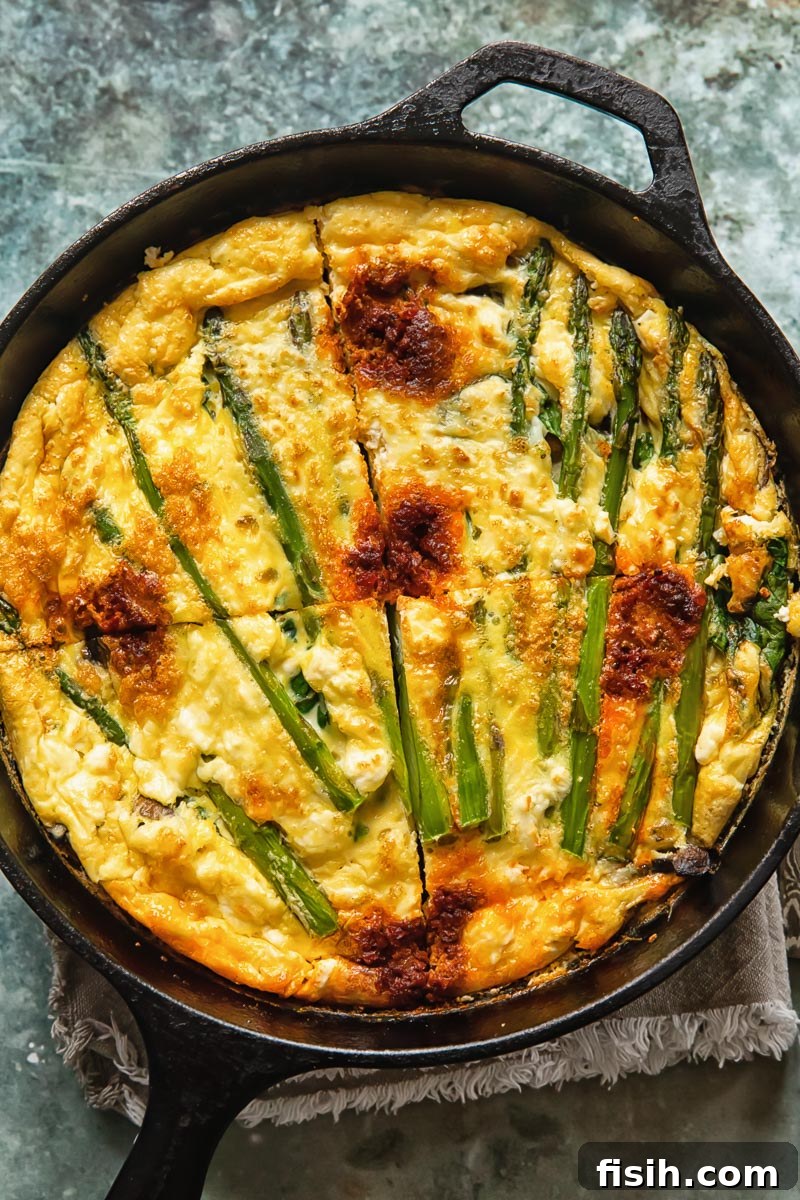
Eggs are a culinary marvel, offering endless possibilities for any meal of the day. This exquisite vegetable frittata, brimming with fresh asparagus, earthy mushrooms, vibrant spinach, and tangy feta, is not just a dish; it’s a testament to how simple ingredients can create something truly spectacular, ready in a flash!
Planning for a satisfying lunch? Elevate your meal by pairing this delightful frittata with a creamy, rich Cream of Broccoli Soup with Smoked Gouda for a truly complete and comforting experience.
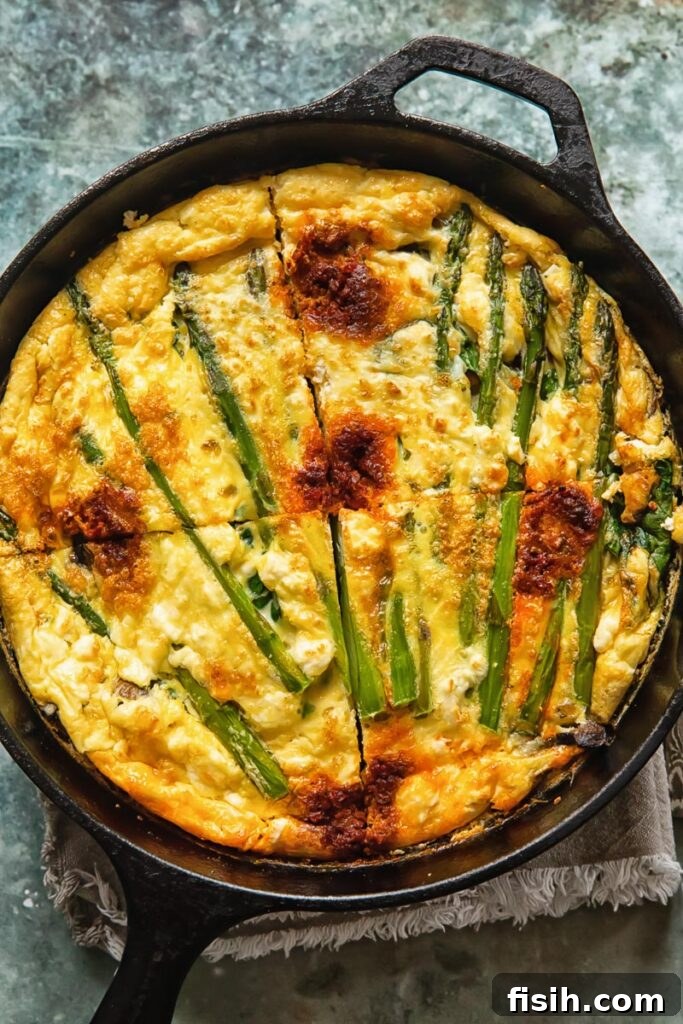
If a dish could evoke a feeling, this vegetable frittata would embody the warmth of a cozy evening. Imagine the gentle comfort of a soft, warm sweater on a chilly night, or the serene pleasure of curling up by a crackling fire with a steaming cup of tea. It’s more than just food; it’s an experience that nourishes both body and soul.
This frittata delivers unparalleled comfort and profound satisfaction. There’s an undeniable magic in eggs, when thoughtfully combined with a medley of fresh, seasonal vegetables, that creates a harmonious flavor profile and a deeply fulfilling meal.
Why Frittata? An All-Day Culinary Star Beyond Breakfast
For far too long, eggs have been unfairly pigeonholed as a “breakfast food.” But why limit such a versatile and nutritious ingredient to just one meal? Eggs are a powerhouse of protein and flavor, capable of transforming into countless delicious dishes that can be enjoyed at any time of day.
Among the myriad ways to celebrate eggs, the frittata stands out as a superb choice. A truly excellent frittata is characterized by its moist, creamy texture and a vibrant medley of flavors. It’s an elegant yet unfussy dish that consistently impresses.
What makes the frittata even more appealing is its incredible adaptability. It’s a culinary canvas, allowing you to incorporate whatever ingredients you have on hand or flavors you crave. This makes it an ideal solution for using up lingering vegetables in your fridge, transforming them into a fresh, exciting meal. I often find myself turning to a frittata when my fridge needs a “clear out,” creating something wonderful from what might otherwise go to waste.
If you’re eager to explore more frittata creations, I have several other beloved recipes for you to try. Discover the hearty Potato Frittata with Taleggio Cheese, the robust Broccoli Frittata with Aged Cheddar and Bacon, and the aromatic, wonderfully unique Persian Herb Frittata (Kuku Sabzi).
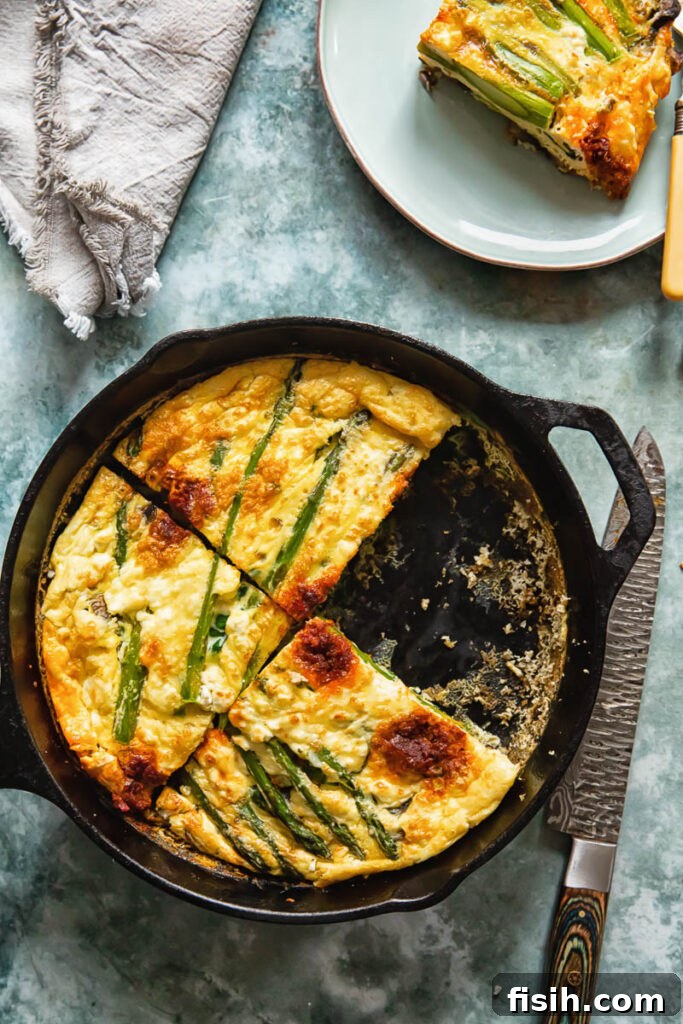
What is a Frittata? Understanding This Italian Delight
The term ‘frittata’ originates from Italy, where it initially broadly referred to eggs fried in various ways. It wasn’t until more recently that its definition evolved to describe the specific dish we recognize today: an open-faced egg dish, predominantly cooked in an oven, brimming with an array of vegetables, cheeses, and other delectable fillings.
While often compared to omelets and quiches, a frittata possesses its own distinct characteristics. Unlike an omelet, it isn’t folded, and it lacks the pastry crust of a quiche, though it shares the comforting, savory appeal of both. A key technique that sets the frittata apart is the vigorous whisking of the eggs. This incorporates more air, resulting in a significantly fluffier, lighter, and more tender consistency compared to its eggy cousins.
One of the frittata’s greatest strengths lies in its lack of strict rules. You are truly limited only by your imagination when it comes to fillings. Because it’s baked at a moderate temperature and remains undisturbed (not flipped) throughout the cooking process, the eggs retain their delightful softness and moisture, preventing the dry, rubbery texture often associated with overcooked eggs.
Ingredients: The Stars of Our Vegetable Frittata
This particular recipe began its journey as an asparagus frittata, specifically because I adore how the crisp, fresh flavor of asparagus beautifully shines through the savory richness of the eggs. To further enhance its nutritional value and robust flavor profile, I meticulously added earthy mushrooms and tender spinach, truly boosting the vegetable content.
For savory dishes of this nature, feta cheese proves to be an indispensable ingredient, delivering consistent perfection every time. The distinctive tang and delicate saltiness of feta are crucial in preventing the frittata from becoming bland or monotonous. Even a small amount provides a powerful flavor punch that elevates the entire dish.
However, what truly makes this frittata sing with an unforgettable flavor is the ingenious addition of pesto. I happened to have a jar of aromatic harissa pesto eagerly awaiting its culinary debut, and its subtle spice provided an extraordinary depth. But don’t feel limited – any pesto you enjoy will undoubtedly be a fantastic complement. Imagine the delightful burst of fresh basil pesto or the sun-kissed intensity of sun-dried tomato pesto; either would profoundly transform this asparagus frittata, adding layers of complex and delicious flavor.
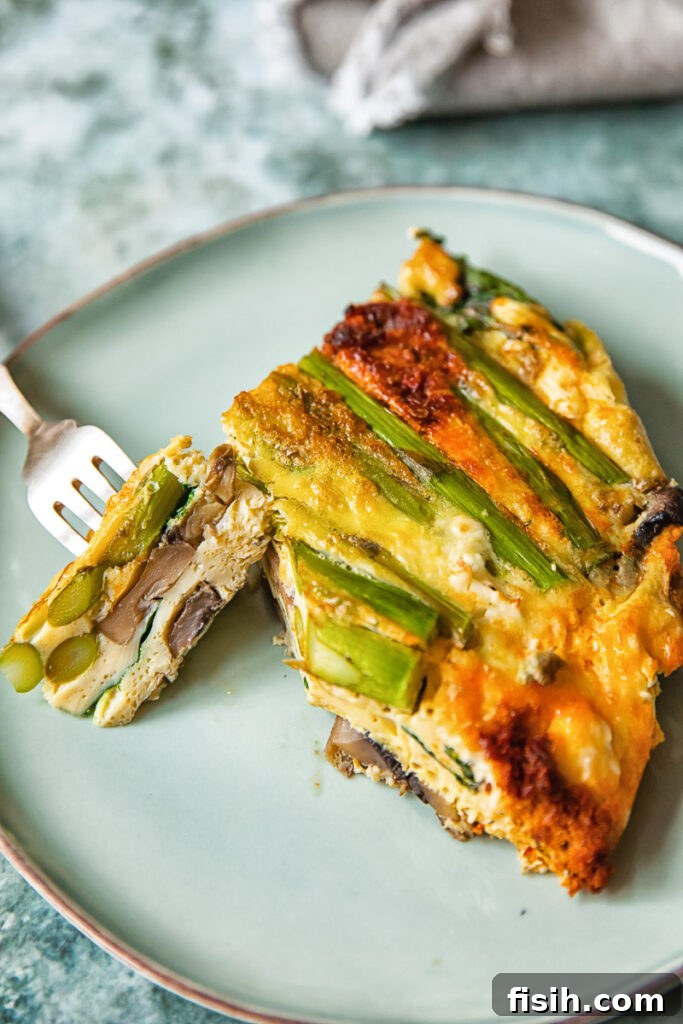
Mastering Your Frittata: Essential Tips and Tricks
- **Choose the Right Pan:** For the perfect frittata, always reach for a cast iron skillet or any other ovenproof skillet. This allows you to effortlessly transition the dish from stovetop to oven, using a single pan to cook your vegetables and then bake your frittata to perfection.
- **Vegetable Substitutions:** The spinach in this recipe is wonderfully versatile. Feel free to substitute it with nutrient-rich kale or even omit it entirely if preferred. If using kale, remember it requires a slightly longer cooking time than spinach, so add it to the pan a few minutes earlier to ensure it wilts properly. Similarly, tenderstem broccoli or broccolini makes an excellent alternative to asparagus, offering a slightly different but equally delicious texture and flavor.
- **Adding Tomatoes:** Tomatoes are a phenomenal addition to any frittata! If using cherry tomatoes, simply halve them. For larger tomatoes, slice them thinly. The beauty of tomatoes in a frittata is that there’s no need to pre-cook them; just add them directly to the pan with the eggs before baking, allowing their juices to meld beautifully with the other flavors.
- **Cheese and Pesto Variations:** While I love the combination of harissa pesto and tangy feta, the world of frittata is your oyster! Experiment with any pesto flavor you enjoy – classic basil, vibrant sun-dried tomato, or even a nut-free version. The same goes for cheese; almost any cheese will yield delicious results. An aged cheddar, for instance, would introduce a wonderful sharpness and depth, while goat cheese would add a creamy tang.
- **Preventing Overcooking:** The secret to a perfectly moist and fluffy frittata, much like any egg dish, is to avoid overcooking. Keep a close eye on it in the oven. Remove the frittata as soon as the eggs have puffed up and appear set in the center, but before they become overly firm or dry. The residual heat will continue to cook it slightly after removal.
Serving Suggestions: Versatility on a Plate
One of the most appealing qualities of a frittata is its remarkable versatility; it truly shines at any mealtime, making it an especially welcome dish on those busy days when you crave simplicity without sacrificing flavor or nutrition. Whether it’s a hearty breakfast, a light lunch, or a satisfying dinner, the frittata effortlessly fits the bill.
For a complete and delightful meal outside of breakfast, I highly recommend complementing your frittata with a crisp, fresh side salad, perhaps dressed with a simple vinaigrette. A slice of perfectly toasted sourdough bread or crusty baguette also makes an excellent accompaniment, perfect for soaking up any lingering flavors. The key is to keep it unfussy; the frittata itself is the star, designed for convenience and deliciousness.
Storage and Leftovers: Enjoying Your Frittata Later
The beauty of a frittata extends to its incredible flexibility as leftovers. It’s truly spectacular whether served warm straight from the oven or enjoyed cold, making it an ideal candidate for meal prepping for the days ahead. You absolutely cannot go wrong by preparing a larger batch to savor later.
Your vegetable frittata will store beautifully in the refrigerator for up to three days. To maintain its freshness and prevent it from drying out, ensure it’s kept securely wrapped in plastic film or stored in an airtight container. These practical storage solutions mean you can enjoy a quick, delicious, and healthy meal whenever hunger strikes, making your weeknights (or any time!) a little bit easier.
More Brunch-Worthy Egg Recipes to Explore
- Eggs Benedict with Easy Hollandaise Sauce
- Easy Shakshuka Recipe
- Turkish Eggs (Çılbır)
- Smoked Salmon Frittata
Vegetable Frittata with Feta
Julia Frey of Vikalinka
15 mins
20 mins
35 mins
4
Equipment
- Saucepan
- Cast iron skillet
Ingredients
- 125g/4oz asparagus
- 1 tbsp olive oil
- 250g/8 oz mushrooms
- 50g/1¾ cup spinach
- 100g/4oz feta
- 2 tbsp pesto, any flavour you like (I used rose harissa pesto)
- 10 eggs
- Salt to taste
- Black pepper to taste
Instructions
-
Preheat the oven to 200°C / 400°F.
-
In a medium pot, bring water to a boil. Add the asparagus and cook for no longer than 1 minute, just until it turns a bright green color. Drain immediately and set aside.
-
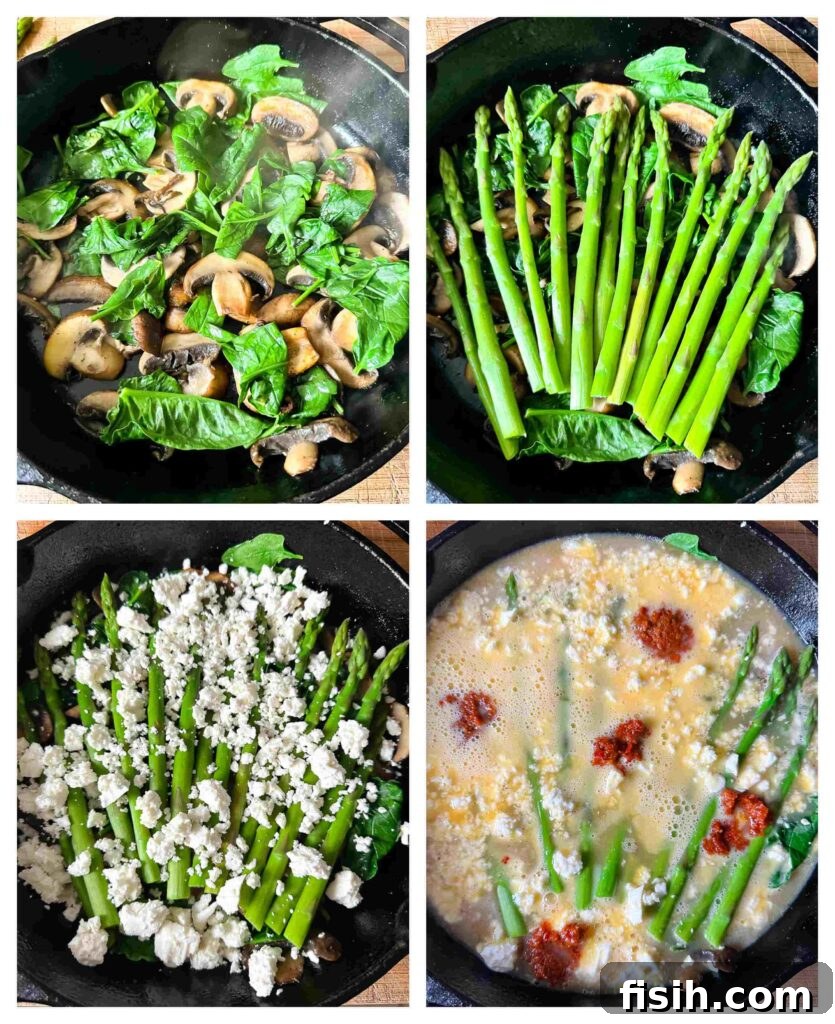
Meanwhile, in your cast iron skillet (or ovenproof pan) over medium heat, cook the sliced mushrooms with 1 tablespoon of olive oil, a pinch of salt, and black pepper until they are golden brown. Once the mushrooms are cooked, add the spinach to the pan and allow it to wilt. Then, artfully arrange the blanched asparagus spears on top of the cooked vegetables.
-
Evenly pour the whisked eggs over all the vegetables in the pan. Distribute small spoonfuls of your chosen pesto over the egg mixture, and then sprinkle generously with feta or any other cheese you prefer. Transfer the skillet to the preheated oven and bake for 20-22 minutes, or until the frittata is puffed and set in the center.
Nutrition
Calories: 306kcal | Carbohydrates: 6g | Protein: 21g | Fat: 22g | Saturated Fat: 8g | Polyunsaturated Fat: 3g | Monounsaturated Fat: 8g | Trans Fat: 0.04g | Cholesterol: 432mg | Sodium: 1106mg | Potassium: 499mg | Fiber: 2g | Sugar: 3g | Vitamin A: 2259IU | Vitamin C: 7mg | Calcium: 219mg | Iron: 3mg
Nutrition information is automatically calculated, so should only be used as an approximation.
Tried this recipe? Let us know how it was!