
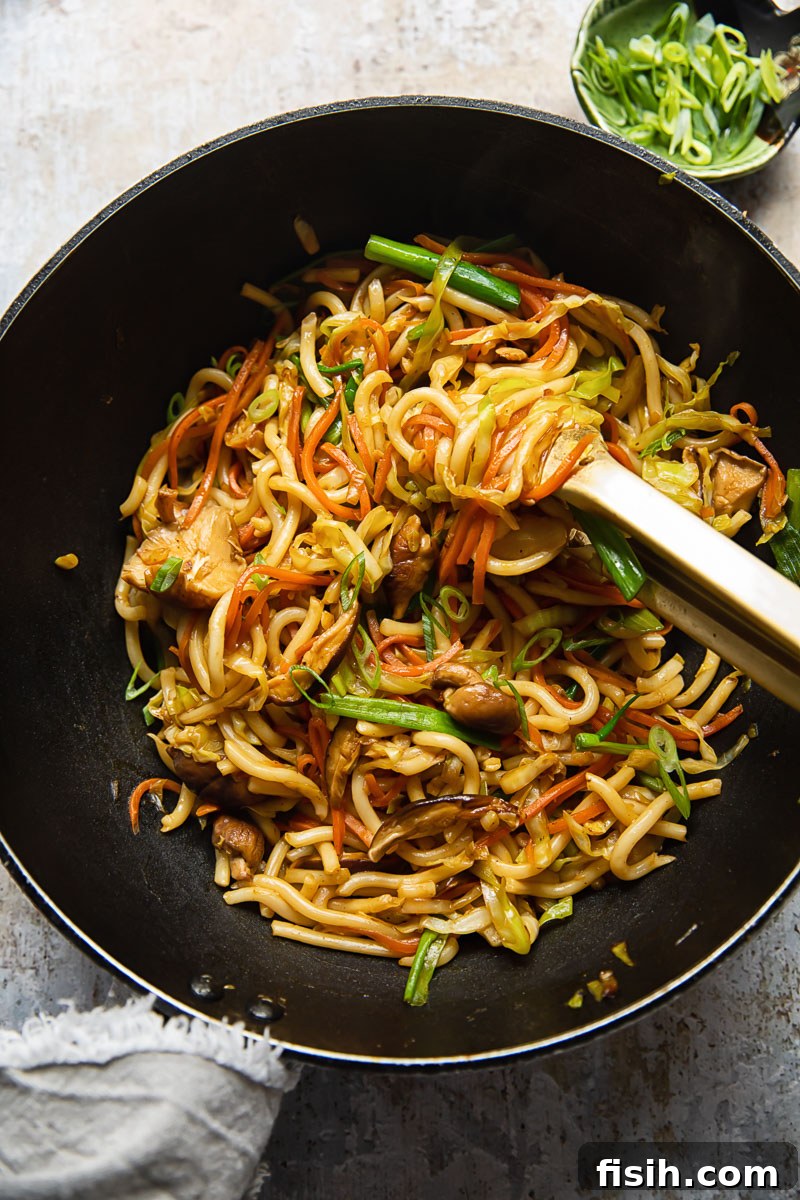
Discover the ultimate guide to crafting the most delicious and satisfying Vegetarian Yaki Udon. This comprehensive recipe and article delves into the heart of a Japanese classic, reimagining it as a vibrant, meatless marvel. Quick to prepare, bursting with flavor, and packed with nourishing ingredients, this stir-fried udon dish is poised to become your go-to favorite for any meal. Forget lengthy cooking times and complex techniques; embrace the simplicity and profound flavors of this vegetarian delight!
Craving more tantalizing meatless stir-fry creations? Don’t miss out on my Spicy Peanut Noodles with Cabbage and Carrots for another delightful culinary adventure!
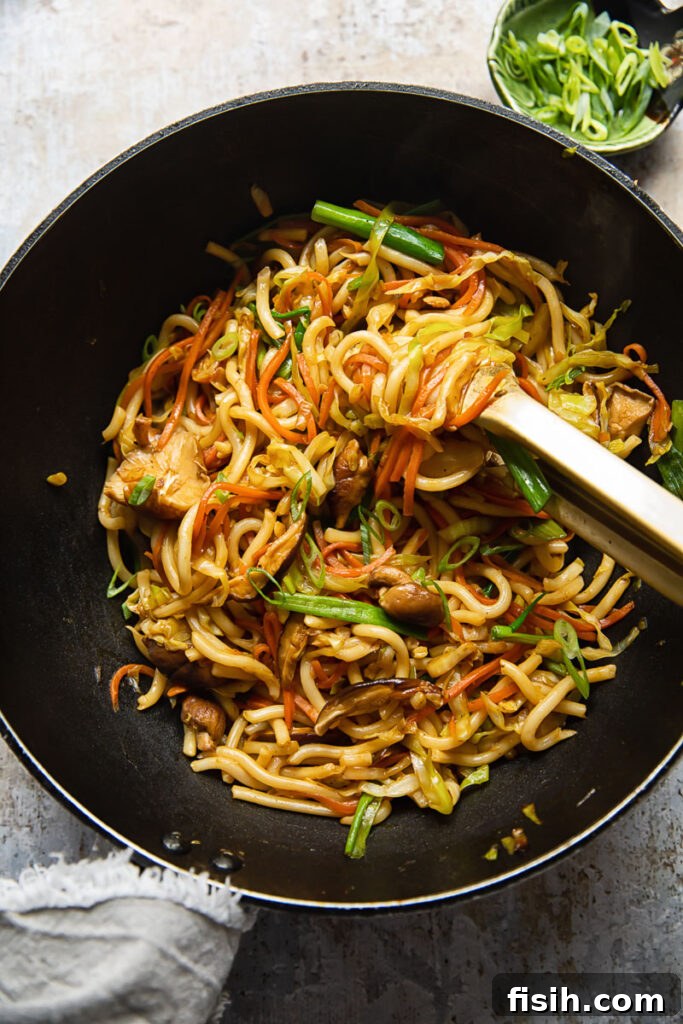
The culinary world has fully embraced Japanese noodles, and it’s easy to see why. Udon noodles, much like their ramen counterparts, offer an incredible foundation for dishes that are both affordable and incredibly flavorful. They are versatile, satisfying, and quick to cook, making them perfect for busy weeknights or a leisurely weekend meal. This Vegetarian Yaki Udon recipe exemplifies the magic that happens when simple ingredients come together to create an explosion of taste and texture.
Despite its swift preparation, this dish delivers an astonishing depth of flavor. The medley of crisp-tender vegetables, combined with a perfectly balanced savory sauce, creates a harmonious blend that will surprise and delight your palate. It’s a testament to the power of fresh ingredients and well-chosen seasonings, proving that meatless doesn’t mean compromising on taste.
Traditionally, Yaki Udon is a beloved Japanese fast food, often featuring savory pork belly or tender chicken. In this rendition, we’ve transformed it into a completely vegetarian dish, celebrating the natural goodness of fresh vegetables. The way the vibrant vegetables intermingle with the rich umami of soy sauce, the subtle sweetness of mirin, and the distinctive depth of dashi stock is truly satisfying. It’s a recipe you’ll find yourself returning to again and again, whether you’re a seasoned vegetarian or simply looking to incorporate more plant-based meals into your repertoire.
Udon Noodles: The Heart of the Dish
Udon noodles are a fundamental pillar of Japanese cuisine, celebrated for their thick, chewy texture and incredible versatility. They serve as a blank canvas, eagerly absorbing the flavors of any broth or sauce they’re paired with, much like potatoes, pasta, or bread in other culinary traditions. Their neutral taste makes them an ideal base for a wide array of ingredients, allowing the accompanying flavors to truly shine.
The origins of udon noodles are shrouded in a bit of mystery, though it’s widely believed they trace back to China, eventually making their way to Japan through various historical exchanges. Once established, they quickly became an indispensable part of Japanese culinary identity, evolving into regional specialties with unique characteristics.
When selecting udon noodles for this recipe, you have two primary options: dried or pre-cooked. Both have their distinct advantages. Pre-cooked udon offers unparalleled convenience, requiring minimal preparation before adding to your stir-fry. However, they can sometimes be more delicate and prone to breaking up during vigorous stirring. Dried udon noodles, on the other hand, boast a firmer texture and excellent structural integrity when cooked, holding up beautifully in a wok. If opting for dried udon, remember that you’ll typically need about half the amount by weight compared to pre-cooked noodles, as they expand significantly upon rehydration.
Beyond stir-fries, udon noodles are wonderfully suited for a variety of dishes. They are magnificent in a comforting soup, where their thick strands soak up savory broths, and equally fantastic in lighter preparations like miso-glazed noodle dishes. Should udon noodles prove elusive in your local supermarket, don’t despair! Soba noodles, egg noodles, or even standard spaghetti can serve as functional substitutes, each offering a slightly different texture but still delivering a delightful noodle experience.
Mastering Vegetarian Yaki Udon: Effortless Excellence
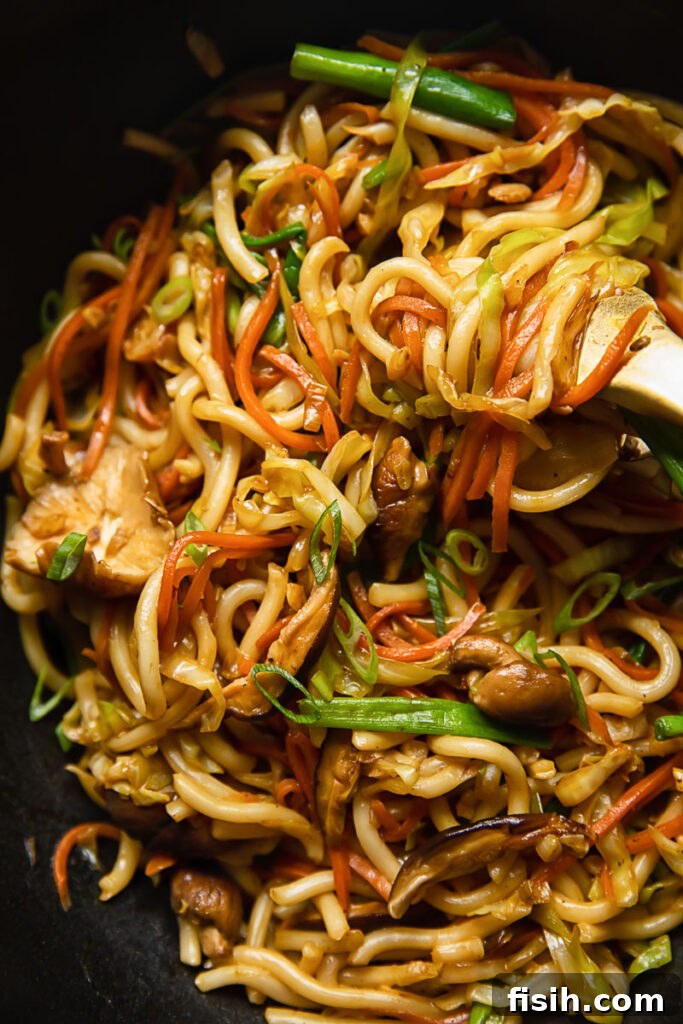
Creating this Vegetarian Yaki Udon is far simpler than one might imagine, and its speed is truly remarkable. The active cooking time for this dish barely touches 10 minutes, making it an ideal choice for a speedy yet incredibly flavorful meal. The secret to its success lies in efficient preparation and a few key techniques.
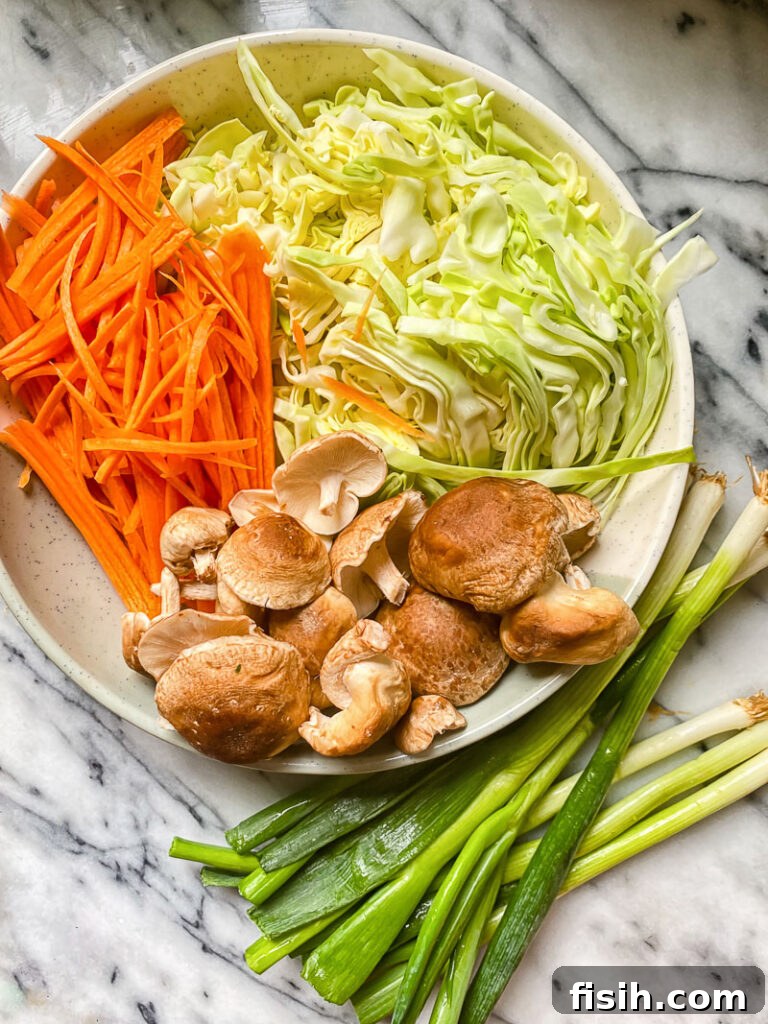
Due to its rapid cooking pace, the importance of “mise en place” – having all your ingredients prepped and ready before you even turn on the heat – cannot be overstated. This is particularly crucial for the vegetables: carrots, cabbage, and green onions should be sliced, chopped, and measured, allowing for a seamless cooking process. This organized approach transforms what could be a frantic scramble into a smooth, enjoyable culinary dance.
Prepping Your Produce: Tips for Flavor and Texture
- Shiitake Mushrooms: If using larger shiitake mushrooms, it’s advisable to remove their stems entirely, as they can become quite woody and unpleasant to chew when cooked. For smaller mushrooms, a simple trim of the stem is sufficient. Once prepped, slice or quarter the mushrooms into bite-sized pieces. If using dried shiitake, rehydrate them in boiling water for 20-30 minutes until tender before slicing.
- Carrots and Cabbage: For the best texture and even cooking, julienne the carrots into thin matchsticks or slice them into very fine rounds. The white cabbage should be thinly sliced to ensure it softens quickly while still retaining a slight crunch.
- Green Onions: Separate the white and green parts of the green onions. The white parts, being tougher, will be stir-fried with the other vegetables to soften, while the green parts are added later for freshness and a vibrant pop of color.
Noodle Preparation: The Foundation of Your Stir-Fry
If you’ve opted for dried udon noodles, now is the time to cook them according to the package instructions. Pay close attention to the recommended cooking time to achieve that perfect chewy-but-not-mushy texture. Once cooked, drain the noodles thoroughly and, crucially, rinse them under cold water. This vital step halts the cooking process, preventing them from becoming overcooked and clumping together, ensuring they remain separate and pliable when added to the wok. If you’re using pre-cooked udon, you can skip this step entirely; these noodles can be added directly to the wok or pan later, without any prior boiling.
As the vegetables cook, you’ll observe them reducing in volume by approximately half. Aim for them to be cooked through, yet still possess a pleasant firmness – a slight al dente bite. This preserves their natural texture and contributes to the overall dynamic mouthfeel of the dish. The quick stir-fry method ensures maximum flavor and nutrient retention, making every bite a delightful experience.
Recipe Tips and Notes for Perfection
- Noodle Nuances: You have the choice between pre-cooked or dried udon noodles. While pre-cooked noodles offer ultimate convenience and speed, they can sometimes be more fragile. Dried udon noodles, though requiring a quick boil, tend to hold their shape better during stir-frying, offering a chewier texture. Both types yield delicious results, so choose what suits your preference and availability.
- Cool Down Your Noodles: Always rinse your cooked udon noodles under cold water immediately after draining. This crucial step stops the cooking process, preventing them from becoming sticky or mushy, and ensures they retain their perfect chewy texture when added to the wok.
- Sourcing Dashi/Tsuyu Stock: Tsuyu or dashi stock is a cornerstone of Japanese flavor. It can often be found in the international aisle of larger supermarkets or easily purchased online. If you find yourself in a bind, a good quality Worcestershire sauce can serve as a surprisingly functional, albeit different, substitute, bringing a similar savory depth.
- Vegan Considerations for Stock: Traditional tsuyu and dashi stock, as well as many Worcestershire sauces, contain fish products. If you are committed to a truly plant-based or vegan recipe, be sure to seek out specific vegan versions of these ingredients. Many brands now offer kombu (seaweed) and shiitake mushroom-based dashi powders or liquids that are entirely plant-derived. Always double-check the labels.
- The Art of Mise en Place: Because this recipe cooks incredibly fast, having all your ingredients chopped, measured, and ready before you start cooking will drastically reduce stress and ensure a smooth, enjoyable process. This is the golden rule of stir-frying!
- Shiitake Stem Savvy: When using shiitake mushrooms, remember to trim off the tough, fibrous stems, especially from larger ones, as they can be unpleasant to eat. If you’re using dried shiitake, rehydrate them first in boiling water for 20-30 minutes until tender, then proceed as you would with fresh mushrooms.
- High Heat, Quick Cook: Stir-fries thrive on high heat and quick cooking. Ensure your wok or pan is adequately heated before adding ingredients to achieve that desirable charred flavor and crisp-tender texture.
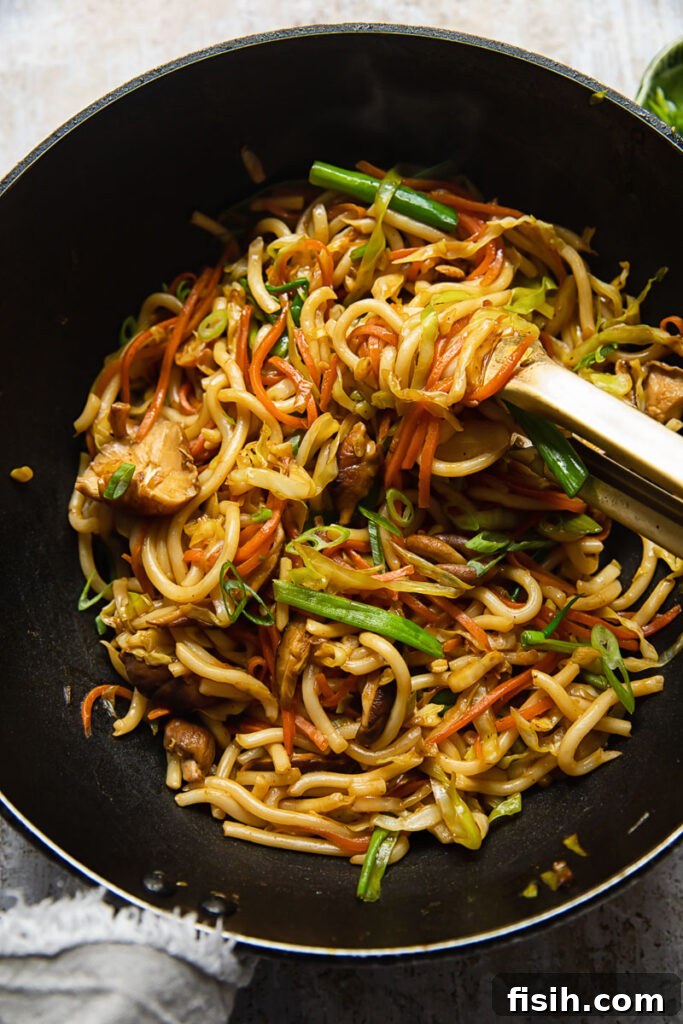
Serving Suggestions and Customization
Vegetarian Yaki Udon is best enjoyed piping hot and fresh from the wok. Its vibrant flavors and satisfying textures are at their peak immediately after cooking, so make sure to have your serving bowls ready! I personally love to add a generous drizzle of chili oil or a dollop of sriracha for an exhilarating spicy kick, complemented by a sprinkle of toasted sesame seeds for added crunch and nutty aroma.
This dish is a fantastic one-pan meal, perfectly capable of standing alone as a complete and deeply satisfying dinner. There’s absolutely no obligation to prepare anything else! However, if you wish to expand your meal or aren’t strictly adhering to a vegetarian diet, a side of Teriyaki Salmon would offer a delicious complement.
Creative Customizations:
- Boost the Protein: For a heartier vegetarian meal, consider adding cubed firm tofu, pan-fried until golden, or some edamame beans. Tempeh is another excellent addition, offering a satisfying texture and protein boost.
- Vary Your Vegetables: Feel free to experiment with other stir-fry friendly vegetables. Bell peppers (red, yellow, or orange), broccoli florets, snap peas, bok choy, or even thinly sliced zucchini can add wonderful color, flavor, and nutrients.
- Aromatic Additions: A little freshly grated ginger or minced garlic stir-fried with the white parts of the green onions can elevate the aromatic profile of the dish.
- Nutty Crunch: Besides sesame seeds, crushed peanuts or cashews can add another layer of texture and flavor, particularly if you enjoy a hint of nuttiness.
Storage and Leftovers Made Easy
Any leftover Vegetarian Yaki Udon can be stored efficiently in an airtight container and kept in the refrigerator for up to 2-3 days. This makes it an excellent option for meal prep, allowing you to enjoy a quick and delicious lunch or dinner later in the week.
When you’re ready to reheat, simply warm a small amount of oil in a pan over medium heat. Add the leftover yaki udon and stir-fry gently until it is heated through. Be careful not to overcook, as the noodles can become too soft. Once hot, it’s ready to be devoured!
More Japanese Recipes to Explore
- Chicken Katsu Curry
- Teriyaki Chicken Stir Fry
- Miso Aubergine (Eggplant)
- Shoyu Chicken
Vegetarian Yaki Udon (Japanese fried noodles)
Print Recipe
This Vegetarian Yaki Udon recipe offers a delightful meatless take on a cherished Japanese classic. It’s incredibly quick and easy to prepare, yet it’s packed with flavor and nourishing ingredients, guaranteeing it will become a new favorite in your culinary rotation!
Ingredients
- 600g / 20oz udon noodles (pre-cooked, or 300g / 10oz dry)
- 1 tbsp oil
- 100g / 1 cup white cabbage, thinly sliced
- 100g / 1 cup shiitake mushrooms (or button mushrooms), stems removed from large ones, trimmed from small, and cut into bite-sized pieces
- 1 carrot, julienned or finely sliced
- 3 green onions, green parts cut into 5cm/2 inch pieces; white parts sliced
- 2 tbsp soy sauce
- 2 tbsp mirin
- 1 tbsp tsuyu/dashi stock (or Worcestershire sauce, ensure vegan if needed)
- 1 tsp sesame oil (optional, for finishing)
Instructions
- Prepare the Vegetables: Cut the carrot into very thin slices or julienne. Finely slice the white cabbage. For shiitake mushrooms, remove the tough stems from large ones and trim smaller ones, then cut all mushrooms into bite-sized pieces. Slice the white parts of the green onions for stir-frying and cut the green parts into 5cm/2 inch pieces for later.
- Cook Noodles: If using dried udon noodles, cook them according to package instructions until al dente. Drain well and immediately rinse under cold water to stop cooking and prevent sticking. Set aside. If using pre-cooked noodles, no prior cooking is needed.
- Stir-Fry Vegetables: Heat 1 tbsp of oil in a wok or large pan over high heat. Add the sliced cabbage, carrots, mushrooms, and the white sections of the green onions. Stir-fry for 5-7 minutes, until the vegetables are cooked through but still have a slight crispness. Their volume will reduce by about half.
- Combine and Finish: Add the prepared udon noodles and the green parts of the green onions to the pan. Pour in the soy sauce, mirin, and dashi stock. Toss everything thoroughly to combine, ensuring the noodles and vegetables are evenly coated with the sauce. Continue to heat for 2-3 minutes, allowing the flavors to meld and the noodles to warm through. If desired, drizzle with sesame oil just before serving. Taste and add a pinch of salt if necessary.
Notes
To ensure this recipe remains entirely plant-based and vegan, carefully select your tsuyu/dashi stock and Worcestershire sauce, as many traditional versions contain animal products. Look for specifically labeled vegan options available in specialty stores or online.
Nutrition
Nutrition information is automatically calculated and should be used as an approximation only.
Tried this recipe?
Let us know how it was!