
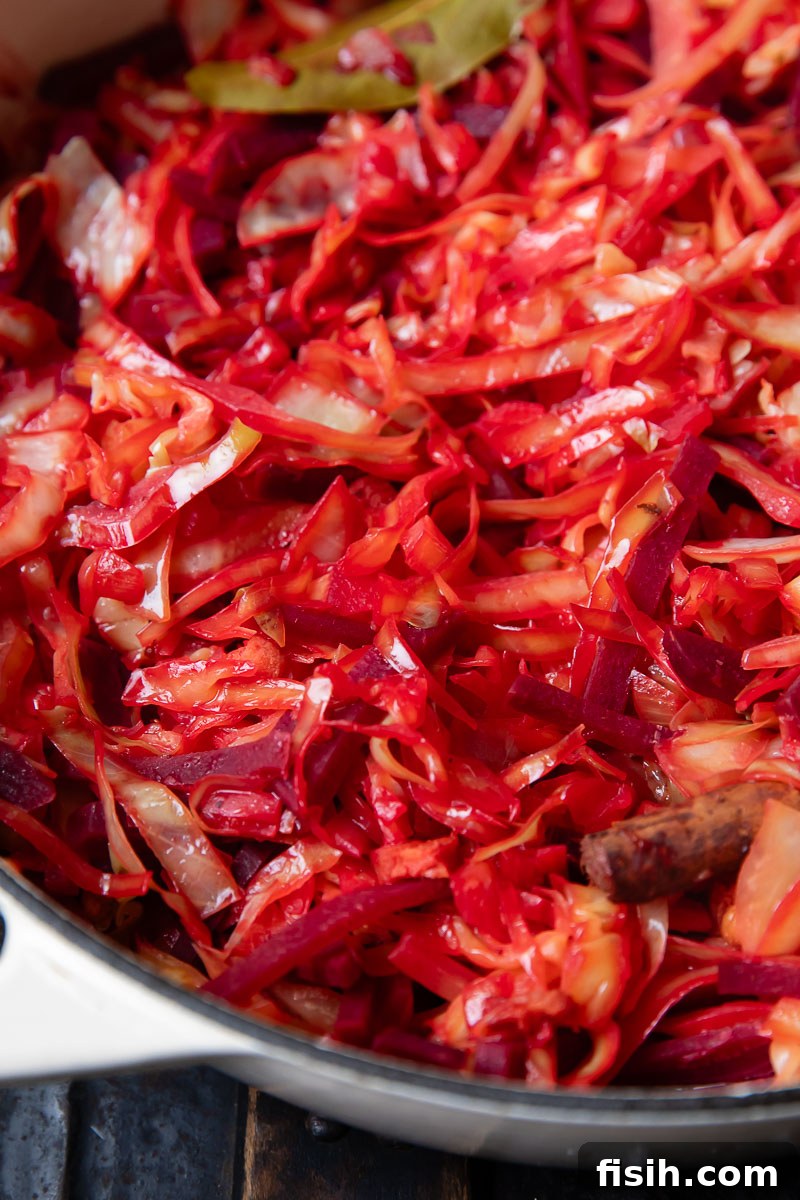
Braised Cabbage and Beets with Bacon: A Vibrant, Comforting Side for Any Season
Discover the irresistible charm of braised cabbage and beets infused with smoky bacon. This incredibly colorful and flavorful side dish transforms often-overlooked vegetables into a culinary masterpiece. With festive hints of cinnamon and nutmeg, and a savory backbone from crispy bacon, it’s the perfect accompaniment to a traditional Sunday roast or a cozy winter meal. Best of all, it’s remarkably low-prep and largely hands-off, making it a true winter favorite that brings warmth and cheer to your table.
Every great meal deserves an equally great side dish, and this braised cabbage and bacon creation is far from average. It masterfully elevates humble white cabbage and earthy beets, creating a visually stunning and deeply flavorful accompaniment. While it pairs beautifully with almost any roast, it truly shines alongside poultry. If you’re looking for a clever shortcut for your main, a spatchcock roast chicken is an excellent time-saver, perfect for those occasions when a full-on roast bird feels like too much of a commitment. This dish is about embracing simplicity without sacrificing flavor, proving that some of the most satisfying meals come from the most straightforward ingredients.
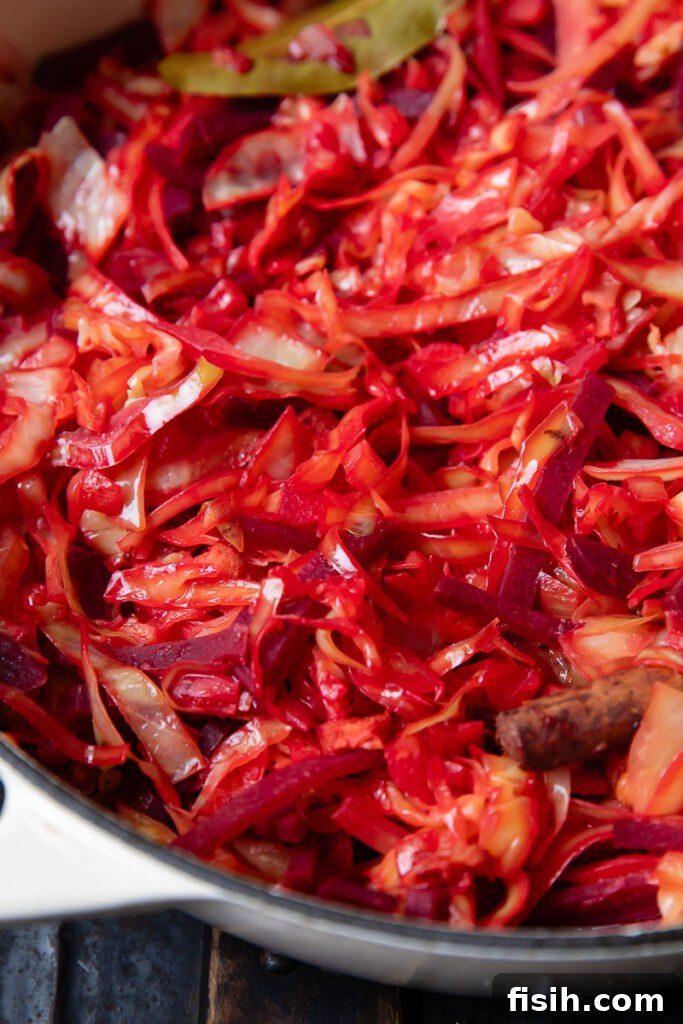
Why Cabbage is a Culinary Gem
Cabbage consistently ranks among my top three favorite vegetables, and for good reason! Perhaps it’s my European heritage, but I simply cannot overstate its culinary versatility and nutritional benefits. Let me elaborate on my profound appreciation for this incredible brassica.
First and foremost, cabbage is incredibly economical. A single head costs a mere fraction of what you’d pay for common vegetables like broccoli, corn on the cob, or zucchini. And let’s not even compare it to pricier options such as aubergine or leeks! What’s more, one humble head of cabbage goes an incredibly long way, feeding a crowd or providing multiple meals throughout the week, making it a budget-friendly staple for any kitchen.
Secondly, cabbage is a bona fide nutritional powerhouse. Bursting with Vitamin C, it’s also an excellent source of Vitamin K, fiber, and various antioxidants, all contributing to a healthy diet. The key, however, is to avoid over-boiling, which can diminish its valuable nutrients. Thankfully, with so many other delicious and healthy cooking methods available, boiling is simply unnecessary. Braising, roasting, or stir-frying are far superior methods that preserve its goodness and enhance its flavor.
Finally, and perhaps most importantly, cabbage is astonishingly versatile. Across Europe, its native soil, cabbage is enjoyed in countless ways: hot or cold, as a standalone side dish, or as the star of a main course. Its ability to absorb flavors and adapt to different cuisines makes it an indispensable ingredient. Here’s a small sampling of its incredible range to inspire your next culinary adventure:
- Miso Butter Roasted Cabbage Wedges (Hot Side) – Since discovering this recipe, it has become a constant in my kitchen. If anything will convince your family to embrace cabbage, it’s these tender, umami-rich wedges. The savory miso butter transforms cabbage into an unbelievably delicious treat. (For another fantastic roasted option, try cabbage wedges with gochujang for a spicy kick!)
- Classic Coleslaw Recipe (Cold Side) – This recipe showcases the vibrant contrast of both red and white cabbage, delivering unparalleled freshness and crunch. Once you experience the superior taste of homemade coleslaw, you’ll never settle for store-bought versions again. It’s cheaper, fresher, and far more flavorful.
- Winter Salad with Cabbage, Kale, and Pomegranate (Side Dish) – Given that kale is a dark-leafed member of the cabbage family, this dish offers double the dietary benefits. It’s a refreshing and vibrant salad, perfect for brightening up colder months with its crisp textures and sweet-tart pomegranate jewels.
- Cabbage Rolls (Golubtsi) (Main Course) – An authentic Russian culinary staple, these cabbage rolls are a complete meal in one. Tender, bright green Savoy cabbage leaves delicately encase a hearty filling of ground meat and rice, all slow-simmered in a rich tomato sauce. It’s a comforting, wholesome dish traditionally known as a delicious remedy against the common cold!
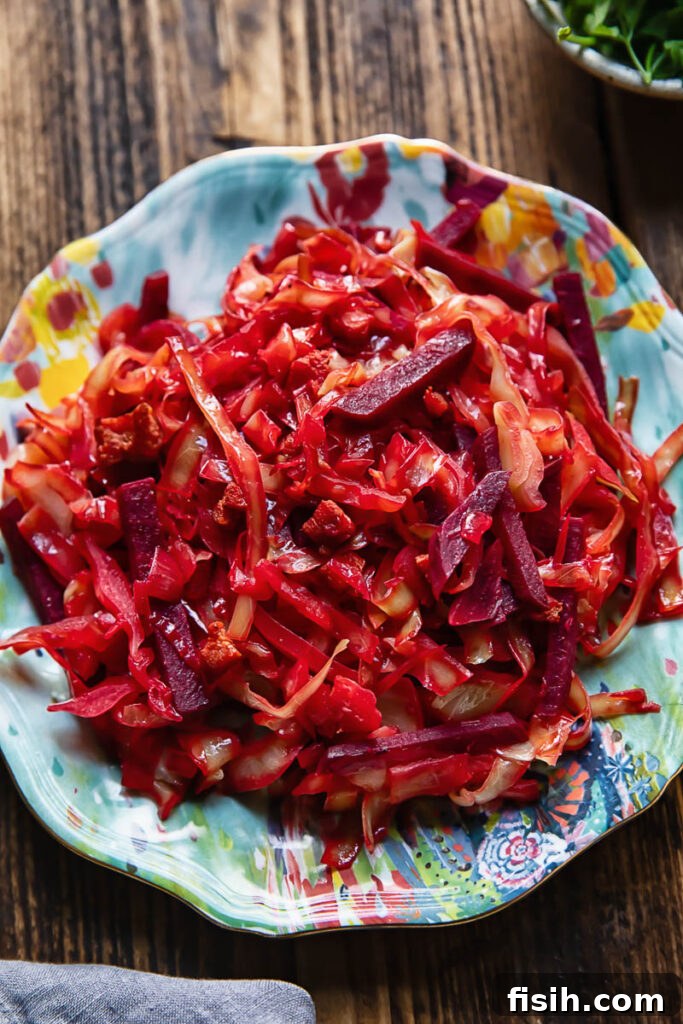
Expert Recipe Tips and Notes for Perfect Braised Cabbage and Beets
-
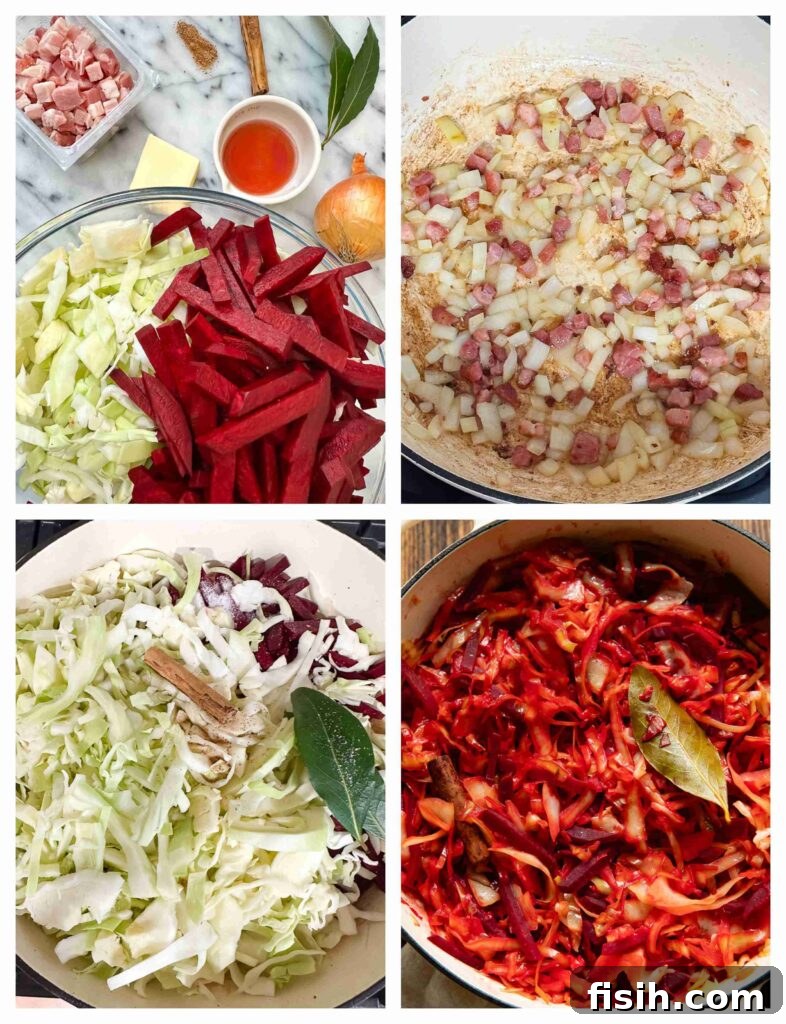
Optimize Cooking Time with Slicing: To significantly reduce the overall cooking time, ensure your cabbage is thinly sliced and your beets are cut into uniform matchsticks. Smaller, more consistent pieces will cook through more quickly and evenly, achieving that perfect tender-crisp texture.
-
Matching Cook Times for Evenness: Beets are naturally denser than cabbage and require a bit longer to soften. To ensure both vegetables finish cooking around the same time and achieve optimal tenderness, cut the beets into smaller pieces than you might typically. This small adjustment makes a big difference in the final texture of the dish.
-
Building a Flavorful Foundation with Bacon: The key to this dish’s deep, savory flavor begins with sautéing the bacon lardons. Cook them slowly over medium heat until all their fat has rendered out and the bacon itself is crispy. This process not only crisps the bacon but also creates a rich, smoky oil base that will seamlessly infuse its salty, savory hints into the cabbage and beets as they braise.
-
Embrace Festive, Aromatic Spices: Cinnamon, nutmeg, and bay leaves are not just for holiday baking; they are traditionally festive flavors that work absolutely deliciously in a savory braise. Their warm, aromatic notes complement the earthy sweetness of the beets and the slight bitterness of the cabbage beautifully, adding depth and a comforting complexity.
-
The Superiority of Fresh Bay Leaves: While dried bay leaves are acceptable, I highly recommend using fresh bay leaves if you can find them. In many regions, particularly in the UK, bay trees and bushes grow abundantly and quickly! A few fresh leaves impart a much brighter, more fragrant, and nuanced herbal note to the dish. Don’t be shy about “pruning” two leaves if you encounter a bay bush in passing – many gardeners won’t mind!
-
Where to Find Fresh Bay Leaves: If foraging isn’t an option or you can’t identify bay leaves in your local suburbia, rest assured that most well-stocked supermarkets, especially those with good produce sections, will carry fresh bay leaves, often in small packages near other herbs.
-
Natural Sweetness from Beets: Some braised cabbage recipes call for adding sugar, but I find it entirely unnecessary and often too sweet. Beets themselves are naturally sweet, providing ample sugars to balance the dish. Personally, I always choose to leave out any added sugar, allowing the inherent sweetness of the beets to shine through.
-
Regularly Check for Burning: Braising is a gentle cooking method, but it’s crucial to keep an eye on your pot, especially towards the end. Check on your cabbage and beets every 15 minutes or so, giving them a stir to ensure nothing sticks to the bottom and burns. This prevents scorching and guarantees an evenly cooked, delicious result.
-
Adjust Cooking Time to Your Preference: The cooking time for braised cabbage and beets can vary between 40 minutes and an hour. This largely depends on how thinly you sliced your vegetables and your personal preference for texture. Some prefer a slightly al dente bite, while others enjoy their vegetables very soft and meltingly tender. Start checking around the 40-minute mark and continue cooking until they reach your desired level of doneness.
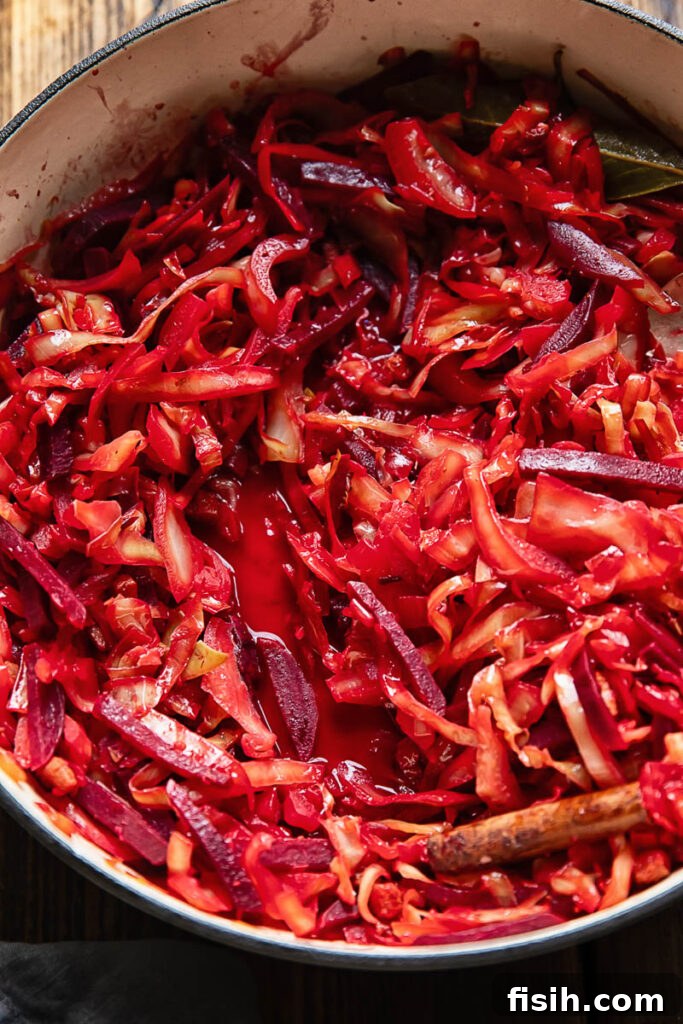
Elevating Your Meal: Serving Suggestions
While I’m gracefully sidestepping any direct mention of “the holidays” (as it’s far too early to fully dive into that discussion!), I will emphatically state that this vibrant vegetable side dish is an absolutely roast-worthy companion. The warming notes of nutmeg, cinnamon, and bay leaves instantly evoke a wintry, comforting atmosphere, setting a delightful tone for your entire table. With its earthy root flavors and natural sweetness, it harmonizes beautifully with a variety of main courses.
For me, the perfect seasonal Sunday roast, featuring this braised delight, would look a little something like this:
- Slow Cooker Roast Beef – If I’m opting for the ease of a simple braised cabbage, then I’m certainly not going to slave over a traditional roast beef either. My slow cooker is my best friend for achieving perfectly tender, flavorful roast beef with minimal effort, allowing me to focus on other elements of the meal, or simply relax!
- While the sheer convenience of Air Fryer Roast Potatoes is undeniably tempting, as soon as the weather takes a turn for the colder, I find myself craving the ultimate comfort of Scalloped Potatoes (known as Dauphinoise in the UK). This rich, creamy, and utterly indulgent potato dish is something I tend to reserve for the cooler months, ensuring I make the most of this recipe during its prime season.
- Maple Glazed Roasted Carrots – These jewel-toned carrots, with their subtle sweetness and beautiful glaze, sit magnificently alongside the deep reds and purples of the braised cabbage and beets. Can you truly imagine a more picturesque and inviting table setting? The combination of colors and flavors is simply stunning.
Beyond the traditional roast, this versatile side also pairs wonderfully with roasted pork loin, grilled sausages, or even a hearty vegetarian lentil loaf. Its robust flavors and vibrant appearance make it suitable for holiday feasts, casual weeknight dinners, or any occasion where you crave comforting, wholesome food.
Storage and Creative Leftover Ideas
While it might sound a bit unconventional, braised red cabbage with beets actually develops an even more delightful flavor when chilled. If you’re a fan of the tangy zest of sauerkraut, you’ll be pleasantly surprised by how tasty these leftovers are cold. Simply store any remaining portions in an airtight container in the fridge for 3-4 days, and then serve them as you would a classic red kraut – perhaps alongside a hearty sausage or as a bright counterpoint to rich meats.
One of my absolute favorite ways to enjoy these leftovers is in a layered sandwich. Imagine this: slices of robust rye bread, topped with creamy Swiss cheese, a generous layer of this flavorful braised cabbage and beets, and your choice of tender chicken or savory ham. For an extra touch of moisture and a delicious zing, add a smear of spicy mustard or a dollop of tangy mayonnaise. It’s a truly satisfying and unique sandwich experience!
If enjoying it cold isn’t your preference, reheating leftovers is simple. Gently warm them on the stovetop over low to medium heat. If the mixture seems a little dry, just add a small splash of water or vegetable stock to bring back its tender consistency and infuse it with renewed warmth and flavor.
More Delicious Side Dishes to Try
- Dill Potato Salad: A fresh and tangy potato salad, perfect for picnics and barbecues.
- Air Fryer Buffalo Cauliflower Bites: Crispy, spicy, and a fantastic vegetarian alternative to chicken wings.
- Crispy Brussels Sprouts with Honey and Bacon: A classic combination of sweet, savory, and perfectly crisp.
- Cucumber and Heirloom Tomato Salad with Red Onions: A refreshing and vibrant salad, celebrating fresh seasonal produce.
Braised Cabbage and Beets with Bacon
Julia Frey of Vikalinka
15 minutes
50 minutes
6 people
Equipment
-
Cast iron casserole dish
Ingredients
- 75g / 1/3 cup cubed bacon lardons or pancetta
- 1 tbsp butter
- 1 onion, chopped
- 2 cloves garlic, minced
- 650g / 6 cups white cabbage, sliced
- 300g / 2.5 cups beets, peeled and cut into thick matchsticks
- 250ml / 1/2 cup chicken stock, or vegetable stock
- 2 tbsp red wine vinegar
- 1/4 tsp nutmeg
- 1 cinnamon stick
- 2 bay leaves, fresh is better
- Salt to taste
Instructions
-
In a deep cast iron pan or a cast iron pot, cook the bacon lardons over medium heat until all fat has rendered and the bacon is crispy. Remove the bacon and set aside, leaving the rendered fat in the pan. Add 1 tbsp of butter and the chopped onion to the pan, cooking over low heat for about 10 minutes until soft and just beginning to color. Then, add the minced garlic and cook for another 20 seconds while stirring constantly to prevent burning.
-
Add the sliced cabbage and prepared beets to the pan, along with the chicken (or vegetable) stock and red wine vinegar. Sprinkle with nutmeg, nestle in the cinnamon stick and bay leaves, and add a pinch of salt. Stir everything together to combine thoroughly, then cover the pot with a lid. Cook over low heat for 40 minutes to 1 hour, checking on it periodically and stirring to prevent sticking and ensure even cooking. (The cabbage and beets will typically be cooked after 40 minutes, but you may wish to cook them a bit longer depending on your desired level of softness.)
-
Once cooked to your liking, taste the braised vegetables and adjust seasoning as needed. Add more salt if desired, and if you prefer a slightly sweeter profile, a tiny pinch of sugar can be added, though the beets usually provide ample natural sweetness. Stir in the reserved crispy bacon lardons just before serving for an extra layer of flavor and texture.
Nutrition
Carbohydrates: 15g |
Protein: 5g |
Fat: 8g |
Saturated Fat: 3g |
Polyunsaturated Fat: 1g |
Monounsaturated Fat: 3g |
Trans Fat: 0.1g |
Cholesterol: 15mg |
Sodium: 606mg |
Potassium: 452mg |
Fiber: 5g |
Sugar: 8g |
Vitamin A: 191IU |
Vitamin C: 44mg |
Calcium: 67mg |
Iron: 1mg
Nutrition information is automatically calculated, so should only be used as an approximation.