
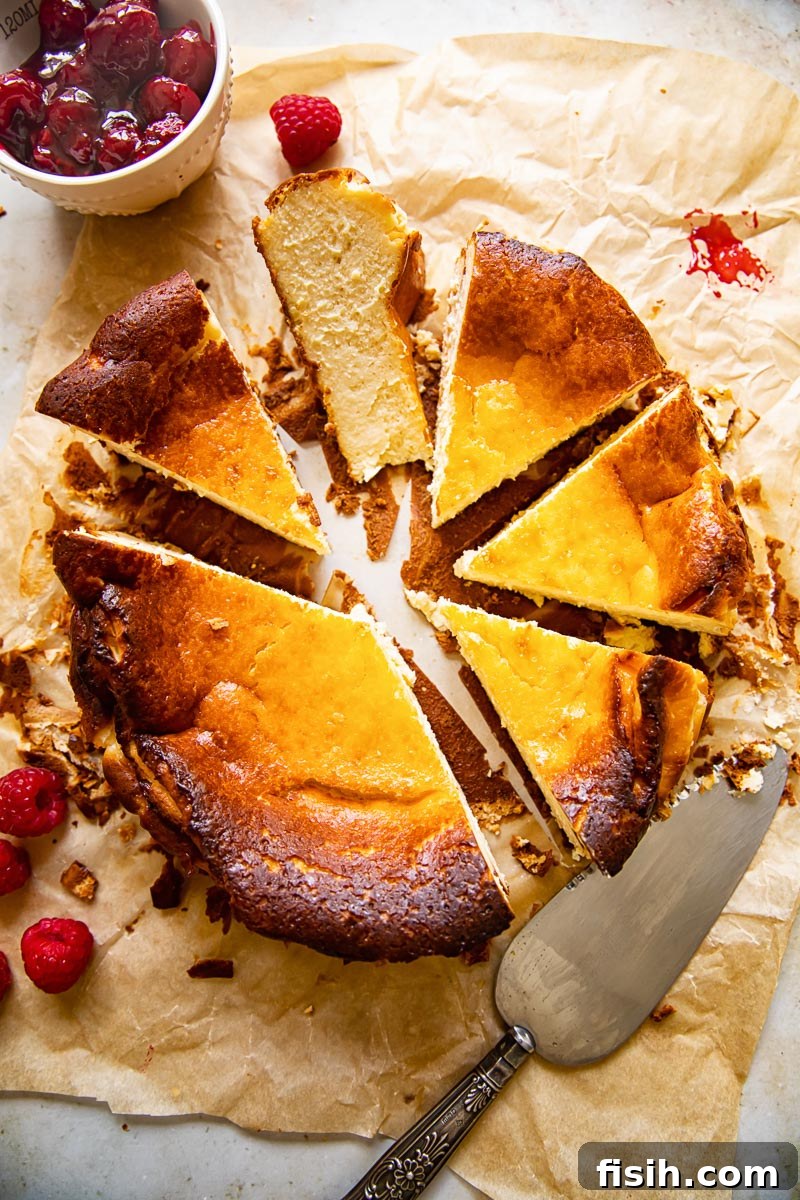
Imagine a cheesecake that defies all the usual rules of baking: no tricky water baths, no delicate crusts, and absolutely no fuss. That’s precisely what you get with this Burnt Basque Cheesecake recipe. It’s not just the simplest cheesecake you’ll ever make; it’s also quite possibly the creamiest, boasting a rich, custardy interior and a perfectly caramelized, ‘burnt’ top. Get ready to impress with minimal effort!
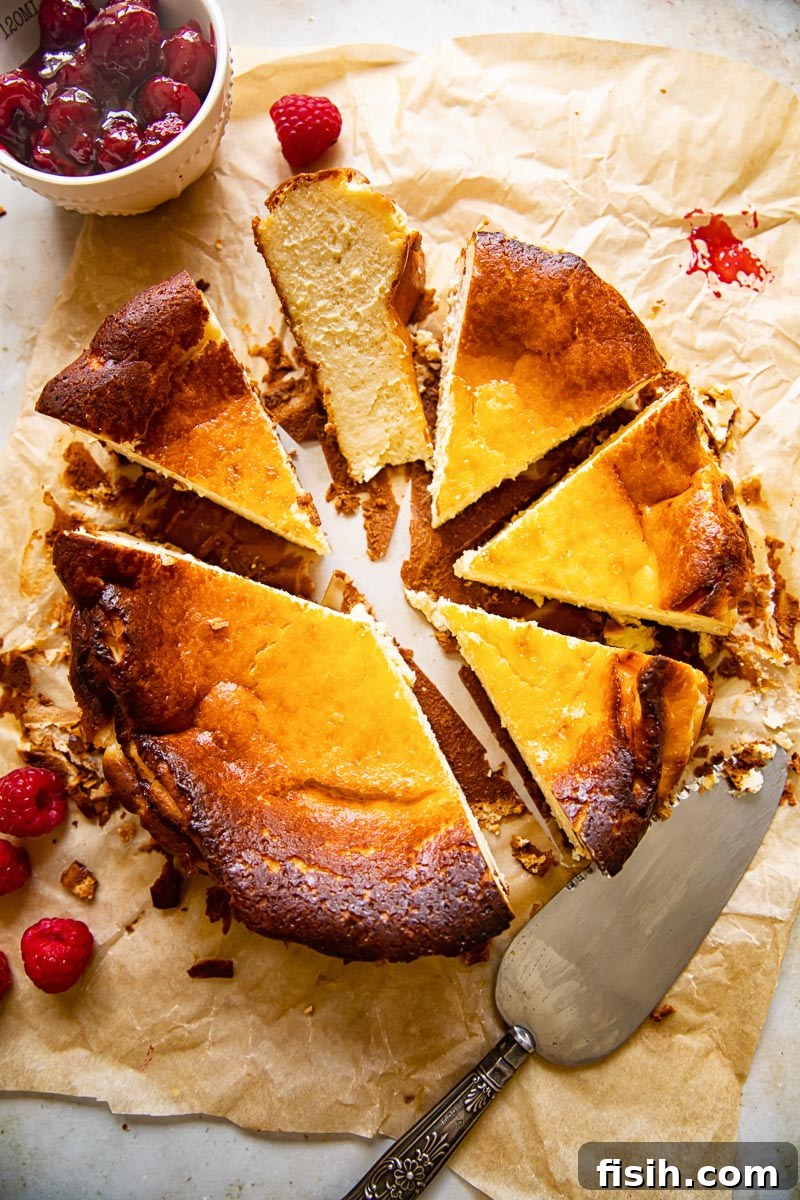
For many, the thought of baking a cheesecake evokes images of cracked tops, soggy crusts, and the dreaded water bath. But what if we told you there’s a cheesecake that embraces imperfection, where a deeply caramelized (or “burnt”) exterior is not just tolerated but celebrated as its signature charm? This Spanish cheesecake is a game-changer, especially if you’ve ever felt intimidated by baking or have had less-than-successful attempts in the past. It’s incredibly forgiving, designed for sheer indulgence rather than intricate precision.
Originating from the renowned La Viña restaurant in San Sebastián, Spain, the Basque cheesecake stands apart. Its rustic appearance, with a deeply bronzed, almost scorched top and an unbelievably creamy, often slightly molten, center, is a testament to its unique baking philosophy. It’s a dessert that screams comfort, sophistication, and effortless culinary brilliance all at once. You can enjoy its pure, unadulterated flavor on its own, but we highly recommend elevating the experience with a vibrant raspberry compote. The burst of tart fruit cuts through the cheesecake’s richness, creating a perfectly balanced bite.
Unveiling the Charm of Burnt Basque Cheesecake
So, what exactly makes a Basque cheesecake so special and distinct from its American or Japanese counterparts? At its heart, the Burnt Basque Cheesecake is a crustless cheesecake baked at a high temperature. This high-heat method is crucial to achieving its iconic “burnt” top and sumptuously creamy, almost custard-like interior. Unlike traditional New York-style cheesecakes that rely on a gentle water bath to ensure a perfectly even, crack-free surface, the Basque version deliberately eschews this method. The goal here isn’t perfection; it’s character.
The dark, caramelized surface isn’t a mistake; it’s the star of the show. This intense caramelization adds a depth of flavor that’s both slightly bitter and incredibly sweet, a beautiful counterpoint to the delicate, sweet, and tangy cream cheese filling. This contrast in textures and flavors is what elevates the Basque cheesecake from a simple dessert to an unforgettable culinary experience. Its rustic charm means there’s no need to stress over cracks or a perfectly smooth finish – in fact, a few crinkles from the parchment paper only add to its artisanal appeal.
One of the most appealing aspects of this cheesecake is its versatility. You can bake it until the center is just set, offering a firmer, yet still creamy, slice. Or, for a truly luxurious experience, you can slightly underbake it, resulting in a center that is wonderfully custardy and jiggly, melting in your mouth with every spoonful. The choice is entirely yours, adapting to your personal preference for texture. This adaptability, combined with its simple ingredient list and straightforward technique, makes the Burnt Basque Cheesecake an absolute joy to bake and an even greater pleasure to devour.
Why This Is Your Easiest Cheesecake Yet
If you’ve ever shied away from baking cheesecakes, this recipe is your golden ticket to conquering your fears. Its incredible simplicity and forgiving nature are truly unparalleled. Here’s why the Burnt Basque Cheesecake is the most stress-free cheesecake you’ll ever encounter:
- No Water Bath Required: This is perhaps the biggest relief for many bakers. Traditional cheesecakes often require a finicky water bath (bain-marie) to ensure even cooking and prevent cracks. With the Basque version, you simply mix, pour, and bake. The high heat does all the magic, creating that characteristic burnt exterior without the need for steam.
- Crustless by Design: Forget the tedious process of pressing crumbs into a pan. This cheesecake is proudly crustless, making it naturally gluten-friendly (if using gluten-free flour) and cutting down on prep time.
- Rustic is Best: Imperfections are celebrated! The parchment paper lining is deliberately crinkled to create a rustic look. Any cracks on top or uneven edges are part of its charm. This frees you from the pressure of achieving a “perfect” appearance, allowing you to focus on flavor and texture.
- Simple, Accessible Ingredients: You won’t need any obscure ingredients. Just full-fat cream cheese, sugar, eggs, heavy cream, vanilla, a touch of flour, and a pinch of salt. These are pantry staples for most bakers, ensuring this delicious dessert is always within reach.
- Mix, Pour, Bake Simplicity: The method is as straightforward as it gets. A quick mix of ingredients, pour into your prepared pan, and into the hot oven it goes. It’s truly a beginner-friendly recipe that yields professional-level results every time.
This “no-fuss” approach makes the Burnt Basque Cheesecake perfect for last-minute dessert cravings, impressing guests, or simply enjoying a decadent treat without the usual baking anxiety.
The Perfect Pairing: Zesty Raspberry Compote
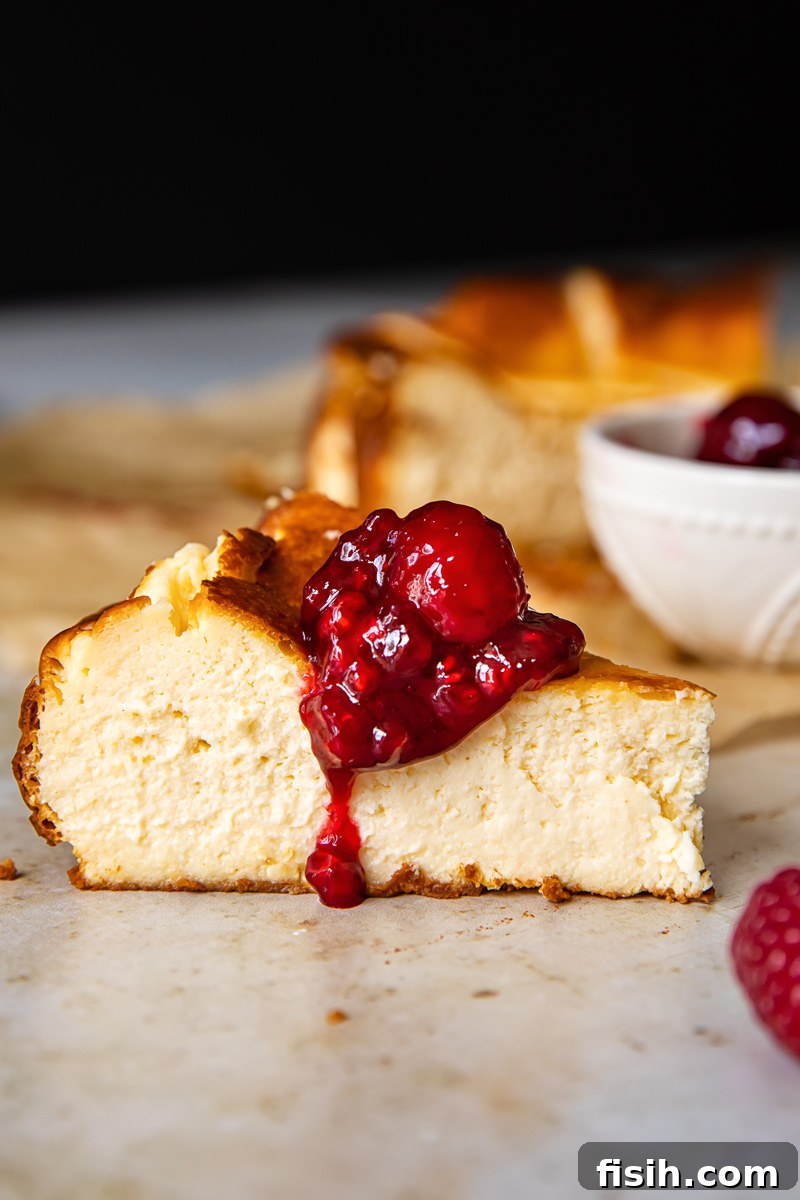
While the Burnt Basque Cheesecake is undeniably delicious on its own, pairing it with a vibrant fruit compote elevates the experience to another level. Rich desserts often benefit from a touch of acidity to balance their creamy sweetness, and a tangy raspberry compote does this beautifully. The bright, tart notes of raspberries cut through the cheesecake’s richness, creating a harmonious symphony of flavors that will leave your taste buds wanting more.
Why Raspberry Compote?
Berries, especially raspberries, are an exceptional choice for this decadent cheesecake. Their natural tartness and delicate sweetness are an ideal complement to the deep caramelization and creamy texture of the Basque cheesecake. Don’t be intimidated by the term “compote” – it’s simply a fancy word for stewed fruit! The beauty of a compote lies in its simplicity: whole fruit pieces, like raspberries, gently cooked in a sugar syrup. This method preserves the fruit’s integrity, offering lovely textural bits that are more substantial than a smooth sauce.
Crafting Your Compote: Easy & Flavorful
Making your own raspberry compote is incredibly easy and quick, allowing you to use seasonal fruits to their fullest potential. You’ll need just a few ingredients: fresh or frozen raspberries, sugar, and a touch of water. The process involves simmering these ingredients until the raspberries break down slightly and the syrup thickens, coating the back of a spoon. For an extra pop of freshness and texture, stirring in some fresh raspberries at the end adds a delightful contrast. This simple step transforms your cheesecake from great to extraordinary, providing a burst of flavor and a beautiful splash of color.
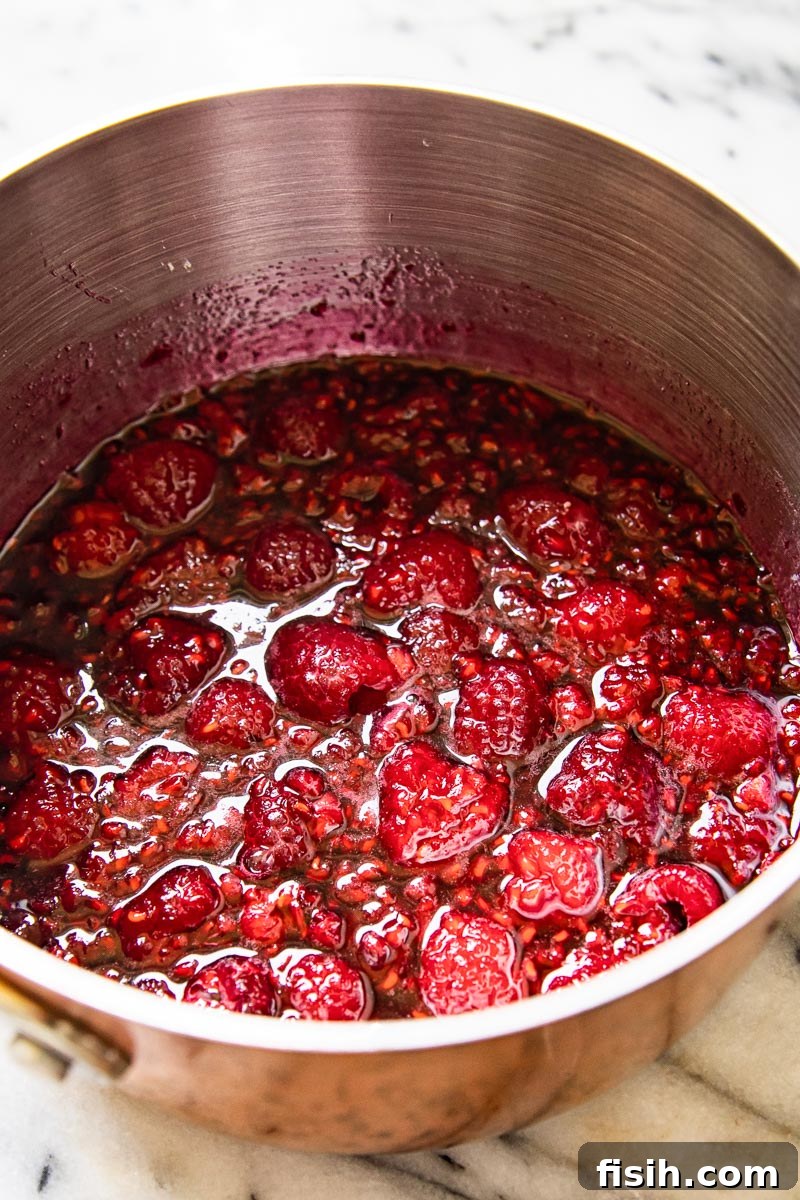
While raspberries are a personal favorite, feel free to experiment with other fruits. A blueberry compote, a vibrant cherry sauce, or even a simple mixed berry topping would be equally delightful. The goal is to introduce a fresh, tangy element that enhances rather than overwhelms the star of the show: your creamy Burnt Basque Cheesecake.
A Global Journey: Cheesecakes Around the World
The concept of a creamy dessert featuring cheese has captivated cultures across the globe for centuries, evolving into countless delightful forms. While our Burnt Basque Cheesecake offers a unique Spanish take, it’s fascinating to explore how other nations interpret this beloved dessert.
- Japanese Cheesecake (Soufflé Cheesecake): Often referred to as “cotton cheesecake” due to its incredibly light, airy, and fluffy texture, this version is a masterclass in delicacy. It’s famously tall, jiggles with every touch, and melts in your mouth like a cloud. Unlike denser cheesecakes, the Japanese variety uses whipped egg whites to achieve its signature soufflé-like consistency, typically baked in a water bath for gentle, even cooking. Explore a Japanese Cheesecake recipe here.
- New York Cheesecake: A true American icon, the New York cheesecake needs no introduction. Renowned for its dense, rich, and ultra-creamy texture, it’s often baked on a graham cracker crust and typically finished with sour cream topping or fresh fruit. It’s the epitome of classic indulgence, a dessert that truly satisfies with its intense creaminess and slightly tangy flavor. Find a classic New York Cheesecake recipe here.
- Italian Ricotta Cheesecake: This version often shares a rustic charm with its Spanish cousin, using fresh ricotta cheese as its primary ingredient. Italian cheesecakes tend to be lighter and less sweet than their New York counterparts, with a slightly granular texture from the ricotta and often flavored with citrus zest, vanilla, or even candied fruit. They are typically crustless or have a very thin pastry base, making them quite similar in spirit to the Burnt Basque Cheesecake. Try an authentic Italian Ricotta Cheesecake recipe.
- Russian Farmer’s Cheese Cheesecake (Tvorog Cheesecake): In Eastern European cuisine, cheesecakes often feature Tvorog, a type of farmer’s cheese similar to ricotta but with a distinct, light tang. Recipes like my mother’s Crumb Apricot Cheesecake showcase this versatile ingredient, creating desserts that are comforting, flavorful, and deeply nostalgic. Tvorog cheesecakes can range from light and airy to dense and rich, depending on the preparation.
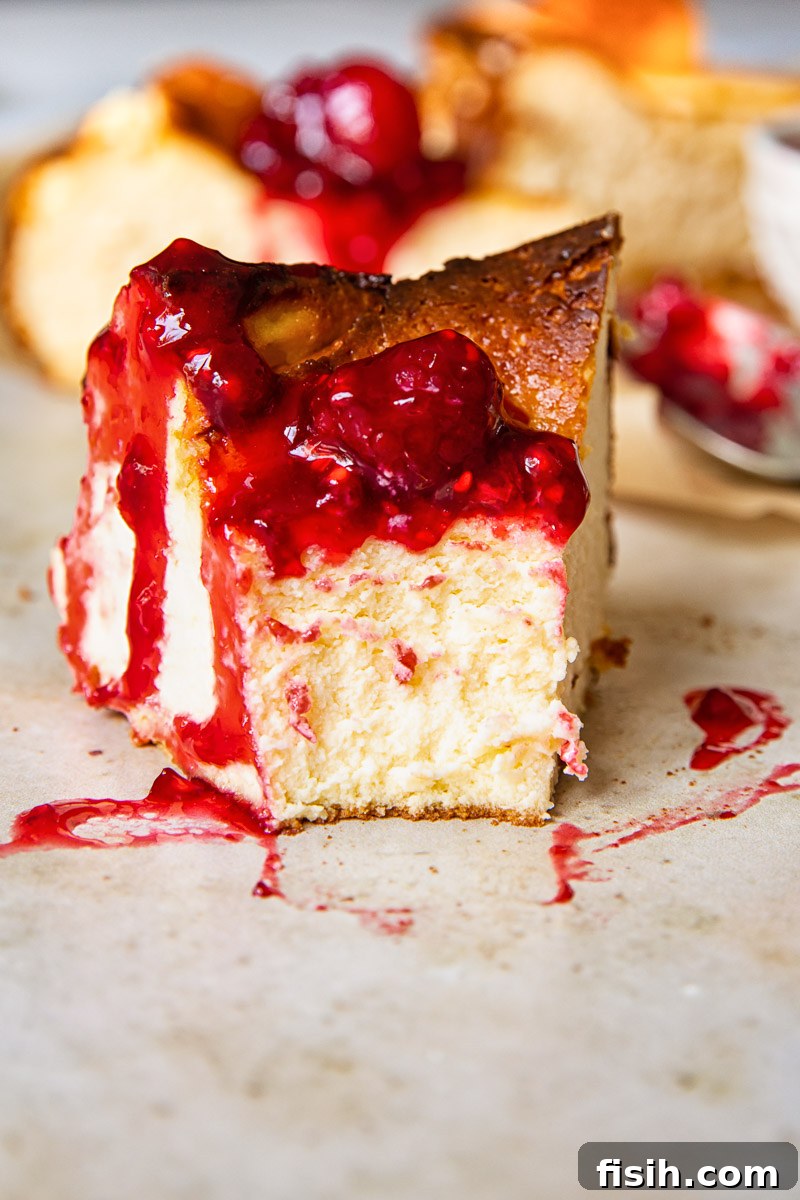
Each of these cheesecakes, from the jiggling Japanese soufflé to the robust New York classic, tells a story of culinary tradition and regional preferences. The Burnt Basque Cheesecake, with its rebellious burnt top and custardy heart, adds another unique chapter to this global narrative, proving that there’s truly a cheesecake for every palate and every occasion.
Expert Tips for Your Perfect Burnt Basque Cheesecake
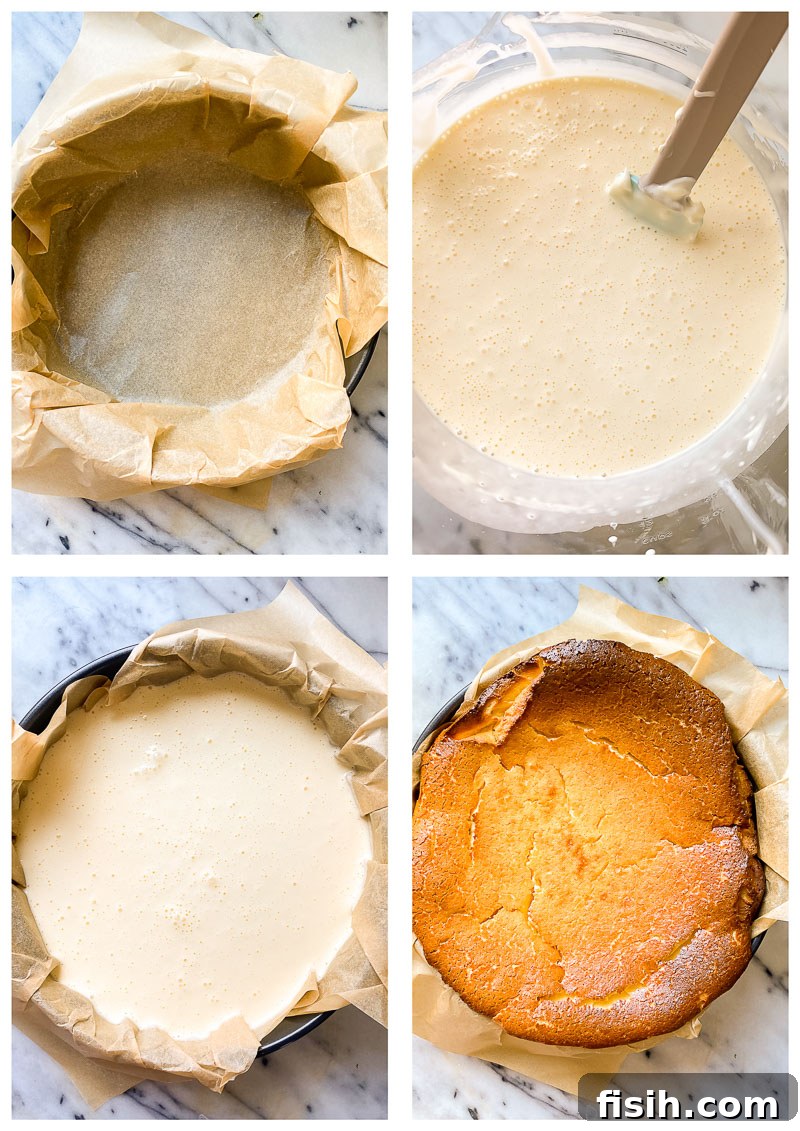
Achieving a show-stopping Burnt Basque Cheesecake is incredibly straightforward, but a few simple tips can ensure your success and elevate your baking experience:
- Parchment Paper is Key: Don’t skip lining your cake pan! Use a generous amount of parchment paper, ensuring it overhangs the edges by at least 1 to 1.5 inches. This not only prevents sticking but also creates the signature rustic, crinkled edges that are part of the Basque cheesecake’s charm. If your paper isn’t wide enough, use two pieces and lay them in a criss-cross fashion. Embrace the pleats; they add character! This overhang also makes for effortless removal – just lift by the paper edges.
- Room Temperature Ingredients: This is crucial for a smooth, lump-free batter. Ensure your full-fat cream cheese and eggs are at room temperature. This allows them to cream together effortlessly with the sugar, resulting in that wonderfully silky texture. Cold ingredients can lead to a lumpy batter and a less uniform bake.
- Go Full-Fat for Richness: This is not the time to cut corners! Use only full-fat cream cheese and heavy whipping cream (double cream). The richness from these ingredients is essential for the cheesecake’s luxurious creaminess, smooth consistency, and robust structure. Brands like Philadelphia are widely trusted and work perfectly, even in Spain!
- Superfine Sugar for Seamless Blending: Caster sugar, also known as superfine sugar, is highly recommended for this recipe. Its fine granules dissolve quickly and evenly into the cream cheese mixture, ensuring a smooth batter without any gritty texture. If you only have granulated sugar, you can pulse it briefly in a food processor to achieve a finer consistency.
- Don’t Overmix the Batter: While you want your ingredients well combined, be careful not to overmix once the flour is added. Overmixing can develop the gluten in the flour, potentially leading to a tougher texture in your cheesecake. Mix just until everything is incorporated and the batter is smooth.
- Embrace the “Burnt” Top: Remember, the dark, caramelized top is intentional and a defining feature of this cheesecake! Don’t be afraid when it browns significantly in the oven. This charring creates a unique, almost smoky flavor profile that perfectly complements the creamy interior. It’s flavor, not a flaw.
- Adjust Baking Time for Desired Texture: For a softer, more custardy, and jiggly center, bake for around 50 minutes to an hour. If you prefer a more set, yet still creamy, cheesecake, extend the baking time to 1 hour 10 minutes. The cheesecake will puff up dramatically in the oven, then settle as it cools – this is completely normal and part of its charm.
- Cooling and Chilling are Essential: Allow the cheesecake to cool completely to room temperature in its pan before transferring it to the fridge. Chilling for at least a couple of hours (or even overnight) allows the cheesecake to fully set, firm up, and for its rich flavors to meld and deepen. For the best serving experience, take it out of the fridge about 30 minutes before serving to let it soften slightly.
- Always Serve with Compote (or fruit!): As discussed, the rich and creamy nature of the Burnt Basque Cheesecake truly shines when paired with a bright, tangy fruit compote. It provides a refreshing contrast that makes each bite even more enjoyable.
By following these simple tips, you’re well on your way to baking a sensational Burnt Basque Cheesecake that will become a go-to dessert for any occasion.
Burnt Basque Cheesecake Recipe
A simple, stunning, and incredibly creamy cheesecake with a signature caramelized top, requiring no water bath!
Ingredients
For the Cheesecake
- 700g (25 oz) full-fat cream cheese, at room temperature (e.g., Philadelphia brand)
- 200g (1 cup) caster sugar / superfine sugar
- 5 large eggs
- 200ml (1 cup) double cream / heavy whipping cream
- 1 tsp vanilla extract
- 3 tbsp plain / all-purpose flour
- 1/4 tsp salt
For the Raspberry Compote
- 150g (1.5 cups) fresh or frozen raspberries
- 100g (1/2 cup) granulated sugar
- 2 tbsp water
- 100g (1 cup) fresh raspberries (for stirring in at the end)
Instructions
- Prepare the Pan: Preheat your oven to 400°F (200°C). Line an 8-inch (20cm) cake pan with parchment paper. Make sure the paper overhangs the edges by at least 1 to 1.5 inches. If your parchment paper isn’t wide enough, use two pieces and lay them in a criss-cross pattern. Don’t worry if the paper isn’t perfectly flat or has pleats against the pan; this rustic look is part of the Basque cheesecake’s charm. You can use a springform pan or a regular cake pan; the parchment paper overhang will allow for easy removal.
- Mix the Batter: In a large bowl, beat the room-temperature full-fat cream cheese with the caster sugar until the sugar is fully dissolved and the mixture is smooth. Add the eggs one at a time, beating well after each addition until the mixture is light and fluffy. Pour in the heavy cream, vanilla extract, all-purpose flour, and salt. Blend until everything is just combined and the batter is smooth. Be careful not to overmix once the flour is added. The batter will be quite runny.
- Bake the Cheesecake: Pour the runny cheesecake mixture into your prepared pan. Bake in the preheated oven for 1 hour to 1 hour 10 minutes. The top should be deeply bronzed, almost burnt, but the center should still be slightly jiggly when gently shaken. For a softer, more custardy center, you can reduce the baking time to about 50 minutes. The cheesecake will rise significantly during baking but will settle and fall slightly as it cools, which is normal.
- Make the Raspberry Compote: While the cheesecake is baking, prepare your raspberry compote. In a small saucepan, combine the 150g (1.5 cups) of fresh or frozen raspberries, 100g (1/2 cup) of sugar, and 2 tablespoons of water. Cook over low heat, stirring occasionally, until the raspberries break down and the mixture becomes syrupy, thick enough to coat the back of a spoon. Remove from heat and stir in the additional 100g (1 cup) of fresh raspberries for added texture and freshness. Set aside to cool.
- Cool and Serve: Once baked, let the cheesecake cool completely to room temperature in the pan. Then, transfer it to the refrigerator and chill for at least a couple of hours, or preferably overnight, to allow it to fully set and for the flavors to develop. About 30 minutes before serving, remove the cheesecake from the fridge to bring it slightly closer to room temperature. Gently lift the cheesecake out of the pan using the parchment paper overhang, carefully peel off the paper, slice, and serve with the homemade raspberry compote. Enjoy!
Nutrition Information (Approximate per serving)
Nutrition information is automatically calculated and should only be used as an approximation.
- Calories: 598 kcal
- Carbohydrates: 48g
- Protein: 10g
- Fat: 42g
- Saturated Fat: 24g
- Polyunsaturated Fat: 2g
- Monounsaturated Fat: 11g
- Trans Fat: 1g
- Cholesterol: 233mg
- Sodium: 403mg
- Potassium: 228mg
- Fiber: 2g
- Sugar: 42g
- Vitamin A: 1701 IU
- Vitamin C: 8mg
- Calcium: 126mg
- Iron: 1mg
More Cheesecake Favorites to Explore
If you’ve fallen in love with the ease and deliciousness of this Burnt Basque Cheesecake, you might enjoy exploring other cheesecake recipes, both traditional and unique. Here are a few more delightful options to tantalize your taste buds:
- Lemon Curd Cheesecake: For a bright and tangy traditional take.
- Almond Raspberry Cheesecake Bars: A convenient and equally delicious way to enjoy cheesecake, perfect for sharing.
- Strawberry Meringue Cheesecake (No Bake): Perfect for warm weather or when you want a lighter, no-oven option.
- Raffaello Cheesecake: A decadent and unique cheesecake inspired by the beloved coconut and almond confections.
- Rustic Plum Cheesecake: Another charmingly rustic option, perfect for showcasing seasonal fruits like juicy plums.
Happy baking, and enjoy your culinary adventures!