

Yorkshire Puddings are an iconic British side dish, a culinary masterpiece served with the revered traditional Sunday roast. These glorious golden crowns of crispy batter rise majestically, embodying the heart of British comfort food. They perfectly complement a feast of succulent roast beef, fluffy roast potatoes, tender vegetables, and, most importantly, lashings of rich, savory gravy. Crafted from the simplest four ingredients, you’ll soon find yourself mastering this art every Sunday. If the idea of a ‘pudding’ at a roast dinner sounds puzzling, then you’re in for a delightful education!
It’s crucial to clarify right from the start: despite their name, Yorkshire Puddings are unequivocally not desserts. If your heart yearns for sweet treats, you can find them here. Now that we’ve established this fundamental distinction – and perhaps redirected a few confused sweet-toothed readers – let’s delve into the fascinating world of these savory delights.
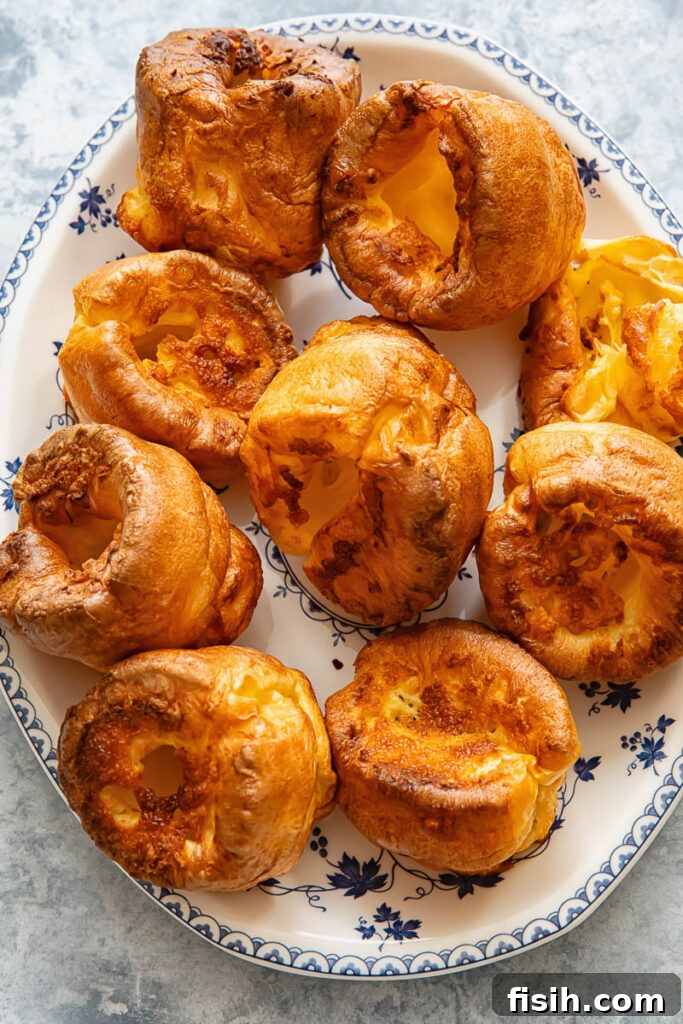
Allow me to share my own initial bewilderment when I first encountered a Yorkshire Pudding on a quaint British pub menu. “Roast Beef with Yorkshire Pudding,” it read. My suspicions were instantly piqued. A ‘pudding’ with roast beef? This culinary mystery only intensified my curiosity. As someone who appreciates a good enigma and was eager to experience my very first authentic British roast beef on UK soil, I bravely ordered it.
To my surprise and delight, the Yorkshire Puddings, when they arrived, were surprisingly familiar. Nestled on the plate alongside the slices of tender meat and all the traditional trimmings, swimming in a generous pool of dark, glistening gravy, were two delightfully wonky, doughy-looking mini chimney pots. Their appearance and initial taste immediately reminded me of the North American popover, a childhood favorite. Upon closer inspection and tasting, I realized the underlying recipes were virtually identical. The key difference, I noted, was the distinctly savory profile of the British versions, often accompanied by an unctuous richness from the cooking fat, contrasting sharply with the buttery, often sweetened popovers typically served with butter and jam. This discovery fueled my ambition to replicate the perfect Yorkshire Pudding at home, a quest that has occupied me for the past few years, refining the method to a fine art. And now, I am thrilled to share my perfected technique with you.
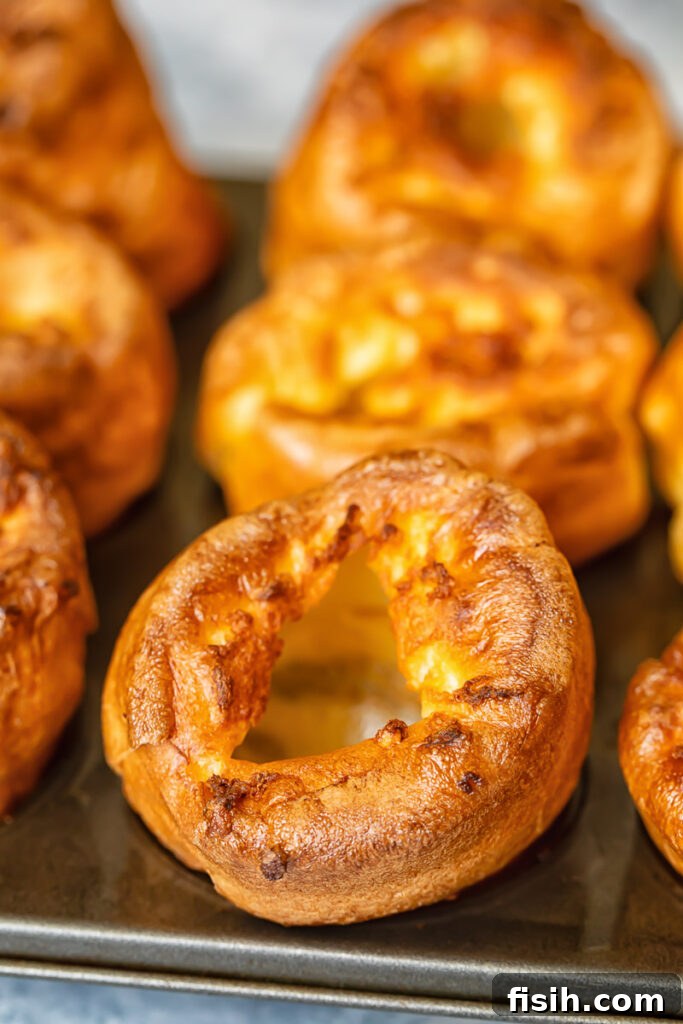
What Exactly Are Yorkshire Puddings? A Deep Dive into this British Classic
At their core, Yorkshire Puddings are a centuries-old British creation, a simple yet magical blend of eggs, milk, flour, and salt. Does that sound familiar? It should! The basic batter is remarkably similar to that used for pancakes. However, unlike its characteristically flat cousin, a Yorkshire Pudding undergoes a glorious transformation in a hot oven, rising dramatically to become light, airy, and magnificently round. Imagine a puffy, edible soup bowl, perfectly engineered to cradle generous amounts of rich gravy – a truly ingenious design.
This ingenious design points to their humble origins. Historically, these inexpensive and readily available ingredients were combined to create “dripping puddings.” These substantial, belly-filling gravy boats were a staple for families with meager meat budgets, effectively stretching a small amount of meat and gravy into a satisfying meal. The puddings would be cooked first, often under a joint of meat to catch the savory drippings, then served as a filling starter, helping to sate appetites before the more expensive meat course.
Today, the ideal Yorkshire Pudding is far from heavy or stodgy. Modern renditions aspire to be wafer-light, with a delightfully crisp, golden shell and a soft, airy interior. They are made to varying scales, from individual, teacup-sized portions like the ones I prefer, to competitively “giant” Yorkshire Puddings that, in my humble opinion, sometimes overshadow the other delicious components of the meal.
But why “Yorkshire”? The name itself holds a fascinating history, with two popular versions explaining its regional attribution. Originally, these batter creations were known simply as ‘dripping puddings,’ a nod to the fact that they were traditionally cooked in the flavorful fat (or ‘dripping’) rendered from roasting beef. The name ‘Yorkshire Pudding’ first appeared in print in a cookbook from the mid-18th century, attributed to a cook from Yorkshire. This formal recognition cemented its association with the county. The second, more debated theory, suggests that Yorkshire’s booming coal industry during that era meant that ovens in the region were consistently hotter. A fiercely hot oven is an absolutely essential element for achieving the perfect, sky-high rise of a Yorkshire Pudding, leading some to believe that the very best puddings could only be found and truly mastered in Yorkshire.
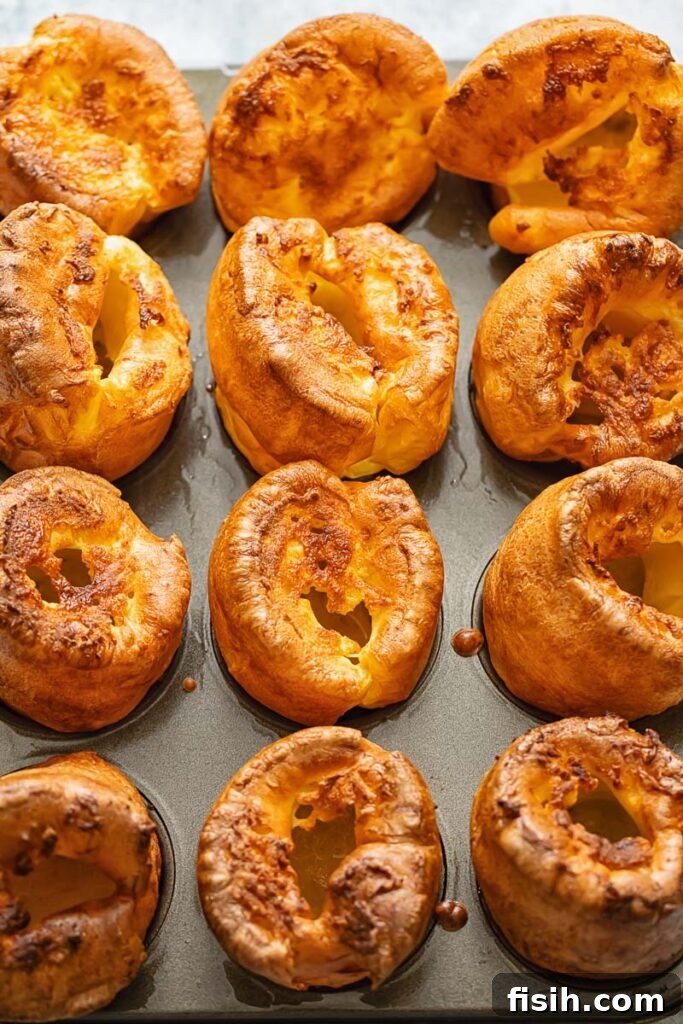
Mastering the Rise: Essential Tips for Perfect Yorkshire Puddings
- When it comes to crafting the perfect Yorkshire Puddings, I wholeheartedly defer to the wisdom of Mary Berry, the undisputed duchess of British baking. Her recipe is renowned for consistently yielding the lightest, crispiest, and most gloriously risen puddings. Following her guidance is a surefire path to success.
- For those who prefer a Yorkshire Pudding with a bit more heft and a denser, spongier texture, a simple adjustment can be made: double the amount of flour in the batter. This slight modification adds a delightful ‘puddingy’ sponginess that many people thoroughly enjoy.
- Indeed, my North American friends, Yorkshire Puddings are the venerable ancestors of your beloved popovers. The primary distinction lies in the choice of cooking fat; traditional Yorkshire Puddings often use savory beef dripping or vegetable oil, while popovers typically rely on butter for their distinct flavor.
- While beef dripping was the traditional fat of choice, imparting an unparalleled depth of flavor, modern recipes often call for vegetable oil. This makes the dish more accessible to those with varied dietary requirements, including vegetarians, and acknowledges the fact that most home cooks no longer routinely collect beef dripping. However, if you happen to have some rich duck fat leftover from a special occasion, as I sometimes do from Christmas, it makes a magnificent substitute!
- When selecting your cooking fat, any neutral vegetable oil with a high smoke point will work beautifully. Absolutely avoid olive oil, as its low smoke point means it will burn and smoke long before your puddings have a chance to rise to their full potential.
- One of the most crucial, yet often overlooked, steps is resting the batter. Even a mere 30 minutes of resting time can make a significant difference. This allows the gluten in the flour to relax, resulting in a more tender structure and, most importantly, a more impressive, sky-high rise.
- Yorkshire Puddings are divas in the kitchen; they demand their own oven space. Sharing the oven with other roasting items like meat, potatoes, or vegetables introduces moisture into the atmosphere, which will prevent your puddings from swelling and inevitably leave them soggy. They thrive in a dry, intensely hot environment.
- Fortunately, there’s no need to stress about your dinner getting cold. Yorkshire Puddings cook relatively quickly, making them perfectly suited to bake during the time your roasted meat is resting. This ensures everything is piping hot and ready to serve simultaneously.
- This point cannot be overstressed: it is absolutely essential that both the oven and the fat in the muffin tin are spitting hot before you introduce the batter. This intense heat is the secret behind their dramatic rise and crispy texture.
- When pouring the batter, take meticulous care not to splash it onto the sides of the muffin tray. Aim to pour the batter directly into the center of each muffin mold. An oily barrier around the edges is vital to prevent sticking and encourage an even rise.
- The temptation to peek is strong, but resist! Do not open the oven door under any circumstances until the puddings are fully baked and ready to be removed. Prematurely opening the oven will cause a sudden drop in temperature, deflating your beautiful puddings, and tragically, there’s no coming back from that.
- Yorkshire Pudding making can definitely be a learning curve, and a bit of practice often leads to perfection. If your puddings emerge from the oven looking gorgeously tall and golden like proud crowns, only to sadly deflate into flimsy flat caps shortly after, it’s a clear sign they hadn’t finished baking. Next time, simply leave them in the oven for a few extra minutes until they are truly set.
Serving Your Golden Crowns: Traditional and Modern Approaches
This is an area that sparks considerable culinary debate among enthusiasts. Die-hard traditionalists will staunchly argue that Yorkshire Puddings can only be rightfully served alongside a magnificent joint of roast beef, accompanied by all the customary Sunday trimmings, of course. However, due to their immense and widespread popularity, home cooks and even many modern pubs have begun to bend these historical rules, proudly serving them with virtually any roast meat or even imaginative vegetarian alternatives.
As open-minded as I generally am in the kitchen, I confess a strong leaning towards authenticity when it comes to my Yorkies. For me, the ultimate experience still involves a perfectly pinkly centered, rarer roast beef. After all, having embraced British culinary traditions so deeply, I am essentially British now!
My dream roast dinner features a juicy prime rib roast beef as the showstopping centerpiece, accompanied by impeccably crunchy-shelled roast potatoes, exquisitely roasted carrots and parsnips, and some vibrant cabbage greens. This combination is not only mouth-wateringly delicious but visually stunning. However, while prime rib is undeniably exquisite, it can also be eye-wateringly expensive! So, unless it’s a truly grand occasion, more budget-friendly cuts like beef topside (or top round) or a tender slow cooker roast beef are more likely to grace my Sunday menu, offering incredible flavor without breaking the bank.
Rest assured, no one is truly judging if you choose to serve your Yorkshire Puddings with a flavorful roast pork, a succulent roast lamb, a classic chicken, or even a festive turkey. The adaptability of Yorkshire Puddings is part of their charm. However, the one element that garners universal agreement and absolutely cannot be compromised is the presence of generous “buckets” of rich, savory homemade gravy!
Preserving Perfection: Storage and Reheating Your Yorkshire Puddings
This simple Yorkshire Pudding recipe yields a dozen muffin tin-sized puddings, a perfect batch for a family meal. In our household, my daughter and I usually manage a respectable two Yorkies each, but my husband and son, with their heartier appetites, are prone to devouring their quota of three. This often leaves us with just two lone Yorkshire puddings, raising the question: is it even worth saving them? In my experience, refrigerating them immediately often leaves them cold and disappointingly flabby, losing their signature crispness. For best results, they are truly best enjoyed fresh from the oven.
However, during the colder months, especially if I’ve had the foresight to incorporate some delicious beef or duck drippings into the recipe, it makes perfect sense to double the batch and prepare 24 puddings. The remainder can then be easily frozen. Simply allow them to cool completely, then transfer them to a freezer-safe bag or airtight container. They will happily keep in the freezer for up to three months, ready for future meals. This foresight is a lifesaver for busy weeks or for impromptu holiday feasts. They reheat beautifully in about 5 minutes at 220°C (428°F), making them a wonderfully convenient addition to a family holiday roast like Thanksgiving or Christmas. Just be aware of the culinary purists who might raise an eyebrow at serving Yorkies with turkey!
More Delicious Holiday Sides to Try
- Traditional Colcannon Recipe
- Herb and Garlic Mashed Potatoes
- Hot Honey Baked Camembert in Bread Bowl
- Garlic Butter Sautéed Cauliflower with Breadcrumbs
Perfectly Puffed Yorkshire Puddings
Julia Frey of Vikalinka
5 minutes
20 minutes
55 minutes
6
people

Ingredients
-
3
large eggs -
225ml / 1 cup
milk,
1% -
100g / 3/4 cup
plain / all purpose flour -
1/4
tsp
salt -
Beef dripping,
lard or duck fat
Instructions
-
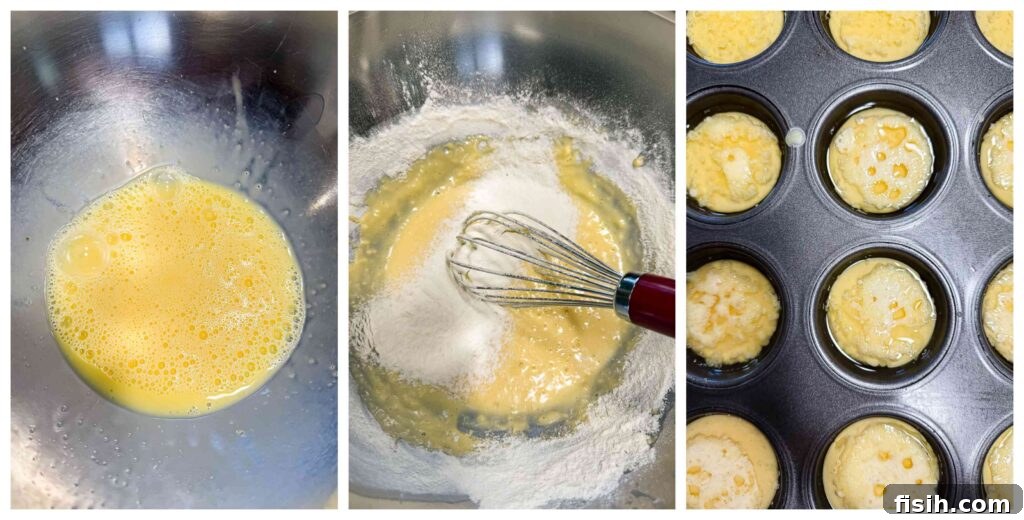
In a large bowl, whisk the eggs thoroughly with the milk. Gradually sift in the flour, mixing until you achieve a smooth, lump-free batter. Season the batter with salt. Once mixed, transfer the batter to a jug with a spout, which will make pouring easier, and let it rest for a minimum of 30 minutes. Meanwhile, preheat your oven to 200°C (400°F) if it’s a fan-assisted oven, or 220°C (450°F) for a conventional oven.
-
Approximately 10-15 minutes before your batter finishes resting, add a generous spoonful of beef dripping, lard, or duck fat into each cup of a 12-hole muffin tin. If using vegetable oil, ensure it covers the bottom of each muffin cup to about 1 cm depth. Place the muffin tin into the preheated oven and heat the fat for 10-15 minutes, or until it is visibly piping hot and shimmering. This intense heat is crucial for the perfect rise.
-
Once the batter has rested and the fat in the muffin tin is smoking hot, carefully remove the pan from the oven. Working quickly, pour the batter evenly among the muffin cups. It’s important to pour the batter directly into the center of each cup, striving to avoid splashing the sides. A spoon can be useful to catch any drips and maintain a clean oily barrier on the sides of the cups.
-
Immediately return the muffin tin to the preheated oven and bake at 200°C (400°F) for fan-assisted ovens for approximately 20 minutes. The most critical rule: do not open the oven door to check on the puddings during baking, as this will cause them to deflate irreversibly. Bake until they are gloriously risen, golden brown, and crisp.
Notes
- For a Yorkshire Pudding with a more substantial, ‘puddingy’ texture, simply double the amount of flour in the batter.
- While beef drippings are traditional, vegetable oil is a widely accepted and accessible alternative for those with dietary requirements, including vegetarians.
- Rich duck fat can also be used for a decadent flavour. Always use a high smoke point vegetable oil and avoid olive oil, which will burn due to its low smoke point.
- Allowing the batter to rest for at least 30 minutes lets the gluten relax, contributing to a better rise and a more tender texture.
- Yorkshire puddings require intense, dry heat. Avoid cooking them simultaneously with other items like meat or vegetables, as their moisture can lead to soggy puddings. Baking them while your roast meat is resting is often the most convenient timing.
- It is paramount that both the oven and the chosen fat in the muffin tin are fiercely hot before the batter is added. This initial burst of heat is essential for a dramatic rise.
- When pouring the batter, be precise and aim directly for the center of each muffin mould. An oily barrier on the sides of the cup is crucial to prevent sticking and facilitate an even ascent.
- Resist the urge to open the oven door during baking! A sudden drop in temperature will cause your beautifully rising puddings to deflate, a unfortunate event from which they cannot recover.
- Perfecting Yorkshire Puddings can take a little practice. If they appear wonderfully tall and golden upon removal but then deflate, it indicates they were underbaked. Next time, extend the baking duration slightly.
Nutrition
Calories:
115
kcal
|
Carbohydrates:
15
g
|
Protein:
6
g
|
Fat:
3
g
|
Saturated Fat:
1
g
|
Polyunsaturated Fat:
1
g
|
Monounsaturated Fat:
1
g
|
Trans Fat:
0.01
g
|
Cholesterol:
86
mg
|
Sodium:
143
mg
|
Potassium:
106
mg
|
Fiber:
0.5
g
|
Sugar:
2
g
|
Vitamin A:
181
IU
|
Calcium:
62
mg
|
Iron:
1
mg
Nutrition information is automatically calculated, so should only be used as an approximation.
Tried this recipe?
Let us know how it was!