
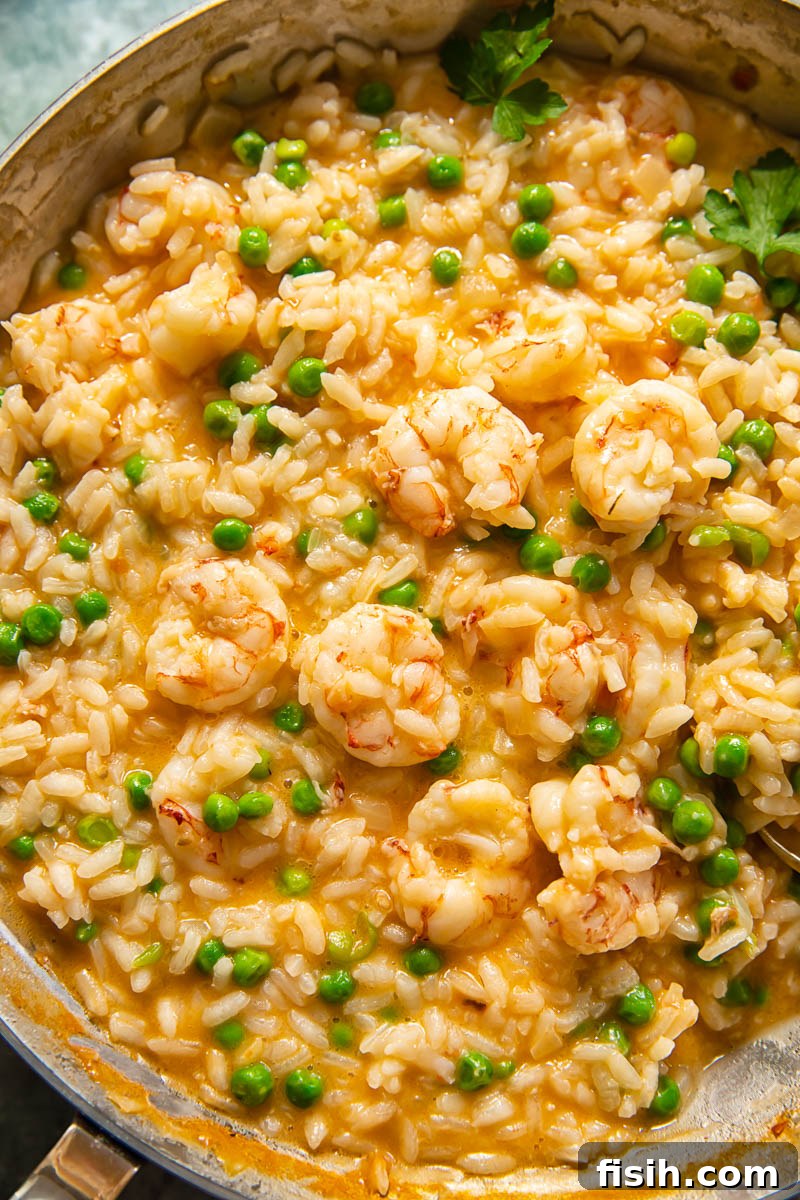
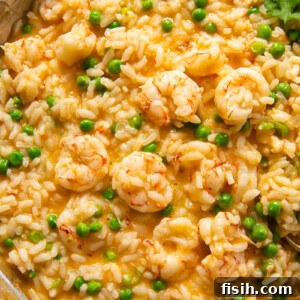
Indulge in the exquisite comfort of this creamy shrimp risotto, a delightful one-pan meal infused with the fresh sweetness of tomatoes and vibrant green peas. Whether you call them shrimp or prawns, these succulent morsels elevate a classic Italian dish into an unforgettable culinary experience that’s surprisingly easy to achieve at home.
While seafood is a star here, if you’re exploring other comforting risotto options, don’t miss our Chicken Risotto with Mushrooms recipe for a hearty alternative.
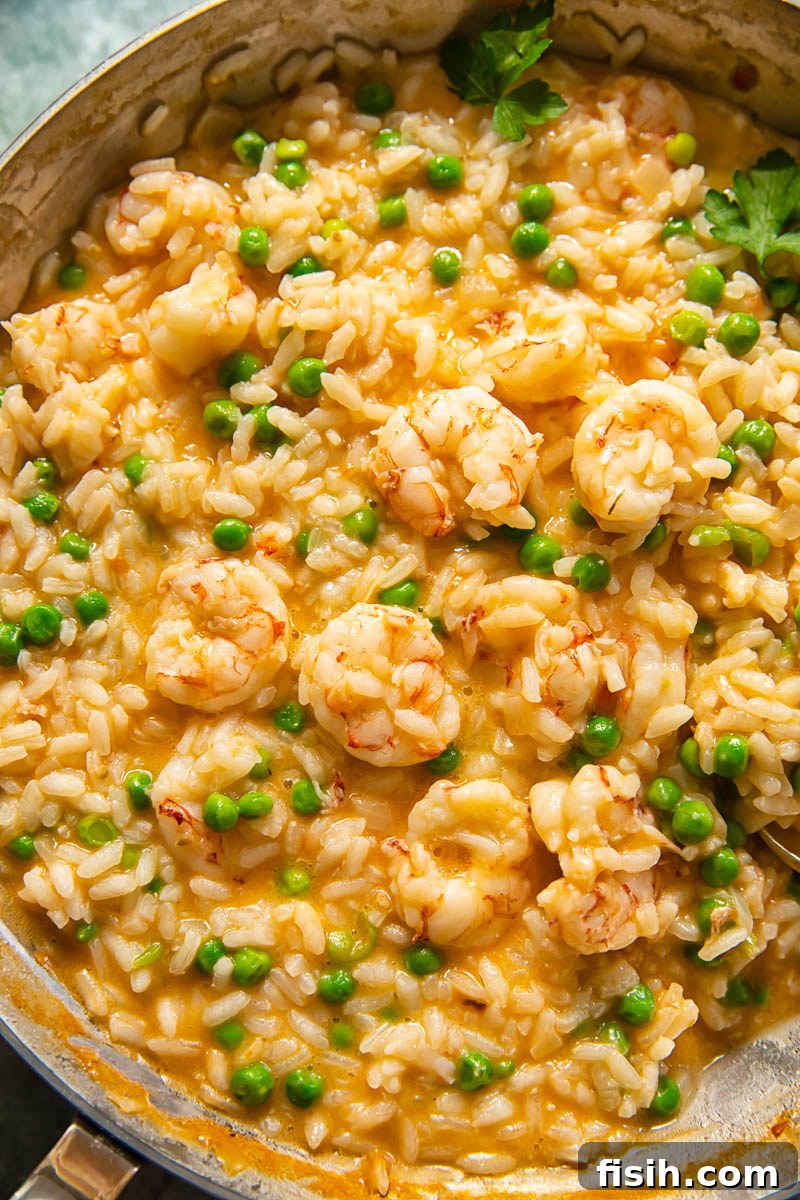
For many, a steaming bowl of creamy risotto represents the epitome of comfort food. Its rich texture and delicate flavors are hard to resist, especially when combined with plump, juicy shrimp. The choice between a decadent shrimp pasta and a luscious shrimp risotto is always a delightful dilemma, and today, we’re diving deep into the latter.
This recipe is a homage to the traditional Italian Risotto ai Frutti di Mare (Seafood Risotto), a dish I’ve savored in countless Italian trattorias. My goal was to capture the essence of those authentic flavors while simplifying the preparation for the modern, busy home cook. By incorporating sweet green peas and ripe tomatoes, we transform this into a complete, wholesome one-pan meal that minimizes fuss without compromising on taste.
I specifically chose prawns (or shrimp, as they’re commonly known in the US) for this risotto because they are my absolute favorite type of seafood. Their tender texture and sweet flavor complement the creamy rice beautifully. However, don’t feel limited by my preference; this recipe is wonderfully versatile. Feel free to experiment by adding other delectable seafood like scallops, mussels, or clams to create your own personalized seafood medley.
The Art of Achieving Perfectly Creamy Risotto
Risotto is renowned globally for its signature creamy, silken texture, often perceived as a complex dish to master at home. Good news: it’s far simpler than its reputation suggests! While it does require a bit of attention and patience, understanding a few fundamental principles will empower you to create restaurant-quality creamy risotto in your own kitchen.
1. Embrace the Starch: The Right Rice and No Rinsing
The secret to risotto’s creaminess lies in the starch content of the rice itself. Unlike most rice varieties where rinsing is crucial to remove excess starch, with risotto, you want that starch! It’s the key component that transforms the cooking liquid into a luxurious, velvety sauce. Therefore, never wash your risotto rice.
The choice of rice is equally vital. You need a short to medium-grain rice with a high starch content and the ability to absorb a lot of liquid without becoming mushy. The best varieties for risotto are Arborio or Carnaroli. Arborio is widely available and a great starting point, while Carnaroli is often favored by chefs for its higher starch content and ability to maintain its shape even better.
2. The Slow and Steady Stock Method
The temptation to pour all the stock into the pot at once to speed up the process is strong, but resist it! This is perhaps the most critical step for achieving that desired creaminess. Stock must be added gradually, usually about one ladleful at a time. This slow addition allows the rice grains to absorb the liquid evenly and slowly release their starch. If you add too much liquid too quickly, the rice will boil rather than simmer gently, resulting in a soupy, rather than creamy, texture. Wait until each addition of stock is nearly fully absorbed before adding the next, ensuring the rice is always just covered.
3. Constant, Gentle Stirring for Starch Release
Another cornerstone of creamy risotto is consistent, gentle stirring. As the rice grains rub against each other and the pan, they naturally release their starchy coating into the cooking liquid. This process, known as “mantecatura,” is what creates the incredibly smooth and luscious consistency we associate with risotto. Don’t overdo it with vigorous stirring, but a regular, gentle stir keeps the rice from sticking and helps distribute the starch evenly.
4. Achieving the Perfect “Al Dente” Texture
Risotto should be tender yet retain a slight bite in the center – an “al dente” texture, much like perfectly cooked pasta. It should never be soggy or mushy. Taste the rice frequently towards the end of the cooking process to gauge its doneness. The overall consistency of the finished risotto should be fluid, not stodgy or dense. When you spoon it onto a plate, it should gently spread outwards, forming a soft ripple, rather than holding a rigid mound.
5. The Final Flourish: Mantecatura with Fat
The very last step, often performed off the heat, is the final “mantecatura” where butter and Parmesan cheese (if using) are stirred in. This emulsifies with the starch and remaining liquid, adding richness, gloss, and the ultimate creamy finish. Cover the pan for a few minutes after this step to allow the flavors to meld and the risotto to settle into its perfect consistency.
Ultimately, the true secret to making creamy, restaurant-quality risotto at home boils down to one essential ingredient: patience. Don’t rush the process, follow these steps diligently, and you’ll be rewarded with a profoundly satisfying dish.
Expert Tips for Your Shrimp Risotto Success
Beyond the core principles, these specific tips will help you perfect your shrimp and pea risotto:
- The Right Rice is Non-Negotiable: As discussed, use a high-starch, short-grain variety like Arborio or Carnaroli rice. These are designed to absorb liquid and release starch, giving your risotto its characteristic luscious texture.
- Introduce Acidity for Balance: Risotto, especially a rich one, benefits immensely from a touch of acidity. It brightens the flavors and prevents the dish from tasting bland or heavy. Dry white wine, such as Pinot Grigio or Sauvignon Blanc, is a classic choice. Alternatively, Vermouth offers a similar acidic lift and aromatic complexity. Add it after toasting the rice and let it fully evaporate, concentrating its flavor.
- Tomatoes for Depth and Sweetness: Tomatoes are a fantastic addition to seafood risotto, mirroring the role of wine by providing a gentle acidity and a hint of sweetness. For this shrimp risotto, I recommend grating one large fresh tomato for a milder, more integrated flavor. If fresh tomatoes aren’t on hand, a tablespoon of good quality tomato paste can achieve a similar depth.
- Choose Your Stock Wisely: To truly enhance the seafood essence of this dish, using a good quality fish stock is highly recommended. It creates a harmonious flavor profile that underscores the shrimp. However, if fish stock isn’t readily available, chicken broth or vegetable broth will also yield delicious results, making the recipe adaptable to what you have.
- Perfectly Cooked Shrimp Every Time: The key to tender, juicy shrimp is to avoid overcooking them. Shrimp cook very quickly, so they should be added towards the very end of the risotto’s cooking time. Typically, they only need about 3-5 minutes to turn pink and opaque. Adding them late ensures they remain succulent and don’t become rubbery.
- Easy Pea Addition: Green peas add a burst of color, freshness, and natural sweetness to the risotto. Like shrimp, they cook rapidly. You can add them directly from frozen; they will thaw and cook in mere minutes alongside the shrimp and the last additions of stock.
- Taste and Season: Risotto needs proper seasoning to shine. Always taste your risotto before serving and adjust the salt level as needed. Remember, the stock itself contains salt, so add carefully. Freshly ground black pepper is also a wonderful addition for a subtle kick.
- The Parmesan Debate: To Add or Not to Add? Traditionally, Italian purists avoid mixing cheese with seafood dishes. However, a touch of freshly grated Parmesan cheese can add an incredible depth of umami and creaminess to shrimp risotto. I personally highly recommend it, even if it’s a “rebel” move! The choice is entirely yours, but don’t be afraid to experiment with what tastes best to you.
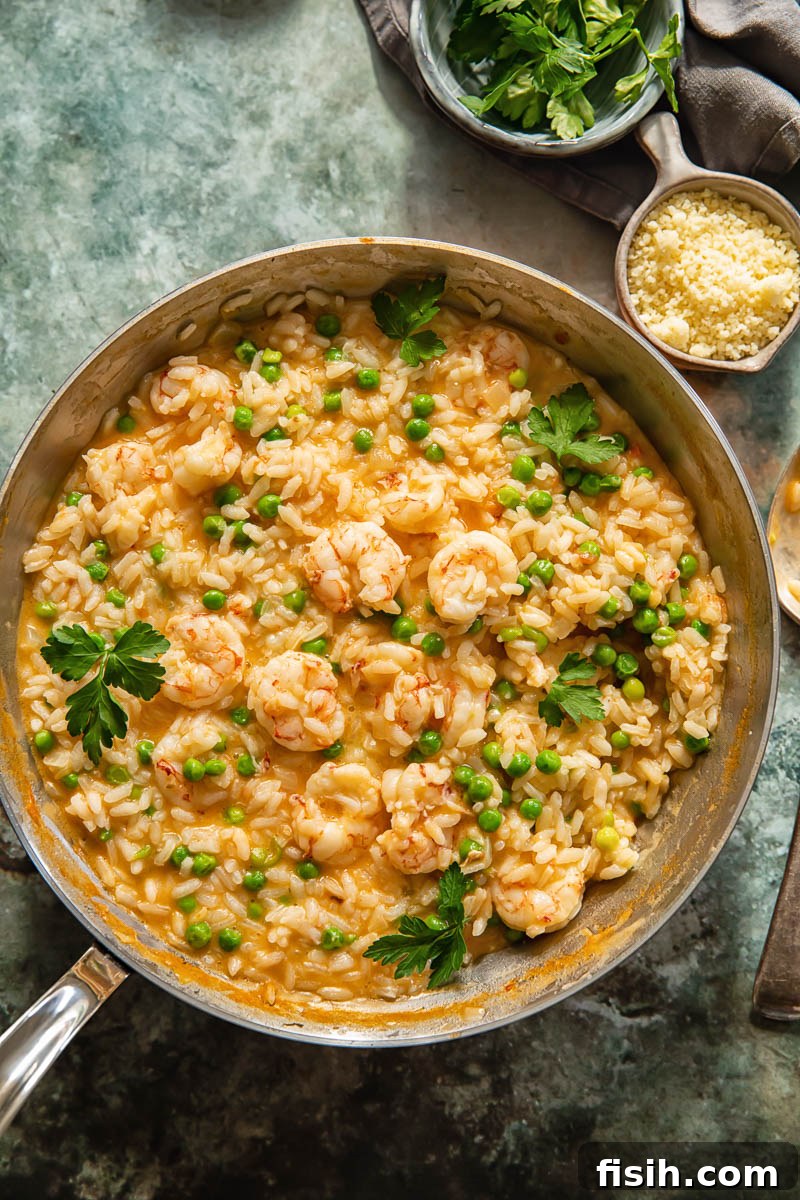
Elevate Your Meal: Delicious Serving Suggestions for Shrimp Risotto
A rich and creamy dish like this shrimp risotto pairs beautifully with fresh, lighter accompaniments that cut through its richness and add textural contrast. Consider these options to complete your meal:
- Crisp, Fresh Salads: A vibrant salad is an ideal counterpoint. To keep with the Italian theme, a classic Caprese Salad with ripe tomatoes, fresh mozzarella, and fragrant basil drizzled with balsamic glaze is an excellent choice. Alternatively, a simple yet elegant Garden Salad with crisp mixed greens and a light vinaigrette provides refreshing crunch.
- Warm, Garlicky Bread: Is there anything more comforting than mopping up creamy risotto with a piece of warm, crusty bread? A hot and fresh Garlic Bread is always a crowd-pleaser and a personal favorite in my household. While an air fryer makes quick work of it, a traditional oven will yield equally delicious results.
- A Bright Citrus Finish: Citrus, particularly lemon, has a magical ability to brighten and enhance the delicate flavors of seafood. A final squeeze of fresh lemon juice over your plated risotto, or a sprinkle of finely grated lemon zest, adds a zesty top note that elevates the entire dish.
- Fresh Herbs for Garnish: A scattering of freshly chopped parsley not only adds a pop of vibrant green color but also contributes a fresh, herbaceous note that complements the seafood and vegetables beautifully. Other fresh herbs like chives or dill could also be lovely.
Storage and Reheating Your Shrimp Risotto
Risotto is incredibly satisfying and filling, so it’s quite common to find yourself with delicious leftovers. Fortunately, this shrimp risotto stores well, allowing you to enjoy its flavors again. Proper storage is key to maintaining quality and food safety, especially with seafood.
- Cool Down Quickly: After serving, allow any leftover risotto to cool down to room temperature as quickly as possible (within one hour) before refrigerating. Spreading it out on a shallow plate can help expedite this process.
- Airtight Storage: Transfer the cooled risotto to an airtight container and store it in the refrigerator. This will help preserve its freshness and prevent it from absorbing other odors from the fridge.
- Consume Promptly: Due to the shrimp, it’s best to consume this risotto within 2-3 days for optimal freshness and safety. While some sources say 3-4 days, playing it safe is always recommended with seafood.
- Reheating for Best Texture: Risotto tends to thicken significantly in the fridge as the starch continues to set. To reheat, gently warm it in a saucepan on the stovetop over low to medium heat. You’ll need to add a splash of water, chicken stock, or even white wine to loosen it up and restore its creamy consistency. Stir gently and continuously until heated through, adding liquid spoonful by spoonful until it reaches your desired texture. Avoid microwaving if possible, as it can make the rice rubbery.
Explore More Risotto Recipes
If you’ve fallen in love with the comforting world of risotto, we have a variety of other delightful recipes to try:
- Chicken Risotto with Mushrooms and Thyme
- Spring Asparagus Risotto
- Butternut Squash Risotto with Sage and Goat Cheese
- Truffled Lentil and Kale Risotto
- Roasted Mushroom Risotto
Beyond risotto, feel free to explore our extensive Italian Recipe Collection, a treasure trove of authentic and Italian-inspired dishes perfect for any occasion, from simple weeknight dinners to elaborate Italian-themed feasts.
Average Rating: 5 from 5 votes
Prawn Risotto with Tomatoes and Peas
By Julia Frey of Vikalinka
Prep: 10 mins | Cook: 20 mins | Total: 30 mins | Servings: 6
Pin Recipe
Print Recipe
This creamy shrimp aka prawn risotto with tomatoes and green peas is an easy one pan meal that is delicious and comforting.
Ingredients
- 1 tbsp olive oil
- 1/2 onion or 1 shallot, finely chopped
- 300g / 1 1/2 cups Arborio rice or other risotto rice
- 1 large tomato, grated (or 1 tbsp tomato paste)
- 125ml / 1/2 cup dry white wine or Vermouth
- 1 litre / 4 cups fish or chicken stock, warmed
- 250g / 8 oz uncooked prawns, peeled and deveined
- 100g / 1/2 cup green peas, frozen or fresh
- 50g / 1/2 cup freshly grated Parmesan cheese
- 1 tbsp unsalted butter
- Salt to taste
- Freshly ground black pepper, for serving (optional)
- Fresh parsley, chopped, for garnish (optional)
Instructions
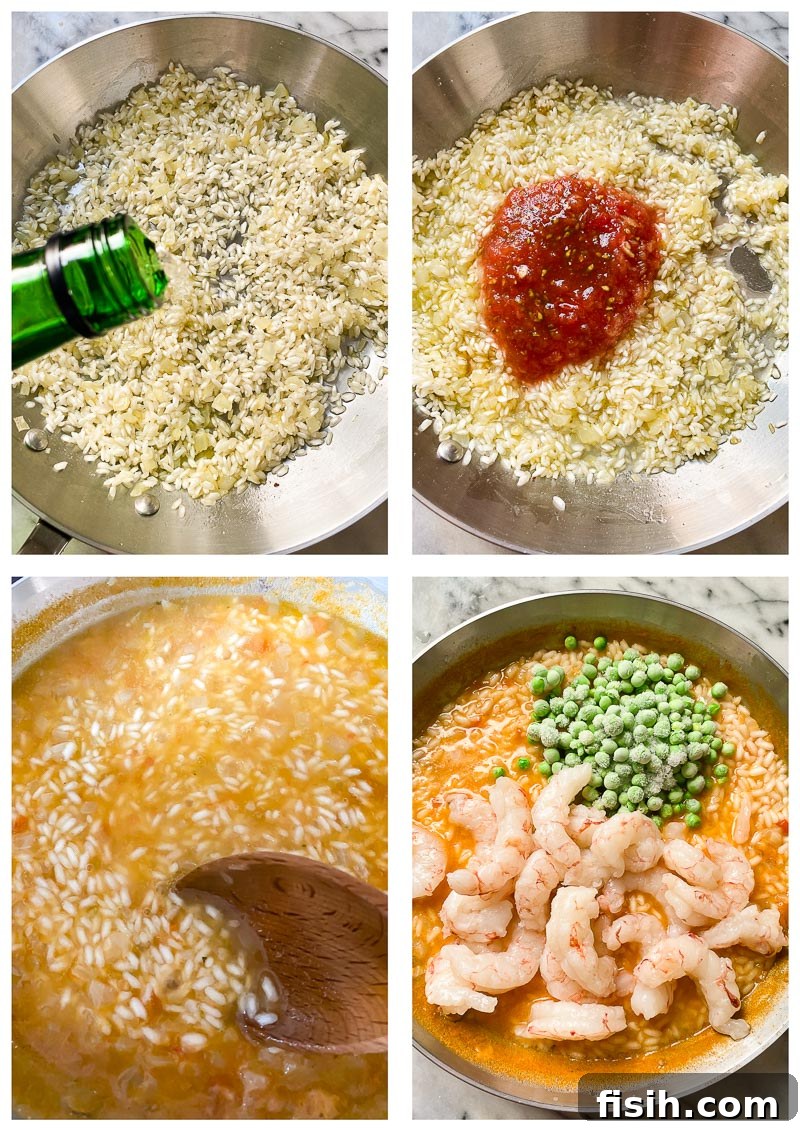
- Sauté Aromatics and Toast Rice: In a large, deep pan or Dutch oven, heat the olive oil over medium-low heat. Add the finely chopped onion or shallot and sauté gently for 5-7 minutes until translucent and softened, being careful not to brown it. Add the Arborio rice to the pan and stir-fry for 1 minute, ensuring each grain is fully coated in oil. This “toasting” step helps the rice cook evenly and develop a nutty flavor.
- Deglaze and Add Stock Gradually: Pour in the dry white wine or Vermouth and let it bubble away for 2-3 minutes until it has almost completely reduced. This deglazes the pan and imparts a crucial layer of flavor. Next, add about ¼ of the warm stock along with the grated tomato (or tomato paste). Stir everything together.
- Cook the Risotto: Let the mixture simmer over medium heat, stirring frequently. The stock should just barely cover the rice initially. As the liquid is absorbed and the rice starts to thicken, add another ladleful of warm stock. Continue this process, adding stock gradually and stirring regularly, allowing each addition to be almost fully absorbed before adding the next. This slow and steady method is vital for the rice to release its starches and create a creamy texture.
- Incorporate Shrimp and Peas: Continue cooking for approximately 15-18 minutes in total, or until the rice is nearly al dente. Just before you add the final ladle of stock, introduce the uncooked prawns and the green peas (they can be added directly from frozen). Stir them in and let them cook with the rice for another 3-5 minutes, or until the prawns are pink and opaque and the peas are tender. The risotto should still be quite fluid at this stage.
- Final Mantecatura and Seasoning: Once the rice is perfectly cooked to an al dente texture and the risotto has reached a beautiful creamy consistency, remove the pan from the heat. Stir in the freshly grated Parmesan cheese and the tablespoon of butter. Continue stirring gently until the cheese has melted and the butter has emulsified, creating a glossy, velvety finish. Taste and season generously with salt, and if desired, freshly ground black pepper.
- Rest and Serve: Cover the pan with a lid and let the risotto stand for 5 minutes. This brief resting period allows the flavors to meld and the risotto to reach its peak creaminess. Serve immediately, garnished with more grated Parmesan and fresh parsley, if desired. Enjoy your delicious, homemade shrimp risotto!
Recipe Notes for the Best Shrimp Risotto
- Rice Choice: For the most luscious and creamy risotto, always opt for high-starch varieties like Arborio or Carnaroli rice. They are designed for this dish.
- Acidity is Key: A splash of dry white wine or Vermouth adds essential acidity, balancing the richness and preventing a bland flavor profile. Don’t skip this step!
- Tomato’s Role: Grated tomato or tomato paste provides a subtle tang and sweetness, enhancing the overall depth of flavor in your seafood risotto.
- Stock Flavor: Fish stock is preferred for a truly intensified seafood flavor, but chicken or vegetable stock are excellent substitutes if fish stock isn’t available.
- Shrimp Timing: Add uncooked prawns only in the last few minutes of cooking. This prevents them from becoming tough and ensures they remain tender and succulent.
- Frozen Peas: Green peas can be added directly from frozen as they require very little cooking time.
- Parmesan is Optional but Recommended: While not strictly traditional in Italian seafood dishes, a sprinkle of Parmesan offers a fantastic savory depth. Feel free to add it, or omit it for a more authentic approach.
Nutrition Information (Approximate Per Serving)
Calories: 322kcal | Carbohydrates: 45g | Protein: 16g | Fat: 7g | Saturated Fat: 3g | Polyunsaturated Fat: 1g | Monounsaturated Fat: 3g | Trans Fat: 1g | Cholesterol: 78mg | Sodium: 590mg | Potassium: 259mg | Fiber: 3g | Sugar: 2g | Vitamin A: 422IU | Vitamin C: 10mg | Calcium: 136mg | Iron: 3mg
Nutrition information is automatically calculated and should only be used as an approximation.
Tried this recipe? Let us know how it was!