
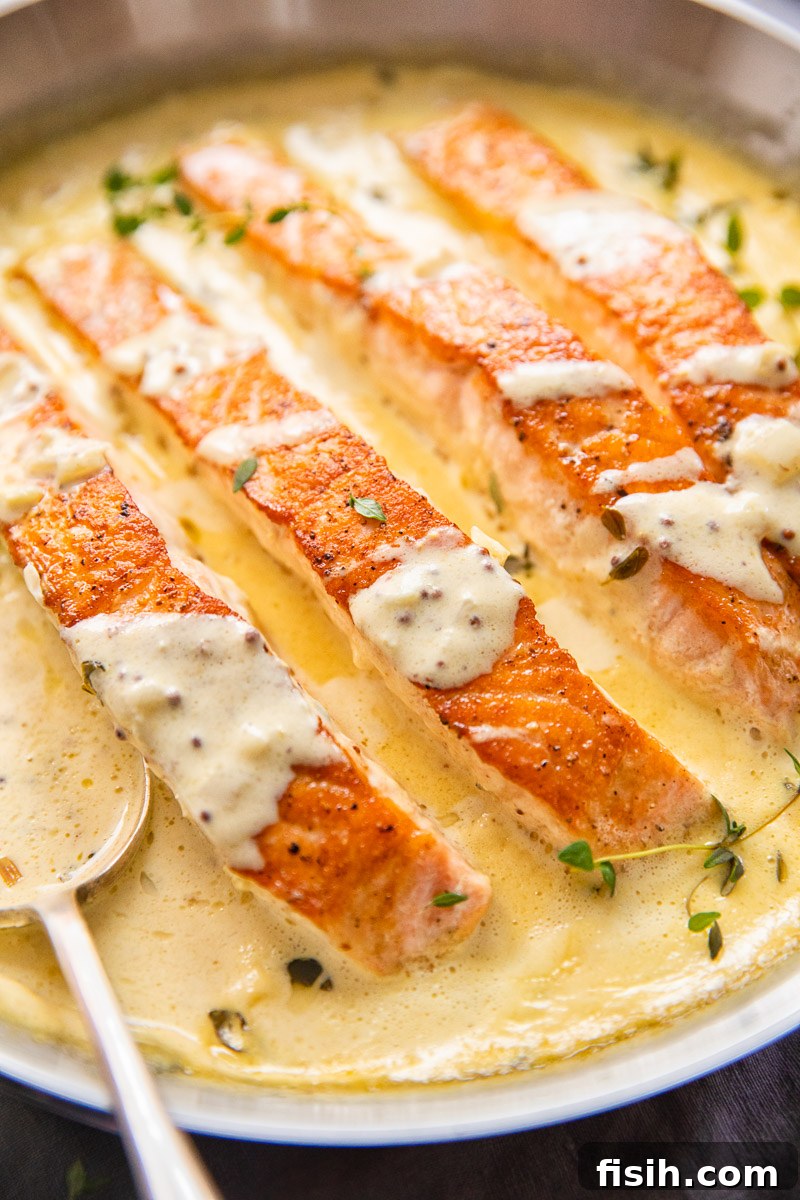
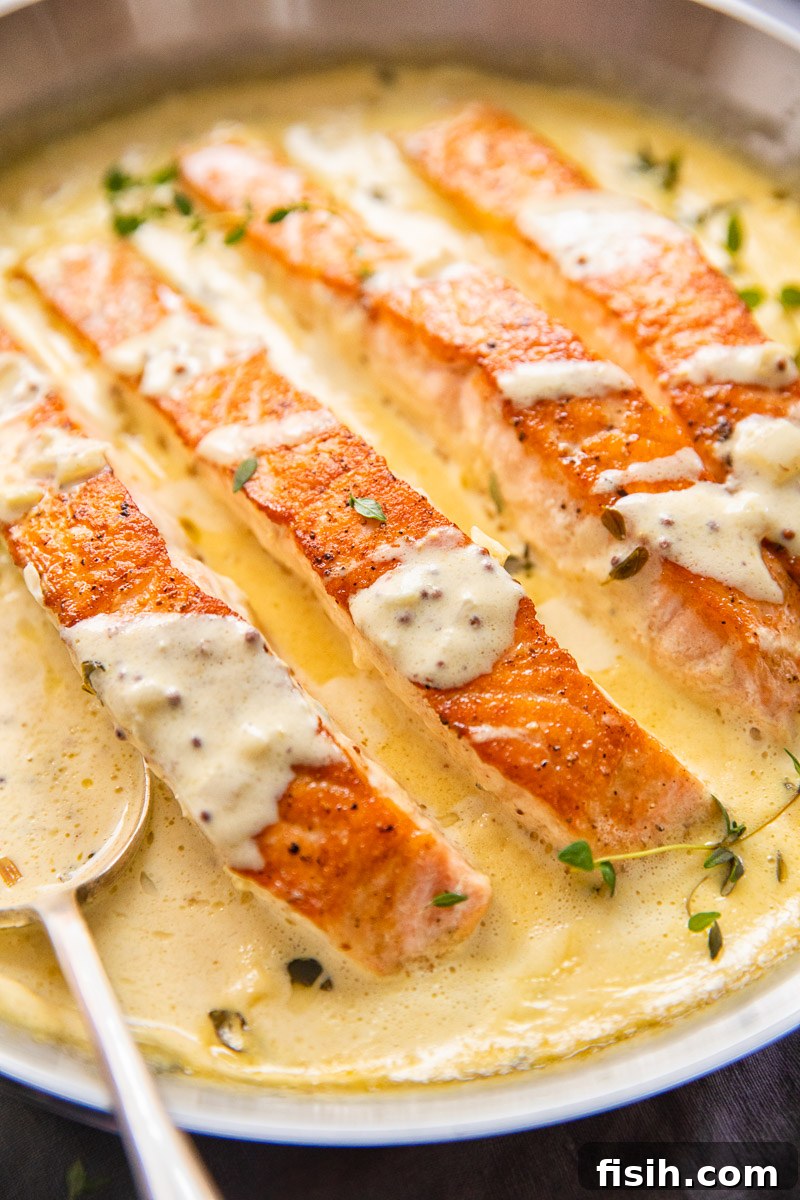
Indulge in an exquisite yet effortless culinary experience with our Pan-Seared Salmon with Creamy Mustard Sauce. This dish isn’t just a meal; it’s a testament to how simple ingredients can transform into a truly elegant and memorable dinner. Perfectly seared salmon fillets, boasting a golden, crispy skin and tender, flaky flesh, are generously bathed in a rich, tangy, and irresistibly creamy mustard sauce. It’s a quick weeknight solution that feels gourmet enough for special occasions, promising to delight your senses and earn a permanent spot in your recipe repertoire. Pair it effortlessly with our renowned herb and garlic mashed potatoes or the vibrant freshness of lemon garlic green beans for a complete and balanced plate.
While our creamy mustard sauce is a star, if you’re seeking a different flavor profile for your salmon, don’t miss our equally popular Tuscan Salmon with Parmesan Cream Sauce – another reader favorite that offers a delightful Italian twist.
Why Salmon is a Family Favorite and a Nutritional Powerhouse
For years, my culinary mission has revolved around integrating more diverse fish and seafood into my family’s diet. Through trial and error, one clear winner emerged: salmon. Its tender texture, rich flavor, and incredible versatility have made it an undeniable hit at our dinner table. Unlike some other fish varieties that might meet with hesitant glances, salmon consistently receives enthusiastic approval.
This widespread appeal is precisely why you’ll discover a treasure trove of salmon recipes gracing the pages of my website. Salmon is not just delicious; it’s a true nutritional powerhouse. Brimming with essential Omega-3 fatty acids, high-quality protein, and vital vitamins like B12 and D, along with minerals such as selenium and potassium, it’s a cornerstone of a healthy diet. Regularly incorporating this fatty fish into your meals contributes to heart health, brain function, and overall well-being. It’s a delicious way to nourish your body while satisfying your taste buds.
Effortless Salmon Cooking Methods
Most often, I opt for the simplest cooking methods to prepare salmon, ensuring it’s a quick and hassle-free addition to our busy weeknights. Roasting salmon in the oven is my go-to for speed and convenience. It allows for minimal hands-on time, making it perfect for those evenings when you need a nutritious meal without the fuss. For an even more streamlined experience, you can toss in a medley of vegetables to create a complete one-pan dinner. Wonderful examples of such fuss-free meals include our One Pan Chilli Garlic Salmon with Broccoli and Sweet Potatoes and the flavorful Teriyaki Salmon with Bok Choy.
However, while roasting is undeniably easy, pan-searing your salmon fillet introduces an entirely new dimension of flavor and texture. This method is also remarkably quick and yields a beautiful golden crust that elevates the entire dish, creating a culinary delight that feels far more intricate than it actually is. The irresistible contrast between the crispy exterior and the moist, tender interior is truly unmatched, making pan-seared salmon a technique worth mastering.
Mastering the Art of Pan-Seared Salmon for a Perfect Crispy Skin
Achieving a perfectly pan-seared salmon is simpler than you might think, and the reward is a culinary experience that rivals any restaurant. The secret lies in a few key techniques that ensure a glorious golden, crispy skin and a tender, moist interior. Here’s how to create the ultimate crispy salmon:
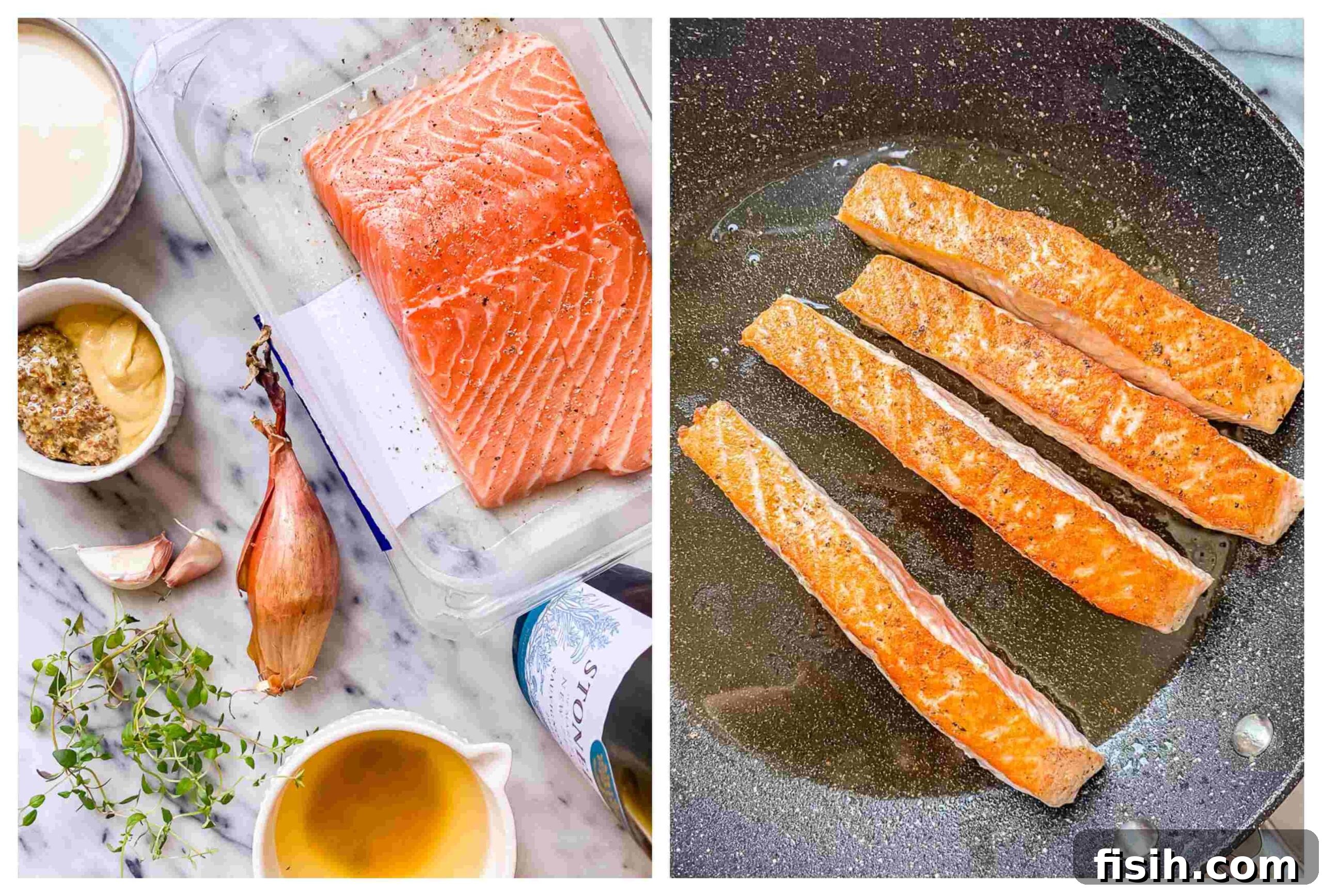
- The Golden Crust: My absolute favorite aspect of cooking salmon in a pan is the magnificent golden crust that forms. This coveted texture is the result of the Maillard reaction – a chemical process that transforms the sugars and amino acids on the surface of the fish when exposed to high heat, creating complex flavors and a beautiful color. To achieve this, a well-heated pan with a combination of oil and butter is absolutely essential. I personally adore using both; the oil provides a higher smoke point, preventing the butter from burning too quickly, while the butter infuses the salmon with an unparalleled depth of rich, nutty flavor that simply cannot be beaten.
- Preventing Sticking: If you’ve ever worried about your delicate salmon fillet adhering stubbornly to the pan, a good quality non-stick pan is your best friend. This simple tool eliminates that common headache, allowing you to sear with confidence and achieve easy flips. Alternatively, a well-seasoned cast-iron pan, properly preheated, can also work wonders.
- Perfect Seasoning is Key: Before your salmon even touches the hot pan, ensure it is thoroughly seasoned. A generous sprinkle of salt and freshly ground black pepper on both sides is crucial. This not only enhances the natural flavor of the salmon but also aids in drawing out moisture from the skin, contributing to that desired crispiness.
- The Searing Process: Begin by placing your salmon pieces, skin-side up, onto a pan that has been preheated over medium-high heat with your oil and butter mixture. This initial placement ensures the top surface gets a good sear. Cook for 3-4 minutes, or until you see a beautiful golden-brown crust develop. The edges of the salmon will begin to look opaque, and you can gently lift a corner to check the color. Once satisfied, carefully flip the salmon over and continue to cook for another 2 minutes. At this stage, your salmon might still be slightly raw in the very middle – and that’s perfectly fine! It will finish cooking gently and absorb all the incredible flavors in the simmering creamy mustard sauce, ensuring a moist and tender result.
- Choosing Your Salmon: For the best results, select fresh salmon fillets, ideally with the skin on, as the skin contributes greatly to the crispy texture. Aim for fillets that are uniform in thickness for even cooking.
The Irresistible Allure of Creamy Mustard Sauce
The beauty of this recipe lies not just in the perfectly pan-seared salmon, but in the luscious, aromatic creamy mustard sauce that cradles it. The reason we intentionally don’t cook the salmon all the way through during the initial searing is so it can complete its cooking journey gently within this incredible sauce, absorbing every nuanced flavor and remaining wonderfully moist.
This mustard cream sauce is not merely a condiment; it’s a versatile culinary star. Its rich, tangy, and savory profile has made it a beloved staple in various cuisines. The French, for example, have long embraced the magic of mustard sauce, famously using it to elevate dishes like rabbit. On my own website, one of the most consistently popular recipes is for Chicken in Wine and Mustard Sauce, a true reader favorite that speaks volumes about the widespread adoration for this flavor combination.
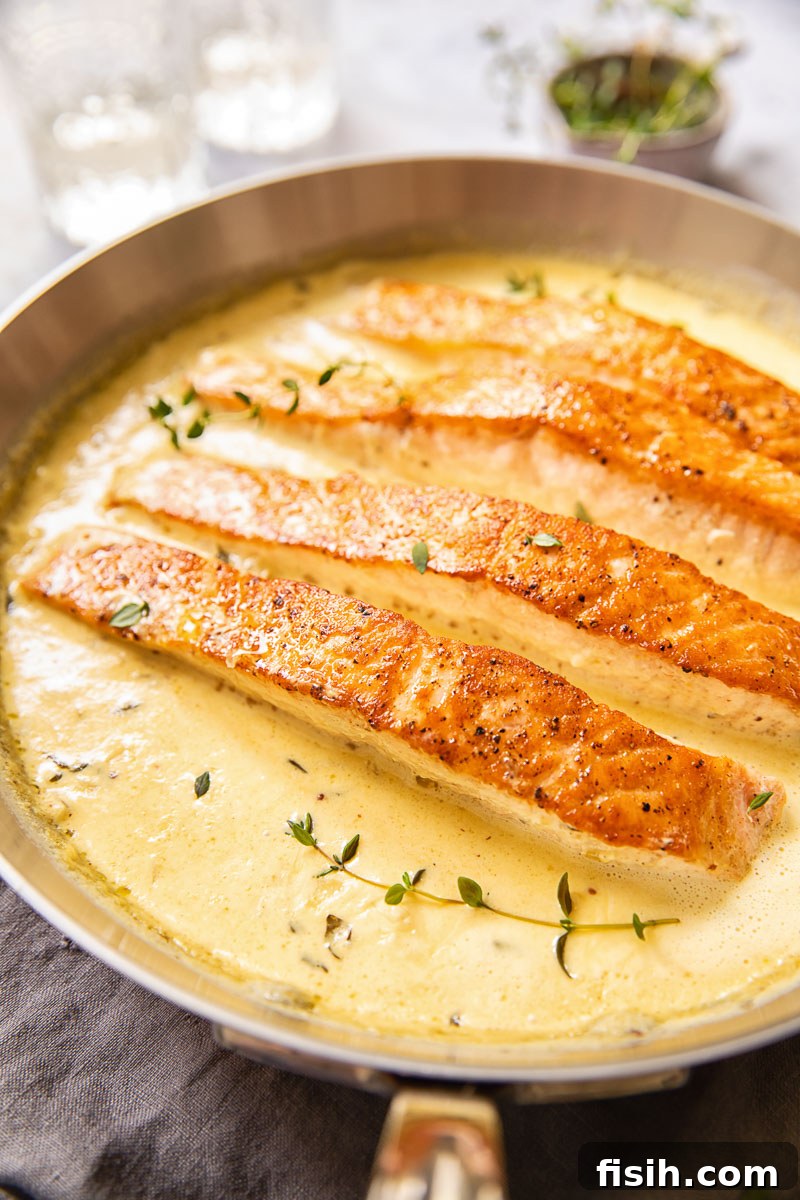
Crafting the Perfect Mustard Cream Sauce
Despite its luxurious taste, the ingredient list for this extraordinary sauce is surprisingly short, and the preparation method is wonderfully simple. Yet, the resulting depth of flavor is anything but plain. It’s a sophisticated blend achieved through a straightforward process:
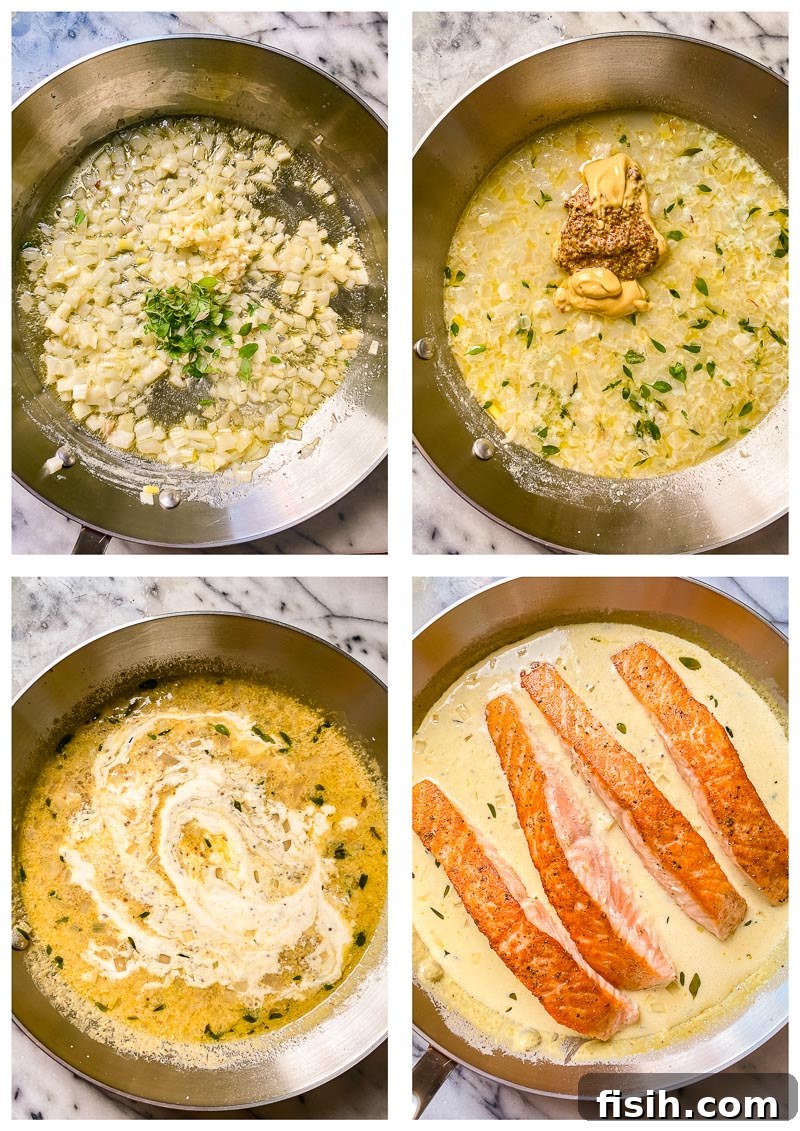
We begin by gently sautéing finely chopped shallots and minced garlic, along with fragrant thyme leaves, which form the aromatic base. Once softened, the pan is deglazed with a splash of dry white wine – a crucial step that releases all the caramelized bits from the pan, infusing the sauce with a profound depth of flavor. We then introduce two types of mustard, each contributing its unique character, alongside a rich chicken or fish stock for an added layer of savoriness, and finally, luxurious heavy cream to create that signature velvety texture. This thoughtful combination creates a sauce that is complex, balanced, and utterly irresistible.
Choosing Your Mustards
For this particular creamy mustard sauce recipe, I highly recommend using a combination of wholegrain mustard and Dijon mustard. The wholegrain mustard provides a pleasant textural pop and a milder, slightly sweeter mustard flavor, while the Dijon mustard contributes its characteristic sharp, piquant, and sophisticated tang. Together, they create a beautifully rounded and complex flavor profile. While you could technically use just one of them, the blend truly makes the sauce sing. However, I strongly advise against substituting Dijon mustard with standard yellow mustard for this recipe. Yellow mustard typically has a much sharper and more intense, sometimes acrid, taste that can overpower the delicate balance of this elegant cream sauce.
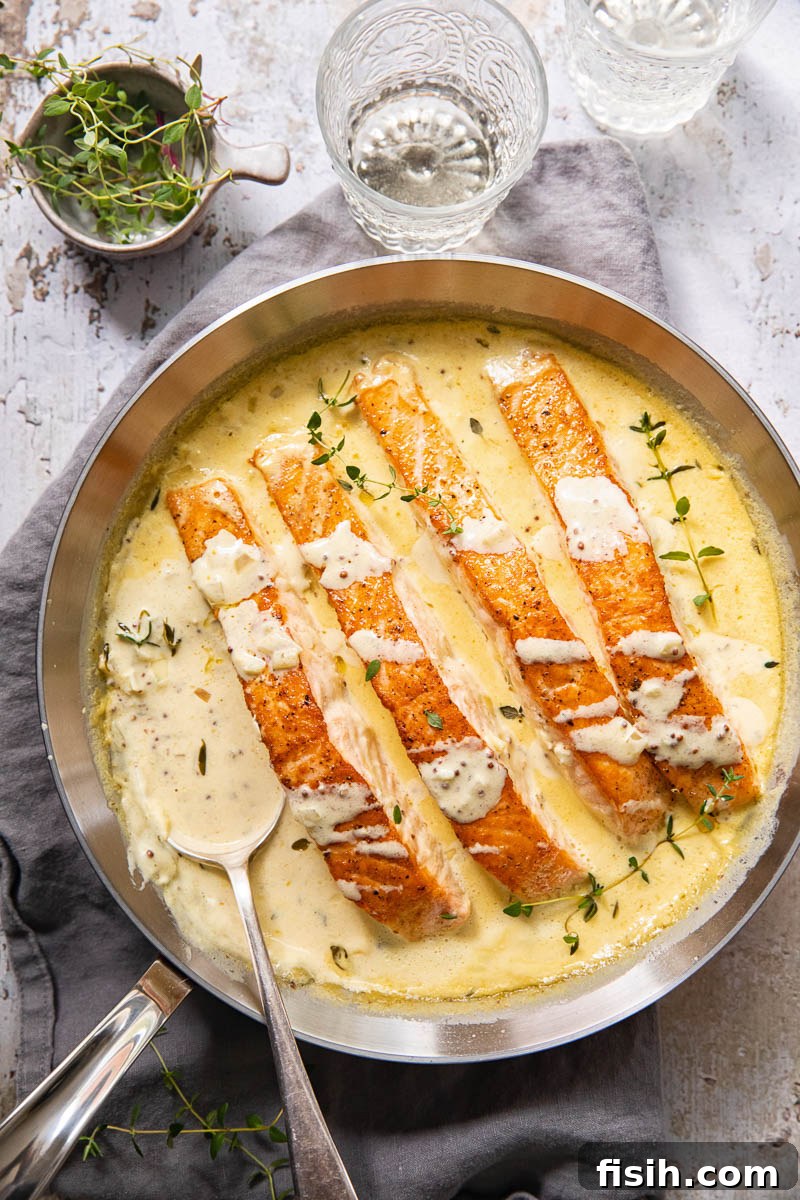
Elevate Your Meal: Perfect Pairings for Pan-Seared Salmon
This pan-seared salmon recipe with its rich mustard cream sauce is incredibly versatile, making it easy to pair with a variety of side dishes. For a truly satisfying and complete meal, I often turn to classic accompaniments like potatoes or rice. My children, in particular, adore both creamy mashed potatoes or crispy air fried potatoes, which are not only easy to prepare but also provide a comforting counterpoint to the vibrant sauce.
Beyond the Basics: Creative Side Dish Ideas
- Potatoes Reimagined: Beyond mashed or air-fried, consider serving the salmon with roasted baby potatoes tossed with rosemary, or a delicate potato gratin for a more sophisticated touch. Sweet potato puree also offers a lovely sweetness that complements the tangy mustard.
- Grain Goodness: For those who prefer grains, a simple wild rice pilaf, fluffy couscous, or even a quinoa salad can be fantastic choices. They soak up the sauce beautifully and add textural interest.
- Vibrant Vegetables: To add freshness and color, alongside our suggested lemon garlic green beans, explore other quick-cooking options. Roasted Radishes and Asparagus make for a deliciously unique and elegant pairing, while steamed broccoli or sautéed spinach would also be excellent.
- Fresh Salads: A light, crisp salad offers a refreshing contrast to the richness of the salmon and sauce. Our elegant Spinach Apple Salad with Walnuts and Blue Cheese is a sophisticated choice, or opt for a simple mixed green salad with a light vinaigrette.
More Favorite Fish Recipes to Explore
If you’re looking to expand your fish repertoire, here are some other beloved recipes from my kitchen that you might enjoy:
- Sole in Lemon Butter Sauce (Sole Meuniere): A classic French preparation that’s delicate and full of flavor.
- Baked Cod with Mustard Sauce: Another fantastic way to enjoy a hearty white fish with a tangy mustard twist.
- Salmon and Potatoes in Foil: Perfect for easy clean-up and a great camping-friendly meal.
- Salmon with Lemon Dill Sauce: A bright and herbaceous option for a different flavor profile.
Pan Seared Salmon with Mustard Cream Sauce
Julia Frey of Vikalinka
10 mins
20 mins
30 mins
4
Print Recipe
Ingredients
- 1 tbsp butter
- 1 tbsp olive oil
- 4 (120g/4oz each piece) salmon fillet pieces
- salt and pepper
- 1 shallot, chopped
- 2 cloves garlic , minced
- 4-5 sprigs fresh thyme or 1/2 tsp dried thyme, leaves only
- 125ml/1/2 cup dry white wine , such as Sauvignon Blanc or Chardonnay
- 2 tbsp whole grain mustard
- 2 tbsp Dijon mustard
- 175ml/2/3 cup chicken or fish stock
- 125ml/1/2 cup heavy cream
Instructions
-
Heat the oil and butter in a non-stick pan over medium-high heat. Once shimmering, add the salmon fillets, seasoned generously with salt and pepper, to the pan skin side up. Sear for 3-4 minutes until a beautiful golden and crispy crust forms. Carefully flip the salmon over and cook for another 2 minutes. At this point, the salmon will not be cooked all the way through, which is intentional. Remove the partially cooked salmon to a separate plate.
-
Using the same pan (do not clean it, as the fond adds flavor), reduce the heat to low. Add the chopped shallots and cook gently for 2-3 minutes until softened. Stir in the minced garlic and thyme leaves, sautéing for just 30 seconds until fragrant. Deglaze the pan with the dry white wine, scraping up any browned bits from the bottom. Allow it to simmer for about 5 minutes until the liquid reduces slightly. Then, stir in both wholegrain and Dijon mustards, chicken or fish stock, and the heavy cream. Continue to simmer gently for another 5 minutes, ensuring the heat remains low to prevent the cream from curdling, until the sauce begins to thicken slightly.
-
Return the partially cooked salmon fillets to the pan, nestling them into the creamy mustard sauce. Let them simmer in the sauce for an additional 5-7 minutes, or until the salmon is opaque throughout and flakes easily with a fork. The sauce should reach your desired consistency; if it’s too thick, add a splash more stock, or if too thin, let it simmer a little longer. Taste the sauce and adjust seasoning with more salt and pepper if necessary. Serve immediately, garnished with fresh herbs if desired.
Nutrition
Calories:
393kcal
|
Carbohydrates:
6g
|
Protein:
27g
|
Fat:
27g
|
Saturated Fat:
11g
|
Polyunsaturated Fat:
4g
|
Monounsaturated Fat:
10g
|
Trans Fat:
1g
|
Cholesterol:
118mg
|
Sodium:
325mg
|
Potassium:
734mg
|
Fiber:
1g
|
Sugar:
2g
|
Vitamin A:
655IU
|
Vitamin C:
3mg
|
Calcium:
57mg
|
Iron:
2mg
Nutrition information is automatically calculated, so should only be used as an approximation.