
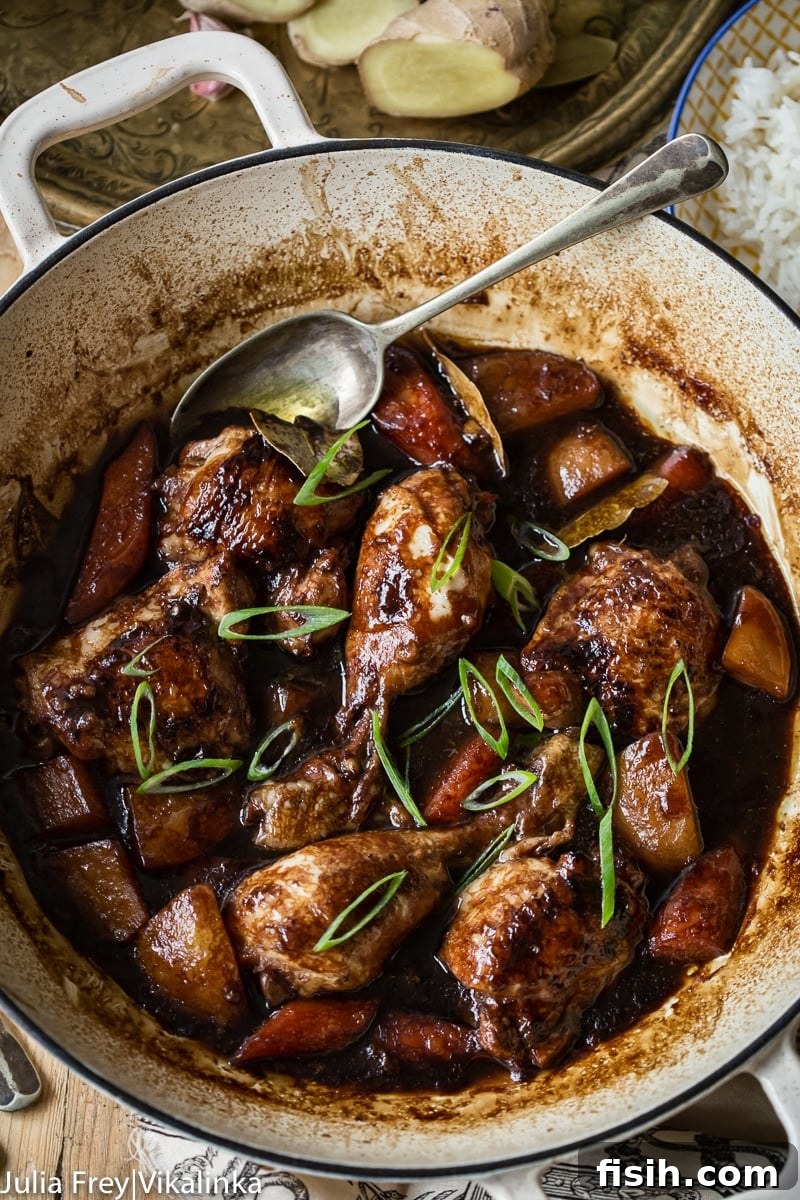
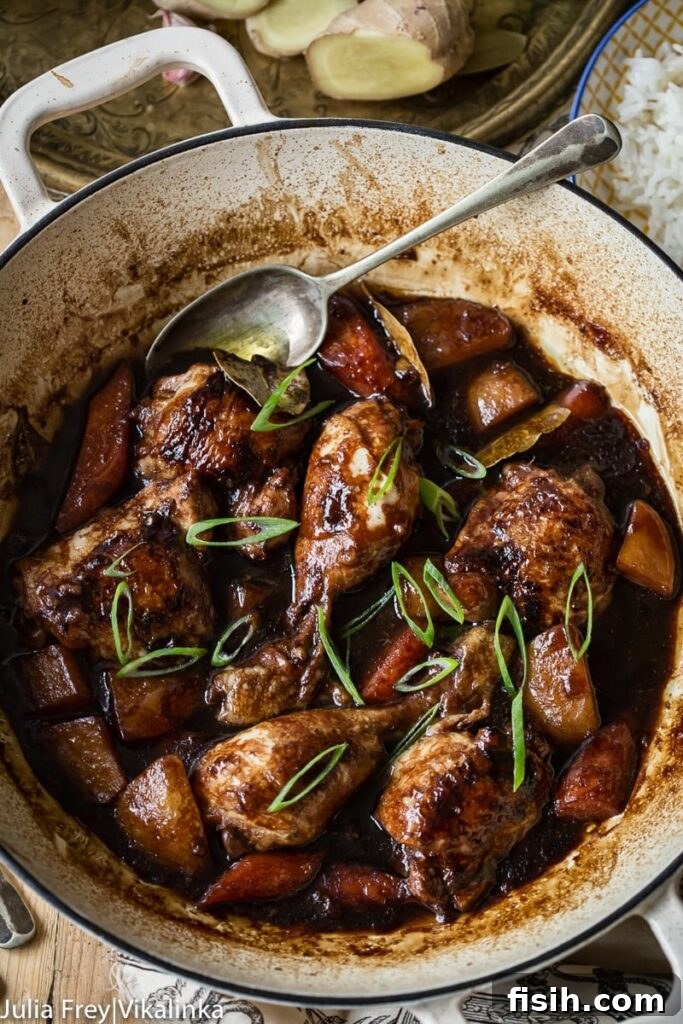
Embark on a culinary journey to the Philippines with this authentic Filipino Chicken Adobo recipe. A definitive step away from the ordinary, this dish features succulent chicken thighs and drumsticks slow-braised in a perfectly balanced blend of pungent vinegar, savory soy sauce, aromatic garlic, and fresh ginger. Using simple pantry staples, you’ll create a meal with an unforgettable flavor profile that is both deeply satisfying and incredibly comforting.
For those eager to explore more traditional Filipino flavors, be sure to also check out my Pancit Canton recipe, a delightful noodle dish perfect for any occasion.
It might come as a delightful surprise, considering my background, that I harbor a profoundly strong emotional attachment to all things Filipino, and particularly to this vibrant Chicken Adobo. My connection to this magnificent country was forged during a pivotal year in my early twenties, spent immersed in the rich tapestry of the Philippines. Although it was undeniably one of the most challenging years of my youth, it instilled in me a deep love and enduring appreciation for the country and its wonderfully resilient people.
From that transformative year, I brought home a handful of cherished memories and, of course, a collection of beloved recipes. This particular Chicken Adobo recipe stands out as one of the most treasured among them. It’s truly fascinating how something initially perceived as strange or foreign can, with time and experience, become incredibly familiar, even profoundly soothing. This Chicken Adobo stew embodies that transformation for me. Its incredible simplicity belies a richness of flavor that turned it into my ultimate comfort food in a land so wonderfully different from my own.
One of the many beautiful aspects of this recipe is its accessibility. It relies entirely on the simplest of pantry staples, meaning you won’t need to hunt for any obscure or rare ingredients. This makes it an ideal dish for home cooks seeking authentic international flavors without the hassle. Even if you’re new to Filipino cuisine, you’ll find Chicken Adobo remarkably easy to fall in love with. Its hearty, soul-warming nature is reminiscent of many comforting stews found around the world, designed to nourish, satisfy, and warm you from the inside out.
Filipino Cuisine: A Culinary Tapestry of Flavors
Filipino cuisine is a truly wondrous and complex culinary landscape, a reflection of a nation comprised of more than 7,000 islands and a rich mosaic of indigenous cultures. This vibrant food culture also carries the indelible influence of centuries of interactions with diverse civilizations, including the powerful impact of Spanish, Chinese, and even American traditions. This confluence of culinary heritage has given rise to a unique gastronomic identity that tantalizes the taste buds.
A constant, unwavering element across every Filipino meal and often even snacks in between, is rice. It serves as the ubiquitous canvas upon which the vibrant flavors of Filipino dishes are painted. Consequently, many traditional dishes, like Chicken Adobo, are designed with a generous amount of flavorful sauce, perfect for pouring over and thoroughly permeating heaps of plain rice. This sauce must, therefore, carry a profound depth of flavor to stand up to and enhance the neutrality of the rice.
Filipino cuisine masterfully achieves this depth through a clever array of ingredients that deliver strong, distinctive notes—acidic, salty, and pungent. Common ingredients like soy sauce, various types of vinegar (cane, palm, coconut, or rice), pungent garlic, aromatic ginger, and savory fish sauce are the cornerstones of this flavor philosophy. They provide the bold, layered tastes that are characteristic of the cuisine.
Chicken Adobo stands as a prime, classic example of how these flavor principles are expertly applied. So iconic and beloved is its taste that it is widely considered the national dish of the Philippines. Its signature salty and vinegary taste, initially quite assertive, mellows beautifully when its rich, complex sauce is generously spooned over a bed of fluffy, plain white rice. The rice absorbs the intense flavors, creating a harmonious and balanced bite.
As with virtually every national dish around the world, the beauty of Adobo lies in its infinite variations; each cook, each family, and each region often boasts their own unique recipe. My personal rendition of Chicken Adobo was meticulously crafted and lovingly adapted from observing several talented Filipino women cook during my memorable year in Isabela. Their techniques and slight variations informed the version I now proudly share with you.
What is Filipino Chicken Adobo? The Essence of a National Dish
At its heart, Filipino Chicken Adobo is a comforting and deeply flavorful stew where chicken pieces are braised in a distinctive sauce crafted from soy sauce, vinegar, garlic, ginger, bay leaves, and black peppercorns. The magic of Adobo lies in this specific cooking process, a culinary technique that results in tender meat enveloped in a tangy, savory, and slightly sweet sauce.
While the fundamental flavor profile of garlic, ginger, soy sauce, and vinegar remains constant, one of the delightful aspects of this recipe is its incredible versatility, particularly in the addition of vegetables. Carrots and potatoes are frequently incorporated into the Adobo stew, serving not merely as fillers but as crucial components that absorb the rich sauce, add textural contrast, and help to balance out the strong, piquant flavors of the adobo sauce. This particular addition of root vegetables was quite common in the region of the Philippines where I lived, and I wholeheartedly recommend including them for a more rounded and satisfying dish.
Though chicken is immensely popular, Pork Adobo stands as one of the most common and equally delicious variations throughout the Philippines. It offers a richer, somewhat fattier alternative that yields incredibly tender results, especially when cooked slowly. If you opt to use pork instead of chicken, consider utilizing a slow cooker for optimal tenderness and flavor development.
The version presented in this recipe adheres closely to the traditional approach I encountered and learned in the Isabela region of the Philippines. However, it’s important to understand that Adobo is prepared in countless ways across the archipelago. Approaches can differ significantly from one region to another, and even from one family to the next, with unique twists on ingredient ratios, additional spices, or even the inclusion of coconut milk for a creamy “Adobong Gata.” This culinary diversity is a testament to the dish’s adaptability and enduring popularity.
Serving Filipino Chicken Adobo: The Perfect Pairing
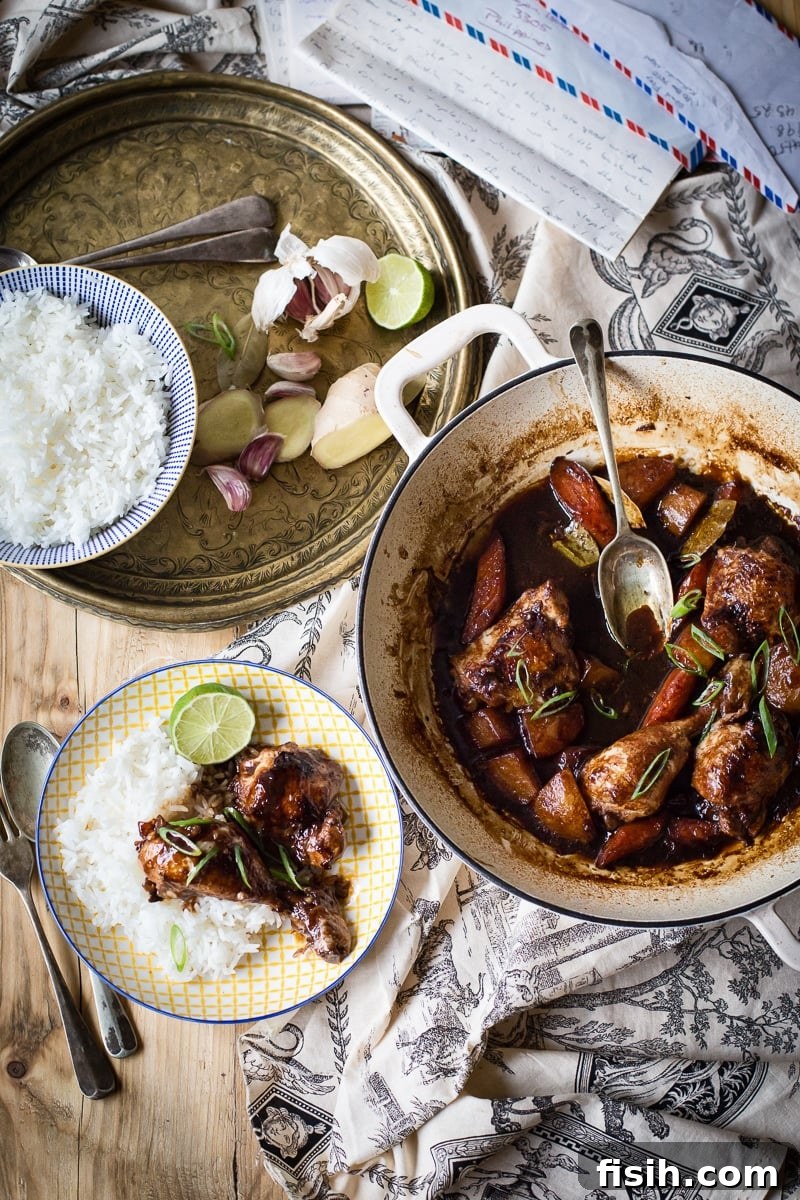
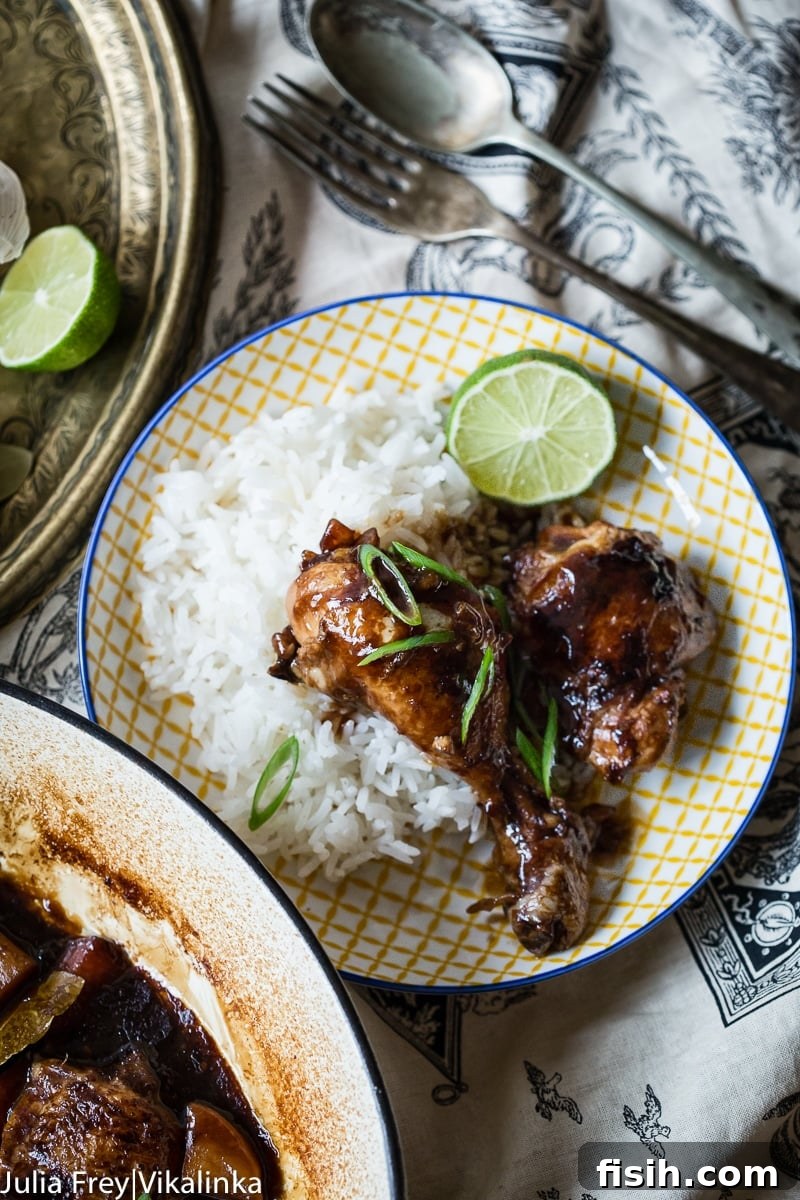
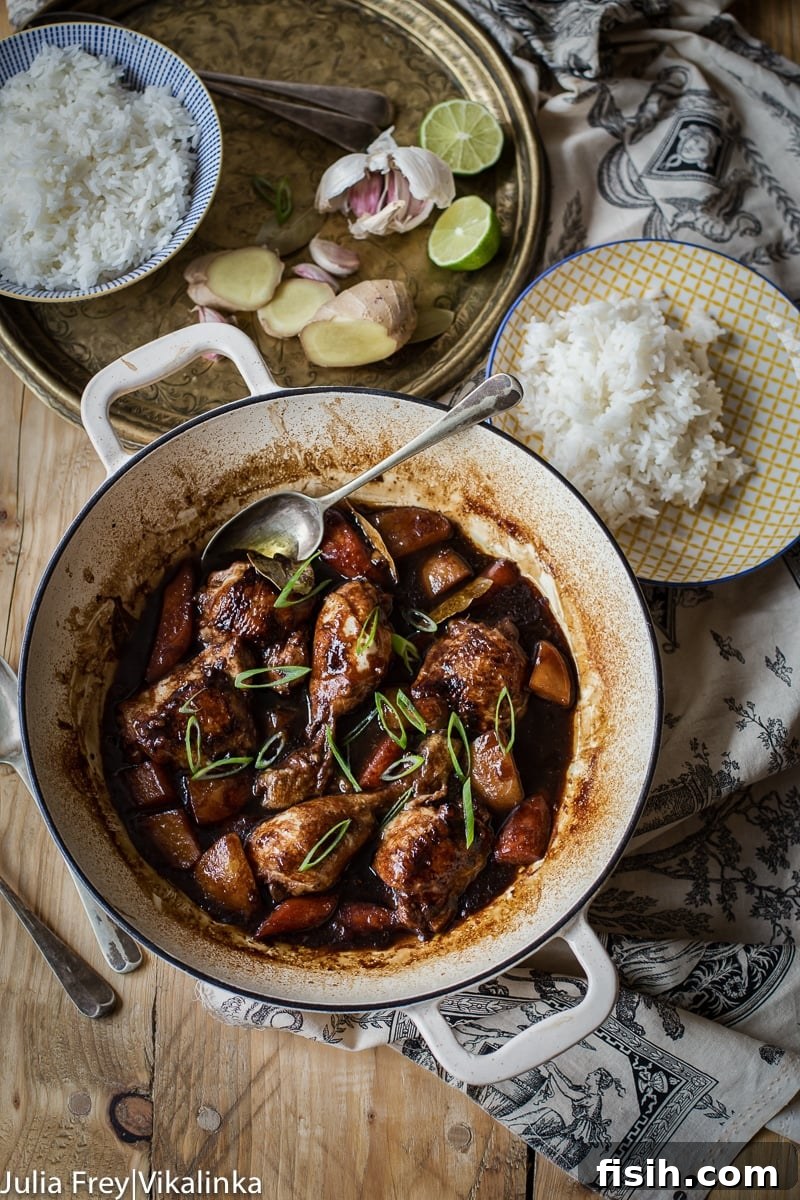
For Filipinos, the serving of Chicken Adobo is a ritual of perfect pairing. It is invariably accompanied by generous portions of plain, unsalted white rice, which acts as the ideal counterpoint to the rich, tangy, and salty adobo sauce. The rice beautifully soaks up the complex flavors, creating a harmonious balance in every bite. To elevate the experience further, a tiny, unassuming citrus fruit known as calamansi, often referred to as Filipino lime, is traditionally served alongside. Its unique tart and aromatic juice, squeezed directly into individual portions, adds a bright, essential zing that cuts through the richness of the adobo. Sadly, outside of the Philippines, calamansi is a rare find, which is truly a shame as its flavor is unparalleled by any other citrus.
In this recipe, I suggest using regular limes as a readily available and excellent substitute. Simply slice them into wedges and encourage your diners to squeeze a little fresh lime juice into their individual servings. This simple act will awaken the flavors and provide that crucial hint of brightness that makes Adobo truly sing.
Expert Recipe Tips and Notes for Perfect Adobo
- Marinating Time: While marinating the chicken for the recommended 30 minutes significantly enhances the depth of flavor by allowing the chicken to fully absorb the savory and tangy notes of the adobo sauce, it’s not strictly essential. If you find yourself pressed for time, you can certainly skip the marinating step altogether or reduce it to a quick 15-20 minutes. The dish will still be delicious, just slightly less intensely flavored.
- Browning the Chicken: Achieving a beautiful brown crust on your chicken pieces is crucial for developing rich flavor through the Maillard reaction. To prevent the chicken from steaming instead of browning in your wok or pan, ensure that you do not overcrowd the pan. Cook the chicken in batches if necessary, leaving ample space between each piece. Remember, the goal at this stage is to brown the exterior, not to cook the chicken completely through; it will finish cooking in the braising liquid.
- Slow Cooker Adaptation: This recipe adapts wonderfully to a slow cooker for a truly hands-off experience. Follow the initial steps of the recipe, including browning the chicken and sautéing the aromatics (Step 1 to Step 3). Instead of simmering in a pan, transfer all ingredients to your slow cooker and cook on low for 6-8 hours, or on high for 3-4 hours, until the chicken is fall-off-the-bone tender. Stir in the cornstarch slurry (mixed with a little water) at the very end and cook for another 15-20 minutes on high or until the sauce has thickened to your desired consistency.
- Instant Pot Adaptation: For a faster preparation, the Instant Pot is an excellent choice. Follow the recipe up to step 3 (marinating, browning chicken, and sautéing aromatics). Combine all ingredients in the Instant Pot, then cook at high pressure for 10-12 minutes for chicken on the bone. Once cooking is complete, perform a quick manual release of the pressure. Afterward, add the cornstarch slurry and use the “Sauté” function for a couple of minutes, stirring constantly, to thicken the sauce to perfection.
- Pork Adobo Variation: Pork is a fantastic alternative to chicken in Adobo. For the most authentic and succulent results, especially if using a cut like pork belly or pork shoulder, cooking it in a slow cooker is highly recommended. The slow, gentle heat will break down the connective tissues, yielding incredibly tender and flavorful pork. While pork belly provides a richer, fattier experience, pork shoulder is an excellent choice for a less fatty yet still delicious option.
- Using Chicken Breasts: While bone-in chicken thighs and drumsticks are more traditional for Adobo due to their moisture and fat content, chicken breasts can certainly be used. If opting for chicken breasts, be mindful not to overcook them, as they can dry out quickly. Consider cutting them into larger chunks to help them retain moisture. The cooking time will likely be slightly shorter.
- Convenience with Pastes: On a busy weeknight, time-saving shortcuts are invaluable. You can often find pre-jarred garlic paste and ginger paste in the international aisle of your grocery store. While fresh garlic and ginger offer the brightest flavor, these pastes are a convenient and perfectly acceptable substitute that can significantly cut down on your preparation time without compromising the essence of the dish.
- Carrots and Potatoes in the Stew: It’s important to note that the potatoes and carrots in this Adobo recipe are not merely side dishes; they are integral components of the stew itself. They play a crucial role in absorbing the vibrant, tangy flavors of the vinegar-based sauce, becoming infused with its deliciousness. Furthermore, both the carrots and potatoes contribute a wonderful textural element and a subtle sweetness that helps to bring balance and hearty substance to the overall dish. Cut them into large chunks so they don’t disintegrate during the long simmering process.
Storage and Leftovers: The Art of Reheating Adobo
One of the many incredible qualities of Filipino Chicken Adobo is that it often tastes even better the next day! The flavors of the adobo sauce have more time to meld and deepen, and the vinegar, which can be quite sharp initially, mellows beautifully, resulting in a more harmonious and complex profile. This makes it an ideal dish for meal prepping or entertaining.
Leftovers can be stored safely in an airtight container in the refrigerator for 3-4 days. For longer storage, Adobo freezes exceptionally well. Simply transfer the cooled chicken and sauce to a freezer-safe container or bag and store it in the freezer for up to three months. When you’re ready to enjoy it again, thaw it in the refrigerator overnight before reheating.
To reheat, you have a couple of convenient options. You can gently warm the Adobo in a microwave until heated through, or, for a stovetop method, transfer it to a saucepan and heat it over medium-low heat. It’s common for the sauce to thicken considerably after refrigeration, so you may need to loosen it up with a splash of water or chicken broth to achieve your desired consistency. Be sure to cover the saucepan with a lid to prevent the chicken from drying out. The Adobo should be thoroughly heated and ready to serve in approximately 10-15 minutes.
More Asian Inspired Chicken Recipes to Explore
- Shoyu Chicken Recipe
- Sticky Asian Chicken
- Honey Soy Chicken Thighs and Drumsticks
- Chicken Satay with Easy Peanut Sauce
Filipino Chicken Adobo
Julia Frey of Vikalinka
35 mins
45 mins
1 hr
20 mins
8
Equipment
-
Carbon steel wok or large deep pan
Ingredients
- 8 chicken pieces, (legs and thighs preferred)
- 125ml / 1/2-3/4 cup soy sauce, (Bragg or Kikkoman brand for gluten-free version)
- 125ml / 1/2-3/4 cup rice vinegar, (adjust to your taste)
- 2 tbsp vegetable oil
- 2 inch long piece of ginger, (grated)
- 5 cloves garlic , (crushed)
- 2-3 bay leaves
- 1/2 tsp fresh ground black pepper
- 1-2 carrot, (medium, cut in large chunks)
- 3 potato, (medium, cut in large chunks)
- 125ml / 1/2 cup water
- 1 tbsp corn starch
- 1 tbsp water (for cornstarch slurry)
- 1 spring onion, (sliced, optional for garnish)
- 1 lime, (for serving)
Instructions
-
In a large bowl, combine the soy sauce, rice vinegar, 1 tablespoon of vegetable oil, 4 crushed garlic cloves, half of the grated ginger, and fresh ground black pepper. Add the chicken pieces to this marinade, ensuring they are well coated. Cover the bowl and let the chicken marinate in the fridge for at least 30 minutes. For a deeper flavor, you can marinate for up to 2 hours.
-
Heat a wok or a large, deep pan over medium-high heat. Add the chicken pieces, browning them for approximately 3 minutes on each side until golden. It’s important not to overcrowd the pan; cook the chicken in batches if necessary to ensure it browns effectively rather than steaming. The chicken will not be fully cooked through at this stage. Once browned, remove the chicken from the pan and set it aside on a plate. Do not discard the marinade.
-
To the same pan (no need to clean it, the leftover drippings add flavor), add the remaining 1 tablespoon of vegetable oil. Sauté the remaining sliced garlic and grated ginger for about 1 minute until fragrant, being careful not to let them brown or burn. Return the browned chicken to the pan. Pour in the reserved marinade, along with the water, bay leaves, carrots, and potatoes. The liquid may not fully cover the chicken initially, which is fine. Increase the heat to bring the sauce to a gentle boil, then reduce the heat to low, cover, and let it simmer for 45 minutes. Continue simmering until the carrots and potatoes are tender (easily pierced with a fork) and the chicken is thoroughly cooked and tender.
-
In a small bowl, whisk together the cornstarch with 1 tablespoon of water until completely smooth, ensuring there are no clumps. Slowly pour this cornstarch slurry into the simmering adobo sauce, stirring continuously. Allow the sauce to simmer for another couple of minutes; it will visibly thicken as it cooks. Spoon the rich, thickened sauce over the chicken and vegetables. The sauce should be glossy and thick enough to lightly coat the pieces. If it’s not thick enough for your preference, continue to simmer uncovered for a few more minutes until the desired consistency is achieved. Before serving, sprinkle with freshly sliced spring onion for a burst of fresh flavor and color (optional).
-
Serve your delicious Filipino Chicken Adobo piping hot with plenty of plain white rice. Offer fresh lime wedges on the side for individual servings, allowing diners to squeeze a little juice over their portion for an authentic tangy finish.
Notes
This recipe can be easily adapted for Slow Cooker and Instant Pot cooking:
- For a Slow Cooker, follow the recipe until step 3 (marinating, browning chicken, and sautéing aromatics). Transfer all ingredients to your slow cooker and cook on low for 6-8 hours or on high for 3-4 hours. Stir in the cornstarch slurry (mixed with water) at the end and cook for an additional 15-20 minutes on high to thicken the sauce.
- For the Instant Pot, complete steps 1-3 as above. Combine all ingredients in the Instant Pot, then pressure cook on high for 10-12 minutes for bone-in chicken. Perform a manual pressure release. Add the cornstarch slurry and use the “Sauté” function for a couple of minutes, stirring constantly, to thicken the sauce.
Nutrition Information (per serving, approximate)
Calories: 304 kcal
Carbohydrates: 5 g
Protein: 23 g
Fat: 21 g
Saturated Fat: 8 g
Cholesterol: 87 mg
Sodium: 961 mg
Potassium: 299 mg
Fiber: 1 g
Sugar: 1 g
Vitamin A: 1451 IU
Vitamin C: 6 mg
Calcium: 25 mg
Iron: 2 mg
Nutrition information is automatically calculated and should only be used as an approximation. Actual values may vary based on ingredients and preparation methods.
Tried this recipe?
Let us know how it was!