
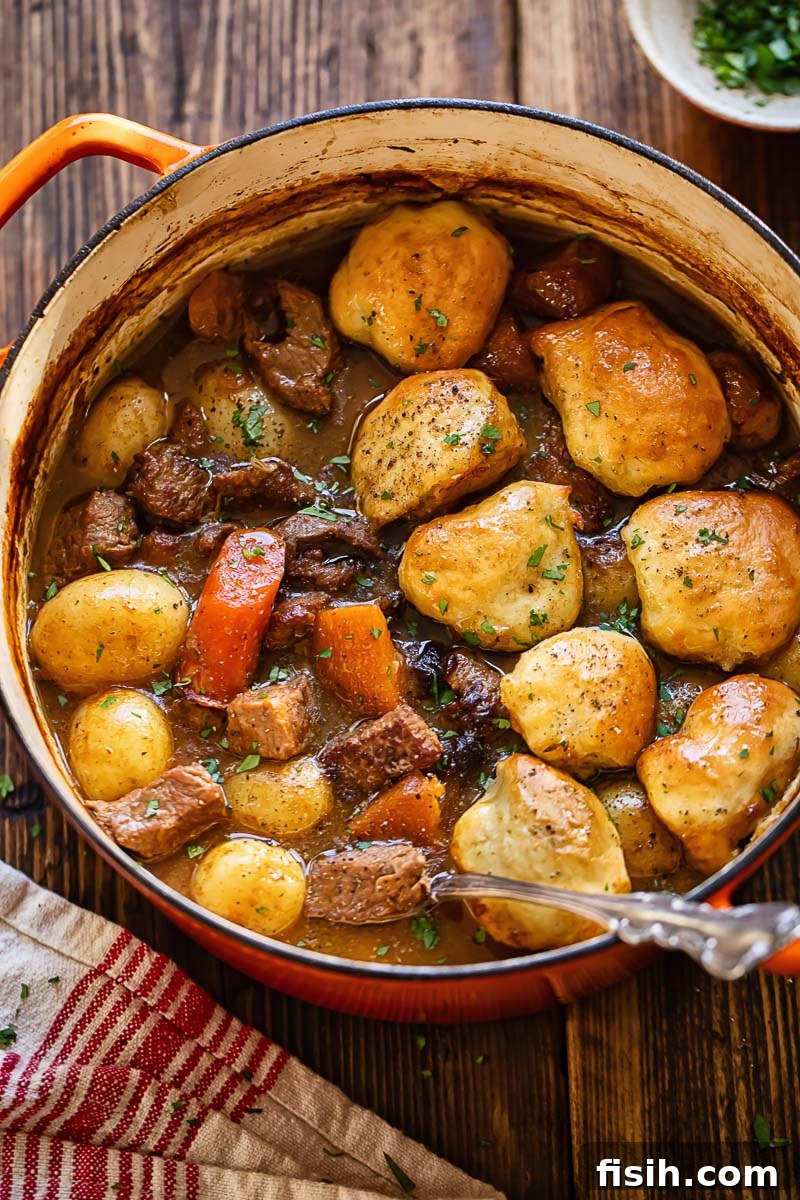
Imagine a blustery winter evening, a roaring fire, and the comforting aroma of a rich, hearty meal simmering gently on the stove. This is the essence of a British classic: Beef Stew with Dumplings. More than just a meal, it’s an experience – a culinary embrace that warms you from the inside out, as inviting and cosy as your favourite tartan blanket. This recipe elevates the traditional, bringing together slow-cooked, tender beef and melt-in-your-mouth root vegetables, all bubbling in a velvety, deep Guinness sauce, crowned with light, buoyant buttermilk dumplings. It’s a one-pot wonder designed for maximum flavour and minimal fuss, making it the ultimate comfort food for any chilly day.
For those who might think stew is simply a bland affair, allow us to introduce you to a world of flavour that will undoubtedly change your mind. While some prefer a symphony of bold tastes, like the Russian Solyanka – a unique blend of sweet beef, smoked meats, potatoes, and mushrooms, balanced by the tang of pickles, capers, lemon, and a generous dollop of sour cream – the sheer versatility and depth of a well-made stew are undeniable. This British Beef Stew with Dumplings stands proud among them, offering its own distinct profile of rich, savoury indulgence.
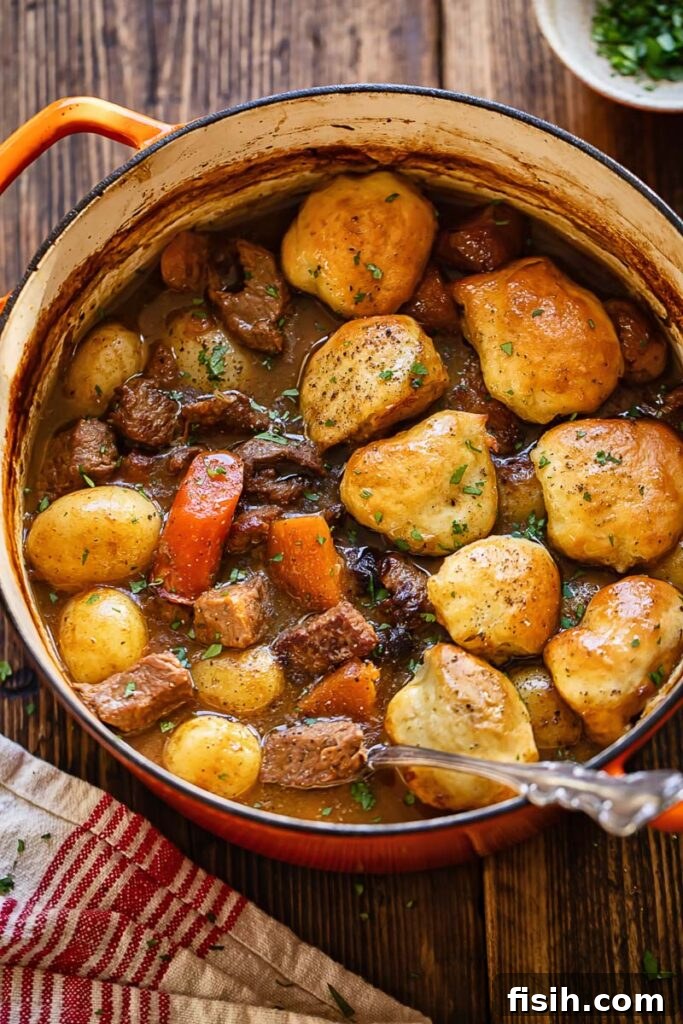
The Universal Appeal of Stew: Comfort and Nourishment
Having navigated the frosty winters of Russia, the snowy landscapes of Minnesota, and the brisk air of Vancouver before settling on the picturesque shores of the British Isles, I’ve learned a fundamental truth: food is fuel. Not just any fuel, but the kind that both satisfies your deepest hunger and provides a profound sense of inner warmth. In this regard, stew reigns supreme. It’s a dish born out of necessity and ingenuity, utilizing humble, accessible, and often inexpensive ingredients to create something truly magnificent.
Stews are the ultimate culinary chameleon, with versions gracing tables in every corner of the globe. From the communal warmth of Japanese hot pots to the complex spices of Pakistani nihari, the soulful depths of Louisiana Gumbo, and the paprika-infused richness of Hungarian Goulash, the variations are endless. Even more familiar recipes like French Beef Bourguignon and Italian Chicken Cacciatore share the same comforting spirit. Despite their diverse origins and flavour profiles, these dishes share defining characteristics that make them universally beloved:
- They are primarily one-pot meals, simplifying both cooking and cleanup.
- They are cooked at a low temperature over an extended period. This slow process is key to breaking down tougher cuts of meat, softening chunky vegetables without turning them to mush, and allowing flavours to meld and deepen into a harmonious whole.
- They are saucy, featuring a thick, flavourful gravy achieved through thickening agents like flour, cornstarch, breadcrumbs, or grains. This rich liquid is crucial for binding the ingredients and enhancing the overall texture.
It’s no wonder that over the years, I have curated a veritable treasure trove of stew recipes on the blog, each a testament to the enduring power of this humble yet glorious dish.
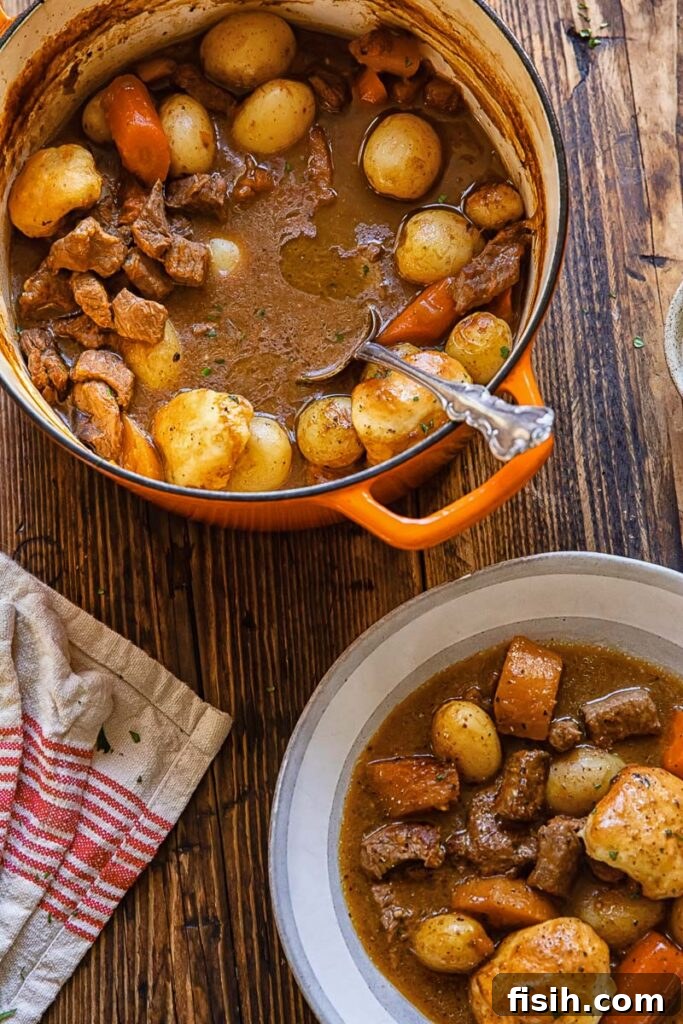
The Heart of British Cuisine: A Classic Beef Stew with a Modern Twist
The UK offers its own proud rendition of stew, a dish deeply embedded in its culinary heritage. The favoured meat tends to be beef, often a more economical yet incredibly flavourful cut such as brisket, beef shin, or stewing steak. These cuts, while initially tough, transform into fork-tender morsels through the magic of slow cooking, absorbing all the rich flavours of the sauce.
The vegetable base is typically robust and earthy, comprising onions, garlic, potatoes, carrots, and swede (also known as rutabaga). These solid root vegetables are chosen for their ability to withstand long cooking times without disintegrating, instead becoming wonderfully soft and soaking up every drop of the rich gravy. They provide not just bulk and nutrition, but also a foundational sweetness and depth that complements the beef perfectly.
What truly elevates this particular stew to a special status is its liquid base: a rich, dark beer. I’ve opted for readily available Guinness, but any good quality stout, porter, or dark ale will impart a complex, malty tang that beautifully enhances the beefy mix, creating an unparalleled depth of flavour. The subtle bitterness and roasted notes of the beer marry with the savoury meat and sweet vegetables, resulting in a sauce that is both robust and incredibly satisfying.
And finally, for a truly authentic and comforting British experience, the stew is generously topped with delicious, homemade dumplings. These rustic, cloud-like morsels are not just an accompaniment; they are an integral part of the dish, designed to soak up the luxurious sauce and provide an additional layer of comforting texture. Each dumpling acts as a miniature sponge, bursting with the stew’s essence in every bite, adding a homely charm to this quintessential midwinter meal.
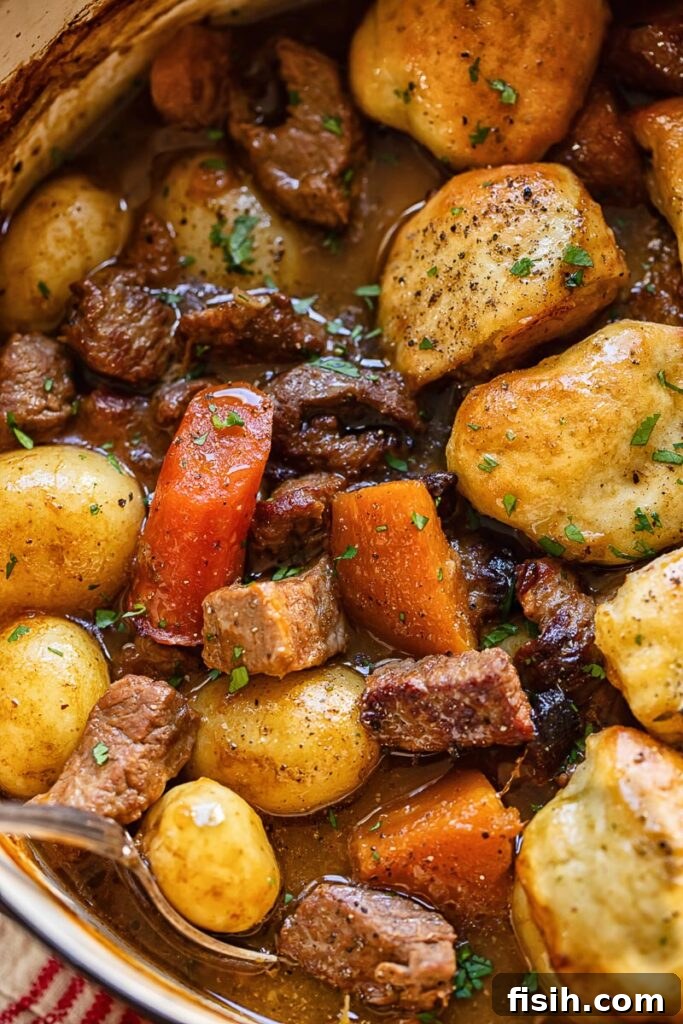
The Secret to Unrivalled Dumplings: A Buttermilk Revelation
While British culinary tradition often dictates that dumplings be made with suet, a type of animal fat, for their characteristic dense and stodgy texture (famously used in steamed puddings like jam roly-poly and spotted dick – yes, it’s a real dish!), tastes have evolved. In recent years, suet has fallen out of favour for many, and personally, I’m not keen on using it in my cooking.
Instead of adhering to the typical British method and ingredients, I’ve adopted an American technique, utilizing buttermilk to craft our homemade dumplings. Buttermilk dumplings are a beloved staple in Southern American cooking, known for their superior lightness and fluffiness. Though not traditionally British, the results, in my opinion, are simply unrivalled. They offer a delightful contrast to the rich stew, melting in your mouth rather than sitting heavily.
Buttermilk, a cultured dairy ingredient much like kefir or natural yoghurt, possesses a subtle tang and a slightly fizzy, airy quality. It’s these unique properties that react with the leavening agents in the batter, creating tiny bubbles that result in incredibly light, tender, and beautifully puffed-up dumplings. This ensures you get a soft, yielding cloud of dough, rather than a dense, floury “stone,” which can sometimes be the outcome of simpler flour and water preparations. My apologies to traditionalists in the UK, but the lightness of these buttermilk dumplings is a game-changer!
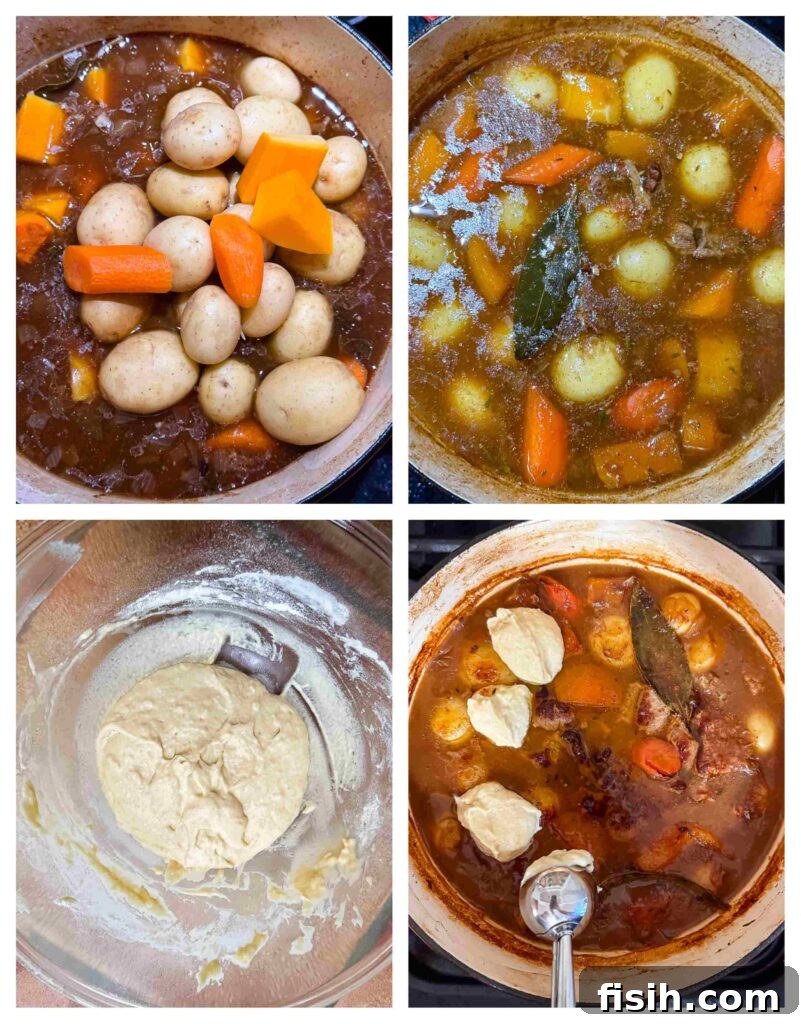
This particular dumpling dough may call for a few more ingredients than the most basic versions, and its wet, somewhat sticky consistency might seem unusual if you’re accustomed to working with firmer doughs. However, I urge you to trust the process. The slight extra effort and the unconventional texture are precisely what contribute to their unparalleled fluffiness. So, get your ice cream scoop ready – it’s the perfect tool for portioning these delicate dumplings!
Expert Tips for a Flawless Beef Stew
Achieving a truly outstanding beef stew with dumplings involves a few key techniques and considerations. Follow these tips to ensure your dish is brimming with flavour and perfect texture:
- Choose Your Beef Wisely: You don’t need expensive cuts for a fantastic stew. Economical options like stewing beef, beef shin, or beef chuck are ideal. These cuts are packed with flavour and become incredibly tender when slow-cooked, thanks to their collagen content which breaks down into gelatin. Cut them into generous, even chunks for consistent cooking.
- Select Waxy Potatoes: For stew, waxy varieties like baby potatoes, new potatoes, or red-skinned potatoes are your best bet. They hold their shape beautifully during long cooking times, unlike floury potatoes which can disintegrate and turn mushy.
- Embrace Root Vegetables: Carrots, butternut squash, parsnips, and swede (rutabaga) are the superstars of stew vegetables. Their hearty texture allows them to absorb the rich flavours of the broth without falling apart, contributing a natural sweetness and earthy depth. Cut them into thick, substantial chunks to prevent overcooking.
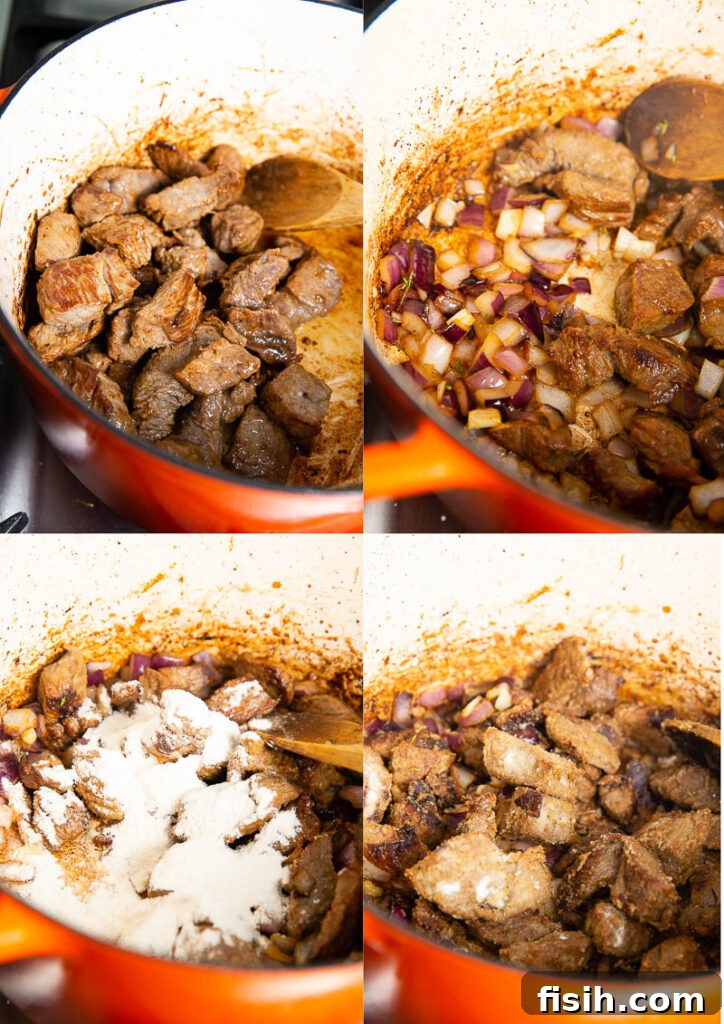
- Never Skip Browning the Beef: This is a fundamental step that locks in incredible flavour. Browning the beef in batches over medium-high heat creates a rich, caramelized crust through the Maillard reaction. These savoury brown bits form the foundation of your stew’s deep flavour profile. Don’t overcrowd the pot; allow sufficient space for the beef to sear, not steam.
- Properly Sweat the Onions: Patience is a virtue when cooking onions. Sautéing them over low to medium heat for a good 8-10 minutes until they become translucent and tender, rather than just soft, allows them to release their natural sweetness into the cooking oil. This essential step prevents any harsh, raw onion flavour and adds a delicate sweetness to the stew. Avoid high heat, which can burn them and impart a bitter taste.
- Deglaze the Pan: After browning the beef and sweating the onions, the bottom of your pot will likely have delicious brown bits (known as “fond”). Deglazing means adding liquid – in this case, beef stock and then Guinness – to the hot pan and using a wooden spoon to scrape up all these flavourful particles. This “fond” is pure flavour gold and is crucial for developing a rich, complex sauce.
- Beer Alternatives: While Guinness adds a distinctive depth, if you’re not a fan, don’t fret! Any dark beer such as a robust stout or ale can be substituted. For a different but equally rich flavour, red wine works wonderfully. If alcohol is a concern, many non-alcoholic stouts are now available that retain the characteristic malty flavour, or simply use extra beef stock.
- Gluten-Free Adaptation: This beef stew recipe is easily adaptable for those on a gluten-free diet. Instead of using wheat flour to thicken the sauce, substitute with cornstarch. Mix cornstarch with a little cold water to create a slurry before adding it to the simmering stew to avoid lumps.
- Light & Fluffy Dumplings: As mentioned, our dumpling recipe steers away from traditional suet. The combination of buttermilk, egg, and baking powder works synergistically to create a dough that produces incredibly light, airy, and fluffy dumplings, a delightful counterpoint to the rich stew below.
Serving Suggestions: Completing Your Comfort Meal
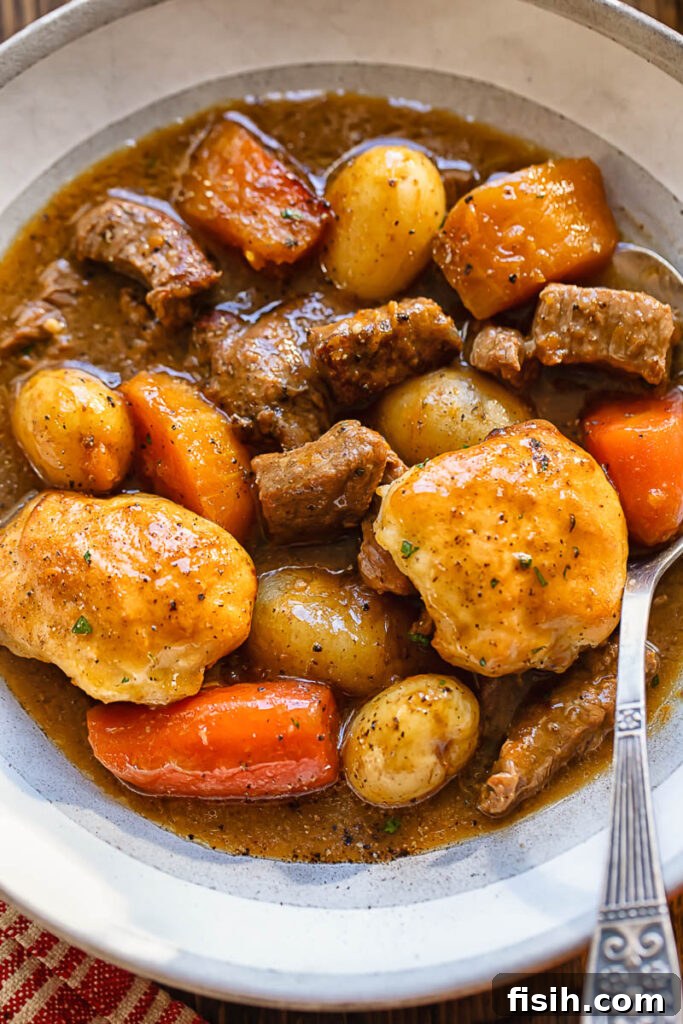
Our Guinness Beef Stew with Buttermilk Dumplings is a triumph of balanced nutrition and hearty flavour, ticking all the essential boxes: tender meat for protein, a medley of vegetables for vitamins, and not one, but two satisfying sources of carbohydrates from the potatoes and the glorious dumplings. It’s a truly complete meal in itself, perfectly designed to replenish and satisfy.
However, if you’ve had a particularly demanding day – perhaps metaphorically “down a mine” or “ploughing the fields” as in the old English days of yore – you might desire a little something extra to complement this magnificent stew. To soak up every last drop of that velvety, flavour-packed sauce, consider serving it with creamy Colcannon Mash, rich Brown Butter Mash, or rustic Potato Farls. Each offers a delightful texture and additional carbohydrate comfort.
And if the carrots and butternut squash in the stew aren’t quite fulfilling your daily plant quota, you can easily boost your greens with some vibrant side dishes. Crispy Brussels Sprouts with Honey and Bacon or savoury Roasted Cabbage Wedges with Miso Butter would make excellent companions, adding a fresh, contrasting element to the richness of the stew.
Storage and Leftovers: A Gift That Keeps on Giving
One of the many virtues of Guinness Beef Stew is its incredible versatility and make-ahead potential. This brilliantly beefy dish is designed to support you, whether you plan to enjoy it today, mid-week, or even next month. It stores beautifully, allowing the flavours to deepen and meld even further over time, making leftovers often taste even better than the initial meal.
You can store any leftover stew in an airtight container in the refrigerator for up to 4 days, ensuring a quick and easy meal during busy weeknights. For longer storage, this stew freezes exceptionally well. Portion it into freezer-safe containers and keep it in the freezer for up to 3 months. This makes it an ideal candidate for meal prepping, allowing you to have a delicious, homemade dinner ready with minimal effort whenever the craving strikes.
If you’re preparing this stew specifically to get ahead, a clever tip is to save the dumpling preparation for the day you plan to serve. While the stew freezes and reheats perfectly, dumplings are always best when made fresh. If you do freeze the stew with dumplings, thaw it overnight in the fridge and reheat it gently in the oven. For optimal results, add freshly prepared dumpling batter on top during the final reheating stage, following the recipe instructions, to ensure they are light and fluffy.
When reheating frozen stew, transfer it to an oven-safe pot, cover, and bake at 160℃/300℉ until heated through. If adding fresh dumplings, proceed with step 6 and 7 of the recipe once the stew is hot.
More Hearty Stews to Try
- Hearty Turkey Stew
- Instant Pot Coq Au Vin
- Greek Butter Bean Stew
- Slow Cooker Campfire Stew
Beef Stew with Dumplings
By Julia Frey of Vikalinka
Prep: 15 mins
Cook: 2 hrs 40 mins
Total: 2 hrs 55 mins
Servings: 6 people
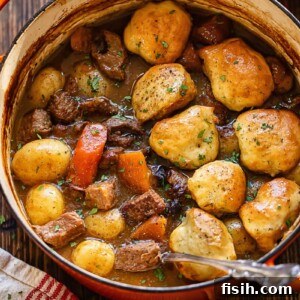
This beef stew with dumplings recipe brings together slow-cooked beef and melt-in-the-mouth vegetables in a velvety sauce with dumplings.
Equipment
- Le Creuset Enamelled Cast Iron Dutch Oven
Ingredients
For the Stew
- 2 tbsp olive oil
- 1 tsp salt and pepper
- 1 kg / 2 lbs stewing beef, diced
- 1 medium onion, chopped
- 3-4 sprigs fresh thyme, or 1 tsp dried thyme
- 2 cloves garlic, minced
- 2 tbsp all-purpose flour
- 500ml / 2 cups water or beef stock, divided
- 440ml / 1 can Guinness or other stout (can use non-alcoholic beer)
- 1-2 bay leaves
- 2 medium carrots, cut into large chunks
- 1/2 small butternut squash, cut into large chunks
- 1/2kg / 1 lb baby potatoes, or 4 large waxy potatoes (e.g., red potatoes)
For the Dumplings
- 125ml / 1/2 cup buttermilk or kefir
- 1 egg
- 1 tbsp olive oil
- 120g / 1 cup all-purpose flour
- 1/4 tsp baking powder
- 1/4 tsp garlic powder
- 1/4 tsp onion powder
- 1/4 tsp salt
Instructions
- Preheat the oven to 160℃/300℉.
- Heat the olive oil in a large Dutch oven or cast iron casserole pot over medium heat. Season the beef chunks with salt and pepper and brown them until golden. Do this in batches to avoid overcrowding.
- Move the browned beef to one side, lower the heat, then add chopped onions and thyme. Cook over low heat for 8-10 minutes until tender and translucent. Add minced garlic and cook briefly for 30 seconds more.
- Sprinkle in the flour and stir to coat the beef. Pour in 250ml (1 cup) of water or beef stock and scrape the bottom of the pot with a wooden spoon to deglaze and release all the flavorful brown bits. Add the Guinness and bay leaves. Bring to a boil, then cover with a lid and transfer to the preheated oven for 1 hour.
- After one hour, remove the pot from the oven. Add the carrots, butternut squash (cut into large chunks), and potatoes. Stir well, add another 250ml (1 cup) of water, cover with the lid, and continue cooking in the oven for another hour.
- While the stew finishes cooking, prepare the dumplings. In a medium bowl, whisk together the buttermilk, egg, 1 tbsp olive oil, flour, baking powder, garlic powder, onion powder, and salt until just combined. The batter will be sticky and resemble a thick waffle batter.
- Take the stew out of the oven. Scoop spoonfuls of the dumpling batter directly on top of the simmering stew. You can use two spoons or an ice cream scoop for easy release. Cover the pot with a lid and return to the oven for 10 minutes. Then, remove the lid and cook for an additional 10 minutes, or until the dumplings are puffed up and golden brown.
Nutrition
Calories: 727kcal | Carbohydrates: 46g | Protein: 36g | Fat: 42g | Saturated Fat: 14g | Polyunsaturated Fat: 2g | Monounsaturated Fat: 20g | Trans Fat: 2g | Cholesterol: 148mg | Sodium: 656mg | Potassium: 1202mg | Fiber: 5g | Sugar: 5g | Vitamin A: 10142IU | Vitamin C: 33mg | Calcium: 127mg | Iron: 6mg
Nutrition information is an approximation and can vary based on ingredients and preparation methods.