
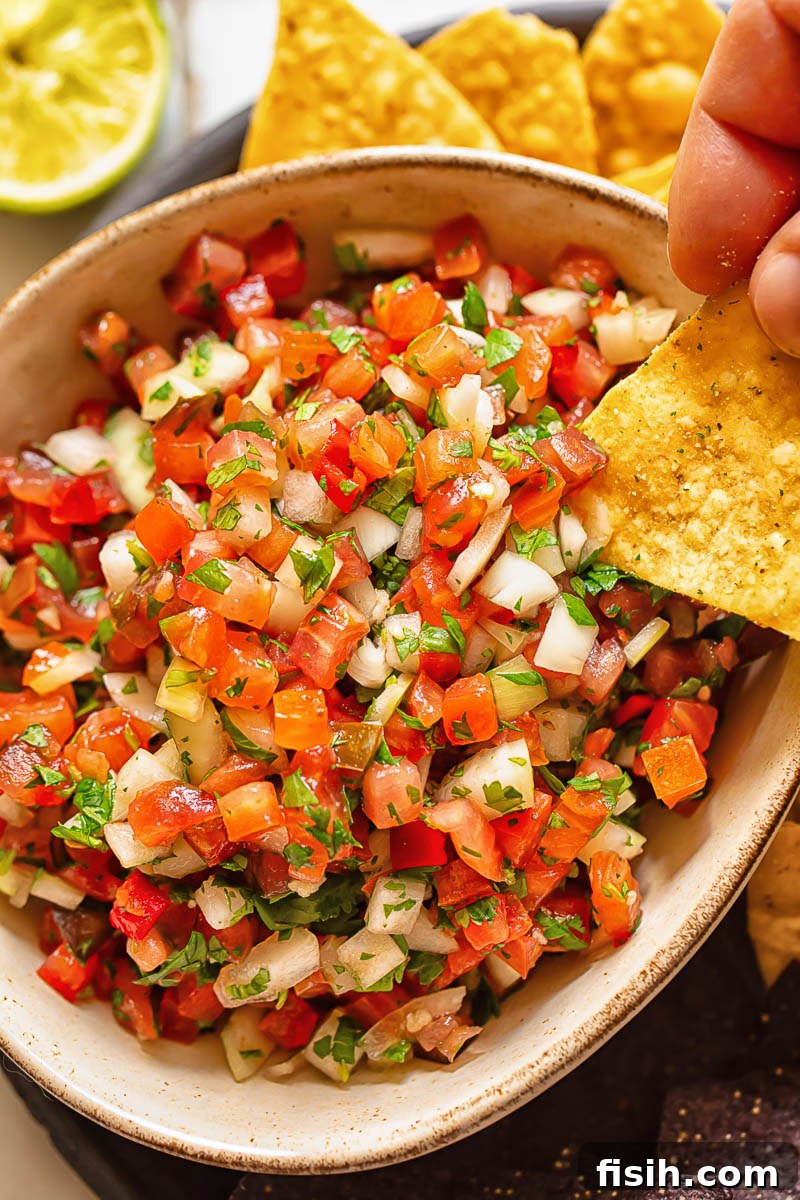
Welcome to the vibrant world of Pico de Gallo! Is it a salsa? Is it a salad? Is it a dip? The delicious truth is, it’s all of the above and more – a quintessential taste of Mexico that transcends simple categories. This refreshing medley of finely chopped ripe tomatoes, crisp onions, pungent garlic, fiery chili, fresh cilantro, and tangy lime is a pure burst of flavor that invigorates the senses. Cool, zesty, and with just the right kick, Pico de Gallo is best enjoyed with a hearty bowl of crunchy tortilla chips and a cold cerveza, instantly transporting you to a sunny Mexican fiesta.
For those seeking a more substantial and heartier option beyond the classic, our Black Bean and Corn Salsa offers a robust and chunky variation that’s equally satisfying and bursting with flavor. It takes the essence of Pico de Gallo and elevates it with additional textures and tastes.
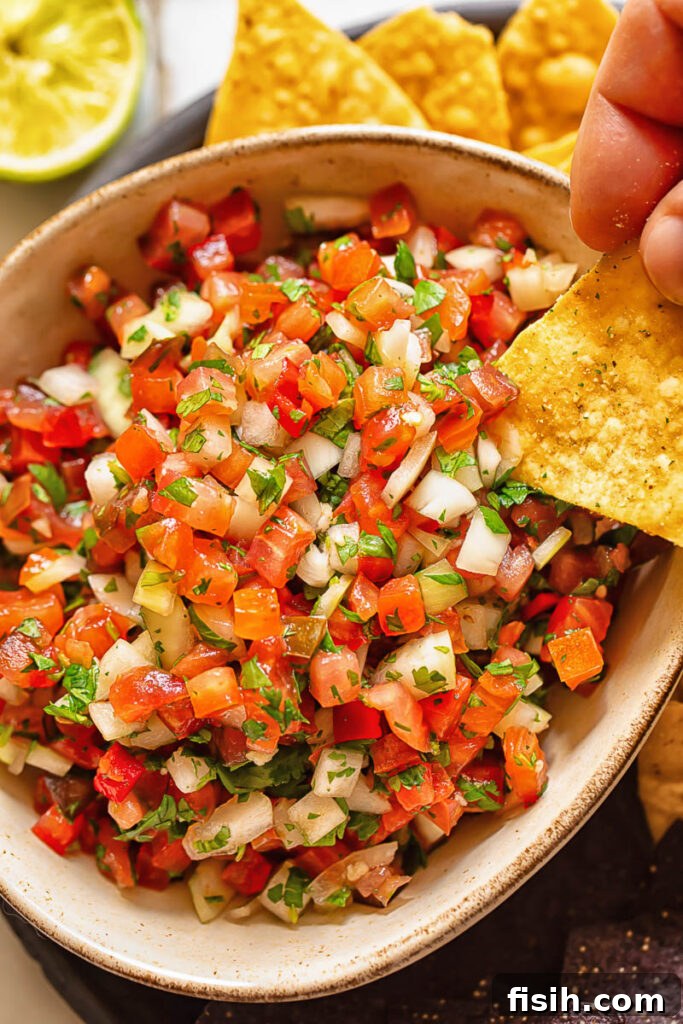
Unveiling Pico de Gallo: The Rooster’s Beak Explained
Pico de Gallo, often affectionately called “salsa fresca” (fresh sauce), is more than just a condiment; it’s a culinary experience. But why the peculiar name, “rooster’s beak”? While the exact origin is debated, popular theories suggest it either refers to the way the ingredients are finely chopped, resembling bird feed, or perhaps the traditional method of eating it by pinching with the thumb and forefinger, much like a rooster pecking. Regardless of its whimsical name, Pico de Gallo stands out as one of Mexico’s most beloved fresh preparations. Its vibrant, summery ingredients instantly evoke holiday vibes, offering a light, low-calorie addition that perfectly complements almost any Mexican-inspired dish, completing a meal with unparalleled freshness.
Despite its widespread popularity, there’s often confusion surrounding Pico de Gallo, especially when compared to other fresh salsas. The most common riddle asked is: “When is pico de gallo salsa fresca, and when is salsa fresca pico de gallo?” Let’s clear up this delicious mystery.
Pico de Gallo vs. Salsa Fresca: A Clear Distinction
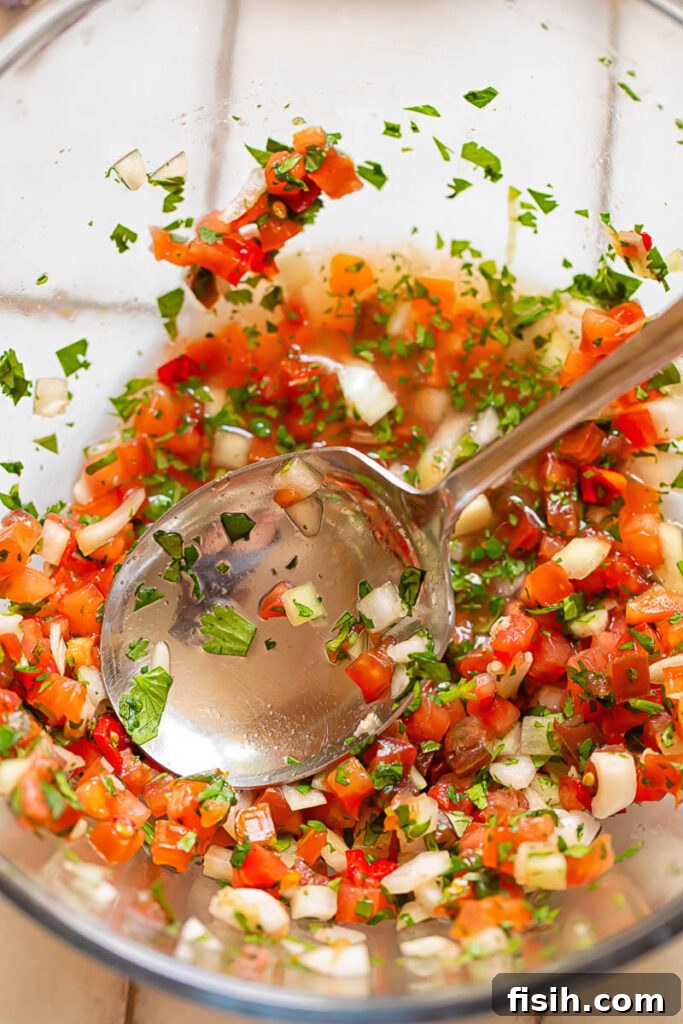
While sharing a nearly identical ingredient list, the key difference between Pico de Gallo and what is commonly referred to as “salsa fresca” lies primarily in their texture and preparation method. True Pico de Gallo is characterized by its chunky, unblended nature. The ingredients—tomatoes, onions, chilies, cilantro, and garlic—are meticulously hand-diced into small, uniform pieces, resulting in a vibrant “salad-like” texture where each component retains its distinct identity and bite. It should never be runny or watery, aiming for a fresh, crisp consistency.
On the other hand, while “salsa fresca” literally translates to “fresh sauce” and can broadly encompass any fresh, uncooked salsa, in common culinary usage, it often refers to a blended dip. A blended salsa fresca, though made with the same fresh ingredients, will be significantly more liquid and smoother due to the processing. Therefore, while Pico de Gallo *is* a type of salsa fresca (a fresh sauce), a blended salsa fresca is generally not Pico de Gallo because it lacks the signature chunky texture. To truly appreciate the difference, we encourage you to try making both and discover your own preference!
Crafting the Perfect Pico de Gallo: The Art of Freshness
Even with an ingredient list as short as six items (plus salt), there’s a nuanced art to creating a truly exceptional Pico de Gallo. This art begins and ends with the absolute freshest produce you can find. The magic of this fresh salsa lies in its ability to capture the essence of summer, which means selecting ingredients at their peak ripeness and flavor. Anything less will compromise the integrity and taste of your final dish.
The Essential Ingredients and Why They Matter
- Tomatoes: The Cornerstone of Flavor
The foundation of outstanding Pico de Gallo is the tomato. Opt for sun-ripened summer tomatoes, ideally Roma or other plum varieties, which are the standard for their firm flesh, low seed content, and balanced sweetness. Unlike their watery and often flavorless winter counterparts, ripe summer tomatoes provide the juicy, sweet, and firm texture crucial for authentic Pico de Gallo. Be incredibly selective here; your pico’s success largely depends on this choice. - Onions: Adding a Piquant Crunch
Both white and red onions work beautifully, each offering a slightly different profile. White onions tend to be sharper and more traditional in some regions, while red onions offer a milder, slightly sweeter note and a beautiful pop of color. Whichever you choose, ensure it’s fresh and firm, finely dicing it to integrate seamlessly without overpowering the other flavors. - Chilies: The Heart of the Heat
Fresh red chilies, such as jalapeños or serranos, provide the characteristic fiery kick. Their freshness is paramount; dried chilies or chili powder simply won’t deliver the same vibrant zing. For less heat, remove the seeds and membranes before finely chopping. For more adventurous palates, leave some seeds in, or add a spicier variety. - Cilantro: The Aromatic Soul
Vibrant, aromatic, and distinctly fresh cilantro leaves are indispensable. Their unique, bright flavor is what truly defines Pico de Gallo. If you’re among those who find cilantro tastes “soapy,” you can reduce the amount or, for a complete substitute, fresh parsley can be used (though it will alter the traditional flavor profile). However, for an authentic experience, fresh cilantro is key. - Garlic: A Punch of Depth
Fresh garlic cloves are non-negotiable. Avoid shriveled old cloves or, even worse, garlic powder. Minced fresh garlic adds an irreplaceable depth and aroma that elevates the entire salsa. Its sharp, savory notes provide a perfect counterpoint to the sweetness of the tomatoes and the tang of the lime. - Lime Juice: The Brightening Element
Freshly squeezed lime juice is absolutely critical. Bottled lime juice often carries a synthetic undertone that will be glaringly apparent and detract from the fresh flavors of your Pico de Gallo. Invest the few moments it takes to squeeze fresh limes – the difference is monumental. - Salt: The Flavor Amplifier
A pinch of salt might seem minor, but it’s the magical ingredient that brings all the other flavors to life, enhancing their natural sweetness and balancing the acidity. Always season to taste.
As a general rule of thumb, for dishes served raw or uncooked, always prioritize fresh, high-quality ingredients. There’s a time and place for bottled, canned, frozen, or dried produce, but it’s certainly not in Pico de Gallo.
Pro Tips for an Unforgettable Pico de Gallo
Recipe Tips and Notes
- Tomato Selection is Paramount: The hallmark of a standout Pico de Gallo is the quality and ripeness of its tomatoes. They must be ripe – not just red, but fragrant and slightly soft to the touch. Roma or plum tomatoes are most commonly recommended due to their ideal low-seed, high-flesh ratio, which contributes to a firm, non-watery salsa.
- Deseeding for Optimal Texture: To prevent your Pico de Gallo from becoming a watery “salsa fresca,” it’s crucial to remove the soft, seedy center of the tomatoes entirely, leaving only the firmer outer flesh. This step ensures a crisp, chunky consistency. If time is a concern, or if you prefer a slightly looser consistency, you can skip this, but consider serving your salsa with a slotted spoon to drain excess liquid.
- Don’t Be Afraid to Deviate (Slightly!): While Roma might be the “right” choice, sometimes a different variety like San Marzano might look more seductively red and ripe. Always trust your instincts when it comes to fresh produce; prioritize ripeness and quality over strict adherence to a specific variety.
- Achieve Uniform Dicing: The aesthetic appeal and balanced flavor distribution of Pico de Gallo benefit greatly from uniformly diced ingredients. Take a few extra moments to chop everything into similar-sized pieces.
- Taste and Customize: This recipe is a guideline, not a rigid rule. Feel empowered to tinker with the proportions until your Pico de Gallo is just right for *your* palate. Perhaps you prefer more garlic, less chili, no cilantro (though we recommend trying it!), or an extra squeeze of lime. Make it uniquely yours.
- The Final Adjustment: Always taste your Pico de Gallo just before serving. This is your last chance to dial up any flavor you feel is lacking – a pinch more salt, a dash more lime, or an extra bit of chili can truly elevate the experience.
Easy Pico de Gallo Recipe
This straightforward recipe will guide you through making a vibrant and delicious Pico de Gallo at home. For the very best results, always prioritize the freshest, highest-quality ingredients available.
Ingredients
- 1 medium white or red onion, finely diced
- 1/2 – 1 red chili (such as jalapeño or serrano), deseeded and finely chopped (adjust quantity to your preferred heat level)
- 25g – 35g / 1/4 cup – 1/3 cup fresh cilantro, leaves only, finely chopped
- 1 – 2 cloves garlic, minced (or pressed)
- Juice of 1 fresh lime
- 4 large ripe tomatoes (Roma/plum tomatoes or San Marzano recommended), deseeded and uniformly diced
- 1/4 tsp salt, or to taste
Instructions
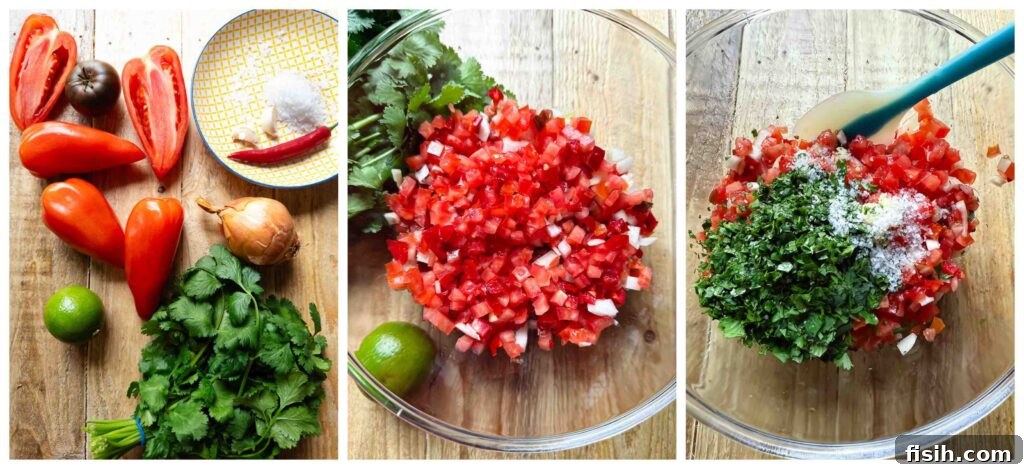
- Begin by preparing your vegetables: finely dice the onion, then deseed and finely dice the tomatoes, and deseed and finely chop the red chilies. Mince the fresh garlic cloves using a garlic press or by hand. For exceptionally quick and uniform dicing, a vegetable chopper can also be used.
- In a medium-sized mixing bowl, combine all the freshly prepared diced and minced ingredients.
- Squeeze the juice of one fresh lime directly over the mixture in the bowl, ensuring even distribution.
- Add 1/4 teaspoon of salt to the mixture. Gently toss all the ingredients together until they are thoroughly combined.
- For optimal flavor development and for the ingredients to meld beautifully, allow the Pico de Gallo to rest in the refrigerator for at least 10-15 minutes before serving.
Recipe Notes
- The triumph of your Pico de Gallo undeniably relies on the ripeness and quality of your tomatoes. Varieties such as Roma or other plum tomatoes are often favored for their lower seed count and firm, fleshy texture. However, the cardinal rule is to always prioritize ripe, flavorful tomatoes over a specific varietal if choices are limited.
- To achieve the characteristic chunky consistency and prevent a watery “soupy” texture, it is paramount to remove the soft, seedy core from your tomatoes, retaining only the firmer outer flesh. If this step feels too time-consuming, or if you prefer a slightly juicier salsa, simply ensure you serve your Pico de Gallo with a slotted spoon to leave any excess liquid behind.
- This recipe is a canvas for your personal taste. Feel completely free to adapt the proportions of garlic, chili, lime, and cilantro to perfectly suit your palate. Whether you desire more tang, less heat, or a stronger herbal note, the power to customize is yours!
- Before presenting your culinary creation, always remember to taste and adjust the seasoning. A final pinch of salt or a splash more lime juice can often elevate the flavors, ensuring your Pico de Gallo is perfectly balanced and utterly delicious.
Nutritional Information (Approximate per serving)
Calories: 40 kcal | Carbohydrates: 9g | Protein: 2g | Fat: 0.3g | Saturated Fat: 0.1g | Polyunsaturated Fat: 0.1g | Monounsaturated Fat: 0.1g | Sodium: 156mg | Potassium: 394mg | Fiber: 2g | Sugar: 5g | Vitamin A: 1504IU | Vitamin C: 31mg | Calcium: 26mg | Iron: 1mg
Please note: Nutritional information is automatically calculated and should be used as an approximation. Individual results may vary based on ingredient specifics and preparation methods.
Creative Serving Suggestions for Pico de Gallo
The versatility of Pico de Gallo makes it an indispensable addition to countless dishes. While it shines brightly as a dip, its fresh, vibrant flavors complement a wide array of meals:
- The Classic Pairing: There’s nothing quite like a freshly made batch of Pico de Gallo, a generous bowl of crisp corn tortilla chips, and an icy cold blood orange margarita. The refreshing citrus of the margarita, especially a blood orange variant which is less assaulting than the lime-heavy classic, makes it a perfect partner to this lime-forward salsa.
- Tacos, Burritos, and Enchiladas: Elevate any Mexican-inspired main course. Spoon it generously over lamb, beef, or pork tacos, burritos, or a bubbling tray of melty chicken enchiladas for an instant burst of freshness and acidity that cuts through richness.
- Grilled Meats and Seafood: A spoonful of Pico de Gallo adds a bright, zesty counterpoint to grilled chicken, steak, or fish. Its raw freshness complements the smoky char of grilled foods beautifully.
- Eggs and Breakfast Dishes: Brighten up your breakfast or brunch. It’s fantastic with scrambled eggs, omelets, huevos rancheros, or even as a fresh topping for avocado toast.
- Salads and Bowls: Incorporate Pico de Gallo into grain bowls, chicken salads, or as a vibrant dressing for simple green salads. Its texture and flavor profile make it a natural fit.
- As a Healthy Side Dish: Served simply on its own, it’s a delicious, low-calorie side that adds nutrition and flavor to any meal.
Storage and Maximizing Freshness
Any fresh salsa that combines the acidity of tomatoes and lime juice will naturally have a limited shelf life. For Pico de Gallo, it’s generally best consumed within approximately 3 days when stored properly in the refrigerator. Beyond this period, the acids in the ingredients can begin to break down the vegetables, potentially leading to a slight fizzing or an “off” taste, diminishing its fresh appeal.
That being said, a brief overnight stay in the cool confines of the fridge can actually benefit this recipe. It allows the individual flavors to intermingle, deepen, and meld together, resulting in a punchier, more harmonious salsa the next day. To preserve its vibrant aromatics and prevent them from permeating other foods in your refrigerator, always ensure your Pico de Gallo is stored in an airtight container. While enjoying it fresh is ideal, a little patience can sometimes yield an even more flavorful experience.
Explore More Fresh Dip Recipes
If you’ve enjoyed the vibrant freshness of Pico de Gallo, you’ll surely love exploring other easy-to-make dips that bring flavor and excitement to any table. Here are a few more delicious options to try:
- Cottage Cheese Red Pepper Dip
- Smoked Cheddar Southwest Dip
- Creamy Cilantro and Walnut Dip
- Cheesy Cranberry and Chorizo Dip Recipe