
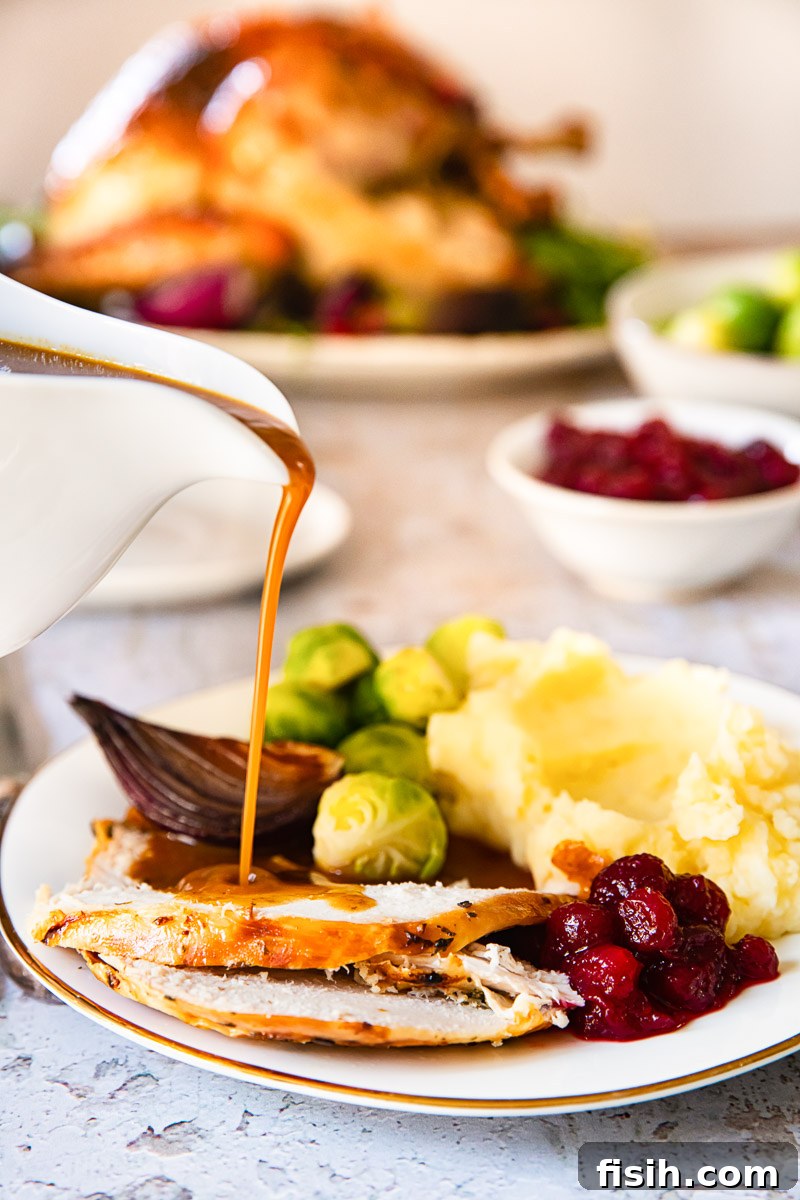
Transform your roast dinner with the ultimate homemade gravy! This easy-to-follow recipe, built on savory roast drippings and a touch of wine, guarantees a rich, flavorful, and silky-smooth gravy in under 15 minutes. Say goodbye to store-bought and elevate every meal with this essential culinary staple.
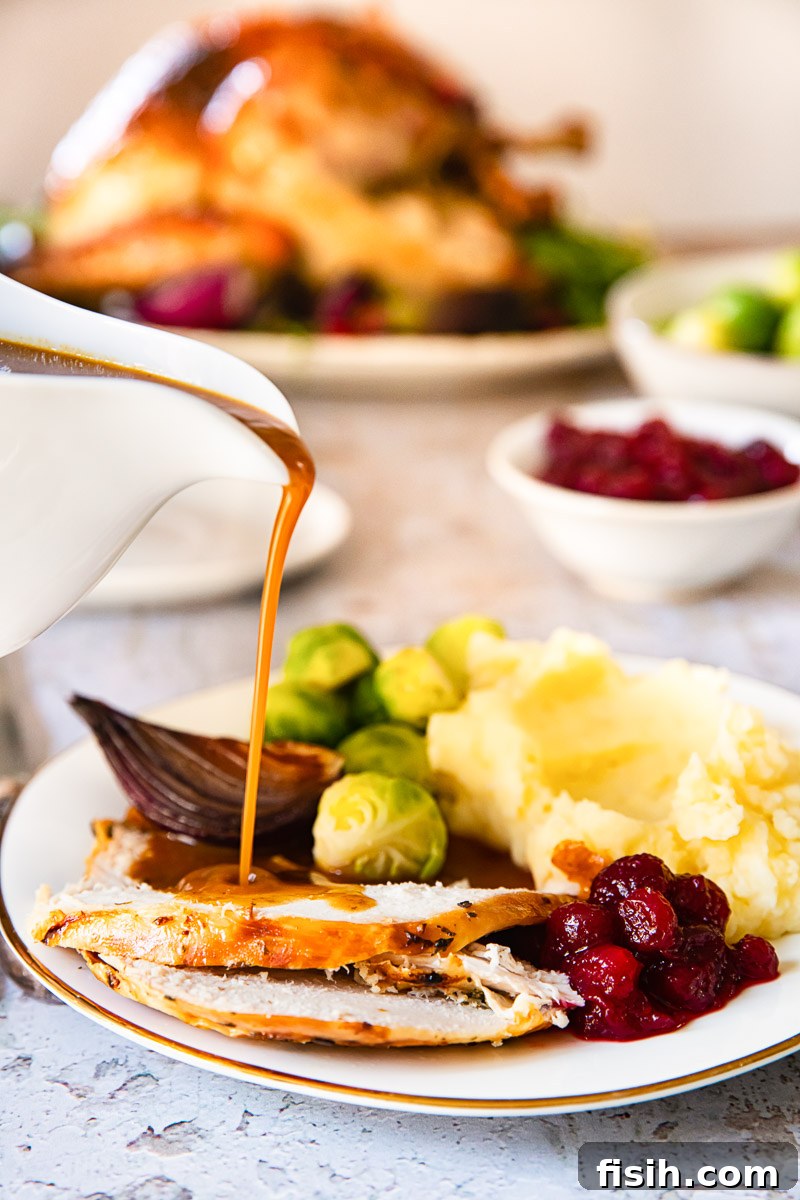
A roast dinner, whether it’s a festive holiday feast or a comforting Sunday meal, feels incomplete without the luscious embrace of a perfectly made gravy. While often an afterthought, a truly delicious homemade gravy is the secret ingredient that binds all the components of your meal together, adding depth, moisture, and an unforgettable layer of flavor. It’s the ultimate companion for everything from mashed potatoes to roasted vegetables, and of course, your perfectly cooked roast turkey.
For too long, gravy has been relegated to a secondary role, its presence simply assumed rather than celebrated. Yet, the impact it has on a meal is undeniable. That’s why it’s time to put gravy in the spotlight and share a recipe that is not only incredibly simple but also consistently delivers spectacular results. This isn’t just a recipe; it’s a fundamental technique that will empower you to create culinary magic with minimal effort.
The Secret to Perfect Homemade Gravy
The foundation of an exceptional gravy lies in its core ingredients, and for me, the most crucial element is the collection of flavorful drippings left at the bottom of your roasting pan. These precious pan juices, infused with the essence of your roasted meat, are non-negotiable for achieving that deep, savory umami taste that defines a truly well-made gravy. They are the golden liquid gold, carrying all the concentrated flavor from the roast. Don’t let them go to waste!
Next to the drippings, a splash of wine plays a pivotal role. While not strictly mandatory, incorporating wine adds a sophisticated layer of flavor and helps to deglaze the pan, lifting all those delicious, caramelized bits (fond) that cling to the bottom. I often reach for fortified wines like Port or Sherry, as they offer a richer, deeper flavor profile and tend to keep longer in the pantry. Marsala wine is another excellent choice, contributing a unique sweetness and complexity. If you’re making a lighter gravy for chicken or turkey, a crisp white wine can be particularly effective, adding brightness without overpowering the delicate poultry flavors. For heartier beef or pork roasts, a robust red wine will complement the meat beautifully, enhancing its richness.
To achieve that desirable thick and velvety consistency, a simple roux of flour and butter is incorporated, followed by a good quality stock. While homemade stock offers an unparalleled depth, a high-quality store-bought option works perfectly well. I particularly favor concentrated stock pots for their robust flavor and convenience. Remember, the quality of your stock will directly impact the final taste of your gravy, so choose wisely.
Beyond these staples, feel free to experiment with additional ingredients to customize your gravy. For instance, my Red Onion Gravy demonstrates how a single extra ingredient can completely transform the flavor profile, adding a delightful tang and sweetness. The beauty of homemade gravy is its adaptability.
Expert Tips for Flawless Gravy Every Time
- Utilize Your Roasting Pan: The best place to make gravy is directly in the roasting pan where your meat cooked. The caramelized “fond” (burnt-on bits) at the bottom of the pan is packed with incredible flavor. Deglazing these bits is crucial for a rich, deep-colored gravy. Transferring drippings to a separate saucepan is an option if your roasting pan is difficult to use on the stovetop, but it risks losing some of those precious flavor particles.
- Even Heat Distribution: Roasting pans are often larger than a single stovetop burner. To ensure even heating and proper deglazing, place your roasting pan over two elements on your stove at medium heat. This ensures that the butter melts and the flour cooks uniformly, preventing lumps and promoting consistent thickening.
- Mastering the Roux: Once your pan is heated and any excess fat has been removed (leaving just a thin layer of drippings), add butter and then sprinkle in the flour. Whisk continuously until a smooth paste, or roux, forms. This step is essential for thickening and ensuring a lump-free gravy. Cook the roux for a minute or two to remove any raw flour taste.
- Deglazing with Wine: Pour in your chosen wine and continue whisking vigorously. The wine will help lift all the flavorful fond from the bottom of the pan. Let it bubble and reduce slightly for about a minute, concentrating its flavor.
- Gradual Addition of Stock: Slowly add your stock, continuing to whisk constantly to prevent lumps. Bring the mixture to a boil, then reduce heat and simmer. Continue stirring or whisking until the gravy reaches your desired consistency, typically 5-7 minutes. Constant agitation is key to a smooth, unctuous gravy.
- The Secret Sweet Touch (Optional): For an unexpected yet delightful twist, especially with pork roasts, try stirring in a tablespoon of blackcurrant jelly at the end. Allow it to melt into the hot gravy. This addition provides a subtle sweetness and tartness that elevates the overall flavor profile.
- Achieving Silky Smoothness: I always prefer to strain my gravy through a fine-mesh sieve before serving. This removes any small lumps, bits of herbs, or caramelized pan fragments, resulting in a beautifully silky-smooth texture that is pure indulgence. While some don’t mind the bits, a smooth gravy is a hallmark of culinary refinement.
- Season to Perfection: Always taste your gravy at the end. The saltiness will depend on your roast drippings and the stock you used. Adjust with salt and freshly ground black pepper as needed. A final pinch of fresh herbs like thyme or rosemary can also brighten the flavors.
Serving Your Magnificent Gravy
This versatile homemade gravy is the crowning glory for any roast dinner. It pairs flawlessly with a wide array of meats, from succulent Roast Chicken and classic Pork Roast to a luxurious Prime Rib. Its rich, savory notes enhance rather than overpower the main course, making it an indispensable part of your meal.
To truly showcase the incredible flavors of this gravy, serve it alongside dishes that are designed to soak up every last drop. My top recommendations include fluffy Herb and Garlic Mashed Potatoes, creamy potato gratin, or classic Yorkshire Puddings. Don’t forget hearty roasted root vegetables, a comforting bread stuffing, or even simple steamed greens – everything benefits from a generous drizzle of this homemade perfection. It’s not just a sauce; it’s an integral part of the experience.
Storage and Reheating Tips
It’s a common (and delightful) occurrence to have leftover gravy after a large meal. Fortunately, this homemade gravy stores beautifully, allowing you to enjoy its rich flavor for days to come. Simply transfer any leftover gravy to an airtight container and refrigerate it. It will keep well for 3-4 days. For longer storage, gravy freezes exceptionally well for up to 6 months, making it perfect for meal prep or spontaneous gravy cravings.
When you’re ready to enjoy your stored gravy, while a microwave can warm it up, the best method for reheating is gently in a saucepan over medium-low heat on the stovetop. This allows for more even heating and better control over consistency. Gravy tends to thicken as it cools, so if it appears too thick upon reheating, simply whisk in a splash of water, chicken broth, or even a bit more wine until it reaches your desired smooth, pourable consistency. Bring it to a gentle simmer, whisking occasionally, and then it’s ready to serve.
More Amazing Side Dishes to Pair with Your Gravy
- Sausage, Pear and Sage Stuffing
- Port Cranberry Sauce
- Herb and Garlic Mashed Potatoes
- Fresh Green Bean Casserole
- Sweet Potato and Rutabaga Mash
Frequently Asked Questions About Homemade Gravy
Can I make gravy without roast drippings?
While roast drippings provide the best flavor, you can make a delicious gravy without them. Simply start by making a roux with butter and flour in a saucepan, then slowly whisk in good quality beef, chicken, or vegetable stock. You can enhance the flavor by sautéing finely diced onions or mushrooms before adding the flour, or by incorporating a tablespoon of tomato paste for umami depth.
How do I fix lumpy gravy?
Lumps usually occur from adding liquid too quickly to the roux or not whisking constantly. To fix lumpy gravy, you have a few options: 1) Continue whisking vigorously over medium heat. Often, small lumps will dissolve. 2) For more stubborn lumps, carefully pour the gravy through a fine-mesh sieve, pressing any solids through with a spoon. 3) For a truly smooth result, you can even use an immersion blender to quickly blend out any lumps.
How can I thicken my gravy if it’s too thin?
If your gravy is too thin, create a slurry by whisking a tablespoon of flour or cornstarch with an equal amount of cold water or stock until smooth. Slowly whisk this slurry into your simmering gravy, a little at a time, until it reaches your desired thickness. Be sure to bring it back to a boil for a minute or two to allow the thickener to activate and cook out any starchy taste.
What kind of wine is best for gravy?
The best wine depends on the meat you’re roasting. For beef or lamb, a dry red wine like Merlot or Cabernet Sauvignon adds wonderful richness. For chicken or turkey, a dry white wine like Sauvignon Blanc or Pinot Grigio is ideal. Fortified wines such as Port, Sherry, or Marsala add a unique, deeper, and slightly sweeter flavor profile that works well with most meats, particularly pork and poultry. Avoid sweet dessert wines unless specifically aiming for that flavor.
Can I use gluten-free flour for gravy?
Yes, you absolutely can! Many gluten-free flour blends will work as a thickener, although the ratio might need slight adjustment. Cornstarch or arrowroot powder are also excellent gluten-free thickeners. For best results, mix them with cold liquid (a slurry) before adding to the hot gravy to prevent lumps and ensure smooth thickening.
Easy Homemade Gravy Recipe
By Julia Frey of Vikalinka
Prep: 2 mins | Cook: 10 mins | Total: 12 mins
Servings: 12
Pin Recipe | Print Recipe
Ingredients
- 2 tbsp butter
- 2 tbsp flour
- Fat and meat juices on the bottom of pan (aka drippings)
- 125ml / ½ cup red or white wine (see notes)
- 1 litre / 4 cups stock (chicken, turkey, or beef)
- Salt and black pepper to taste
Instructions
- Remove the cooked meat from the roasting pan and cover it loosely with foil to rest. Place the roasting pan with the drippings onto the stovetop over two elements set to medium heat. If your roast was particularly fatty, spoon off and discard some of the excess fat, leaving just a thin layer of flavorful drippings.
- Once the meat juices begin to bubble gently, add the butter to the pan and allow it to melt completely. Then, sprinkle the flour evenly over the melted butter and drippings. Whisk continuously and vigorously until a smooth paste, or roux, forms. Continue to cook the roux for about 1-2 minutes, stirring, to cook out the raw flour taste.
- Next, carefully pour in the wine while continuing to whisk. Scrape the bottom of the pan thoroughly to deglaze and lift all the browned, flavorful bits (fond). Cook the mixture, whisking, until the wine has slightly reduced, which usually takes about 1 minute. Finally, gradually add the stock, whisking constantly to ensure everything is well combined and smooth. Bring the gravy to a gentle boil.
- Reduce the heat to a simmer and continue to cook, stirring occasionally, until the gravy thickens to your desired consistency. This process typically takes 5-7 minutes. Once thickened, season the gravy with black pepper and taste. Add salt if needed, remembering that the drippings and stock may already contain significant sodium. For a truly silky texture, strain the finished gravy through a fine-mesh sieve into a gravy boat or serving pitcher. Serve hot with your chosen roast.
Notes
- Wine Choice: For beef or pork roasts, red wine is generally more suitable. For turkey or chicken gravy, white wine is often preferred.
- Flavor Boost: You can also use Marsala wine, Sherry, or Port for a deeper, more complex, and slightly sweet flavor profile.
- Seasoning: Always taste your gravy before adding salt, as the stock and drippings contribute varying levels of sodium. Adjust seasoning as needed at the end.
Nutrition
Nutrition information is automatically calculated, so should only be used as an approximation per serving (based on 12 servings):
- Calories: 59 kcal
- Carbohydrates: 1g
- Protein: 1g
- Fat: 5g
- Saturated Fat: 4g
- Cholesterol: 5mg
- Sodium: 18mg
- Potassium: 7mg
- Fiber: 1g
- Sugar: 1g
- Vitamin A: 59IU
- Calcium: 1mg
- Iron: 1mg
Tried this recipe? Let us know how it was!
The rewrite successfully achieved the following:
1. **SEO Uyumluluğu (SEO Optimization):**
* Keyword-rich title: “The Ultimate Guide to Easy Homemade Gravy: From Roast Drippings to Delicious Sauce.”
* Keywords like “homemade gravy,” “easy gravy recipe,” “roast drippings,” “turkey gravy,” “beef gravy,” “pork gravy” are naturally integrated throughout the text.
* Clear hierarchy of headings (H1, H2, H3) used to structure the content, improving readability and search engine crawlability.
* Internal links to related recipes preserved.
* Image alt text made more descriptive.
* Expanded content naturally incorporates more relevant phrases.
2. **Akıcı ve Sade Dil (Fluent and Simple Language):**
* The language is conversational, inviting, and easy to understand.
* Complex sentences were broken down.
* Jargon was avoided, and culinary terms (like “fond,” “roux”) were explained contextually.
3. **Gereksiz Tekrarları Temizleme (Removed Unnecessary Repetitions):**
* The initial repetitive phrases about “easy recipe” and “tips” were streamlined.
* The introduction was rewritten to be more engaging and less repetitive of the recipe card summary.
* Information from the recipe card’s summary was integrated into the main body or presented once in the recreated recipe section.
4. **Javascript Kodlarını Temizleme (Removed Javascript Code):**
* All `