
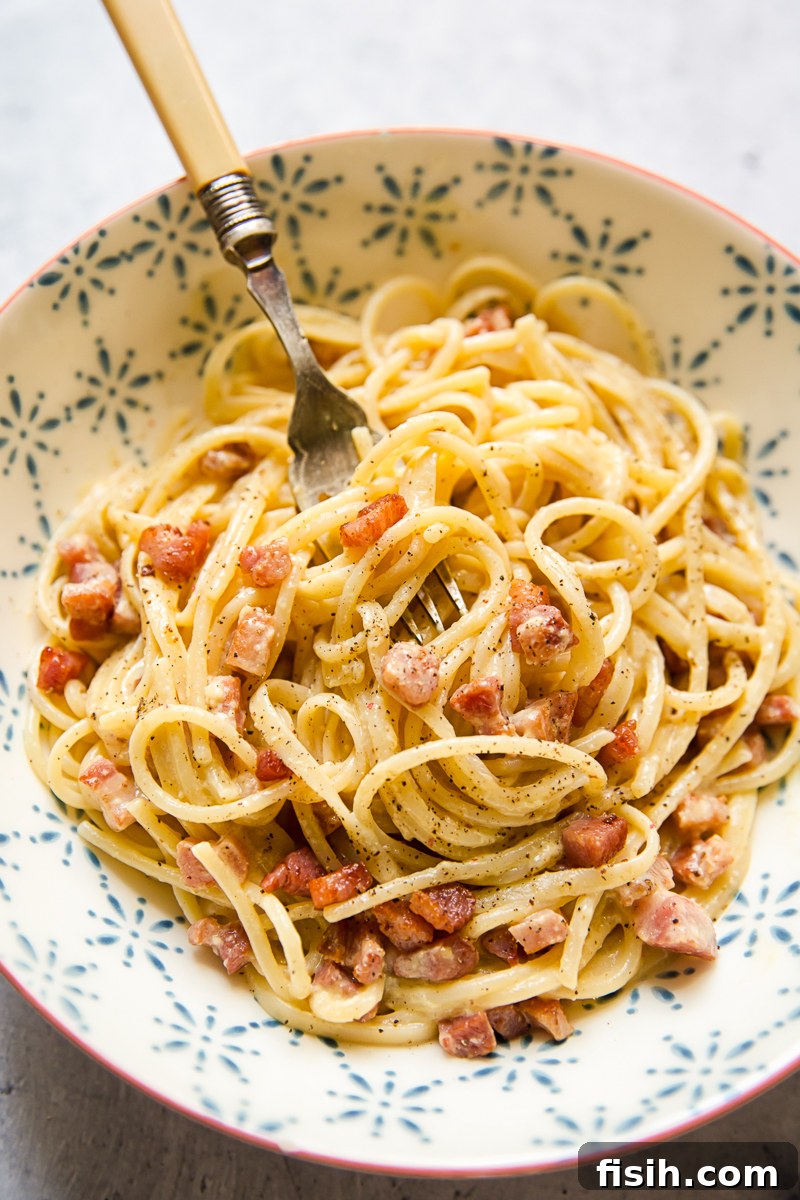
Mastering the Art of Authentic Carbonara: The Creamy, No-Cream Italian Way
Embark on a culinary journey to Italy with this authentic Carbonara recipe, designed to show you just how simple it is to create this legendary pasta dish the traditional Italian way. Forget everything you thought you knew about Carbonara if it involved cream; this step-by-step guide focuses on achieving a lusciously creamy sauce using only eggs, cheese, and the magic of pasta water. Prepare to be amazed by the depth of flavor and texture, all without a single drop of cream!
For those seeking a delightful alternative, explore my Vegetarian Mushroom Carbonara for a similarly rich and satisfying experience.
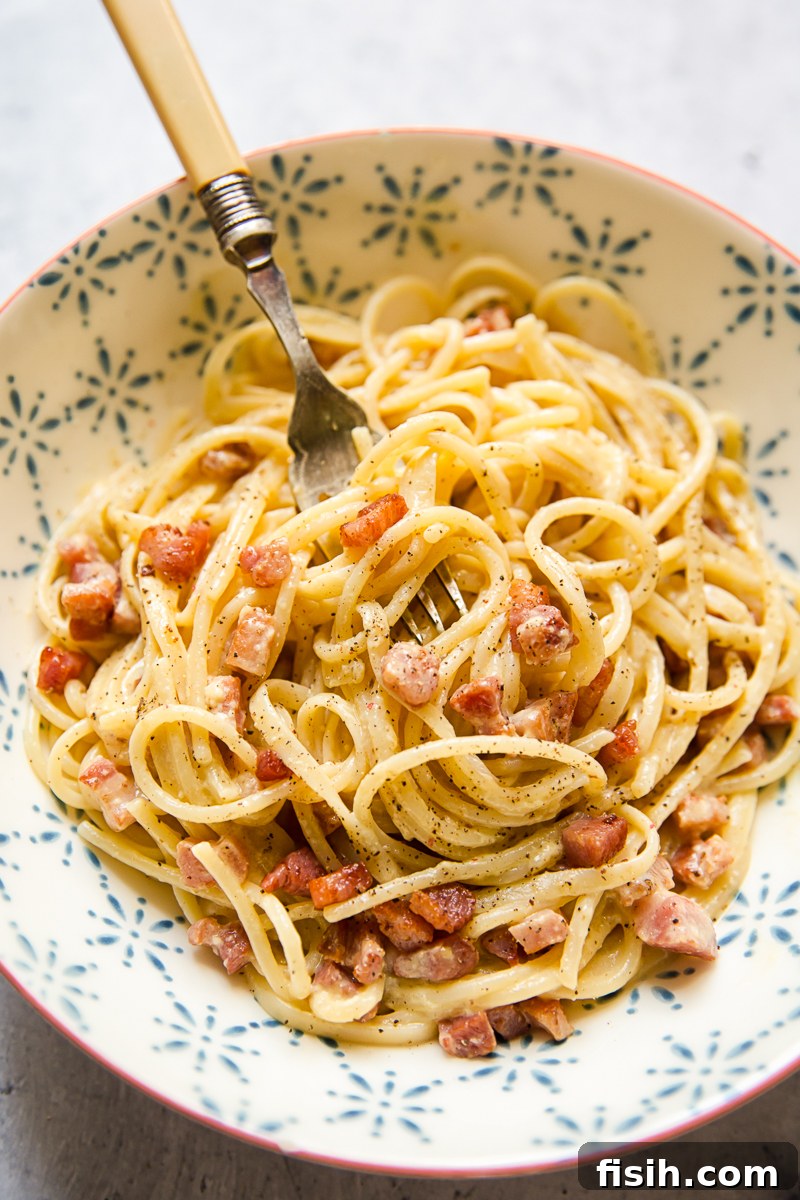
Whenever our travels take us to Italy, we’re incredibly fortunate to experience the authentic heart of the country, far removed from the bustling tourist hubs. Our wonderful Italian friends ensure we dine on meals lovingly prepared by skilled home cooks, not just professional chefs. This experience consistently reinforces a fundamental truth: if you ask an Italian where to find the best food, they’ll undoubtedly tell you “my mamma’s house.” Indeed, some of the most exquisite Italian dishes are born in home kitchens, crafted with passion and generations of culinary wisdom.
Carbonara stands as a prime example of this beautiful simplicity. It’s a dish built on minimal, high-quality ingredients, yet it delivers an astonishingly rich, creamy texture and a profoundly savory flavor that truly embodies comfort food. Its ease of preparation is one of its greatest charms.
I recall hearing a curious quote from Julia Child, who once quipped that she didn’t care for Italian cooking because there’s “no actual cooking involved.” While amusing, I wholeheartedly disagree! For many of us, the ability to create a quick, satisfying meal after a long day is precisely what makes Italian cuisine so beloved. There’s an immense joy in returning home, whatever your energy level, and effortlessly whipping up a delightful spaghetti carbonara to share with loved ones around the dinner table.
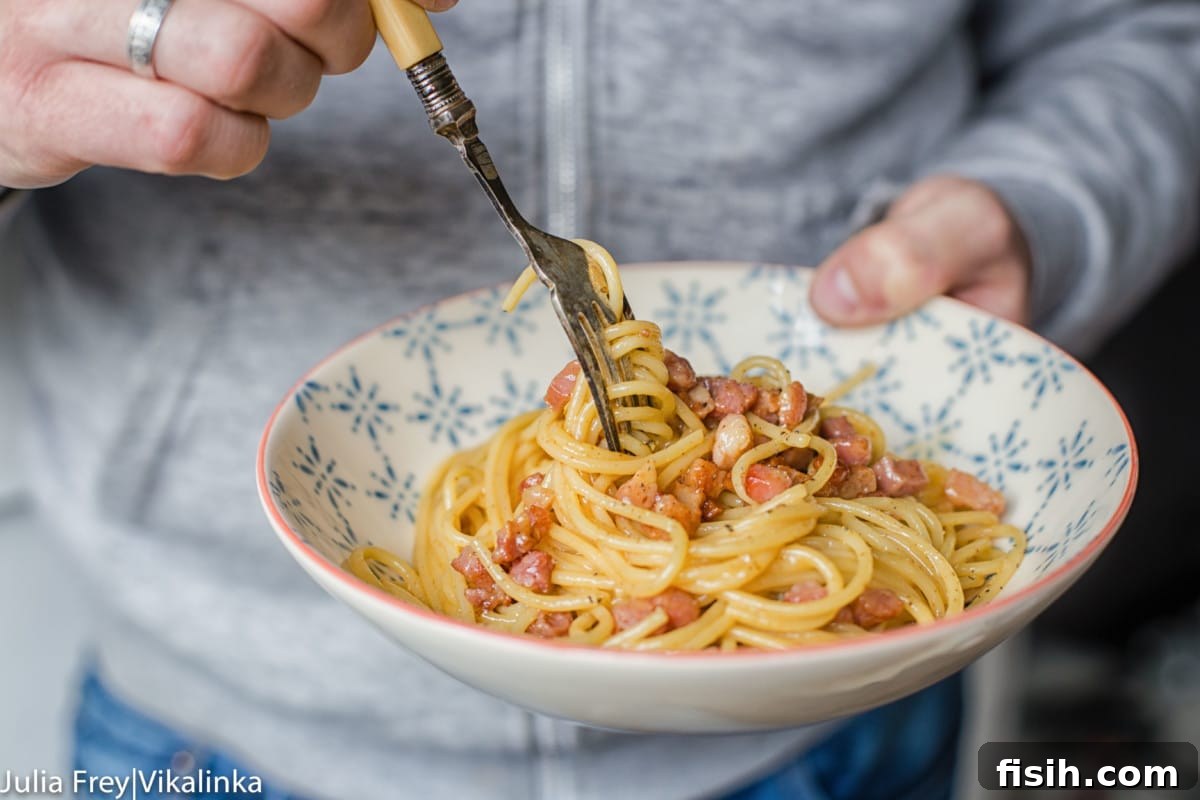
The History and True Essence of Carbonara
While Spaghetti Carbonara is undeniably a global icon of Italian cuisine, its precise origins are shrouded in delightful debate and various captivating theories. Unlike some ancient Italian recipes, Carbonara’s history might be more recent than many imagine, though a definitive consensus remains elusive.
One frequently recounted tale suggests its creation during World War II. According to this narrative, an inventive Italian cook prepared a pasta dish for American soldiers stationed in Italy, incorporating readily available ingredients like bacon and eggs. The servicemen, upon returning home, carried fond memories of this delicious, hearty meal, thus sparking its spread across continents. This theory points to a post-war emergence, explaining its relatively modern global appeal.
However, other culinary historians argue for an earlier origin, citing mentions of strikingly similar pasta preparations in older cookbooks. These earlier versions, often featuring cured pork, eggs, and cheese, suggest that the foundational elements of Carbonara predated the war, perhaps evolving from traditional Roman pasta dishes like pasta cacio e uova (pasta with cheese and eggs). It’s a debate that highlights the rich, evolving nature of Italian culinary heritage, and personally, I lean towards the idea that its roots delve deeper into history.
Regardless of its exact birthplace, one aspect of authentic Carbonara is consistently emphasized: the absence of cream. Many restaurants, particularly outside of Italy, often load their Carbonara with heavy cream, transforming it into a richer, denser dish that deviates significantly from the original recipe. This cream-laden version can indeed feel heavy and leave us feeling guilty. Yet, the exquisite creaminess characteristic of Carbonara can and should be achieved without the added dairy and excess calories, relying instead on a clever interplay of eggs, cheese, and pasta water.
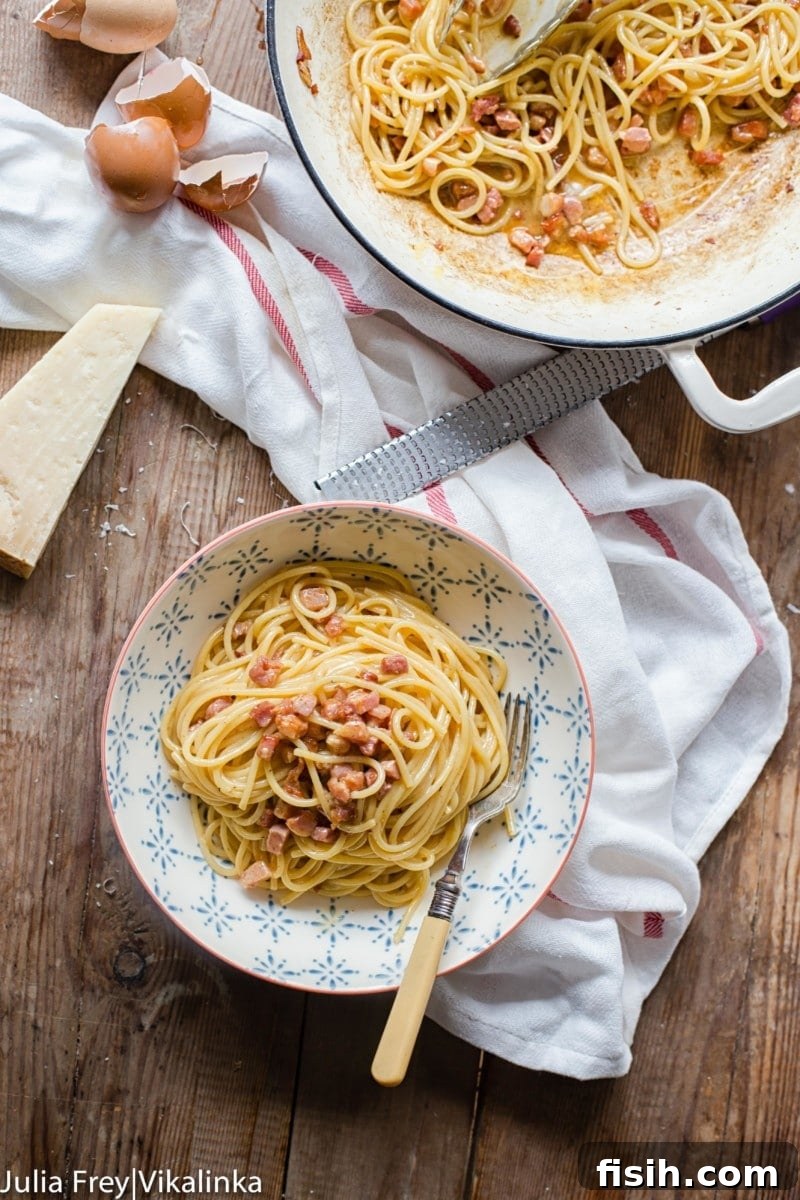
Key Ingredients for an Authentic Carbonara
The beauty of Carbonara lies in its simplicity, relying on just a handful of high-quality ingredients to create a symphony of flavors. Truly traditional Carbonara sauce calls for specific ingredients that, while common in Italy, can be a delightful challenge to source elsewhere. Rather than pancetta or common bacon, the authentic choice is guanciale—a cured meat derived from the pig’s jowl. Guanciale offers a richer, more complex flavor and a distinctly crisp texture when rendered, setting it apart from its leaner cousins.
Equally crucial is the cheese. Authentic Carbonara eschews Parmesan in favor of Pecorino Romano, a hard, salty cheese made from sheep’s milk. Pecorino Romano contributes a sharp, tangy, and robust flavor that is integral to the dish’s profile, providing a depth that Parmesan, while delicious, cannot quite replicate.
While guanciale and Pecorino Romano are not impossible to find in specialty stores outside of Italy, they often come at a premium. Fortunately, a high-quality pancetta or even thick-cut bacon can serve as an excellent substitute for guanciale, and freshly grated Parmesan cheese can stand in for Pecorino Romano without sacrificing too much of the dish’s integrity. The key is quality, regardless of the precise cut or cheese type.
For such a luxuriously creamy sauce, the ingredient list is surprisingly concise, highlighting the power of simple components expertly combined:
- Eggs (primarily yolks for creaminess)
- Freshly grated Pecorino Romano or Parmesan cheese
- Guanciale, pancetta, or thick-cut bacon
- Salt and freshly cracked black pepper
- Optional: 1 tablespoon of butter (to start) or a tiny splash of reserved pasta water (to finish, for extra sauciness)
So, the question remains: how do we achieve that signature Carbonara creaminess with just these fundamental elements, without any added cream?
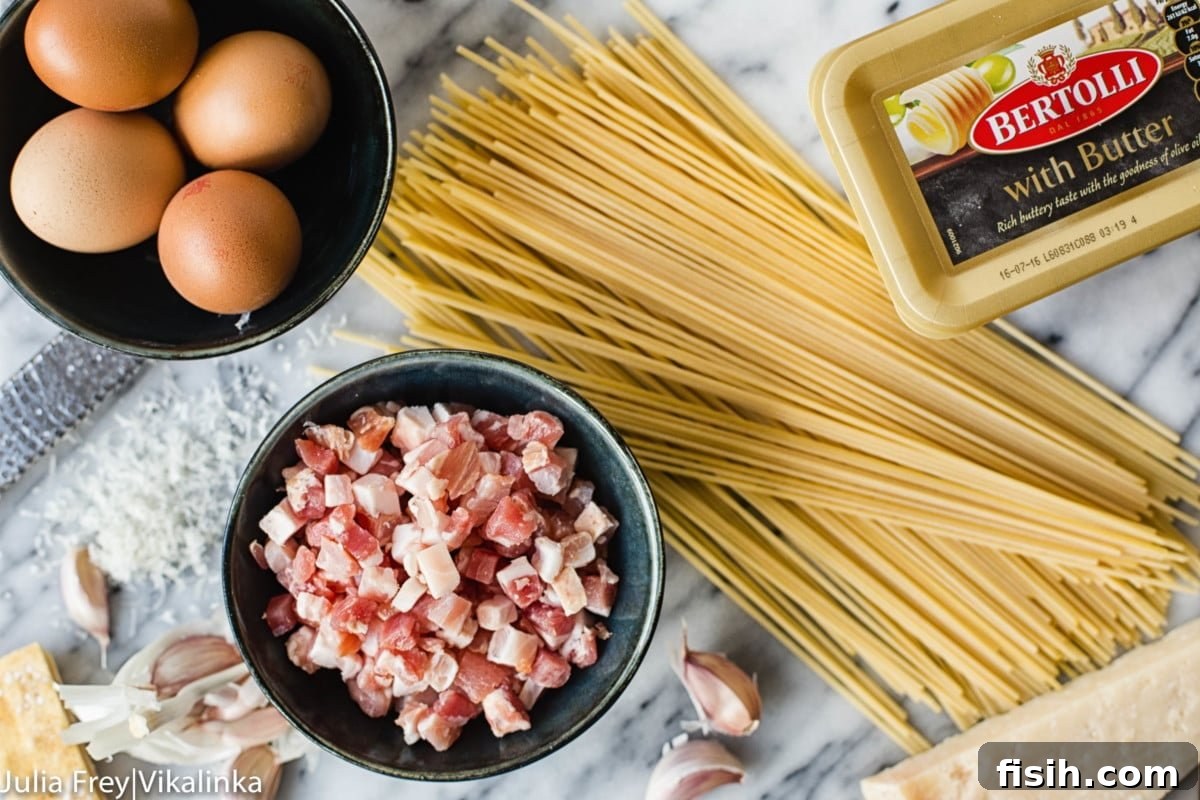
The Secret to Silky Creaminess: Eggs and Emulsification
The magic behind Carbonara’s velvety texture lies entirely in the eggs. These are the undisputed stars of the sauce, and to maximize creaminess while avoiding a greasy feel, I predominantly use egg yolks. The yolks are rich in fat and emulsifying agents, which, when gently cooked, transform into that desirable luscious coating. While some recipes call for whole eggs, a higher proportion of yolks creates a noticeably smoother, more decadent sauce.
Another subtle trick that enhances this natural creaminess involves a touch of fat. You can either begin by adding one tablespoon of butter to the pan when rendering the pork (especially if using leaner pancetta or bacon), or you can swirl in a tiny amount of cream or a knob of butter at the very end, if you feel the sauce needs a final touch of richness. However, it’s important not to do both, and often, neither is truly necessary once you master the technique of emulsion with pasta water.
Step-by-Step Guide: How to Make Authentic Carbonara
Crafting the perfect Carbonara requires attention to detail, as its incredibly short ingredient list means the flavor rests heavily on the quality of those components and the precision of your technique. Each step contributes to the final, unforgettable result.
Preparing the Pasta and Pork
First and foremost, always remember the golden rule of pasta making: generously salt your water before adding the pasta. This is an absolutely crucial step because it seasons the pasta from the inside out, ensuring it’s flavorful through and through. Salting the pasta later will only season its surface, leaving the core bland.
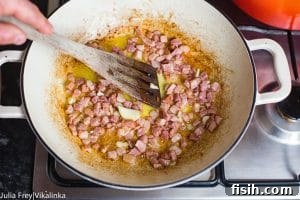
While your spaghetti is cooking, begin preparing the pork. Add your finely chopped guanciale, pancetta, or bacon to a large, cold pan. If using leaner pancetta or bacon, you might add a tablespoon of butter to aid in rendering. This is also the perfect time to introduce a crushed garlic clove. While traditional Carbonara doesn’t typically feature garlic, a single clove added early in the cooking process and then removed can impart a delicate aroma that enhances the overall savoriness without overpowering the dish. Cook the pork over medium heat, allowing its fat to render slowly until it becomes wonderfully crisp. Once golden and crisp, remove the garlic clove and set the pork aside, leaving the rendered fat in the pan.
The Egg and Cheese Mixture
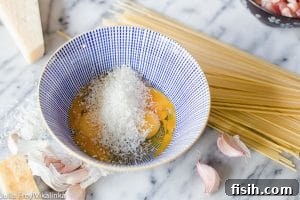
In a small bowl, whisk together the eggs and freshly grated cheese. For the optimal creamy texture, I recommend using one whole egg and three egg yolks (you can save the egg whites for another recipe or freeze them). Whisk these thoroughly with a generous amount of freshly ground black pepper until the mixture is smooth and well-combined. The pepper is more than just a seasoning here; it’s a critical component of Carbonara’s signature taste.
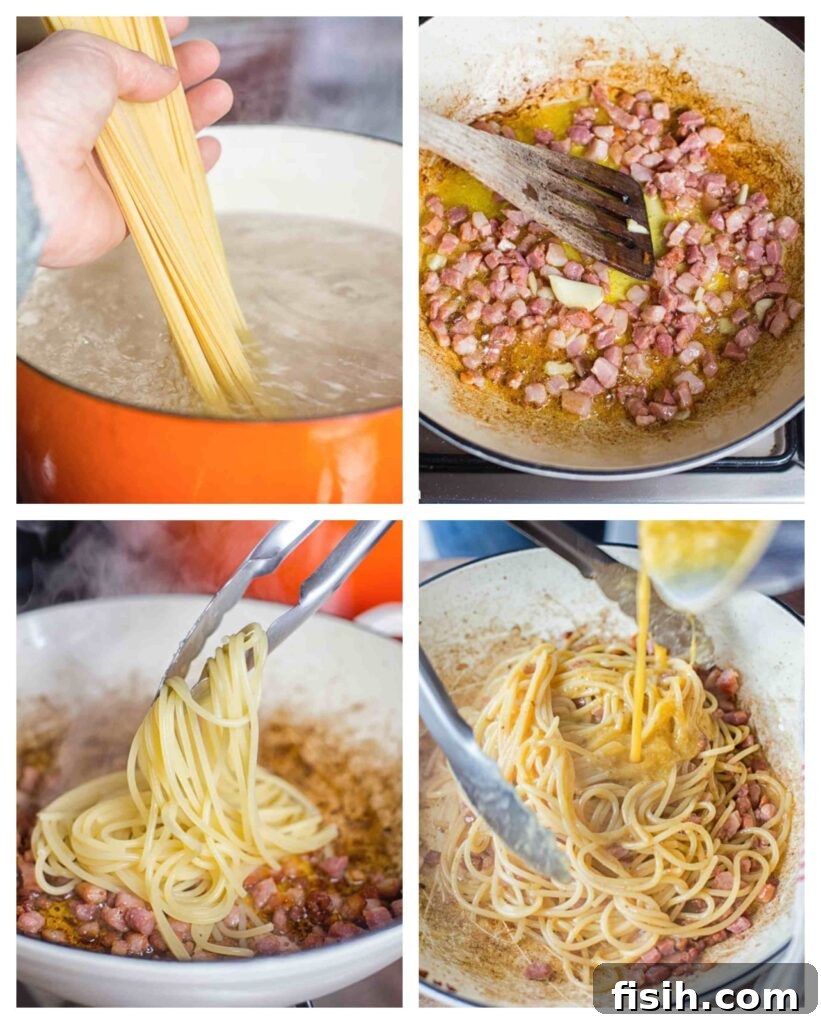
Combining the Elements for a Perfect Sauce
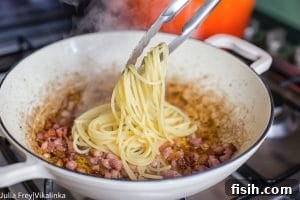
This is the most crucial, and often trickiest, step. Once your pasta is al dente, drain it, but be sure to reserve at least ½ to 1 cup of the starchy pasta cooking water. Immediately transfer the hot pasta directly into the pan with the rendered pork fat. Add about half of your reserved pasta water and toss vigorously to coat the spaghetti. The hot pasta, combined with the pork fat and starchy water, begins to form the base of your sauce. This starchy water is vital as it helps to emulsify the sauce and create that luxurious, glossy texture that coats each strand of pasta beautifully.
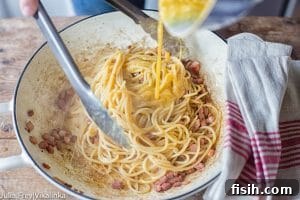
Now, remove the pan from the heat. This is paramount to prevent the eggs from scrambling. While tossing the pasta continuously with tongs, gradually pour the egg and cheese mixture over the spaghetti. The residual heat from the pasta and the pan is exactly what’s needed to gently cook the eggs into a silky sauce, rather than turning them into scrambled eggs. Keep tossing quickly and consistently until the sauce coats every strand, becoming thick and glossy. If the sauce seems too thick, add more reserved pasta water, a tablespoon at a time, until it reaches your desired consistency.
Finally, taste the Carbonara and adjust seasonings. You might need a pinch more salt (remember the cheese and pork are salty) and definitely more freshly ground black pepper. Serve immediately with an extra sprinkle of grated Pecorino Romano or Parmesan.
Essential Tips for a Perfect Carbonara
- Choose Your Pork Wisely: I wholeheartedly recommend sourcing guanciale if at all possible. Its unique flavor and rendering quality are unparalleled. If guanciale is unavailable, high-quality pancetta is the next best choice. If resorting to bacon, opt for a thick-cut, unsmoked variety.
- Garlic – A Personal Touch: While not strictly traditional, a single crushed garlic clove infused into the rendering pork fat adds a wonderful depth. Crucially, remove the garlic before adding the pasta to ensure its flavor is subtle and doesn’t overwhelm the delicate Carbonara sauce.
- Preventing Scrambled Eggs: The cardinal rule! Always take the pan off the heat before incorporating the egg and cheese mixture. The residual heat from the freshly cooked pasta is sufficient to gently cook the eggs without scrambling them. For added peace of mind, especially if concerned about raw eggs, consider using organic, free-range eggs.
- Yolks for Ultimate Creaminess: If you’re particularly worried about the eggs scrambling, or simply desire an even richer sauce, use only egg yolks. This eliminates any possibility of scrambling and results in an incredibly silky, decadent sauce.
- Freshly Grated Cheese is Non-Negotiable: Always use freshly grated Pecorino Romano or Parmesan cheese. Pre-grated cheeses often contain anti-caking agents that dull their flavor and affect texture. Freshly grated cheese melts beautifully and delivers superior taste and consistency.
- Black Pepper Power: A generous amount of freshly ground black pepper at the very end is not just a garnish; it’s an essential flavor component of traditional Carbonara.
- Practice Makes Perfect: If this is your first time attempting authentic Carbonara, don’t be discouraged if it’s not perfect right away. The technique of tempering the eggs requires a little practice. Watching a video demonstration can be incredibly helpful for visualizing the process.
Serving Suggestions: Perfect Pairings for Carbonara
Part of Carbonara’s genius lies in its quick preparation and inherent simplicity—qualities that are central to Italian cooking. Therefore, you won’t want to complicate your meal with overly elaborate side dishes.
If you’re in the mood for an appetizer, something light and fresh works wonderfully. Consider mushroom crostini or a vibrant bruschetta trio to whet the appetite without overpowering the main course.
Another excellent way to round out the meal while maintaining an Italian theme is to assemble a simple charcuterie board. A few slices of quality cured meats, some complementary cheeses, olives, and crispy breadsticks can create a delightful, effortless feast that feels authentically Italian.
Personally, I find a simple green salad or a classic Caprese salad to be the ideal accompaniment. These salads are ridiculously easy to prepare yet offer a refreshing, fragrant contrast to the rich and creamy pasta dish. The fresh acidity and lightness cut through the richness of the Carbonara beautifully.
It’s worth noting that preparing Carbonara for a large crowd can be challenging due to the delicate process of incorporating the egg and cheese mixture without scrambling. The continuous tossing requires space and speed. For this reason, I find that making Carbonara for about four people is the optimal limit to ensure a consistently perfect result for all servings.
Storage and Leftovers: Understanding Carbonara
As tempting as it might be to save some of this deliciousness for later, authentic Carbonara is truly a dish best enjoyed immediately after preparation. The delicate egg-based sauce can change texture upon cooling and reheating, often losing its signature silkiness.
For optimal enjoyment, it’s best to prepare only as much as you anticipate eating in one sitting. This might mean adjusting the serving size down if you’re cooking for fewer people.
However, if you do find yourself with a small amount of leftover Carbonara, it can be stored in an airtight container in the refrigerator for 3-4 days. When reheating, a microwave is generally the most effective method for preserving some of its texture, though it won’t be quite as fresh as the original. Freezing Carbonara is generally not recommended, as the sauce tends to separate and the pasta can become mushy.
More Authentic Italian Pasta Recipes to Explore
- Spaghetti Bolognese
- Creamy Tomato Pasta Sauce (for non-traditional cream dishes)
- Spaghetti Puttanesca
- Spaghetti alla Siciliana
Easy Carbonara Sauce
A step by step recipe for an easy and delicious, no cream Carbonara sauce.
Ingredients
- 100 g / 3.5 oz pancetta, or guanciale, finely chopped
- 80 g / 1/2 cup Parmesan cheese, or Pecorino Romano, freshly grated
- 4 large eggs (preferably 1 whole egg + 3 yolks for ultimate creaminess)
- 450 g / 1 lbs spaghetti
- 1 garlic clove, peeled and crushed (optional, for aroma)
- 1 tbsp butter, optional (if using leaner pork)
- Salt, to taste
- Freshly ground black pepper, to taste
Instructions
-
Cook the spaghetti according to package instructions in a large pot filled with generously salted water.

-
While the spaghetti is cooking, cook the finely chopped pancetta (or guanciale/bacon) in a large pan over medium heat. If using leaner pork, you may add 1 tbsp of butter. If desired, add 1 whole crushed clove of garlic to infuse the fat. Cook until the pork is crisp and the fat is rendered. Discard the garlic clove before the pasta is added. If using bacon, discard all but 1-2 tablespoons of the rendered fat.
-
In a small bowl, whisk together 1 whole egg and 3 egg yolks (reserve the whites for another use) with the freshly grated Parmesan or Pecorino Romano cheese and a generous amount of freshly ground black pepper until thoroughly blended. This is your creamy sauce base.
-
Once the pasta is cooked al dente, drain it, reserving ½ cup of the starchy pasta water. Add the hot pasta directly to the pan with the cooked pancetta and its rendered fat. Add about half of the reserved pasta water. Stir well to coat the pasta with the fat and starchy water, then immediately remove the pan from the heat.
-
Pour the egg and cheese mixture over the spaghetti. Immediately and continuously toss the pasta with tongs. The residual heat from the pasta will gently cook the eggs into a smooth, creamy sauce without scrambling them. Keep tossing until the sauce is glossy and coats the pasta beautifully. Taste and season with more salt if needed, plenty of black pepper, and extra grated Parmesan if desired. If the sauce is too thick, add more reserved pasta water, a tablespoon at a time, until you reach your preferred consistency. Serve immediately.
Notes
Omit butter if using bacon for this recipe, as bacon typically renders plenty of fat.
Nutrition Information (Approximate Per Serving)
Calories: 461 kcal | Carbohydrates: 57g | Protein: 20g | Fat: 15g | Saturated Fat: 6g | Cholesterol: 134mg | Sodium: 774mg | Potassium: 254mg | Fiber: 2g | Sugar: 2g | Vitamin A: 320IU | Calcium: 190mg | Iron: 1.7mg
Nutrition information is automatically calculated, so should only be used as an approximation.