
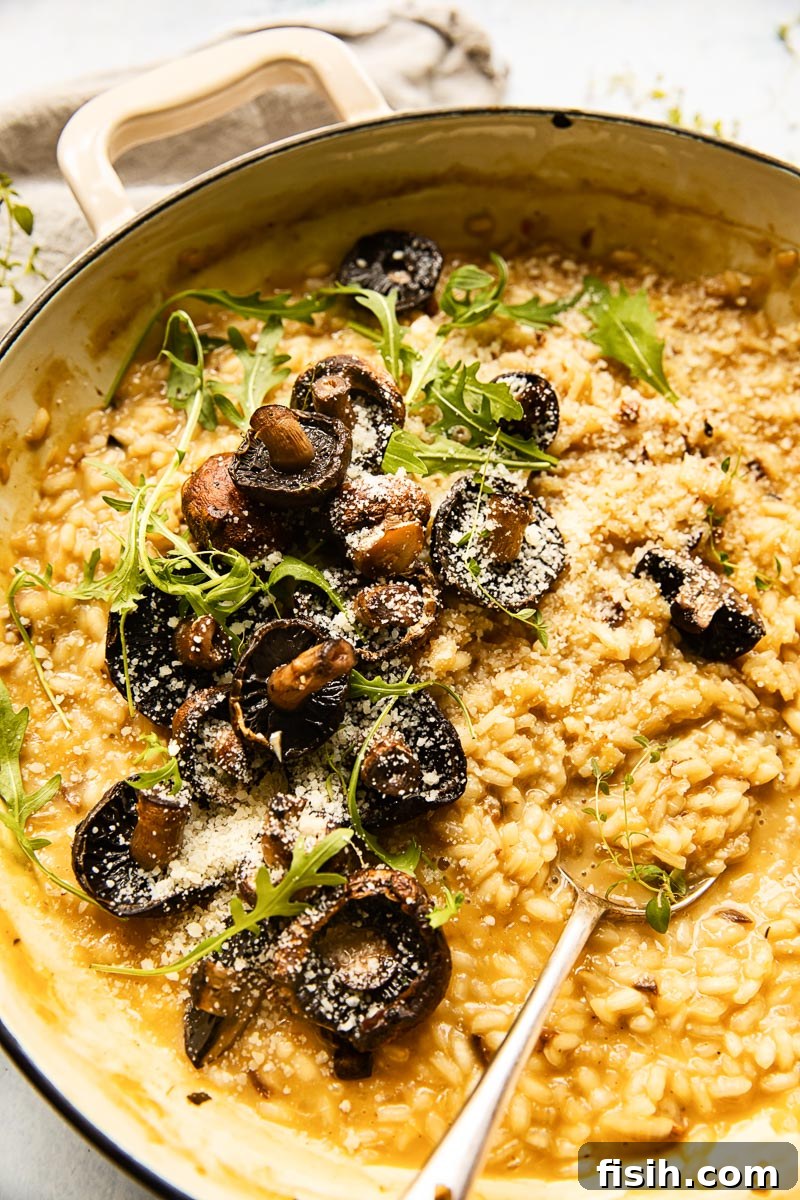
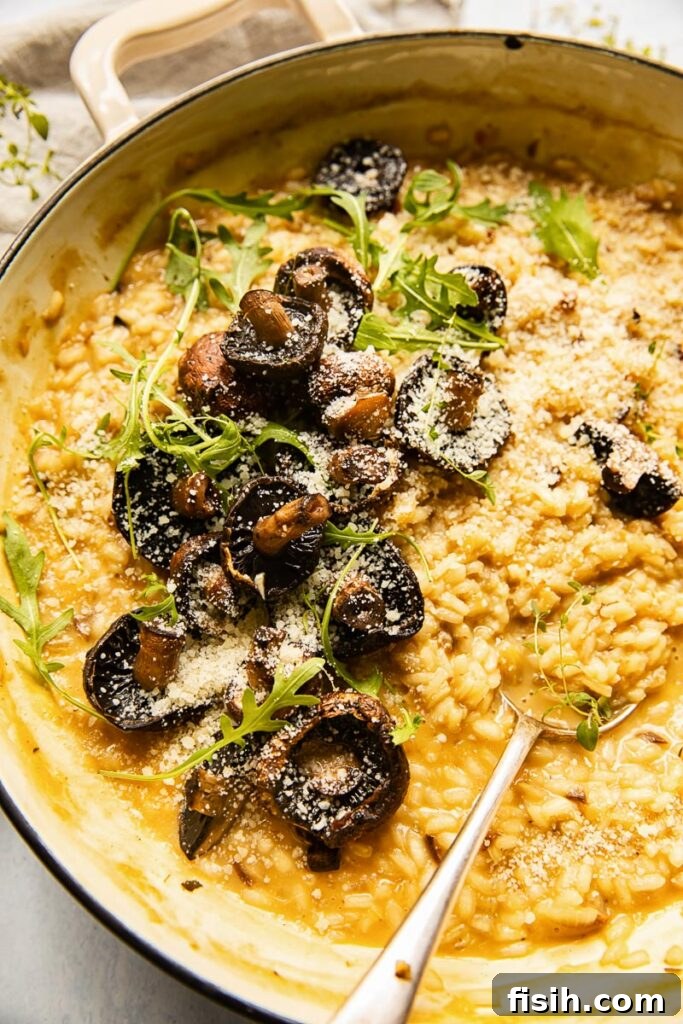
Roasted mushroom risotto is a dish that embodies warmth, richness, and culinary satisfaction, truly defining comfort food at its finest. This incredibly flavorful meal, featuring tender, earthy portobello mushrooms, is surprisingly straightforward to master in your own kitchen. The magic lies in the roasting process, which intensifies the mushrooms’ natural umami, transforming them into succulent flavor bombs that elevate every spoonful of creamy risotto. Forget intricate techniques; with a few key principles, you’ll be creating restaurant-quality mushroom risotto that tastes like it took hours, but actually comes together with ease.
Craving a heartier version? If you’re looking to add a protein boost, this recipe is wonderfully versatile. Consider exploring a delicious Chicken Risotto with Mushrooms and Thyme for another comforting meal idea!
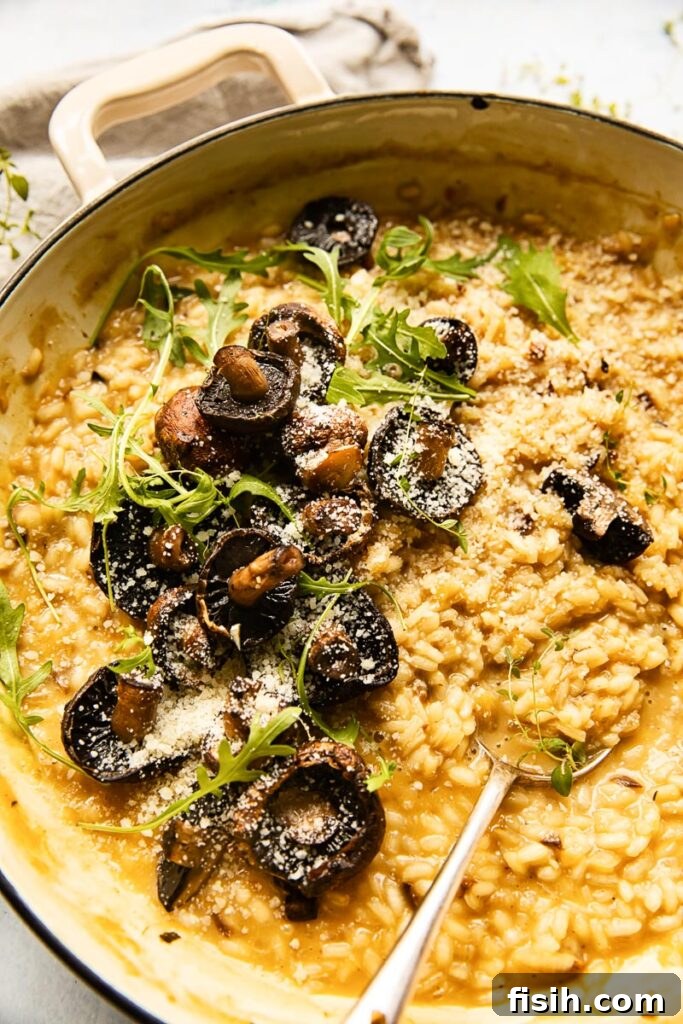
For many, risotto might seem like a daunting culinary endeavor, an elegant dish best left to Italian nonnas or professional chefs. I admit, I once held this misconception, viewing it as a tedious process not truly worth the effort. However, my perspective completely shifted after a memorable trip to Italy, where I had the privilege of tasting authentic risotto prepared by true masters. The depth of flavor, the perfect al dente bite, and the luxurious creaminess were revelations. It was then I realized that risotto isn’t about complexity, but about understanding a simple, yet crucial, technique.
Since then, risotto has become one of my go-to comfort foods. It’s the perfect choice when I desire a satisfying, wholesome meal that feels special without demanding excessive time or a multitude of pans. It’s a dish that invites you to slow down, engage with the cooking process, and truly appreciate the transformation of humble ingredients into something extraordinary. While there’s a particular technique to achieving the perfect creamy texture, it’s far from intimidating. With a little practice, you’ll find yourself confidently stirring your way to risotto perfection!
Mastering the Creaminess: The Secret to Perfect Risotto
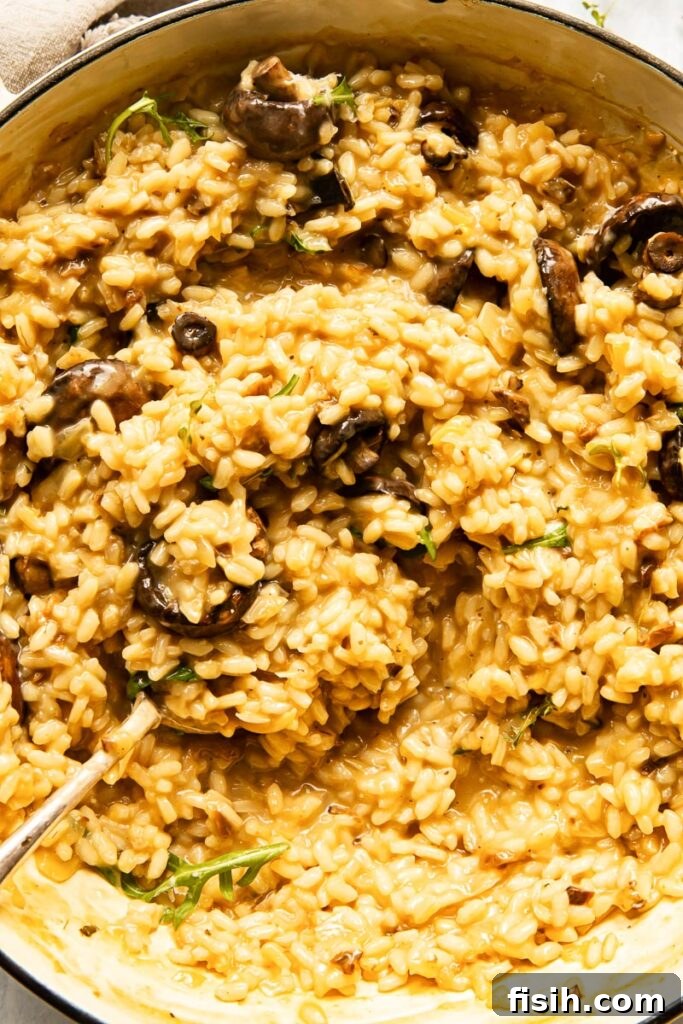
The hallmark of a truly exceptional risotto is its velvety, luscious creaminess, a texture that many mistakenly believe requires copious amounts of cream or cheese. The truth, however, lies not in dairy overload, but in the intelligent use of the right rice and a time-honored cooking method. This intrinsic creaminess is what sets authentic Italian risotto apart, making it a naturally rich and satisfying dish.
The journey to creamy risotto begins with choosing the correct type of rice. Varieties like Arborio and Carnaroli are specifically cultivated for risotto because of their high starch content and firm grains. Unlike long-grain rice, these medium-grain varieties have a high concentration of amylopectin, a type of starch that is gradually released during cooking. This released starch emulsifies with the cooking liquid, creating that signature creamy texture without the need for additional heavy ingredients.
The technique itself involves a mindful, slow addition of warm stock, combined with consistent, gentle stirring. This process is paramount. As you slowly ladle in the stock, the rice grains rub against each other, encouraging the amylopectin to leach out and thicken the liquid. This constant interaction allows the rice to absorb the liquid gradually, plumping up each grain while simultaneously releasing its natural starches. This slow, deliberate approach ensures that the risotto develops a beautiful, natural creaminess from within, rather than relying on external thickeners.
It can be tempting to pour all the stock in at once, hoping to speed up the cooking process. Resist this urge! Adding all the liquid simultaneously will result in rice that boils rather than slowly absorbs, leaving you with a soupy, bland concoction where the grains are either mushy or uncooked in the center. The magic of risotto is in the patient, step-by-step hydration that unlocks the rice’s full potential.
When serving, the ideal risotto should not be stiff or stodgy; it should flow. Italians refer to this desired consistency as “all’onda,” meaning “wavy.” If you spoon a portion onto your plate, it should gently spread outwards, forming a soft ripple, rather than holding a rigid mound. This indicates a perfectly cooked risotto—creamy, yet still offering a slight resistance, an al dente bite, at its core.
So, what’s the true secret to achieving this sublime creaminess? It’s simply a dash of patience and an appreciation for the process. By following these steps, you’ll unlock the authentic taste and texture of restaurant-quality risotto right in your home kitchen, proving that delicious results often stem from simple, well-executed techniques.
Roasted Portobello Mushrooms: A Flavor Powerhouse
While classic risotto is undeniably delicious, this recipe takes it to another level with the inclusion of roasted portobello mushrooms. These magnificent fungi are not merely an addition; they are a central component that imbues the creamy risotto with a profound, savory depth often referred to as “umami.” Umami, the fifth basic taste, is characterized by its rich, savory, and meaty qualities, and portobellos are brimming with it.
Roasting the portobello mushrooms prior to adding them to the risotto is a crucial step that unlocks and concentrates their flavor in a way that mere sautéing cannot achieve. The high heat of the oven caramelizes their natural sugars and deepens their earthy notes, transforming them into intensely flavorful morsels. This process amplifies their inherent umami, creating a complex and satisfying taste that beautifully complements the subtle richness of the risotto. It’s a surprising burst of concentrated mushroom essence that will make your taste buds sing.
Admittedly, roasting the mushrooms first adds an extra step to the cooking process, extending the overall preparation time slightly. However, I assure you, this small investment of time is profoundly worth it. The difference in flavor is remarkable, delivering a robust, meaty quality and an unparalleled depth that elevates this humble mushroom risotto from good to truly unforgettable. Once you experience the concentrated deliciousness of roasted portobellos, you’ll understand why this extra effort is absolutely indispensable.
Essential Recipe Tips for Perfect Risotto
To ensure your roasted mushroom risotto turns out perfect every time, keep these crucial tips in mind:
- Choose the Right Rice: The foundation of creamy risotto is the rice itself. Always opt for a high-starch, medium-grain variety like Arborio or Carnaroli. These types are designed to release their starch and absorb liquid evenly, contributing to the signature creamy texture. Sometimes, you might find packets simply labeled ‘risotto rice,’ which will also work wonderfully.
- The Ideal Pan: For optimal heat distribution and stirring ease, use a large, heavy-bottomed saucepan or a wide pot with high sides. This allows the rice to cook evenly and provides ample space for stirring without splashing, which is crucial for uniform starch release.
- White Wine for Acidity: A dry white wine, such as Sauvignon Blanc or Pinot Grigio, is a traditional addition to risotto. Its acidity cuts through the richness of the dish, providing a vital balance of flavors. Avoid any sweet wines, as they will throw off the taste profile.
- Wine-Free Option: If you prefer to cook without wine, don’t worry! You can achieve a similar acidic balance by adding 1-2 teaspoons of white wine vinegar or a squeeze of fresh lemon juice after the rice has been lightly toasted. This subtle tang is important for rounding out the dish’s flavor.
- Keep Your Stock Warm: Always ensure your vegetable and mushroom stocks are simmering gently on a separate burner before adding them to the rice. Adding cold stock will significantly drop the temperature of your risotto, interrupting the cooking process and potentially leading to unevenly cooked rice.
- Patience with Stirring: Resist the urge to constantly stir vigorously. Gentle, consistent stirring every minute or so is key. This allows the rice to absorb the stock evenly and release its starch, creating that desired creaminess. Over-stirring can break the rice grains, while under-stirring can lead to clumpy, unevenly cooked risotto.
- For Visual Learners: If you’re new to making risotto, watching the process can be incredibly helpful. You can find detailed demonstrations like this video, or read through comprehensive guides such as my top risotto-making tips in this article.
Elevate Your Meal: Delicious Serving Suggestions
A rich and creamy dish like this roasted mushroom risotto truly shines when paired with contrasting flavors and textures. The key is to balance its comforting heartiness with something fresh, light, or crunchy. Here are a few perfect accompaniments:
- Fresh Caprese Salad: I’m a huge advocate for pairing creamy dishes with something vibrant and crisp. A Caprese Salad is an absolute winner here. The juicy, ripe tomatoes, fresh mozzarella, fragrant basil, and a drizzle of balsamic glaze offer a delightful counterpoint to the risotto’s richness. It’s incredibly simple to prepare, yet adds an elegant touch and refreshing burst of flavor.
- Warm Garlic Bread: For a more indulgent and utterly satisfying combination, a warm, homemade Garlic Bread is often insisted upon by my own kids! Loaded with plenty of fresh herbs and finished with melted mozzarella, it’s the perfect vehicle for soaking up any leftover creamy sauce. While I often whip mine up in an air fryer for speed and crispness, a traditional oven works just as beautifully. The garlicky aroma and crunchy texture add another layer of enjoyment to the meal.
- Simple Green Salad: A mixed green salad with a light vinaigrette is always a classic choice. The acidity of the dressing and the crispness of the lettuce provide a palate-cleansing effect that perfectly complements the earthy risotto.
- Steamed Asparagus or Green Beans: Lightly steamed green vegetables like asparagus or green beans, perhaps tossed with a little lemon zest and olive oil, can add a fresh, vibrant crunch and a hint of sweetness that pairs wonderfully with the savory mushrooms.
Storage and Reheating: Enjoying Your Risotto Again
Roasted mushroom risotto is a deliciously filling dish, meaning that a moderate serving can be incredibly satisfying. This often leads to delightful leftovers, which, fortunately, store and reheat quite well. Proper storage is key to maintaining both flavor and safety.
Once your risotto has cooled to room temperature (within two hours of cooking), transfer it to an airtight container. This prevents it from drying out and absorbing unwanted odors from the fridge. Stored correctly, your leftover mushroom risotto will keep beautifully in the refrigerator for 3-4 days. Always ensure you consume it within this timeframe to maintain optimal freshness and food safety.
When it comes to reheating, you have a couple of options. While the microwave is certainly convenient, I personally find that reheating on the stovetop yields the best results, helping to restore some of that original creamy texture. To reheat on the stovetop, place the risotto in a saucepan over medium-low heat. You’ll likely notice it has thickened considerably in the fridge. To loosen it up and bring back its characteristic “all’onda” consistency, gradually add a splash of vegetable stock, water, or even a little milk while gently stirring. Continue stirring and adding liquid until it reaches your desired creamy, flowing consistency. Heat it through until piping hot, but avoid boiling, which can overcook the rice. A fresh sprinkle of Parmesan cheese and black pepper after reheating can also work wonders to revitalize the dish.
More Vegetarian Risotto Creations
If you’ve fallen in love with the comforting versatility of vegetarian risotto, you’re in for a treat! Here are some other delightful recipes to inspire your culinary adventures:
- Truffle Risotto with Wild Mushrooms: An elegant and aromatic indulgence.
- Spring Asparagus Risotto: Fresh, vibrant, and bursting with seasonal flavor.
- Saffron Risotto (Risotto alla Milanese): A classic, golden-hued, and subtly fragrant masterpiece.
- Butternut Squash Risotto with Sage and Goat Cheese: Sweet, earthy, and tangy—a perfect autumnal dish.
- Instant Pot Risotto with Broccoli: For those busy days when you need a quick yet flavorful meal.
Roasted Mushroom Risotto
By Julia Frey of Vikalinka
Prep: 45 mins | Cook: 25 mins | Servings: 6
Delicious roasted portobello mushrooms add stunning savory flavor, making this the ultimate comfort food.
Ingredients
- 300g/ ⅔ lb baby portobello mushrooms
- 5-6 sprigs fresh thyme
- 3 cloves garlic, thinly sliced
- 2 tbsp extra virgin olive oil
- 2 stalks celery, finely diced
- 1 white onion, finely diced
- 10g/ 3.5 oz dried mushrooms
- 50g/ 2oz Parmesan cheese, freshly grated (or vegetarian hard cheese)
- 300g/ 1½ cup Arborio rice
- 125ml/ ½ cup dry white wine
- 500ml/ 2 cups vegetable stock, warmed
- 500ml/ 2 cups water (for rehydrating mushrooms)
- Salt to taste
Instructions
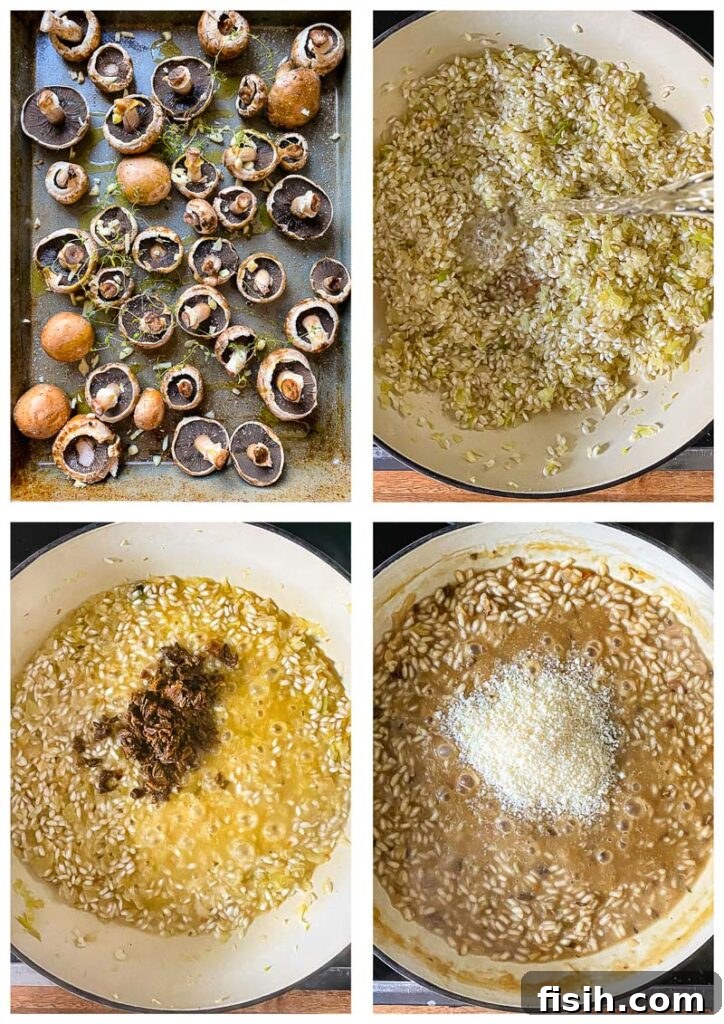
- Preheat your oven to 200°C (400°F). Scatter the whole baby portobello mushrooms on a large baking sheet. Distribute the sliced garlic cloves and thyme leaves evenly over the mushrooms, then drizzle with olive oil. Roast for 15 minutes, until tender and slightly caramelized.
- While the mushrooms roast, prepare your dried mushrooms. Place the dried mushrooms in a bowl and pour 500ml (2 cups) of hot water over them. Allow them to steep for at least 30 minutes to rehydrate fully. Once softened, carefully drain the mushrooms, reserving the flavorful liquid by straining it through a fine-mesh sieve or cheesecloth into a separate container. Set the rehydrated mushrooms aside; you can chop them if they are large.
- Finely chop the onions and celery into a small dice, preparing your soffritto base.
- Heat a large, heavy-bottomed pan or wide pot over medium heat. Add 2 tablespoons of olive oil. Once hot, add the diced celery and onions and sauté gently for about 10 minutes, until softened and translucent, but not browned.
- Add the Arborio rice to the pan with the vegetables. Sauté for about 1 minute, stirring continuously, until all the rice grains are evenly coated with olive oil and appear slightly translucent around the edges. This step is called “toasting” the rice and helps it hold its shape.
- Pour in the dry white wine and stir until it has completely evaporated. Make sure to scrape the bottom of the pan to release any flavorful browned bits into the broth. Allow it to simmer gently over low heat for 2-3 minutes.
- Begin adding the stock. Start by adding 125ml (½ cup) of the warm vegetable stock and 125ml (½ cup) of the strained mushroom stock along with the chopped rehydrated mushrooms to the rice. Give it a good stir. The liquid should just cover the rice. Continue to cook, stirring regularly but not constantly, allowing the rice to absorb almost all the liquid before adding another ladleful (about 125ml/½ cup) of stock. Repeat this process, alternating between vegetable and mushroom stock, until all the stock is used, and the rice is cooked al dente—tender yet still slightly chewy in the center. This should take approximately 18-20 minutes after the wine has evaporated.
- Once the rice is cooked to a beautiful, creamy consistency and has achieved the desired “all’onda” flow, remove the pan from the heat. Cut the roasted portobello mushrooms into smaller, bite-sized pieces and add them to the risotto. Stir to combine thoroughly. Add a good pinch of salt to taste, being careful not to over-salt as cheese will be added. Grate a generous amount of Parmesan cheese (or vegetarian hard cheese) over the top. Cover the pan with a lid and let it stand for 5 minutes; this allows the flavors to meld and the risotto to become even creamier.
- Serve immediately, garnished with more freshly grated cheese and a sprinkle of freshly ground black pepper. Enjoy your perfectly creamy and deeply flavorful roasted mushroom risotto!
Notes
Choose a dry white wine for this recipe, avoiding anything sweet. If you prefer not to add wine, you can substitute it with 1-2 teaspoons of white wine vinegar or a squeeze of lemon juice to replace the acidity, which is crucial for balancing the richness of the risotto.
Nutrition
- Calories:
- 350kcal
- Carbohydrates:
- 59g
- Protein:
- 10g
- Fat:
- 8g
- Saturated Fat:
- 2g
- Polyunsaturated Fat:
- 1g
- Monounsaturated Fat:
- 4g
- Trans Fat:
- 0.002g
- Cholesterol:
- 6mg
- Sodium:
- 876mg
- Potassium:
- 571mg
- Fiber:
- 5g
- Sugar:
- 4g
- Vitamin A:
- 341IU
- Vitamin C:
- 4mg
- Calcium:
- 137mg
- Iron:
- 3mg
Nutrition information is automatically calculated, so should only be used as an approximation.