
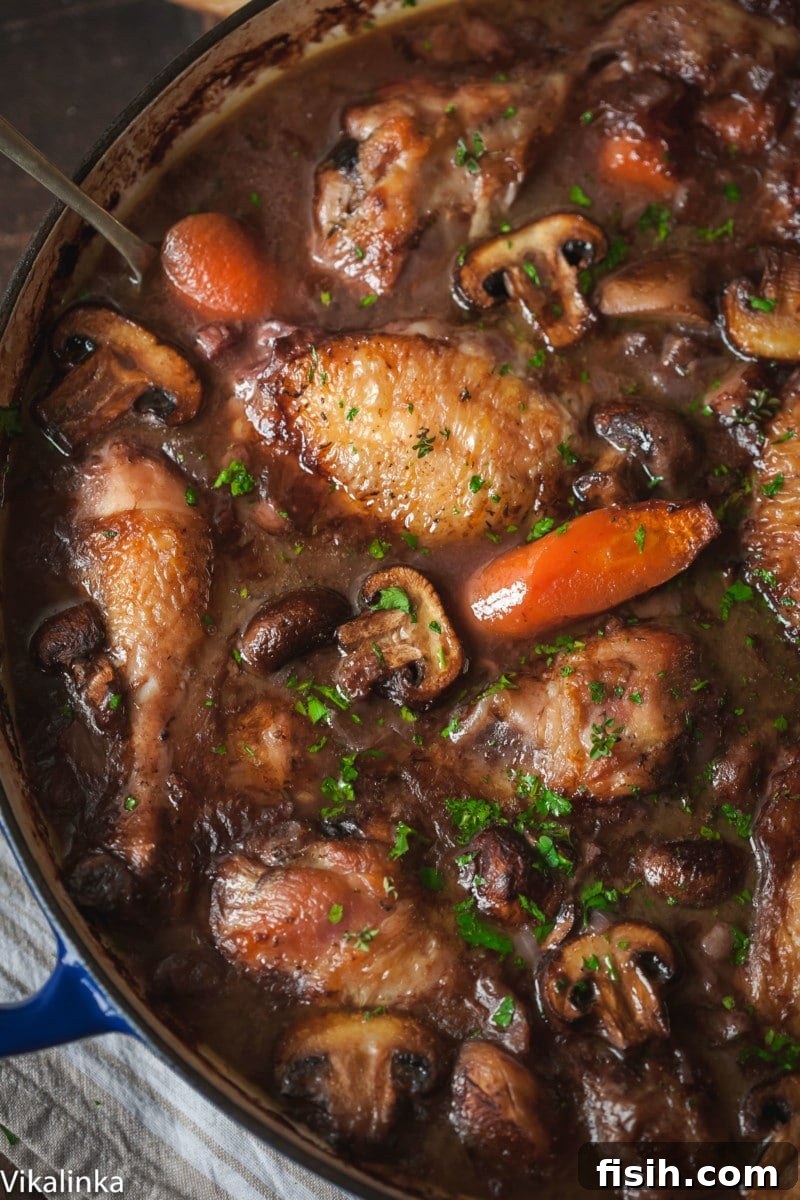
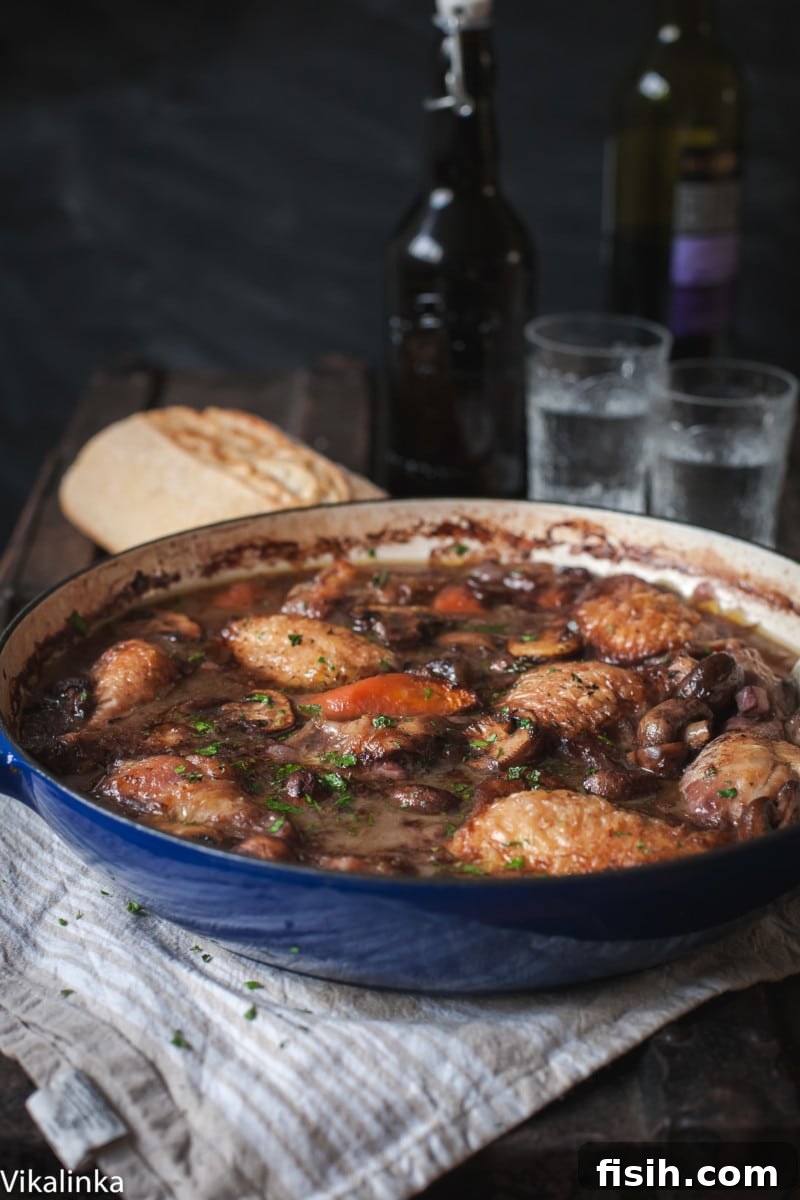
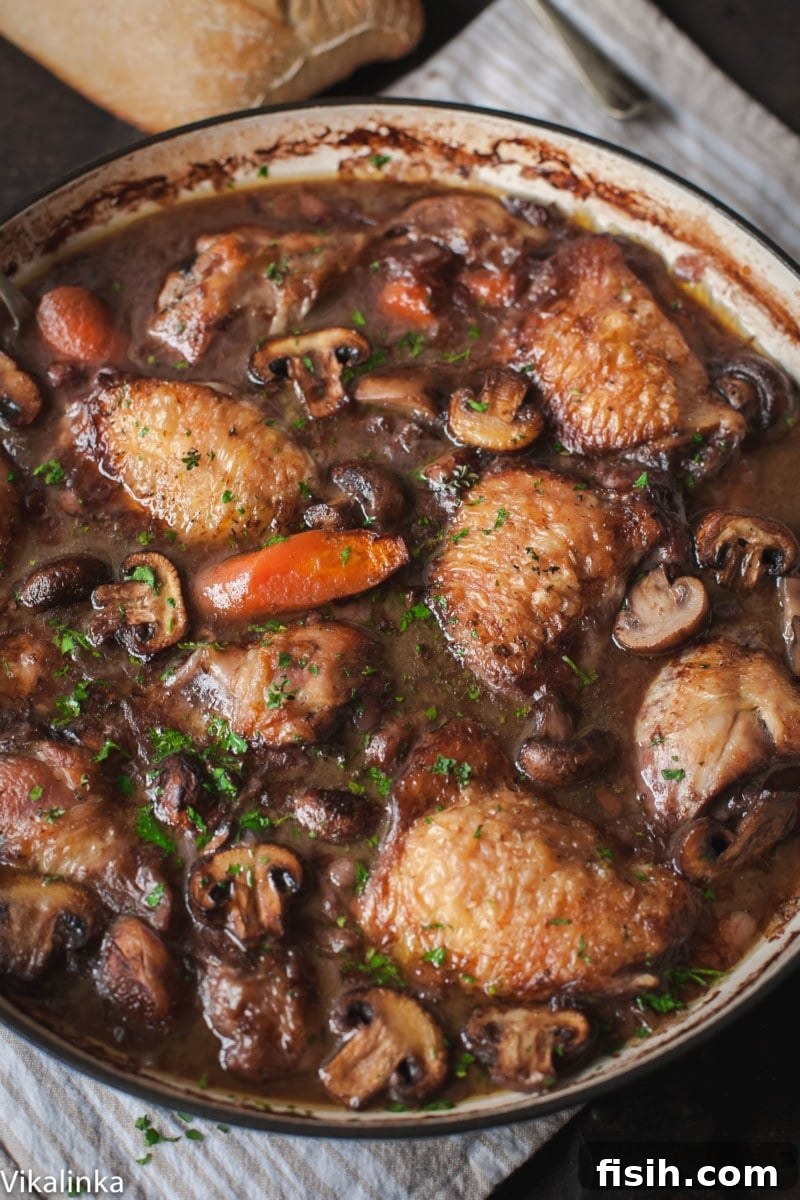
Coq au Vin is more than just a dish; it’s a culinary embrace, a timeless French classic that transforms humble chicken into an exquisite feast. Imagine succulent chicken pieces, seared to a beautiful golden brown, then slowly simmered in rich red wine, infused with the earthy sweetness of carrots, onions, and mushrooms, and aromatic herbs. The result is a deeply flavorful, tender, and absolutely divine stew that embodies rustic elegance. This recipe guides you through creating that magic in your own kitchen.
For a truly complete dining experience, pair this exquisite Coq au Vin with creamy Herb and Garlic Mashed Potatoes. The smooth, garlicky potatoes are perfect for soaking up every drop of the rich, savory sauce. To begin your French-inspired meal, consider a fresh and vibrant starter like this Spinach Apple Salad with Walnuts and Blue Cheese, offering a delightful contrast of textures and flavors.
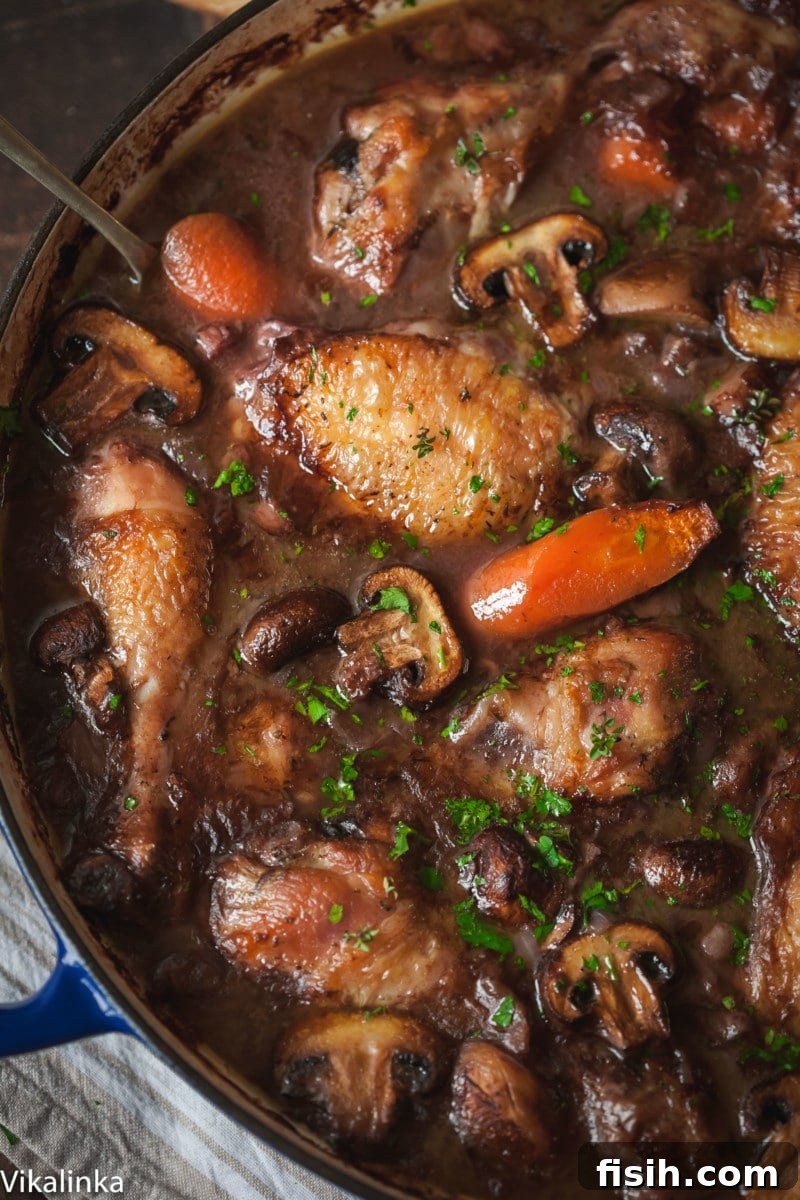
There’s a special kind of comfort that only a simmering pot of Coq au Vin can bring, especially on a chilly day. The gentle gurgle from the oven, the intoxicating aroma filling your home – it’s an invitation to slow down, to savor, and to gather around a table for a truly memorable meal. Cold days truly are made for cozy and comforting stews, and this French masterpiece is arguably the king of them all.
This traditional recipe for chicken slowly braised in red wine is nothing short of outstanding. Despite its sophisticated reputation, you don’t need years of culinary training to master this French classic. It’s surprisingly simple, requiring minimal hands-on effort for a dish that delivers maximum flavor. This is the very definition of rustic, wholesome food that warms you from the inside out.
If chicken isn’t your preferred choice of meat, or if you’re looking to explore similar flavor profiles, be sure to check out my Beef Bourguignon recipe. It offers comparable robust flavors and is equally iconic in French cuisine, using beef instead of chicken. For those seeking to accelerate the cooking process without compromising on taste, my Instant Pot Coq au Vin offers a fantastic alternative, halving the traditional cooking time while still yielding tender, flavorful results.
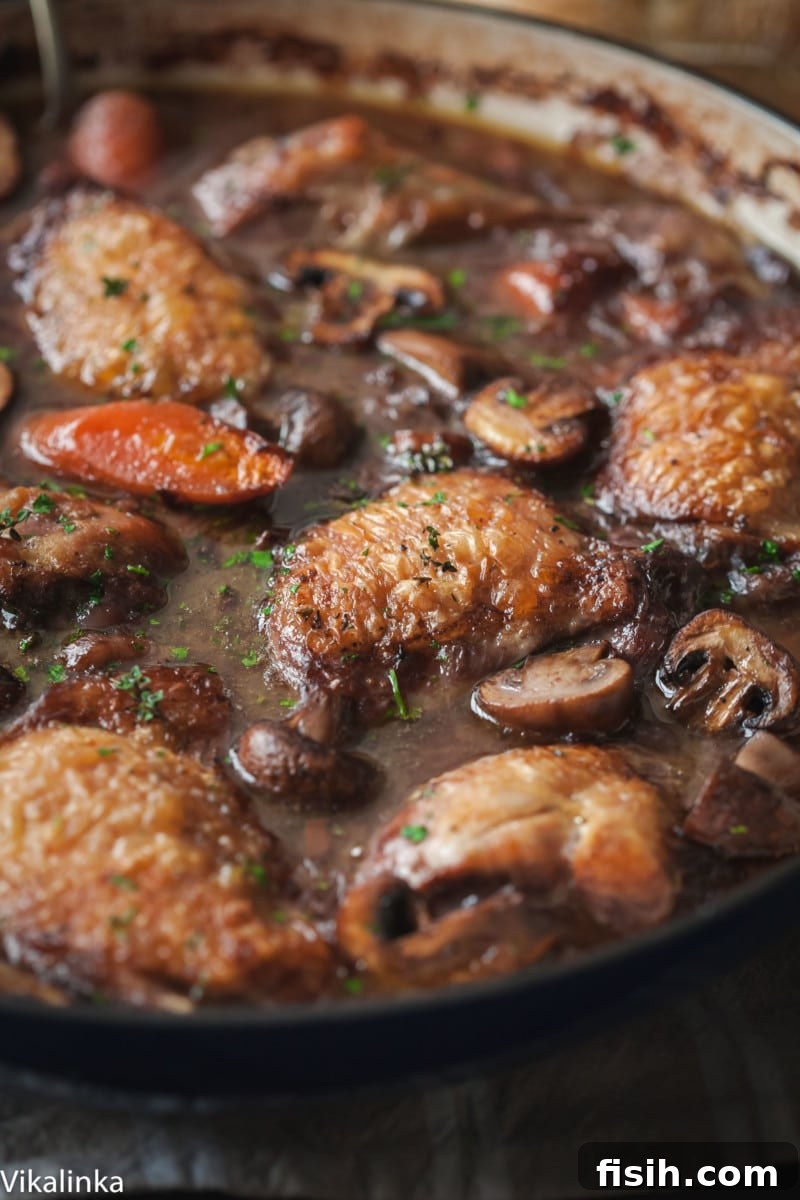
Is Coq au Vin Difficult to Cook? Dispelling the Myth
Many classic French dishes carry an air of intimidation, leading home cooks to believe they are overly complex. Coq au Vin, which literally translates to “Chicken in Wine,” might sound fancy, but it is, in fact, remarkably approachable. The beauty of this dish lies in its slow-cooking method, which does most of the work for you. Once the initial browning and sautéing are complete, the oven takes over, allowing the flavors to meld and deepen without constant supervision.
This makes Coq au Vin an ideal choice for entertaining. It’s elegant enough for a special dinner party, yet it frees you from being chained to the stove. You can prepare it a few hours in advance, allowing it to cool slightly, and then gently reheat it just before serving. This forward-thinking approach means you can greet your guests feeling relaxed and refreshed, rather than flustered from last-minute cooking. French cuisine consistently impresses with its ability to be sophisticated, deeply satisfying, and wonderfully comforting all at once, and Coq au Vin perfectly embodies this triple threat.
Over the years, I’ve prepared Coq au Vin countless times, and it consistently receives rave reviews. It’s a dish that never gets old, always delivering that perfect balance of rich flavors and tender texture. Its enduring popularity across generations is a testament to its inherent deliciousness and relatively straightforward preparation.
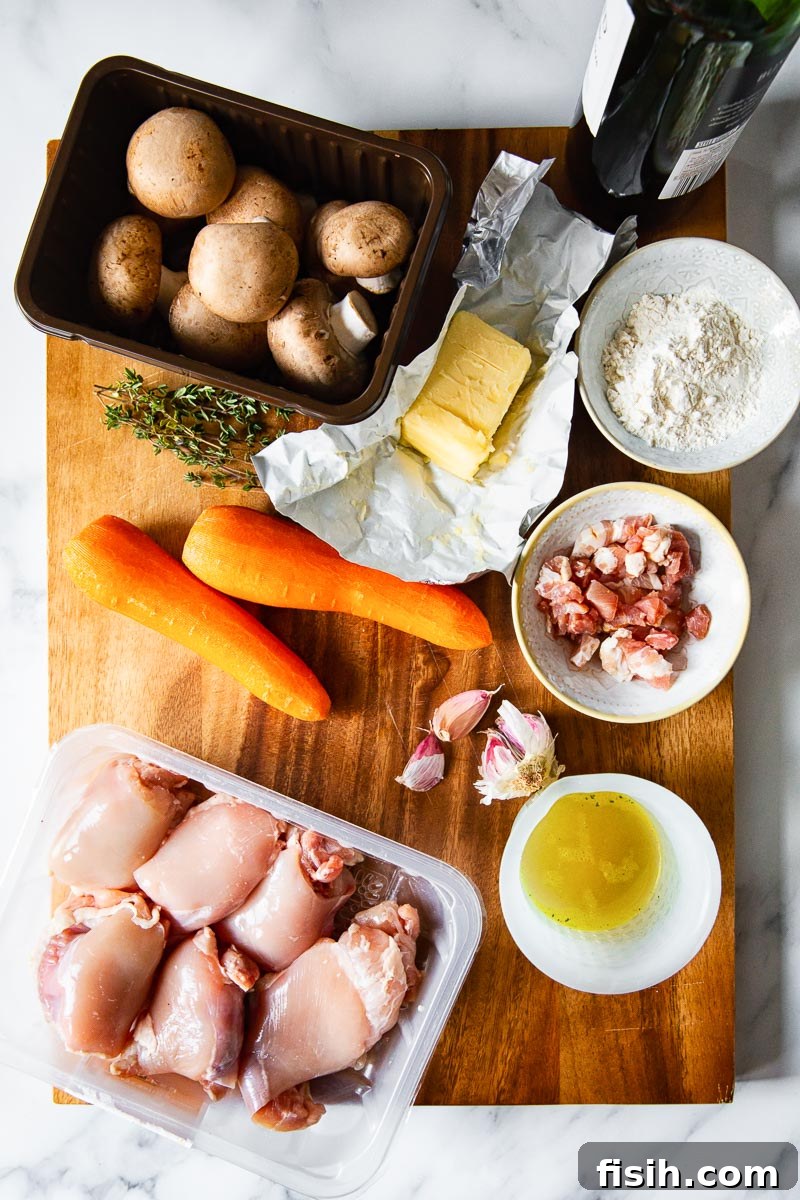
Essential Ingredients for Authentic Coq au Vin
The profound and rich flavors that define this wonderful dish are a direct result of carefully selected quality ingredients, brought together with a touch of culinary artistry. Each component plays a vital role in building the complex layers of taste.
Here’s a detailed look at what you’ll need:
- Chicken Thighs and Legs: These cuts are perfect for slow-braising due to their higher fat content and connective tissue, which break down over time, resulting in incredibly tender and flavorful meat. While I prefer using pieces with skin and bones for maximum flavor, skinless and boneless thighs will also work if you’re looking for a leaner option.
- Aromatics and Vegetables: A classic mirepoix of robust mushrooms, sweet carrots, and pungent onions forms the foundational layer of flavor and texture, contributing to the rustic charm of the stew.
- Herbs and Spices: Fresh thyme brings a wonderful earthy, subtly floral note that complements the richness of the chicken and wine. Garlic adds an indispensable aromatic depth, enhancing the overall savory profile.
- Braising Liquids: Red wine is, of course, the star here, providing acidity, fruitiness, and depth. High-quality chicken stock supports the wine, adding body and savory notes to the sauce.
- Thickening and Finishing: A classic butter and flour roux (or cornstarch for a gluten-free alternative) is used to thicken the sauce to a luxurious, coating consistency. The butter also enriches the sauce, adding a velvety mouthfeel and additional flavor.
The Art of Wine Selection for Coq au Vin
As the name suggests, wine is not merely an accompaniment but a fundamental ingredient in Coq au Vin, alongside the chicken itself. A golden rule that bears repeating is this: always use a wine that you would genuinely enjoy drinking. The flavors in the wine concentrate during the slow cooking process, meaning any undesirable notes will become more pronounced. Skimping on wine quality will inevitably compromise the final taste of your dish.
I recall an early attempt at this dish with a bottle of less-than-stellar homemade wine. It was… fine. Edible, but far from the memorable, deeply satisfying experience Coq au Vin is meant to be. It took me a few years to revisit the recipe, this time armed with a decent bottle of wine. That was the moment I truly understood the magic of Coq au Vin – the profound depth of flavor and the timeless quality that has kept this dish cherished on tables for generations.
Traditionally, Burgundy wines, specifically Pinot Noir, are favored for this recipe, given the dish’s historical roots in the Burgundy region of France. However, don’t let the lack of a specific bottle deter you. Excellent Coq au Vin can be made with various medium-bodied dry red wines. My personal favorites include Cabernet Sauvignon, Shiraz (or Syrah), and Merlot. These varietals offer a good balance of fruit and tannins without overpowering the delicate chicken. Avoid anything too sweet or overly tannic. The key is a wine that is robust enough to stand up to the long cooking process but won’t dominate the other flavors.
For an interesting regional variation, in the Alsace region of France, this dish is prepared with Riesling (a dry version) and is known as Coq au Vin Blanc, offering a lighter, often more aromatic take on the classic.
Mastering Coq Au Vin: Essential Recipe Tips
- Low and Slow Oven Temperature: This recipe calls for cooking in the oven at a lower temperature than usual, specifically 120°C (250°F). This gentle heat is crucial for a longer, slower braise, allowing the chicken to become incredibly tender without drying out, and the flavors to deepen beautifully.
- Choosing Your Cured Pork: While authentic Coq au Vin often features bacon lardons, which are less smoky and fatty than regular bacon, feel free to use standard bacon or pancetta. The rendered fat from the pork is essential for browning the chicken and provides a foundational layer of savory flavor.
- Ideal Chicken Cuts: Chicken thighs and legs are truly ideal for this slow-braised dish. Their higher fat content and connective tissues break down over the extended cooking time, yielding incredibly succulent meat. While skinless, boneless chicken thighs can be used, avoid chicken breasts at all costs. They lack the richness and tend to become stringy and dry, rather than tender, when cooked for a longer duration.
- The Importance of Browning: Don’t skip the step of browning the chicken pieces before braising. This critical step doesn’t aim to cook the chicken through, but rather to develop a rich, caramelized crust. This Maillard reaction adds incredible depth and complexity to the overall taste of the stew.
- Deglazing for Depth: Deglazing the pan with brandy (or whiskey, bourbon, or even a splash of the same red wine you’re using) is a simple technique that adds a significant boost of flavor. It lifts all the caramelized bits from the bottom of the pot, incorporating them into your sauce for an even richer profile.
- Sauce Color Variation: The final color of your Coq au Vin sauce will naturally vary, ranging from a deep brown to a vibrant dark purple, depending on the specific red wine you choose. Rest assured, this variation in color will not negatively impact the taste of your dish, as long as you’ve used a decent quality wine.
- Achieving the Perfect Sauce Consistency: The long cooking time in the oven is designed to naturally reduce and thicken your stew, concentrating its flavors. However, for those who prefer a more luxuriously thick sauce that clings to the chicken and vegetables, stirring in a mix of melted butter and flour (a beurre manié) at the very end will achieve that desired consistency. For a gluten-free option, a cornstarch slurry works just as effectively.
- Planning Ahead for Flavor: Coq au Vin, like many stews, often tastes even better the day after it’s made. The flavors have more time to meld and develop. Consider preparing it a day in advance for optimal taste.
Perfect Pairings: What to Serve with Coq Au Vin
With its rich, flavorful sauce, Coq au Vin practically begs for something to soak up every delicious drop. For this reason, I wholeheartedly recommend serving it with creamy mashed potatoes or elegant potatoes au gratin. The velvety texture of the potatoes provides a comforting contrast to the tender chicken and robust sauce. And, of course, a good crusty baguette or sourdough bread is absolutely essential for mopping up every last bit of the exquisite gravy. A simple side of blanched green beans or a fresh green salad with a light vinaigrette can also offer a lovely, crisp counterpoint to the richness of the stew.
To truly elevate the meal, compliment your Coq au Vin with a glass of the same nice French red wine you used in the cooking process. This creates a harmonious pairing that enhances the flavors of both the food and the wine. Bon Appetit!
Storage and Leftovers: Enjoying Coq Au Vin Again and Again
Coq au Vin is one of those wonderful dishes that often tastes even better the next day, as the flavors continue to deepen and meld. Properly stored, you can enjoy this culinary delight for days to come.
You can store any leftover Coq au Vin in a refrigerator for up to 4 days. Always use an airtight container to maintain its freshness and prevent it from absorbing other odors in the fridge.
When it comes to reheating, the best method is on the stovetop. Place the leftovers in a pan over low heat, adding a splash of water or chicken stock to keep the sauce from becoming too thick or drying out. Cover the pan with a lid or foil to ensure the Coq au Vin reheats gently and evenly, keeping the chicken succulent. Allow at least 15 minutes, stirring occasionally, and always check to make sure the meat is piping hot in the middle before serving.
For longer storage, Coq au Vin freezes exceptionally well. You can freeze any leftovers for up to three months in an airtight, freezer-safe container. When you’re ready to enjoy it, simply let it thaw completely in the refrigerator overnight before reheating using the stovetop method described above.
More Classic French Chicken Recipes to Explore
If you’ve fallen in love with the rustic charm of Coq au Vin, there’s a whole world of French chicken dishes waiting to be discovered. Each offers a unique taste of France’s rich culinary heritage:
- Chicken Provencal
- Chicken Casserole a la Normande
- Chicken in Wine and Mustard Sauce
- Chicken Chasseur
Coq Au Vin, the Ultimate One-Pot Dinner
Equipment
-
Cast iron Dutch oven
Ingredients
- 1 tbsp olive oil
- 120g / 4 oz pancetta or bacon lardons, cubed
- 8-10 pieces chicken thighs and legs
- 1 onion
- 2 carrots
- 1-2 cloves garlic, chopped
- 80ml/1/4 cup brandy or whisky
- 375ml / 1½ cup red wine, your choice
- 250ml / 1 cup chicken stock
- 8-10 sprigs thyme
- 1 tbsp butter
- 1½ tbsp flour for thickening, or use corn starch for gluten-free version
- 250g / 1/2 lbs mushrooms
- salt and pepper to taste
Instructions
-
Preheat oven to 120°C (250°F). Heat a tablespoon of olive oil in a large Dutch oven (a cast iron pot is perfect if you have one). Fry your pancetta or bacon lardons for 8-10 minutes until browned and remove them to a plate.
-
Season your chicken pieces with salt and pepper and brown them in the same pot in batches to avoid overcrowding. Remove to the same plate as the bacon. You are not cooking your chicken all the way through, just browning on both sides for flavor.
-
Slice your onions and carrots into medium-sized chunks and add them to the pot with a pinch of salt and pepper. Cook over medium heat for 10 minutes until softened. Add the chopped garlic and cook for 1 minute longer, stirring constantly to prevent burning. Add your brandy and scrape up all the flavorful browned bits from the bottom of the pan to incorporate them into your sauce. Now, return the bacon and chicken, along with any collected juices, to the pot. Pour in your chosen red wine and chicken stock, then add the thyme sprigs and bring to a boil. Once boiling, cover with a lid and transfer to the preheated oven for 55 minutes.
-
When the chicken is tender and no longer pink inside, mix melted butter with flour (or corn starch for a gluten-free option) to create a smooth paste. Stir this mixture into the sauce in the pot. Thickly slice the mushrooms and add them to the pot. Taste and adjust the seasoning if needed. Return the pot to the oven, this time with the lid off, for an additional 10-15 minutes to allow the sauce to naturally thicken to your desired consistency.
Notes
- This chicken stew could be made with skinless, boneless chicken thighs but not chicken breasts. Chicken breasts tend to become stringy instead of tender when cooked for a longer period of time.
- This recipe has a longer cooking time because it is cooked in the oven at a lower temperature than usual.
- There is no need for the chicken to be cooked all the way through after browning. This step is just to add additional flavor to the stew.
- Deglazing with brandy also adds flavor. Whiskey, bourbon or red wine can also be used.
- The sauce can vary in color from brown to dark purple depending on the wine. As long as you use a decent quality wine, this won’t negatively affect the taste of the dish. Read above for recommendations on the wine to use.
- We are giving a long time for the stew to cook in the oven, which will allow it to reduce and thicken naturally. But if you still want a thicker sauce, stir in a mix of melted butter and flour at the end.
Nutrition
Nutrition information is automatically calculated, so should only be used as an approximation.