
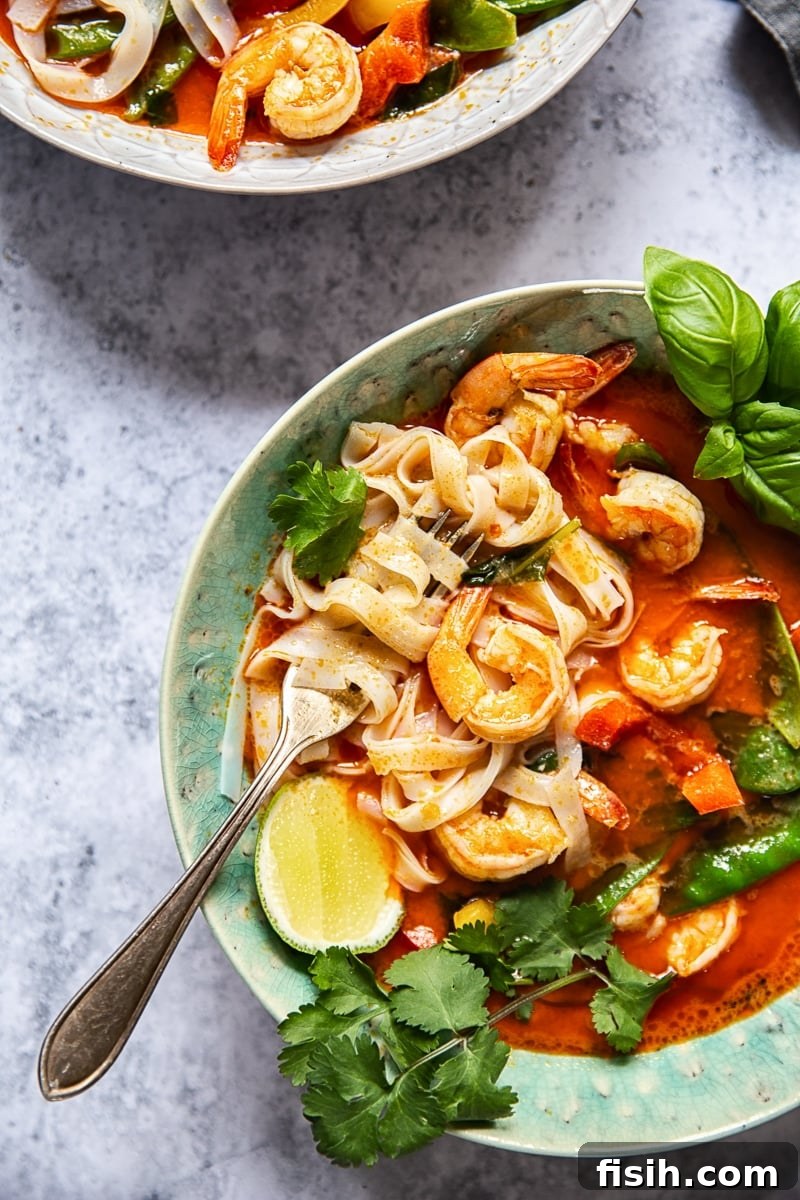
Experience the vibrant flavors of Thailand right in your kitchen with this incredibly easy Thai red curry featuring succulent shrimp and crisp snow peas. Forget about waiting for takeout or spending a fortune – this homemade version is not only quicker and more affordable but also packed with fresh, authentic taste.
If you’re already a connoisseur of these tantalizing Thai flavors, you might also enjoy our Instant Pot Chicken with Thai Glaze for another simple yet impressive meal.
Why You’ll Adore This Quick Thai Curry
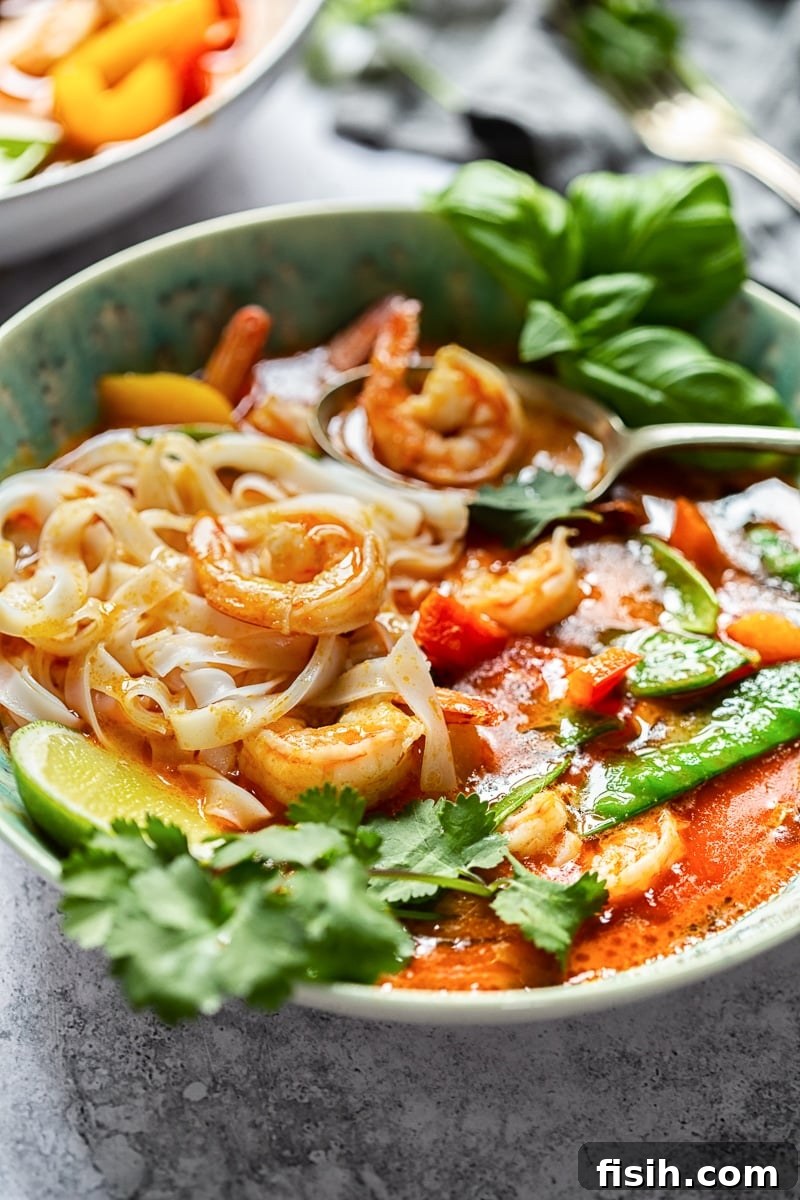
Imagine a dish that wraps you in warmth on a chilly evening without feeling heavy. This Thai red curry recipe delivers just that. It’s a symphony of bright colors, exotic aromas, and comforting flavors that come together in an astonishingly short amount of time. In just 15 minutes, with minimal chopping required, you can have a restaurant-quality meal on your table. Simply start your rice cooker, and by the time your fragrant jasmine rice is ready, your vibrant curry will be simmering, waiting to be devoured.
This recipe is designed for ease and efficiency, proving that delectable Thai cuisine doesn’t need to be complicated. It’s the perfect solution for busy weeknights when you crave something special but are short on time. The balance of creamy coconut milk, spicy curry paste, and tender ingredients creates a harmonious dish that satisfies every palate.
Mastering Thai Curries with Quality Paste
Many home cooks shy away from Thai curries, believing that creating authentic curry pastes from scratch is an arduous task, requiring a vast array of exotic ingredients and deep knowledge of Thai culinary traditions. While it’s true that making paste from scratch is a labor of love, it’s not essential for a fantastic homemade curry.
For quick and easy dinners, we embrace a smart shortcut: a high-quality, pre-made Thai red curry paste. This “cheat” allows us to unlock complex Thai flavors without the extensive prep. These pastes are typically a blend of aromatic ingredients like red chilies, lemongrass, galangal, kaffir lime zest, coriander root, and spices, all ground into a flavorful base. They are the secret weapon for delivering a punch of authentic taste.
Choosing Your Thai Curry Paste
When browsing the international aisle of your supermarket, you’ll primarily encounter two main types of Thai curry pastes: red and green. Thai red curries are generally characterized by a medium-hot spice level, a rich red hue derived from dried red chilies, and a balanced flavor profile that leans into savory and aromatic notes. Green curries, on the other hand, often utilize fresh green chilies and can be notably spicier, with a brighter, herbaceous quality.
The quality of your curry paste truly makes a difference. A superior paste will be intensely flavorful and aromatic, carrying all the essential spices your dish needs, eliminating the need to hunt down obscure ingredients. It’s worth investing in the best brand you can find, as this single ingredient forms the backbone of your curry. However, “most expensive” doesn’t always equate to “best.” Don’t be afraid to experiment with a few different brands to discover your personal favorite.
Once you grasp the basic technique of preparing a Thai curry, a world of culinary creativity opens up. The fundamental approach remains consistent, but by swapping out proteins, vegetables, or even the type of curry paste, you can create countless variations. For instance, our Thai Fish Curry uses many similar principles and ingredients but results in a distinctly different, equally delicious outcome. This versatility makes Thai curry a perfect choice for adventurous home cooks.
Essential Ingredients and Simple Customizations
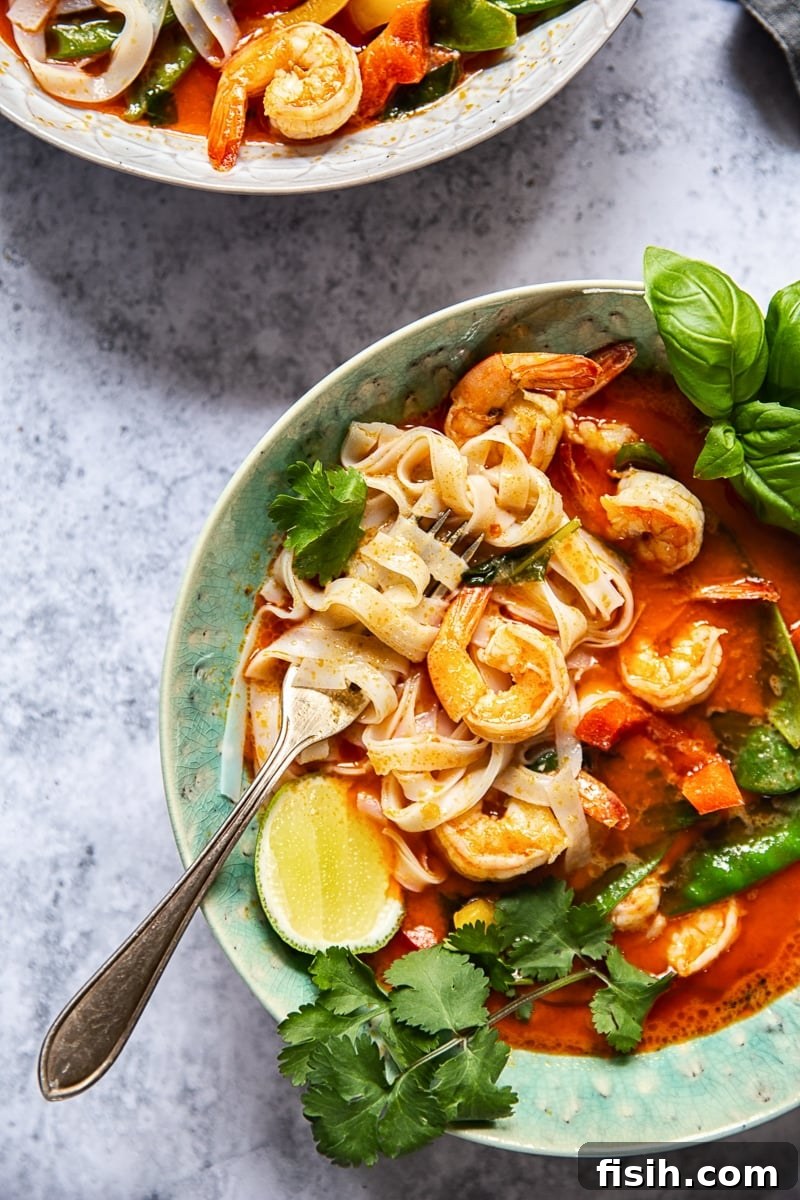
This particular Thai red curry recipe shines with the inclusion of plump shrimp, also known as prawns, which cook incredibly fast, making it ideal for a quick meal. However, the beauty of this dish lies in its adaptability. You can easily substitute the shrimp with other proteins, such as tender slices of chicken breast or even firm tofu for a delightful vegetarian option.
The core of this curry features vibrant bell peppers and the signature crispness of snow peas. Beyond these, the possibilities for adding your favorite vegetables are endless. Consider incorporating fresh green beans, earthy mushrooms, delicate asparagus spears, nutrient-rich bok choy, or tender zucchini slices. The key to a perfectly cooked curry is to select vegetables that have similar cooking times or to add them in stages, ensuring everything reaches optimal tenderness without becoming mushy or remaining raw. For instance, heartier vegetables like carrots or broccoli would benefit from being added earlier than quick-cooking snow peas.
The creamy base of this curry comes from coconut milk, which imparts a luxurious texture and subtle sweetness that beautifully balances the spice of the curry paste. We recommend full-fat unsweetened coconut milk for the richest flavor and silkiest consistency, but a light version can be used for a lower-calorie alternative. A splash of fish sauce is crucial for adding that distinctive umami depth that is characteristic of Thai cuisine, enhancing all the other flavors in the dish.
If you’re a fan of comforting soups, this curry can easily be transformed into a hearty Thai Noodle Soup. Simply increase the amount of broth (chicken, vegetable, or even more coconut milk diluted with water) to achieve your desired soup-like consistency, and serve it over your favorite noodles.
Pro Tips for the Perfect Thai Red Curry
- Mise en Place is Key: Thai cooking moves quickly, so ensure all your ingredients are prepped, chopped, and measured before you even turn on the stove. This ensures a smooth and stress-free cooking experience.
- Protein Perfection: For a truly fast dinner, shrimp and thinly sliced chicken breasts are excellent choices. If using chicken, ensure it’s cut into bite-sized pieces for even cooking.
- Curry Paste Quality: As mentioned, the quality of your red or green curry paste significantly impacts the final flavor. Opt for a reputable brand to guarantee authentic tastes. Green curry paste is generally spicier than red, so adjust according to your heat preference.
- Coconut Milk Choice: Full-fat unsweetened coconut milk offers the richest flavor and a wonderfully creamy texture. For a lighter meal, feel free to use light coconut milk.
- Vegetable Harmony: Select vegetables that cook at a similar pace, such as snow peas and bell peppers, to avoid unevenly cooked ingredients. If using a mix, add harder vegetables earlier.
- Fresh Garnishes: Elevate your curry with a flourish of fresh, aromatic herbs. Chopped cilantro and torn Thai basil leaves add a burst of freshness, while a squeeze of fresh lime juice brightens and balances the entire dish.
- Balancing Flavors: Thai cuisine thrives on a balance of sweet, sour, salty, and spicy. Taste your curry before serving and adjust as needed with a pinch of sugar, more fish sauce, additional lime juice, or a dash of chili flakes.
Serving Suggestions for a Complete Meal
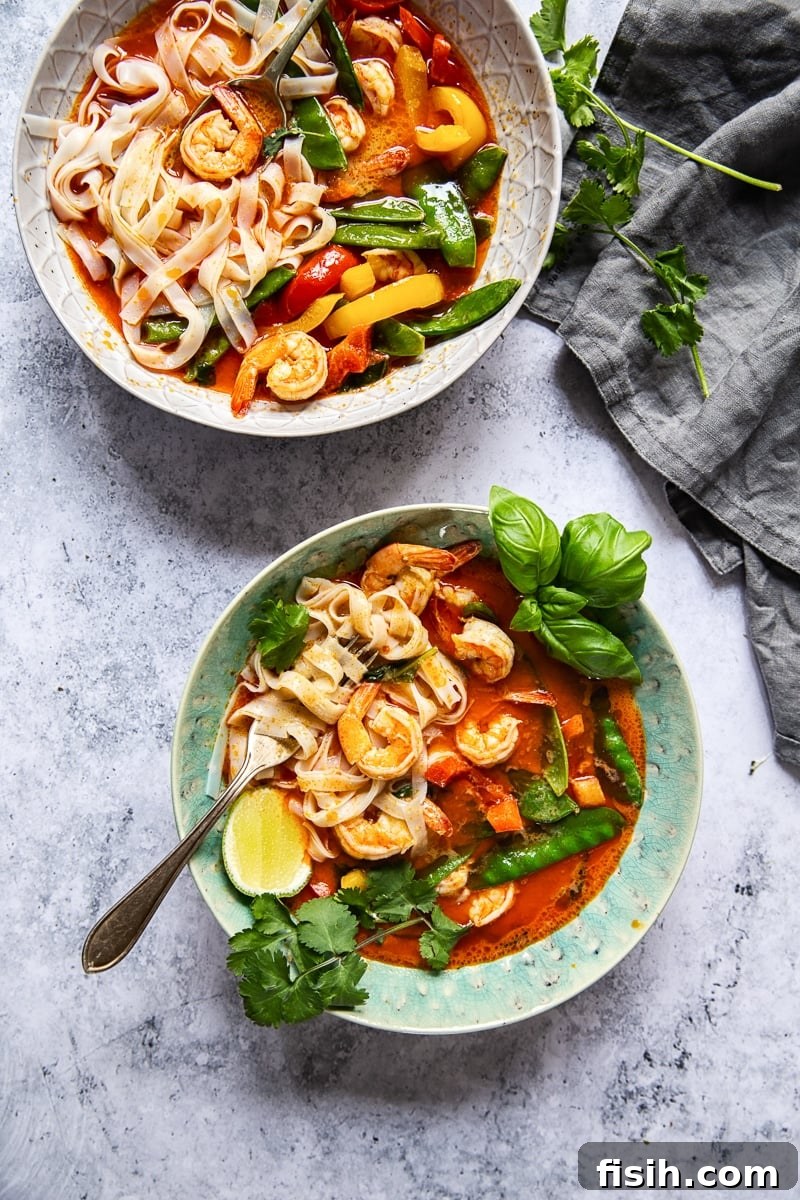
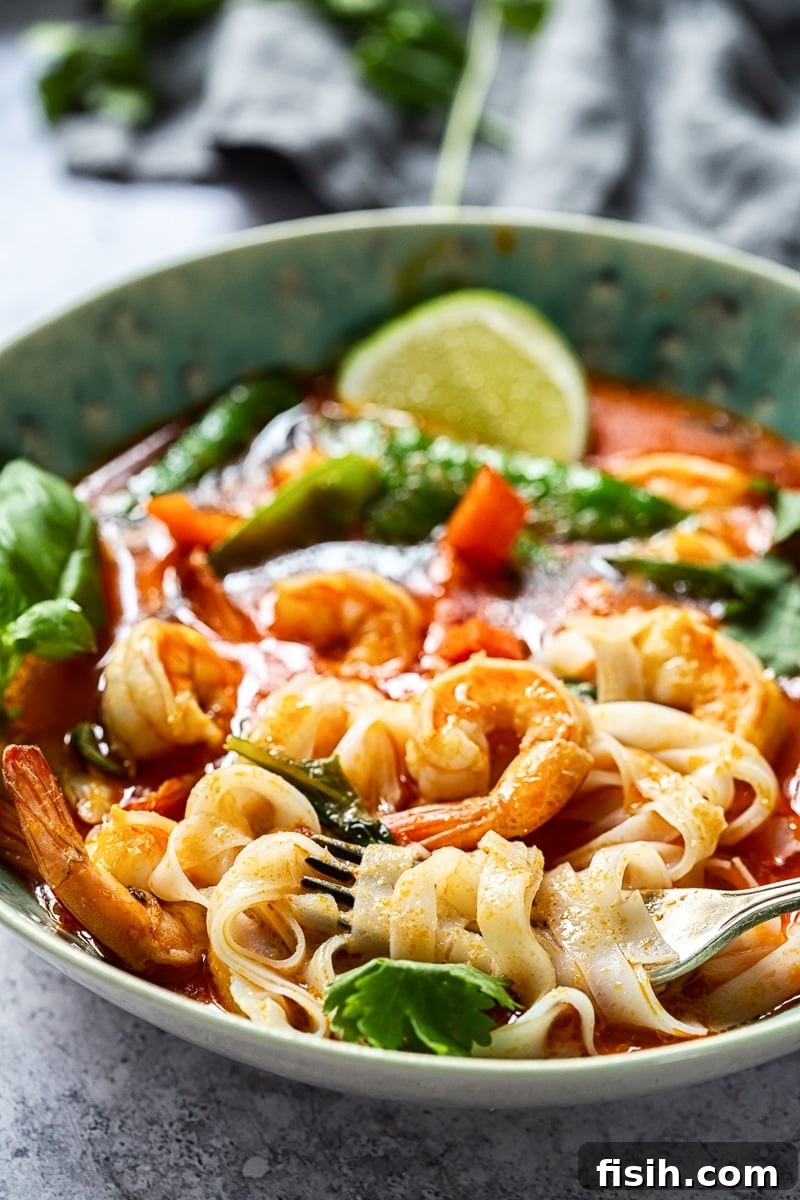
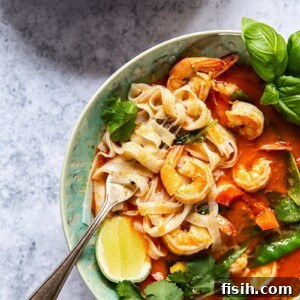
The classic accompaniment for any Thai curry is plain steamed rice. Fragrant jasmine rice is particularly traditional and provides the perfect canvas to absorb the rich, complex flavors of the curry. The fluffy grains soak up the sauce beautifully, ensuring every bite is infused with deliciousness. For those who prefer a little variety, noodles can also be a fantastic base. Think thin vermicelli rice noodles or broader flat rice noodles, both offering a different textural experience.
If you’re like me, you believe the rice deserves a bit more attention; after all, it often fills a significant portion of your bowl! My personal favorite pairing with Thai red curry is aromatic coconut rice. Its subtle sweetness and fragrant notes gently complement the curry without overpowering it. Making coconut rice is surprisingly easy, whether in a traditional rice cooker or an Instant Pot, adding another layer of flavor to your meal.
Beyond the base, don’t forget the finishing touches. A generous squeeze of fresh lime juice right before serving is non-negotiable; it provides a zesty, acidic counterpoint that brightens all the flavors. Fresh cilantro and Thai basil leaves add a wonderful aromatic pop and a touch of color. For those who enjoy an extra kick, a sprinkle of dried chili flakes or a few thinly sliced fresh chilies can be added. Roasted peanuts offer a delightful crunch, while a side of crispy spring rolls or a simple cucumber salad can round out the meal perfectly.
Storage and Leftovers
This Thai red curry is a fantastic dish for meal prepping, and it stores well, though careful consideration should be given to the shrimp. The curry can be frozen for up to three months, making it a convenient option for future quick meals. When freezing, ensure it’s stored in an airtight container to maintain freshness and prevent freezer burn. To thaw, simply transfer it to the refrigerator overnight.
If you plan to enjoy it within a few days, leftovers can be kept refrigerated for 4-5 days. Beyond this period, it’s generally not advisable to store it due to the delicate nature of shrimp, which can lose texture and flavor over extended refrigeration.
Reheating is straightforward. You can warm the curry gently in a microwave or, for best results, heat it in a saucepan on the stovetop over medium-high heat. If the curry has thickened slightly in the refrigerator, add a splash of water, chicken broth, or a touch more coconut milk to achieve your desired consistency while stirring gently until heated through. Always ensure the curry is piping hot before serving.
Quick & Easy Thai Red Curry with Shrimp and Snow Peas
By Julia Frey of Vikalinka
Prep: 5 mins Cook: 10 mins Total: 15 mins Servings: 4
Print Recipe
A fast and flavorful Thai red curry recipe featuring tender shrimp, vibrant red peppers, and crisp snow peas, perfect for a quick weeknight meal.
Ingredients
- 1 tbsp vegetable oil
- 1 tsp sesame oil (optional)
- 1/2 fresh red chili, sliced (or 1/4 tsp dried chili flakes)
- 1 large yellow or red bell pepper, sliced
- 2 tbsp Thai red curry paste (use 1/2 cup/190g if using a runnier paste)
- 1 lbs (approx. 450g) prawns/shrimp, peeled and deveined
- 400ml/14 oz full-fat coconut milk
- 1 tbsp fish sauce
- 65g/1 cup snow peas
- 10g/3 tbsp fresh cilantro, chopped
- 1/2 lime, juice only
- 2-3 fresh basil leaves (Thai basil preferred), torn
Instructions
- Prepare your ingredients: Slice the bell pepper and fresh chili. Separate cilantro leaves from their stalks; finely chop the stalks and set the leaves aside for garnish.
- Heat a large frying pan or wok over medium heat. Add both vegetable oil and sesame oil (if using). Once hot, add the chopped cilantro stalks, sliced bell pepper, and fresh chili. Stir-fry for 2-3 minutes until the vegetables start to soften slightly.
- Stir in the Thai red curry paste and cook for another minute, continuously stirring to release its aromas. Pour in the coconut milk and fish sauce, mixing well to combine all ingredients into a fragrant sauce.
- Add the shrimp and snow peas to the simmering curry. Cook for approximately 3 minutes, or until the shrimp turn opaque pink and are just cooked through. Shrimp cook very quickly, so avoid overcooking to keep them tender.
- Remove the pan from the heat. Stir in the reserved fresh cilantro and basil leaves.
- Taste the curry and adjust seasonings as needed. Squeeze in fresh lime juice to taste, enhancing the brightness of the dish. Serve immediately over steamed jasmine rice or noodles.
Nutrition (per serving, approximate)
Calories: 372kcal | Carbohydrates: 7g | Protein: 26g | Fat: 27g | Saturated Fat: 22g | Cholesterol: 286mg | Sodium: 1251mg | Potassium: 451mg | Fiber: 1g | Sugar: 3g | Vitamin A: 2523IU | Vitamin C: 63mg | Calcium: 207mg | Iron: 7mg
Nutrition information is automatically calculated and should be used as an approximation.
Tried this recipe? Let us know how it was!
More Delicious Curry Recipes to Explore
- Indian Butter Chicken
- Chinese Chicken Curry
- Chickpea and Butternut Squash Curry (Vegetarian)
- Easy Cauliflower and Potato Curry (Vegetarian)