
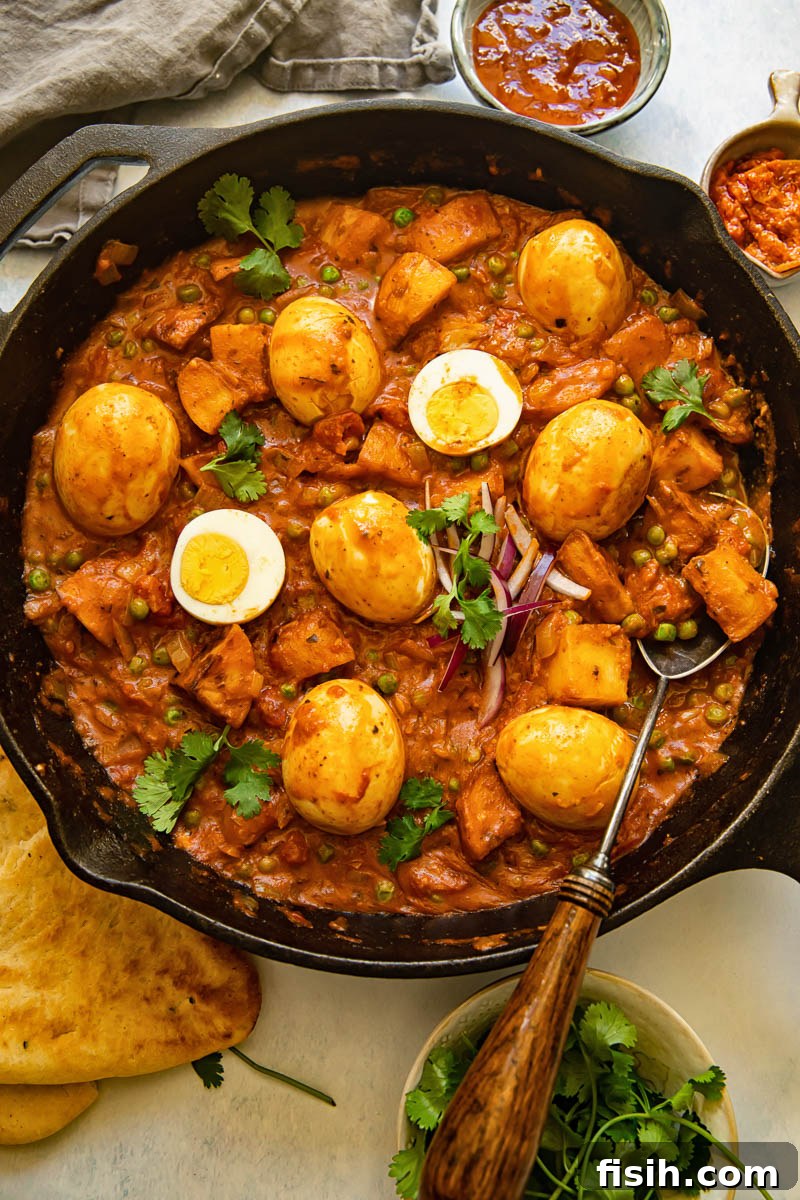
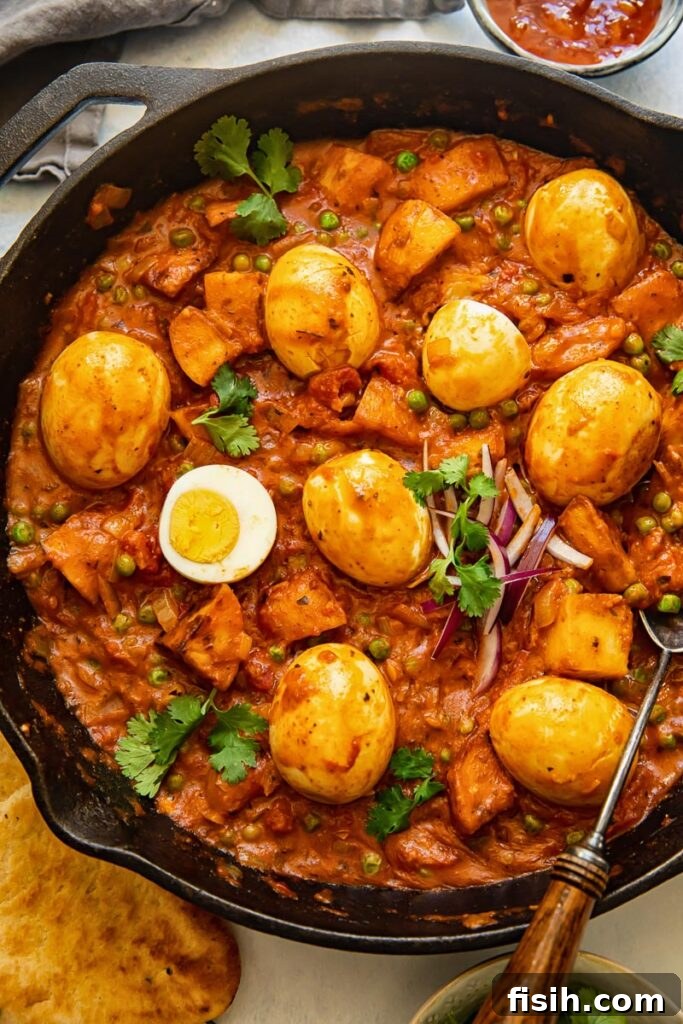
Discover the unparalleled delight of Egg Curry, a traditional Indian classic that is surprisingly simple to prepare yet bursts with complex, aromatic flavors. Often overlooked, this vegetarian gem combines the goodness of hard-boiled eggs with a rich, fragrant sauce, creating a truly satisfying and protein-packed meal perfect for any dinner table. Its mild spice profile and comforting texture promise to make it a cherished recipe in your culinary repertoire.
India’s diverse culinary landscape is renowned for its incredible array of curry recipes, each offering a unique taste experience. If you’re eager to explore more vibrant flavors, we have a multitude of other exquisite curry recipes for you to try and savor.
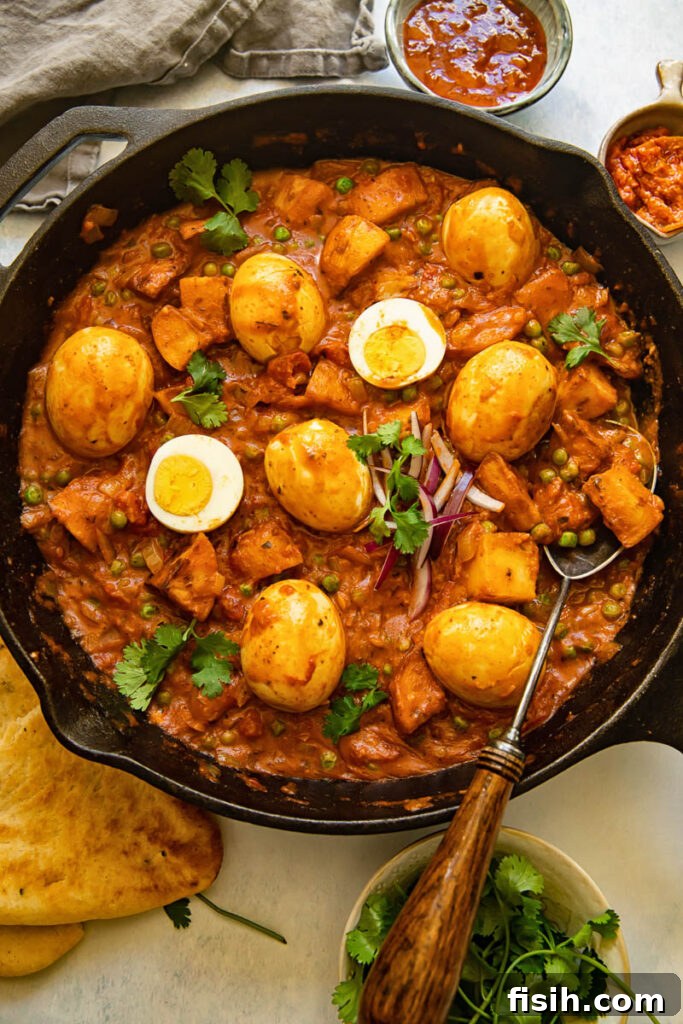
While chicken or lamb curries often take the spotlight in Western kitchens, Egg Curry, particularly with potatoes and peas, is a beloved staple in many Indian households that truly deserves more recognition. Eggs are an incredibly versatile and economical ingredient, offering a fantastic way to boost the protein content and add a unique creamy texture to your curry without relying on meat.
The foundational sauce for this curry is a timeless classic, incredibly adaptable for various interpretations. Incorporating traditional elements like tender potatoes and sweet peas creates a hearty and wholesome dish. However, the beauty of this recipe lies in its flexibility; feel free to experiment with other vegetables or even legumes to suit your taste and availability.
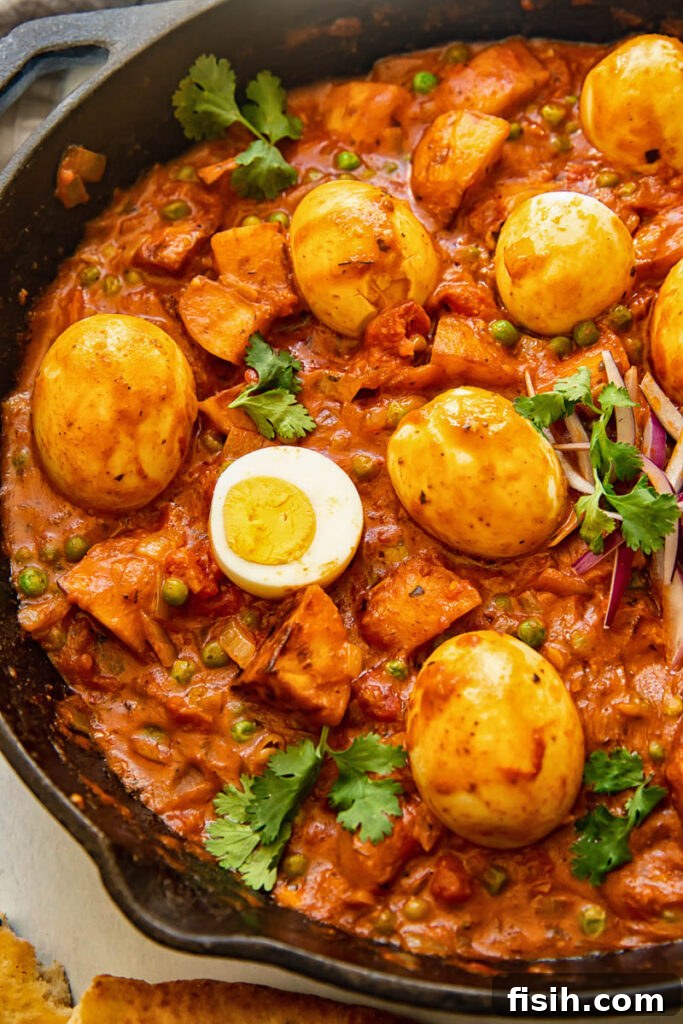
What truly transforms this dish into something special is the inclusion of hard-boiled eggs. As they simmer gently in the fragrant, spiced gravy, the eggs absorb the rich flavors while imparting a subtle creaminess. This addition elevates a simple vegetable curry into a substantial and nourishing meal, making it an ideal choice for a fulfilling vegetarian dinner that you’ll want to revisit time and again.
The World of Vegetarian Curries: Building Unforgettable Flavors
In many parts of the world, curries are almost synonymous with meat-based dishes like chicken or lamb. However, within India, vegetarian curries are not just common, but they are revered for their incredible depth of flavor and diversity. Indian cuisine has mastered the art of extracting and layering flavors from plant-based ingredients, creating dishes that are as rich and satisfying as any meat-centric meal.
The misconception that meat is essential for a flavorful dish often stems from its inherent umami and fat content. But for cooks well-versed in meatless cooking, a stunning array of flavors can be achieved through clever use of spices, cooking techniques, and fresh ingredients. The secret often lies in building a robust aromatic base and allowing high-quality spices to shine.
A diverse spice pantry is undoubtedly crucial for authentic Indian cooking. Yet, for many home cooks, investing in dozens of individual spices that might only be used occasionally can be daunting and impractical. This is where the magic of a good quality curry paste comes into play. Curry pastes are a fantastic shortcut, offering a pre-blended, complex set of fragrant spices ready to be incorporated into your dish. They deliver authentic flavors without the need for an extensive spice collection. I highly recommend finding a reputable brand (Patak’s is a personal favorite) as the quality of the paste significantly impacts the final taste. It’s also an easy way to experiment with your cooking; using the same core recipe with a different curry paste can create a completely new and exciting dish!
Beyond the paste, another fundamental and surprisingly simple technique for building great flavor into any curry involves the slow frying of onions, garlic, and ginger in oil. This aromatic trio, often called the “holy trinity” in many cuisines, is absolutely vital. As basic as it sounds, this process, when executed correctly, creates a deep, savory, and sweet umami foundation that is the backbone of a truly exceptional curry. I recommend frying the onions for at least 5-7 minutes to soften and caramelize them, bringing out their natural sweetness. If you have a bit more time, allowing them to gently cook on low heat for 10 minutes or even longer will yield an even richer, more profound flavor. Just be sure to add a splash of water to the pan if the onions appear to be browning too quickly or sticking, preventing them from burning and ensuring an even cook.
Crafting Your Perfect Egg Curry: A Step-by-Step Guide
This delightful Egg Curry recipe begins with the preparation of its two main stars: the eggs and potatoes. For the eggs, boil them for approximately 10 minutes to ensure they are hard-boiled. Immediately after boiling, plunge them into an ice-cold water bath. This crucial step not only halts the cooking process, preventing rubbery whites, but also significantly cools them down, making them much easier to peel without damaging the delicate surface. While the eggs are cooling, peel and cube your potatoes, then brown them in a tablespoon of vegetable oil until they develop a beautiful golden crust on the outside. They don’t need to be cooked through at this stage, as they will finish cooking in the curry sauce. Once browned, set them aside.
As previously highlighted, the core methodology for crafting this curry is a fundamental one for any aspiring home cook to master. It’s all about meticulously building a robust foundation of flavor that will carry through the entire dish.
To keep the process straightforward and avoid the need for an extensive spice rack, utilizing a pre-made curry paste is highly recommended. For this recipe, I opted for tikka masala paste. Its balanced blend of spices makes it incredibly versatile and a staple in many of my other curry creations, including popular dishes like Chicken Tikka Masala and Paneer Tikka Masala.
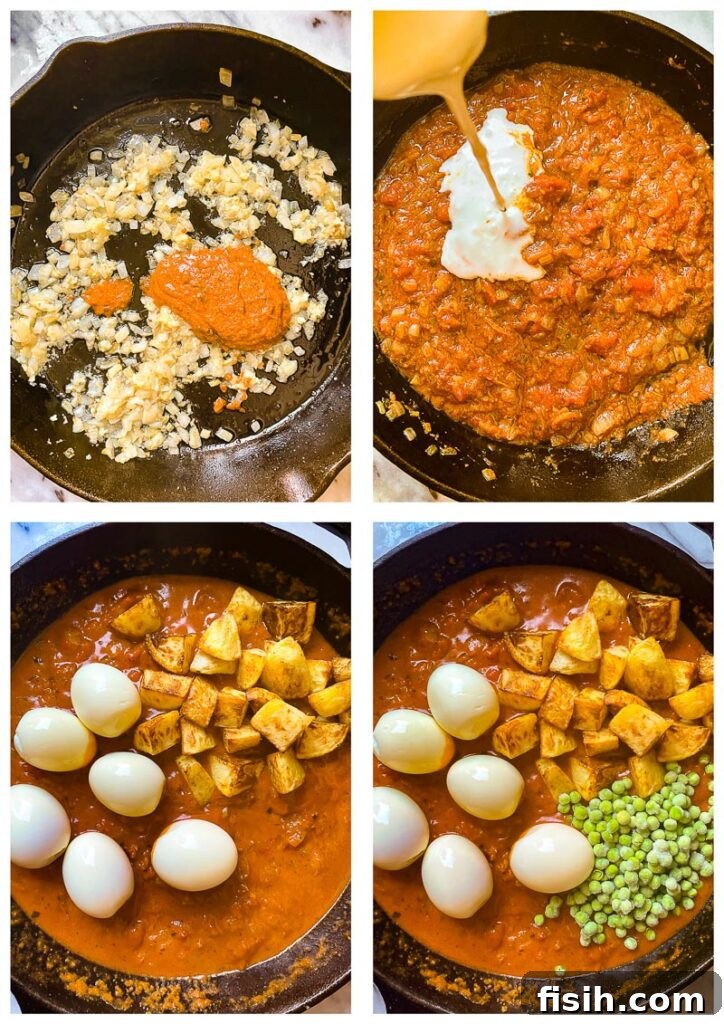
Before introducing the curry paste, you’ll first need to establish that crucial aromatic base. Begin by sautéing finely chopped onions in oil until they are soft and translucent, ideally for 5-7 minutes. Take your time with this step, as adequately caramelized onions contribute immensely to the curry’s depth and fragrance. Once the onions are ready, add minced garlic and grated ginger, cooking for just another 30 seconds until fragrant, being extremely careful not to burn them, as burned aromatics can impart a bitter taste to your dish.
Now, it’s time to infuse the pan with more complex flavors. Add your chosen curry paste, stirring it in and frying it for a few seconds to release its oils and intensify its aroma. Next, pour in canned chopped tomatoes, allowing the mixture to simmer gently for about 5 minutes. This helps to break down the tomatoes and meld the flavors. After this initial simmer, stir in the coconut milk, bring the curry back to a gentle boil, then reduce the heat and let it simmer for another 10 minutes. This simmering period allows the sauce to thicken slightly and for all the flavors to truly marry. Finally, add the peeled hard-boiled eggs, the browned potatoes, and the frozen peas to the pan. At this point, the curry sauce might be quite thick; if so, add a splash of water to achieve your desired consistency. Let everything simmer together for an additional 10 minutes, or until the potatoes are perfectly tender, but still hold their shape and don’t fall apart.
Recipe Tips and Notes for a Perfect Egg Curry
- I used tikka masala paste for its versatile flavor profile that complements this recipe beautifully. While other curry pastes can be substituted, be aware that each paste has a distinct spice blend and will result in a different final flavor.
- The depth of flavor in your curry largely depends on how well you fry the onions. For maximum richness, take your time and let them sauté over low heat for up to 10 minutes until deeply golden. If they start to stick or brown too quickly, add a small splash of water to the pan.
- For easier handling and peeling, boil your eggs in advance and allow them to cool completely. You can even prepare them the day before and store them in the refrigerator.
- This fragrant Egg Curry is best served hot over fluffy basmati rice or with warm Indian breads like naan or chapatis. For an enhanced dining experience, pair it with mango chutney or a spicy Indian pickle.
- Using a good quality, pre-made curry paste, such as Patak’s tikka masala curry paste, is a fantastic way to introduce a complex array of Indian spices into your dish without needing to purchase numerous individual ingredients. While tikka masala offers a wonderful flavor, feel free to experiment with other curry pastes to explore different taste profiles for your egg curry.
Serving Suggestions for a Complete Indian Feast
A generous serving of fragrant basmati rice is truly all you need to transform this delectable Egg Curry into a hearty and satisfying meal. However, for those who enjoy adding variety and richness to their Indian dinner experience, I love to present a few complementary sides.
To elevate the meal, consider serving this curry alongside aromatic coconut rice, which adds a subtle sweetness and creamy texture that pairs wonderfully with the curry’s spices. A bowl of comforting red lentil dal offers additional protein and a different textural dimension. And of course, warm, soft naan bread is perfect for scooping up every last drop of that incredible sauce.
For an extra burst of flavor and a touch of sweetness or tang, I almost always include a dollop of mango chutney or a fiery spicy pickle. If you’re feeling adventurous and want to create a truly lavish spread, consider adding another side dish like creamy saag paneer. This combination introduces an even greater range of flavors and textures, making your Indian feast truly unforgettable. Finally, a generous sprinkling of fresh cilantro (coriander) not only adds a vibrant pop of color but also a refreshing herbaceous note that brightens the entire dish and enhances its beauty.
Storage and Reheating Tips for Delicious Leftovers
One of the many joys of a good curry is that it often tastes even better the next day! Allowing the flavors to meld and intensify over a few days in the refrigerator will only do good things for your Egg Curry. When stored properly in an airtight container, your leftovers will keep beautifully for 3-4 days in the refrigerator.
This Egg Curry also freezes well, making it an excellent option for meal prepping. You can freeze it for up to three months in a freezer-safe container. Be aware, however, that while the curry sauce and eggs will maintain their quality, the potatoes might become slightly softer in texture after freezing and thawing. They will still be delicious, but expect a minor change in consistency.
When you’re ready to enjoy your leftovers, simply reheat them in a microwave until piping hot, or gently warm them in a saucepan over medium-low heat on the stovetop. If reheating in a saucepan, it’s a good idea to add a splash of water or a little extra coconut milk to loosen the sauce and prevent it from becoming too thick or sticking to the bottom of the pan.
More Vegetarian Curry Recipes to Explore
- Potato and Cauliflower Curry ‘Aloo Gobi’
- Chickpea and Butternut Squash Curry
- Paneer Tikka Masala
- Coconut Lentil Curry with Butternut Squash
- Sweet Potato and Lentil Curry
Egg Curry with Peas and Potatoes
By Julia Frey of Vikalinka
Prep: 10 mins | Cook: 40 mins | Total: 50 mins | Servings: 6

A simple yet flavourful Indian classic with mild spice and beautiful fragrance.
Ingredients
- 8 eggs
- 1 tbsp vegetable oil
- 2 potatoes
- 1 onion
- 1 tbsp garlic paste or 2 cloves garlic
- 1 tbsp grated ginger
- 3 tbsp curry paste (I used tikka masala)
- 200g / 7oz canned chopped tomatoes
- 250ml / 1 cup coconut milk
- 150g / 1/2 cup frozen peas
- Cilantro, for garnish
Instructions
- In a large pot, boil the eggs for 10 minutes. Plunge them into cold water and let them cool, then peel.
- Peel and cube the potatoes, then brown them in vegetable oil until golden on the outside but not cooked all the way through. Remove to a separate plate.
- Add chopped onion to the pan and sauté over medium heat for 5-7 minutes until soft and lightly golden. Then add the garlic and ginger and cook for 30 seconds longer until fragrant. Add the Indian curry paste and stir-fry for a few seconds.
- Then add the canned tomatoes and let the curry simmer for 5 minutes. Pour in the coconut milk, bring to a gentle boil, then lower the heat and simmer for 10 minutes.
- Add the peeled eggs, browned potatoes, and frozen peas to the pan. If the sauce is too thick, add a splash of water. Let it simmer for another 10 minutes until the potatoes are tender but not falling apart.
- Top with fresh cilantro/coriander and serve with rice, naan, mango chutney, or a spicy pickle.
Notes
I used tikka masala curry paste from Patak’s.
Nutrition
Calories: 253kcal | Carbohydrates: 20g | Protein: 11g | Fat: 15g | Saturated Fat: 10g | Polyunsaturated Fat: 1g | Monounsaturated Fat: 3g | Trans Fat: 0.02g | Cholesterol: 218mg | Sodium: 142mg | Potassium: 601mg | Fiber: 3g | Sugar: 4g | Vitamin A: 1631IU | Vitamin C: 25mg | Calcium: 81mg | Iron: 4mg
Nutrition information is automatically calculated, so should only be used as an approximation.