
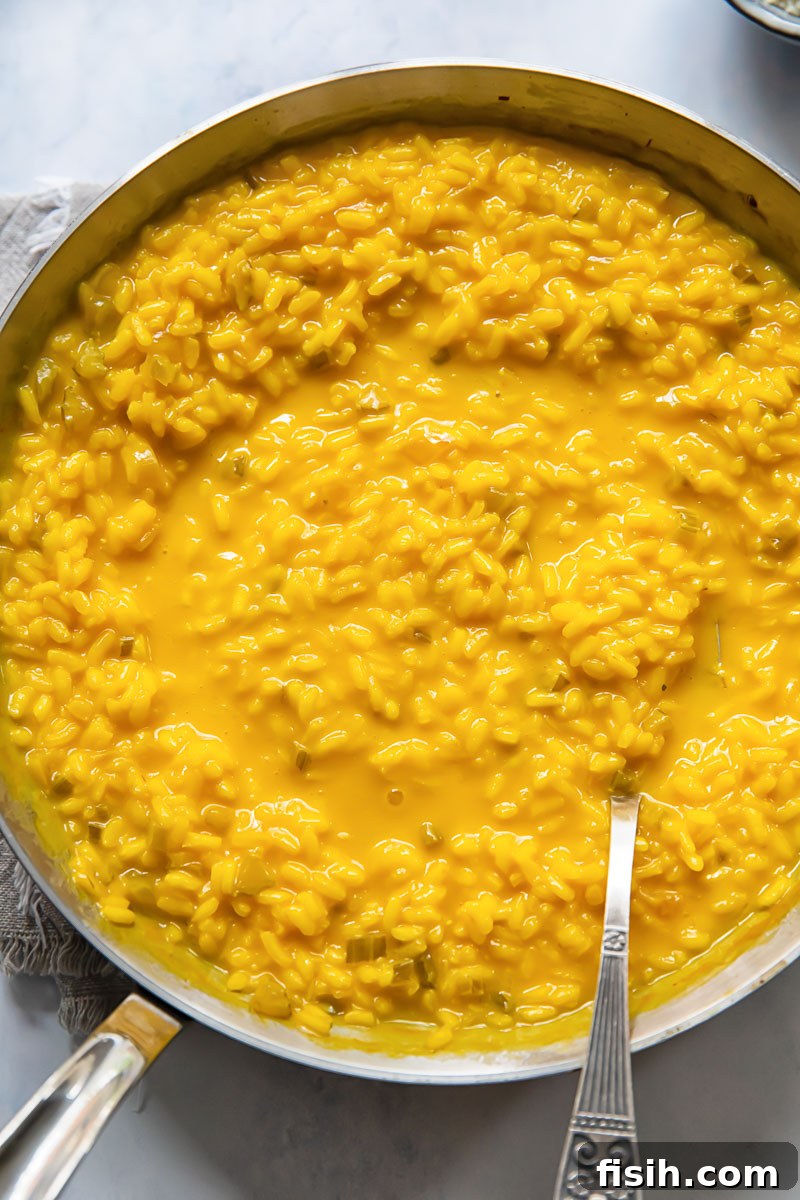
Step into the culinary heart of Italy with Saffron Risotto, a dish that transcends mere sustenance to become a radiant symbol of comfort and sophistication. Often hailed as a gleaming plate of romance, this iconic Italian creation, known as Risotto alla Milanese, is a testament to the transformative power of simple ingredients. It’s a comforting, creamy blend of perfectly cooked rice and fragrant saffron threads, surprisingly accessible to master for home cooks. Whether served as a dazzling main course or a spectacular side, its golden hue and aromatic embrace promise an unforgettable dining experience. Join us as we demystify the art of preparing this exquisite dish, guiding you toward culinary success.
Once you’ve savored the delight of a perfectly prepared saffron risotto, you might be inspired to explore other luxurious rice dishes. Consider trying your hand at our supremely special Truffle Risotto with Wild Mushrooms for an earthy, decadent twist. Or, if you’re looking for another fragrant side dish that highlights the magic of saffron, don’t miss our recipe for Fragrant Saffron Rice.
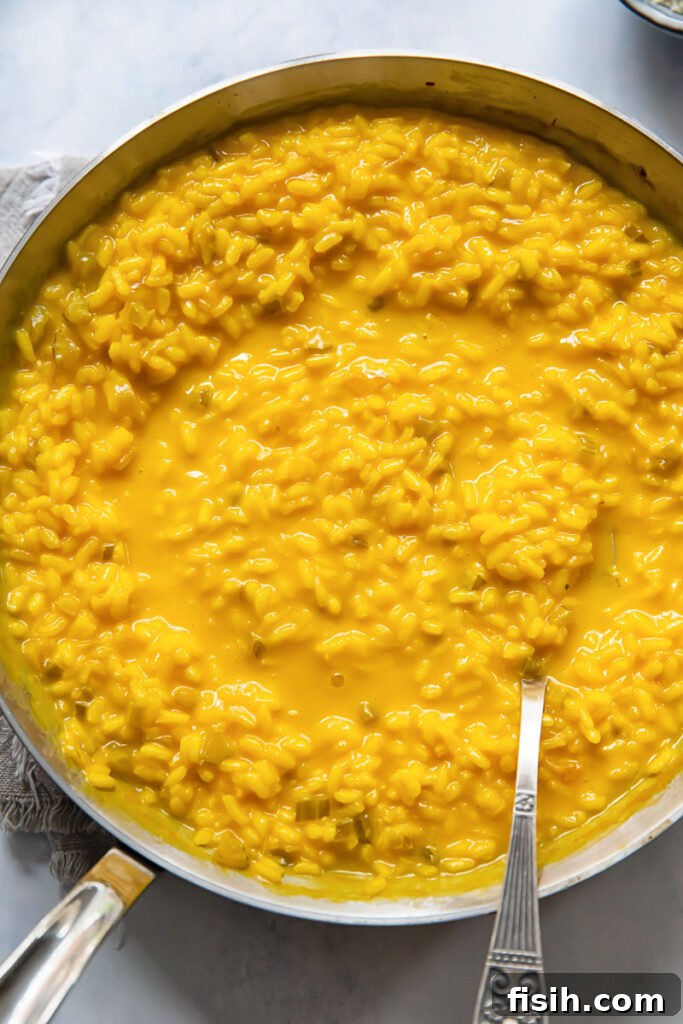
The Allure of Risotto: A Versatile Italian Classic
Risotto stands as a beloved staple in Italian cuisine, offering a delightful alternative to traditional pasta dishes and serving as an excellent option for guests with gluten sensitivities. At its core, risotto is a humble yet profound dish made with just a few key ingredients: specially selected rice, flavorful stock, and aromatic additions. While its reputation often precedes it as being “tricky” or a “labor of love,” the truth is that the technique, though requiring patience and attention, is one that anyone can master with practice.
Indeed, preparing risotto demands a certain level of dedication. It’s an interactive cooking experience that builds anticipation as you gradually transform simple grains of rice into a luxurious, creamy masterpiece. But rest assured, with time, patience, and a few expert tips, you will be proudly serving steaming, satisfying bowls of this rich family favorite. The reward for your efforts is a decadently rich and luscious rice dish that embodies the very essence of Italian culinary tradition.
What is Risotto alla Milanese?
At its heart, risotto is traditionally prepared on the stovetop through a gradual process of adding small quantities of hot stock to rice and stirring continuously until the liquid is absorbed, then repeating this process. This method, while requiring constant attention, is what allows the rice to slowly release its starches, creating the signature creamy texture that defines a perfect risotto. This constant interaction is what makes it a labor of love, but it’s also what makes the final outcome so incredibly rewarding.
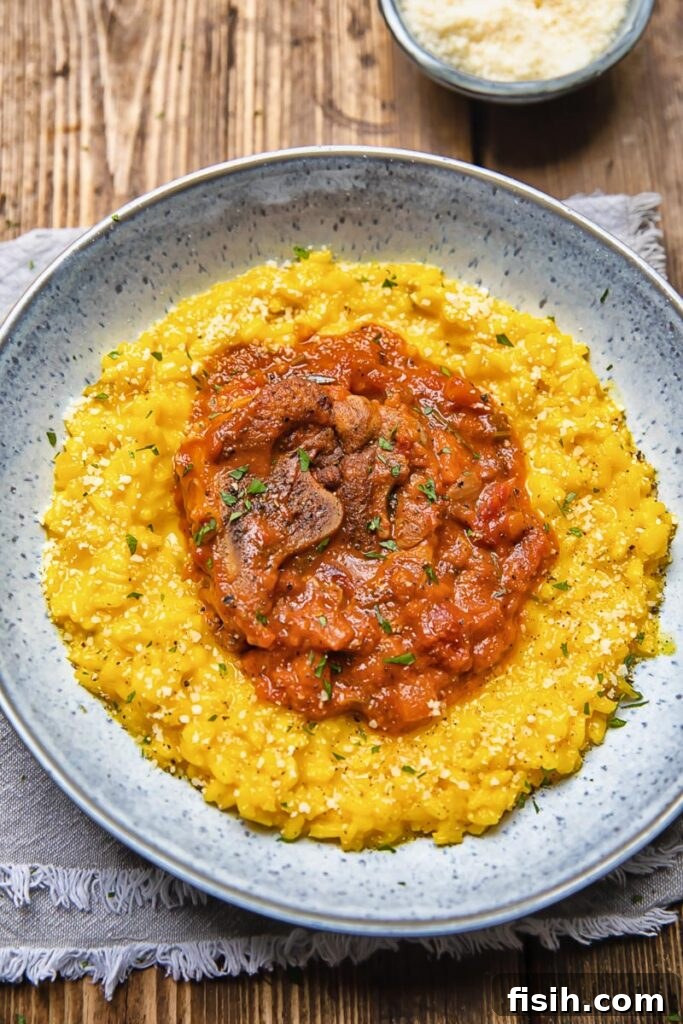
Saffron Risotto, or Risotto alla Milanese, follows this exact technique but elevates the experience with the precious addition of saffron. The result is a glossy, golden plateful of delicately flavored rice, instantly recognizable by its vibrant hue. The thin, fiery-colored saffron threads, often referred to as “red gold,” impart a unique flavor profile that is both subtly sweet and distinctly earthy. When paired with sharp, salty Parmesan cheese, the risotto gains a savory depth that makes it an ideal accompaniment. Historically, it is often served alongside osso buco, a slow-cooked veal shank dish from Lombardy, but its versatility means it pairs beautifully with a variety of meats and other Italian specialties.
The Legend Behind the Gold: A Culinary Prank
The intriguing origin story of saffron risotto is as colorful as the dish itself, reputedly born from a playful prank in Northern Italy during the Middle Ages. In an era perhaps less abundant in everyday amusements, a mischievous glassmaker, known for using saffron to tint his stained-glass creations, decided to add a touch of the precious spice to a wedding banquet’s typically pale white risotto. The guests, surprised by the radiant golden transformation, presumably found the dish as palatable as it was amusing.
This culinary jest not only delighted medieval wedding-goers but also inadvertently created a timeless classic. Today, gourmands and home cooks around the world continue to appreciate this “mistake” turned masterpiece, with saffron risotto standing as a vibrant testament to the unexpected joys that can arise from kitchen experimentation and a bit of good-natured fun.
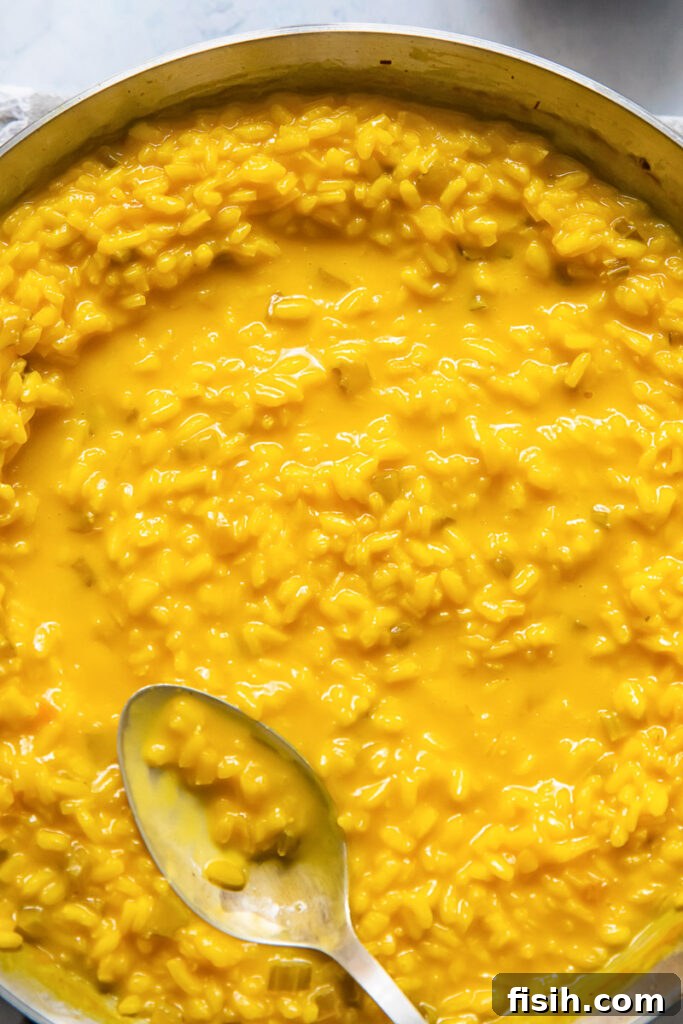
Choosing the Perfect Risotto Rice
The foundation of a truly exceptional, sleek, and velvety risotto sauce lies squarely in the choice of rice. The secret is starch, and therefore, selecting the right variety is paramount to achieving that coveted creamy consistency. While several types of rice exist, two stand out as the champions for risotto: Arborio and Carnaroli.
Arborio rice is perhaps the most widely recognized and readily available choice for risotto. Its short, stubby grains are adept at absorbing liquid while simultaneously releasing a generous amount of starch, which is crucial for creating the characteristic oozy, rich sauce. Its accessibility and consistent performance make it a popular and reliable option for both novice and experienced risotto makers.
Carnaroli rice, while less commonly found and often considered a premium choice, is revered by many chefs for its superior qualities. Its plumper grains possess an even higher starch content and a firmer structure, allowing them to remain al dente even after absorbing a large volume of liquid. This results in an incredibly rich, supremely creamy texture that is often described as the pinnacle of risotto. If you can find it, Carnaroli is worth the investment for a truly luxurious risotto.
It is imperative to steer clear of standard long-grain rice varieties, such as basmati or jasmine. While delicious in their own right, these types lack the necessary starch and will not yield the desired creamy consistency. Using them will likely result in a thin, watery sauce and unpleasantly chewy rice, negating all your hard work. Resist the temptation for convenience; the right rice is the cornerstone of an authentic and satisfying saffron risotto.
Essential Ingredients for a Stellar Saffron Risotto
Beyond the critical choice of rice, the quality of your other ingredients significantly impacts the final flavor and texture of your saffron risotto. Each component plays a vital role in building the depth and complexity of this revered dish.
- Quality Stock: The backbone of any risotto, a good vegetable or chicken stock is essential. Use homemade whenever possible, or opt for a high-quality, low-sodium store-bought variety. Keep it warm throughout the cooking process, as cold stock will shock the rice and slow starch release.
- Aromatics: Finely diced shallots (or half an onion) and celery provide the essential aromatic base, or soffritto, for the risotto. These vegetables are gently sautéed to become sweet and translucent, forming the first layer of flavor.
- Dry White Wine: A splash of dry white wine, like a Pinot Grigio or Sauvignon Blanc, adds a crucial touch of acidity and complexity, deglazing the pan and enhancing the overall flavor profile. If you prefer not to use wine, a good quality white wine vinegar can offer a similar acidic note.
- The Star: Saffron Threads: Genuine saffron threads are non-negotiable for Risotto alla Milanese. Its distinctive aroma, flavor, and vibrant color are what define the dish. Crush the threads gently in a mortar and pestle, or steep them in a small amount of warm stock for 10-15 minutes before adding to maximize their release of color and flavor.
- Parmesan Cheese: Freshly grated Parmesan cheese (Parmigiano-Reggiano) is stirred in at the end, providing a salty, umami-rich finish that melts into the risotto, contributing to its creamy texture and savory depth.
- Butter: A final knob of cold butter, added along with the Parmesan, helps create the luxurious, glossy finish known as mantecatura, enriching the risotto and making it incredibly silky.
Mastering the Art of Saffron Risotto: A Step-by-Step Guide
Creating saffron risotto is a rewarding culinary journey. Follow these steps for a perfectly creamy and flavorful dish:
Recipe Tips and Notes
- The trademark creamy texture of risotto is entirely dependent on the rice. Ensure you use a high-starch variety like Arborio or Carnaroli. Sometimes, packets are simply labeled ‘risotto rice’, which is also suitable.
- A touch of acidity is crucial for balancing the richness of any risotto. Dry white wine is ideal, but if you don’t frequently cook with wine, consider keeping a bottle of cooking wine or a good quality white wine vinegar. Once opened, cooking wine typically lasts longer.
- If wine isn’t an option, a tablespoon of white wine vinegar serves as a perfect substitute to achieve that essential tang.
- For proper moisture retention and even cooking, select the right pan. A large, high-sided saucepan or Dutch oven is recommended to allow for ample stirring and liquid absorption without splashing.
- To ensure maximum flavor and that gorgeous golden glow, don’t just add saffron threads whole. Crush them lightly in a mortar with a pestle, or steep them in a small amount of warm stock for 10-15 minutes before incorporating them into the dish.
- If you’re still feeling nervous, watching a visual guide can be incredibly helpful. Check out this video to walk you through the process of making perfect risotto.
- For more in-depth advice on risotto techniques, read our comprehensive risotto-making tips in this article.
Ingredients
- 2 tbsp extra virgin olive oil
- 1 large shallot, or 1/2 onion, diced
- 1 celery stalk, diced
- 300g / 1½ cups risotto rice (Arborio or Carnaroli)
- 125ml / 1/2 cup dry white wine
- 1 litre / 4 cups vegetable or chicken stock, warmed
- 1/2 tsp saffron threads
- Salt to taste
- 50g / 1/2 cup grated Parmesan cheese
- 1 tbsp butter
Instructions
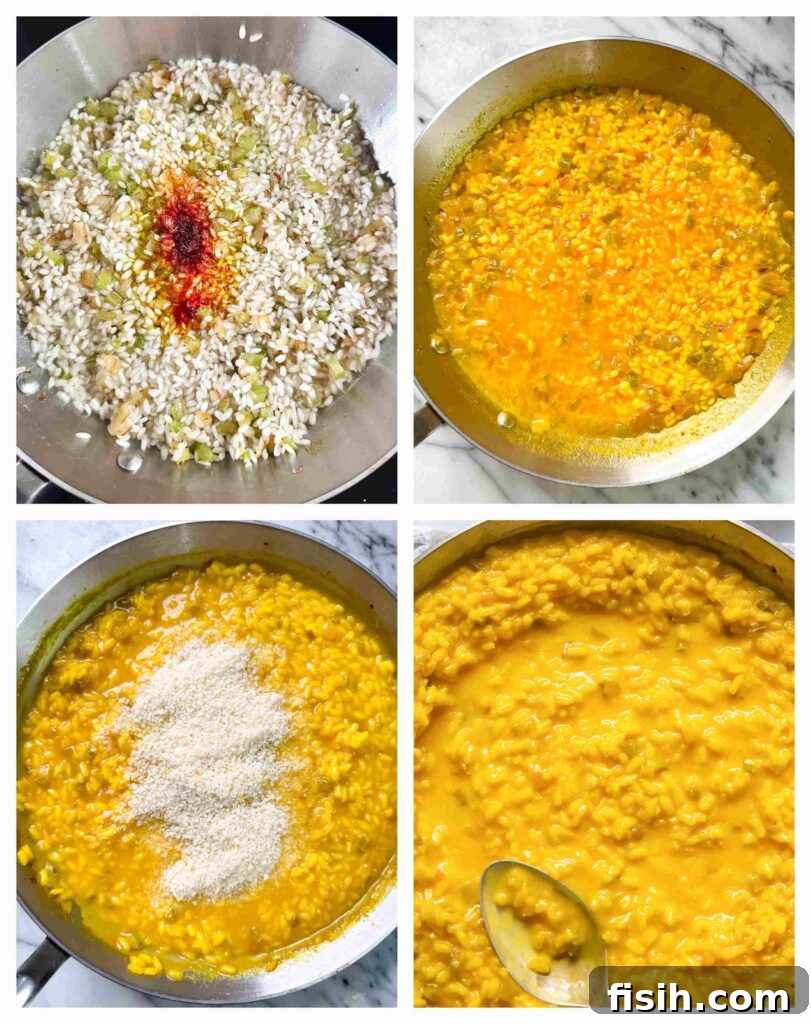
- Begin by heating one tablespoon of extra virgin olive oil in a large, deep pan or a large saucepan over low heat. Add the finely diced celery and shallot, and sauté gently for about 10 minutes until they are softened and translucent but not browned. This forms your aromatic base.
- Once the celery and shallot are tender, add the risotto rice to the pan. Toast the rice for a couple of minutes, stirring constantly, until every grain is evenly coated with the oil and appears slightly translucent at the edges, with a tiny opaque spot in the center.
- Pour in the dry white wine. Increase the heat slightly and simmer, stirring, until the wine is nearly completely evaporated. This step, known as “deglazing,” adds a layer of flavor and acidity. Now, add the crushed saffron threads, stirring them into the rice.
- Add about a quarter of the warm stock to the rice, just enough to cover it. Stir frequently until the liquid is almost fully absorbed. As you see the stock level diminishing, add another ladleful, approximately one cup at a time. Continue this process, stirring regularly, allowing the rice to absorb the liquid before adding more. This gradual addition and constant stirring are vital for releasing the starches that create the risotto’s creamy texture. The entire process typically takes 18-25 minutes.
- Taste the rice periodically for doneness. It should be cooked through but still have a slight bite in the center, known as al dente. When the rice reaches your preferred consistency, remove the pan from the heat.
- Stir in the grated Parmesan cheese and the tablespoon of butter. This final step is called mantecatura, which means to “beat in” or “cream,” and it gives the risotto its characteristic richness, sheen, and ultra-creamy texture. Stir vigorously for about a minute until the butter and cheese are fully incorporated and the risotto is luscious.
- Cover the pan with a lid and let it rest for 5 minutes. This allows the flavors to meld and the risotto to settle into its perfect consistency. Uncover, give it one final gentle stir, and serve immediately.
Nutrition
Nutrition information is automatically calculated, so should only be used as an approximation.
- Calories: 422kcal
- Carbohydrates: 65g
- Protein: 10g
- Fat: 11g
- Saturated Fat: 3g
- Polyunsaturated Fat: 1g
- Monounsaturated Fat: 6g
- Cholesterol: 9mg
- Sodium: 1779mg
- Potassium: 115mg
- Fiber: 2g
- Sugar: 3g
- Vitamin A: 631IU
- Vitamin C: 1mg
- Calcium: 156mg
- Iron: 3mg
Serving Suggestions and Wine Pairings
Saffron risotto, with its rich flavor and velvety texture, is incredibly versatile and pairs beautifully with a range of dishes. Traditionally, it finds its perfect match with Osso Buco, a succulent slow-braised veal shank dish from the Lombardy region of Italy. While veal is classic, a pork version also works wonderfully. The luxuriousness of the risotto beautifully complements the tender, fall-off-the-bone meat and rich sauce of osso buco.
Beyond tradition, saffron risotto is a fantastic accompaniment to various protein-rich main courses. It pairs exceptionally well with a perfectly cooked rib-eye steak, where its creaminess can balance the robust flavors of the beef. Similarly, it’s a delightful partner for tender Veal Piccata, allowing the delicate lemon-caper sauce to shine against the backdrop of golden rice.
For a lighter touch or as part of a larger meal, creamy dishes like saffron risotto are often enhanced when served alongside a fresh, vibrant salad. To maintain an authentic Italian theme, a classic Caprese Salad, with its ripe tomatoes, fresh mozzarella, and aromatic basil, provides a refreshing contrast to the richness of the risotto. A simple green salad with a light vinaigrette would also be a superb choice.
When it comes to wine pairings, a dry white wine that echoes the wine used in the cooking process is often ideal. A crisp Italian Pinot Grigio or a Vermentino would beautifully complement the saffron and Parmesan. If you prefer red, a lighter-bodied option like a young Valpolicella or a Nebbiolo could also work, especially if serving with a heartier meat dish.
Storage and Leftovers: Repurposing Your Saffron Risotto
Risotto is known for being incredibly filling and satisfying, so it’s not uncommon to find yourself with delicious leftovers. Fortunately, saffron risotto stores well, allowing you to savor its flavors for another day. To properly store, transfer any remaining risotto into an airtight container and refrigerate promptly. It will maintain its quality for 3-4 days.
When reheating, risotto tends to thicken significantly in the fridge as the starches continue to set. To restore its creamy consistency, gently reheat it on the hob (stovetop) over low heat. Add a splash of water, broth, or even a little milk, stirring constantly, until it loosens up and reaches your desired texture. Avoid microwaving if possible, as it can lead to uneven heating and a rubbery texture.
Beyond simple reheating, leftover risotto offers exciting possibilities. One popular method is to transform it into arancini – crispy, fried rice balls often filled with cheese or ragu. Simply shape the cold risotto into balls, optionally stuff with a small cube of mozzarella, coat in breadcrumbs, and deep-fry until golden. This is a fantastic way to give your leftovers a new lease on life and enjoy another classic Italian treat.
Explore More Risotto Recipes
Once you’ve mastered Saffron Risotto, you’ll find the world of creamy, comforting risottos wide open for exploration. Here are some other delightful risotto recipes to try:
- Butternut Squash Risotto with Sage and Goat Cheese
- Spring Asparagus Risotto
- Prawn Risotto with Tomatoes and Peas
- Chicken Risotto with Mushrooms and Thyme
- Roasted Mushroom Risotto
Tried this recipe?Let us know how it was!