
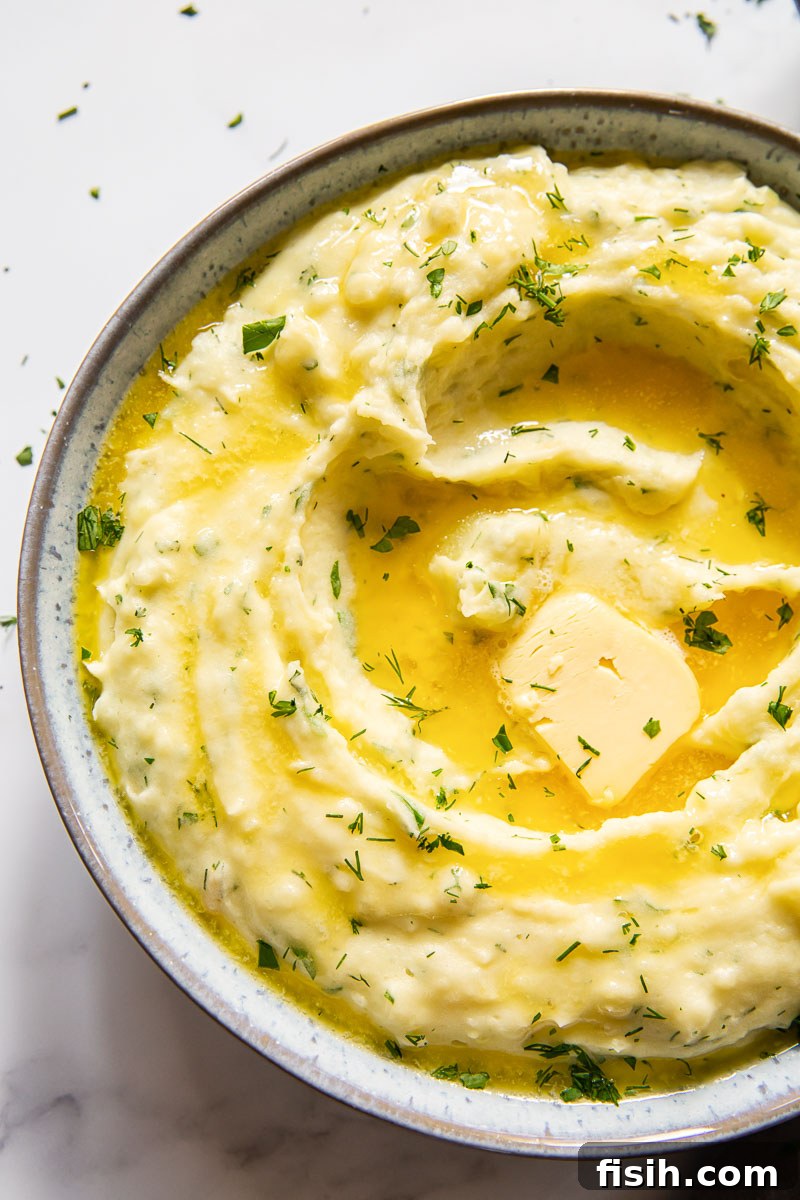
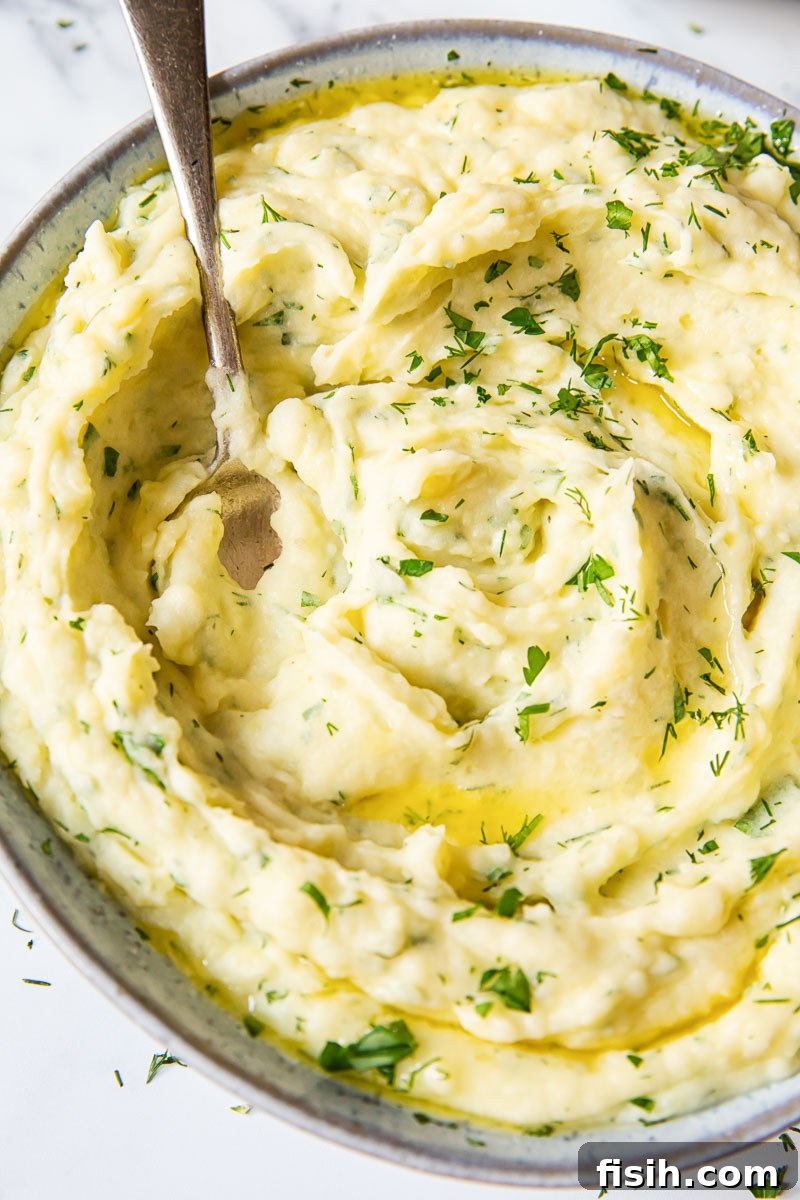
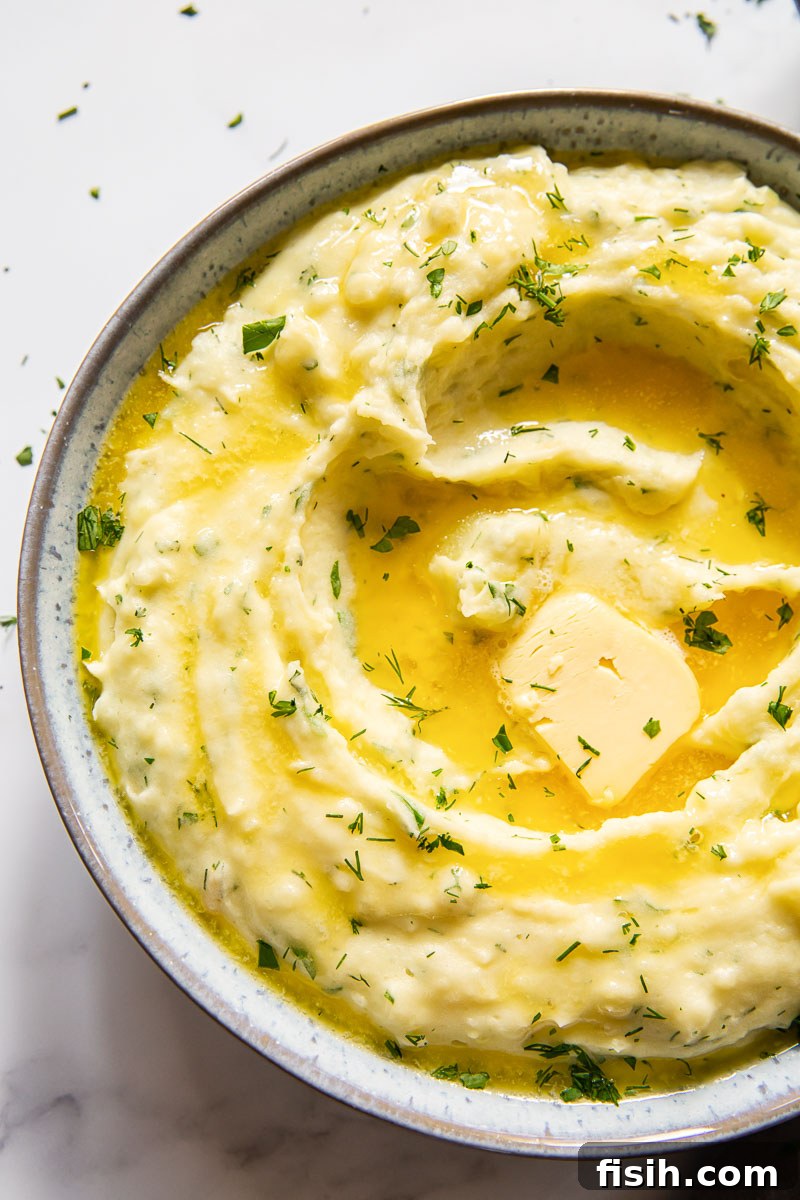
Indulge in the ultimate comfort food with our recipe for creamy, buttery mashed potatoes, elevated by the aromatic embrace of fresh herbs and the sweet, mellow depth of roasted garlic. This isn’t just a side dish; it’s a culinary experience you’ll want to recreate again and again, becoming a cherished staple in your kitchen.
For those who love to experiment with different potato mashes, you might also enjoy exploring options like Sweet Potato and Swede (Rutabaga) Mash, offering a delightful twist on the classic.
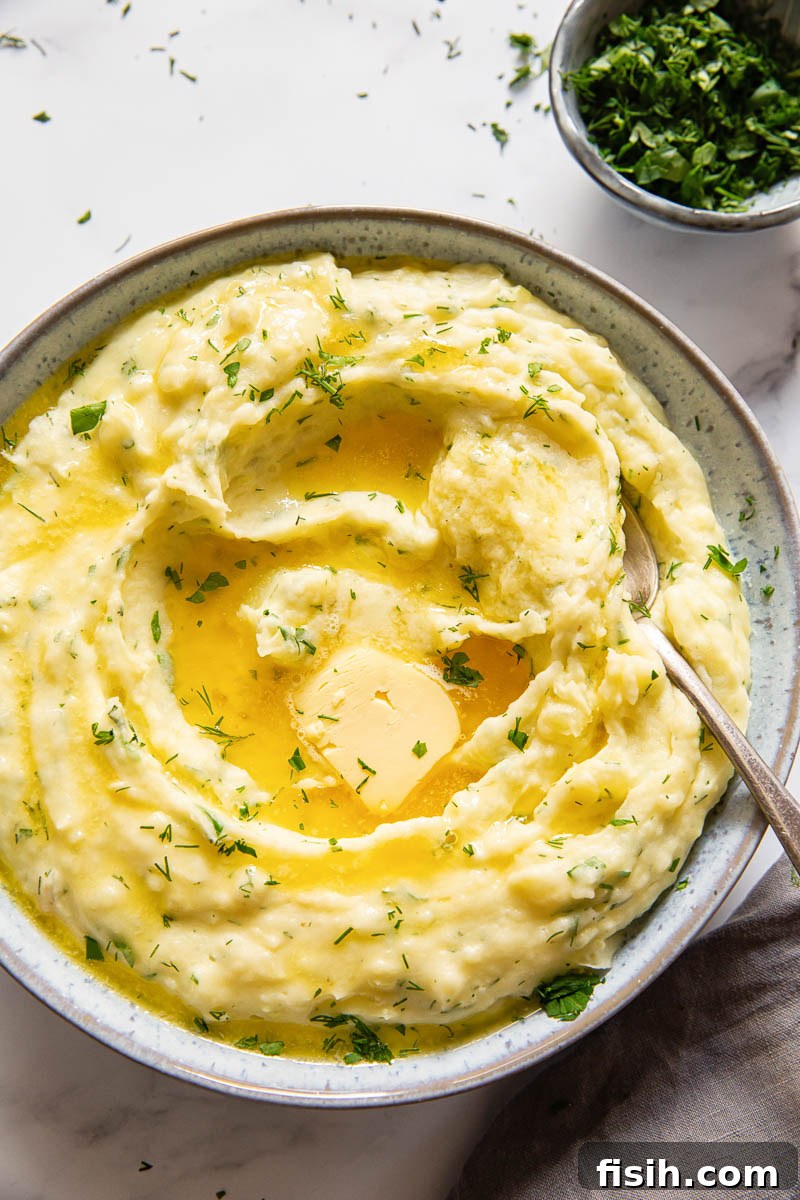
When it comes to crafting the perfect batch of mashed potatoes, my unwavering answer remains consistent: butter. While selecting the ideal potato variety and mastering the finest mashing techniques are crucial, the true magic unfolds with a generous infusion of butter. Without it, even the most meticulously prepared potatoes will fall short, lacking that essential richness and luxurious texture that defines truly exceptional mashed potatoes.
I confess, I don’t make mashed potatoes on a whim. But when the craving strikes, or a special occasion calls for this classic comfort, I ensure they are sumptuously buttered, transforming a simple dish into an unforgettable delight.
Now that my biggest secret has been revealed, let’s delve into the other equally important factors that contribute to the sublime taste and texture of homemade mashed potatoes. Beyond the golden goodness of butter, the very foundation of your mash lies in the potato itself.
Choosing the Best Potatoes for Creamy Mash
As a lifelong enthusiast of potatoes, I’ve had ample time to study the nuances of this versatile root vegetable. It turns out, my affection for potatoes extends to a deep understanding of their characteristics, a knowledge I’m eager to share! Selecting the right type of potato is foundational to achieving the perfect texture for your mash.
Potatoes generally fall into two main categories: waxy and floury (often referred to as starchy). Both types are wonderful in their own right, but they shine in different culinary applications. Waxy potatoes, characterized by their firm texture and lower starch content, hold their shape exceptionally well after cooking. This makes them ideal for dishes where you want the potato chunks to remain intact, such as potato salads, gratins, or boiling for a firmer side.
However, attempting to mash waxy potatoes is an exercise in futility, often resulting in a gluey, unappetizing mess. Their high moisture content and sticky starch cells become agitated with excessive mashing, leading to a pasty consistency that is far from the desired fluffy result. The more you work them, the stickier they become, turning your dream of smooth mash into a sticky reality.
Conversely, floury or starchy potatoes are the undisputed champions for mashing. Their high starch content and low moisture allow them to break down easily when cooked, creating a fluffy, absorbent texture that is absolutely ideal for whipping into a creamy, dreamy pile of mashed potatoes. They readily soak up butter and milk, resulting in that luxurious, melt-in-your-mouth consistency we all adore.
Top Potato Varieties for Mashing
- In North America, look for **Yukon Gold potatoes** (renowned for their naturally buttery flavor and creamy texture) or **Russet potatoes** (which cook up fluffy and light, perfect for absorbing liquids).
- In the UK and beyond, excellent choices include **Maris Piper**, **King Edward**, **Vivaldi**, and **Desiree**. These are often considered “all-rounder” potatoes, equally suitable for mashes, roasting, and just about any potato dish you can imagine.
When shopping, always check the potato label for descriptions like “floury,” “starchy,” or “good for mashing.” This simple step can save you from a gluey potato disaster and ensure your mashed potatoes are perfectly smooth and delicious every time.
Mastering the Technique for the Fluffiest Mashed Potatoes
Achieving a beautifully creamy potato mash isn’t just about the ingredients; it’s also about the method. While several approaches exist, some are distinctly superior for delivering that velvety smooth texture we crave. The key is to break down the cooked potato cells without overworking them, which can release too much starch and lead to a sticky consistency.
- **The Classic Potato Masher:** My personal preference, offering the most control over the final texture. A good old-fashioned potato masher allows you to achieve anything from a slightly chunky, rustic mash to a relatively smooth one, depending on how much you work it. It’s forgiving and provides a satisfying tactile experience.
- **The Elegant Potato Ricer:** For those who aspire to the smoothest, most ethereal mashed potatoes, a potato ricer is an indispensable tool. My mother often employed this method for special occasions, and the results were always impeccable. Pushing the cooked potatoes through the small holes of a ricer separates the starch cells gently, preventing stickiness and yielding a light, airy, and incredibly fine mash.
- **Avoid the Food Processor (Mostly):** Some home cooks might be tempted to use a hand mixer or even a food processor for speed. While a hand mixer, used sparingly on a low setting, *can* work if you’re careful, I strongly advise against using a food processor. The high-speed blades of a food processor brutalize the potato starch cells, rapidly breaking them down and releasing excessive amounts of starch. This invariably results in a gummy, glue-like consistency, utterly ruining a perfectly good batch of potatoes. It’s a risk not worth taking for the sake of convenience.
Regardless of your chosen tool, ensure your potatoes are thoroughly drained and “steam-dried” after cooking. This means returning them to the hot, empty pot for a minute or two over low heat, allowing any residual moisture to evaporate. Excess water dilutes flavor and can make your mash less creamy.
Elevating Your Mash: Flavorful Additions and Enhancements
While the foundation of great mashed potatoes relies on quality potatoes, butter, and proper technique, the true magic lies in the carefully chosen additions that can transform a simple side into a culinary masterpiece. In my humble opinion, some add-ons are non-negotiable, while others offer a delightful layer of complexity. For instance, **hot milk, generous butter, and salt** are absolutely essential for a well-balanced and flavorful mash. However, the inclusion of fresh herbs and roasted garlic, while not strictly required, is highly recommended for an unparalleled taste experience.
I, like many of you, adore garlic. But adding it raw to mashed potatoes can be overpowering, producing a sharp, pungent flavor that might not be ideal for a sophisticated dinner party or a festive holiday table. The raw intensity can linger, creating a less than pleasant experience.
Roasted garlic, however, is an entirely different story. The slow roasting process transforms the garlic cloves, mellowing the harsh flavors we often find difficult to stomach, while simultaneously deepening and caramelizing the sweet, nutty notes we love. Roasted garlic is nothing short of magic! It imparts a rich, umami depth and a subtle sweetness that complements the potatoes beautifully, adding a gourmet pizzazz to an otherwise simple dish. It’s an easy, yet incredibly effective way to infuse your mash with incredible flavor.
Another simple yet profoundly effective trick to elevate your mashed potatoes to extraordinary heights is to load them with fresh, fragrant herbs. Think of the classic combination found in the beloved Ranch dressing – parsley, dill, and chives. Any combination of these three offers a vibrant burst of freshness and a delicate herbaceous aroma that perfectly cuts through the richness of the butter. Their bright, clean flavors add a sophisticated touch and a hint of garden-fresh goodness, making your mashed potatoes truly irresistible.
Essential Tips for Perfect Mashed Potatoes
- **Potato Selection is Key:** As highlighted earlier, choosing the right type of potato is paramount. Not all varieties are created equal, and some are simply not suited for mashing. Refer to our guide above for advice on selecting the best starchy or all-rounder potatoes for that dreamy texture.
- **Embrace Fresh Herbs:** While dried herbs may seem like a convenient shortcut, I strongly advise against them in this recipe. Fresh herbs offer an unparalleled burst of vibrant flavor and aroma that dried versions simply cannot replicate. The difference in taste and quality will be noticeable and greatly appreciated.
- **Season Generously and Taste Often:** Under-salted mashed potatoes are notoriously bland and unpleasant. Always taste your potatoes before serving to ensure they are seasoned perfectly. Add a bit more salt, tasting as you go, until you achieve that ideal flavor balance. A touch of freshly cracked black pepper can also be a wonderful addition, but I find it doesn’t always enhance the delicate herb and garlic notes in this particular recipe.
- **Maintain Temperature:** The act of mashing potatoes can cause them to cool down significantly. To ensure your mash is piping hot when served, I recommend mashing them in the same large pot in which they were cooked. This allows for a quick and easy reheat over low heat, if necessary, right before serving. Warming your milk and butter before adding them also helps maintain the temperature and creates a smoother consistency.
- **Avoid Over-Mashing:** This is a common pitfall. Once the potatoes are mashed to your desired consistency (smooth or slightly chunky), stop working them. Over-mashing, especially with waxy potatoes or a food processor, will activate too much starch, leading to a gluey, unpleasant texture.
- **Don’t Use Cold Ingredients:** Ensure your milk and butter are warmed before adding them to the hot mashed potatoes. Cold ingredients will cool down the potatoes, making them harder to incorporate smoothly and potentially impacting the final texture. Warm milk and softened butter blend seamlessly, contributing to a truly luxurious mash.
Serving Suggestions for Your Garlic & Herb Mash
Creamy garlic and herb mashed potatoes are incredibly versatile, making them a perfect accompaniment to a wide array of dishes. They particularly shine when paired with saucy main courses, allowing them to soak up all those delicious flavors. Imagine them alongside classics like Salisbury Steak with Onion Mushroom Gravy, or the rich and savory Beef Stroganoff! The fluffy texture of the mash is ideal for capturing every drop of a decadent sauce.
Of course, no holiday feast is complete without them. These mashed potatoes are an indispensable side dish for Thanksgiving or Christmas dinner, serving as the perfect complement to a magnificent roast turkey, an impressive honey-mustard crusted prime rib roast, or any celebratory roast chicken. While many might vote for crispy roast potatoes, I personally need the comforting embrace of creamy mashed potatoes to absorb the generous rivers of homemade gravy! They are also fantastic with simpler weeknight meals, from hearty stews to pan-seared pork chops.
Storage, Reheating, and Repurposing Leftovers
One of the many beauties of mashed potatoes is their ability to be prepared ahead of time or enjoyed as delicious leftovers. Properly stored, your creamy garlic and herb mashed potatoes will keep beautifully in an airtight container in the refrigerator for 3-4 days. For longer storage, they can be frozen for 2-3 months. To freeze, allow them to cool completely, then portion them into freezer-safe bags or containers. Thaw overnight in the refrigerator before reheating.
While reheating in a microwave is certainly an option for convenience, for the best results and to retain that desirable creamy texture, I recommend placing them covered in an oven preheated to 180°C (350°F) for 15-20 minutes, or until they are heated through. You might want to add a splash of warm milk or a pat of butter before reheating to restore their original creaminess.
Repurposing leftover mashed potatoes is a culinary art form that often doesn’t receive enough attention. With the right recipe, they can be transformed into something truly special and exciting. For this, I frequently turn to savory salmon cakes, where the mash acts as a perfect binder, or a comforting mashed potato casserole, often topped with a crispy cheese crust. Other fantastic ideas include cheesy potato croquettes, shepherd’s pie, or even quick potato pancakes for a delicious breakfast or brunch. Don’t let those leftovers go to waste!
Explore More Mashed Potato Recipes
- Parmesan Mashed Potatoes
- Brown Butter Mashed Potatoes
- Irish Mashed Potatoes (Champ)
- Instant Pot Mashed Potatoes with Cream Cheese
4.67 from 3 votes
Herb and Garlic Mashed Potatoes
Julia Frey of Vikalinka
20 mins
15 mins
35 mins
6
Creamy and buttery mashed potatoes are made only better by a handful of fresh herbs and some roasted garlic.
Equipment
- Potato ricer
- Potato masher
- Large pot
Ingredients
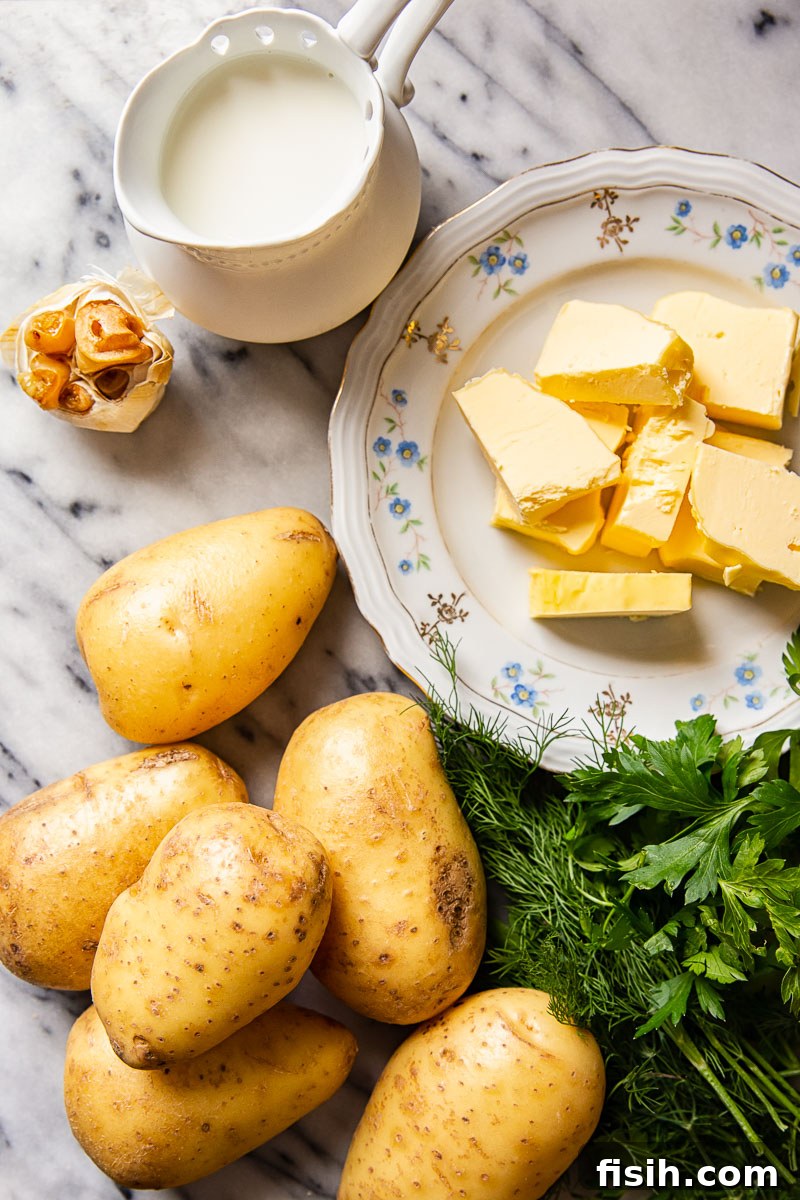
- 1 small head garlic
- 6 medium potatoes (floury/starchy varieties recommended)
- Salt to taste
- 50ml / 1/4 cup hot whole milk
- 100g / 1/2 cup unsalted butter
- 1-2 tbsp fresh parsley, chopped
- 1-2 tbsp fresh dill, chopped
- 1-2 tbsp fresh chives, chopped (optional, for extra flavor)
Instructions
- Preheat your oven to 200°C (400°F). Carefully cut the top off the head of garlic to expose the cloves. Wrap the garlic head tightly in aluminum foil and bake for 45-50 minutes, or until the cloves are very soft and caramelized. Allow to cool slightly.
- While the garlic is roasting, peel and quarter the potatoes. Place them in a large pot, cover with cold, salted water, and bring to a boil. Cook until the potatoes are very tender and easily pierced with a fork (approximately 15-20 minutes).
- Once the roasted garlic is cool enough to handle, gently squeeze the softened cloves out of their peels into a small bowl. Mash them thoroughly with a fork until a smooth paste forms. Set aside.
- Drain the cooked potatoes thoroughly. Return them to the hot, empty pot over low heat for 1-2 minutes to steam-dry and remove any excess moisture. This step is crucial for non-watery mash.
- Remove the pot from the heat. Add the hot milk and begin mashing the potatoes with a potato masher until they are mostly smooth.
- Next, add the unsalted butter and continue mashing until the potatoes are creamy and smooth, breaking down most lumps.
- Begin by stirring in about half of the mashed roasted garlic. Taste the potatoes, and slowly increase the garlic quantity according to your preference until you achieve the desired depth of flavor. Season with additional salt to taste.
- Finally, add the fresh chopped parsley and dill (and chives, if using). Gently fold the herbs into the mashed potatoes with a spatula until just combined. Avoid overmixing to preserve the herbs’ freshness.
- Serve the Herb and Garlic Mashed Potatoes piping hot, with an extra pat of butter on top if desired for ultimate richness.
Video
A video tutorial for this recipe can often be found on the recipe blog for visual guidance on preparation steps.
Notes
You might find it necessary to reheat your mashed potatoes before serving, as they tend to lose some warmth during the mashing process. This ensures they are perfectly hot and enjoyable.
Nutrition Information
Calories: 255kcal | Carbohydrates: 28g | Protein: 6g | Fat: 14g | Saturated Fat: 9g | Cholesterol: 37mg | Sodium: 28mg | Potassium: 909mg | Fiber: 5g | Sugar: 1g | Vitamin A: 486IU | Vitamin C: 27mg | Calcium: 86mg | Iron: 7mg
Nutrition information is automatically calculated and should only be used as an approximation.