
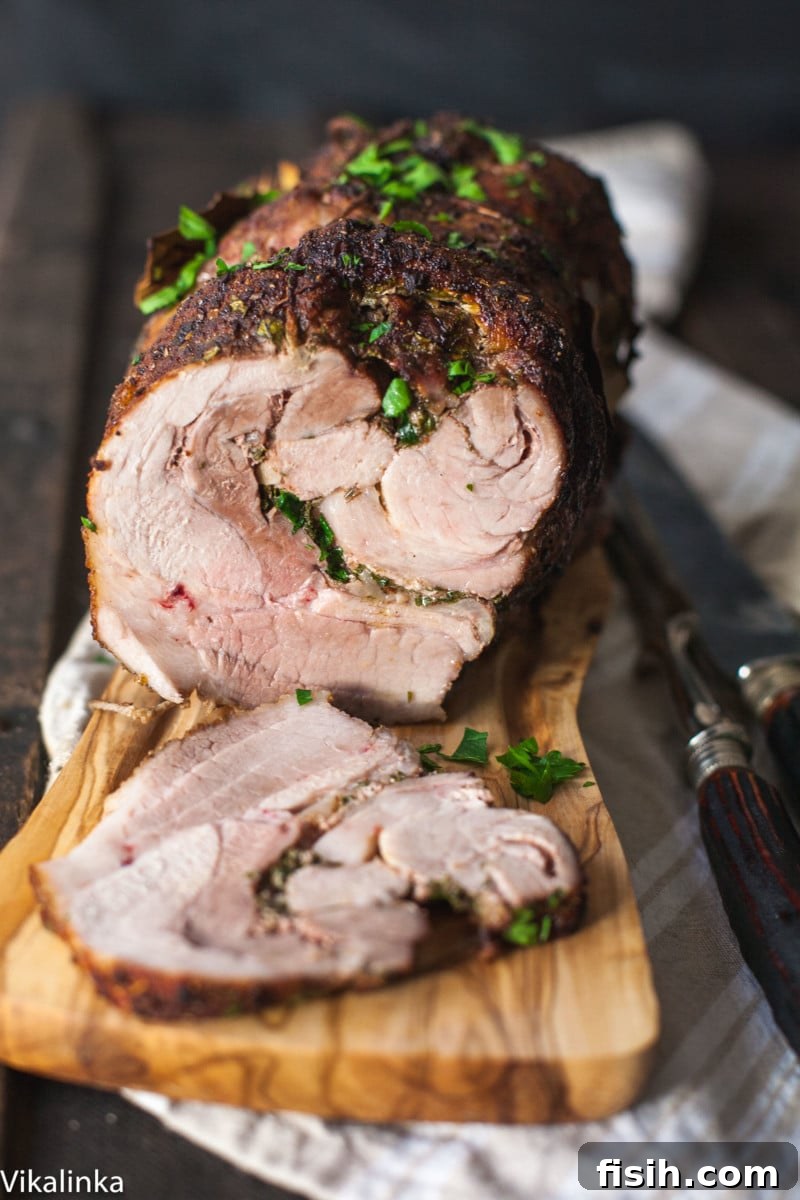
Elevate your holiday table with this incredibly flavorful and consistently juicy pork roast! Known as “Buzhenina” in Eastern European cultures, this aromatic spice-rubbed pork shoulder roast, infused with fresh herbs and garlic, transforms an humble cut of meat into a spectacular dish. Perfect served hot as a grand centerpiece or enjoyed cold the next day, it’s a true crowd-pleaser that embodies comfort and tradition.
Craving more delicious pork recipes? Discover our Bacon Wrapped Pork Tenderloin for another fantastic option.
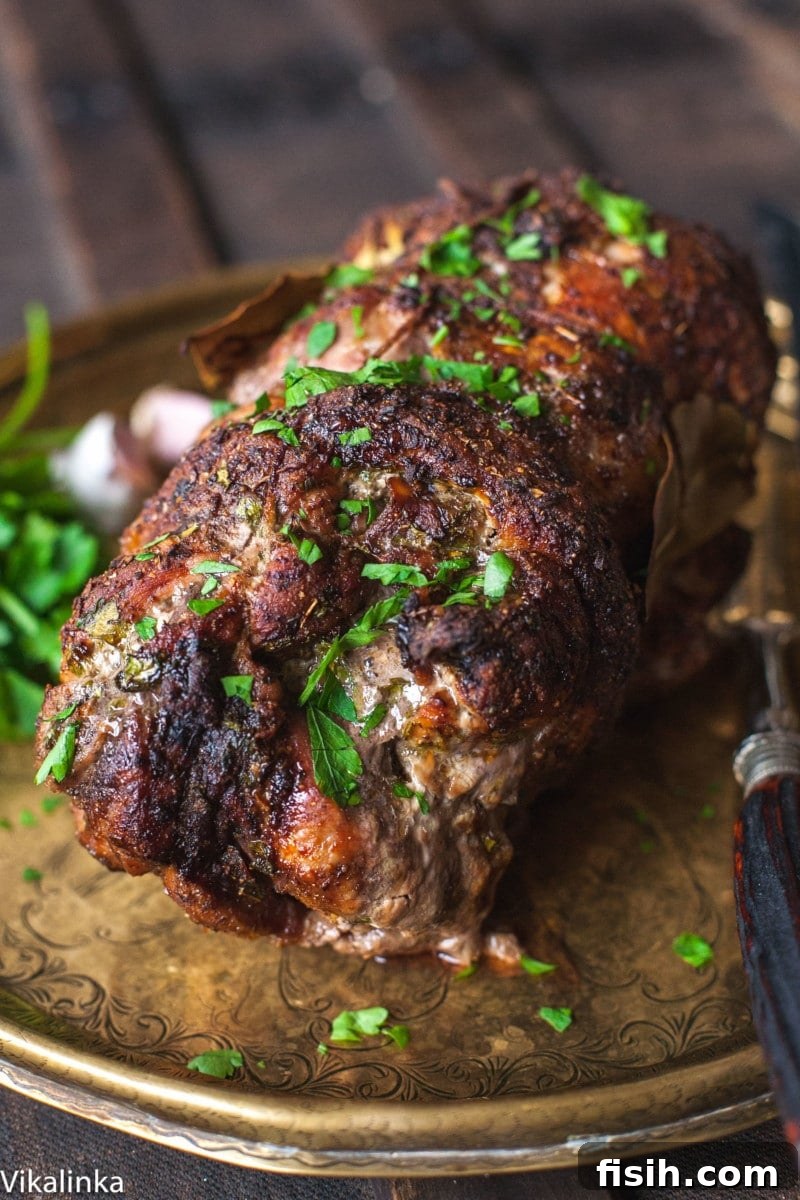
In many homes, including mine, few cuts of meat receive as much adoration as pork shoulder. Whether slow-cooked for succulent pulled pork or roasted to tender perfection, it consistently delivers on moisture and rich flavor. This recipe is a testament to my mission: to shine a well-deserved spotlight on this often under-appreciated cut, showcasing its incredible potential to become a truly unforgettable meal.
Today, I’m sharing a recipe that holds a particularly special place in my heart: a roasted pork dish known as “Buzhenina” in Russia and Ukraine. This isn’t just any roast; it’s the dish my mother prepared every single year for holidays and special occasions, a culinary tradition I eagerly anticipated. Its aroma alone could transport you back to cherished family gatherings, a symbol of warmth and celebration.
What makes Buzhenina so extraordinary, you might ask? At its core, it’s a simple piece of meat, but one that has been lavished with an abundance of care, attention, and time-honored techniques. This love, combined with a symphony of spices and fresh aromatics, elevates it far beyond the ordinary, transforming it into a dish that’s deeply satisfying and profoundly flavorful.
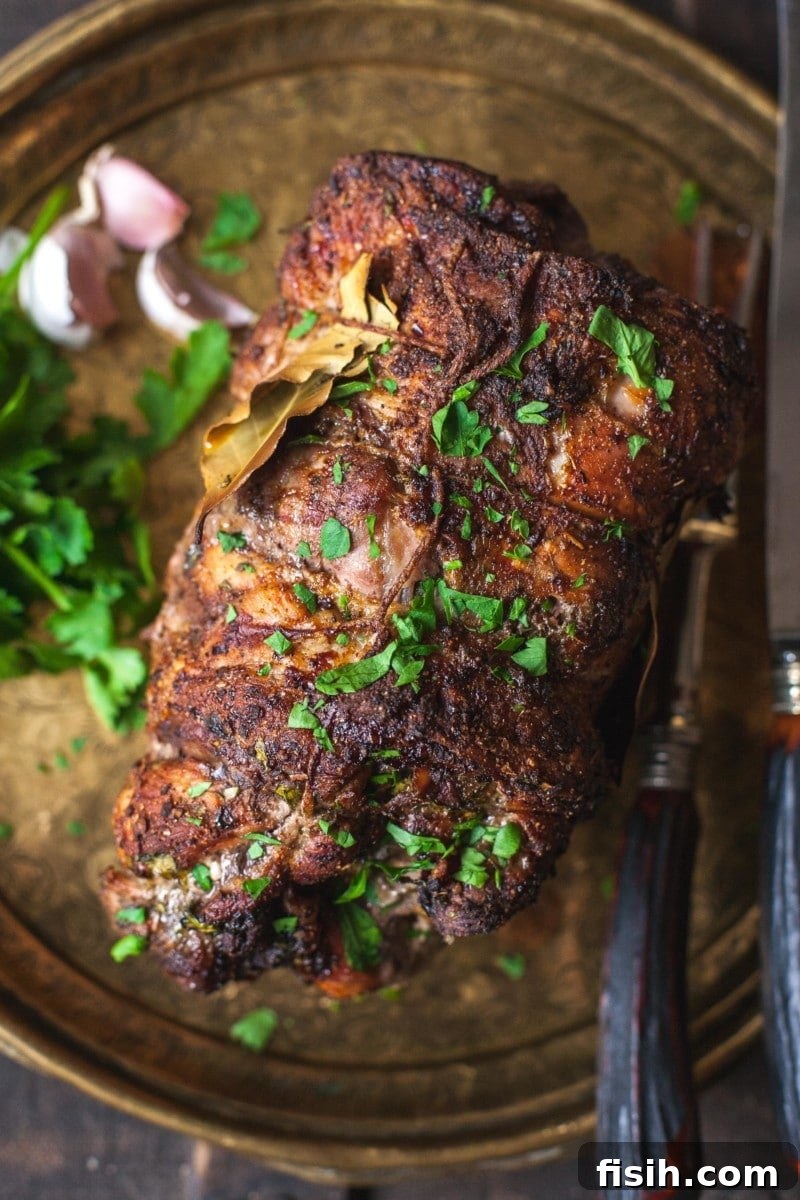
What is Buzhenina? An Eastern European Delicacy
Defining “Buzhenina” with absolute certainty can be a delightful challenge, precisely because its definition is wonderfully broad and steeped in history. Much like many ancient culinary traditions, Buzhenina is a flexible term that encompasses various styles of pork roasts, typically prepared with generous amounts of garlic and a fragrant blend of spices. It’s more than just a recipe; it’s a method and a celebration of hearty, flavorful meat preparation.
Historically, this versatile cooking technique has been applied to a range of meats, including fish and turkey. So, theoretically, almost any cut of meat could be transformed into a “buzhenina.” However, it is pork that is most strongly and lovingly associated with this dish, earning its place as the preferred choice for its rich flavor and tender texture.
Buzhenina often graces holiday tables and special gatherings, serving as an impressive centerpiece when presented hot and freshly roasted. Yet, its appeal doesn’t diminish once it cools. Served thinly sliced the day after, it gains a new dimension of flavor as the spices fully meld. In fact, cold Buzhenina has earned a playful reputation in some circles as an excellent “hangover cure,” a testament to its comforting and restorative qualities. Its dual nature makes it an incredibly practical and cherished dish for any occasion.
Choosing the Perfect Pork Cut for Your Roast
The foundation of a truly exceptional Buzhenina lies in selecting the right cut of pork. While I learned this recipe from my mother, who often worked with more challenging cuts, the beauty of this dish is its ability to elevate even the most economical options. Pork shoulder, also known as pork butt or Boston butt, is consistently a cost-effective choice and is my personal recommendation for this recipe. Its generous marbling of fat ensures a moist and succulent roast every time.
I recall my mother’s dedication as she meticulously prepped cheaper cuts, carefully trimming away excess fat, bones, and connective tissues to prepare them for roasting. Her efforts were a labor of love, driven by the desire for a delicious outcome, regardless of the initial quality of the meat. Fortunately, modern butchery often means you’ll find boneless pork shoulder joints that require minimal trimming, making your preparation much simpler. The cut I typically use today, for instance, requires virtually no extra work, allowing me to focus on the flavor infusion.
My mother’s approach taught me a valuable lesson: you don’t need to splurge on expensive cuts to enjoy a magnificent meal. A boneless pork shoulder joint, while affordable, can yield incredibly tender and flavorful results with the right preparation. If you’re inclined to spend a little more and prefer a leaner cut, pork loin or pork tenderloin are excellent alternatives that will also perform beautifully. However, remember that leaner cuts might require closer monitoring to prevent drying out. But trust me, even a humble pork shoulder, once infused with flavor and roasted with care, truly tastes like a million dollars!
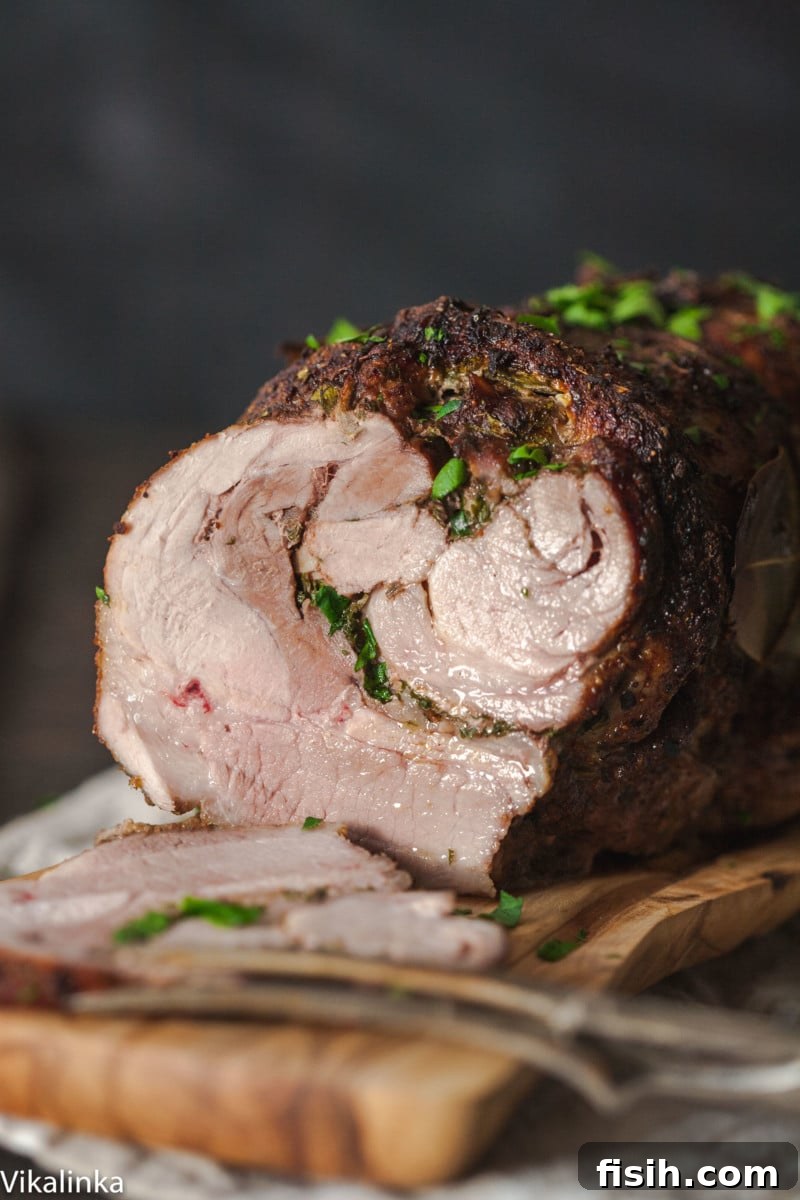
Crafting the Perfect Juicy and Aromatic Pork Roast
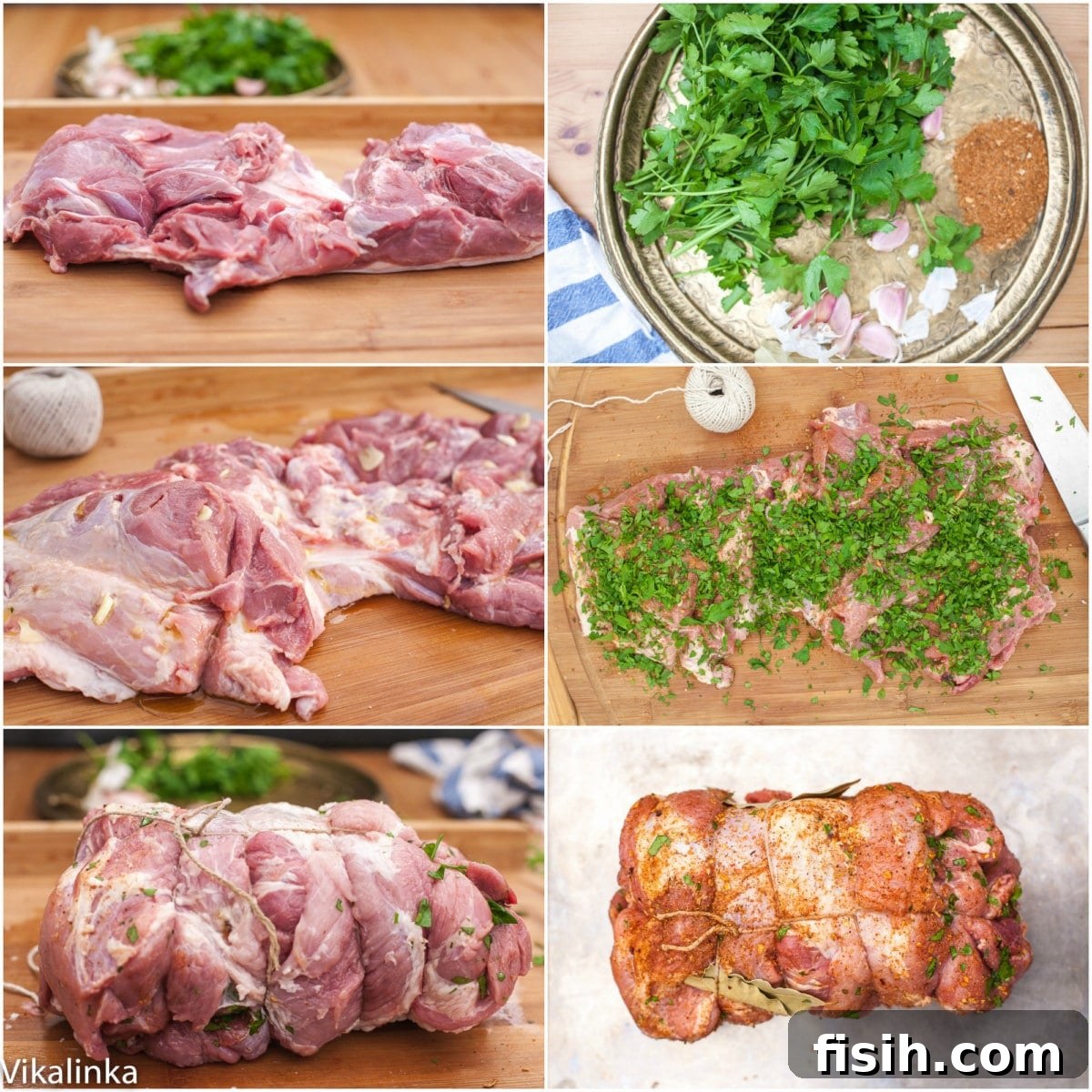
Achieving a juicy, tender, and intensely flavorful pork roast is simpler than you might think, thanks to a few key techniques. If you’ve purchased a roast that’s already tied, carefully untie it and lay it flat on a clean cutting board. This allows for maximum surface area to absorb our wonderful flavors.
The first crucial trick, a gem I learned from my mother, is to thoroughly prick the pork all over its surface with the tip of a sharp knife. These small incisions serve as perfect pockets for flavor. Into each of these pockets, insert thin slivers of fresh garlic. This labor-of-love step ensures that the fragrant essence of garlic permeates every bite, rather than just flavoring the surface.
Next, drizzle the pork lightly with a touch of extra virgin olive oil. This acts as a binder for our spice rub and helps create a beautiful crust. Now, it’s time for the spice rub of your choice. A simple yet effective option is freshly ground black pepper and sea salt. For an authentic Eastern European flavor profile, I highly recommend using shashlik spice. This vibrant blend, readily available in most Eastern European grocery stores, typically combines a delightful mix of onion, hot paprika, coriander, marjoram, nutmeg, allspice, and a harmonious balance of black pepper and salt. Feel free to experiment or create your own custom blend – the goal is a robust and aromatic seasoning.
Once rubbed, generously sprinkle the pork with a fresh bunch of finely chopped flat-leaf parsley. This adds a layer of freshness and color. Carefully roll the pork up tightly, ensuring all the inserted garlic and herbs are nestled within. Secure the rolled roast firmly with kitchen twine at regular intervals to maintain its shape during cooking. Give it a final rub with your chosen spices to ensure a rich crust. Transfer your beautifully prepared pork to a sturdy roasting pan, tuck a couple of bay leaves under the twine for an extra layer of subtle aroma, and it’s ready for the oven.
Preheat your oven to a high temperature of 220°C (475°F). Roast the pork at this initial high heat for 20 minutes. This crucial step helps to sear the exterior, locking in juices and developing a golden crust. After 20 minutes, reduce the oven temperature to 190°C (375°F) and continue roasting for approximately 1 hour and 10 minutes, or until an internal meat thermometer inserted into the thickest part of the roast registers between 60-65°C (145-150°F). Remember that the temperature will continue to rise slightly after removal from the oven.
Upon reaching the desired internal temperature, remove the pork roast from the oven. The most critical step for a truly juicy roast is often overlooked: resting. Tent the roast loosely with foil and let it rest undisturbed for 20-25 minutes before carving. This allows the juices to redistribute throughout the meat, resulting in an exceptionally tender and moist final product. Slice thinly against the grain and prepare for a truly sensational meal!
Expert Tips for the Perfect Buzhenina
- **The Garlic Infusion:** While it might seem a bit tedious, the step of pricking the meat with a sharp knife and stuffing those tiny slits with garlic slices is absolutely non-negotiable for authentic Buzhenina flavor. This method ensures the garlic’s pungent, aromatic essence penetrates deep into the meat, creating an unparalleled taste experience. Don’t skip it!
- **Selecting Your Pork:** As mentioned, my mother and I both favor inexpensive pork shoulder for this recipe due to its incredible flavor and juiciness when slow-roasted. However, if you prefer a leaner cut or wish to elevate the dish further, pork loin or pork tenderloin are fantastic alternatives. Adjust cooking times accordingly, as leaner cuts cook faster.
- **Mastering the Spice Rub:** I often streamline my cooking by using a pre-made spice rub, and shashlik spice, a traditional blend from the Caucasus region, is my go-to for its nostalgic and robust flavor profile. If you can’t find it, or prefer to mix your own, a homemade blend is simple and rewarding. Combine common spices like onion powder, hot paprika for warmth and color, ground coriander for citrusy notes, earthy marjoram, a pinch of nutmeg, fragrant allspice, freshly ground black pepper, and salt. Adjust the ratios to your taste for a truly personalized rub.
- **The Art of Resting:** This cannot be stressed enough – always, always allow your cooked pork roast to rest for a minimum of 20-30 minutes before slicing. Tenting it loosely with foil helps retain heat while the muscle fibers relax and reabsorb the flavorful juices. This critical resting period guarantees the juiciest, most tender results, ensuring every slice is a delight.
- **Even Cooking:** To ensure your roast cooks evenly, bring the pork out of the refrigerator at least 30-60 minutes before roasting to allow it to come closer to room temperature. This prevents the outside from overcooking before the inside is done.
- **Flavor Boost:** Consider brining your pork shoulder overnight for an even juicier and more flavorful roast. A simple saltwater brine with herbs can work wonders.
Delightful Serving Suggestions for Your Pork Roast
A magnificent pork shoulder roast, especially one as rich and aromatic as Buzhenina, deserves an equally satisfying array of side dishes. No holiday table featuring this roast would be complete without a generous serving of potatoes. Depending on my mood and the occasion, I often reach for either creamy, comforting mashed potatoes or perfectly crispy and savory roasted baby potatoes. Both options provide a wonderful canvas for soaking up the pork’s delicious juices.
To complete your culinary spread, consider adding a couple of vibrant vegetable dishes. Sticking with the roasted theme creates a cohesive and effortlessly elegant meal. Try adding beautifully caramelized roasted carrots with a garlicky lemon tahini sauce, or crisp-tender Brussels sprouts, perhaps enhanced with honey and bacon for a touch of sweetness and smoky depth. These classic roasted vegetables offer a sophisticated yet approachable complement to the rich pork.
Alternatively, introduce a burst of freshness and contrasting textures with lighter, brighter side salads. A vibrant festive red cabbage slaw offers a delightful crunch and tang, cutting through the richness of the meat. A unique walnut beet salad provides earthy sweetness and a satisfying nutty bite, while a creamy celeriac remoulade adds a subtle anise flavor and a smooth texture. These fresh options introduce a lovely crunch, sweetness, and acidity that perfectly balance the savory, tender pork, making every bite a complex and delightful experience.
Storage and Creative Leftover Ideas
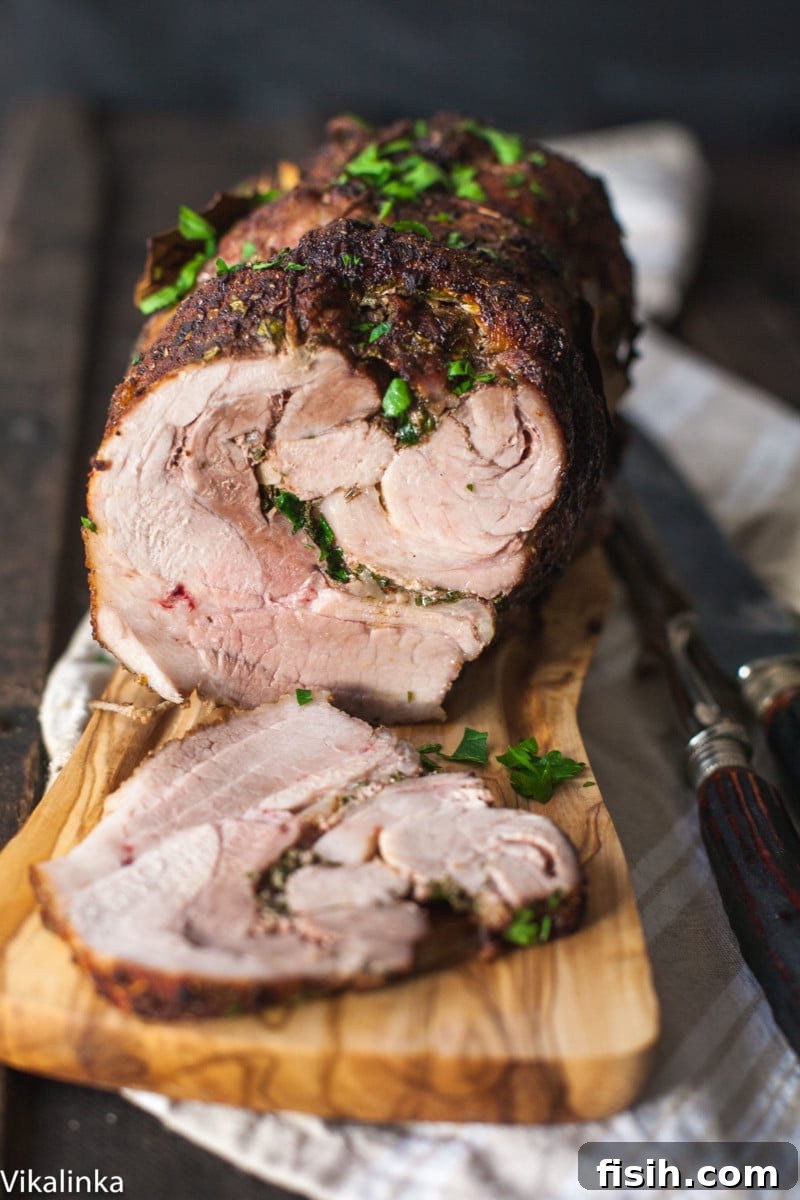
One of the many charms of Buzhenina is its versatility, not only at the dinner table but also in its deliciousness as leftovers. While it’s utterly fantastic served warm, fresh out of the oven, it’s equally delightful when enjoyed cold. Storing it in the fridge overnight allows the rich flavors to meld and deepen, creating an even more complex taste profile.
The next day, slice the chilled Buzhenina thinly. It transforms into an exquisite cold cut, perfect for elegant platters. Serve it alongside an assortment of fine cheeses, savory salami, and slices of lovely sourdough or hearty rye bread. It makes for an impressive appetizer, a sophisticated lunch, or a light dinner that requires minimal effort but delivers maximum flavor. Beyond cold cuts, leftover Buzhenina can be diced and added to salads, sandwiches, or even folded into an omelet for a gourmet breakfast. Its robust flavor stands up well to various reinterpretations.
For longer storage, leftover pork roast freezes exceptionally well. For optimal taste and texture, it’s best to consume it within 4-6 months, though it can safely be kept frozen for longer periods. When storing in the refrigerator, ensure you use up any cooked pork within 4 days to maintain food safety and peak quality. Always store in an airtight container to prevent drying out and absorb odors from other foods. Proper storage ensures you can enjoy the exquisite flavors of your Buzhenina for days or even months to come.
More Delicious Meat Roast Recipes to Try
- Rosemary and Thyme Roast Chicken and Potatoes: A classic, fragrant chicken dish perfect for any family dinner.
- Pork Roast with Warm Persimmon Sauce: A unique and delightful sweet and savory combination for your pork.
- Roast Turkey Recipe: Your comprehensive guide to a perfectly roasted, succulent holiday turkey.
- Roast Leg of Lamb with Mint Sauce: A timeless pairing of tender lamb with a refreshing mint accompaniment.
Aromatic Spice Rubbed Pork Roast Stuffed with Herbs and Garlic (Buzhenina)
Ingredients
- 2.25kg / 5 lbs pork shoulder joint or pork loin
- 4 garlic cloves, sliced
- 2-3 tbsp shashlik spice rub or your favorite rub
- 1 bunch of flat leaf parsley, chopped
- 1 tbsp olive oil
- 2 bay leaves
Instructions
-
Preheat the oven to 475°F/220°C.
-
If you buy a roast that’s been tied, untie it and lay flat on a cutting board. Prick the pork all over with the tip of a sharp knife and insert sliced garlic into those little pockets. Then sprinkle with a little bit of extra virgin olive oil, and a tablespoon of spice rub of your choice. Generously sprinkle it with chopped parsley and roll it up tight. Tie with a piece of kitchen twine and rub with your rub of choice.
-
Transfer to a roasting pan, tuck a couple of bay leaves under the twine and pop it in the oven. Roast the pork for 20 minutes, then bring the temperature down to 375°F/190°C and roast for 1 hour 10 minutes or until a meat thermometer registers 145°F-150°F.
-
Let it rest for 10-15 minutes and serve with mashed or roasted potatoes. Alternatively, cool it in the fridge overnight, slice thinly, and serve it cold as a starter.
Nutrition
Nutrition information is automatically calculated, so should only be used as an approximation.
Tried this recipe?
Let us know how it was!