
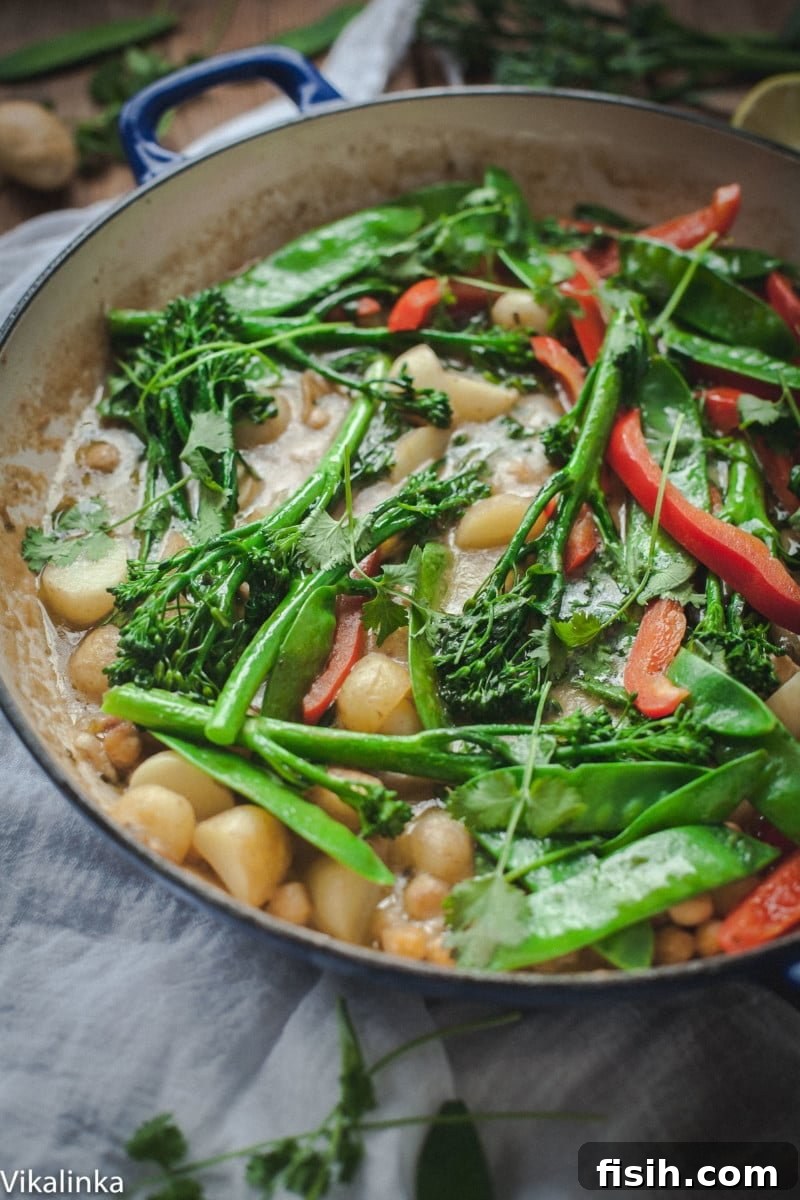
Embark on a culinary journey to Thailand with this vibrant Vegetarian Thai Green Curry! Packed with the goodness of new potatoes, crisp snow peas, hearty chickpeas, and fresh broccoli, all swimming in a rich, aromatic coconut milk broth, this dish promises a symphony of flavors. It’s not just delicious; it’s a wonderfully wholesome meal that comes together remarkably fast, making it a perfect choice for busy weeknights or a delightful spring evening when fresh produce abounds.
For those who adore the dynamic flavors of Thai cuisine, we invite you to explore more of our cherished recipes. Discover the robust notes of our Thai Red Curry with Prawns and Snow Peas, or savor the comforting warmth of our Slow Cooker Thai Chicken and Wild Rice Soup. Each offers a unique taste of this beloved culinary tradition.
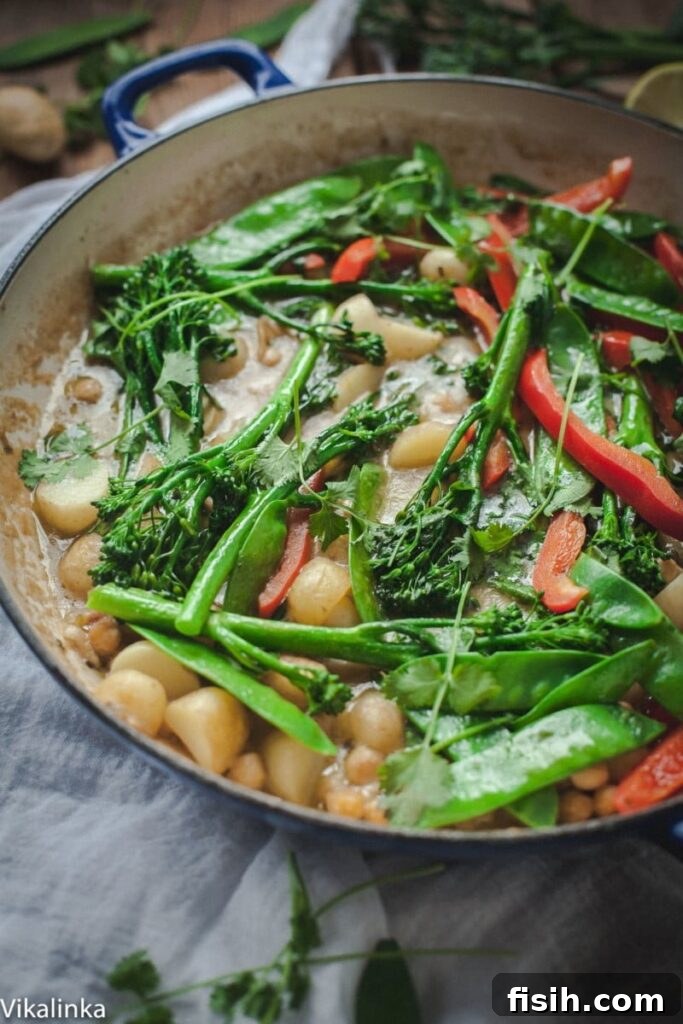
The Irresistible Allure of Thai Green Curry
When my kitchen is blessed with an abundance of fresh vegetables, overflowing from the crisper drawer, my thoughts frequently turn to the comforting and versatile world of curries. There’s something inherently satisfying about a hearty curry, especially when served alongside a mound of steaming fluffy rice. They are universally loved by everyone in my family and, contrary to popular belief, require surprisingly little time to prepare, proving that exceptional flavor doesn’t always demand hours in the kitchen.
The beauty of curry lies in its adaptability. The specific type of curry I choose often depends entirely on the fresh ingredients I have on hand, allowing for endless creativity and minimizing food waste. While the idea of crafting a homemade curry paste might seem appealing to some, I usually opt for a simpler, yet equally effective, approach. Making authentic Thai curry pastes from scratch is a labor of love; it demands a significant investment of time, a deep understanding of local Thai culinary traditions, and access to a sometimes extensive and exotic list of ingredients. For many home cooks, myself included, sourcing all those unique aromatics can be a real challenge.
Instead, I prefer to rely on high-quality, pre-made curry pastes. These pastes, expertly blended by those with generations of culinary knowledge, offer an authentic flavor profile without the intensive prep work. Just consider the complex array of ingredients typically found in a good Thai green curry paste: fresh green chilies for that distinctive hue and heat, fragrant ginger and garlic, the earthy notes of cilantro stalks and roots, and the bright, citrusy aroma of lemongrass, among many other spices and herbs. It’s a masterful combination that’s hard to replicate perfectly in a home kitchen. Choosing a reputable store-bought paste ensures a consistently delicious and convenient result, allowing you to focus on the fresh produce that makes this curry so special.
Essential Ingredients for a Perfect Vegetarian Thai Green Curry
Creating an authentic and satisfying vegetarian Thai green curry starts with understanding its core components. While the exact proportions can be adjusted to your taste, these ingredients form the foundation of a truly remarkable dish:
- Thai Green Curry Paste: This is the heart of your curry. A good quality paste typically features a blend of fresh green chillies, galangal (often mistaken for ginger), lemongrass, kaffir lime zest, garlic, shallots, and coriander (cilantro) root. The green chillies give it its signature color and a fresh, vibrant heat.
- Coconut Milk: The creamy base of any Thai curry. Opt for full-fat coconut milk for the richest flavor and silkiest texture. Light coconut milk can be used for a lower-calorie option, but it may result in a thinner consistency.
- Fish Sauce or Vegetarian/Vegan Fish Sauce Substitute: Traditional fish sauce provides a crucial umami depth. For a vegetarian or vegan version, a high-quality substitute, often made from seaweed or mushroom extract, is essential to achieve that balanced savory profile. You can find excellent vegetarian fish sauce substitutes online.
- Lime Juice: Freshly squeezed lime juice adds a bright, zesty finish that cuts through the richness of the coconut milk and awakens all the flavors. It’s added at the very end to preserve its fresh taste.
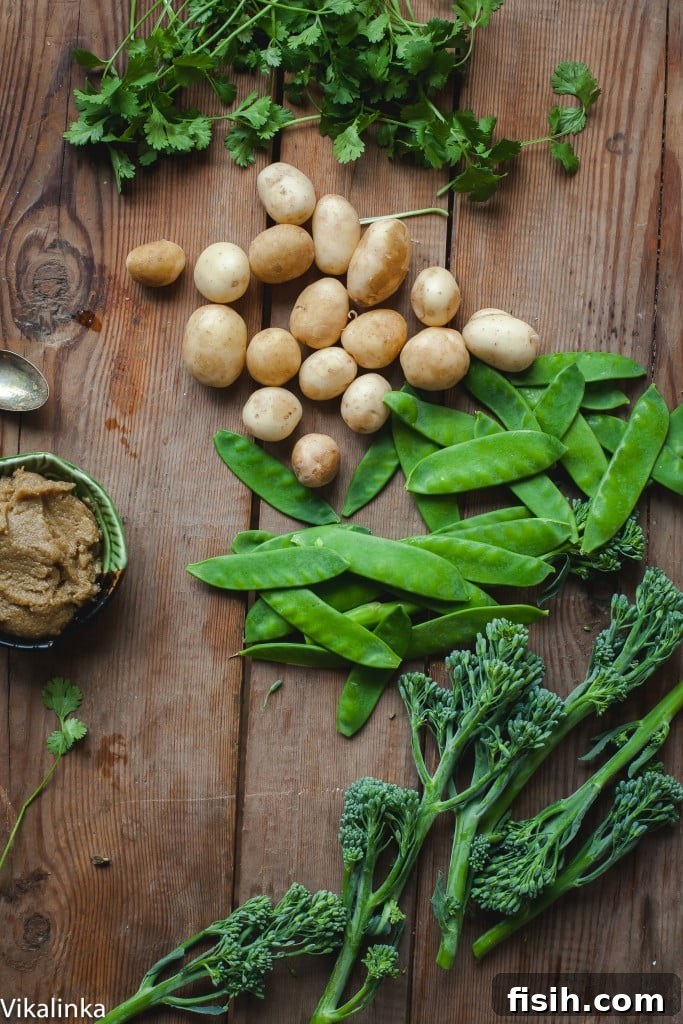
- Assorted Vegetables: The stars of this vegetarian curry. While our recipe features new baby potatoes, crisp snow peas, and tender broccoli florets, the possibilities are truly endless.
- Protein Source: For this vegetarian version, chickpeas are a fantastic choice, offering a satisfying texture and plant-based protein. Tofu is another excellent option.
Unleash Your Creativity: What Vegetables Work Best in Vegetarian Curries?
One of the most exciting aspects of making vegetarian curries is the freedom to experiment with a vast array of vegetables. The short answer to what you can use is simple: anything you like! Beyond the delightful combination of new baby potatoes, crisp snow peas, tenderstem broccoli, and vibrant red bell peppers featured in this recipe, here are some additional ideas to inspire your next culinary creation:
- Sweet Potato: Adds a lovely sweetness and creamy texture, making the curry even more comforting.
- Butternut Squash: Similar to sweet potato, it offers a subtle sweetness and a beautiful orange hue, softening beautifully in the curry.
- Baby Corn: Provides a delightful crunch and a mild, sweet flavor.
- Bamboo Shoots: A classic Thai ingredient, offering a unique crisp texture and earthy notes.
- Eggplant (Aubergine): Absorbs the curry flavors wonderfully and becomes incredibly tender. Thai eggplants (pea eggplants or small green eggplants) are particularly authentic, but regular globe eggplant works well too.
- Zucchini (Courgette): A quick-cooking vegetable that adds freshness and a soft texture without overpowering other flavors.
- Mushrooms: Shiitake, cremini, or oyster mushrooms add an earthy, umami depth.
- Spinach or Kale: Wilted greens can be stirred in at the very end for an extra boost of nutrition and color.
- Carrots: Sliced thinly or julienned, they add sweetness and a pop of color.
Powering Up Your Plate: Protein Options for Vegetarian and Vegan Curries
While vegetables bring incredible flavor and texture, incorporating a good source of plant-based protein is key to making your vegetarian or vegan curry a truly satisfying and complete meal. For this recipe, we’ve chosen two excellent options:
- Chickpeas: These versatile legumes are a powerhouse of fiber and protein. They absorb the rich curry sauce beautifully, offering a slightly nutty flavor and a tender, yet firm, texture that stands up well to simmering. Any other type of beans, such as cannellini or kidney beans, would also work well.
- Tofu: Firm or extra-firm tofu is an ideal choice for curries. It’s a blank canvas that readily soaks up all the aromatic spices and coconut goodness. For best results, press the tofu to remove excess water before cutting it into cubes and adding it to the curry. You can also pan-fry or bake the tofu cubes until golden prior to adding them to the curry for a firmer texture and more depth of flavor.
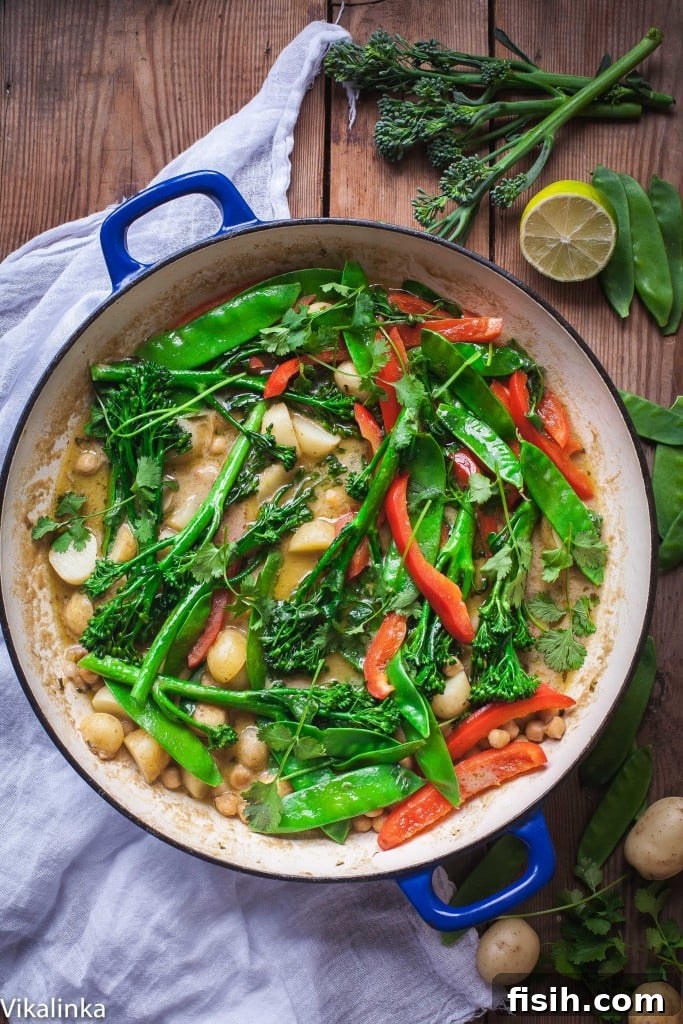
This potato and chickpea curry, vibrant and flavorful, stands out not just for its incredible taste but also for its remarkable efficiency. It’s a dish that can be on your table in under 20 minutes, making it an absolutely perfect choice for a swift and satisfying summer dinner or any time you need a quick, healthy meal.
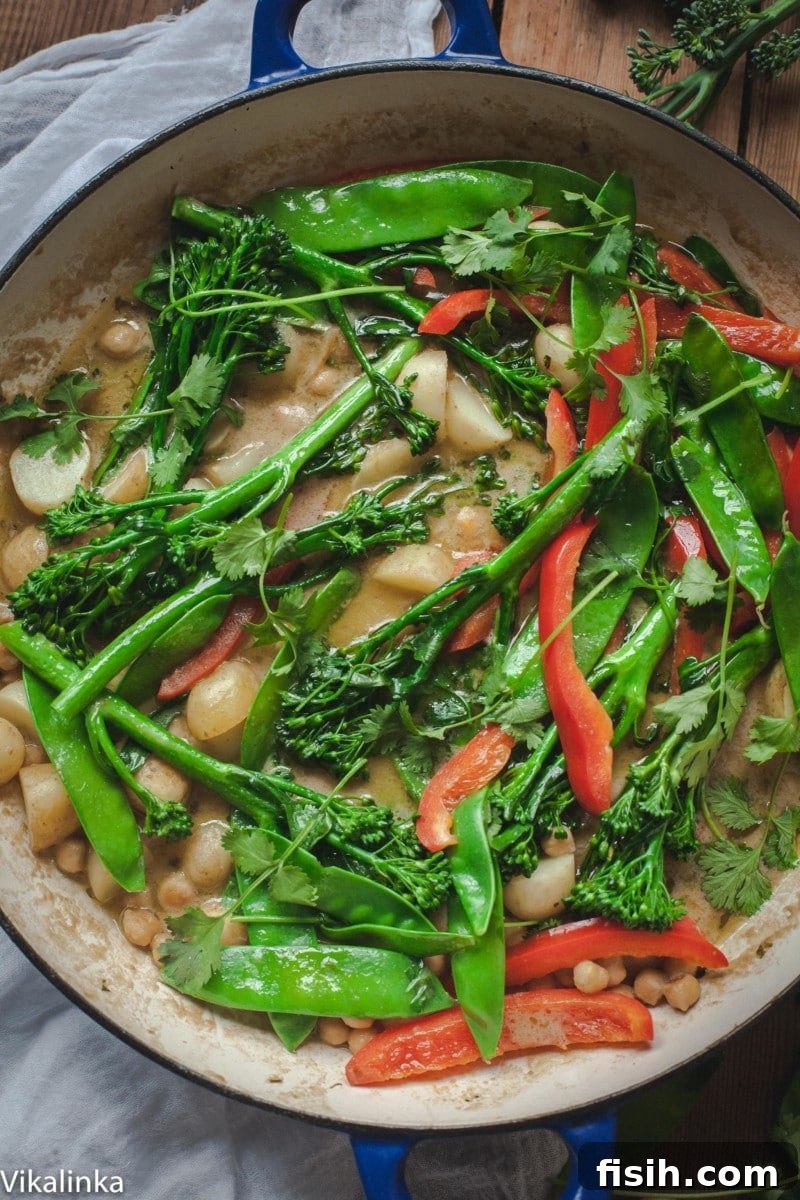
Imagine tender new baby potatoes, providing a comforting earthiness, alongside the delightful crunch of fresh snow peas and the slight bitterness of tenderstem broccoli. Add to this the sweet notes of red bell peppers and the nutty texture of chickpeas, all generously coated in a fragrant and subtly spicy green curry sauce. These garden-fresh ingredients, united by the rich coconut milk, blend seamlessly to create a meal that is both profoundly comforting and invigoratingly fresh. It’s a beauty to behold on your plate, a feast for the senses, and, most importantly, incredibly good for you!
Understanding Thai Curry Colors: Red vs. Green
Thai cuisine is renowned for its diverse and flavorful curries, often distinguished by their vibrant colors. The most common varieties, red and green curries, while both incredibly delicious, have distinct differences primarily rooted in their chilli content and flavor profiles. Understanding these distinctions can help you choose the perfect curry to suit your palate.
The main difference between Thai red and green curries lies in the type of chilies used in their respective pastes. Thai red curry paste traditionally incorporates dried red chilies, which impart a deep, fiery heat and a rich, brick-red color. These chilies are often soaked before being ground, contributing to a robust and intense spice level that can be quite assertive.
In contrast, Thai green curry paste is prepared with fresh green chilies, specifically bird’s eye chilies or larger green spur chilies, which give the curry its characteristic bright green hue. While fresh green chilies still provide a kick, they generally yield a fresher, more herbaceous, and often less overtly spicy heat compared to their dried red counterparts. Green curry also tends to be brighter and more aromatic, featuring a higher proportion of fresh herbs like kaffir lime zest, galangal, and lemongrass, which contribute to its complex and fragrant character.
So, if you appreciate a subtle warmth rather than an overpowering inferno, or if you’re just beginning to explore the wonderful world of Thai cuisine, opting for a Thai green curry is an excellent choice. It allows you to savor the intricate blend of sweet, sour, salty, and spicy notes that define this aromatic and utterly delightful culinary tradition, all while enjoying a manageable level of spice.
Crafting Your Vegetarian Thai Green Curry: A Simple Step-by-Step Guide
Despite its complex and incredibly deep flavors, preparing a delicious Thai green curry at home is surprisingly straightforward and far less complicated than it might seem. With a few key steps and a good quality curry paste, you’ll master this vibrant dish in no time. Follow these simple instructions to create a truly authentic-tasting meal:
- The Curry Paste Foundation: While traditionalists often begin by meticulously crafting their own green curry paste from scratch, this step, though rewarding, is time-consuming and demands a variety of specialty ingredients that aren’t always readily available. For convenience without sacrificing flavor, I highly recommend opting for a high-quality, store-bought green curry paste. These pastes are skillfully prepared, offering an authentic flavor profile that simplifies the cooking process.
- Infuse the Aromatics: Begin by heating a tablespoon of vegetable oil and a teaspoon of sesame oil (the sesame oil is optional but adds a wonderful depth) in a large frying pan or wok over medium heat. Once hot, add finely chopped cilantro stalks. Stir-fry them for a couple of minutes until fragrant. These stalks release an incredible aroma and essential oils, building a flavorful base for your curry.
- Awaken the Paste: Next, add your chosen green curry paste to the pan. Cook it briefly, stirring continuously for about 20-30 seconds. This crucial step, known as “blooming” the paste, gently toasts the spices and aromatics, intensifying their flavors and releasing their full potential. Be careful not to burn it.
- Build the Curry Base: Pour in the rich coconut milk, followed by the fish sauce (or its vegetarian substitute). Stir everything together until well combined. Now, add your hardy vegetables – the new baby potatoes, halved, and the chickpeas for an extra boost of protein and texture. Reduce the heat to low, cover the pan, and let it simmer gently for about 10 minutes. This allows the potatoes to soften and absorb the curry flavors, ensuring they are nearly cooked through.
- Incorporate Delicate Vegetables: After the potatoes have had their head start, it’s time to add the more delicate vegetables that require less cooking time. Stir in the tenderstem broccoli, snow peas, and sliced red bell pepper. Continue cooking, now uncovered, for another 5-7 minutes. You want the vegetables to become tender-crisp – cooked through but still retaining a slight bite and their vibrant colors. This ensures they don’t become mushy.
- Finishing Touches: Before serving, add a generous squeeze of fresh lime juice over the curry. This brightens the entire dish, providing a crucial balance to the rich coconut milk. Finally, sprinkle with a handful of freshly chopped cilantro leaves.
- Serve and Enjoy: Ladle your beautiful vegetarian Thai green curry over a bed of fluffy jasmine rice or your favorite noodles for a truly satisfying and flavorful meal.
Why You’ll Love This Vegetarian Thai Green Curry
This vegetarian Thai Green Curry isn’t just another recipe; it’s a testament to how simple ingredients can transform into an extraordinary meal. The combination of fresh vegetables like crisp snow peas and tender broccoli with the hearty goodness of new potatoes and protein-rich chickpeas makes it a powerhouse of nutrition and flavor. Bathed in a creamy, aromatic green curry sauce, every spoonful is a delight.
I remember when I first whipped up this particular iteration, not thinking much of it beyond a quick dinner. I snapped a photo on a whim and shared it on Instagram – as we bloggers often do. To my surprise, the response was overwhelming! You, my wonderful readers, went crazy for it, flooding my inbox with requests for the recipe. How could I refuse? My love for this culinary community meant I had to oblige. And so, I am thrilled to present to you my much-requested green vegetable, potato, and chickpea Thai curry – a dish that brings comfort, flavor, and health to your table with incredible ease.
Tips for Success and Customization
- Adjust the Spice: If you’re using a mild curry paste and prefer more heat, feel free to add ½ to 1 minced fresh green chili (or red for extra kick) along with the curry paste. For less spice, you can reduce the amount of curry paste.
- Coconut Milk Quality: The quality of your coconut milk makes a difference. Full-fat versions provide a richer, creamier curry. Stir well before opening the can, especially if the cream has separated.
- Vegetable Prep: Cut your vegetables into roughly similar sizes to ensure even cooking. Harder vegetables like potatoes and carrots go in first, followed by quicker-cooking ones.
- Freshness is Key: Fresh cilantro and lime juice added at the end truly elevate the flavors. Don’t skip them!
- Serving Suggestions: While jasmine rice is a classic pairing, this curry is also fantastic with brown rice, quinoa, or even rice noodles for a different texture. For an extra touch, garnish with fresh basil leaves or a sprinkle of toasted peanuts.
Storage and Reheating
This curry makes excellent leftovers! Store any uneaten portions in an airtight container in the refrigerator for up to 3-4 days. To reheat, gently warm on the stovetop over medium-low heat, adding a splash of water or vegetable broth if the sauce has thickened too much. The flavors often deepen overnight, making it even more delicious the next day.
More Delicious Curry Recipes to Explore
If you’ve fallen in love with the vibrant world of curries, we have plenty more to tempt your taste buds. Expand your curry repertoire with these fantastic recipes:
- Chinese Chicken Curry
- Butter Chicken Curry
- Cauliflower and Potato Curry Aloo Gobi
- Chickpea and Butternut Squash Curry
Vegetarian Thai Green Curry
By Julia Frey of Vikalinka
Prep: 5 mins Cook: 15 mins Total: 20 mins Servings: 4
This vegetarian Thai green curry made with new potatoes, snow peas, chickpeas and broccoli is ready in no time and is absolutely delicious.
Ingredients
- 1 tbsp Oil
- 1 tsp Sesame oil, optional
- 2 tbsp Thai Green Curry Paste, if using very thick, concentrated paste, ½ cup/190gr if using runnier paste (for UK readers)
- 400ml/14oz Coconut milk
- 1 tbsp Fish sauce or vegetarian fish sauce substitute (see notes)
- 6-8 New baby potatoes, halved
- 400g/1 cup Chickpeas, drained
- 5-6 Tenderstem broccoli
- 150g/1cup Snow peas
- 1 Red pepper, large
- 4-5 sprigs Cilantro, chopped
- 1/2 Lime, juice only
Instructions
- Slice the bell pepper.
- Take cilantro leaves off their stalks, chop up the stalks finely.
- Heat a large frying pan on medium heat and when it’s hot add both vegetable oil and sesame oil.
- Then add chopped cilantro stalks and stir fry for a couple of minutes.
- Add your curry paste and cook it while stirring for a minute, then pour in coconut milk and fish sauce or vegetarian fish sauce substitute, mix to combine.
- Add potatoes and chickpeas, turn the heat down and simmer covered for 10 minutes until potatoes are tender.
- Add snow peas, tender stem broccoli and red bell pepper, continue cooking uncovered for 5-7 minutes. Taste your vegetables for doneness. They should be softer but still slightly crunchy and bright green.
- Add chopped cilantro and squeeze lime juice from 1/2 lime over the curry.
- Serve with rice.
- *Note: This recipe uses spicy curry paste but if you use a mild one add 1/2 of minced chilli for some heat.
Notes
Vegetarian fish sauce substitute
Nutrition
Nutrition information is automatically calculated, so should only be used as an approximation.
Tried this recipe?Let us know how it was!